On Schopenhauer, Nietzsche, and Materialism
Hypothesis: The 2.1 TB quest is a discussion on the philosophical argument between Schopenhauer’s denial of Will to Live and Nietzsche’s Will to Power, and the main actor was Aventurine. #Acheron and the tiniest bit of #Ratiorine #理砂
Hypothesis: The 2.1 TB quest is a discussion on the philosophical argument between Schopenhauer’s denial of Will to Live and Nietzsche’s Will to Power, and the main actor was Aventurine. #Acheron and the tiniest bit of #Ratiorine #理砂

CW: Discussion of characters’ suicidal tendency.
HI3, GGZ, NGE, Madoka Rebellion ending spoilers.
HI3, GGZ, NGE, Madoka Rebellion ending spoilers.
I actually studied hard science back in uni, so some things might be oversimplified. That pol sci course is finally pulling its weight. Further reading through the links is recommended if you want to get a more in-depth view of the topics.
1. During the talk between Acheron and Aven, he mentioned that everyone is enveloped by Nihility. But what exactly is Nihility?

2. The answer for this question lies in the debate of German philosophy in the 18-19th century, because Hoyo has told us point blank that they’re taking inspo from Nietzsche, Freud, and Jung.


3. Back during the 18-19th century, German philosophy was in a bit of a pinch. Darwin’s theory of Evolution was published, the scientific and non-scientific worlds were both shattered, for it was becoming increasingly evident that god doesn’t exist.
4. A crisis emerged in the European philosophy scene: If god doesn’t exist, then can humans remain moral and right? Before Darwin, Europe had relied on religions to guide its morals. Without god, what, then, is the true drive of humans?
5. In an attempt to answer these questions, European philosophers generally divided themselves into 2 opposing camps: Materialism and Idealism.
6. Materialism is, in short, the belief that the physical world shapes how humans are. This camp eventually became the mainstream. We, as children of the modern world and evidence-based science, (generally) fall into this camp (with a few exceptions…)

7. In contrast, Idealism is the belief that the physical world is determined by human will and/or collective unconsciousness. The root of Idealism came from Plato, who later influenced Gnosticism (HSR’s main inspo for worldbuilding) and pre-modern Idealism.

8. Plato believes that everything is comprised of Form and Good. Form is the true essence of things, so basically the soul/truth that controls the physical beings/objects. Good is the ultimate collective drive that determines all things, as all things aim to be good.
9. In the 19th century, Kant pushed forward his more moderate form of Idealism: Transcendental Idealism, which, in short, argues that phenomena are physical events and nounmena (Thing in Itself, Ding an sich) are the idealist truth behind physical events.
plato.stanford.edu/entries/kant-t…
plato.stanford.edu/entries/kant-t…
10. Similar to Plato, Kant believed that all things aim to be good, and the ideal of the (Christian) God is exactly this Highest Good.
plato.stanford.edu/entries/kant-r…
plato.stanford.edu/entries/kant-r…
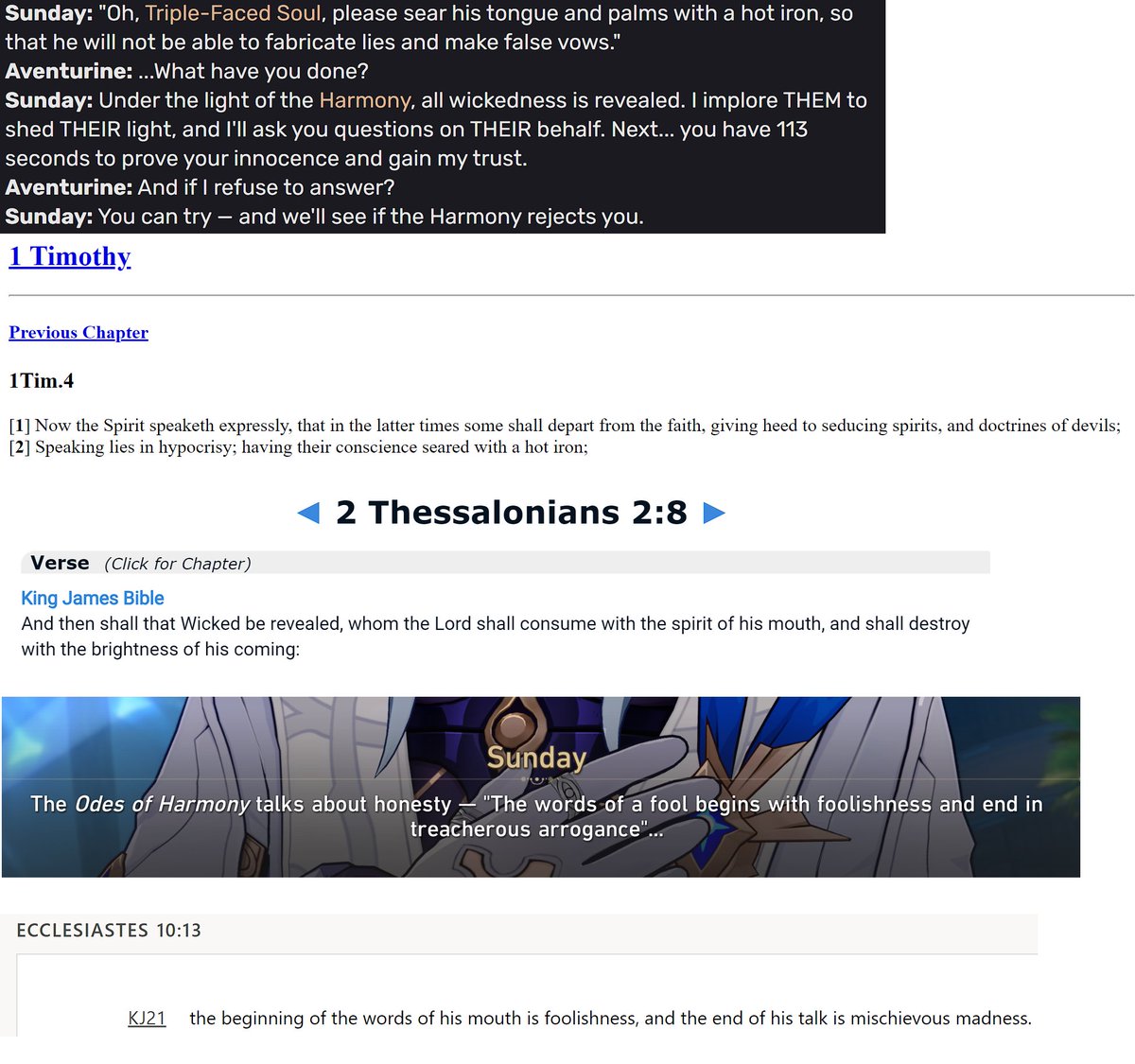
11. In the context of Penacony, it is very easy to see that Plato, the Abrahamic religion, and Kant are represented by the Family, with their belief in their ultimate good - Xipe. Because, what’s with, you know, all the Bible quotes Sunday has done lol.
12. Developing his ideas from Kant, Hinduism, and Buddhism, Schopenhauer created his own philosophy. Like Kant, he believes that things are divided into Presentation (physical events) and Will (truth).
degruyter.com/document/doi/1…
degruyter.com/document/doi/1…
13. However, unlike Kant, Schopenhauer argues that the Highest Good - God, doesn’t exist (due to the aforementioned Darwin’s Theory of Evolution), and that the collective unconsciousness of humanity - The Will, is not the drive to do good but the Will to Live.
14. According to Schopenhauer, the world is a bleak place of illusionary gain, where people are driven by nature to compete against each other and step on each other for self-preservation.
15. And to become a human in this godless bleak world, people need to be compassionate to others, deny their own Will to Live, go against natural instinct, and achieve nihil negativum. Pretty much lifted straight from Buddhism (extinguishing of desire to achieve emptiness).

16. Needless to say, this is the entire plot of Izumo, where Acheron achieved Nihility at the cost of 2 worlds getting Tang-ed into a black hole (literally denial of Will to Live to become Nothingness).
https://twitter.com/synonyms26/status/1771595853154893930?t=woidtryIHN4CXgH_zrBndA&s=19

17. In addition, Schopenhauer also promoted arts and music as the beauty of the world, the truth and good of a pessimistic world, as arts are the values of humanity and should be valued over the material demands of the physical world.
plato.stanford.edu/entries/schope…
plato.stanford.edu/entries/schope…
18. Basically, he started the “arts for the sake of arts” movement, vs the “arts for the sake of society movement” of the materialism camp. Tragic artists who die horribly like Van Gogh are considered to fulfil the Schopenhauer aesthetics.
19. This is also the main principle behind the character of Kaworu Nagisa in NGE, and it’s why his entire theme is about arts, music, and denying his own Will to Live (aka dying by suicide in every single instalment).


20. Effectively, this is also where the whole “fight for beauty” of HI3 came from, where Elysia’s and the main cast’s Schopenhauer aesthetics won against the Will to Live (of Honkai) and defeated Kevin’s Spiritual Adam (Nietzsche’s Will to Power).
21. This is also Kaveh’s stand in Genshin, where he very insistently followed “art for the sake of art” and “for other people’s happiness” to (sometimes) his own detriment (denial of his own desire, denial of Will to Live) in both the Parade of Providence quest and his hangout.

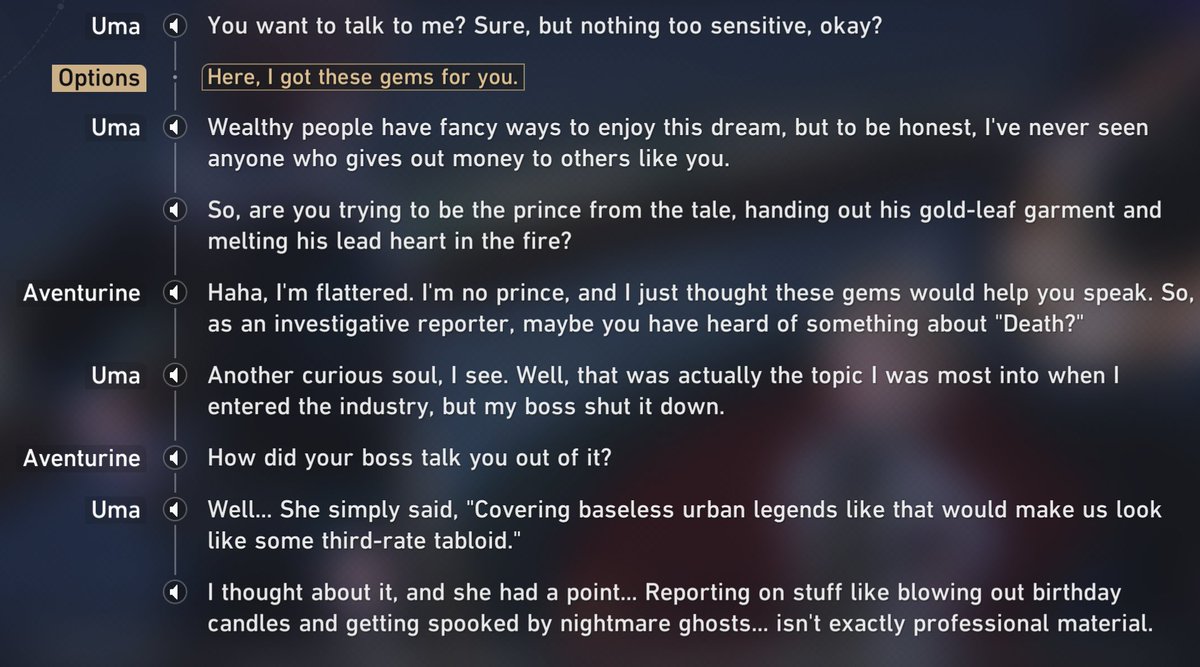
22. Notably, in Penacony, Schopenhauer’s philosophy is also discussed in the character of Aventurine, with the reference to Oscar Wilde’s the Happy Prince, where the Prince gave away all of his gems and gold leaves until there was nothing but a broken lead heart left, and he died
23. 100% Schopenhauer aesthetics.
https://twitter.com/synonyms26/status/1781019473371414587?t=ClZTqfTQceAjutda6AybtQ&s=19

24. However, like NGE, HSR doesn’t portray Schopenhauer on its own but through the lens of Nietzsche’s criticism of Schopenhauer.
25. Nietzsche was actually an admirer of Schopenhauer when he was young, but the more he read Schopenhauer, the more he became critical of Schopenhauer’s nihil negativum.
26. In Nietzsche’s view, while Schopenhauer was correct that the world is bleak, Schopenhauer’s denial of Will to Live is only falling into the despair and nihility of a godless world, not true salvation.

27. In layman’s terms, it’s when you keep doing good things but are returned with nothing or hostility by society (because other people don’t practise denial of Will to Live like you and have their own desires), and then you start to get depressed. Hence, Nihility.

28. This sense of Nihility is very well-represented in both NGE (Shinji, mostly Shinji) and all Hoyo titles, most obviously in Sachin from genshin Kaveh event, but also in Kevin from HI3, in God Killer Mei from GGZ, and in Acheron and Aventurine from HSR.

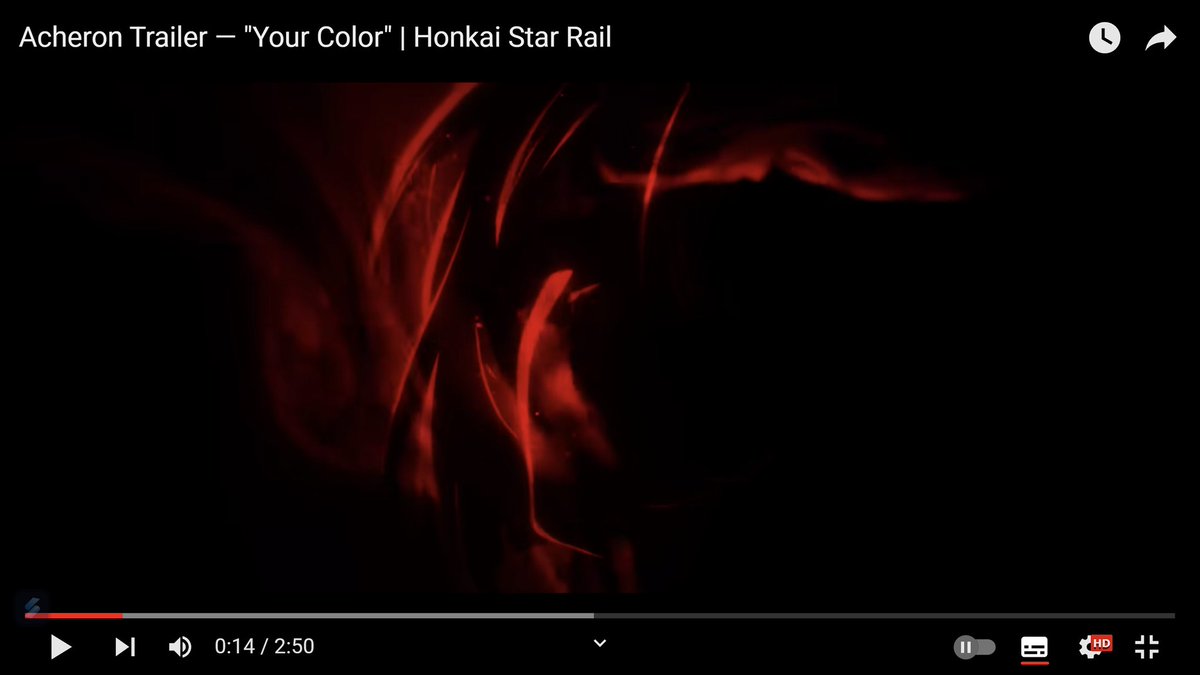
29. After completing the Schopenhauer/Buddhist ending of her world, Acheron fell into Nihility, slowly losing her color overtime. Like Acheron and like how Nietzsche criticized Schopenhauer’s Denial of the Will to Live as suicidal, Aventurine is suicidal from trauma.

30. Said suicidal tendency can be seen in various media. Firstly, the Sticker menu, which says he wishes for self-destruction.

31. Secondly, his Harvey Dent moment in the TB quest and his story 4, where it plainly tells us that he enters in every risky wager in the hope of dying and/or destroying the world.

32. Thirdly, also in the TB quest, his psychoanalytical moment under the Harmony also tells us that he wagers with his life because he half wants to die.

33. Fourthly, the Happy Prince. Self-explanatory.
https://twitter.com/synonyms26/status/1781019473371414587?t=ClZTqfTQceAjutda6AybtQ&s=19

34. Fifthly, the achievements you get after completing Aven’s parts of the quest, which are a reference to the Cumaen Sibyl.

35. Sibyl is a guide to the underworld, like Acheron, but at the same time, she’s also cursed to age backward (like Kakavash) until there’s nothing left after rejecting Apollo’s advance (Sunday’s). At the end of it, she was begging for death, so like both Acheron and Aven.
36. T.S.Eliot’s the Wasteland is quoted here again. Previously, the Wasteland is quoted in the diver set to depict Frebass/Phlebas’ suicidal tendency (Nihility, death of Jesus) and Acheron’s Will to Power (god killer).
https://twitter.com/ceoofelio/status/1755972940578037999?t=eo_VdzQZJvj_mOziyjDBrg&s=19
37. I might be missing some refs, but overall, yeah, TB quest is very clear in telling us that Aven and Acheron are both suicidal and internally deny their own Will to Live. Hence, Aventurine and Acheron talk happened as Aventurine literally ran toward the black hole (Nihility).

38. Thus, unlike the beautiful ending of HI3, like how Shinji killed Kaworu in NGE, Acheron and Aventurine are not plain portrayals of Schopenhauer’s aesthetics but are criticism of Schopenhauer’s philosophy of Nihility through the lens of Nietzsche.

39. But Hoyo did not let the characters stay defeated under shadows of Nihilism (cuz that’s a family unfriendly message), like God Killer Mei in GGZ and Shinji in NGE, they continued on with Nietzsche’s Will to Power as a method to defeat Schopenhauer’s Nihility.

40. While Schopenhauer’s Will is the Will to Live, Nietzsche interpretes the collective drive of humanity as the Will to Power. In essence, Will to Power isn't just the drive for self-preservation; it is the drive to overcome all obstacles of Nihility to become the Übermensch.
41. In Thus Spoke Zarathustra, the Übermensch is the exceptional human among the mass, surpassing Nihility, killing the old destructive Christian God (values), and creating a new set of values (God) for the mass. Hence, God is Dead.
42. This concept of an Übermensch has been widely applied in NGE and Hoyo titles. Notably, it's the desired outcome of Instrumentality in NGE, where humanity exists as a single new God (Neon Genesis Evangelion) and traversing the universe to prove humans existence.

43. This is also the exact same plot used in Hi3 for Spiritual Adam, which is directly cited by the TB quest, and Otto’s plot. However, because Schopenhauer is the ending of HI3, 1 Übermensch was deemed fake and defeated, and the other one died for good.
44. More details on Spiritual Adam here:
https://twitter.com/synonyms26/status/1774148539888918541?t=CLVDwomdWBtwXQ0HbclEDw&s=19
45. For GGZ God Killer Mei, she wanted to kill God to save Kiana and innitially failed (to Nihility), but eventually she and Kiana got it right with a nice dose of Gnosticism, and both became the new gods of the GGZ world, creating a new world order.
46. For Acheron, after reaching Schopenhauer’s Nihility, she was still unsatisfied and wanted to remember the ephemeral mortal world, so she's looking to kill Device IX right now. Basically, she's gunning for the Übermensche slot as the collective Will of her world.

47. For Aventurine, the process is a bit more complicated.
Going back to the TB quest, we can see that Aven was affected by the power of Harmony and split into 3.
Going back to the TB quest, we can see that Aven was affected by the power of Harmony and split into 3.

48. This is a clear nod to Freud and Jung psychoanalytical method, which has been directly cited to be one of Hoyo’s inspo for Penacony. And they also appear directly in-game several times as cameo.
49. Forgot to send the cameo Pic...

40. Schopenhauer and Nietzsche both formulated the concept of collective Will from Plato’s Good, and similarly, Freud and Jung analyzed the human psychology using Schopenhauer and Nietzsche’s Will as the basis.
41. Eventually, Freud developed the popularly known Ego, Id, and Superego division of the psyche. Ego is the self. Id is the unconscious supresssed shadow, childhood memory, and desire. Superego is the part of the self that's influenced by society and interpersonal relationship.

42. In Aven’s case, the Superego that appeared is one influenced by the society called “The Harmony”.
Which is why it keeps telling him to die. It's influenced by Sunday (the self-destructive Christianity, in Nietzsche’s terms), telling Aven to die (deny Will to Live).
Which is why it keeps telling him to die. It's influenced by Sunday (the self-destructive Christianity, in Nietzsche’s terms), telling Aven to die (deny Will to Live).


43. However, even after Superego was cut off by Acheron, Aven…still kinda wants to die, because one part of him is the genuine Id not influenced by the Harmony (religion). Kakavash as a child is characterized by childhood trauma and survivor guilt. He wants to die.

44. The drive of the Happy Prince wasn't just due to religious values, so to speak, but also because he genuinely wants to die, in the hope that he would finally be free to love a love that dare not speaks its name, and be happy in heaven.
45. This is why Aven still asked Acheron on how to overcome Nihility, cuz he still has that death drive intrinsically within himself.

46. Acheron, as the Übermensche in training here, gave Aven a guiding hand and told him of an alternative to “the end”, effectively offering him the path of the Will to Power - the same path she is travelling on.


47. However, she also reminded him of another solution to his problem of Nihility: Materialism, or in other words, someone outside the dream is still waiting for him to come back and live on.

48. In opposition to all Idealism camps (both Schopenhauer and Nietzsche), Materialism believes that physical conditions determine the ideals, not vice versa. This is why Ratio's message is on a literally physical object and why Ratio is so tied to hard science: Materialism.

49. Thus, Nihility or Will to Nothingness shouldn't matter, Aven still has things he has to do in reality, goals he wants to achieve (the world isn't gonna destroy itself), and a Ratio waiting for him to return and aggressively flirt I mean work with.
40. In essence, instead of kissing the Prince and dying first, the male bird lover in this case told the Prince to “live on” with the promise that neither of them is gonna die. The only heaven is one that can be built on earth.

41. Jury’s still out on that one, but from Aven’s final speech to Kakavash, it looks like Ratio's materialism did work. Kakavash the ID that wants to die left, leaving Aven the Self to swim through Nihility and make his way to the real Dreamscape (Paradise).

42. In a way, you can compare Ratiorine in the TB quest to Haikaveh in the event. Ratio Materialism helped Schopenhauer Prince Aven overcome Nihilism (probably), where the Schopenhauer artist Kaveh defeated Sachin’s Nihilism with the help of Materialism and Egoism Al Haitham.


43. Aven and Kaveh actually have very similar base traits tbh, only that one lives a normal (if still suffering life), and the other is put into extreme situations (massacres and being enslaved). Ratio and Al Haitham’s likenesses don't even need to be said.
44. Summary of the philosophical debate: Schopenhauer Denial of Will to Live for Emptiness is considered too Nihilistic by Nietzsche. Nietzsche proposes becoming new God and kills the old one. They both inspired Freud and Jung to develop psychoanalytics.

45. Materialism thinks that it's all empty talk with no proof.

46. Conclusion 1: Izumo’s past is Acheron achieving Emptiness through Schopenhauer, but she still wants to live and has desire, so she is now waking the path of Nietzsche Will to Power so that she can kill God (Nihility IX).


47. Conclusion 2: Aven is the Happy Prince, suicidal in both Id and the Harmony-influenced Superego. He was originally Schopenhauer, but Acheron Nietzsche steered him from Nihility, and Ratio Materialism reminded him that he needs to live for his grand plan in the physical world.


48. Conclusion 3: Sunday and the Family are the self-destructive Abrahamic religion in Nietzsche’s terms.

49. Conclusion 4: HI3 ending is Schopenhauer, with 2 separate Nietzsche defeated. GGZ is Nietzsche and Gnosticism winning. Haikaveh is Schopenhauer winning over Nietzsche Nihility, with the help of Materialism and Egoism.

50. Conclusion 5: Kaworu is Schopenhauer, Shinji is Nihility, Yui/Lilith is Nietzsche, and Hoyo is NGE weebs.


51. Bonus: If you have watched the Madoka Rebellion movie, you will probably find all of this very familiar. Rebellion is structured along the exact line of Schopenhauer vs Nietzsche, with Madoka being the Schopenhauer + Buddhism combo, while Nietzsche is Homura.

52. This is why Madoka’s despair/Nihility/Wraith is in the form of Buddhist monks, while Homura keeps quoting God is Dead.


@threadreaderapp unroll
• • •
Missing some Tweet in this thread? You can try to
force a refresh