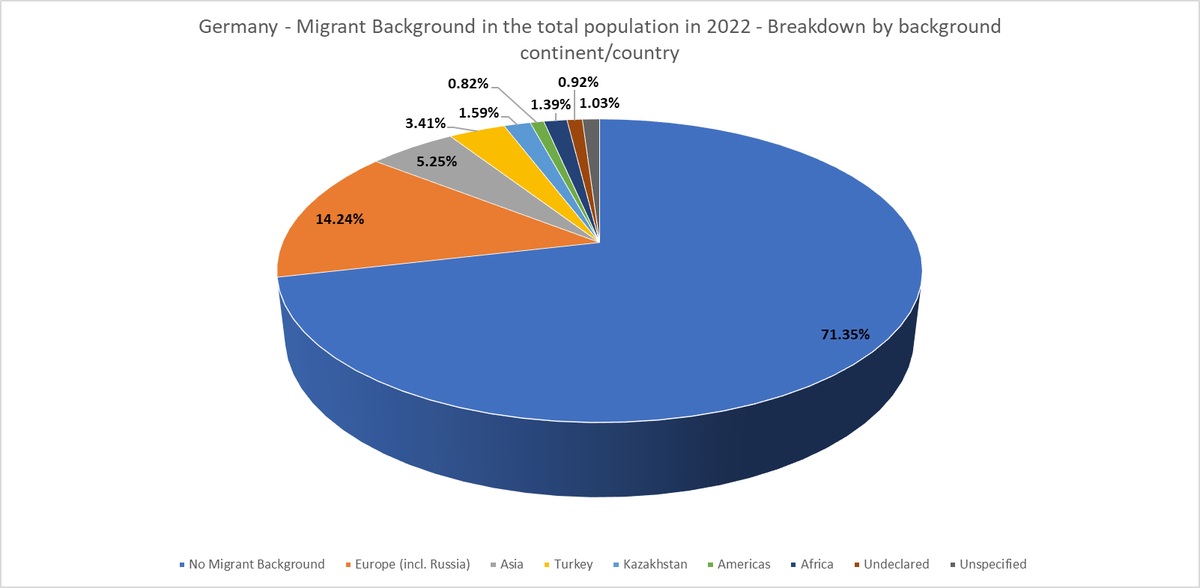
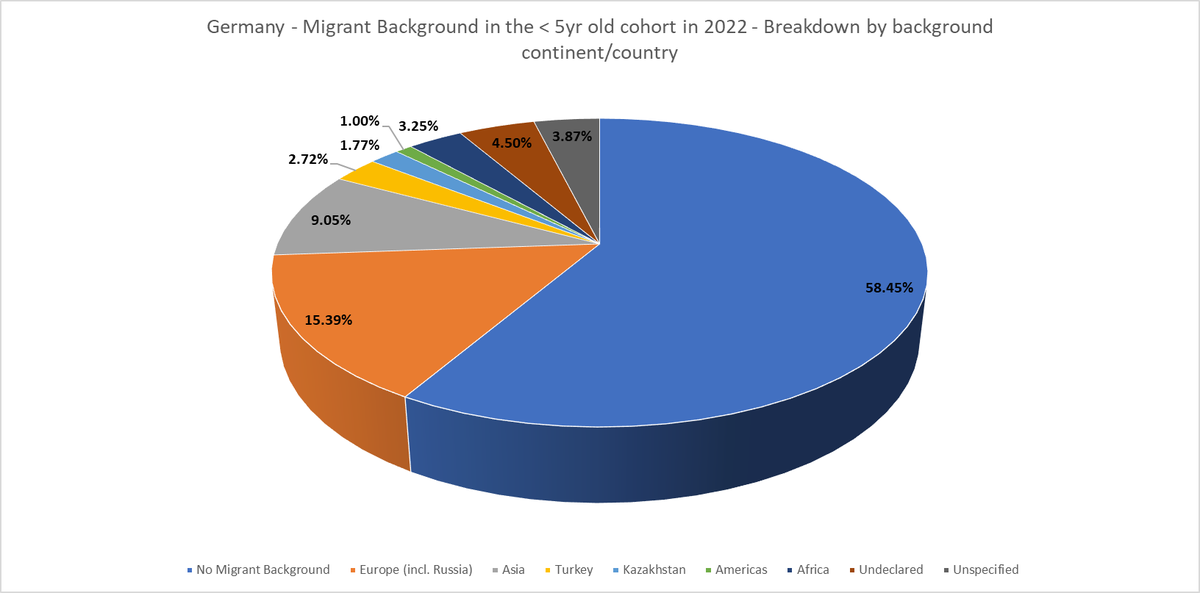
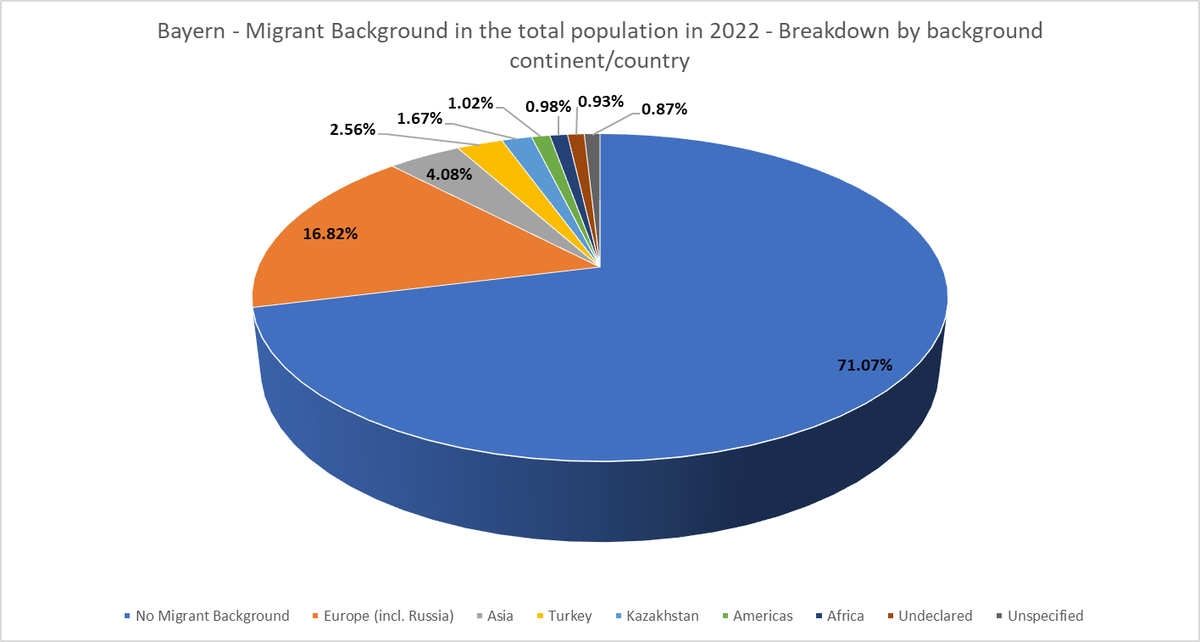
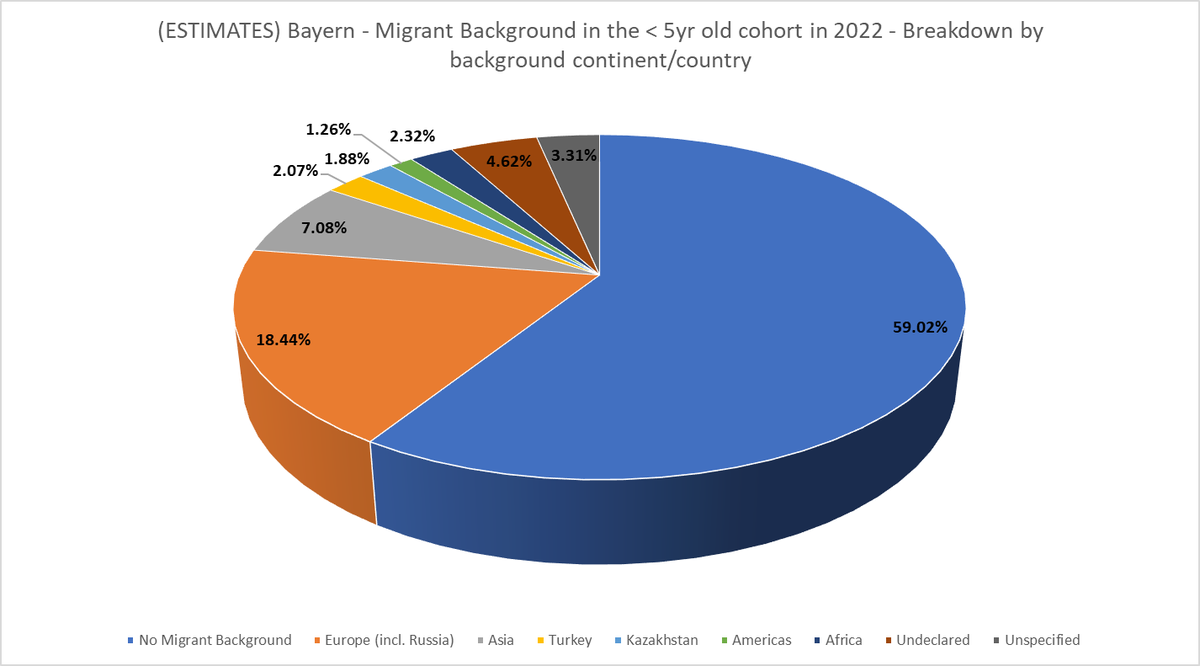
1). Updated Germany thread for 2023:
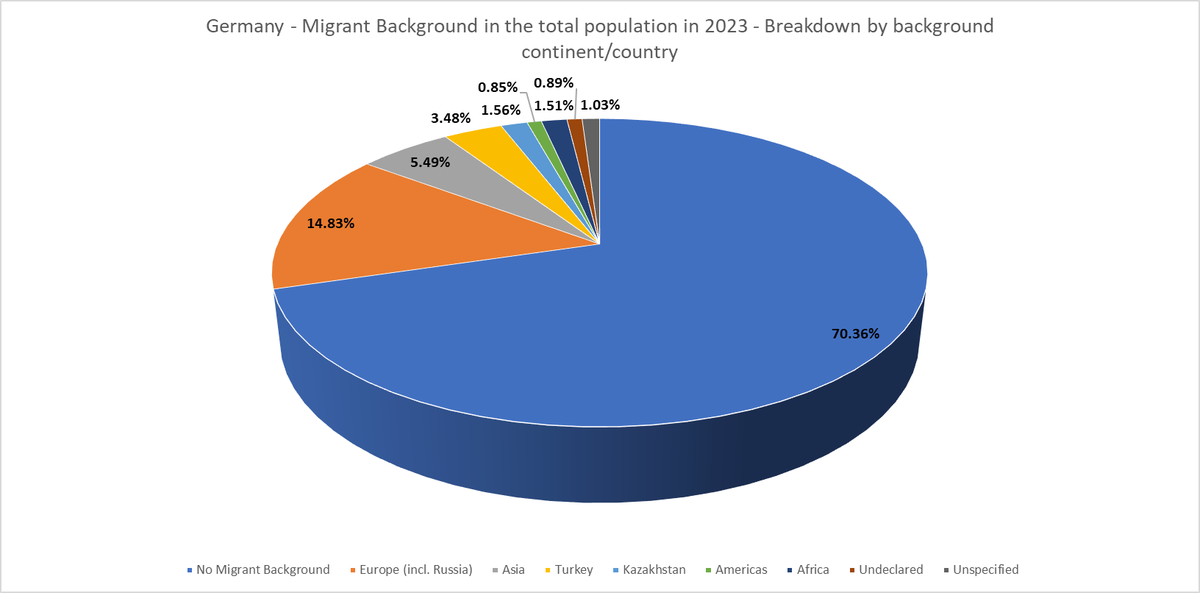
We start with data for the entire country, per 2023 Microcensus.
Germans with no migrant background will definitely fall below 70% amongst all ages in 2024 and amongst children, they'll fall below 55% by 2027, if not before.

We start with data for the entire country, per 2023 Microcensus.
Germans with no migrant background will definitely fall below 70% amongst all ages in 2024 and amongst children, they'll fall below 55% by 2027, if not before.
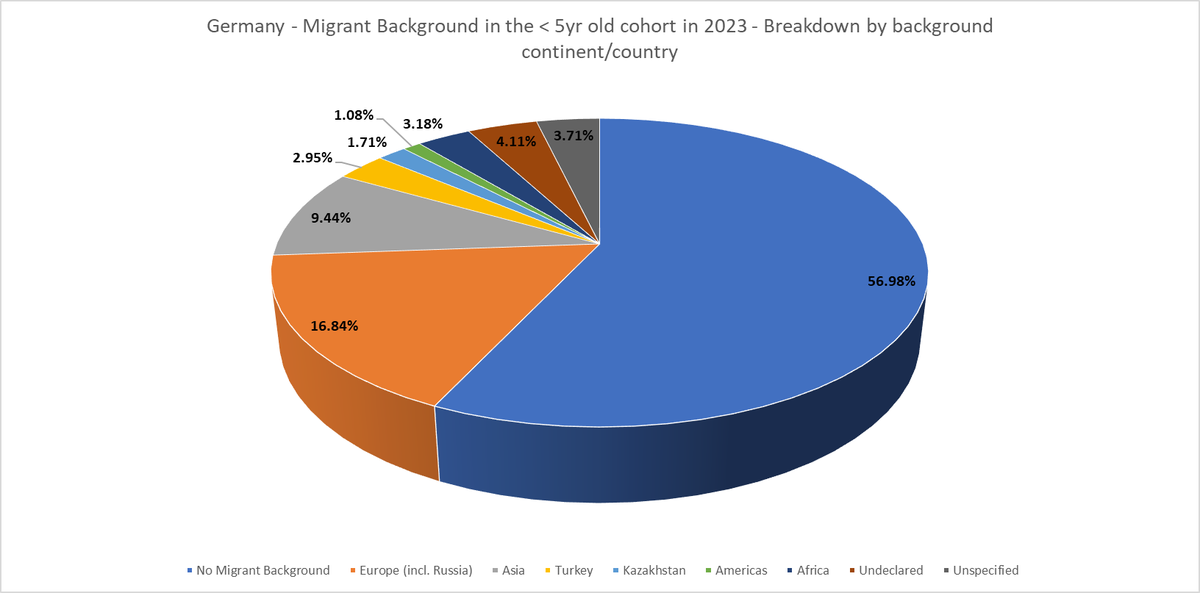
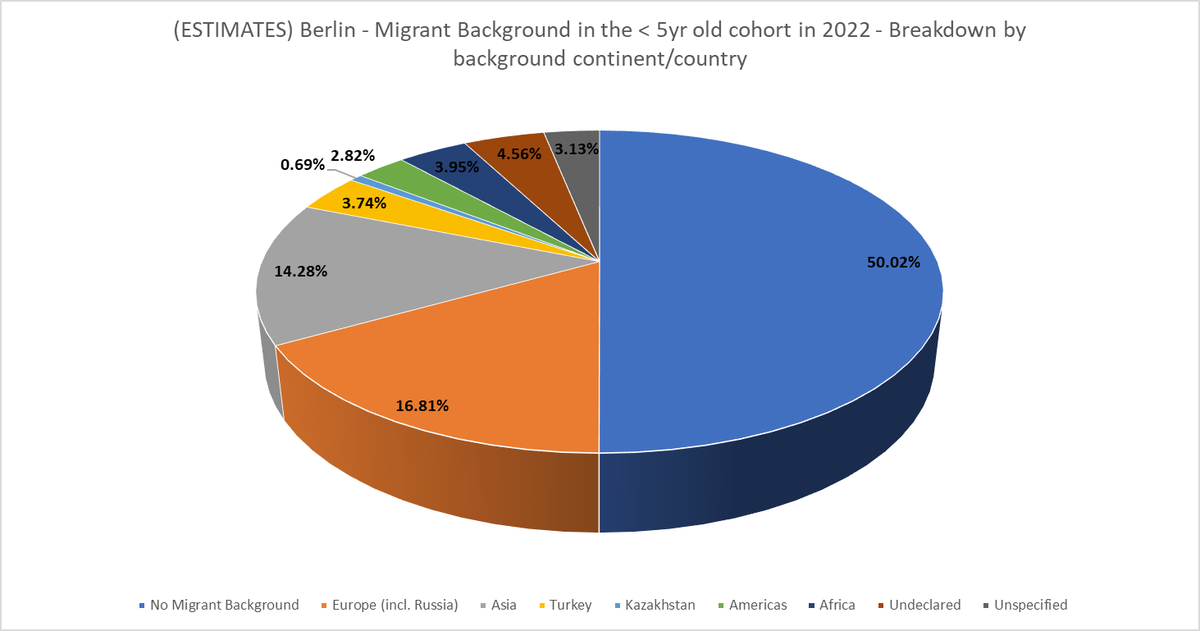
2). Comparing to 2022, the following % weighting changes have been recorded amongst under-5yr group:
No Migrant Background -1.47%
Europe (incl. Russia) +1.45%
Asia +0.39%
Türkiye +0.23%
Kazakhstan -0.06%
Americas +0.08%
Africa -0.07%
Undeclared -0.39%
Unspecified -0.16%
No Migrant Background -1.47%
Europe (incl. Russia) +1.45%
Asia +0.39%
Türkiye +0.23%
Kazakhstan -0.06%
Americas +0.08%
Africa -0.07%
Undeclared -0.39%
Unspecified -0.16%
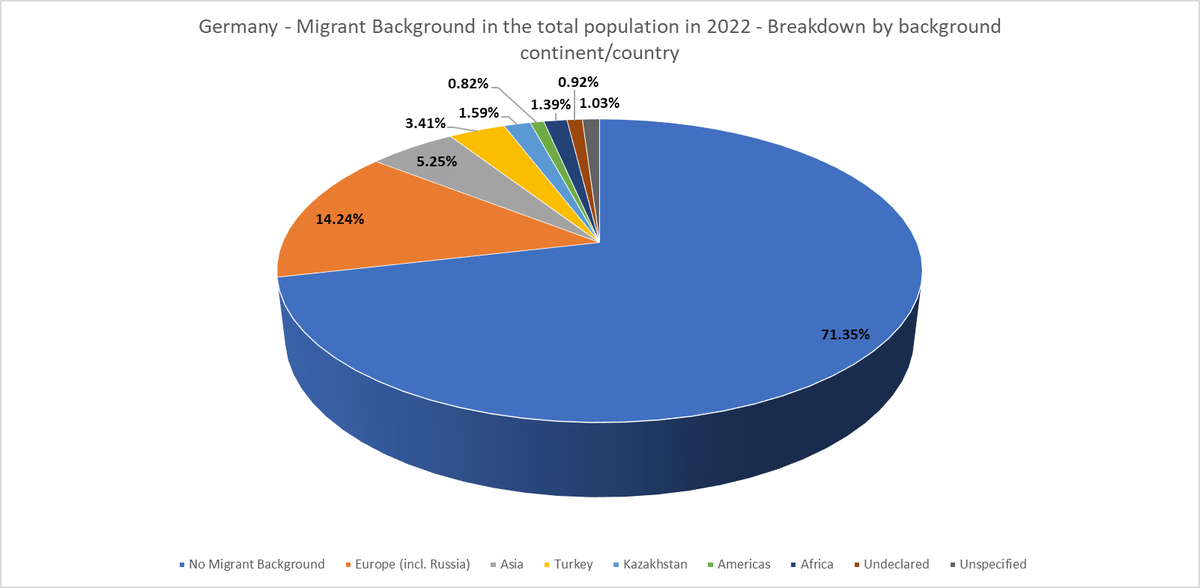
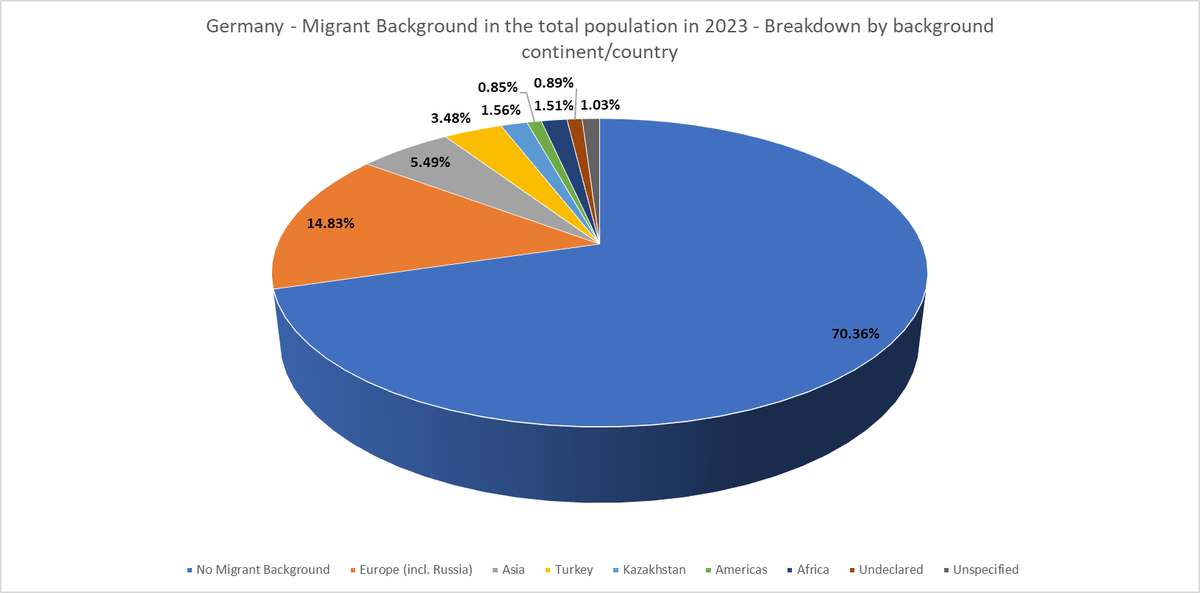
*Note the below:
1. Overwhelming majority in 'Kazakhstan' background are ethnic German/Russians & their descendants.
2. Those in 'Undeclared & Unspecified' groups contain children of mixed marriages (for example, between a Pole & Italian in Germany).
1. Overwhelming majority in 'Kazakhstan' background are ethnic German/Russians & their descendants.
2. Those in 'Undeclared & Unspecified' groups contain children of mixed marriages (for example, between a Pole & Italian in Germany).
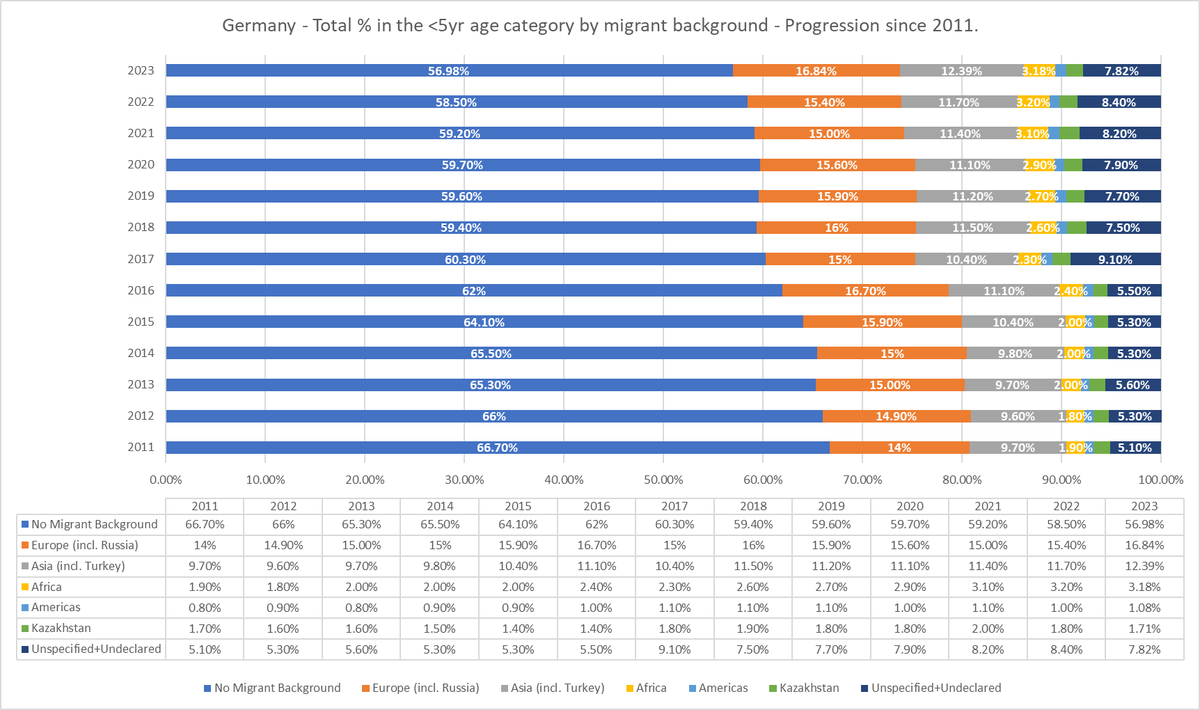
3). Those without a migration background in the <5yr old category have fallen from 66.7% in 2011 to 56.9% of the total in 2023, a significant decrease.
This decline is likely to continue for the foreseeable future.
This decline is likely to continue for the foreseeable future.
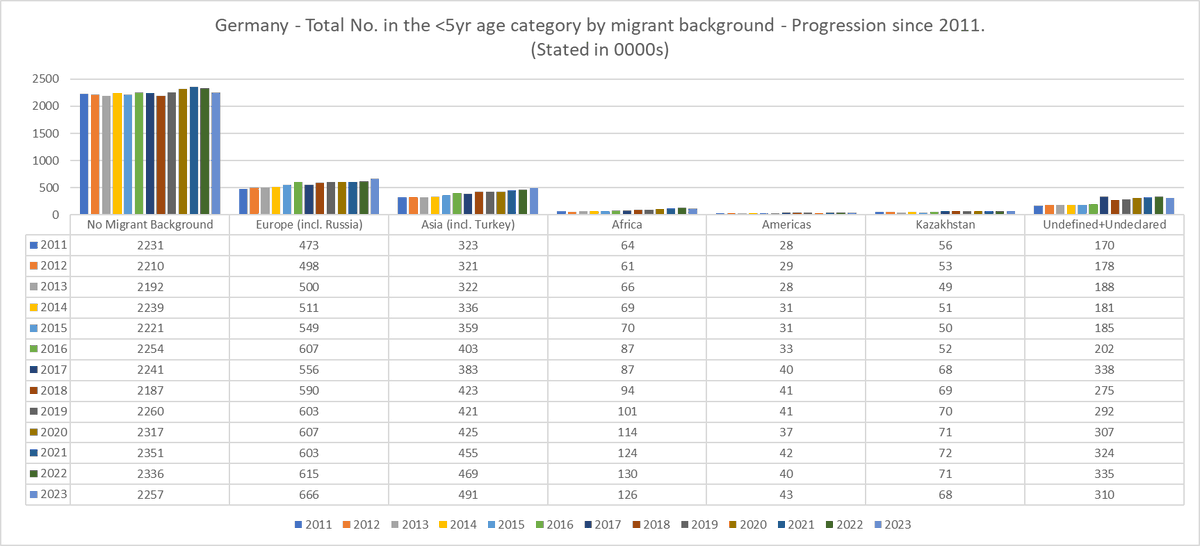
4). Those to a European background surged in 2023 (Ukrainians & W. Balkan children), whilst those to an Asian (incl. Turkey) background were helped by an increase in Indian, Turkish & Afghan children.
Syrians plateaued whilst African background declined, as did Kazakh.
Syrians plateaued whilst African background declined, as did Kazakh.
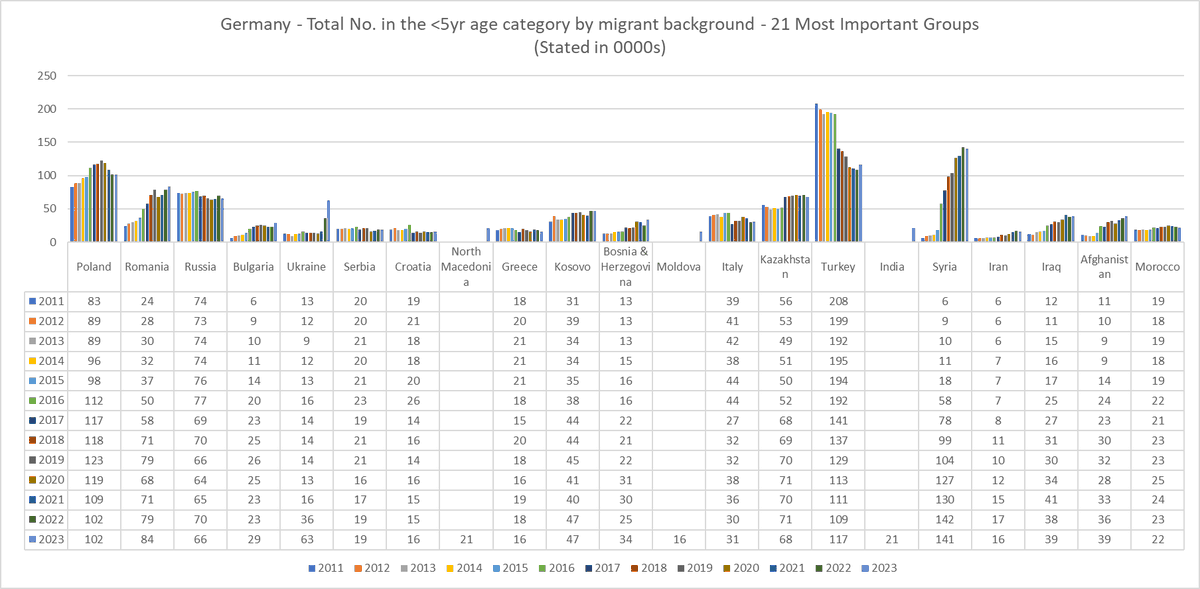
5). When it comes to the 21 most important background groups in the <5yr old category, Europeans dominate alongside Turks, Syrians, Afghans, etc:
In 2023, N. Macedonians, Moldovans & Indians joined the top 21, replacing French, Chinese & Pakistanis.
In 2023, N. Macedonians, Moldovans & Indians joined the top 21, replacing French, Chinese & Pakistanis.
• • •
Missing some Tweet in this thread? You can try to
force a refresh