Good morning from New York.
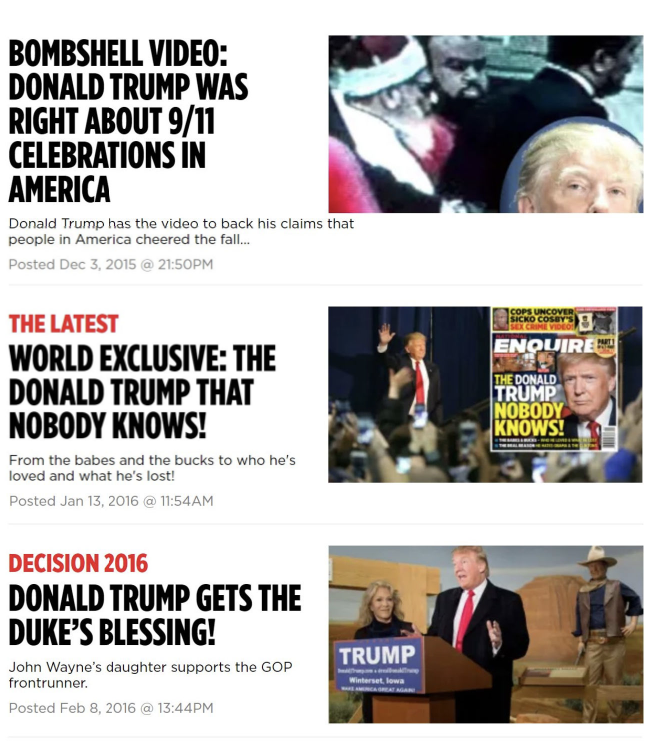
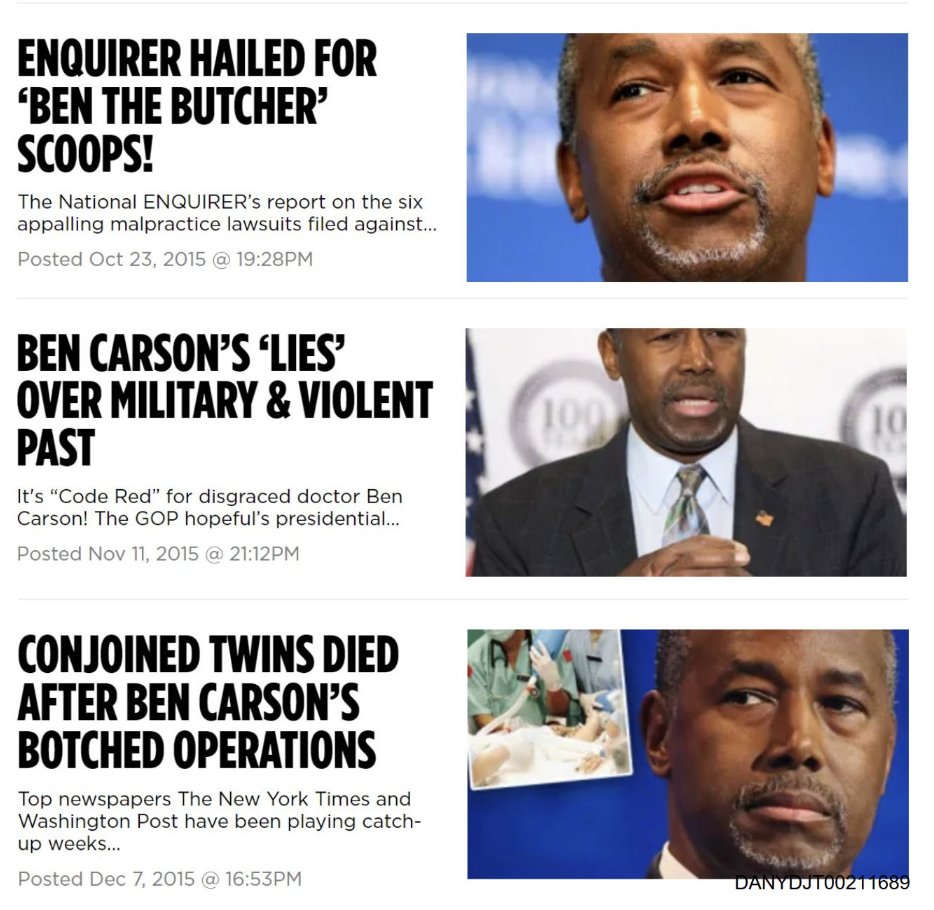
On Day 1 on the stand, David Pecker described how he turned his tabloid empire into the Trump campaign's "eyes and ears": promoting him, attacking his rivals, and silencing "women selling stories."
The ex-AMI chief's testimony resumes today. 🧵

On Day 1 on the stand, David Pecker described how he turned his tabloid empire into the Trump campaign's "eyes and ears": promoting him, attacking his rivals, and silencing "women selling stories."
The ex-AMI chief's testimony resumes today. 🧵
Context for this testimony:
In 2018, the day of Michael Cohen's sentencing, SDNY revealed AMI entered into a non-prosecution deal resolving a campaign finance probe.
AMI admitted the purpose of the Karen McDougal hush money—and agreed to beef up campaign finance compliance.
In 2018, the day of Michael Cohen's sentencing, SDNY revealed AMI entered into a non-prosecution deal resolving a campaign finance probe.
AMI admitted the purpose of the Karen McDougal hush money—and agreed to beef up campaign finance compliance.
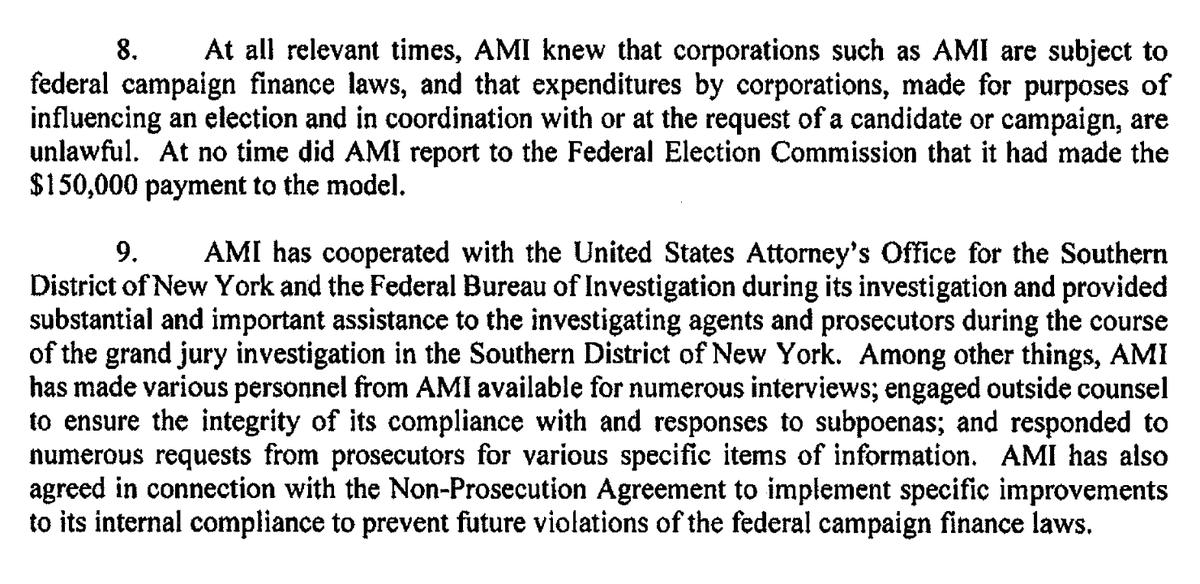
The agreement also obligated AMI's officers and representatives to truthfully cooperate with law enforcement investigations, with penalties for false, incomplete or misleading testimony.
Read the full agreement here: documentcloud.org/documents/2457…
Read the full agreement here: documentcloud.org/documents/2457…


Pecker's arrangement with Trump's campaign has been called a "fake news" mill, but his testimony suggests something much more.
AMI acted as its "eyes and ears"—a private intel firm, hush-money fund, and propaganda organ smearing rivals on supermarket checkouts across the US.
AMI acted as its "eyes and ears"—a private intel firm, hush-money fund, and propaganda organ smearing rivals on supermarket checkouts across the US.
All this, prosecutors say, without disclosure to the voting public for years, since the fateful Trump Tower meeting in August 2015.
Remember:
The 34 counts of falsifying business records relate to the reimbursements for Michael Cohen's payout to Stormy Daniels.
Prosecutors say reason Pecker didn't have a direct role in that payout was because he wasn't reimbursed on the prior two with Sajudin and McDougal.
The 34 counts of falsifying business records relate to the reimbursements for Michael Cohen's payout to Stormy Daniels.
Prosecutors say reason Pecker didn't have a direct role in that payout was because he wasn't reimbursed on the prior two with Sajudin and McDougal.
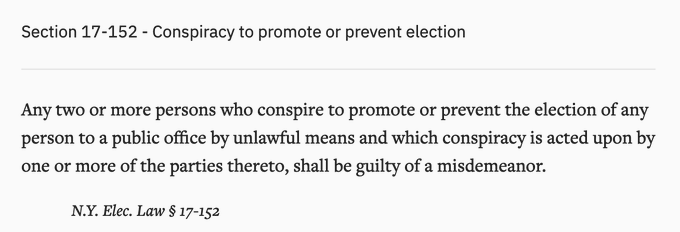
Put another way, the financial contortions behind at the Daniels payoff — and the charges at the heart of this case — result directly from the same alleged conspiracy between Trump, Cohen, and Pecker in August 2015.
That's the bank shot behind the N.Y. election law statute.
That's the bank shot behind the N.Y. election law statute.
Now
Trump enters the courtroom and is seated at the defense table.
Photojournalists go close up in front of him, as usual, to take their photos.
Trump enters the courtroom and is seated at the defense table.
Photojournalists go close up in front of him, as usual, to take their photos.
"All rise."
Justice Merchan takes the bench and invites Trump's lawyer Emil Bove to put their email exchange from Wednesday on the record.
It's an evidentiary issue.
Justice Merchan takes the bench and invites Trump's lawyer Emil Bove to put their email exchange from Wednesday on the record.
It's an evidentiary issue.
Now:
Prosecutor Chris Conroy files ANOTHER order to show cause to hold Trump in contempt for "four violations in the last three days" of the gag order.
Prosecutor Chris Conroy files ANOTHER order to show cause to hold Trump in contempt for "four violations in the last three days" of the gag order.
One alleged violation refers to Trump describing the jurors as "95% Democrats."
Correcting an earlier tweet—
Prosecutor Conroy's comment that Trump sent a message to Pecker to "Be nice" was his characterization about the subtext of Trump's remarks about Pecker to the press.
I will update Trump's verbatim remarks once I find the comment in question.
Prosecutor Conroy's comment that Trump sent a message to Pecker to "Be nice" was his characterization about the subtext of Trump's remarks about Pecker to the press.
I will update Trump's verbatim remarks once I find the comment in question.
Connecting to two threads here
https://x.com/KlasfeldReports/status/1783493110493827485
Pecker continues his testimony about Karen McDougal.
He says she didn’t want to become "the next Monica Lewinsky."
He says she didn’t want to become "the next Monica Lewinsky."
Pecker said that the tip about Karen McDougal came from her attorney Keith Davidson, whom he describes as "one of the major sources for [then-Enquirer editor in chief] Dylan Howard."
"So I thought that this story should be purchased."
"So I thought that this story should be purchased."
Pecker says that Trump told him about McDougal:
"Karen is a nice girl. Is it true that a Mexican group is trying to buy the story for $8 million?"
Pecker says he didn't believe it.
"Karen is a nice girl. Is it true that a Mexican group is trying to buy the story for $8 million?"
Pecker says he didn't believe it.
But Pecker said the "nice girl" remark confirmed his suspicion that Trump knew her.
Pecker says Michael Cohen told him: "You should go ahead and buy this story."
"I am going to have Dylan Howard negotiate the terms," Pecker said he responded, before asking: "Who's going to pay for it?"
Cohen: "Don't worry. I'm your friend. The Boss will take care of it."
"I am going to have Dylan Howard negotiate the terms," Pecker said he responded, before asking: "Who's going to pay for it?"
Cohen: "Don't worry. I'm your friend. The Boss will take care of it."
Pecker describes receiving updates on the negotiations:
"Dylan Howard gave me the following terms: To purchase the lifetime rights for Karen McDougal would cost $150,000."
But McDougal also wanted to "restart her career."
"Dylan Howard gave me the following terms: To purchase the lifetime rights for Karen McDougal would cost $150,000."
But McDougal also wanted to "restart her career."
Pecker:
McDougal also wanted to write for the celebrity magazines and appear on fitness titles.
She also wanted to launch a clothing line, a beauty product, and she wanted to be an anchor for the red carpet events.
McDougal also wanted to write for the celebrity magazines and appear on fitness titles.
She also wanted to launch a clothing line, a beauty product, and she wanted to be an anchor for the red carpet events.
But Pecker says, for him, the biggest concern was the money, and he raised the topic again to Cohen.
"He said, ‘You should pay.’"
"I said, 'Michael, why should I pay?'"
Pecker says he told Cohen he already paid for Sajudin.
"He said, ‘You should pay.’"
"I said, 'Michael, why should I pay?'"
Pecker says he told Cohen he already paid for Sajudin.
Pecker says he told Cohen:
"Now, you’re asking me to pay $150K for the Karen story and all of these additional items that she wants to do."
"Now, you’re asking me to pay $150K for the Karen story and all of these additional items that she wants to do."
Pecker says Cohen replied: “Don’t worry about it. I'm your friend. The Boss will take care of it.”
Pecker describes an older catch-and-kill arrangement, involving Arnold Schwartznegger's run for governor of California.
AMI got his cooperation on fitness mags in return for soft-focus coverage, and Pecker described not publish a story they acquired—and the LA Times later ran.
AMI got his cooperation on fitness mags in return for soft-focus coverage, and Pecker described not publish a story they acquired—and the LA Times later ran.
After the prosecutor asked whether the embarrassing episode led Pecker to appreciate the "legalities" of supporting a political candidate, Pecker responded "yes."
Defense: Objection
Judge: Sustained.
Defense: Objection
Judge: Sustained.
Exhibit: The deal with Karen McDougal.
The contract purchased the "Limited Life Story Rights" for "any romantic, personal and/or physical relationship McDougal has ever had with any then-married man."
The contract purchased the "Limited Life Story Rights" for "any romantic, personal and/or physical relationship McDougal has ever had with any then-married man."
The contract obligated AMI to pay $150,000 within two days of the execution of the agreement.
AMI had "sole discretion" about its "creative or business" decisions.
"Q: So, by purchasing her life rights, you had no obligation to actually print them?
A: No."
AMI had "sole discretion" about its "creative or business" decisions.
"Q: So, by purchasing her life rights, you had no obligation to actually print them?
A: No."
Pecker agrees he had no intention of printing her story, either.
Question from Conroy:
Q: Do you know whether anyone other than Michael Cohen had knowledge of this contract?
A: Yes, I believe Donald Trump did.
Q: Do you know whether anyone other than Michael Cohen had knowledge of this contract?
A: Yes, I believe Donald Trump did.
Exhibit: Invoice for the McDougal payoff.
Dated Aug. 9, 2016, it lists AMI as the subsidiary and Keith M. Davison & Associates, PLC as the vendor of a $150,000 transfer.
Dated Aug. 9, 2016, it lists AMI as the subsidiary and Keith M. Davison & Associates, PLC as the vendor of a $150,000 transfer.
Exhibit: The payment voucher for the $150,000.
It's dated Aug. 9, 2016—and sent to the firm of McDougal's lawyer Keith Davidson.
It's dated Aug. 9, 2016—and sent to the firm of McDougal's lawyer Keith Davidson.
Asked if he ever had any intention to print Karen McDougal's story, Pecker responds: "No, we never did."
He agrees that he was aware that he had an obligation to comply with campaign-finance laws.
As the prosecutor pursues this line of questioning, the defense objects.
He agrees that he was aware that he had an obligation to comply with campaign-finance laws.
As the prosecutor pursues this line of questioning, the defense objects.
The parties approach the bench for a sidebar conference debating this legal issue, out of earshot from the jury.
Justice Merchan: "The objection is overruled."
Asked if he or AMI ever reported the McDougal payoff as a campaign contribution, Pecker says: "No, we did not."
"We purchased the story so that it wouldn't be published by any other organization.
"We purchased the story so that it wouldn't be published by any other organization.
Pecker:
"We didn't want the story to embarrass Mr. Trump or embarrass or hurt the campaign."
"We didn't want the story to embarrass Mr. Trump or embarrass or hurt the campaign."
Asked if he would have entered into the agreement had Michael Cohen not promised to reimburse him, Pecker responds: "No."
Pecker explains how Cohen's reassurances allayed his concerns about the arrangement, quoting him as saying:
"Why worry? I'm your friend. The Boss will take care of it."
"Why worry? I'm your friend. The Boss will take care of it."
Pecker said Cohen called him "constantly in the month of September" to send the files and boxes over to him.
"The Boss said that if I got hit by a bus, or if the company was sold, he didn't want someone else to potentially publish those stories."
"The Boss said that if I got hit by a bus, or if the company was sold, he didn't want someone else to potentially publish those stories."
David Pecker lays the foundation to enter an invoice into the record, in a series of questions and answers.
It is admitted into evidence.
It is admitted into evidence.
It relates to Resolution Consultants LLC, a shell company created by Michael Cohen to reimburse AMI for Karen McDougal's story.
The description of services in the invoice refers to that as: "Agreed upon 'flat fee' for advisory services."
The description of services in the invoice refers to that as: "Agreed upon 'flat fee' for advisory services."
Next exhibit: The assignment agreement
AMI assigned the rights to McDougal's story to Resolution Consultants LLC on Sept. 30, 2016, for $125,000.
The agreement was signed, but it was not actually executed, Pecker says.
AMI assigned the rights to McDougal's story to Resolution Consultants LLC on Sept. 30, 2016, for $125,000.
The agreement was signed, but it was not actually executed, Pecker says.
Pecker says that he had a conversation with counsel, and decided that he did not want to follow through with the agreement—and told Cohen that.
"I'm not going forward. It's a bad idea, and I want you to rip up the agreement," Pecker told Cohen, according to his testimony.
"I'm not going forward. It's a bad idea, and I want you to rip up the agreement," Pecker told Cohen, according to his testimony.
Pecker says of Cohen's reaction:
"He was very very angry, very upset, screaming at me basically." [...]
"Cohen said, 'The Boss is going to be very angry at you.'"
But Pecker said he stuck to his guns: "I said I'm not going forward. The deal is off."
"He was very very angry, very upset, screaming at me basically." [...]
"Cohen said, 'The Boss is going to be very angry at you.'"
But Pecker said he stuck to his guns: "I said I'm not going forward. The deal is off."
On that dramatic note, it's time for the morning recess.
Before the jury comes in, the judge excludes blockbuster text messages following evidentiary arguments.
Prosecutors say Dylan Howard texted a relative: "At least if he wins I’ll be pardoned for electoral fraud."
But that raised Confrontation Clause issues, the judge finds.
Prosecutors say Dylan Howard texted a relative: "At least if he wins I’ll be pardoned for electoral fraud."
But that raised Confrontation Clause issues, the judge finds.
Prosecutors also said they wanted texts messages in of Dylan Howard quoted saying:
"Trump victory imminent."
"He’s just been named president-elect. Oh dear."
All excluded by the judge.
"Trump victory imminent."
"He’s just been named president-elect. Oh dear."
All excluded by the judge.
After the judge declines for now to let the messages in, David Pecker takes the stand again.
"All rise."
The jury enters and takes their seats.
Assistant DA Joshua Steinglass resumes his direct examination.
The jury enters and takes their seats.
Assistant DA Joshua Steinglass resumes his direct examination.
Questioning turns to AMI releasing Dino Sajudin from his non-disclosure agreement.
Asked if he remembers the "Access Hollywood" tape coming out, Pecker says:
"I do. It was very embarrassing, very damaging for the campaign."
"I do. It was very embarrassing, very damaging for the campaign."
Pecker recounts Cohen saying that the "feedback on the 'Access Hollywood' tape was very, very damaging to the campaign."
Email exhibit:
After the "Access Hollywood" tape, Pecker said he spoke with Cohen and learned about the campaign's concerns about an old Radar Online article titled "Donald Trump, Playboy Man."
Radar is an AMI property.
After the "Access Hollywood" tape, Pecker said he spoke with Cohen and learned about the campaign's concerns about an old Radar Online article titled "Donald Trump, Playboy Man."
Radar is an AMI property.
In an email, the publication's then-chief content officer Dylan Howard wrote of that article: "I've deleted the story completely. It doesn't exist."
Questioning turns to Stormy Daniels.
Pecker said he thought the arrangement with a "porn star" would be damaging to the AMI brand, and he said that he told Dylan Howard of the proposed hush-money payment:
"I am not a bank, and we are not paying out any more disbursements of monies."
"I am not a bank, and we are not paying out any more disbursements of monies."
Pecker says Michael Cohen was "upset" about AMI demurring from paying off Stormy Daniels:
"He said that The Boss would be furious," Pecker says, adding that Cohen urged him to go forward in buying Daniels' story.
Pecker said he emphasized he would not, "Period."
"He said that The Boss would be furious," Pecker says, adding that Cohen urged him to go forward in buying Daniels' story.
Pecker said he emphasized he would not, "Period."
Pecker says he told Cohen:
"I am not paying for this story. I didn't want to be involved with this from the beginning."
But Pecker says he advised Cohen to purchase the story because "if it gets out, I believe The Boss is going to be very angry with you."
"I am not paying for this story. I didn't want to be involved with this from the beginning."
But Pecker says he advised Cohen to purchase the story because "if it gets out, I believe The Boss is going to be very angry with you."
Questioning turns to the @WSJ scoop on Karen McDougal:
"National Enquirer Shielded Donald Trump from Playboy Model’s Affair Allegation," which came out before the election.
Pecker said it sparked a tense phone call with Trump on Nov. 5, 2016, three days before election day
"National Enquirer Shielded Donald Trump from Playboy Model’s Affair Allegation," which came out before the election.
Pecker said it sparked a tense phone call with Trump on Nov. 5, 2016, three days before election day
The call ended "very abruptly," Pecker says.
Pecker, later in his testimony:
"I wanted to protect AMI. I wanted to protect myself, and I also wanted to protect Donald Trump."
"I wanted to protect AMI. I wanted to protect myself, and I also wanted to protect Donald Trump."
After the WSJ article, Pecker says AMI amended the hush-money agreement because Karen McDougal was getting "bombarded" with press inquiries.
She wanted to speak without penalty.
Cohen said "it was a very bad idea" and "The Boss would be very angry."
She wanted to speak without penalty.
Cohen said "it was a very bad idea" and "The Boss would be very angry."
Cohen recommended that Pecker not release McDougal.
Q: Did you take that advice?
A: No, I did not.
Q: Did you take that advice?
A: No, I did not.
"Q: Why did you want to allow Ms. McDougal to speak to the press at this point?
A: I thought that the Wall Street Journal article already set the stage and the tone of what this story is, and I wanted to keep some sense of control around this story."
A: I thought that the Wall Street Journal article already set the stage and the tone of what this story is, and I wanted to keep some sense of control around this story."
Pecker says he also wanted a PR rep for McDougal who reported to AMI.
Next exhibit:
The amended agreement between AMI and McDougal, signed by her on Nov. 29, 2016, and by a company representative on Dec. 7, 2016.
The amended agreement between AMI and McDougal, signed by her on Nov. 29, 2016, and by a company representative on Dec. 7, 2016.
Pecker describes Michael Cohen complaining about not being reimbursed yet:
"Michael Cohen paid Stormy Daniels out of his own funds, which was the first time I heard of that. I wasn't involved in the transaction."
"Michael Cohen paid Stormy Daniels out of his own funds, which was the first time I heard of that. I wasn't involved in the transaction."
Pecker describes a conversation in Trump's office:
"I said Michael Cohen is very concerned about his bonus for this year, and I wanted you to do that he's very loyal."
He said Cohen was working very hard.
"I believe that he would throw himself in front of a bus for you."
"I said Michael Cohen is very concerned about his bonus for this year, and I wanted you to do that he's very loyal."
He said Cohen was working very hard.
"I believe that he would throw himself in front of a bus for you."
Pecker said that Trump responded that Cohen had multiple apartments in his buildings and valuable taxi medallions.
"Don't worry about it. I'll take care of it," Trump added, according to Pecker.
(Note: Those medallions would later figure in Cohen's prosecution.)
"Don't worry about it. I'll take care of it," Trump added, according to Pecker.
(Note: Those medallions would later figure in Cohen's prosecution.)
Pecker says Trump told him: "I wanted to thank you for taking care of the McDougal situation," then said something similar about him "taking care of the doorman situation."
Asked by the prosecutor whether Trump's concern about the stories getting out was primarily about his family or the campaign, Pecker responds:
"I thought it was for the campaign."
"I thought it was for the campaign."
Q: After Mr. Trump announced his candidacy for the presidency, did he ever express concern for how [...] Melania Trump would think of his affairs?
A: No.
A: No.
Q: You said he invited you to the inauguration?
A: Yes.
Q: Did you go?
A: No.
Lunch recess.
A: Yes.
Q: Did you go?
A: No.
Lunch recess.
The jury and the witness are excused from the courtroom.
Back at 2:15 p.m. ET.
Back at 2:15 p.m. ET.
Trump is back in the courtroom, appearing to sharply exhale when he reached the defense table before sitting down.
The parties argue an evidentiary issue about Dylan Howard's text messages with Stormy Daniels' agent Gina Rodriguez.
ADA Steinglass: "Mr. Howard is a co-conspirator, and these are statements in furtherance of the conspiracy."
ADA Steinglass: "Mr. Howard is a co-conspirator, and these are statements in furtherance of the conspiracy."
Steinglass adds that the messages go to a "core part of the conspiracy."
They are 15 pages of texts, the judge said.
They are 15 pages of texts, the judge said.
"All rise."
The jury is entering.
The jury is entering.
Pecker's testimony continues:
Q: Did there come a time when you visited the White House?
A: Yes, I did.
Q: Did there come a time when you visited the White House?
A: Yes, I did.
Pecker:
Trump invited me to the White House for dinner, describing it as a "'thank you' dinner"
Trump invited me to the White House for dinner, describing it as a "'thank you' dinner"
Pecker says Trump told him:
"Bring your friends [and] business associates. It's your dinner."
"Bring your friends [and] business associates. It's your dinner."
Pecker took Trump up on the invitation, bringing along Howard and Rothstein.
"Jared Kushner was there. Sean Spicer was there."
All of the people he brought were able to take a photo with Trump in the Oval Office, he says.
"Jared Kushner was there. Sean Spicer was there."
All of the people he brought were able to take a photo with Trump in the Oval Office, he says.
Photo exhibits:
* Dylan Howard in the White House
* David Pecker and Trump walking into the White House, where he said they were having a conversation about Karen McDougal
* Dylan Howard in the White House
* David Pecker and Trump walking into the White House, where he said they were having a conversation about Karen McDougal
Email from Dylan Howard to Keith Davidson dated July 12, 20217:
"Surreal last night," the three-word body of the email reads, referring to the dinner.
"Surreal last night," the three-word body of the email reads, referring to the dinner.
Pecker says that Karen McDougal seemed "a little upset" during a lunch.
The articles were taking a while.
She hadn't received media training as a red carpet anchor.
"So, she was stating what she'd like to get done."
The articles were taking a while.
She hadn't received media training as a red carpet anchor.
"So, she was stating what she'd like to get done."
Pecker said the purpose of the meeting was to make sure they were complying to the agreement.
"I wanted her to remain within our (pause) family, I should say."
"I wanted her to remain within our (pause) family, I should say."
That was a pregnant pause before the "family."
According to Pecker, Trump got angry after seeing Anderson Cooper interviewing McDougal. Trump said that he thought there was an agreement forbidding her from speaking to the press.
Pecker replied: "Yes, we have an agreement but I amended it to allow her to speak to the press."
Pecker replied: "Yes, we have an agreement but I amended it to allow her to speak to the press."
Pecker says Trump got “mad” and couldn’t understand why Pecker amended the agreement.
At some point, the FEC contacted Pecker about his activities with AMI.
Pecker said that Michael Cohen tried to reassure him: "Jeff Sessions is the attorney general and Donald Trump has him in his pocket."
But Pecker wasn't reassured: "I'm very worried."
Pecker said that Michael Cohen tried to reassure him: "Jeff Sessions is the attorney general and Donald Trump has him in his pocket."
But Pecker wasn't reassured: "I'm very worried."
Questioning turns to AMI's non-prosecution deal with federal prosecutors.
The prosecutor shows him the agreement.
The prosecutor shows him the agreement.
Justice Merchan recites a curative instruction that jurors cannot use the non-prosecution agreement for any purpose, other than to assess David Pecker's credibility.
They cannot use it as evidence of Trump's guilt.
They cannot use it as evidence of Trump's guilt.
* 2017
Pecker has been reciting his various agreements with law enforcement.
After reading various portions of the NPA — linked higher in the thread — Pecker recites his agreements with the Manhattan District Attorney's office.
After reading various portions of the NPA — linked higher in the thread — Pecker recites his agreements with the Manhattan District Attorney's office.
That agreement immunizes Pecker if he fulfills the agreement to cooperate truthfully.
Here's how Pecker says he learned about the FBI raid on Michael Cohen:
"The FBI came to my home on the same day and had a search warrant on my phone."
Dylan Howard then called him to say the same happened to him, and Howard told him about Cohen, according to Pecker.
"The FBI came to my home on the same day and had a search warrant on my phone."
Dylan Howard then called him to say the same happened to him, and Howard told him about Cohen, according to Pecker.
Asked if he has any ill-will toward Trump, Pecker emphatically answers in the negative.
"On the contrary, [...] I felt that Donald Trump was my mentor. He helped me out throughout my career."
"On the contrary, [...] I felt that Donald Trump was my mentor. He helped me out throughout my career."
After Pecker gives a post-9/11 closing anecdote about his friendship with Trump, the prosecution's direct examination ends.
Team Trump will have the opportunity to cross examine the witness next.
Team Trump will have the opportunity to cross examine the witness next.
Questioning for Trump is Emil Bove.
Observation:
Trump's lead attorney Todd Blanche has been quiet in court all day, since the judge dressed him down during Tuesday's proceedings.
Bove, his fellow Southern District of New York alum, has taken the lead most of the day.
Trump's lead attorney Todd Blanche has been quiet in court all day, since the judge dressed him down during Tuesday's proceedings.
Bove, his fellow Southern District of New York alum, has taken the lead most of the day.
Bove questions Pecker about "checkbook journalism."
"You only published about half of the stories that you purchased?" he asks.
Pecker agrees.
"You only published about half of the stories that you purchased?" he asks.
Pecker agrees.
Pecker also agrees that it's standard for those agreements to obligate sources not to disclose their stories to other outlets.
Bove calls these kind of source agreements "standard operating procedure," and Pecker agrees.
Pecker agrees that he had not heard phrase "catch-and-kill" before the investigation.
Q: The first time you heard that phrase is from a prosecutor, right?
A: That is correct.
Q: The first time you heard that phrase is from a prosecutor, right?
A: That is correct.
Asking about politicians trying to get favorable coverage to win an election, Bove says there's "nothing surprising about that, yes?"
Pecker agrees.
Pecker agrees.
Bove turns to AMI's purchase of a story about Tiger Woods, about a woman meeting him in a parking lot in Florida.
"All of the investigative work was done internally," Pecker says.
Pecker agrees that AMI used the information to leverage it against Woods for access.
"All of the investigative work was done internally," Pecker says.
Pecker agrees that AMI used the information to leverage it against Woods for access.
Pecker concedes he's also suppressed stories about Mark Wahlberg and Rahm Emanuel.
Bove pointedly asks whether he's gotten FEC scrutiny about Emanuel.
Pecker agrees he hasn't.
Bove pointedly asks whether he's gotten FEC scrutiny about Emanuel.
Pecker agrees he hasn't.
Bove latches onto a discrepancy in Pecker's grand jury testimony, on whether the Trump Tower meeting was early- or mid-August.
First, Bove asks the question accusingly with flashes of his prosecutorial experience.
Then, he adopts an empathetic tone about the nature of memory.
First, Bove asks the question accusingly with flashes of his prosecutorial experience.
Then, he adopts an empathetic tone about the nature of memory.
Bove's stick-and-carrot approach—over a minor detail of what part of a month a meeting took place—cues Pecker to concede it's difficult to precisely remember events from nearly a decade ago.
Pecker holds firm on the crux of his testimony:
"What I said under oath is the truth. That's all I plan on doing today."
Pushing back at Bove's suggestion, Pecker says, softly but decisively: "It's not a script."
"What I said under oath is the truth. That's all I plan on doing today."
Pushing back at Bove's suggestion, Pecker says, softly but decisively: "It's not a script."
Pecker agrees that Cohen acted as an intermediary for potentially negative stories.
Bove notes that Cohen worked for Trump for at least eight years before the Trump Tower meeting.
Bove notes that Cohen worked for Trump for at least eight years before the Trump Tower meeting.
Prosecutor objects, and the parties approach the bench for a sidebar, after Trump's counsel mentions David Pecker's testimony before the federal grand jury.
So ends trial proceedings for the day.
The judge is excusing the jury with their daily instructions.
The judge is excusing the jury with their daily instructions.
Post-trial proceedings:
Prosecution accuses Trump's counsel of improper impeachment, leading to an exchange where Emil Bove tests the judge's patience.
Merchan: "Mr. Bove, are you missing my point? Because I don't think you're responding to what I'm saying."
Prosecution accuses Trump's counsel of improper impeachment, leading to an exchange where Emil Bove tests the judge's patience.
Merchan: "Mr. Bove, are you missing my point? Because I don't think you're responding to what I'm saying."
News—
As proceedings end, Justice Merchan announces he's signed the order to show cause on Trump's four latest alleged gag order violations.
He's scheduled a hearing on Wednesday at 2:15 p.m. ET
As proceedings end, Justice Merchan announces he's signed the order to show cause on Trump's four latest alleged gag order violations.
He's scheduled a hearing on Wednesday at 2:15 p.m. ET
• • •
Missing some Tweet in this thread? You can try to
force a refresh