Not quite random observations about #TheRingsOfPower
Although contact between the elves and the isle of Númenor has broken down 350 years ago, there are still a lot of remnants of that once amicable relationship visible in the city. Let’s look at a few of them.
A thread 🧵(40)
Although contact between the elves and the isle of Númenor has broken down 350 years ago, there are still a lot of remnants of that once amicable relationship visible in the city. Let’s look at a few of them.
A thread 🧵(40)
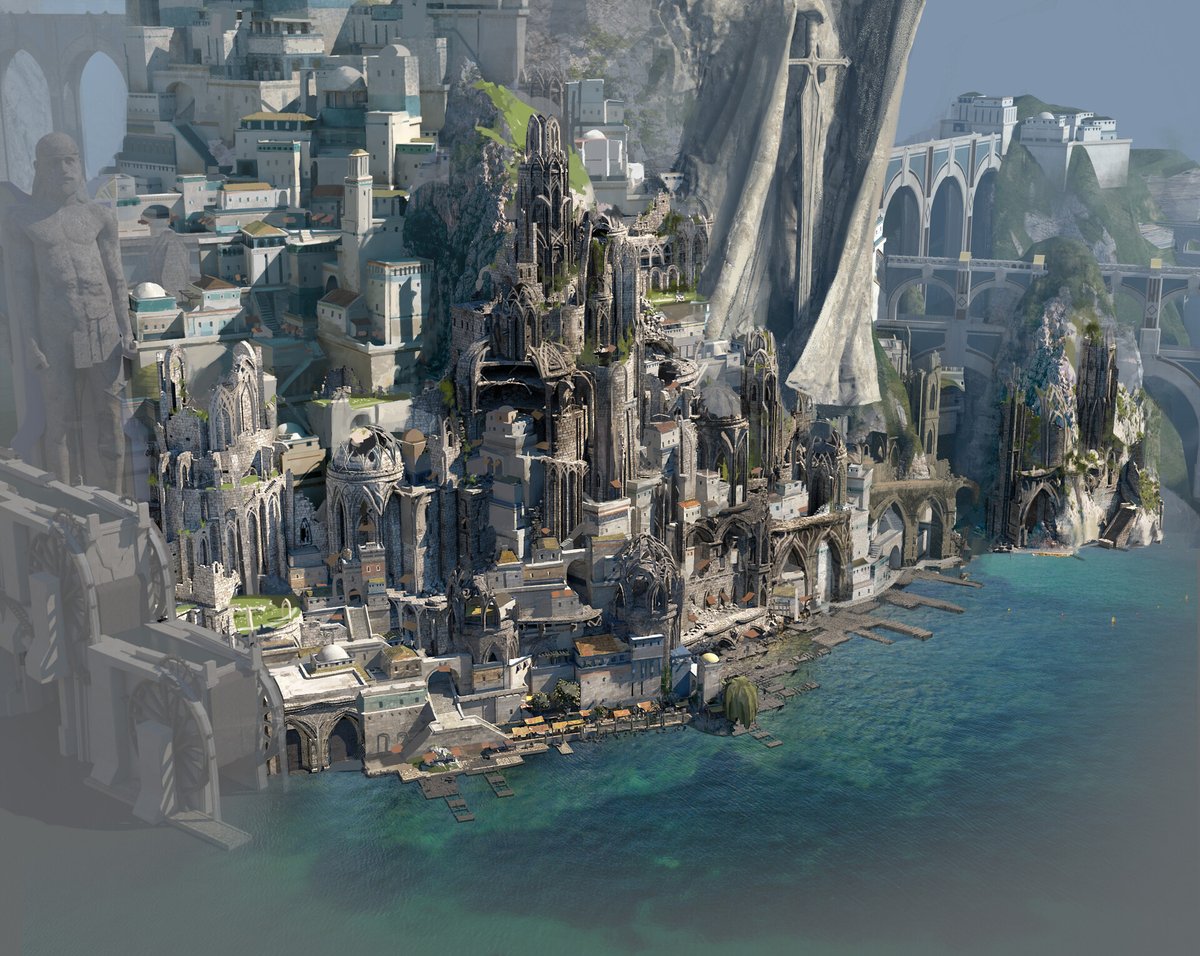
In their Podcast, J.D. Payne calls their design of Númenor a ʻlayer-cake’.
ʻYou can tell the history of this civilisation in the architecture itself […] You see this sort of conflict between elf and human written in stone.’
ʻYou can tell the history of this civilisation in the architecture itself […] You see this sort of conflict between elf and human written in stone.’
In Episode 3, Miriel states the timeline for the escalation of the conflict: ʻElves have been unwelcome on our shore since the reign of my grandfather’s great grandfather’.
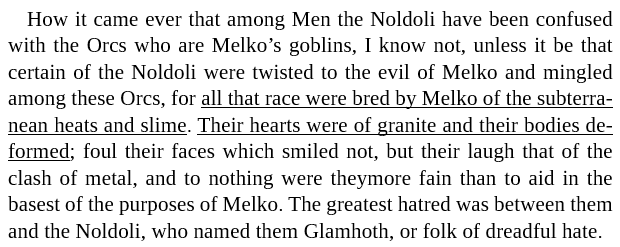
Miriel’s grandfather is Ar-Gimilzôr, the ʻgreatest enemy of the Faithful’, who forbade utterly the use of the Elven-tongues.
His great grandfather is Ar-Adûnakhôr, ʻLord of the West’, who started to restrict the use of the Elven-tounges (from: ʻAkallabêth’)
His great grandfather is Ar-Adûnakhôr, ʻLord of the West’, who started to restrict the use of the Elven-tounges (from: ʻAkallabêth’)
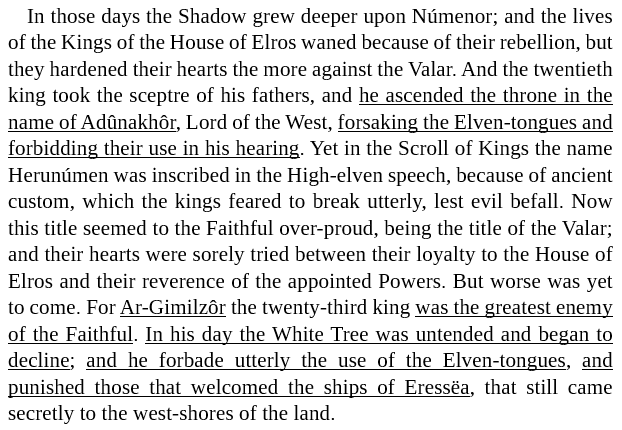
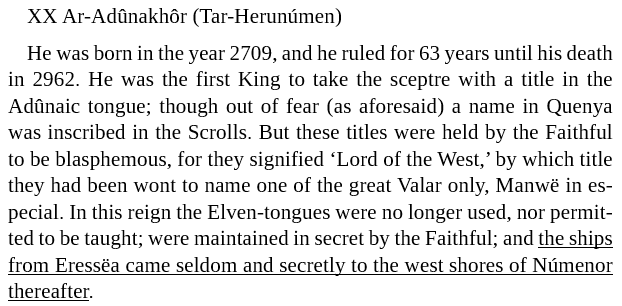
But it was also during his reign, that the elven ships from Eressëa started to come only secretly to the west shores of Númenor. (from: ʻThe Unfinished Tales’, ʻThe Line of Elros: The Kings of Númenor’)
The first massive reminder of the connection between the Men of Númenor and the Elves is the towering statue of Eärendil, a half-elf, and his wife Elwing, an elf, both parents to the first King of Númenor, Elros.
We see it for the first time at the start of Episode 3.
We see it for the first time at the start of Episode 3.


Elwing is pictured as a bird because it was in this form that she found her husband Eärendil on his voyage to reach Valinor. (from: ʻOf the Voyage of Eärendil and the War of Wrath’)

When Elendil, Galadriel and Halbrand leave their boat, we can also see massive colums that end in the pointed arch that we already know from Valinor, Lindon and Eregion.
They are darker than the architecture around them, showing age but also neglect.
They are darker than the architecture around them, showing age but also neglect.


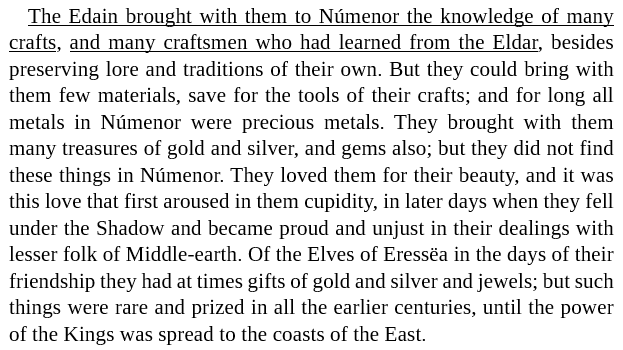
In his ʻDescription of the Island of Númenor’, Tolkien mentions that the craftsmen of Númenor had learned from the Elves of Beleriand.
Beside Beleriand, there were two other sources of elven influence: Lindon and the island of Eressëa, next to but still separte from Valinor.
Beside Beleriand, there were two other sources of elven influence: Lindon and the island of Eressëa, next to but still separte from Valinor.
When Elendil waylays Galadriel later in Episode 3, he shows her a bust in an alcove, decorated with fresh flowers, as a sign that there are still people in Númenor that are friendly to the Elves.
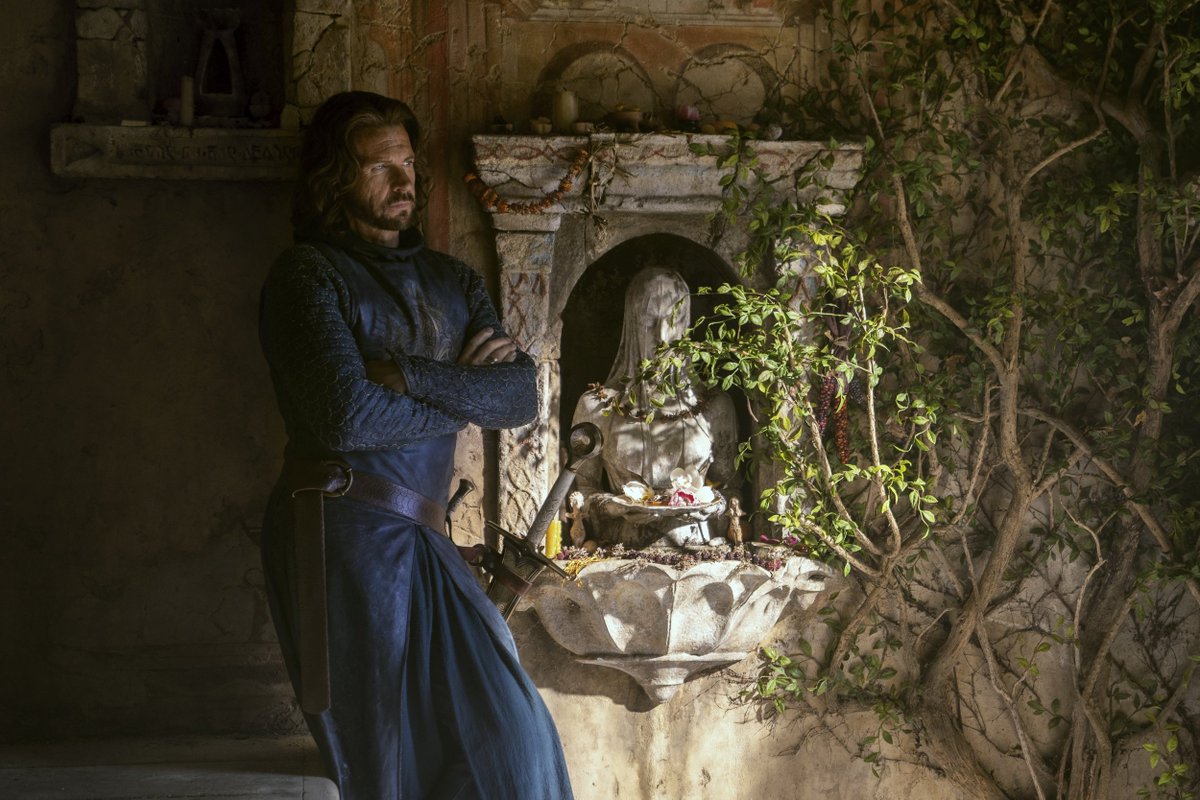
The veiled bust looks like the veiled female Elves we see in Episode 1 and Episode 5.


But it is also possible that both go back to one of the Valier and the veiled Elves are in a special service to her.
In ʻThe Lost Road’, the Nùmenoreans had images of the Valar in their gardens. These were made by the Elves of Eressëa, who had seen them in their visible form.
In ʻThe Lost Road’, the Nùmenoreans had images of the Valar in their gardens. These were made by the Elves of Eressëa, who had seen them in their visible form.

In Episode 5 we see another mysterious mural next the the stairs leading up from the market place.
It looks like a figure clothed in black holding a smaller figure on its lap. Maybe it’s Mandos with the soul of a deceased person, but there is just not enough of it visible.
It looks like a figure clothed in black holding a smaller figure on its lap. Maybe it’s Mandos with the soul of a deceased person, but there is just not enough of it visible.

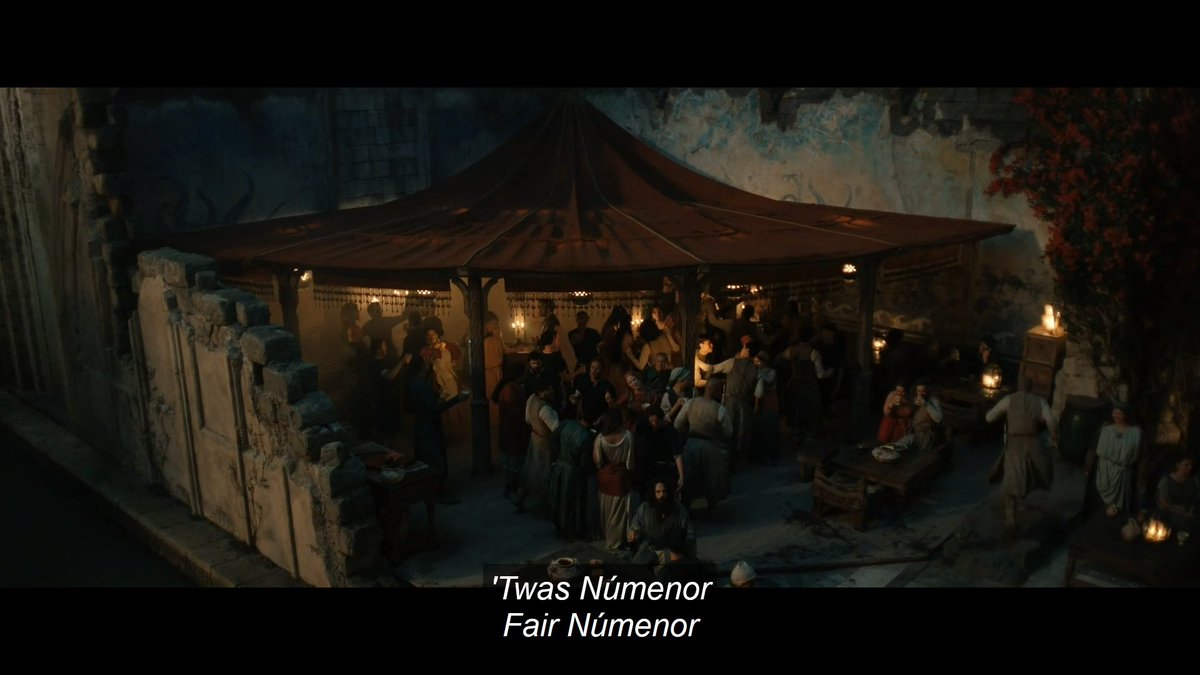
In Episode 4 (and other ones as well), we see another mural, this time depicting the collaboration of Elves and Men in a fight against a sea monster.
The cantina is set in the ruins of an older elvish building that contains murals on the other walls too.
The cantina is set in the ruins of an older elvish building that contains murals on the other walls too.



Beside the statue of Eärendil and Elwing another building literally towers over the city: the King’s Tower.
It is built on a ledge next to the palace and although it is clearly built in the elven style, it does not show any signs of decay.
It is built on a ledge next to the palace and although it is clearly built in the elven style, it does not show any signs of decay.


One possible explanation is that it is the Tower of Elros and as such exempt from the neglect of everything of elvish influence (or Tar-Palantir restored it as part of his return to the old way). (from: ʻAkallabêth’)
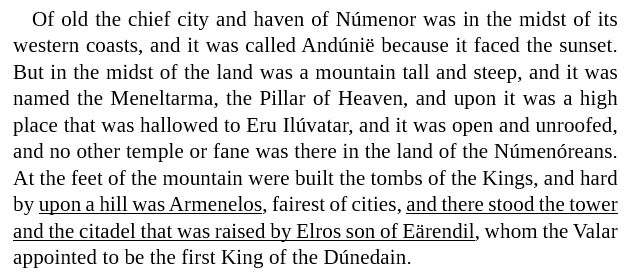
In the king’s bedroom we see the 8-pointed star of Fëanor in the windows. This star seems to be used as the common elven symbol in the show.
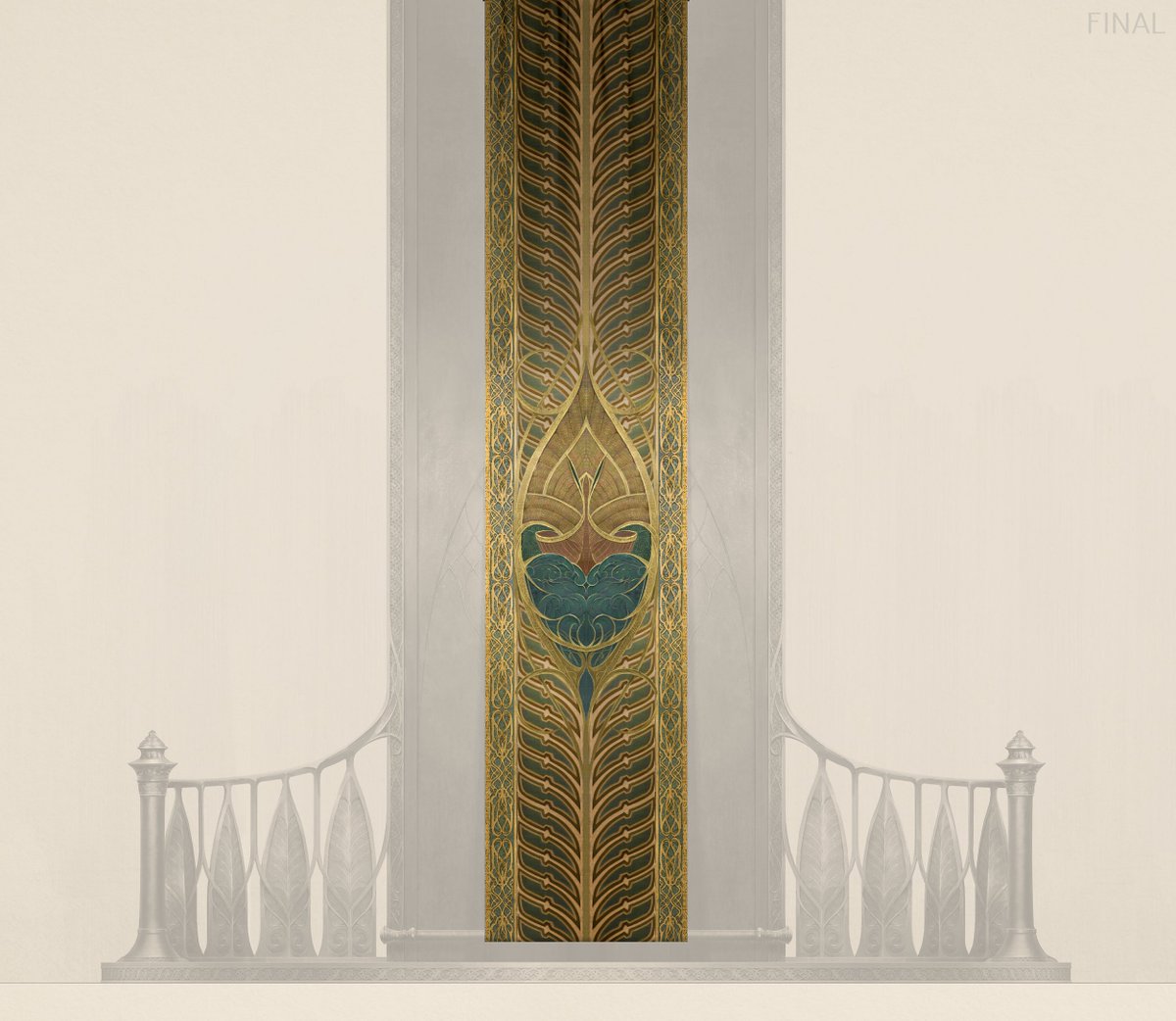
Behind the king’s bed is a tapestry depicting a ship, but unlike the one in Lindon, this ship appears to come out of the west.
Behind the king’s bed is a tapestry depicting a ship, but unlike the one in Lindon, this ship appears to come out of the west.


Above the king’s bedroom is another chamber that houses one of the Palantiri, but also some heirlooms of elvish origin or with elvish history.
The star of Fëanor again features prominent in the center of the room.
The star of Fëanor again features prominent in the center of the room.


In ʻDescription of the Island of Númenor’, Tolkien mentions some of the heirlooms of Númenor in a footnote: Aranrúth, the King's sword (which we see later in the season), and Dramborleg, Tuor’s axe.
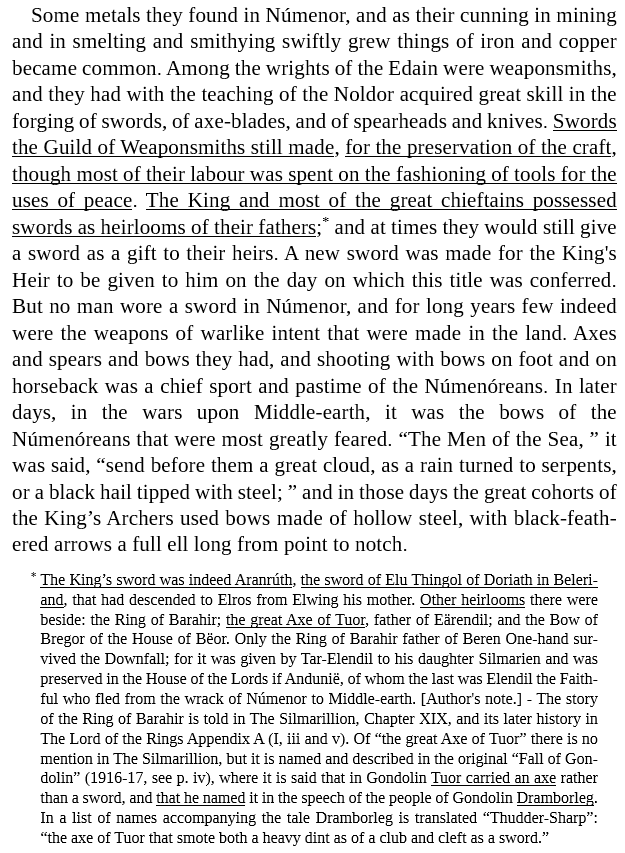
As mentioned in Christopher’s part of the footnote, Tuor’s axe was part of the original version of ʻThe Fall of Gondolin’ in the ʻBook of Lost Tales’.
Beside the axe, we also read that ʻa swan’s wing was wrought on his shield’.
Beside the axe, we also read that ʻa swan’s wing was wrought on his shield’.
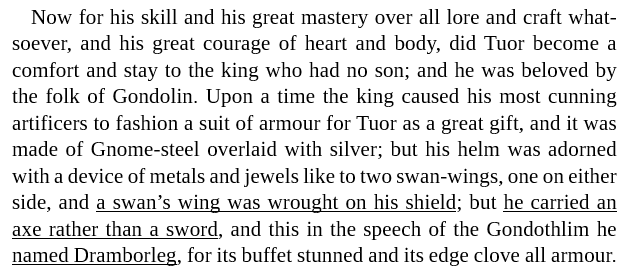
In later versions of the story, the axe disappears and the shield is given a new backstory: it is now part of the armament found by Tuor in the ruins of Vinyamar, left there by Turgon on behest of Ulmo. (from: ʻOf Tuor and his Coming to Gondolin’)
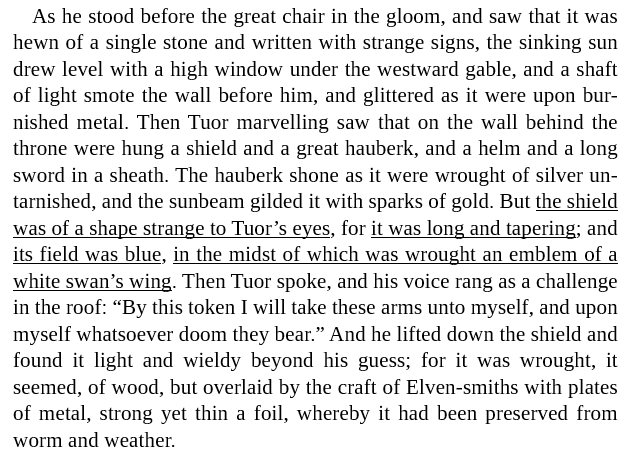
A close view of Dramborleg:
https://x.com/DailyRoP/status/1698678381003378892
Concept art of of both Tuor’s axe and shield by WETA workshop:
https://x.com/ce_toca/status/1694330437542322490
The next two heirlooms were by the dwarven smith Telchar, but still have a connection to the elves.
The first is the ʻHelm of Hador’, also called ʻDragon-helm of Dor-lómin’ because it has a gilded image of Glaurung on his crest. (from: ʻUnfinished Tales’, ʻNarn i Hîn Húrin’)
The first is the ʻHelm of Hador’, also called ʻDragon-helm of Dor-lómin’ because it has a gilded image of Glaurung on his crest. (from: ʻUnfinished Tales’, ʻNarn i Hîn Húrin’)

The helmet was made for Azaghâl, the Lord of the dwarven city of Belegost, and wandered as a gift through Maedros and Fingon to Túrin’s ancestor Hador.
At some point it was given to Thingol and from him back to Túrin. (from: ʻUnfinished Tales’, ʻNarn i Hîn Húrin’)
At some point it was given to Thingol and from him back to Túrin. (from: ʻUnfinished Tales’, ʻNarn i Hîn Húrin’)
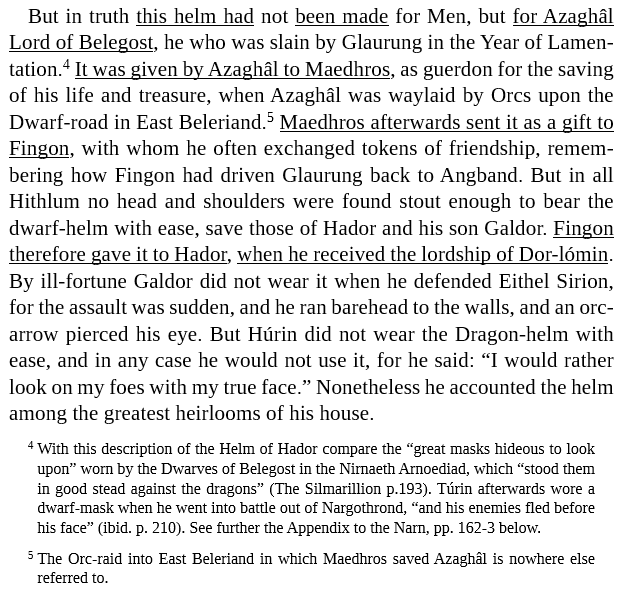
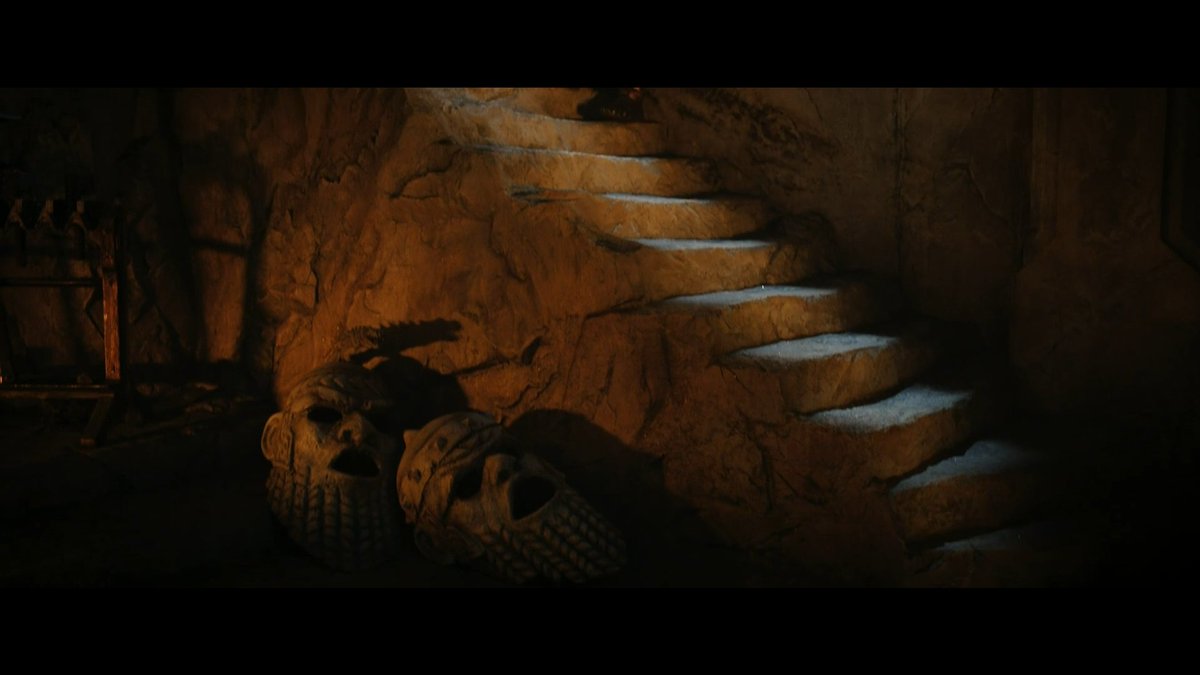
We don’t get a close-up of the Dragon-helm in Númenor, but the Durins keep a big stone replica of the helm and this one appears in Episode 2 and Episode 7.
As a gift, the helmet represents the elven friendship with dwarves and men.
As a gift, the helmet represents the elven friendship with dwarves and men.

Narsil, the sword that was carried by Elendil in the battles of the Last Alliance, broken in his fight against Sauron and then reforged into Andúril at the end of the Third Age, shares a similar connection.
In ʻThe Two Towers’, Aragorn claims that it also was made by Telchar.
In ʻThe Two Towers’, Aragorn claims that it also was made by Telchar.
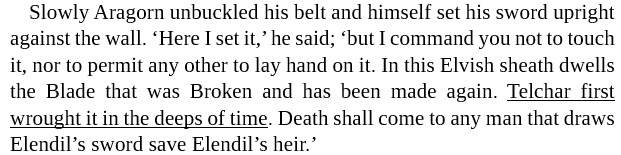
And according to the ʻNarn i Hîn Húrin’, Thingol had swords ʻwrought by Telchar himself’ in his armories, so it is very likely that Narsil was one of these swords and passed down to Elros through Thingol’s hoard in Doriath.

Concept art of Narsil by WETA workshop:
https://x.com/IAmNotDannyBoy/status/1696693997580730398
We don’t see Aranrúth in the tower, but Queen Regent Míriel takes it with her on the expedition to Middle-earth and we get a glimpse of it in Episode 5 and Episode 6.
(She leaves Tirharad without the sword in Episode 7.)
(She leaves Tirharad without the sword in Episode 7.)


In a concept art of the sword published by WETA workshop we can see a story told on the blade: Beren and Luthien, the werewolf Carcharoth with the Silmaril within, King Thingol and Huan on the hunt and finally the fight between Huan and Carcharoth.
https://x.com/nerdoftherings1/status/1694427226287034629
The design follows the description for a sword made for the King of Artanor, called Tinwelint, by the treacherous elf Ufedhin and his dwarven party in ʻThe Nauglafring’, a story of the ʻBook of Lost Tales’.
(Artanor > Doriath, Tinwelint > Thingol.)
(Artanor > Doriath, Tinwelint > Thingol.)
https://x.com/tonypajamas3795/status/1783290818695975409
Sidenote:
It is noteworthy that Elrond did not claim any of the elvish weapons from Gondolin or Doriath, but left all of them to his brother Elros.
It is noteworthy that Elrond did not claim any of the elvish weapons from Gondolin or Doriath, but left all of them to his brother Elros.
We have seen Míriel in front of the Builders Guild with Aranrúth in Episode 5.
In Episode 4, Pharazôn mentions another construction with elvish connections: the ʻSea Wall’.
In Episode 4, Pharazôn mentions another construction with elvish connections: the ʻSea Wall’.
It is not clear if Armenelos itself, being inland, has a sea-wall, but according to ʻAldarion and Erendis’, Aldarion learned from Círdan ʻthe building of walls to withstand the hunger of the sea’ and he ʻbusied himself with the building of great sea-walls’.
Next to the Builders Guild is another relict of the old relationship, now partly hidden behind a notice board: a memorial plaque about the doom of the Númenoreans.
The inscription above it proclaims: ʻBlessed are the Edain, Friends of the Eldar, Children of the World’.
The inscription above it proclaims: ʻBlessed are the Edain, Friends of the Eldar, Children of the World’.

In a concept art published by Ramsey Avery, we can read the full text.
The sentence ʻAid to the Eldar earned the Edain the realm of Númenor’ is very close to Galadriel’s view: ʻThe virtue you speak of was your ancestors’ loyalty to the Elves’.
The sentence ʻAid to the Eldar earned the Edain the realm of Númenor’ is very close to Galadriel’s view: ʻThe virtue you speak of was your ancestors’ loyalty to the Elves’.
https://x.com/e51dc715a5/status/1766483185012023319
But that runs against the current of the new númenórean self-confidence, which is probably why it has been covered up.
The ban to sail further west than sight of their own shores, still visible at the top, is going to play a major role in future seasons. (from: ʻAkallabêth’)
The ban to sail further west than sight of their own shores, still visible at the top, is going to play a major role in future seasons. (from: ʻAkallabêth’)
We end our tour through Armenelos with two trees.
The first is Nimloth, the White Tree, that grows in a courtyard below the throneroom. The tree itself looks healthy, but the surrounding arches have not been restored to the form that we see in the background of the puppet show.
The first is Nimloth, the White Tree, that grows in a courtyard below the throneroom. The tree itself looks healthy, but the surrounding arches have not been restored to the form that we see in the background of the puppet show.


Nimloth was a gift for the Númenóreans from the elves of Eressëa and it goes back to Galathilion, an image of Telperion made by Yavanny. (from: ʻAkallabêth’)

While the tree was neglected under Míriel's grandfather Ar-Gimilzôr, her father Tar-Palantir reversed this policy and tended the White Tree again with honour. (from: ʻAkallabêth’)
(Also notice Palantir’s yearning to see a ship from the west as on the tapestry in his bedroom.)
(Also notice Palantir’s yearning to see a ship from the west as on the tapestry in his bedroom.)
The other tree is only seen in the use of its branches: when the ships leave for Middle-earth in Episode 5 and return to Númenor in Episode 8, we see green branches fixed to the arch of the ship’s bell.


According to ʻAldarion and Erendis’, these braches are called the ʻGreen Bough of Return’ and are cut from the tree ʻoiolairë’, which, like Nimloth, was a gift of the Elves. When using it, the crew still follows a teaching of the Elves.
ADDENDUM 1
A better look at the strange mural over the stairs:
A better look at the strange mural over the stairs:
https://x.com/Nyang2212/status/1787489806332612784
ERRATUM
When writing about the statue, I misclassified Elwing. Like Elrond or Arwen, she also belongs to the Peredhil or Half-elves.
When writing about the statue, I misclassified Elwing. Like Elrond or Arwen, she also belongs to the Peredhil or Half-elves.
https://x.com/beccahdavis/status/1787509169404232090
ADDENDUM 2
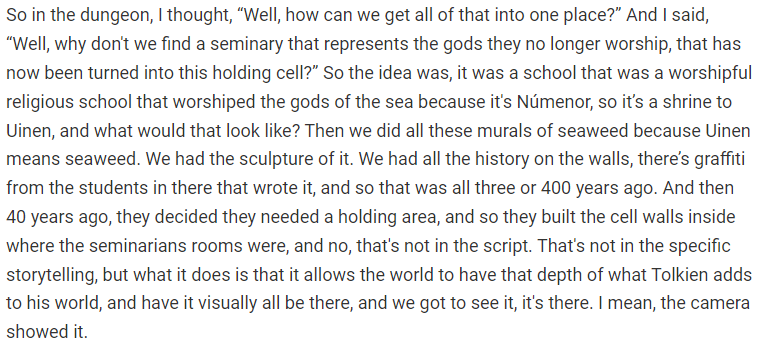
Another building with elvish elements in the prison where Halbrand and Galadriel end up.
We see again the pointy elven arches (other than the round manish ones) and the a statue of the maia Uinen.
Another building with elvish elements in the prison where Halbrand and Galadriel end up.
We see again the pointy elven arches (other than the round manish ones) and the a statue of the maia Uinen.

In an interview with Collider, published in June 2023, production designer Ramsey Avery provided insights into the design process.
In this case they tried to create visuals that could take on the role of Tolkien’s poems: provide a small window into a bigger backstory.
In this case they tried to create visuals that could take on the role of Tolkien’s poems: provide a small window into a bigger backstory.
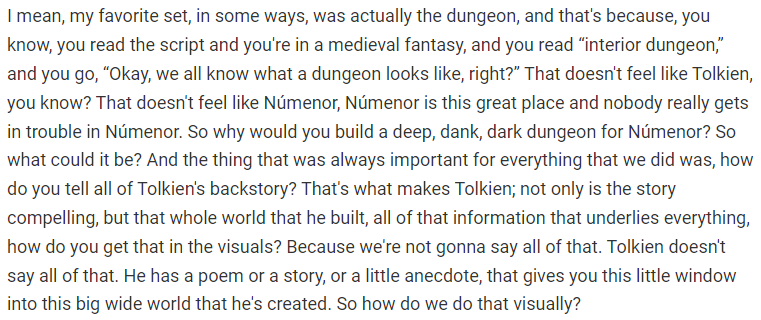
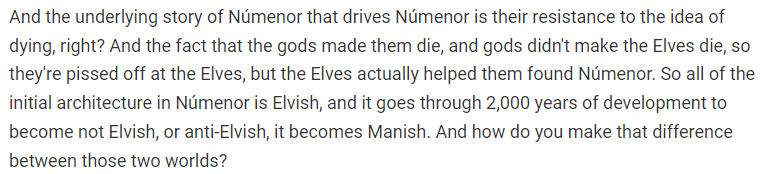
The bigger backstory is the númenórean resistance to the idea of dying. Because the gods in their view discriminated against them in the case of mortality, they turn away from the gods and from the Elves.
Their architecture goes from Elvish to anti-Elvish, or Manish.
Their architecture goes from Elvish to anti-Elvish, or Manish.
In the case of our prison, it was designed as a seminary and a shrine to Uinen. But the estrangement that started 350 years ago finally reached that place too and when a holding area was needed they modified the rooms of the seminarians into cells.
Link to the full interview:
collider.com/the-rings-of-p…
collider.com/the-rings-of-p…
• • •
Missing some Tweet in this thread? You can try to
force a refresh