Just-released exhibits:
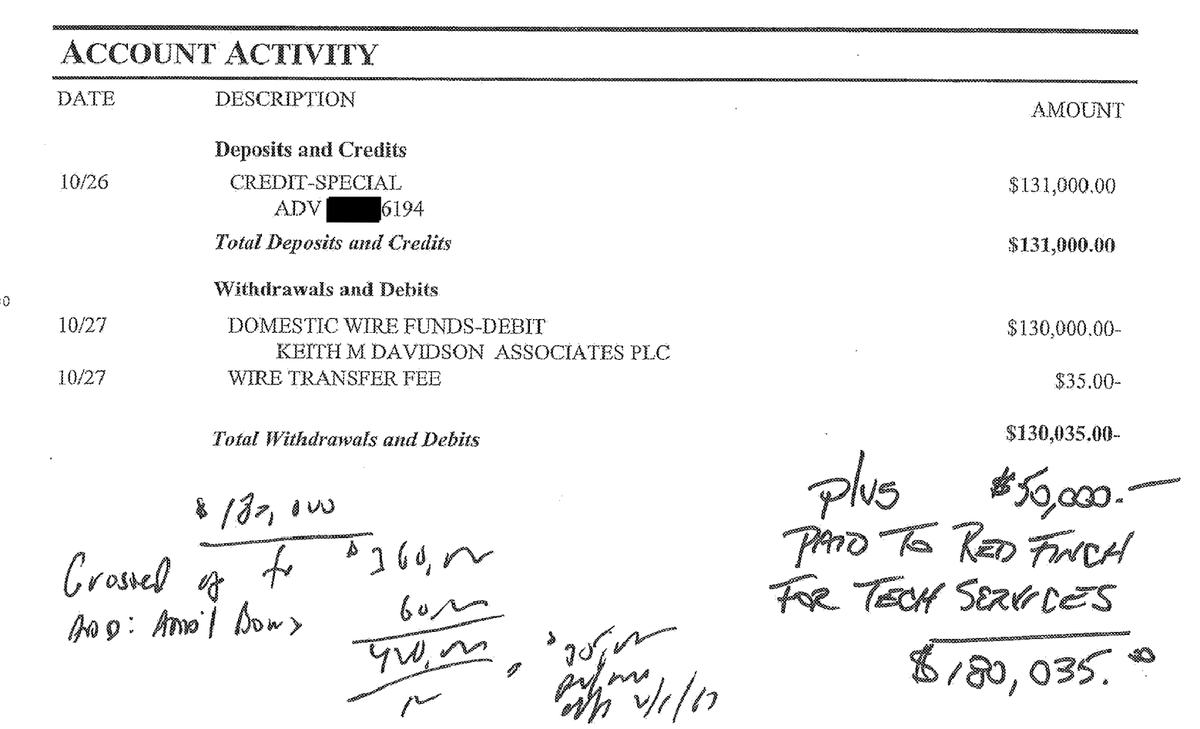
These handwritten notations by jailed ex-Trump Org CFO Allen Weisselberg could be described as a visualization of the prosecution's theory of the case.
Let's break it down. 🧵
These handwritten notations by jailed ex-Trump Org CFO Allen Weisselberg could be described as a visualization of the prosecution's theory of the case.
Let's break it down. 🧵
First off:
It's written on a bank statement for Michael Cohen's shell company Essential Consultants LLC, showing the transfer to Daniels' law firm.
It's written on a bank statement for Michael Cohen's shell company Essential Consultants LLC, showing the transfer to Daniels' law firm.
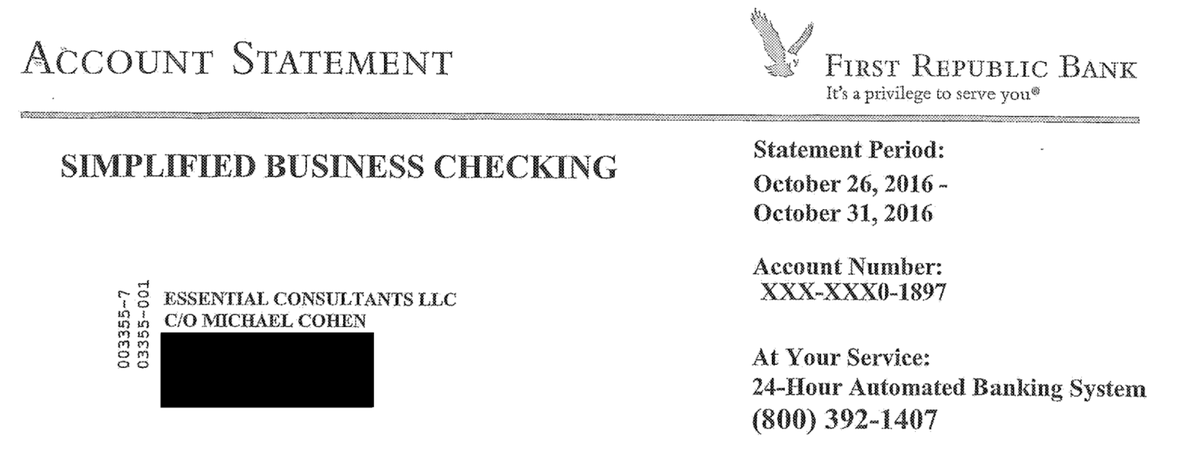
Going from left to write on the handwritten notations: the math.
Step One:
* "$180,000 is "Grossed up to $360,000," then
* "ADD: ADD'l Bonus 60,000"
_______________________________
$420,000"
Step One:
* "$180,000 is "Grossed up to $360,000," then
* "ADD: ADD'l Bonus 60,000"
_______________________________
$420,000"
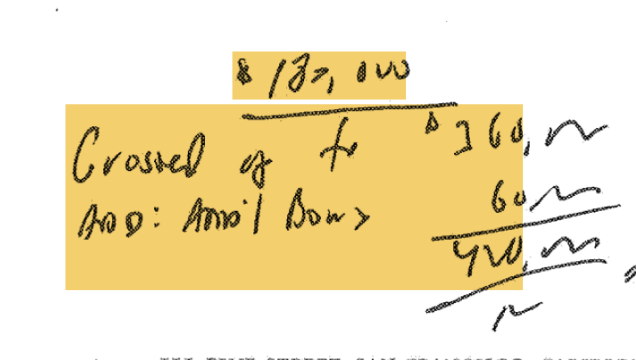
Step Two:
$420,000 breaks down into monthly payments of "$35,000," jotted down here.
But wait, where did the $180,000 figure come from? Next notation.
$420,000 breaks down into monthly payments of "$35,000," jotted down here.
But wait, where did the $180,000 figure come from? Next notation.
Step Three:
The document itself shows the $130,000 payoff to Daniels' lawyer, and the notation adds "$50,000 — Paid To RedFinch For Tech Services."
No detail here is left unstated on the document.
The document itself shows the $130,000 payoff to Daniels' lawyer, and the notation adds "$50,000 — Paid To RedFinch For Tech Services."
No detail here is left unstated on the document.
In a separate document, backing up all of these notations:
* Jeff McConney, jotting down the same system, on Trump Organization letterhead
* Jeff McConney, jotting down the same system, on Trump Organization letterhead
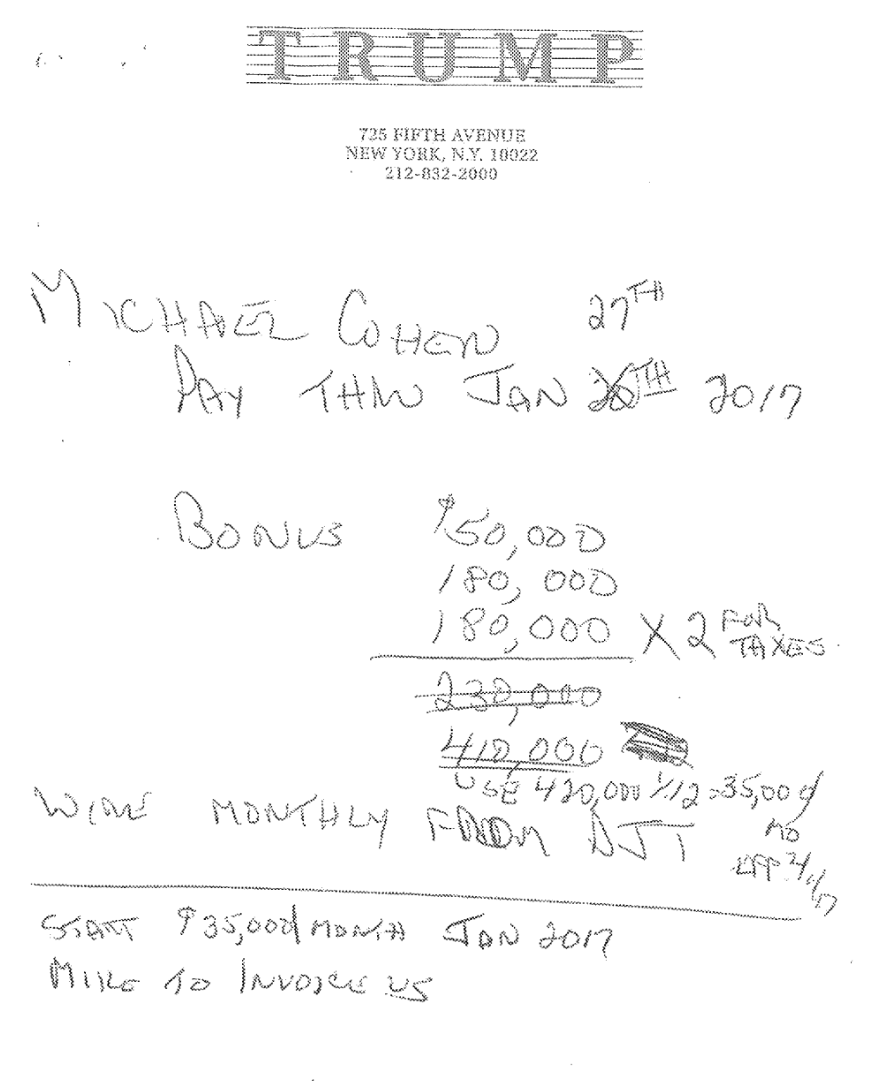
One key difference between the two sets of handwritten notes: McConney wrote explicitly that the "[g]ross[ing] up" was "FOR TAXES."
Stay on this thread for coverage of the afternoon session.
Stay on this thread for coverage of the afternoon session.
Next witness:
Deborah Tarasoff, accounts payable supervisor at the Trump Organization
Deborah Tarasoff, accounts payable supervisor at the Trump Organization
Tarasoff says she's currently employed by the Trump Organization, which she says is paying her legal expenses.
She's worked there for 24 years.
She's worked there for 24 years.
Prosecutor Christopher Conroy questions the witness, first with some preliminaries about her background and employer.
Tarasoff identifies various Trump Org employees: exec assistant Rebecca Manochio, general counsel Alan Garten, and Michael Cohen.
"He was a lawyer that worked there," Tarasoff says of Cohen.
"He was a lawyer that worked there," Tarasoff says of Cohen.
* Typo: left to right.
Monday whiff on that one.
Monday whiff on that one.
Tarasoff confirms the general practice of stapling the invoices to the checks.
"The check is on top of the invoice."
Quick breakdown of why this is important:
"The check is on top of the invoice."
Quick breakdown of why this is important:
Prosecutors say that Trump signed nine of the reimbursement checks, which were stapled on top of the invoice.
Both were falsely marked legal expenses, prosecutors say.
Both were falsely marked legal expenses, prosecutors say.
That Trump received the checks attached to the invoice for their signatures goes to the former president's knowledge of both sets of documents.
Tarasoff just testified that Trump could, and had, declined to sign certain checks.
When he did, he marked them: "Void," she says.
Tarasoff just testified that Trump could, and had, declined to sign certain checks.
When he did, he marked them: "Void," she says.
The prosecutor's point in that line of questioning appears to be: Trump read the checks and invoices, and he apparently didn't void them here.
Tarasoff says that Trump signed all of the checks for his personal account.
The prosecutor shows the witness a thumb drive for identification.
As the witness reviews payment vouchers, the evidence flashes on screens throughout the courtroom.
Some monitors are at the defense and prosecution tables; some large ones hang on the side and rear walls of the courtroom for the gallery.
Also: Every juror has one.
Some monitors are at the defense and prosecution tables; some large ones hang on the side and rear walls of the courtroom for the gallery.
Also: Every juror has one.
Some jurors share a screen with their peers, but they're available for up-close inspection.
That the jurors are closely inspecting these monitors shows they're paying attention.
That the jurors are closely inspecting these monitors shows they're paying attention.
Over in the overflow room, members of the press and public receive the same view of the evidence — and certain trial participants, like Trump — via CCTV.
Now on the screen: A check to Michael Cohen via Trump's trust.
Eric Trump and Allen Weisselberg signed it, Tarasoff says.
Now on the screen: A check to Michael Cohen via Trump's trust.
Eric Trump and Allen Weisselberg signed it, Tarasoff says.
Eric Trump, seated in the front of the gallery, also appears to be looking at the evidence on the screen.
The check says "VOID" in three places only because it was photocopied; it was never voided, the witness says.
The check says "VOID" in three places only because it was photocopied; it was never voided, the witness says.
Tarasoff next inspects some emails related to monthly payments to Cohen.
This one is stamped with "ACCOUNTS PAYABLE" and the $35,000 amount. The witness confirms: That's her stamp.
This one is stamped with "ACCOUNTS PAYABLE" and the $35,000 amount. The witness confirms: That's her stamp.
As the records get repetitive, some of the jurors' attention wanes occasionally.
But most still have their eyes locked on their screens — showing the same records prosecutors want them to find Trump falsified.
But most still have their eyes locked on their screens — showing the same records prosecutors want them to find Trump falsified.
Tarasoff confirms one check was voided: the April 2017 one, which was lost and then reissued.
The prosecutor enters a stop payment report into evidence.
Another exhibit: Another reimbursement record to Cohen marked "Retainer" for May 2017.
Shown to the jury:
Another check to Michael Cohen bearing Trump's signature, this one from June 2017.
Another check to Michael Cohen bearing Trump's signature, this one from June 2017.
We're now up to the August 2017 check to Cohen, bearing Trump's signature.
Again, $35,000.
Afternoon recess.
Again, $35,000.
Afternoon recess.
We're back.
Another $35,000 check to Cohen, signed by Trump again with a marker.
Another $35,000 check to Cohen, signed by Trump again with a marker.
The same drill, with an invoice, stamp, ledger entry, and check:
Another $35,000 to Michael Cohen for November, again signed by Trump with a marker.
Another $35,000 to Michael Cohen for November, again signed by Trump with a marker.
The same drill, with a stamped invoice, ledger entry, and check:
Another $35,000 to Michael Cohen for December 2017, again signed by Trump with a marker.
Another $35,000 to Michael Cohen for December 2017, again signed by Trump with a marker.
So ends Cohen's reimbursement checks — and with them, direct examination.
Trump's lead attorney Todd Blanche starts cross.
Trump's lead attorney Todd Blanche starts cross.
Tarasoff agrees with the lawyer that the Trump Organization is a "family business."
Blanche does most of the talking at the beginning: Trump used to be around a lot, until he campaigned for and became president. Then, he was around less.
The witness agrees with all that.
Blanche does most of the talking at the beginning: Trump used to be around a lot, until he campaigned for and became president. Then, he was around less.
The witness agrees with all that.
Brief cross-ex. No redirect.
Tarasoff exits the courtroom.
The parties approach for a sidebar conference.
Tarasoff exits the courtroom.
The parties approach for a sidebar conference.
...And we're done for the day for witness testimony.
Justice Merchan gives his usual instruction to jurors.
Justice Merchan gives his usual instruction to jurors.
After the jury leaves, Assistant DA Joshua Steinglass pushes back against the defense's implication that the prosecution is "sandbagging" them.
Trump's defense has the full witness list, just not the order, he says.
Trump's defense has the full witness list, just not the order, he says.
Steinglass says that prosecutors will be recalling their paralegal who authenticated Trump's social media posts, clarifying her testimony ended early to accommodate Hope Hicks' schedule.
But there's more Trump social media to enter into evidence, he says.
But there's more Trump social media to enter into evidence, he says.
Note:
The social media in question isn't for alleged contempt; it's evidentiary.
The social media in question isn't for alleged contempt; it's evidentiary.
Todd Blanche argues against recalling the witness.
The judge appears skeptical that there's any prejudice to the defense to let her back on the stand.
The judge appears skeptical that there's any prejudice to the defense to let her back on the stand.
Judge: Generally speaking, how are we doing on schedule?
ADA: Well.
Judge: Well. Can you give me any more than that? (Laughter)
ADA: Well.
Judge: Well. Can you give me any more than that? (Laughter)
Steinglass estimates that the prosecution's case will last for two more weeks from tomorrow.
With that, happy Monday to all — and see you again on Tuesday.
• • •
Missing some Tweet in this thread? You can try to
force a refresh