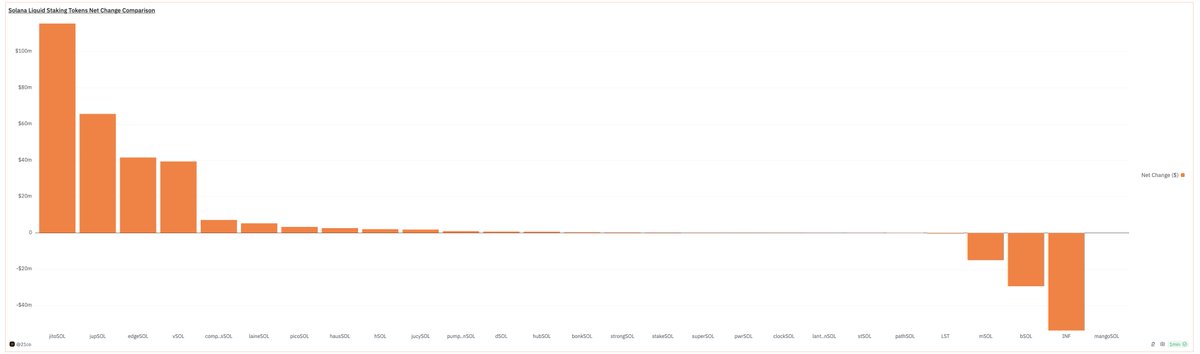
Overview of Solana's Liquid Staking Market
(✍️/7)
(✍️/7)

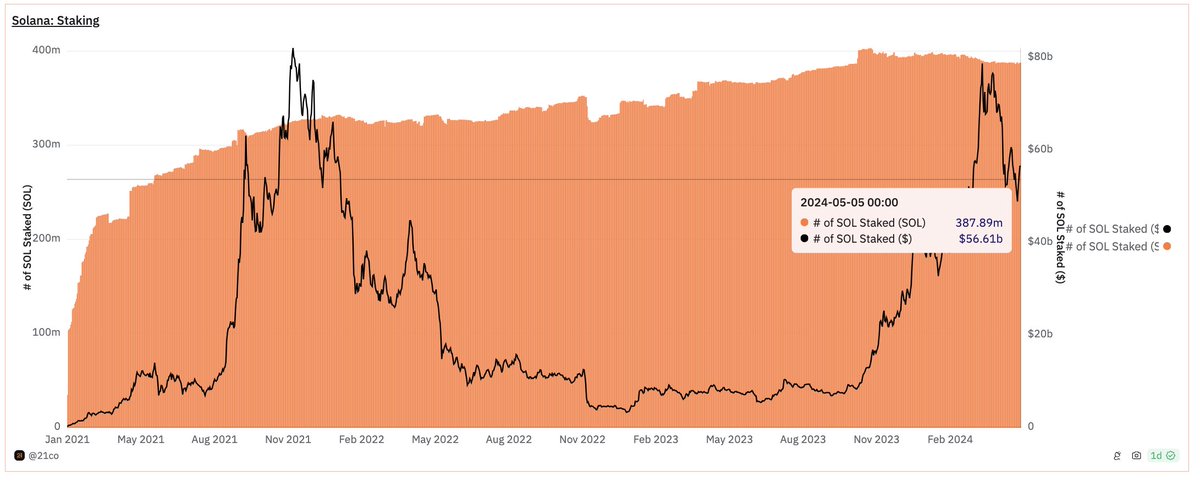
1/ Despite having 60%+ Staking Ratio, only 6% ($3.4B) of the Staked SOL comes from Liquid Staking
Ethereum on the contrary, has 32% of its stake comes from Liquid Staking. The reason for the difference imo is because of whether there is in-protocol delegation.
Solana has provided an easy way for SOL stakers to delegate their SOL natively whereas Lido is one of the only ways in the early days to delegate your ETH to earn staking rewards.
Ethereum on the contrary, has 32% of its stake comes from Liquid Staking. The reason for the difference imo is because of whether there is in-protocol delegation.
Solana has provided an easy way for SOL stakers to delegate their SOL natively whereas Lido is one of the only ways in the early days to delegate your ETH to earn staking rewards.

2/ Market Share of Solana LSTs are more Balanced than Ethereum
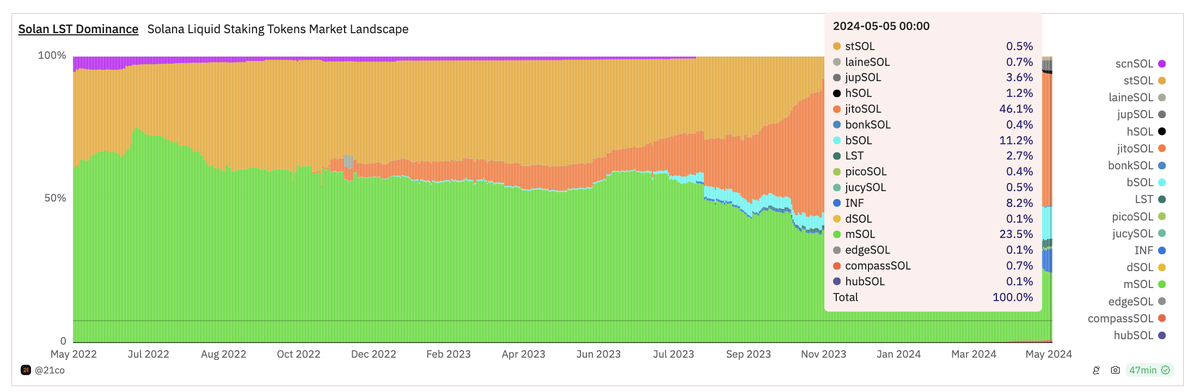
On Ethereum, 68% of the market share is coming from Lido. Comparatively, the Liquid Staking Tokens on Solana are more in a Oligopoly State.
Top 3 Liquid Staking Tokens on Solana account for 80% of the market share
On Ethereum, 68% of the market share is coming from Lido. Comparatively, the Liquid Staking Tokens on Solana are more in a Oligopoly State.
Top 3 Liquid Staking Tokens on Solana account for 80% of the market share

3/ History of LSTs on Solana
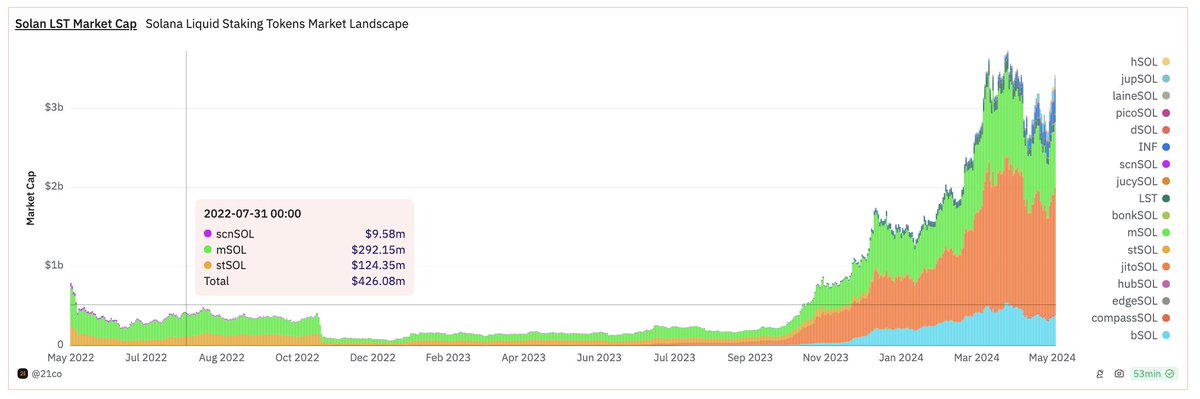
In the early days, the market is split by Lido's stSOL (33%), Marinade's mSOL (60%), and Sanctum's scnSOL (7%), and the total market cap of Solana's LSTs is less than $1B
The lack of adoption can be attributed to marketing and integrations. Back then, there weren't a lot of high-quality DeFi protocols for LSTs and the narrative is not focusing on Liquid Staking.
It also didn't help when FTX collapsed, causing the liquid staking ratio to drop from 3.2% to 2%
In the early days, the market is split by Lido's stSOL (33%), Marinade's mSOL (60%), and Sanctum's scnSOL (7%), and the total market cap of Solana's LSTs is less than $1B
The lack of adoption can be attributed to marketing and integrations. Back then, there weren't a lot of high-quality DeFi protocols for LSTs and the narrative is not focusing on Liquid Staking.
It also didn't help when FTX collapsed, causing the liquid staking ratio to drop from 3.2% to 2%
4/ Current Leaders in the LST Market
With the launch of jitoSOL in Nov 2022, they used about 1 Year to flip stSOL and mSOL and become the most dominant LST on Solana with 46% market share.
2nd: mSOL (23.5%)
3rd: bSOL (11.2%)
4th: INF (8.2%)
5th: jupSOL (3.6%)
With the launch of jitoSOL in Nov 2022, they used about 1 Year to flip stSOL and mSOL and become the most dominant LST on Solana with 46% market share.
2nd: mSOL (23.5%)
3rd: bSOL (11.2%)
4th: INF (8.2%)
5th: jupSOL (3.6%)
5/ The Success of Jito
More details are in the thread below. To summarize, for an LST to succeed, the most important factors are:
1. Liquidity
2. DeFi Integration / Partnerships
3. Chain Expansion (Optional)
More details are in the thread below. To summarize, for an LST to succeed, the most important factors are:
1. Liquidity
2. DeFi Integration / Partnerships
3. Chain Expansion (Optional)
https://x.com/tomwanhh/status/1786713126529896802
6/ Liquid Staking is the Untapped Potential for Solana DeFi, which can potentially boost their TVL by $1.5B-$17B
Liquid Staking Tokens have fuelled the growth in Ethereum's DeFi ecosystem. For example, 40% of AAVE v3's TVL comes from wstETH. It can serve as a yield-generating collateral and unlock more potential in DeFi like Pendle, Eigenlayer, Ethena, etc.
Here are my expectations for Solana's Liquid Staking Ratio in 1-2 Years time (Based on current Valuation)
Base case: 10%, an additional $1.5B liquidity available in DeFi
Bull Case: 15%, an additional $5B liquidity available in DeFi
Long-Term Bull Case :30%, having a similar liquid staking ratio as Ethereum. Adding an additional $13.5B liquidity available in DeFi
Liquid Staking Tokens have fuelled the growth in Ethereum's DeFi ecosystem. For example, 40% of AAVE v3's TVL comes from wstETH. It can serve as a yield-generating collateral and unlock more potential in DeFi like Pendle, Eigenlayer, Ethena, etc.
Here are my expectations for Solana's Liquid Staking Ratio in 1-2 Years time (Based on current Valuation)
Base case: 10%, an additional $1.5B liquidity available in DeFi
Bull Case: 15%, an additional $5B liquidity available in DeFi
Long-Term Bull Case :30%, having a similar liquid staking ratio as Ethereum. Adding an additional $13.5B liquidity available in DeFi
7/ Top DeFi Teams are working together to onboard more Staked SOL Capital to DeFi
@DriftProtocol, @JupiterExchange, @marginfi, @bonk_inu, @heliuslabs, @sanctumso, @SolanaCompass all launched their liquid staking tokens.
As a DeFi user, it is always better to have competition and new innovation in the market. That is why i am optimistic about the future of Solana DeFi
@DriftProtocol, @JupiterExchange, @marginfi, @bonk_inu, @heliuslabs, @sanctumso, @SolanaCompass all launched their liquid staking tokens.
As a DeFi user, it is always better to have competition and new innovation in the market. That is why i am optimistic about the future of Solana DeFi
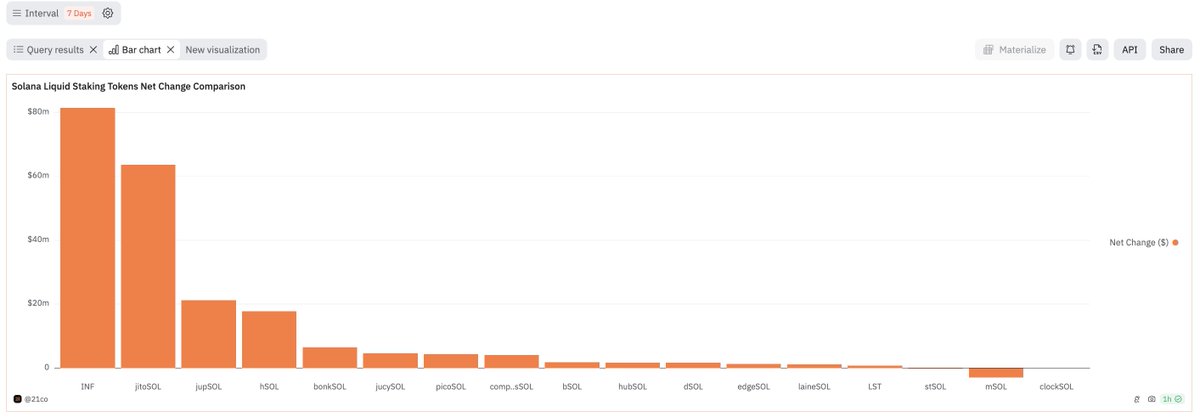
Here is the WIP @DuneAnalytics on Solana Liquid Staking Tokens, leveraging the bank holiday to do something fun.
Any feedback and ideas are welcome!
dune.com/21co/solana-li…
Any feedback and ideas are welcome!
dune.com/21co/solana-li…
Tagging Solana experts who would be interested
@fknmarqu
@andrewhong5297
@aeyakovenko
@rajgokal
@SolanaLegend
@santiagoroel
@cburniske
@0xMert_
@Austin_Federa
@sssionggg
@buffalu__
@bennybitcoins
@mlphresearch
@soleconomist
@magicdhz
@rektdiomedes
@poopmandefi
@AndurilData
@mrgnalt
@KyleSamani
@0xFA2
@cindyleowtt
@ceterispar1bus
@fknmarqu
@andrewhong5297
@aeyakovenko
@rajgokal
@SolanaLegend
@santiagoroel
@cburniske
@0xMert_
@Austin_Federa
@sssionggg
@buffalu__
@bennybitcoins
@mlphresearch
@soleconomist
@magicdhz
@rektdiomedes
@poopmandefi
@AndurilData
@mrgnalt
@KyleSamani
@0xFA2
@cindyleowtt
@ceterispar1bus
https://x.com/tomwanhh/status/1787592785366786347
• • •
Missing some Tweet in this thread? You can try to
force a refresh