Few people have asked me for a thread on my @researchEDSW keynote on teacher retention. So here it is 🧵👇 
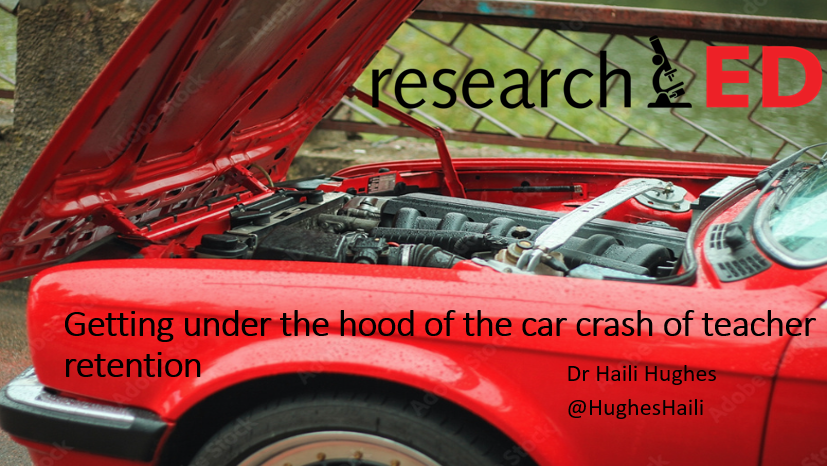
I started off by setting the scene of what is currently a recruitment and retention crisis, where schools in the UK are facing a dire situation – the supply of teachers is not meeting the demand.

I spoke about how the DfE has put lots of work into recruiting new teachers into the profession, but I feel the Department for Education is placing too big an emphasis on this and that there is less focus on the drain of experience.
For me you need to flip the narrative – Retention and Recruitment, not the endless focus on recruitment.
Why? Well...
Why? Well...

Well to begin with, experienced teachers are the stalwarts of the school – they turn up day in day out, year after year. Without them, we risk losing the mentors and expert colleagues who’ll work alongside our ECTs.

Supporting ECTs is not the only thing we need experienced teachers for. Explicit knowledge is important when working with novice teachers, who don’t yet possess the mental models about what effective teaching might look like. This can be codified, deconstructed & practised...

But that Tacit knowledge is also key. It refers to the knowledge, skills, and abilities an individual gains through experience, that is often difficult to put into words or otherwise communicate. If we lose our experienced teachers, we also risk losing this. What a waste!

Tacit knowledge is often expressed in:
Behaviours
Actions
Habits
Routines
Predictions
Responses
Intuitions
Studying the facts about a subject is a prerequisite to obtaining tacit knowledge, spending time learning on the job & gaining personal experience raises knowledge quality.
Behaviours
Actions
Habits
Routines
Predictions
Responses
Intuitions
Studying the facts about a subject is a prerequisite to obtaining tacit knowledge, spending time learning on the job & gaining personal experience raises knowledge quality.
Dylan Wiliam talks about ‘Loving the one you’re with’ but the problem is that experienced teachers don’t feel very loved. New pay scales: ECTs have an 8.9% increase and teachers with more than five years of experience get 5% more.

While this was intended to enhance recruitment, what message does it send to more experienced teachers? Perhaps if we have access to data of loss, in terms of years of experience, it may make people realise what we are losing.
Four years ago, I wrote Preserving Positivity, where I analysed the 2019 DfE data on why experienced teachers were leaving the profession and suggested some practical ways that experienced teachers could take back control.

This research looked at the reasons why teachers leave the profession. Millions of quid was spent on this and to be honest, they could have bunged me a tenner and I would have given them the answers.
It is all so predictable
It is all so predictable
This report paints a dire picture:
•44% more teachers stated they intended to leave teaching in 2022/23 than the previous year
•Teachers’ working hours significantly increased
•Real-terms pay growth for experienced teachers since 2010/11 was 15% lower than average UK earnings
•44% more teachers stated they intended to leave teaching in 2022/23 than the previous year
•Teachers’ working hours significantly increased
•Real-terms pay growth for experienced teachers since 2010/11 was 15% lower than average UK earnings

We have all had those days where we want to leave – year 9 for a double on a Friday afternoon. We have all been on looking for Tesco checkout jobs…Cos, she looks happy, doesn’t she? Now more than ever, experienced teachers are voting with their feet. indeed.co.uk

You can launch campaigns like troops for teachers, or scouts getting a badge about how great teaching is...


But these things are only a sticking plaster, covering the cracks of a system that is hemorrhaging experienced teachers and quite frankly, our kids deserve better.

Although those numbers are shocking – it’s just data right? There are many of us sat in this room now who have left the profession and I wanted to share the real stories of 3 other people’s experiences and what policy makers and school leaders can learn from them.
This heartbreaking video details a teacher's experience with a toxic leader. I have also lived this. You can read about my experience here: theinkedscholar.blogspot.com/2021/06/recove…
Too many toxic leaders seem to just get away with ruining their colleague's lives. They erode confidence, psychological safety and autonomy. Teachers are 16% less likely than similar professionals to report having ‘a lot’ of influence over how they do their job.

Teacher autonomy is strongly associated with improved job satisfaction and a greater intention to stay in teaching. Increasing teachers’ reported influence over their PD goals from ‘some’ to ‘a lot’ is associated with a 9% t increase in intention to stay in teaching. It matters.
Self-determination theory (Deci and Ryan, 2000) provides a theoretical framework for understanding motivation and its implications. The theory hypothesises that while both intrinsic and extrinsic forms of motivation can drive job performance, they have different implications.

Teachers working in conditions that emphasise a greater reliance on intrinsic motivation are thought to be more likely to have high well-being and job satisfaction, and be more likely to stay.

Conversely, greater reliance on extrinsic motivation is thought to risk undermining teacher's sense of feeling trusted and their own intrinsic motivation, potentially leading to disengagement, burnout and leaving.

Deci and Ryan outline 3 basic psychological needs that underpin intrinsic motivation:
- Competence
- Autonomy
- Relatedness
The theory suggests that these needs are interdependent. Intrinsic motivation is likely to increase more if you have all three at the same time.
- Competence
- Autonomy
- Relatedness
The theory suggests that these needs are interdependent. Intrinsic motivation is likely to increase more if you have all three at the same time.

So for more experienced teachers, who won’t be overwhelmed by this interdependence, there is a positive relationship between autonomy, job satisfaction and retention. Toxic leaders like the one we heard about need to read this.
Amy Edmondson talks about team psychological safety as a shared belief held by members of a team that it's OK to take risks, to express their ideas & concerns, to speak up with questions, to admit mistakes all without fear of negative consequences. It's about humanity of leaders.

I truly believe the answer to this is teacher agency.
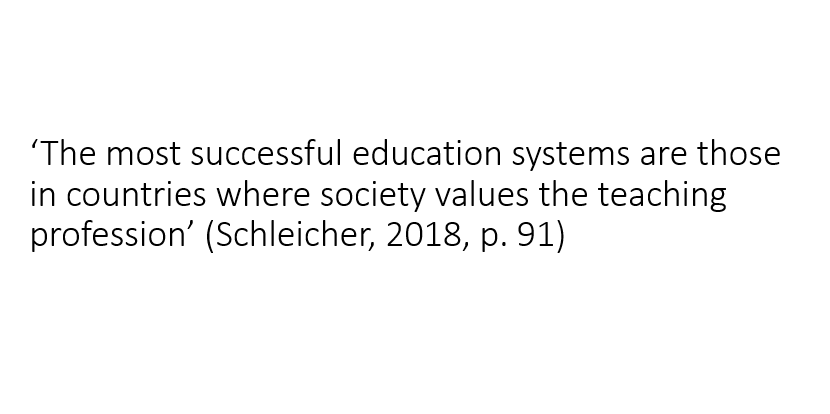
Human-centred educational improvement places teachers’ agency and leadership at the centre of educational decision-making. Championing and improving the prestige of the teaching profession is key.
Human-centred educational improvement places teachers’ agency and leadership at the centre of educational decision-making. Championing and improving the prestige of the teaching profession is key.
• • •
Missing some Tweet in this thread? You can try to
force a refresh