Good morning from New York.
"He approved it."
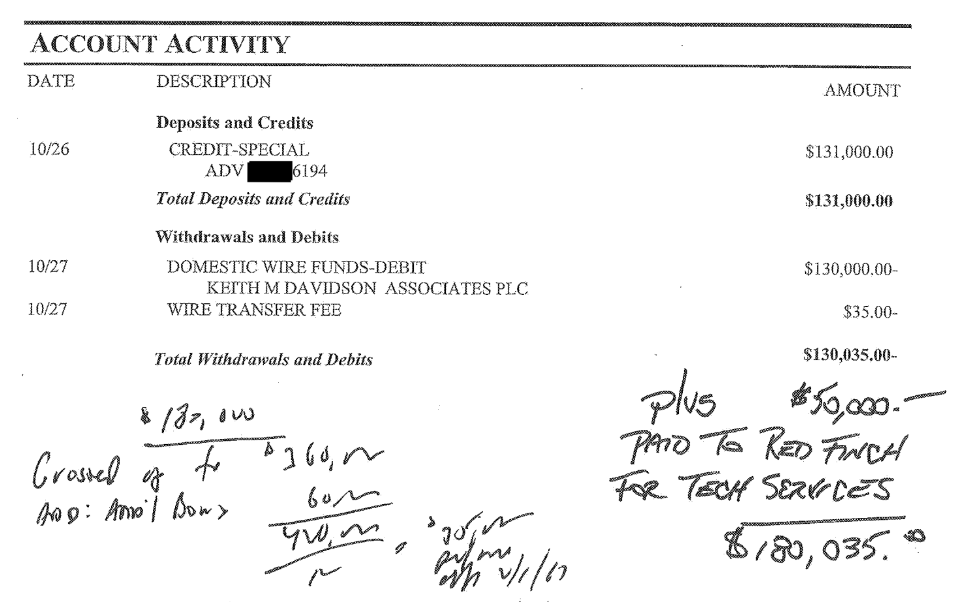
In three words, Michael Cohen tied Trump to this system of reimbursements—in a blink-and-you-might-miss-it line dropped just before trial adjourned.
Follow Trump's team likely attempting to undermine it on cross today. 🧵
"He approved it."
In three words, Michael Cohen tied Trump to this system of reimbursements—in a blink-and-you-might-miss-it line dropped just before trial adjourned.
Follow Trump's team likely attempting to undermine it on cross today. 🧵
Why is that important?
Team Trump claimed that the former president never even heard of Cohen's reimbursements, let alone approved them, and they were all legal fees.
The jury has heard that defense line—and seen it contradicted repeatedly, including by Trump's own words.
Team Trump claimed that the former president never even heard of Cohen's reimbursements, let alone approved them, and they were all legal fees.
The jury has heard that defense line—and seen it contradicted repeatedly, including by Trump's own words.
If Trump claims there's nothing wrong with approving Cohen's reimbursements, jurors may find themselves wondering:
Why is Trump's defense running away from them, even though he's on record in a tweet and sworn court documents giving them the green light?
Why is Trump's defense running away from them, even though he's on record in a tweet and sworn court documents giving them the green light?
After Trump "approved it," the then-President-elect remarked, "This is going to be one heck of a ride in D.C.," according to Cohen.
Indeed.
Stand by for today's trial proceedings.
Indeed.
Stand by for today's trial proceedings.
The DA's paralegals enter the courtroom, with a cart of documents.
One more bit of context:
Trump's top lawyer Todd Blanche left no ambiguity when trial began, telling jurors verbatim: "The $35,000 a month was not a payback to Mr. Cohen for the money that he gave to Ms. Daniels."
Per the defense, there are no reimbursements; only legal fees.
Trump's top lawyer Todd Blanche left no ambiguity when trial began, telling jurors verbatim: "The $35,000 a month was not a payback to Mr. Cohen for the money that he gave to Ms. Daniels."
Per the defense, there are no reimbursements; only legal fees.
That's the claim Trump's defense is now tied to — and what prosecutors keep battering, including through Cohen.
Bragg's assistants just entered the courtroom.
No Bragg this morning, at least not yet.
Bragg's assistants just entered the courtroom.
No Bragg this morning, at least not yet.
Trump enters the courtroom.
Now part of the entourage: Vivek Ramaswamy, sitting next to Eric Trump. They chat.
Also: Doug Burgum.
Now part of the entourage: Vivek Ramaswamy, sitting next to Eric Trump. They chat.
Also: Doug Burgum.
Vivek just lost his seatmate.
Eric Trump moves a row back.
Eric Trump moves a row back.
Taking the Trump scion's former spot: Rep. Byron Donalds.
"All rise."
Justice Merchan takes the bench, and the attorneys register their appearances.
Prosecutors have an issue to raise to the judge—in private for a sidebar conference.
Justice Merchan takes the bench, and the attorneys register their appearances.
Prosecutors have an issue to raise to the judge—in private for a sidebar conference.
"Witness entering."
Michael Cohen returns to the stand.
His attorney @EDanyaPerry sits in the gallery.
Michael Cohen returns to the stand.
His attorney @EDanyaPerry sits in the gallery.
Cohen's testimony resumes — with his visit to the White House.
Q: Did you have a conversation with then-President Trump?
A: I did.
Cohen says the conversation took place in the Oval Office.
Q: Did you have a conversation with then-President Trump?
A: I did.
Cohen says the conversation took place in the Oval Office.
Cohen:
"I was sitting with President Trump. He asked me if I was okay. He asked me if I needed money."
Cohen says that he replied that he was okay.
Trump: "Just make sure you deal with Allen."
"I was sitting with President Trump. He asked me if I was okay. He asked me if I needed money."
Cohen says that he replied that he was okay.
Trump: "Just make sure you deal with Allen."
Cohen is shown a picture of himself at the White House, and other evidence corroborating the visit.
Prosecutor Hoffinger shows Cohen his invoice seeking "payment for services rendered."
Q: Was this invoice a false record?
A: Yes, ma'am.
Q: Was this invoice a false record?
A: Yes, ma'am.

Asked whether the check stubs marked "retainer" were false, Cohen gives the same answer: "Yes," they were.
Michael Cohen identifies Trump's signature on one of his checks.
Now, Hoffinger goes record by record with Cohen, prompting him to testify about the falsity of each one.
We're up to June so far.
We're up to June so far.
Cohen has completed his identification of all of the records he has testified to have been false.
Cohen says he performed "minimal" work for Melania Trump—or on Summer Zervos' lawsuit against Trump.
Attorney Marc Kasowitz took the lead on the latter case.
Attorney Marc Kasowitz took the lead on the latter case.
Cohen said that he continued to hold the title of Trump's personal attorney in 2018.
"As a result of the Stormy aniels matter and her electing to go public, Mr. Trump wanted an action to be filed—an arbitration to be filed" for breach of the NDA, Cohen says.
"As a result of the Stormy aniels matter and her electing to go public, Mr. Trump wanted an action to be filed—an arbitration to be filed" for breach of the NDA, Cohen says.
Outside counsel Larry Rosen was also on that case in 2018.
Cohen says he did "more" work that year than in 2017 — and he didn't get paid in 2018.
(Before cross, prosecutors appear to be preemptively rebutting arguments that Cohen was paid for legal services rendered.)
Cohen says he did "more" work that year than in 2017 — and he didn't get paid in 2018.
(Before cross, prosecutors appear to be preemptively rebutting arguments that Cohen was paid for legal services rendered.)
Michael Cohen says he lied for Trump "out of loyalty and in order to protect him."
Cohen is being asked about his admitted perjury about Trump Tower Moscow. He told Congress that it was a "truncated" time period and that he only spoke to Trump about it a few times.
That was false.
That was false.
Asked why he lied about that, Cohen says "because I was staying on Mr. Trump's message that there was no 'Russia, Russia, Russia.'"
Cohen is asked a series of questions connecting what he was federally prosecuted for doing in that congressional hearing — lie for Trump — with what Manhattan prosecutors say he did with respect to Stormy Daniels:
Lie for Trump.
Lie for Trump.
Cohen on why Stormy Daniels' statement was false:
Q: How do you know she was paid any hush money?
A: Because I was the one who paid it.
Q: How do you know she was paid any hush money?
A: Because I was the one who paid it.

Cohen is shown what he described as his "misleading" statement to the FEC about the Stormy Daniels payoff.
It stated that the Trump campaign and Trump Organization weren't parties to the deal — omitting Trump himself, Cohen noted.
It stated that the Trump campaign and Trump Organization weren't parties to the deal — omitting Trump himself, Cohen noted.
Justice Merchan issues a curative instruction on the FEC investigation.
"Neither the fact of the FEC investigation, nor the responses thereto," are evidence of Trump's guilt.
"Neither the fact of the FEC investigation, nor the responses thereto," are evidence of Trump's guilt.
Cohen says he inserted this clause because he thought the press was smart enough to notice the discrepancy of denying only the Trump campaign or Trump Org's ties to Daniels' payment.
"I do not plan to provide any further comment on the FEC matter or regarding Ms. Clifford."
"I do not plan to provide any further comment on the FEC matter or regarding Ms. Clifford."
Cohen says he knew reporters would ask about Trump's ties to the deal.
In the statement, he also wrote: "Just because something isn't true doesn't mean it can't cause you harm or damage. I will always protect Mr. Trump."
In the statement, he also wrote: "Just because something isn't true doesn't mean it can't cause you harm or damage. I will always protect Mr. Trump."
Cohen is shown a text message from Trump's lawyer Jay Sekulow apparently praising his Stormy Daniels denial:
"Client says thanks for what you do."
"Client says thanks for what you do."
Cohen testifies that the message was about his statement regarding Daniels.
When trial began, David Pecker testified that Cohen told him not to worry about the FEC probe because Trump had then-AG Jeff Sessions "in his pocket."
Cohen confirms he told him Sessions would take care of it.
Q: Prior to saying that, had you been told that by President Trump?
A: Yes, ma'am.
Cohen confirms he told him Sessions would take care of it.
Q: Prior to saying that, had you been told that by President Trump?
A: Yes, ma'am.
After the FBI's search, Michael Cohen said his life was turned "upside-down," and he was "concerned, despondent," and "frightened"
Cohen says Trump returned a phone call to reassure him.
"He said, ‘Don’t worry. I’m the President of the United States.'"
Cohen says Trump returned a phone call to reassure him.
"He said, ‘Don’t worry. I’m the President of the United States.'"
According to Cohen, Trump also told him: "There’s nothing here. Everything’s going to be okay. Stay tough. You’re going to be okay."
Cohen said he believed Trump then.
"With his Justice Department, it should go nowhere. So I stayed reassured and I remained in the camp."
Cohen said he believed Trump then.
"With his Justice Department, it should go nowhere. So I stayed reassured and I remained in the camp."
Cohen recites this series of Trump tweets into the record, interpreting them as a message to him:
"Stay in the fold. Stay loyal. I have you. [...] Don’t flip."
The posts "reinforced my loyalty and my intention to stay in the fold," Cohen says.
"Stay in the fold. Stay loyal. I have you. [...] Don’t flip."
The posts "reinforced my loyalty and my intention to stay in the fold," Cohen says.

Morning recess.
Trump exits, followed by his lawyers, son and entourage.
Trump exits, followed by his lawyers, son and entourage.
Trump et al return — with some fewer "et als."
His GOP allies have left.
His GOP allies have left.
We're back.
Q: Mr. Cohen, are you familiar with an attorney named Robert Costello?
A: I am.
Q: Mr. Cohen, are you familiar with an attorney named Robert Costello?
A: I am.
Background from the Mueller report:
After Trump's tweets, Costello, who was close to Rudy Giuliani, sent an email to Cohen saying: "You are ' loved' ... they are in our comer . . . . Sleep well tonight[], you have friends in high places."
After Trump's tweets, Costello, who was close to Rudy Giuliani, sent an email to Cohen saying: "You are ' loved' ... they are in our comer . . . . Sleep well tonight[], you have friends in high places."

Cohen says that he was "distraught" from the FBI search when he met with Costello at the Regency Hotel—and Costello made clear he was close to Rudy:
"This would be a great way to have a backchannel to the president to makes sure that you are still good and that you are secure."
"This would be a great way to have a backchannel to the president to makes sure that you are still good and that you are secure."
Next exhibit: Email from Costello to Cohen, dated April 19, 2018
The email validated Costello's relationship to Giuliani and the concept of the "backchannel," Cohen said.
The email validated Costello's relationship to Giuliani and the concept of the "backchannel," Cohen said.
Next email: Costello conveys convo with Rudy to Cohen:
"He asked me to tell you that he knows how tough this is on you and your family and he will make su[r]e to tell the President. He said thank you for opening this back channel of communication and asked me to keep in touch."
"He asked me to tell you that he knows how tough this is on you and your family and he will make su[r]e to tell the President. He said thank you for opening this back channel of communication and asked me to keep in touch."
On June 13, 2018, Costello told Cohen that "my friend has communicated to me that he is meeting with his client this evening and he added that if there was anything you wanted to convey you should tell me and my friend will bring it up for discussion this evening."
Cohen says he understood Costello's "friend" was Rudy Giuliani, whose "client" was then-President Trump.
For Cohen, the "covert" mode of communication had an "I-Spy-ish" feel, he says.
For Cohen, the "covert" mode of communication had an "I-Spy-ish" feel, he says.
Email from Bob Costello, seemingly frustrated at Cohen for not retaining him:
"When I suggested that we meet and discuss a strategy following this news you suddenly took a new approach and stated: 'That's not going to happen.' Stunned by this remark, I was asking you for a clarification of our legal relationship."
"When I suggested that we meet and discuss a strategy following this news you suddenly took a new approach and stated: 'That's not going to happen.' Stunned by this remark, I was asking you for a clarification of our legal relationship."
Costello to Cohen 6/14/18
"It seems clear to me that you are under the impression that Trump and Giuliani are trying to discredit you and throw you under the bus to use your phrase. I think you are wrong because you are believing the narrative promoted by the left wing media."
"It seems clear to me that you are under the impression that Trump and Giuliani are trying to discredit you and throw you under the bus to use your phrase. I think you are wrong because you are believing the narrative promoted by the left wing media."
Costello to Cohen, email (cont'd)
"You are making a very big mistake if you believe the stories these 'journalists' are writing about you. They want you to cave. They want you to fail. They do not want you to persevere and succeed."
Cohen testifies: "This is part of the pressure campaign."
"You are making a very big mistake if you believe the stories these 'journalists' are writing about you. They want you to cave. They want you to fail. They do not want you to persevere and succeed."
Cohen testifies: "This is part of the pressure campaign."
Cohen says he never told Robert Costello the truth about Trump's involvement in the Stormy Daniels payoff because he didn't "trust" him — and he remained loyal to Trump at the time.
Cohen says he had conversations with his family, following the FBI's search.
At the time, Cohen says, he did not know what SDNY was even looking at — and he was in a "unique situation."
(Trump's GOP entourage reenters the courtroom during this monologue.)
At the time, Cohen says, he did not know what SDNY was even looking at — and he was in a "unique situation."
(Trump's GOP entourage reenters the courtroom during this monologue.)
Cohen delivers this line straight to the jury, in a soft and measured tone.
"I made a decision again based on a conversation with my family: I would not lie for President Trump any longer."
"I made a decision again based on a conversation with my family: I would not lie for President Trump any longer."
After two leading versions of the question prompt sustained objections, the prosecutor asks:
Q: Why in fact did you pay that money to Stormy Daniels?
A: To ensure that the story would not come out, would not affect Mr. Trump's chances of becoming President of the United States.
Q: Why in fact did you pay that money to Stormy Daniels?
A: To ensure that the story would not come out, would not affect Mr. Trump's chances of becoming President of the United States.
Cohen testifies (accurately) that, during his guilty plea on campaign finance violations, he and prosecutors said that he committed his crimes at Trump's direction and benefit.
Cohen said that his guilty plea was the "worst day of my life."
The day after Cohen's guilty plea, Trump fired off this tweet — one that Cohen just testified caused him "angst" and "anxiety."

Cohen describes his sentencing and surrendering to prison.
Before he surrendered, Cohen testified before Congress again, and he describes that process, starting with his invitation by the now-late Rep. Elijah Cummings.
Before he surrendered, Cohen testified before Congress again, and he describes that process, starting with his invitation by the now-late Rep. Elijah Cummings.
Cohen recounts his apologies to Congress and the American people at the hearing.
He says that "the citizenry had a right to know" the information withheld from the public — another line delivered directly at the jury.
He says that "the citizenry had a right to know" the information withheld from the public — another line delivered directly at the jury.
Several of the jurors return Cohen's eye contact, during his narration about being fitted for an ankle bracelet.
Where this monologue was going:
Cohen was about to released from prison for home confinement in the COVID era, before being sent back to prison for writing a book critical of Trump.
A federal judge freed him, calling it retaliatory. courthousenews.com/judge-frees-mi…
Cohen was about to released from prison for home confinement in the COVID era, before being sent back to prison for writing a book critical of Trump.
A federal judge freed him, calling it retaliatory. courthousenews.com/judge-frees-mi…
The prosecutor had to tread carefully around the episode. Trump's lawyers lodged repeated objections, some sustained.
The prosecutor gets ahead of a defense line of attack.
During his civil trial, Michael Cohen claimed that he lied by falsely pleading guilty to tax crimes associated with his tax medallions. Cohen says that he "did not dispute there was an error" in his taxes.
During his civil trial, Michael Cohen claimed that he lied by falsely pleading guilty to tax crimes associated with his tax medallions. Cohen says that he "did not dispute there was an error" in his taxes.
Cohen previously claimed that federal prosecutors unjustly pressured him to plead guilty to that, by threatening to prosecute his wife.
Today, Cohen testifies that his critique was that it was overkill by prosecutors.
Today, Cohen testifies that his critique was that it was overkill by prosecutors.
Cohen says he was a "first time offender," who "consistently paid taxes on its due date," who had "never been audited."
He expressed surprise "that this would go immediately to a criminal charge."
Expect more on this during cross-examination.
He expressed surprise "that this would go immediately to a criminal charge."
Expect more on this during cross-examination.
Prosecutor Hoffinger asks Cohen about his civil fraud trial testimony on the topic.
Q: Did you admit under question that yes, it was a lie when you agreed to plead guilty to those counts?
A: Yes.
Q: Did you admit under question that yes, it was a lie when you agreed to plead guilty to those counts?
A: Yes.
Cohen testifies that he "never disputed" the "underlying fact."
"I was given 48 hours to accept their plea," or a superseding indictment would name his wife, Cohen says.
"And I was going to protect my wife," he tells the jury.
"I was given 48 hours to accept their plea," or a superseding indictment would name his wife, Cohen says.
"And I was going to protect my wife," he tells the jury.
Certain jurors appear to take some notes during this exchange.
Michael Cohen, on his podcast.
"I named it 'Mea Culpa' for two reasons. First it was my responsibility, which I take. Second, it was because they're my initials."
(Full disclosure: I'm somewhat embarrassed to say I never made the second connection.)
"I named it 'Mea Culpa' for two reasons. First it was my responsibility, which I take. Second, it was because they're my initials."
(Full disclosure: I'm somewhat embarrassed to say I never made the second connection.)
Cohen is asked about his books.
Analysis: Prosecutors have turned to the part of direct examination commonly abbreviated as "BOBS" — "Bring Out the Bad Stuff."
They defang attacks on a witness's credibility—antagonism vs the defendant, financial motives, and rap sheets—by bringing it out themselves.
They defang attacks on a witness's credibility—antagonism vs the defendant, financial motives, and rap sheets—by bringing it out themselves.
Michael Cohen's closing lines:
"I regret doing things for [Trump] that I should not have. Lying. Bullying people in order to effectuate a goal. I don't regret working with the Trump Organization." (cont'd)
"I regret doing things for [Trump] that I should not have. Lying. Bullying people in order to effectuate a goal. I don't regret working with the Trump Organization." (cont'd)
Cohen's closing lines (cont'd)
"As I expressed before, I had some very interesting, great times. But to keep a loyalty and to do the things that he asked me to do, I violated my moral compass, and I suffered the penalty, as has my family."
Prosecutor: "No further questions."
"As I expressed before, I had some very interesting, great times. But to keep a loyalty and to do the things that he asked me to do, I violated my moral compass, and I suffered the penalty, as has my family."
Prosecutor: "No further questions."
Cross will begin after the lunch recess.
We're back.
"Witness entering."
Michael Cohen returns to the witness stand.
"Witness entering."
Michael Cohen returns to the witness stand.
"All rise."
The jury is entering.
The jury is entering.
Trump's lead attorney Todd Blanche begins cross-ex.
"May I inquire?" Blanche asks.
He can — and after having Cohen confirm that they never met, Blanche's first question is a doozy.
"May I inquire?" Blanche asks.
He can — and after having Cohen confirm that they never met, Blanche's first question is a doozy.
Blanche asks Cohen whether he recently described him as "crying little shit" on TikTok.
Cohen starts to say: "It sounds like something I would say," before prosecutors object.
Judge: "Sustained."
Cohen starts to say: "It sounds like something I would say," before prosecutors object.
Judge: "Sustained."
Blanche asks whether Cohen said on TikTok, on April 23, that it sounded like David Pecker has corroborated what he's been saying for years.
Cohen agrees.
Cohen agrees.
Asked whether he's been following the trial on CNN and MSNBC, Cohen responds he's watched the networks, but not specifically for this trial.
Q: Is this trial important to you, Mr. Cohen?
A: Personally, yes.
Q: Is this trial important to you, Mr. Cohen?
A: Personally, yes.
Blanche asks whether Cohen referred to Trump as a "dictator douchebag."
"It sounds like something I said," Cohen says.
Cohen agrees with Blanche that he also said Trump belongs in a "f***ing cage" like an "animal."
"It sounds like something I said," Cohen says.
Cohen agrees with Blanche that he also said Trump belongs in a "f***ing cage" like an "animal."
Analysis:
The start of Cohen's cross highlights the pitfalls of a witness mouthing off on social media and broadcast, days before taking the stand. Cohen agrees the DA's office urged him repeatedly to stop talking about the case.
The start of Cohen's cross highlights the pitfalls of a witness mouthing off on social media and broadcast, days before taking the stand. Cohen agrees the DA's office urged him repeatedly to stop talking about the case.
Asked whether Cohen made a promise to his attorneys to stop talking and stop going on TV, prosecutors make an objection.
Sustained.
Sustained.
Blanche tries a couple other methods of making this point, prompting more objections.
Sustained, by Justice Merchan.
Sustained, by Justice Merchan.
Q: You continue to talk to the press to this day?
A: About many topics.
Asked whether that includes this case, Cohen agrees that's correct.
A: About many topics.
Asked whether that includes this case, Cohen agrees that's correct.
Blanche keeps rattling off Cohen's media appearances, which allegedly frustrated the DA's office.
Cohen coolly says he does not recall their frustration about an appearance with Don Lemon.
Cohen coolly says he does not recall their frustration about an appearance with Don Lemon.
During all of this, Trump's eyes appear to be closed and his head appears to be tilted up.
Cohen says he doesn't recall leaking whether he leaked the fact that he gave his phones to the DA.
With heavy sarcasm, Blanche asks whether Cohen has detailed telephone recollections of years-old conversations with Trump—but can't recall his promise to the DA's office from last year.
Q: You don't recall the [DA's office] telling you that you were unwittingly helping President Trump by going on TV?
A: (quietly) No, sir.
A: (quietly) No, sir.
Blanche says Cohen has been "warned repeatedly" by the DA's office not to talk about the case.
"Yes," Cohen responds.
Cohen says they told him: "Please don't talk about the case."
"Yes," Cohen responds.
Cohen says they told him: "Please don't talk about the case."
Blanche skeptically asks about the manner of the instruction.
Cohen says: "Actually, they contacted my attorney."
He later quotes them saying: "It's probably better off that you don't speak about it."
Blanche incredulously repeats Cohen's quotation.
Cohen says: "Actually, they contacted my attorney."
He later quotes them saying: "It's probably better off that you don't speak about it."
Blanche incredulously repeats Cohen's quotation.
Cohen: "Well, I do have a First Amendment right. I can speak."
Blanche says he's not asking about Cohen's First Amendment rights. He's asking about the prosecutors' instructions.
Blanche says he's not asking about Cohen's First Amendment rights. He's asking about the prosecutors' instructions.
Blanche turns to Cohen's podcast, "Mea Culpa."
Q: Of those more than 200 episodes, would you agree that you have talked about President Trump in every single one?
A: I would say he's mentioned in every one, yes.
Q: Of those more than 200 episodes, would you agree that you have talked about President Trump in every single one?
A: I would say he's mentioned in every one, yes.
Michael Cohen says he does his TikToks "to build an audience, to create a community," and "to vent."
Cohen: "It does make money, but it's not significant."
Cohen: "It does make money, but it's not significant."
Q: You've also talked extensively on Mea Culpa your desire that President Trump be convicted in this case?
Cohen first says it "sounds like something he would say" — then, when pressed by Blanche, answers "probably."
"Do you have any doubt?" Blanche asks.
Cohen first says it "sounds like something he would say" — then, when pressed by Blanche, answers "probably."
"Do you have any doubt?" Blanche asks.
Cohen responded that he doesn't know whether he said it those words, but he expressed the sentiment that he wanted to "see accountability."
Blanche turns to Cohen's merchandising.
There's an image of Trump in an orange jumpsuit, a "Convict 45" T-shirt, and a mug with the slogan "SEND HIM TO THE BIG HOUSE NOT THE WHITE HOUSE."
Cohen agrees he wore the Trump-in-an-orange-jumpsuit merch last week.
There's an image of Trump in an orange jumpsuit, a "Convict 45" T-shirt, and a mug with the slogan "SEND HIM TO THE BIG HOUSE NOT THE WHITE HOUSE."
Cohen agrees he wore the Trump-in-an-orange-jumpsuit merch last week.
Q: A lot of your family members also bought properties in Trump buildings?
A: Yes, sir.
In the early 2000s, Cohen says: "We bought as a block."
A: Yes, sir.
In the early 2000s, Cohen says: "We bought as a block."
Cohen agrees that he worked for Trump during his time at the Trump Organization — and that he also worked for his family on occasion, including Melania and Don Jr.
He doesn't believe he ever worked for Eric Trump, the only family member other than the defendant in the room.
He doesn't believe he ever worked for Eric Trump, the only family member other than the defendant in the room.
Q: Fair to say you admired President Trump while you were working for him.
A: Yes, sir.
Cohen agrees that he read "Art of the Deal" twice, and asked whether it was a "masterpiece," he says he thought it was an "excellent" book.
A: Yes, sir.
Cohen agrees that he read "Art of the Deal" twice, and asked whether it was a "masterpiece," he says he thought it was an "excellent" book.
Asked whether he was "obsessed" with Trump, Cohen says he wouldn't characterize it that way.
Cohen says he admired Trump, but he agrees he used the word "obsessed" in his book "Disloyal."
Cohen says he admired Trump, but he agrees he used the word "obsessed" in his book "Disloyal."
Blanche rattles off Cohen's erstwhile praise of Trump in the 2015 era.
Cohen:
"At the time, I was knee-deep into the cult of Donald Trump."
"At the time, I was knee-deep into the cult of Donald Trump."
Cohen agrees that he wasn't lying about Trump at the time.
"That's how I felt," Cohen responds, twice, in response to different questions.
"I was expressing my feelings."
"That's how I felt," Cohen responds, twice, in response to different questions.
"I was expressing my feelings."
Blanche asks Cohen about a Vanity Fair profile that was done in September 2017.
"Written by Emily Jane Fox," Cohen recalls, agreeing that he said that he would take a bullet for Trump.
"Written by Emily Jane Fox," Cohen recalls, agreeing that he said that he would take a bullet for Trump.
Cohen agrees that he said at the time that there was no money in the world that would get him to write a book about Trump.
Turning to Cohen's congressional testimony on October 2017, Blanche asks whether Cohen was lying by saying he was happy to serve Trump.
Cohen says that part was true.
Cohen says that part was true.
Blanche reviews Cohen's meeting with Mueller's investigative team.
Cohen agrees that he told them that his life had been turned upside down since the release of the Steele Dossier—and that he's never been to Prague.
Cohen agrees that he told them that his life had been turned upside down since the release of the Steele Dossier—and that he's never been to Prague.
Asked whether he lied about the Trump Moscow project, Cohen responded: "Yes, the information that I gave was not accurate."
Q: Is it a lie?
A: It is inaccurate, yes.
Q: Is it a lie?
A: I don't know if I would characterize it as a lie. It was inaccurate.
Q: Is it a lie?
A: It is inaccurate, yes.
Q: Is it a lie?
A: I don't know if I would characterize it as a lie. It was inaccurate.
Questioning continued in that vein, and now Blanche turns to Cohen's stint in Otisville.
Afternoon recess.
We're back.
Justice Merchan informs jurors that court will break early on Thursday, at 4 p.m., to accommodate a juror's commitment.
Cross-ex resumes.
Justice Merchan informs jurors that court will break early on Thursday, at 4 p.m., to accommodate a juror's commitment.
Cross-ex resumes.
Cohen agrees that he asked prosecutors what the benefit would be for meeting with them, when they first visited him in Otisville.
Asked if Cohen asked prosecutors about their timeline, Cohen replies, "I don't recall saying that; no, sir."
Q: Is it fair to say, the [DA] didn't commit to anything? [...]
A: That's correct.
A: That's correct.
Cohen agrees that the basis for his bid for a reduced sentence was for his cooperation, including with the Mueller investigation and Manhattan DA's office.
Asked about whether he also cited cooperation with SDNY, Cohen expresses confusion.
Asked about whether he also cited cooperation with SDNY, Cohen expresses confusion.
Context:
SDNY characterized Cohen's description of his assistance to their investigation as "overstated" and "incomplete," as opposed to Mueller's office, which found him cooperative.
SDNY characterized Cohen's description of his assistance to their investigation as "overstated" and "incomplete," as opposed to Mueller's office, which found him cooperative.
Blanche instructs Cohen to don headphones to listen to an episode of his Mea Culpa podcast.
It's not in evidence, and so we can't hear it.
It's to refresh his memory.
It's not in evidence, and so we can't hear it.
It's to refresh his memory.
Sidebar conference.
Blanche asks whether Cohen said in the same podcast that Trump needs to wear handcuffs and do the perp walk.
"I wouldn't put it past me," Cohen answers.
"I wouldn't put it past me," Cohen answers.
Q: Is it fair to say you're motivated by fame?
A: No, I don't think that's fair to say.
Q: Is it fair to say you're motivated by publicity?
A: I don't think that's fair to say.
Cohen says he's motivated by "many things."
A: No, I don't think that's fair to say.
Q: Is it fair to say you're motivated by publicity?
A: I don't think that's fair to say.
Cohen says he's motivated by "many things."
Q: You thanked the new DA team for continuing their investigation?
A: Sounds correct.
Asked whether he expressed a "strong desire" to hold Trump accountable, Cohen again says it: "Sounds correct."
A: Sounds correct.
Asked whether he expressed a "strong desire" to hold Trump accountable, Cohen again says it: "Sounds correct."
Q: You wanted the District Attorney's office to publicly acknowledge that you were cooperating, correct?
A: I would say so, yes.
Asked if he has any doubt, Cohen says no.
A: I would say so, yes.
Asked if he has any doubt, Cohen says no.
Q: How much money have you made from 'Revenge'?
A: (pause) I don't know exactly, but I will say about $400,000.
"Disloyal" made $2 million, Cohen said earlier.
A: (pause) I don't know exactly, but I will say about $400,000.
"Disloyal" made $2 million, Cohen said earlier.
Todd Blanche borrows a line from the prior testimony of Hope Hicks.
Q: When you think of yourself as a 'fixer,' are you fixing things that you broke?
A: No, sir.
Q: When you think of yourself as a 'fixer,' are you fixing things that you broke?
A: No, sir.
First day of Michael Cohen's cross concludes.
He's back on Thursday.
He's back on Thursday.
After the jury leaves, the parties approach for a sidebar conference.
• • •
Missing some Tweet in this thread? You can try to
force a refresh