Time Capsule Tales Profile picture
May 19 12 tweets 6 min read Read on X
9 biggest scandals in history:

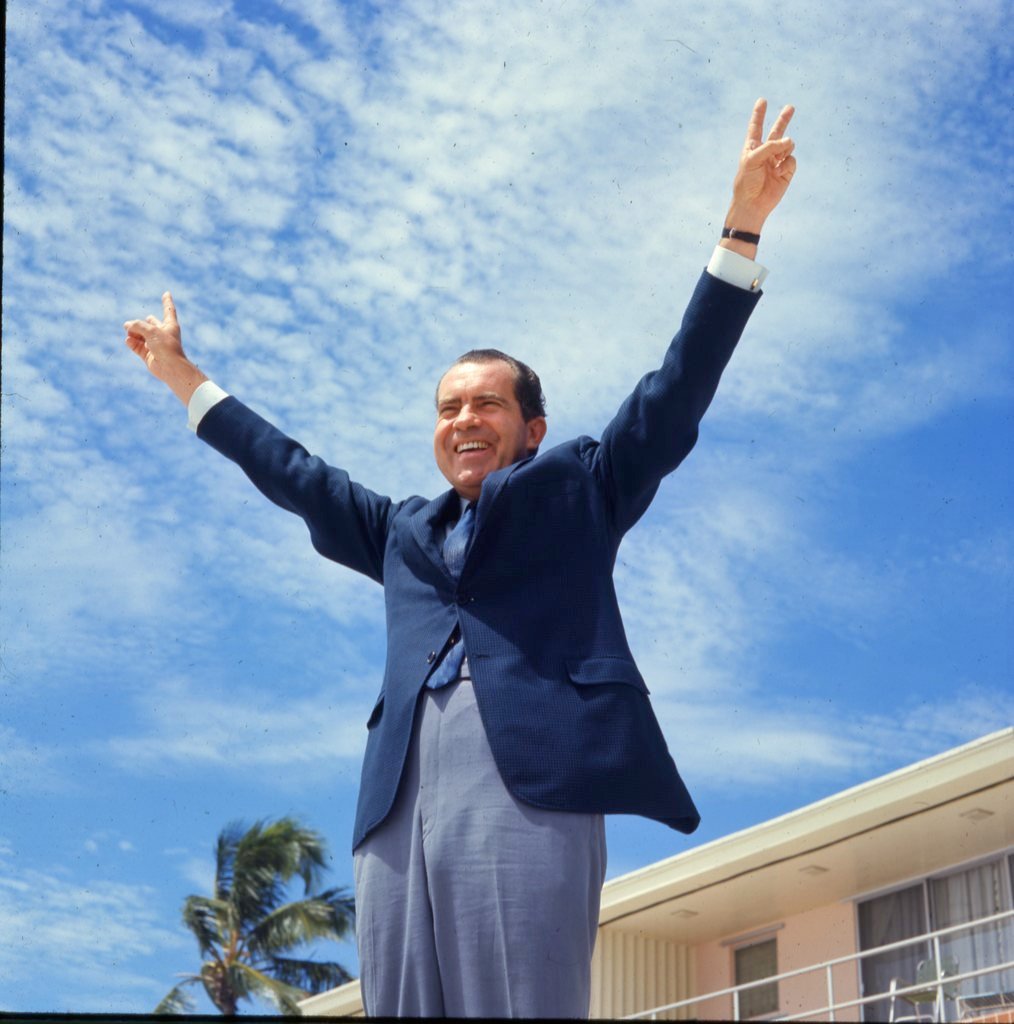
1. Watergate: Tapes revealed that President Nixon and his top advisors were involved in covering up a break-in at a Democratic National Committee office in the Watergate complex in Washington, D.C. Nixon resigned before he could be impeached, becoming the first President to step down. Several of his top advisors — including the White House lawyer, Chief of Staff and Attorney General — did prison time.

The Committee to Re-elect the President was using mechanisms of government to attack domestic opponents in the press and the political world, even breaking into the psychiatrist’s office of the Pentagon Papers leaker, Daniel Ellsberg, to see what kind of dirt they could use to smear him.Image
2. Bill Clinton – Monica Lewinsky Scandal: In 1988, news broke of President Clinton's affair with White House intern Monica Lewinsky. Clinton initially denied the allegations, famously stating, "I did not have sexual relations with that woman." However, evidence, including Lewinsky's blue dress with Clinton's DNA, led to his admission of an inappropriate relationship. This scandal resulted in Clinton's impeachment by the House of Representatives on charges of perjury and obstruction of justice, although he was acquitted by the Senate and completed his term in office.Image
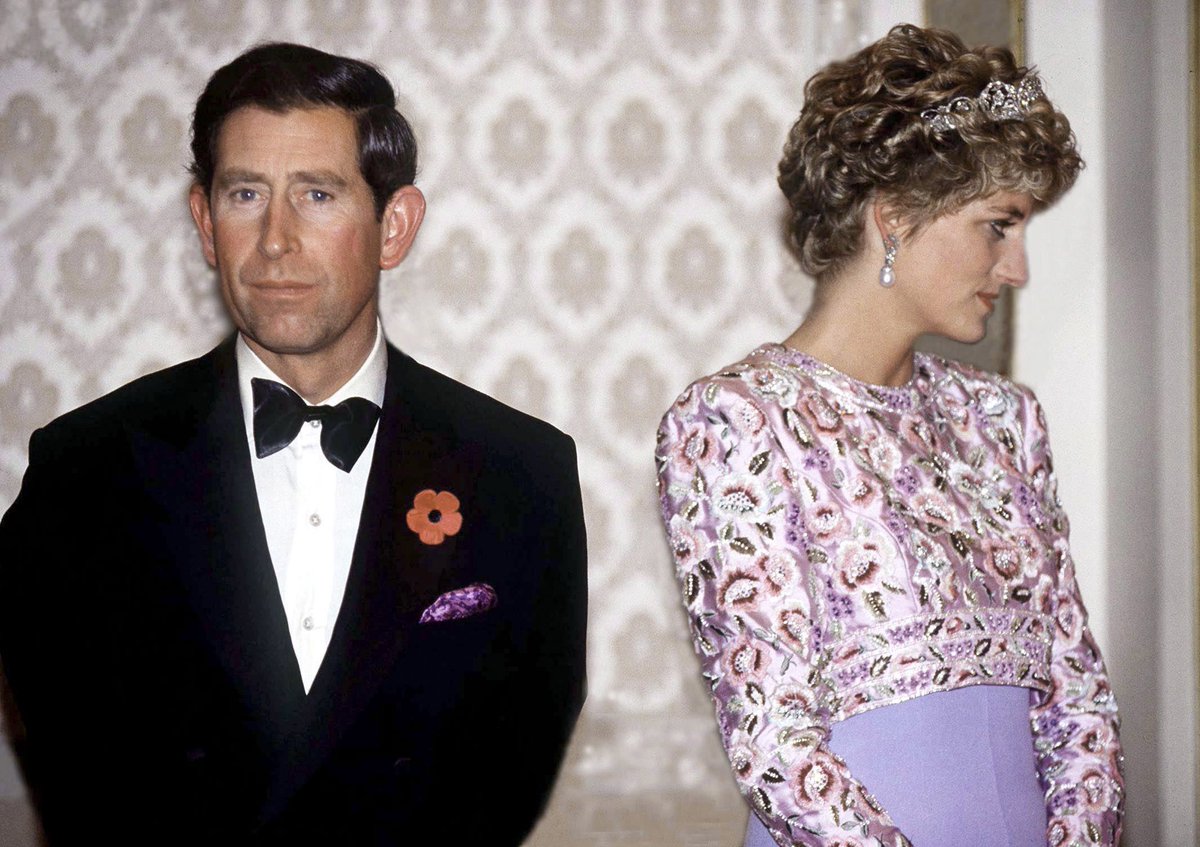
3. Prince Charles & Princess Diana's divorce: The scandal was highly publicized, marked by revelations of infidelity and personal struggles within their marriage. The media frenzy peaked with Diana's candid interview in 1995, where she famously stated, "There were three of us in this marriage," referring to Charles' relationship with Camilla Parker Bowles.Image
Here is Diana smashing a sugar glass bottle over Charles' head in 1986. I bet she wished it was real glass.
4. Abu Ghraib: Early on in the Iraq War, US army members & the CIA committed human rights violations and war crimes against detainees at the Abu Ghraib prison in Iraq. The abuse came to light in 2004 with the Department of Defense removing 17 soldiers from duty in response. Specialist Charles Graner and PFC Lynndie England were found to have committed some of the worst offenses & they received much harsher sentences.Image
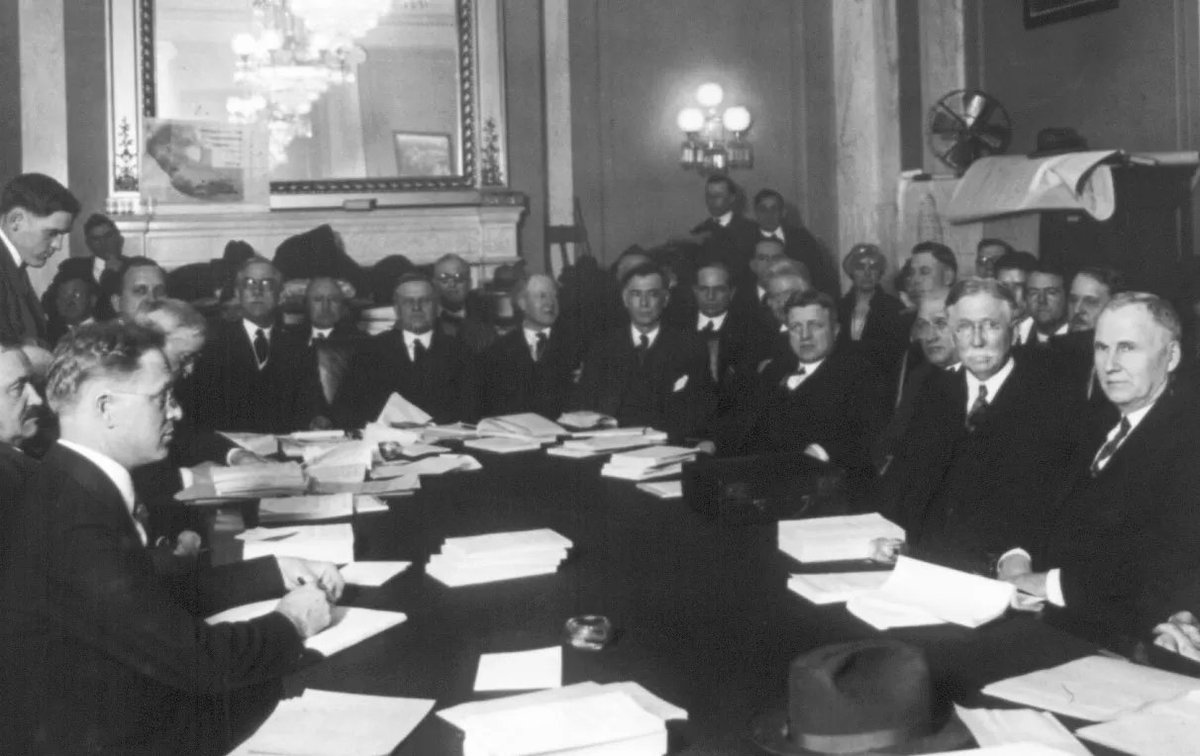
5. Teapot Dome scandal: In the 1920s, President Warren G. Harding’s Secretary of the Interior Albert Fall secretly accepted hundreds of thousands of dollars in Liberty Bonds in exchange for leasing former Navy oil reserves in Wyoming known as Teapot Dome to a private company. He became the first Cabinet secretary to go to prison because of his actions on the job.

The entire administration crumbled in his first term, right out of the gate. The scandal infected his entire close friend group and Harding became synonymous with cronyism and corruption. Scrutiny into Harding’s personal life led to the discovery that he had a mistress. It put so much pressure on President Harding that he died in office of a heart attack.

People in the government were selling the administration to the highest bidder, using their government power to exploit bad positions to make a lot of money. They weren’t interested in the national interest; they were interested in their self-interest.Image
6. The Crédit Mobilier Scandal (1872): Crédit Mobilier, the company hired to build the Union Pacific Railroad, used its stock to bribe top officials in President Ulysses S. Grant’s administration — including the Vice President, the Speaker of the House and other members of Congress — to secure federal support to build a transcontinental railroad. The scandal came to light in 1872, but it took place in 1867 before Grant was President.

It was a prime example of corrupt crony capitalism that plagued the U.S. government. The scandal discredited the Grant Administration, even though the President was not involved in it personally, and, by extension, the Administration’s Reconstruction policy of protecting black rights against white terror in the post-Civil War South.Image
7. Tangentopoli: The Tangentopoli scandal, also known as "Bribesville," erupted in Italy in the early 1990s, revealing extensive political corruption and bribery involving numerous politicians and businessmen. The investigation, led by Milan magistrates and dubbed "Operation Clean Hands," uncovered a network of illicit payments made in exchange for public contracts.

The scandal implicated leaders from Italy's major political parties, including the long-dominant Christian Democrats and Socialists, leading to widespread public outrage. As a result, many prominent figures were arrested, and several parties dissolved, fundamentally reshaping the Italian political landscape. The Tangentopoli scandal exposed systemic corruption and significantly undermined public trust in Italian political institutions.Image
8. The Profumo scandal: The Profumo scandal of the 1960s rocked the United Kingdom when it was revealed that John Profumo, the Secretary of State for War, had an affair with Christine Keeler, a model with connections to a Soviet naval attaché. The affair raised national security concerns and questions about potential espionage. Initially, Profumo denied the relationship in a statement to the House of Commons but was later forced to admit the truth and resign. The scandal severely damaged the credibility of Prime Minister Harold Macmillan's government, contributing to its eventual downfall.Image
9. Enron scandal: In 2001, it was revealed that the Houston-based energy company had engaged in widespread accounting fraud to hide its financial losses. Enron used complex financial structures and off-the-books partnerships to inflate profits and conceal debts, misleading investors and regulators.

The company's collapse led to the largest bankruptcy in U.S. history at the time, erasing billions in shareholder value and leading to significant job losses. Key executives, including CEO Jeffrey Skilling and founder Kenneth Lay, were convicted of multiple charges related to the fraud. The scandal also resulted in the dissolution of Arthur Andersen LLP, Enron's auditing firm, and led to significant regulatory reforms, including the Sarbanes-Oxley Act, to improve corporate governance and financial disclosure.Image
Any I missed?
Mistyped on this one sorry this happened in 1998 not ‘88

• • •

Missing some Tweet in this thread? You can try to force a refresh

 

Keep Current with Time Capsule Tales

Time Capsule Tales Profile picture

Stay in touch and get notified when new unrolls are available from this author!

Read all threads

This Thread may be Removed Anytime!

PDF

Twitter may remove this content at anytime! Save it as PDF for later use!

Try unrolling a thread yourself!

how to unroll video
  1. Follow @ThreadReaderApp to mention us!

  2. From a Twitter thread mention us with a keyword "unroll"
@threadreaderapp unroll

Practice here first or read more on our help page!

More from @timecaptales

May 18
8 of the statistically closest United States presidential elections in history:

1. Donald Trump vs Hillary Clinton (2016): Clinton had nearly 3 million more votes than Trump in the popular election, but Trump won the election with 304 Electoral College votes to Clinton’s 227.

Pop. vote: Trump with 62,984,828, Clinton with 65,853,514Image
2. Rutherford B. Hayes vs Samuel J. Tilden (1876): The election was hard fought, and the vote tallying was marred by irregularities and hostility. It became the longest and most controversial election up to its time and threatened to wreak havoc across the country. It was finally concluded in the House of Representatives when the speaker forced completion of the vote count on March 2, 1877. Hayes lost the popular vote to Tilden by some 250,000 votes but won the electoral college by a single vote.

Pop. vote: Hayes with 4,036,298, Tilden with 4,300,590Image
3. John F. Kennedy vs Richard Nixon (1960): Kennedy won the popular vote by less than 120,000 votes out of 68.8 million votes cast and received 303 electoral college votes to Nixon’s 219.

Pop. vote: Kennedy with 34,227,096, Nixon with 34,107,646 Image
Read 8 tweets
May 18
10 of history's wildest conspiracy theories that turned out to be true:

1. MKUltra: In the 1950s, the CIA’s Project MKUltra was originally intended to make sure the United States government kept up with presumed Soviet advances in mind-control technology. CIA documents suggest that they investigated "chemical, biological, and radiological" methods of mind control as part of MKUltra.

Subjects were given these substances without their knowledge, which led to serious psychological harm. For a long time, MKUltra was just a rumor, but in the 1970s, investigations by Congress uncovered the truth. The program was shut down, and many details were made public, revealing the extent of the unethical practices. It showed how far the government was willing to go in the name of national security, even if it meant violating human rights.

Much of Project MKUltra’s research was destroyed by the CIA when the truth came out, so the extent of how far their experiments went will never fully be known.Image
2. Prohibition Poisoning: During Prohibition (1920-1933), the U.S. Treasury Department poisoned industrial alcohol in an attempt to discourage bootleggers from using it to make alcoholic beverages. But apparently not all bootleggers were concerned with public health, and they produced and sold the beverages anyway, resulting in thousands of deaths.

The government secretly continued the practice until the end of Prohibition, despite knowing its effects. Seymour M Lowman, assistant Secretary of the Treasury in charge of Prohibition at the time, said in 1927, that drunks were “dying off fast from poison ‘hooch'” and “a good job will have been done” if America became sober because of it.

Of course, people continued to drink – and around 700 people died through this poisoning until Prohibition ceased in 1933. However, the shocking story only truly re-emerged in recent years.Image
3. Tuskegee Syphillis Experiment: In 1932, the U.S. Public Health Service conducted an experimental trial of a treatment for syphilis on several hundred African-American men in Tuskegee, Alabama, without securing their informed consent. Men with the disease were never given adequate treatment for it and were never fully informed of their role in the experiment. Even after penicillin use became widespread, the government continued the tests.Image
Read 10 tweets
May 17
8 of history's biggest unsolved mysteries:

1. D. B. Cooper: On the afternoon of November 24, 1971, a nondescript man calling himself Dan Cooper approached the counter of Northwest Orient Airlines in Portland, Oregon. He used cash to buy a one-way ticket on Flight #305, bound for Seattle, Washington. Thus began one of the great unsolved mysteries in FBI history.

Cooper was a quiet man who appeared to be in his mid-40s, wearing a business suit with a black tie and white shirt. He ordered a drink - bourbon and soda - while the flight was waiting to take off. A short time after 3:00 p.m., he handed the stewardess a note indicating that he had a bomb in his briefcase and wanted her to sit with him.

The stunned stewardess did as she was told. Opening a cheap attaché case, Cooper showed her a glimpse of a mass of wires and red-colored sticks and demanded that she write down what he told her. Soon, she was walking a new note to the captain of the plane that demanded four parachutes and $200,000 in twenty-dollar bills.

When the flight landed in Seattle, the hijacker exchanged the flight's 36 passengers for the money and parachutes. Cooper kept several crew members, and the plane took off again, ordered to set a course for Mexico City.

Somewhere between Seattle and Reno, a little after 8:00 p.m., the hijacker did the incredible: He jumped out of the back of the plane with a parachute and the ransom money. The pilots landed safely, but Cooper had disappeared into the night, and his ultimate fate remains a mystery to this day.

The FBI learned of the crime in-flight and immediately opened an extensive investigation that lasted many years. Calling it NORJAK, for Northwest Hijacking, we interviewed hundreds of people, tracked leads across the nation, and scoured the aircraft for evidence. By the five-year anniversary of the hijacking, we had considered more than 800 suspects and eliminated all but two dozen from consideration.Image
2. What happened to the Roanoke colony? England’s plan to colonize North America did not get off to a smooth start. When John White and about 115 colonists arrived on Roanoke Island in 1587, the settlement had already been abandoned once, and a garrison of 15 men left behind had also disappeared. The colonists arrived too late in the year to grow food, and White returned to England for supplies.

Delayed by the Anglo-Spanish War, he returned in 1590 to find everyone gone, with "CROATOAN" carved into a post. White interpreted this as a sign they had relocated safely, but a storm prevented him from searching. Most researchers think the settlers were either killed or absorbed into Native populations, and the mystery of their disappearance became significant only in the 1800s.Image
3. What was the Tunguska event? In 1908, a colossal explosion took place over the remote Tunguska River area in Siberian Russia, flattening around 80 million trees across an area of approximately 830 square miles.

Despite its enormity, there were no direct witnesses and it wasn't until 1927 that a Soviet scientific expedition, led by Leonid Kulik, reached the site to investigate. They found no impact crater, leading to numerous theories, ranging from a meteorite airburst to more fringe ideas like UFOs or black holes.

In recent years, the most accepted scientific explanation is that a comet or asteroid disintegrated in Earth's atmosphere, causing the blast. However, without conclusive evidence, the Tunguska Event continues to captivate and mystify.Image
Read 8 tweets
May 17
5 most popular JFK assassination conspiry theories ~

1. Soviets & Cubans: Oswald was a self-avowed Marxist who defected to the Soviet Union at 20. He returned to the U.S. accompanied by his Russian-born wife & daughter.

Speculation arose about a potential link between Oswald and the Soviets seeking vengeance after the Cuban Missile Crisis. However, Oswald's Russian connections and pro-Cuban sentiments make this theory doubtful due to the risk of war with the U.S. Both nations also reportedly found Kennedy more cooperative than Johnson.

Files declassified in 2021 revealed that between September 27 and October 3, Oswald visited the Soviet and Cuban Embassies in Mexico City multiple times. Some theorize that this trip was to orchestrate the assassination or plan his escape, fueled by claims that Oswald’s Marxist convictions influenced his decision to target JFK.

There are also theories suggesting that American intelligence agencies might have known about Oswald’s intentions but allowed the assassination to happen due to their purported desire to remove Kennedy from office.Image
2. The driver did it: One theory is that William Greer, the driver of the President’s car, turned around and shot JFK. This is based on reports from doctors of a bullet entry wound to the front of Kennedy’s neck, despite Kennedy’s official autopsy showing he’d been hit with two bullets – one that entered his upper back and exited below his neck, and one that hit him in the back of his head, exiting the front of his skull. However, this theory is partly based on a poor quality copy of the famous Zapruder film, and mostly disregarded.Image
3. The CIA did it: One theory posits that Kennedy’s assassination was an inside job, potentially executed by a rogue faction within the CIA, owing to tensions following the Bay of Pigs invasion. Despite CIA denials, Kennedy’s awareness of their covert operations against Fidel Castro spurred suspicions that the agency orchestrated his murder to prevent exposure and dismantling.

Additionally, some believe that anti-communist elements in the CIA saw Kennedy’s diplomatic initiatives as weakening America’s stance in the Cold War. His assassination would ensure that the U.S. maintained a more aggressive and confrontational look.Image
Read 6 tweets
May 16
9 biggest historical conspiracy theories:

1. Lee Harvey Oswald did not assassinate JFK: Conspiracy theorists claim that the 1963 assassination of the former president was orchestrated by the CIA or that multiple shooters were involved. Former LA District Attorney Vincent Bugliosi estimated that a total of 42 groups, 82 assassins, and 214 people have been accused in various conspiracy scenarios.Image
2. The Moon landing was faked: Theorists claim that the 1969 Apollo 11 mission was done on a studio set on Earth & that NASA has continued to run with this hoax for 50+ years. Opinion polls taken in various locations have shown that between 6% and 20% of Americans, 25% of Britons, and 28% of Russians surveyed believe that the crewed landings were faked.Image
Here is former astronaut Buzz Aldrin punching a moon landing conspiracy theorist in the face. Satisfying.
Read 12 tweets
May 15
Glorious architectural wonders you've never heard of (thread) 🧵

1. Meenakshi Temple, India 🇮🇳 Image
2. Hallgrimskirkja Church, Iceland 🇮🇸 Image
3. Wat Rong Khun, Thailand 🇹🇭 Image
Read 15 tweets

Did Thread Reader help you today?

Support us! We are indie developers!


This site is made by just two indie developers on a laptop doing marketing, support and development! Read more about the story.

Become a Premium Member ($3/month or $30/year) and get exclusive features!

Become Premium

Don't want to be a Premium member but still want to support us?

Make a small donation by buying us coffee ($5) or help with server cost ($10)

Donate via Paypal

Or Donate anonymously using crypto!

Ethereum

0xfe58350B80634f60Fa6Dc149a72b4DFbc17D341E copy

Bitcoin

3ATGMxNzCUFzxpMCHL5sWSt4DVtS8UqXpi copy

Thank you for your support!

Follow Us!

:(