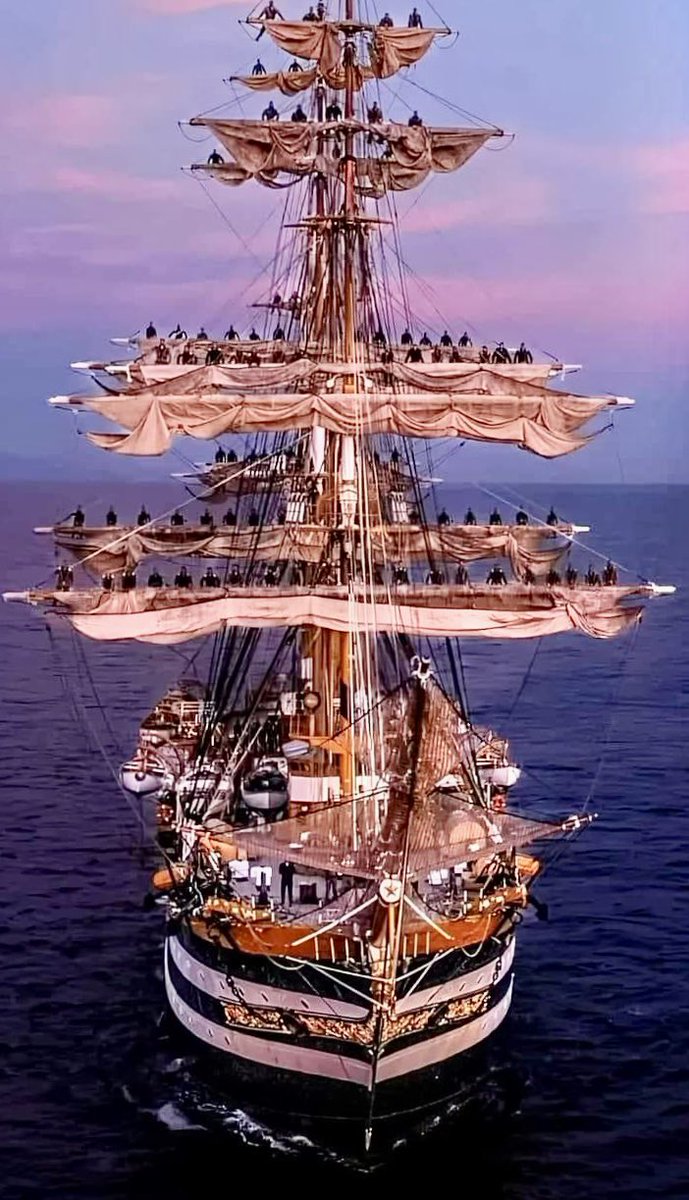
The Amerigo Vespucci: the most beautiful tall ship in the World ✨⚓️
Named after the legendary and unparalleled Tuscan sea explorer, Amerigo Vespucci, in whose honor America is named!
A Thread 🧵 that fills me with pride and emotion 💫.
Who was the Italian 🇮🇹 Amerigo Vespucci (Florence 1454 - Seville 1512)?
When Christopher Columbus reached the coasts of the Indies from the west in 1492—or so he believed—Amerigo Vespucci was in Seville. He was thirty-eight years old and had recently moved to Spain to trade goods. Little did he imagine that within ten years, he would follow the route and destiny of the Genoese admiral, redrawing the boundaries and concept of the world as it was known.
Between 1499 and 1502, he made two voyages across the Atlantic, one under the command of the King of Castile and one in the service of the King of Portugal.
In addition to his insights into sea longitude, he provided the first accurate descriptions of the places and peoples encountered on the uncharted coasts across the ocean, henceforth known as "America," "the land of Amerigo."
The Ship
Imposing not only in size, the Amerigo Vespucci measures 101 meters in length and about 16 meters in width, and is also "imposing" from a technical standpoint. This sailing ship, equipped with diesel and electric engines, has a bowsprit at the bow and three masts (the main mast at 54 meters, the foremast at 50 meters, and the mizzen mast at 43 meters). It boasts 2,650 square meters of sails, divided into 24 square sails made of a vegetable material called "canvas olona." The crew maintaining the Amerigo Vespucci training ship to perfection consists of 470 people performing the most varied tasks assigned by the commander.
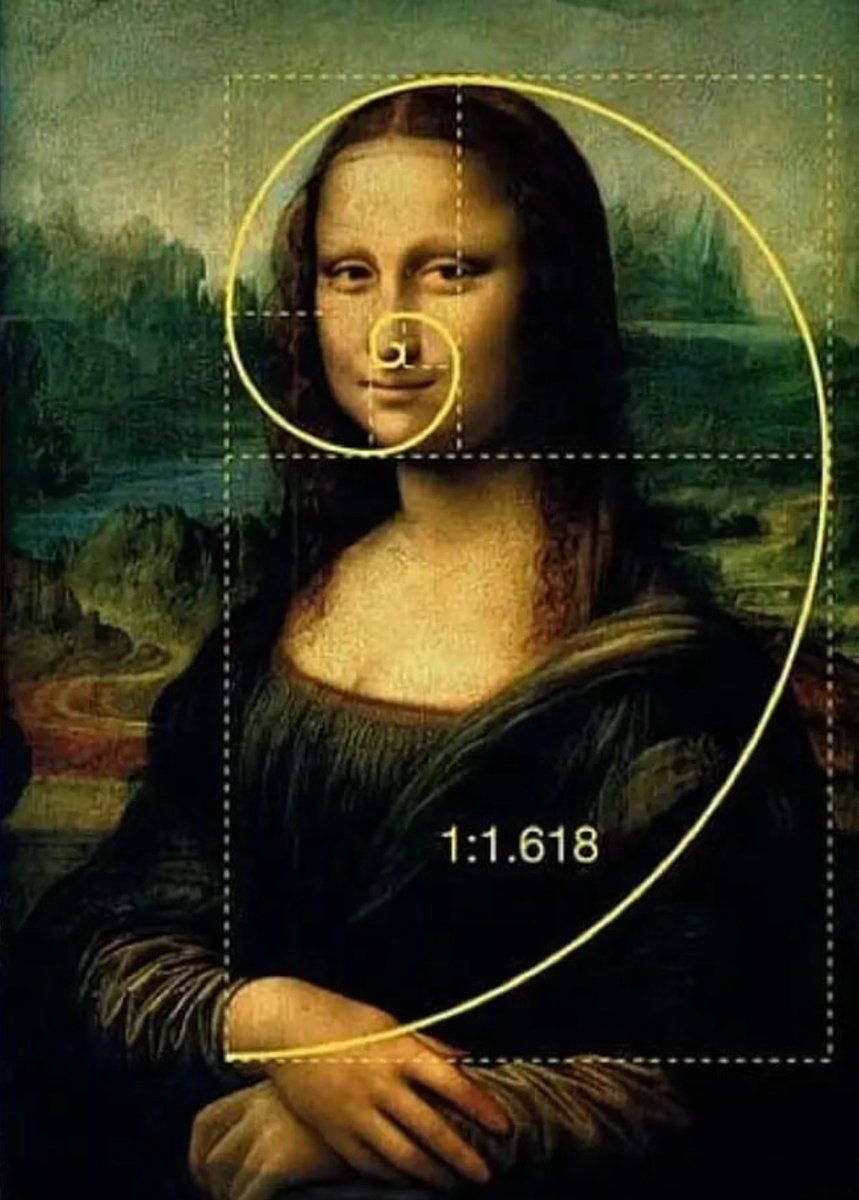
The mathematical marvel of the Golden Ratio, also known as the Divine Proportion, and its connection to the Fibonacci Sequence.
1. “Introduction to the Golden Ratio”: The golden ratio, φ, is a fascinating mathematical concept that appears in nature, art, and architecture. Often called the divine proportion, it is approximately equal to 1.6180339887...
2. “What Makes it Special?“: The golden ratio is unique because it can be found in the proportions of various natural forms, from the spirals of shells to the arrangement of leaves and the pattern of galaxies.
Ready for an inside-out exploration?
We know them by heart from the outside, but let's see if we can recognize them from the inside or below!
A surprising Thread 🧵
1. Looking down in the Center of the Giotto Bell Tower, Florence - Italy 🇮🇹
2. The Leaning Tower of Pisa, Tuscany - Italy 🇮🇹 viewed from the inside.
3. The Leaning Tower of Pisa, Tuscany - Italy 🇮🇹
The worn staircase inside it.
Today bears a profound historical weight: May 6, 1527, stands as the infamous day of the “Sack of Rome” 🔥.
A thread 🧵.
This brutal event was orchestrated by Spanish and Landsknechts, German mercenaries serving under Charles V of Habsburg, claiming the lives of 20,000 individuals. Additionally, a staggering 30,000 more succumbed to the plague brought by the invading forces. Seeking sanctuary, Clement VII sought refuge in Castel Sant'Angelo, ultimately paying a ransom of 400,000 ducats.
Thus, the Renaissance era met its tragic conclusion.
In defending St. Peter's Square and escorting Pope Clement VII to Castel Sant'Angelo, the Pontifical Swiss Guard lost 147 of its 189 men!
May 6 remains to this day the day of the swearing-in of new guards.
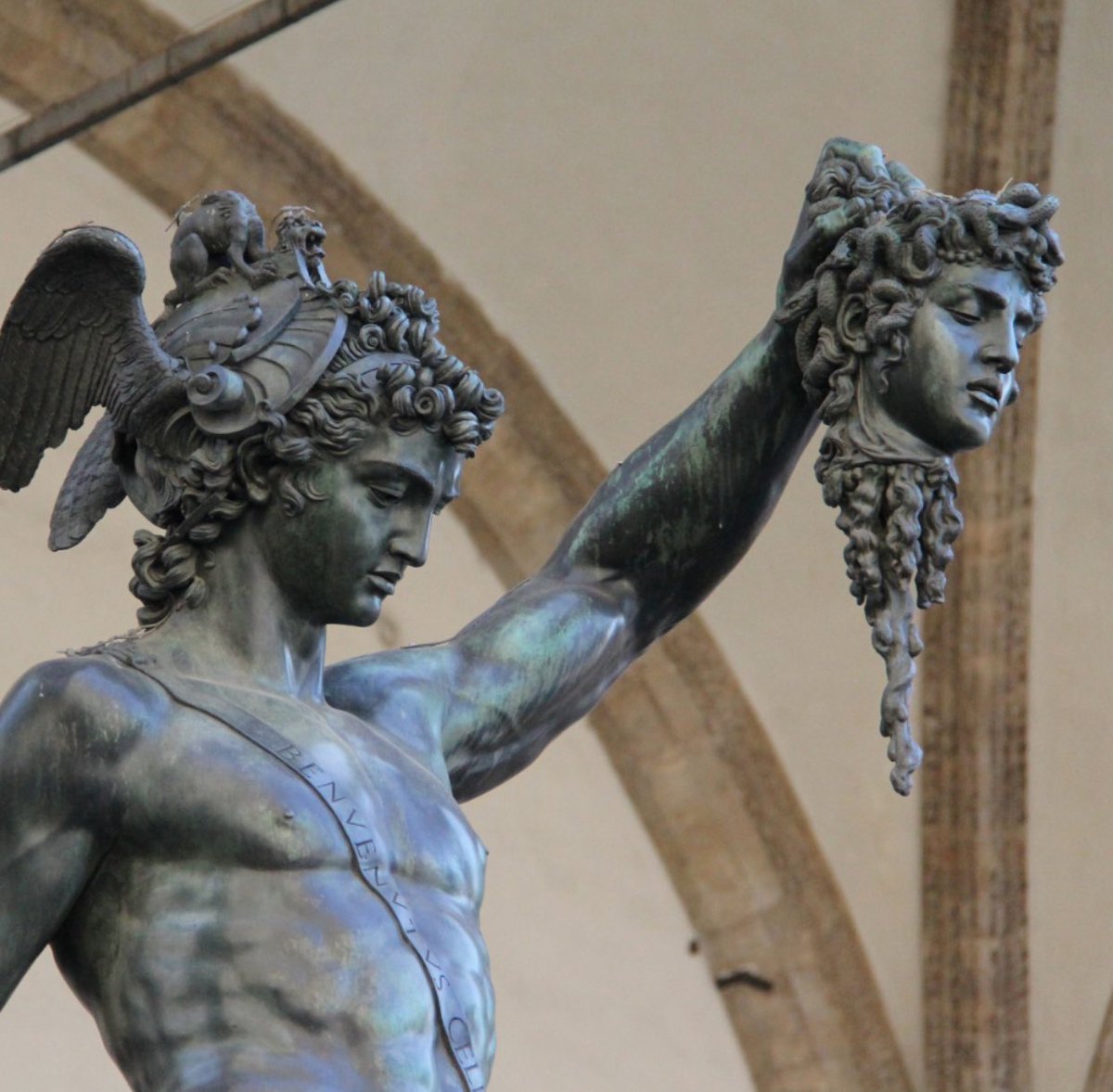
Benvenuto Cellini, known to all for the famous statue in Piazza della Signoria, vividly described his experience of the Sack of Rome in his writings, having participated in the defense of the Holy See 🇻🇦 .
“When night fell and the enemy entered Rome, we in the Castello, and most particularly myself, who has always delighted in seeing new things, stood there contemplating this unbelievable spectacle and conflagration, which was of a magnitude that those who were situated in any other spot but the Castello would neither see or imagine”.
Benvenuto Cellini, in his autobiography, My Life (composed between 1558 and 1566).
📍Terme di Saturnia Natural Spa & Resort, Tuscany Italy 🇮🇹
A paradise of wellness since Roman times 💫 - a Thread 🧵
The thermal waters of the Saturnia Baths (Manciano, province of Grosseto) gush from the depths of the Earth at a constant temperature of 37.5°C for over 3000 years, annually attracting tens of thousands of tourists.
Saturnia water passes under Mount Amiata, embarking on a journey that lasts over 40 years. During this process, the waters accumulate significant amounts of sulfur, calcium, and magnesium before resurfacing, with a flow of almost 800 liters per second.
During the Roman Empire, the baths were considered a place of luxury and pleasure, frequented by Roman nobility and members of high society. Over the years, they became an important thermal center of ancient Rome where people could socialize and discuss, with distinguished guests visiting to benefit from the healing properties of the waters.
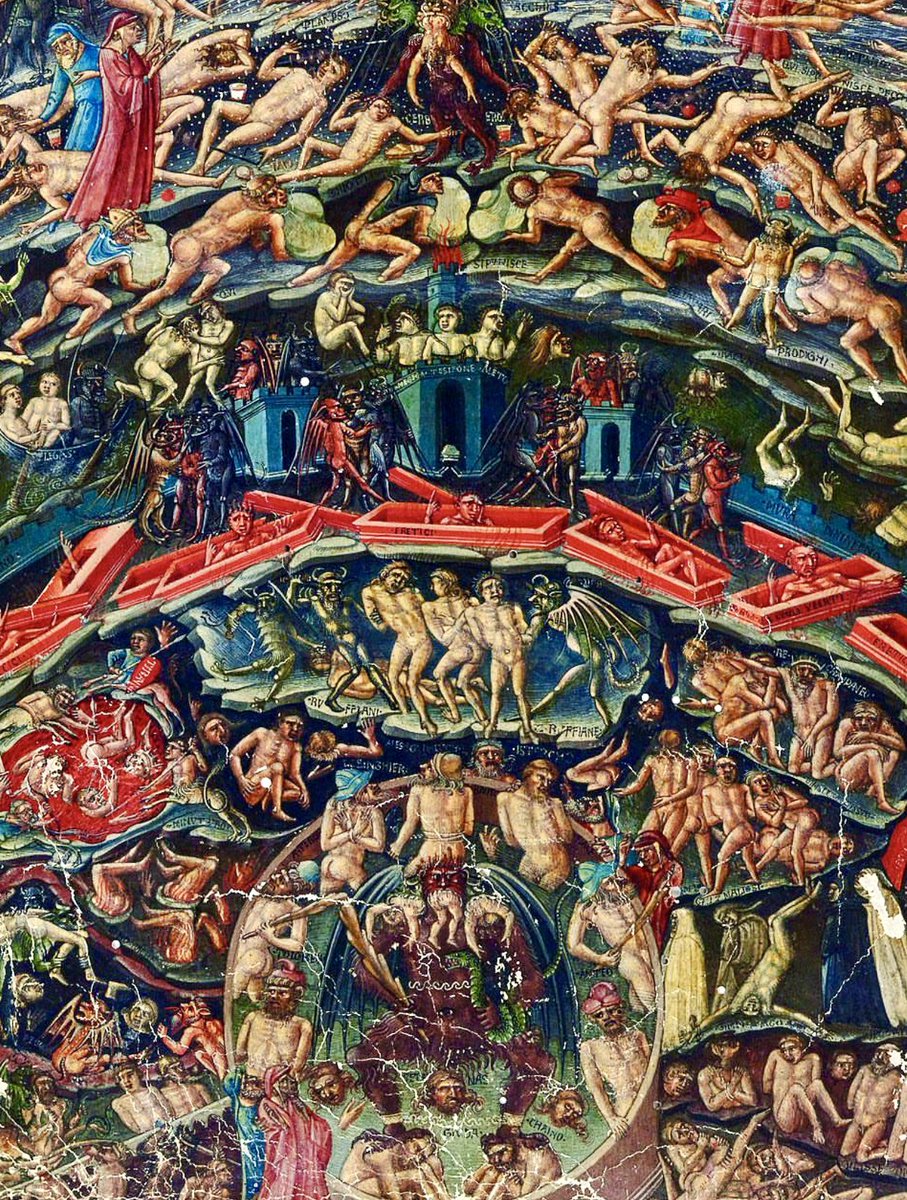
The hour has come for me to explore the darkest, most redemptive and monumental work of all time by the greatest poet in history:
Dante Alighieri - Divine Comedy 🔥
(To enhance readability, I shall employ copious numerical figures).
A Thread 🧵👇
* Dante's year of birth: 1265,
📍Florence, Italy 🇮🇹
* Theoretical start date of the narrated journey: March 25
* Dante's age at the beginning of the work: 39 years old
* Duration of composition: 14/15 years
* Number of words: 101,698
* Number of characters: 408,476
The Structure of the Divine Comedy:
* Eleven-syllable tercets with interlocking rhymes
* The poem consists of 100 cantos divided into 3 canticles (Hell, Purgatory, Paradise) each comprising 33 cantos, plus an introductory canto.
* Inferno is composed of 9 circles.
* Purgatorio is composed of 9 zones (7 cornices, the Antipurgatory, and the Earthly Paradise).
* Paradise is composed of 9 concentric, moving heavens enclosed by the Empyrean, totaling 10.