Heatloss Profile picture
May 24, 2024 15 tweets 6 min read Read on X
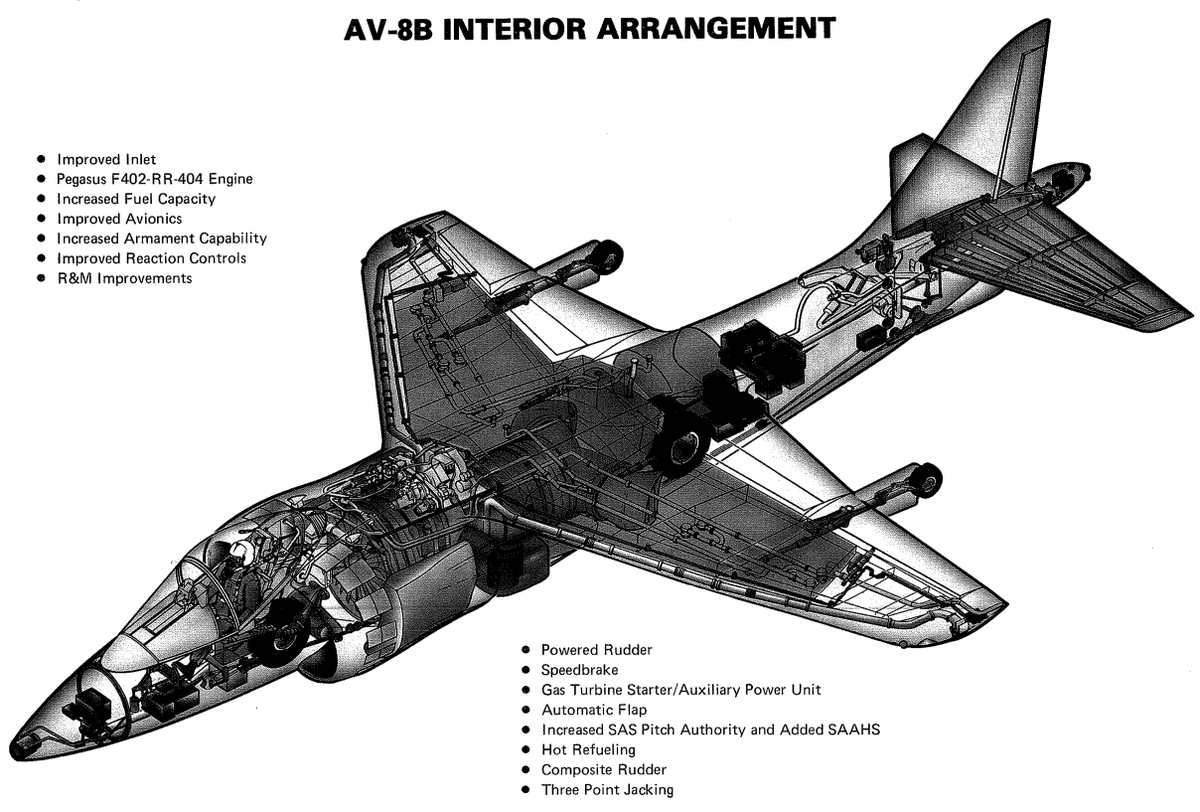
I've mentioned previously that I prefer the AV-8B to the earlier Harriers. This will be a short overview of the changes and improvements compared to the AV-8A. 🧵 Image
The first thing to consider is the point of the Harrier II. The USMC appreciated the flexibility that the Harrier I provided, but was concerned about low payload, short range, outdated avionics, and a poor safety record.
The Harrier II solved these issues.
Like usual, we're gonna start at the front with this one.
At the tip of the nose, the AN/ASB-19 Angle Rate Bombing system is covered by a glass dome. Right behind this, the aircraft computer is mounted, and the airframe structure is designed for but not with an APG-65 radar. Image
ARBS was one of the biggest improvements to the Harrier. It had two modes: optical tracking and laser tracking. In the first, the pilot would initiate the track. In the second, a soldier on the ground could designate a target, allowing the computer to lock on.
ARBS tracks the target and provides angular rate information. The computer is provided with instantaneous angle information, aircraft dive angle information, and aircraft speed.
Combined with a stored ballistic trajectory, the computer calculates the release angular rate. Image
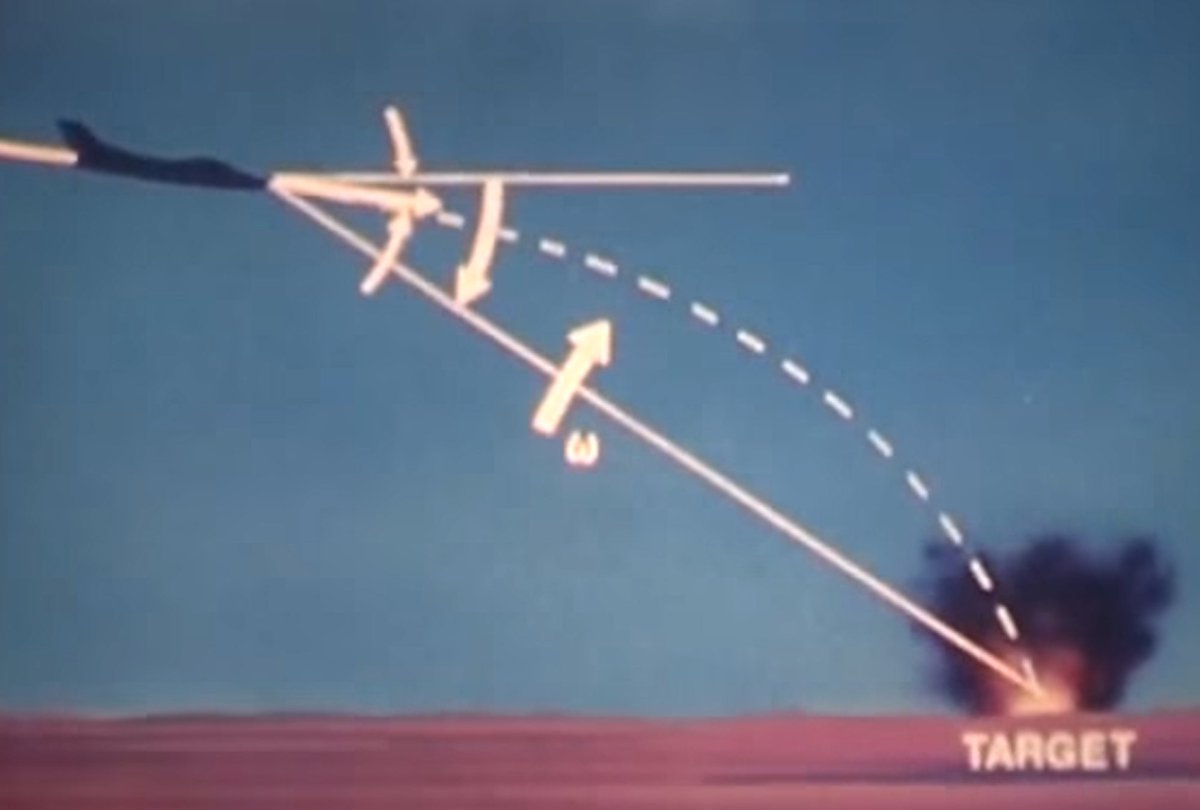
Once the measured angular rate matches the calculated angular rate, the bomb is automatically released.
The dual-mode laser/visual tracker was an especially fantastic optimization for CAS, as the USMC needed better, more accurate weapons targeting and release.
Behind the avionics section is the cockpit. The cockpit was enlarged and raised to provide better vision rearwards and over the side of the cockpit. The lack of visibility was one of the biggest issues with the AV-8A, and directly contributed to its poor safety.
Image
Image
The cockpit, of course, also received massive internal overhauls, which could be a topic on its own. Image
Unfortunately, we're going to have to skip over some of the electronic warfare and other avionics improvements due to a lack of space to cover them. Another time. Image
Now for the hover performance.
One of the many goals of the AV-8B was improving the vertical flight characteristics. The first major way this was done was through the lightening of the airframe with the extensive use of composites in the nose, wings, tail, and rudder.


Image
Image
Image
Image
The second way was through refinements in the control systems, as described below. Image
The third and final major way was through the "Lift Improvement Devices". These limited the re-intake of exhaust gases from the engine and deflected some of the air coming back up under the aircraft, massively increasing the available lift as the aircraft approached the ground.
Image
Image
The new wing design also massively changed the capabilities of the Harrier. The wing was 15% larger, 330 pounds lighter, could hold more ordnance, and had far superior low and high-speed handling characteristics when compared to the AV-8A. Image
The final topic for today is range improvement. The supercritical airfoil, greater internal fuel, and lift improvement devices allowed for a much greater combat radius than AV-8A with comparable loads.
These are likely optimistic numbers, but should give a good idea.
Image
Image
And some other overview stuff that didn't make it into the meat of the thread.

Image
Image
Image

• • •

Missing some Tweet in this thread? You can try to force a refresh

 

Keep Current with Heatloss

Heatloss Profile picture

Stay in touch and get notified when new unrolls are available from this author!

Read all threads

This Thread may be Removed Anytime!

PDF

Twitter may remove this content at anytime! Save it as PDF for later use!

Try unrolling a thread yourself!

how to unroll video
  1. Follow @ThreadReaderApp to mention us!

  2. From a Twitter thread mention us with a keyword "unroll"
@threadreaderapp unroll

Practice here first or read more on our help page!

More from @heatloss1986

Nov 25
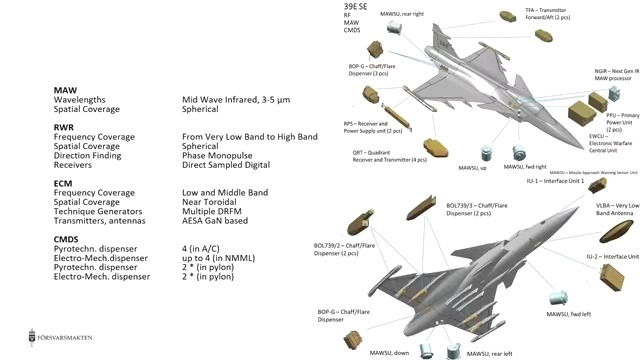
Someone asked me to do a comparison of capabilities between F-35A and JAS-39E Gripen. A ton of material is classified but I will do my best here.
In short, Gripen is not even in the same class as F-35A. It isn't awful, but it is not a competitor with F-35. Image
Image
Let's start with one of the greatest advantages of the Gripen: its electronic warfare systems. The Gripen has a relatively robust signal receiver network across the aircraft, with several antennas capable of electronic attack, such as the wingtip pods and external jammers. Image
Image
Image
Image
The Gripen's wingtip pods provide an uncommon capability called "crosseye jamming." Crosseye jamming can create a positional false target in the horizontal or vertical plane, rather than just range. Image
Read 25 tweets
Jun 24
Optically guided missiles seem enticing until you realize the litany of problems with them. In this short thread, I'll explore a few.

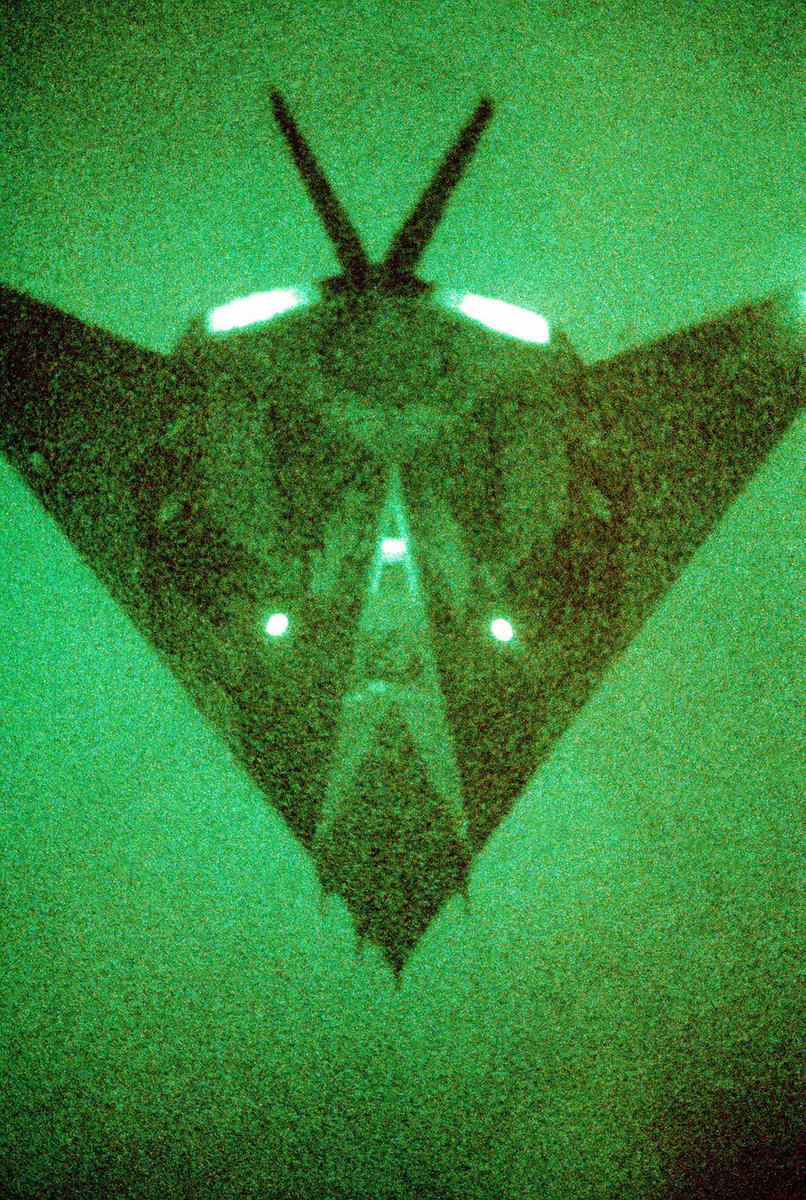
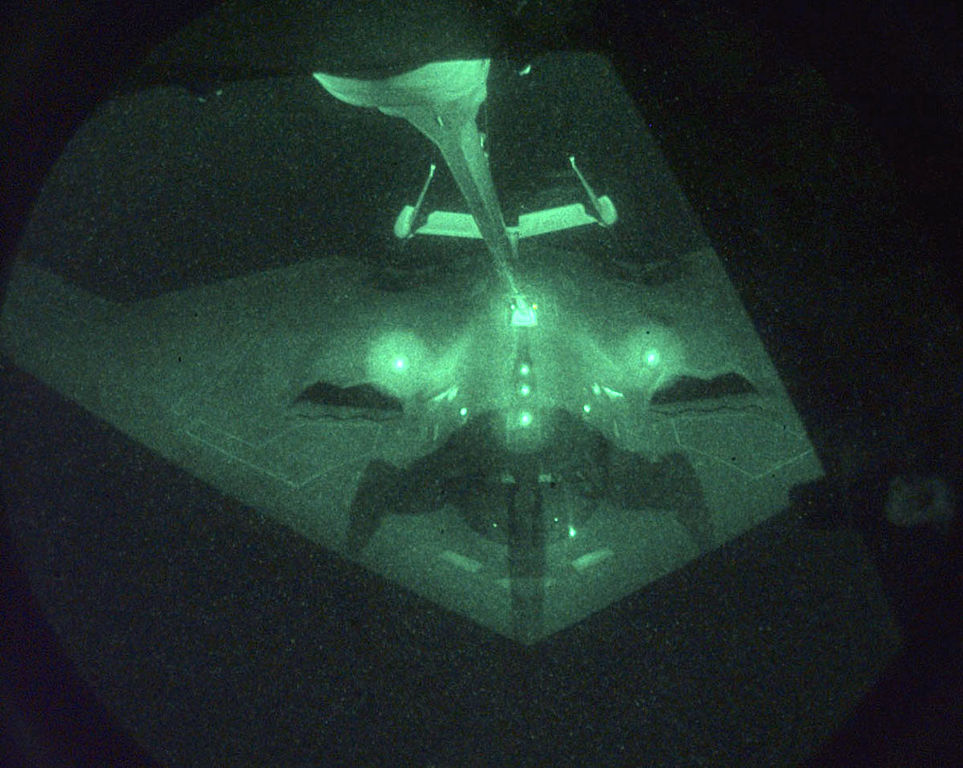
The first and easiest counter is to fly at night. F-117 Nighthawk combat missions were flown at night, as was Midnight Hammer with B-2 over Iran. Image
Image
If you want to try to optically track a target with damn near zero contrast, be my guest.

The Japanese Navy found that at night the human eye struggled to pick up ships over about five miles. A ship on the horizon is a significantly bigger target than a B-2 or F-117.
For a computer, greater signal to noise ratios are required to effectively track a target. This is why imaging infrared is preferable to optical contrast. Shown below is the last few seconds of flight of an AIM-9X.
This uses imaging infrared to detect and track the target.
Read 11 tweets
May 27
Since the end of the Cold War in 1991, the US Navy's ability to conduct air superiority and offensive strikes has been slowly diminishing. Today, we stand at an inflection point, where the F/A-XX program to deliver a new strike fighter to the Navy is in Jeopardy.
🧵 Image
This thread is a pitch for a congressional write-in campaign. The first part is a history of the degradation of the Navy's air wing. The second part is an analysis of a recent oversight hearing. The last post of this thread contains instructions for emailing your representatives.
In the 1980s, the A-6F was proposed for development. This was to be an updated A-6E including modern avionics, new engines, and AMRAAM. This would have provided the Navy with a relatively low cost program, retaining a two-seat crew with a large payload and good mission systems. Image
Read 24 tweets
May 12
Some very interesting stuff going on here with the Shenyang aircraft. 🧵

Exhaust appears visually similar to the F-22's with 2D thrust vectoring and shrouding. Wing shaping is nothing particularly special but seems good. Like JH-36, it retains some conventional control surfaces.
The all moving wingtips are a novel solution. I don't know what the trade offs are but they must be at least somewhat worth it. Potentially these are considered lower risk, higher strength, or more effective than the semi-morphing control surfaces on the JH-36. Image
The intake design is interesting. Unlike JH-36, which uses caret intakes underneath and uses a DSI above, the Shenyang aircraft uses what appears to be two DSIs below. The gear appears to fold sideways into a bay ABOVE the side bays, giving it a J-20-esque four bay arrangement. Image
Read 6 tweets
Apr 20
With the renewed interest in the Europa wars, this may be the best time to bring up the unusual short ranged missile developed for space-superiority craft.

The AIM-95E "Europa Agile," the only missile designed for operation in deep space AND within thin atmospheres.🧵 Image
First off, I apologize in advance for the lack of photos on this topic. All existing photos of Agile are of the ones designed in the 1970s for operation within Earth's atmosphere. Therefore, you will have to imagine some of these changes to the system.
The Agile for aerial use was cancelled in the mid 1970s after about $50m was wasted developing several different airframes and seekers. This spelled the end for the program as most know it, but this would only be the starting point for the Europa Agile. Image
Read 16 tweets
Apr 16
For my entire life I have been taught about the importance of effective searches. Since May 2024, I have fought with an unwanted feature that has made my experience worse.

A rant about "AI Overview," AI assisted search and their impact on using Google as a tool for research.🧵 Image
Google has billed these features as "taking the legwork out of searching" and "able to answer complex questions." This is a bald faced lie.
The AI has wasted more time than it has saved me, lied about results, and forced me to learn methods to get around it rather than to use it. Image
Image
Image
I do a lot of research using keywords that I need matched exactly. For example, right now, I was looking up the specific thrust of the General Electric F414 engine used in the X-59, an experimental plane in development for NASA. This should be a simple question to answer. Image
Image
Read 15 tweets

Did Thread Reader help you today?

Support us! We are indie developers!


This site is made by just two indie developers on a laptop doing marketing, support and development! Read more about the story.

Become a Premium Member ($3/month or $30/year) and get exclusive features!

Become Premium

Don't want to be a Premium member but still want to support us?

Make a small donation by buying us coffee ($5) or help with server cost ($10)

Donate via Paypal

Or Donate anonymously using crypto!

Ethereum

0xfe58350B80634f60Fa6Dc149a72b4DFbc17D341E copy

Bitcoin

3ATGMxNzCUFzxpMCHL5sWSt4DVtS8UqXpi copy

Thank you for your support!

Follow Us!

:(