I've mentioned previously that I prefer the AV-8B to the earlier Harriers. This will be a short overview of the changes and improvements compared to the AV-8A. 🧵 
The first thing to consider is the point of the Harrier II. The USMC appreciated the flexibility that the Harrier I provided, but was concerned about low payload, short range, outdated avionics, and a poor safety record.
The Harrier II solved these issues.
The Harrier II solved these issues.
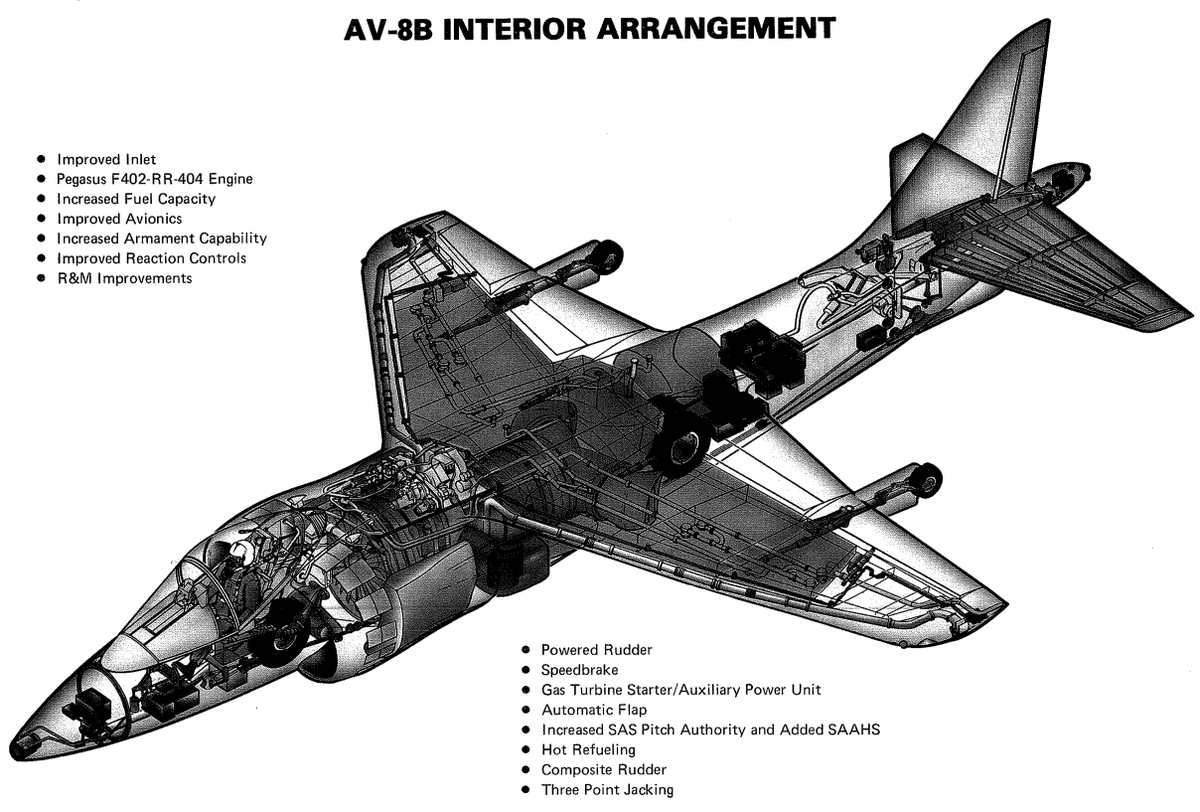
Like usual, we're gonna start at the front with this one.
At the tip of the nose, the AN/ASB-19 Angle Rate Bombing system is covered by a glass dome. Right behind this, the aircraft computer is mounted, and the airframe structure is designed for but not with an APG-65 radar.
At the tip of the nose, the AN/ASB-19 Angle Rate Bombing system is covered by a glass dome. Right behind this, the aircraft computer is mounted, and the airframe structure is designed for but not with an APG-65 radar.

ARBS was one of the biggest improvements to the Harrier. It had two modes: optical tracking and laser tracking. In the first, the pilot would initiate the track. In the second, a soldier on the ground could designate a target, allowing the computer to lock on.
ARBS tracks the target and provides angular rate information. The computer is provided with instantaneous angle information, aircraft dive angle information, and aircraft speed.
Combined with a stored ballistic trajectory, the computer calculates the release angular rate.
Combined with a stored ballistic trajectory, the computer calculates the release angular rate.
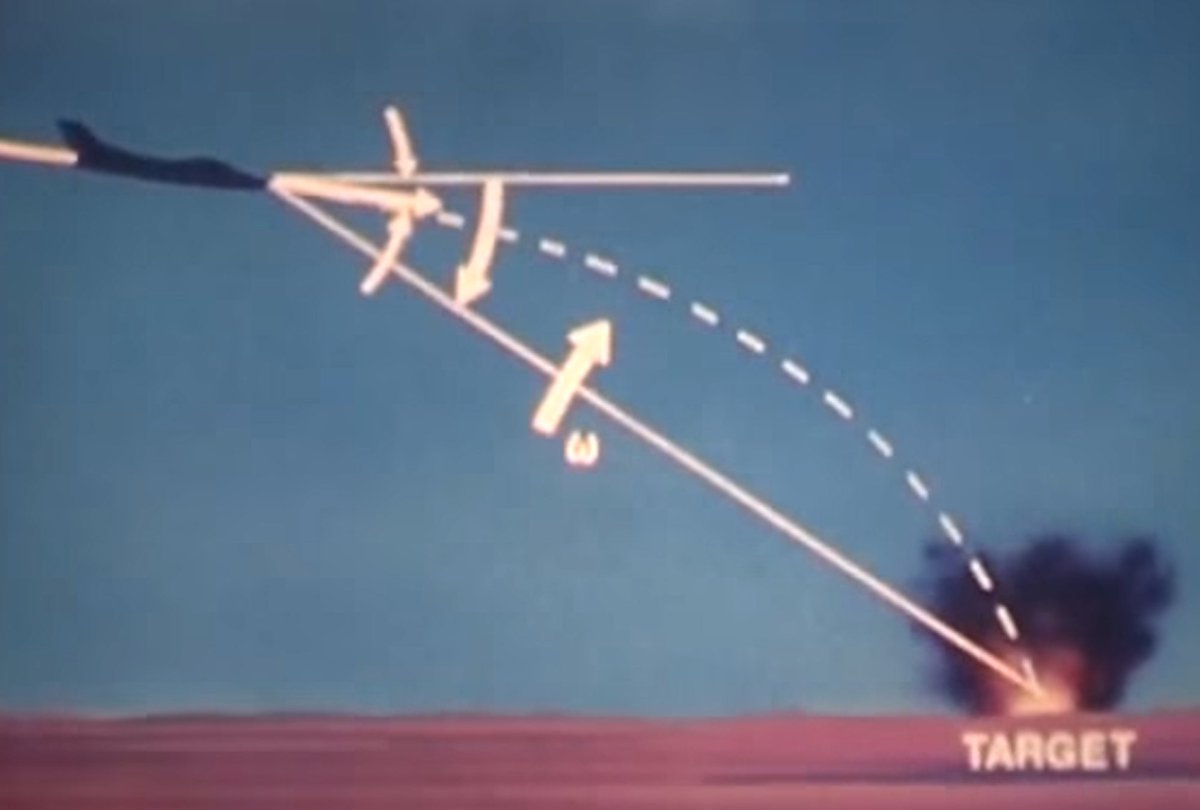
Once the measured angular rate matches the calculated angular rate, the bomb is automatically released.
The dual-mode laser/visual tracker was an especially fantastic optimization for CAS, as the USMC needed better, more accurate weapons targeting and release.
The dual-mode laser/visual tracker was an especially fantastic optimization for CAS, as the USMC needed better, more accurate weapons targeting and release.
Behind the avionics section is the cockpit. The cockpit was enlarged and raised to provide better vision rearwards and over the side of the cockpit. The lack of visibility was one of the biggest issues with the AV-8A, and directly contributed to its poor safety.


The cockpit, of course, also received massive internal overhauls, which could be a topic on its own.

Unfortunately, we're going to have to skip over some of the electronic warfare and other avionics improvements due to a lack of space to cover them. Another time.

Now for the hover performance.
One of the many goals of the AV-8B was improving the vertical flight characteristics. The first major way this was done was through the lightening of the airframe with the extensive use of composites in the nose, wings, tail, and rudder.
One of the many goals of the AV-8B was improving the vertical flight characteristics. The first major way this was done was through the lightening of the airframe with the extensive use of composites in the nose, wings, tail, and rudder.


The second way was through refinements in the control systems, as described below.

The third and final major way was through the "Lift Improvement Devices". These limited the re-intake of exhaust gases from the engine and deflected some of the air coming back up under the aircraft, massively increasing the available lift as the aircraft approached the ground.


The new wing design also massively changed the capabilities of the Harrier. The wing was 15% larger, 330 pounds lighter, could hold more ordnance, and had far superior low and high-speed handling characteristics when compared to the AV-8A.

The final topic for today is range improvement. The supercritical airfoil, greater internal fuel, and lift improvement devices allowed for a much greater combat radius than AV-8A with comparable loads.
These are likely optimistic numbers, but should give a good idea.
These are likely optimistic numbers, but should give a good idea.


And some other overview stuff that didn't make it into the meat of the thread.


• • •
Missing some Tweet in this thread? You can try to
force a refresh