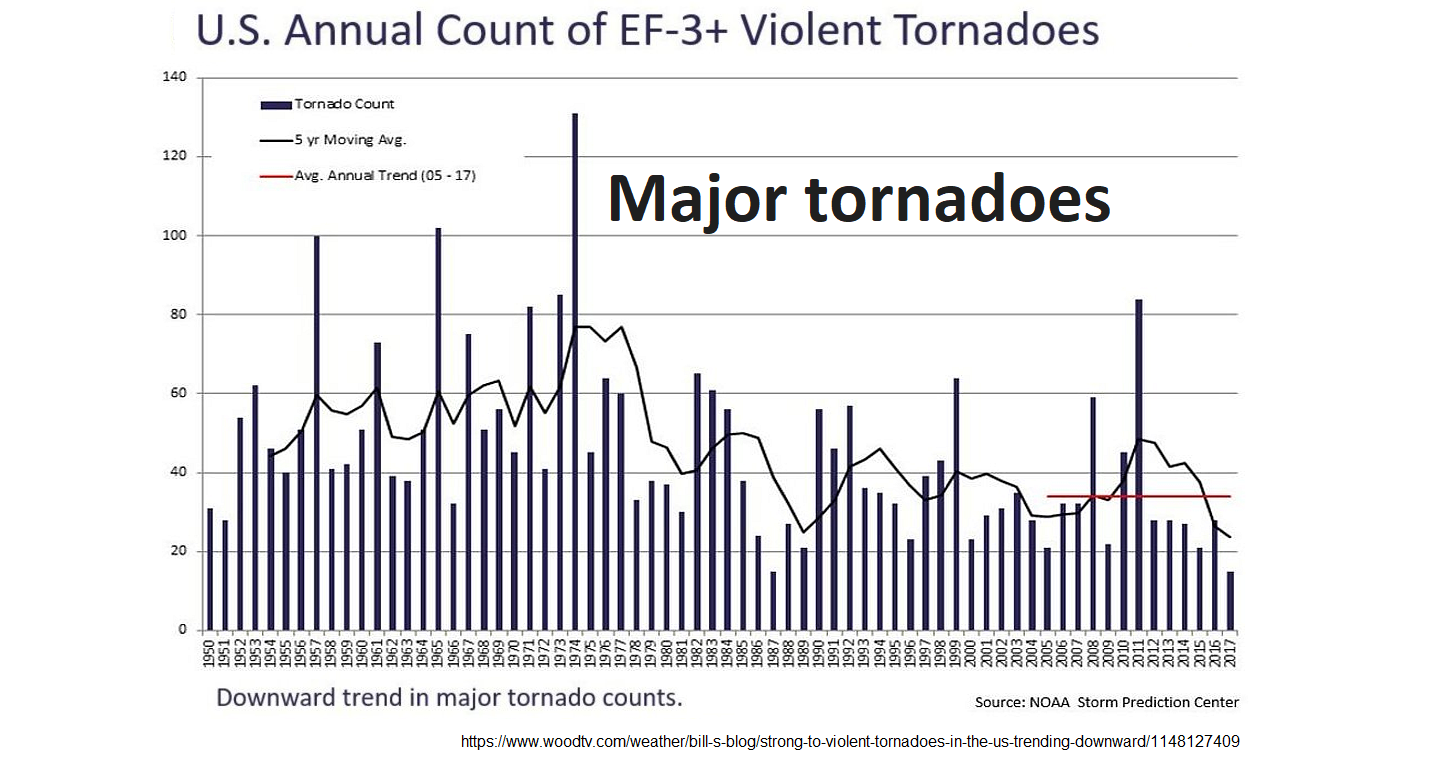
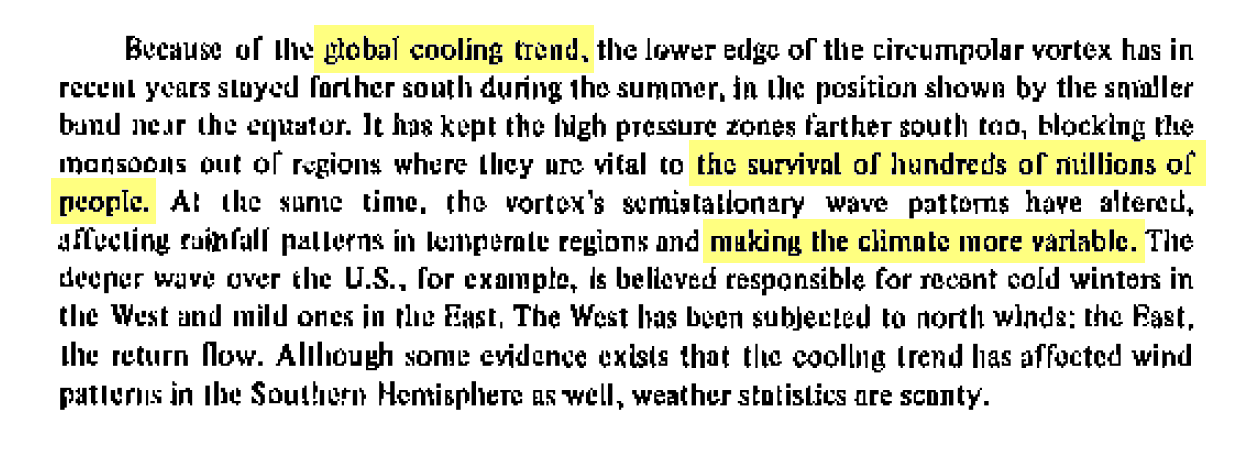
1/19› This is the source of those graphs:
They are perfectly accurate.
You seem to have confused the source of the graphs with a paper that cited them. I don't know how you did that, since the source is shown right on each of the graphs.
You can learn more about the topic here:
climatlas.com/tropical/
sealevel.info/learnmore.html…
They are perfectly accurate.
You seem to have confused the source of the graphs with a paper that cited them. I don't know how you did that, since the source is shown right on each of the graphs.
You can learn more about the topic here:
climatlas.com/tropical/
sealevel.info/learnmore.html…
2/19› Storms are NOT increasing. I JUST explained that; have you already forgotten?
Learn more about it here:
andymaypetrophysicist.com/2017/12/22/glo…
Learn more about it here:
https://x.com/ncdave4life/status/1794086210400322040
andymaypetrophysicist.com/2017/12/22/glo…

@Anymous84861064 @BenKoby1911 @joe51du @Willard1951 @Rabs1958 @HalBeowa @SpudNielsen @TheDisproof @rln_nelson @Veritatem2021 @GillesnFio @Anvndarnamn5 @MartinDn1001 @3GHtweets @MarcEHJones @tonyjsargeant @ammocrypta @JohnWil12363553 @DenisDaly @AristotleMrs @S_D_Mannix @Camburnclimate @ozzorro1 @bomac_macbo @Devonian1342 @GAJAJW @Jaisans @bulkbiker @Climatehope2 @Data79504085 @Mark_A_Lunn @Michael_D_Crow @Hji45519156 @waxliberty @priscian @SuperFoxyLoxy @ChrisBBacon3 @JaapTitulaer @wjack76995 @Rocky35418823 @NobaconEgbert @balls95652097 @BointonGiles @SeekerTheGreat1 @ubique60 @EthonRaptor @RMcgillss @paligap17 @MaggieL @PeterGleick 3/19› Neither hurricanes and nor'easters have worsened, and strong tornadoes have declined in frequency:
sealevel.info/learnmore.html…
sealevel.info/EF3_to_EF5_tor…
sealevel.info/learnmore.html…
sealevel.info/EF3_to_EF5_tor…

4/19› The decline in hurricane & tropical cyclone destructiveness is less striking than the decline in tornadoes. It might be merely due to random variation, but here's a paper about it:
Lin & Chan (2015), Recent decrease in typhoon destructive potential and global warming implications. Nature Communications, doi:10.1038/ncomms8182.nature.com/articles/ncomm…
Lin & Chan (2015), Recent decrease in typhoon destructive potential and global warming implications. Nature Communications, doi:10.1038/ncomms8182.nature.com/articles/ncomm…
@Anymous84861064 @BenKoby1911 @joe51du @Willard1951 @Rabs1958 @HalBeowa @SpudNielsen @TheDisproof @rln_nelson @Veritatem2021 @GillesnFio @Anvndarnamn5 @MartinDn1001 @3GHtweets @MarcEHJones @tonyjsargeant @ammocrypta @JohnWil12363553 @DenisDaly @AristotleMrs @S_D_Mannix @Camburnclimate @ozzorro1 @bomac_macbo @Devonian1342 @GAJAJW @Jaisans @bulkbiker @Climatehope2 @Data79504085 @Mark_A_Lunn @Michael_D_Crow @Hji45519156 @waxliberty @priscian @SuperFoxyLoxy @ChrisBBacon3 @JaapTitulaer @wjack76995 @Rocky35418823 @NobaconEgbert @balls95652097 @BointonGiles @SeekerTheGreat1 @ubique60 @EthonRaptor @RMcgillss @paligap17 @MaggieL @PeterGleick 5/19› Contrary to what climate activists would have you believe, a warming climate is generally net-beneficial. That's why scientists call the periods of warmest climate, including periods warmer than our current climate, "climate optimums."
archive.ph/E03QZ
archive.ph/E03QZ
6/19› "Cold weather kills 20 times as many people as hot weather, according to an international study analyzing over 74 million deaths in 384 locations across 13 countries.."
Source:
Reference:
Gasparrini et al, (2015), Mortality risk attributable to high and low ambient temperature: a multicountry observational study. The Lancet, Vol 386, no. 9991, pp.369-375. doi:10.1016/S0140-6736(14)62114-0
sciencedaily.com/releases/2015/…
thelancet.com/journals/lance…
Source:
Reference:
Gasparrini et al, (2015), Mortality risk attributable to high and low ambient temperature: a multicountry observational study. The Lancet, Vol 386, no. 9991, pp.369-375. doi:10.1016/S0140-6736(14)62114-0
sciencedaily.com/releases/2015/…
thelancet.com/journals/lance…
7/19› Contrary to what you apparently believe, Alimonti et al (2022) was an excellent paper, and its politically-motivated retraction is a scandal. You can learn about it here:
rogerpielkejr.substack.com/p/the-alimonti…
rogerpielkejr.substack.com/p/the-alimonti…
@Anymous84861064 @BenKoby1911 @joe51du @Willard1951 @Rabs1958 @HalBeowa @SpudNielsen @TheDisproof @rln_nelson @Veritatem2021 @GillesnFio @Anvndarnamn5 @MartinDn1001 @3GHtweets @MarcEHJones @tonyjsargeant @ammocrypta @JohnWil12363553 @DenisDaly @AristotleMrs @S_D_Mannix @Camburnclimate @ozzorro1 @bomac_macbo @Devonian1342 @GAJAJW @Jaisans @bulkbiker @Climatehope2 @Data79504085 @Mark_A_Lunn @Michael_D_Crow @Hji45519156 @waxliberty @priscian @SuperFoxyLoxy @ChrisBBacon3 @JaapTitulaer @wjack76995 @Rocky35418823 @NobaconEgbert @balls95652097 @BointonGiles @SeekerTheGreat1 @ubique60 @EthonRaptor @RMcgillss @paligap17 @MaggieL @PeterGleick 8/19› and here:
and here:
wattsupwiththat.com/2023/08/25/the…
wattsupwiththat.com/2023/09/03/med…
and here:
wattsupwiththat.com/2023/08/25/the…
wattsupwiththat.com/2023/09/03/med…
9/19› Alimonti & Mariani also have a newer paper out, which is also excellent:
Alimonti, G., & Mariani, L. (2024). Is the number of global natural disasters increasing? Environmental Hazards, 23(2), 186–202. doi:10.1080/17477891.2023.2239807.tandfonline.com/doi/abs/10.108…
Alimonti, G., & Mariani, L. (2024). Is the number of global natural disasters increasing? Environmental Hazards, 23(2), 186–202. doi:10.1080/17477891.2023.2239807.tandfonline.com/doi/abs/10.108…
10/19› I noticed only 2 weaknesses in the earlier (retracted) Alimonti et al (2022) paper:
Ⅰ. When discussing droughts they didn't mention that elevated CO2 mitigates drought impacts.
Ⅰ. When discussing droughts they didn't mention that elevated CO2 mitigates drought impacts.
https://twitter.com/ncdave4life/status/1771531378686869750
11/19›
Ⅱ. They uncritically mentioned "the widely cited 'hockey-stick' trend for temperatures" without mentioning that it has been debunked.
Refs:
Wegman E, Scott D & Said Y. (2006). Ad Hoc Committee Report on the 'Hockey Stick' Reconstruction.
McShane B and Wyner A. (2011). A statistical analysis of multiple temperature proxies: Are reconstructions of surface temperatures over the last 1000 years reliable? Ann. Appl. Stat. 5(1) 5-44. sealevel.info/WegmanReport.p…
doi.org/10.1214/10-AOA…
Ⅱ. They uncritically mentioned "the widely cited 'hockey-stick' trend for temperatures" without mentioning that it has been debunked.
Refs:
Wegman E, Scott D & Said Y. (2006). Ad Hoc Committee Report on the 'Hockey Stick' Reconstruction.
McShane B and Wyner A. (2011). A statistical analysis of multiple temperature proxies: Are reconstructions of surface temperatures over the last 1000 years reliable? Ann. Appl. Stat. 5(1) 5-44. sealevel.info/WegmanReport.p…
doi.org/10.1214/10-AOA…
12/19› Contrary to the complaints of the four critics of Alimonti et al (2022), who bullied Springer into retracting it, it's indisputable that extreme weather events have not significantly worsened as CO2 levels have risen.
In fact, one very important category of extreme weather events, severe tornadoes, has substantially improved (declined).sealevel.info/learnmore.html…
In fact, one very important category of extreme weather events, severe tornadoes, has substantially improved (declined).sealevel.info/learnmore.html…
13/19› The four critics of Alimonti et al (2022) who successfully bullied Springer into retracting it are all activists, not impartial scientists. All four of them make their livings in the "Climate Biz," and have careers which are dependent on climate alarmism. When the fake "climate crisis" collapses, all 4 will need to find new jobs.
14/19› Rahmstorf is particularly notorious for deeply flawed "studies" promoting the climate scare. Here's an excerpt from one of the published critiques of his work:
"…this statistical analysis (Rahmstorf, 2007) is based on an application of statistics… violating basic assumptions of the statistical methods used."
Schmith et al (2007), Comment on "A Semi-Empirical Approach to Projecting Future Sea-Level Rise." Science, 317(5846), p.1866. doi:10.1126/science.1143286science.org/doi/abs/10.112…
"…this statistical analysis (Rahmstorf, 2007) is based on an application of statistics… violating basic assumptions of the statistical methods used."
Schmith et al (2007), Comment on "A Semi-Empirical Approach to Projecting Future Sea-Level Rise." Science, 317(5846), p.1866. doi:10.1126/science.1143286science.org/doi/abs/10.112…
@Anymous84861064 @BenKoby1911 @joe51du @Willard1951 @Rabs1958 @HalBeowa @SpudNielsen @TheDisproof @rln_nelson @Veritatem2021 @GillesnFio @Anvndarnamn5 @MartinDn1001 @3GHtweets @MarcEHJones @tonyjsargeant @ammocrypta @JohnWil12363553 @DenisDaly @AristotleMrs @S_D_Mannix @Camburnclimate @ozzorro1 @bomac_macbo @Devonian1342 @GAJAJW @Jaisans @bulkbiker @Climatehope2 @Data79504085 @Mark_A_Lunn @Michael_D_Crow @Hji45519156 @waxliberty @priscian @SuperFoxyLoxy @ChrisBBacon3 @JaapTitulaer @wjack76995 @Rocky35418823 @NobaconEgbert @balls95652097 @BointonGiles @SeekerTheGreat1 @ubique60 @EthonRaptor @RMcgillss @paligap17 @MaggieL @PeterGleick 15/19› Ouch! That's gotta smart!
See also:
tinyurl.com/rahmstuff
See also:
tinyurl.com/rahmstuff
16/19› CO2 emissions have only a slight warming effect, but they're nevertheless extremely beneficial for agriculture.
CO2 benefits crops in 2 important ways: CO2 fertilization (which increases crop yields in all conditions), and improved water use efficiency and drought resilience.sealevel.info/learnmore.html…
CO2 benefits crops in 2 important ways: CO2 fertilization (which increases crop yields in all conditions), and improved water use efficiency and drought resilience.sealevel.info/learnmore.html…
17/19› It's conservativly estimated that 15-20% of current crop yields are a direct result of the beneficial effects of elevated CO2. If we didn't have those improvements in crop yields we might be able to make up the deficit by using ALL of Earth's rainforests for agriculture. Maybe.
ourworldindata.org/grapher/agricu…
ourworldindata.org/land-use
ourworldindata.org/grapher/agricu…
ourworldindata.org/land-use

18/19› Climate change is a highly politicized topic, so (as is the case for any politicized topic) if you want to understand it you need to read balanced information. I have a list of resources which can help:
It has:
● accurate introductory climatology info
● in-depth science from BOTH skeptics & alarmists
● links to balanced debates between experts on BOTH sides
● information about climate impacts
● links to the best blogs on BOTH sides of the issuesealevel.info/learnmore.html
It has:
● accurate introductory climatology info
● in-depth science from BOTH skeptics & alarmists
● links to balanced debates between experts on BOTH sides
● information about climate impacts
● links to the best blogs on BOTH sides of the issuesealevel.info/learnmore.html
19/19› I'll conclude with the wisdom of the late Prof. Freeman Dyson:
"…non-climatic effects of carbon dioxide as a sustainer of wildlife and crop plants are enormously beneficial… possibly harmful climatic effects of carbon dioxide have been greatly exaggerated, and… the benefits clearly outweigh the possible damage."
When he wrote these words he was, by general consensus, America's most distinguished living scientist. He was the man who took over Einstein's position, when Einstein died.
Prof. Dyson knew that manmade climate change is modest & benign, and CO2 emissions are beneficial, not harmful.
"…non-climatic effects of carbon dioxide as a sustainer of wildlife and crop plants are enormously beneficial… possibly harmful climatic effects of carbon dioxide have been greatly exaggerated, and… the benefits clearly outweigh the possible damage."
When he wrote these words he was, by general consensus, America's most distinguished living scientist. He was the man who took over Einstein's position, when Einstein died.
Prof. Dyson knew that manmade climate change is modest & benign, and CO2 emissions are beneficial, not harmful.

@Anymous84861064 @BenKoby1911 @joe51du @Willard1951 @Rabs1958 @HalBeowa @SpudNielsen @TheDisproof @rln_nelson @Veritatem2021 @GillesnFio @Anvndarnamn5 @MartinDn1001 @3GHtweets @MarcEHJones @tonyjsargeant @ammocrypta @JohnWil12363553 @DenisDaly @AristotleMrs @S_D_Mannix @Camburnclimate @ozzorro1 @bomac_macbo @Devonian1342 @GAJAJW @Jaisans @bulkbiker @Climatehope2 @Data79504085 @Mark_A_Lunn @Michael_D_Crow @Hji45519156 @waxliberty @priscian @SuperFoxyLoxy @ChrisBBacon3 @JaapTitulaer @wjack76995 @Rocky35418823 @NobaconEgbert @balls95652097 @BointonGiles @SeekerTheGreat1 @ubique60 @EthonRaptor Compilation:
@ThreadReaderApp @Rattibha @threaddotblue unroll
@reSeeIt save threadtwitter-thread.com/t/179467650012…
@ThreadReaderApp @Rattibha @threaddotblue unroll
@reSeeIt save threadtwitter-thread.com/t/179467650012…
• • •
Missing some Tweet in this thread? You can try to
force a refresh