Diogenes was one of history's strangest (and funniest) philosophers.
He lived in a barrel, disrupted Plato's lectures, and made fun of Alexander the Great to his face.
But Diogenes wasn't just a joker — his ideas are as relevant now as they were two thousand years ago...
He lived in a barrel, disrupted Plato's lectures, and made fun of Alexander the Great to his face.
But Diogenes wasn't just a joker — his ideas are as relevant now as they were two thousand years ago...
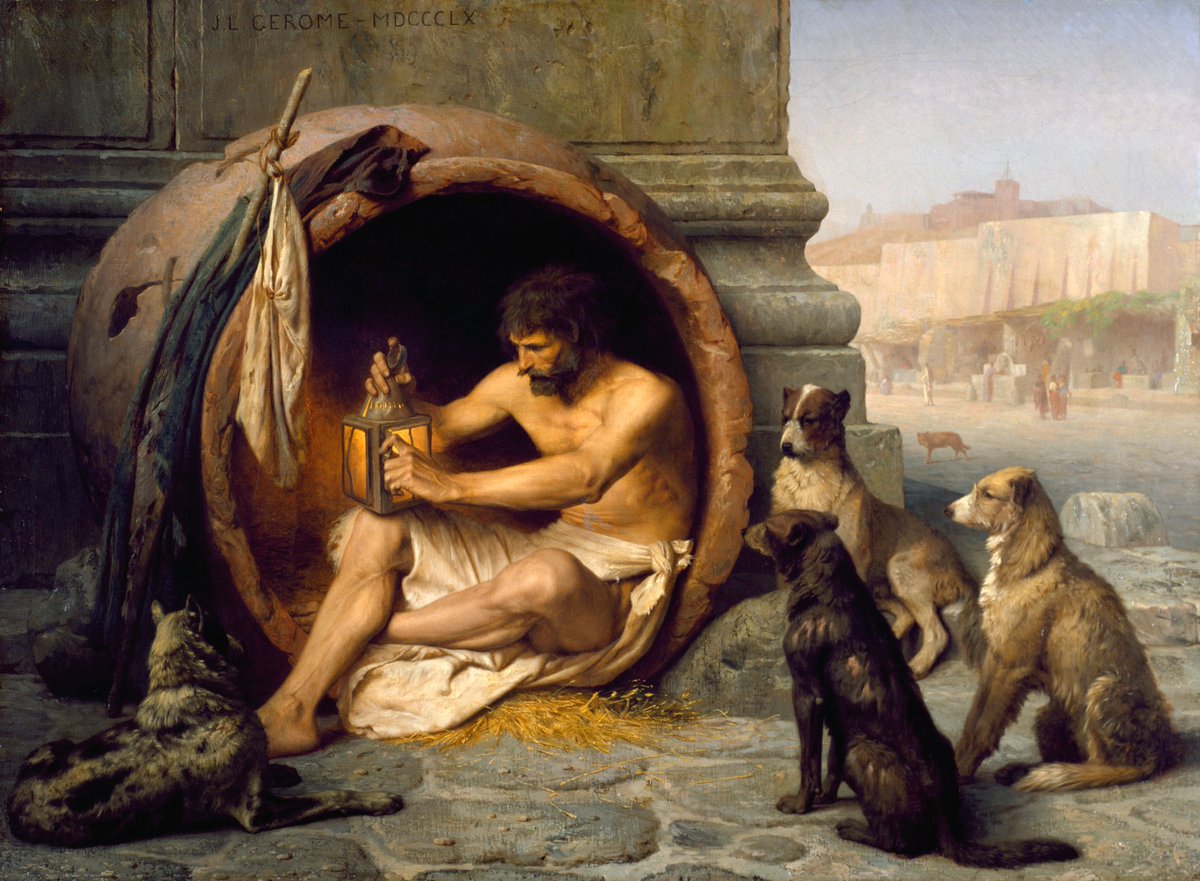
Diogenes was born in a Greek city called Sinope, on the coast of modern Turkey, in 412 BC.
His father was in charge of minting coins, and Diogenes helped him secretly lower the amount of gold in these coins — a major crime.
So they were banished... but as Diogenes later joked:
His father was in charge of minting coins, and Diogenes helped him secretly lower the amount of gold in these coins — a major crime.
So they were banished... but as Diogenes later joked:

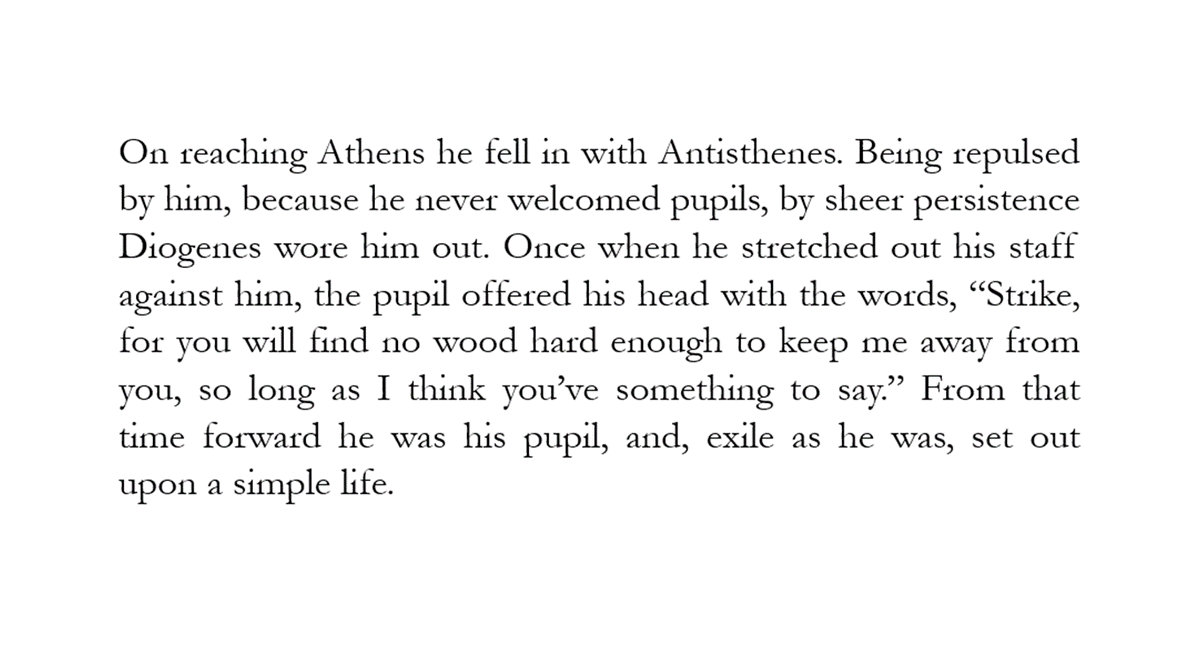
Diogenes ended up in Athens, and there he became a loyal follower of Antisthenes.
Antisthenes, who had been a pupil of Socrates, was the founder of a philosophical school called "Cynicism".
The way Diogenes became his pupil says a lot about their respective characters...
Antisthenes, who had been a pupil of Socrates, was the founder of a philosophical school called "Cynicism".
The way Diogenes became his pupil says a lot about their respective characters...
Regarding "Cynicism", forget the modern definition.
It comes from the Greek word "kynikos", meaning "dog-like" — that is what Antisthenes and his followers were called.
Why? Because they believed society was a distraction, and that humans should live in harmony with nature.
It comes from the Greek word "kynikos", meaning "dog-like" — that is what Antisthenes and his followers were called.
Why? Because they believed society was a distraction, and that humans should live in harmony with nature.
Diogenes took his master's philosophy further than anybody.
He threw away his possessions, lived in a clay barrel on the street, and set out to expose the hypocrisy and harmfulness of society by any means necessary.
As he once said, "I am a citizen of the world."
He threw away his possessions, lived in a clay barrel on the street, and set out to expose the hypocrisy and harmfulness of society by any means necessary.
As he once said, "I am a citizen of the world."

Remember, this was Athens at the time of Plato.
Socrates was not long gone, and the city was filled with philosophers, playwrights, and grand architecture.
But Diogenes believed it was all a ruse, and that the real path to virtue and happiness lay away from civilised order.
Socrates was not long gone, and the city was filled with philosophers, playwrights, and grand architecture.
But Diogenes believed it was all a ruse, and that the real path to virtue and happiness lay away from civilised order.

A later historian called Diogenes Laertius is the source for much of the information about his life.
Laertius recounts dozens of stories about Diogenes, some of them funny and some of them shocking, including urinating on his critics and defecating in public...
Laertius recounts dozens of stories about Diogenes, some of them funny and some of them shocking, including urinating on his critics and defecating in public...

What was Diogenes trying to achieve?
Well, something called "parrhesia" was crucial to Cynic philosophy, meaning the freedom to speak openly.
But this doesn't just mean free speech; it means a moral obligation to always say what you believe to be true.
Well, something called "parrhesia" was crucial to Cynic philosophy, meaning the freedom to speak openly.
But this doesn't just mean free speech; it means a moral obligation to always say what you believe to be true.

Diogenes' antics weren't trolling, though some have called it that.
He believed that people did not think for themselves about what was good or bad, and merely accepted existing social customs.
He wanted people to use their natural reason to find happiness and goodness.
He believed that people did not think for themselves about what was good or bad, and merely accepted existing social customs.
He wanted people to use their natural reason to find happiness and goodness.

Diogenes believed the froth of civilisation — wealth, power, fame, and possessions — got in the way of that.
As Plutarch said, "Aristotle dines when it seems good to King Philip, but Diogenes when he himself pleases."
Or consider this famous encounter with Plato.
As Plutarch said, "Aristotle dines when it seems good to King Philip, but Diogenes when he himself pleases."
Or consider this famous encounter with Plato.

As ever, beneath the outward show of caustic wit was concealed a deep philosophical conviction about the fundamental dignity of humanity and how much it had been corrupted by the trivialities and artifice of society.
He chose to drink with his hands rather than a cup:
He chose to drink with his hands rather than a cup:

Diogenes was also fond of what might be called practical jokes, though ones which were perhaps closer to philosophical performance art.
He once went about Athens in broad daylight with a lantern. When people asked him why, Diogenes replied, “I am looking for a man.”
He once went about Athens in broad daylight with a lantern. When people asked him why, Diogenes replied, “I am looking for a man.”

For this reason he disliked Plato.
Diogenes thought Plato had warped the teachings of the great Socrates and was too obsessed with theories rather than actions.
So, Laertius reports, Diogenes liked to make fun of him and other lecturers, even disrupting their work...
Diogenes thought Plato had warped the teachings of the great Socrates and was too obsessed with theories rather than actions.
So, Laertius reports, Diogenes liked to make fun of him and other lecturers, even disrupting their work...

At some point Diogenes was captured by pirates, sold into slavery, and taken to Corinth.
Laertius reports how Diogenes dealt with this situation — there was seemingly nothing that could dampen his spirits or reel in his famous wit.
Laertius reports how Diogenes dealt with this situation — there was seemingly nothing that could dampen his spirits or reel in his famous wit.

It was also at Corinth that Diogenes met Alexander the Great, who had recently reasserted his father's control over the Greeks and travelled there to hold an assembly.
Everybody came to meet and greet him, apart from one famously troublesome philosopher...
Everybody came to meet and greet him, apart from one famously troublesome philosopher...

This moment is the most famous of Diogenes' life.
Little wonder it has been portrayed in art so often — the perfect example of a radical, personal liberty triumphing over social power.
Little wonder it has been portrayed in art so often — the perfect example of a radical, personal liberty triumphing over social power.

Although, if one anecdote summarise his methods and why Diogenes insisted on his bizarre antics, it is probably this, as recounted by Stobaeus:

Diogenes later passed his Cynic philosophy onto a man called Crates, who in time became the teacher of another philosopher called Zeno of Citium.
And it was Zeno of Citium who founded Stoic philosophy — the fingerprints of Cynicism are all over Stoicism.
And it was Zeno of Citium who founded Stoic philosophy — the fingerprints of Cynicism are all over Stoicism.
Diogenes died at about ninety years old, though how he met his end is disputed.
In any case, those who admired him set up a fitting tribute — though one, perhaps, of which Diogenes would not have approved.
In any case, those who admired him set up a fitting tribute — though one, perhaps, of which Diogenes would not have approved.

And that's the story of Diogenes, an ancient thinker who does not fit the usual stereotype of philosophers.
What he said and did, whether it was ultimately right or wrong, is surely of no less relevance now than it was two and a half thousand years ago.
What he said and did, whether it was ultimately right or wrong, is surely of no less relevance now than it was two and a half thousand years ago.

• • •
Missing some Tweet in this thread? You can try to
force a refresh