Heatloss Profile picture
Jun 4 15 tweets 4 min read Read on X
The early F-106's Airborne Moving Target Indication (AMTI) system was an unusual method for dealing with the threat of Soviet bombers flying at low altitudes to avoid detection by radar. Though no pictures or official explanations exist, I think I can describe this system.🧵
First, I must admit that AMTI is only a partially correct method of describing the "clutter" function on the F-106's MA-1.
While it provided MTI based on target Doppler shift, it did so with a "coherent on receive only" system rather than a fully clutter-referenced MTI system.
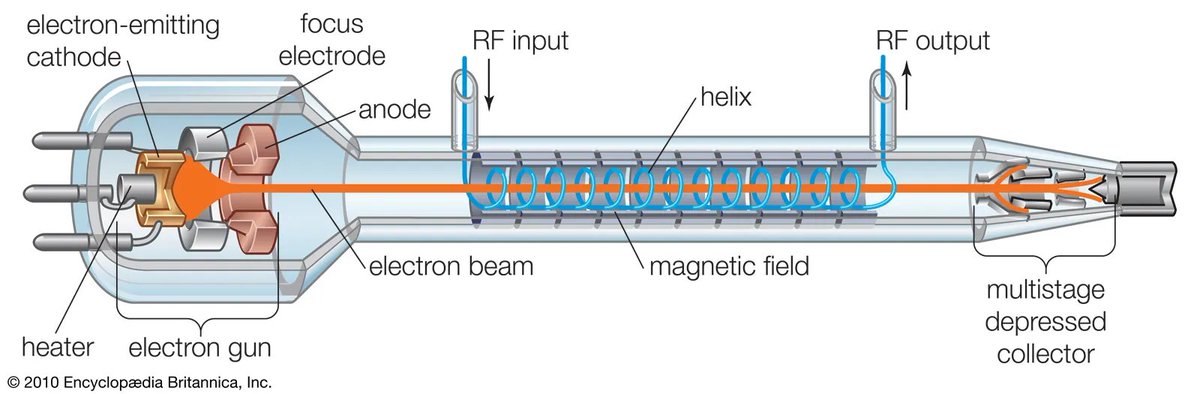
Radar coherency is critical to Doppler processing. A fully coherent radar has a single, frequency-stable, continuous oscillator generating the frequency to be used by the radar. This is then amplified to produce the output power by a Klystron or Traveling Wave Tube. (Image: TWT) Image
By comparing the shift in phase and frequency between the reference and the received pulse, a Doppler shift can be measured. This reference is on the top of this chart, and a coherent radar is shown below in green. A non-coherent radar, shown at the bottom, works differently. Image
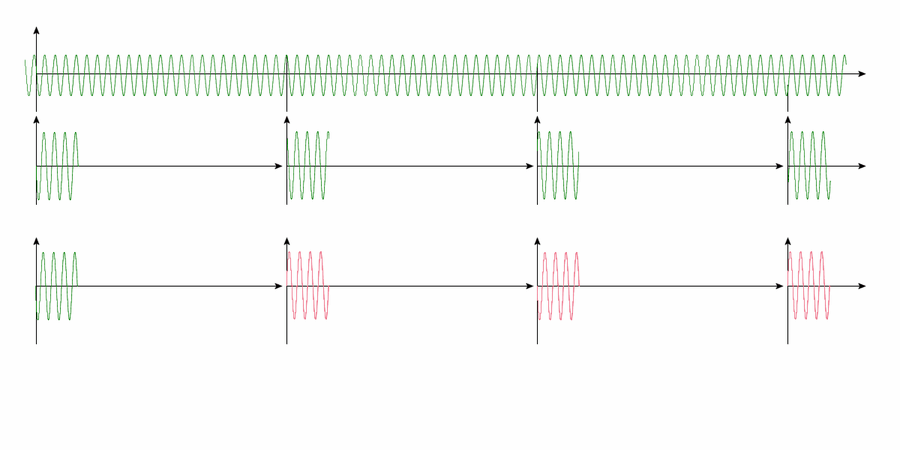
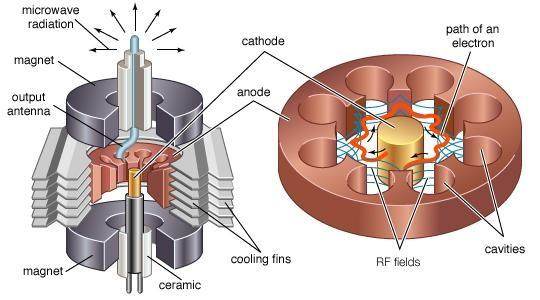
A non-coherent radar uses an oscillator (normally a cavity magnetron, which does not require a separate amplifier) that is switched on and off, meaning it starts at a random phase. Therefore, without a way to compare phase shift, it cannot process target Doppler information. Image
When MA-1 entered service in 1957, nobody had yet figured out how to make a stable oscillator and amplifier for a coherent pulse-doppler radar. This would come about in around 1960 with Master-Oscillator Power Amplifier, a Hughes method of radar timing later applied to lasers.
So what is "coherency on receive"? This system saves the pulse information (starting phase and frequency) transmitted by the radar and compares it to the phase and frequency of radar returns.
On MA-1, this was probably done with a vacuum tube designed to store the pulse without degradation or changes in frequency. This was a tall order, shown by the failures during the development of the F-4E's CORDS system, which attempted the same system on a lower-weight radar.
When the radar mode selector was in Clutter mode and the range selector was at 4 or 16 miles, the MTI mode would be activated.
The system was unique in terms of its design for one major reason: it was optimized for "low overtake" targets rather than high closing rate targets. Image
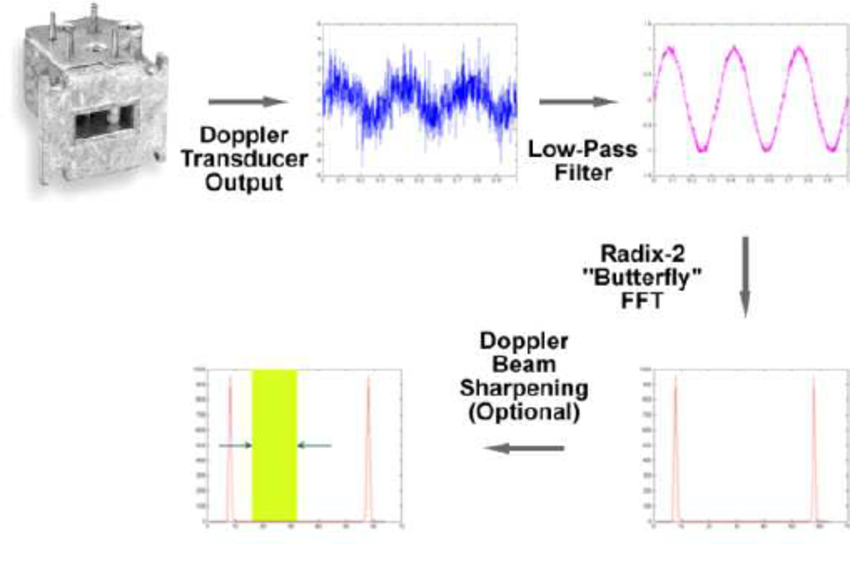
Normally, high closing rates are easier for pulse Doppler radars to spot. In PD, the received pulse is processed to extract its component frequencies with an algorithm known as a Fourier transform. These are then compared with the expected frequency from the stable oscillator.
Image
Image
However, due to the rear-aspect limitations of the earliest AIM-4 Falcons, only rear-aspect attacks were considered relevant for this system. This heavily influenced the design of CORO.
Instead of using complex signal processing to spot targets, it likely applied a higher amplitude multiplier to the lower Doppler shift targets (probably inversely proportional to shift) while applying a lower multiplier to the higher closing rate targets--namely, the ground.
When this was projected on the radar screen, the low overtake targets would be brighter, and therefore easier to pick out of the clutter returns that would normally be brighter than it! (This image is not of the CORO system in action, but rather just a normal radar return) Image
Unfortunately, I have no hard sources for this as of right now, only some deductions based on the comments made by a few old maintainers and corroboration with some other mentions of the system in official documents.
If anyone out there has more concrete info or stories to tell, let me know! I'm totally alright about being wrong here, but as of right now, with the information I have access to, I feel confident that this is how it worked.

• • •

Missing some Tweet in this thread? You can try to force a refresh

 

Keep Current with Heatloss

Heatloss Profile picture

Stay in touch and get notified when new unrolls are available from this author!

Read all threads

This Thread may be Removed Anytime!

PDF

Twitter may remove this content at anytime! Save it as PDF for later use!

Try unrolling a thread yourself!

how to unroll video
  1. Follow @ThreadReaderApp to mention us!

  2. From a Twitter thread mention us with a keyword "unroll"
@threadreaderapp unroll

Practice here first or read more on our help page!

More from @heatloss1986

May 24
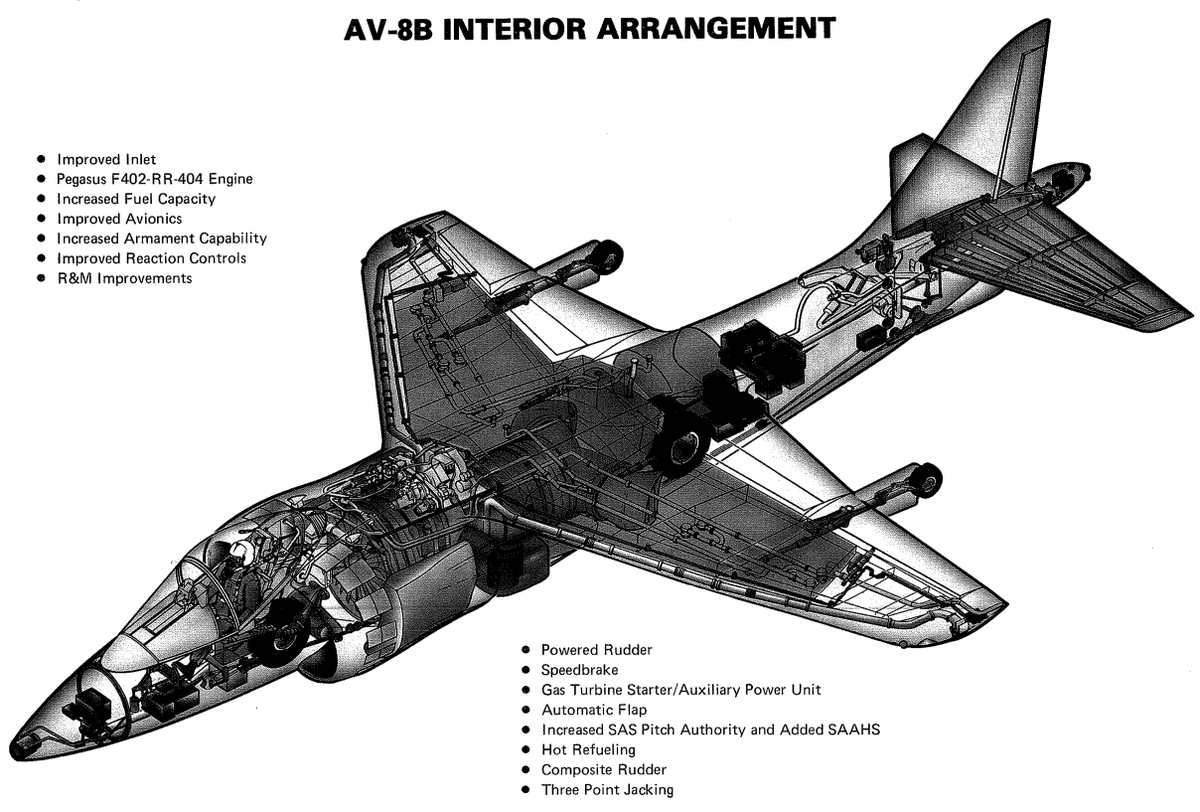
I've mentioned previously that I prefer the AV-8B to the earlier Harriers. This will be a short overview of the changes and improvements compared to the AV-8A. 🧵 Image
The first thing to consider is the point of the Harrier II. The USMC appreciated the flexibility that the Harrier I provided, but was concerned about low payload, short range, outdated avionics, and a poor safety record.
The Harrier II solved these issues.
Like usual, we're gonna start at the front with this one.
At the tip of the nose, the AN/ASB-19 Angle Rate Bombing system is covered by a glass dome. Right behind this, the aircraft computer is mounted, and the airframe structure is designed for but not with an APG-65 radar. Image
Read 15 tweets
May 9
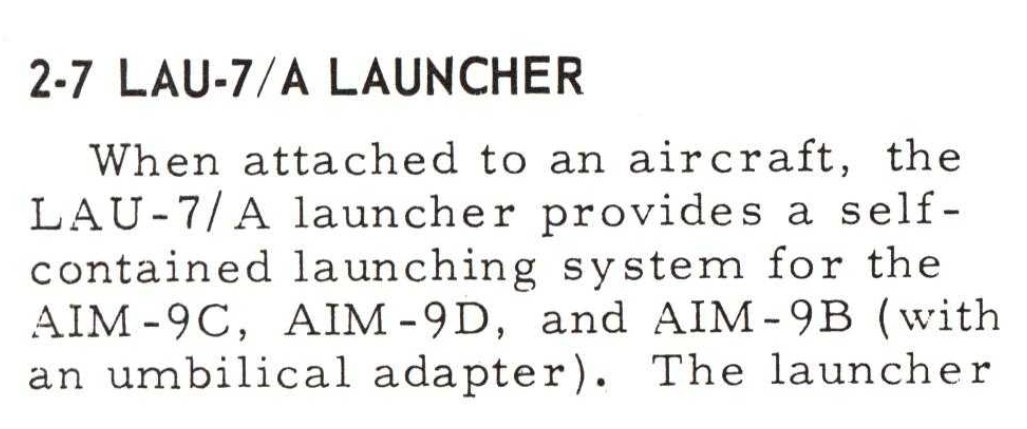
A short thread on a less appreciated part of air-to-air missiles, the launchers. In this case, the LAU-7/A launcher for the AIM-9, as applied to the D/G/H. 🧵 Image
LAU-7/A had everything you needed for an AIM-9D. A power supply, a retaining assembly, fire control system tie-ins, a tone generator, safety devices, and most importantly, compressed gas.

Image
Image
Image
Dimensions. Image
Read 11 tweets
May 5
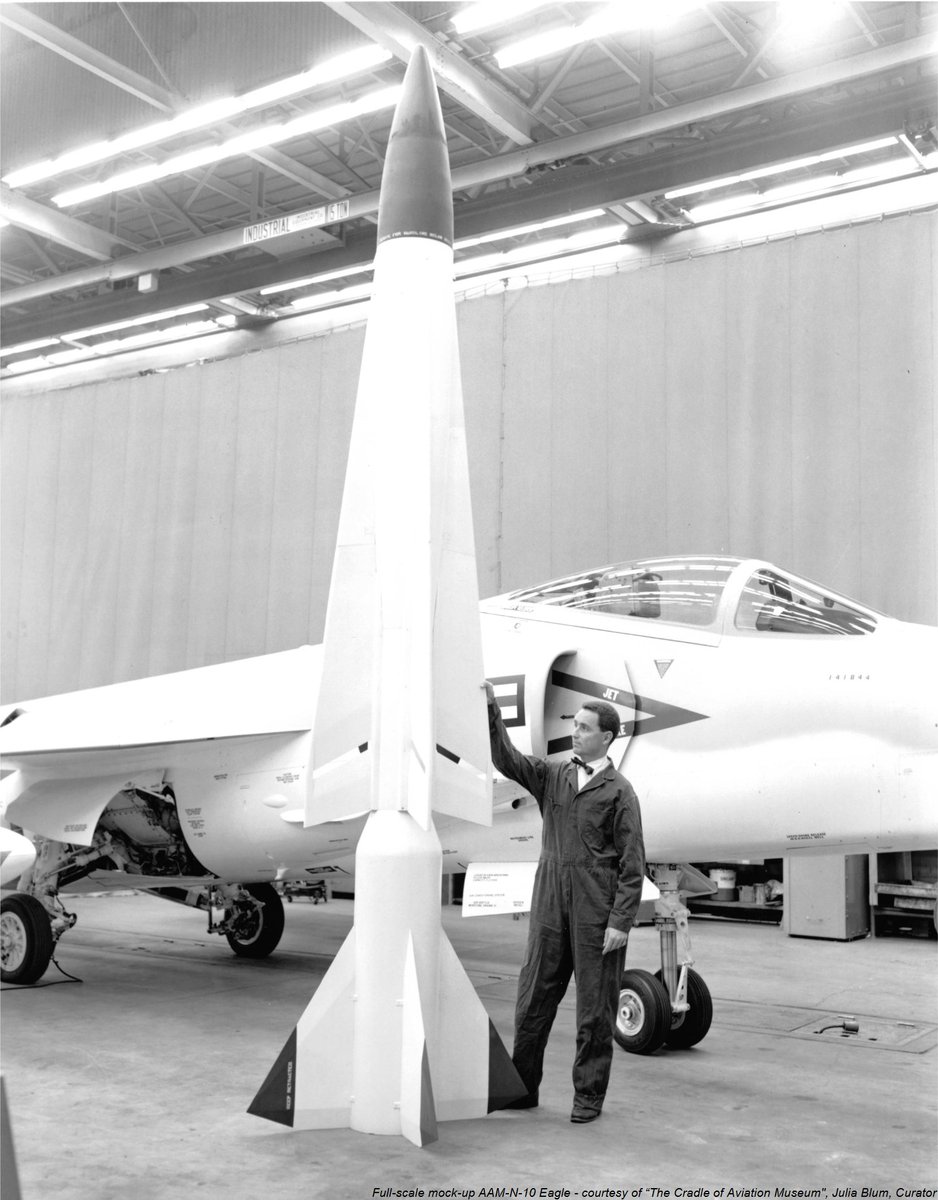
In 1958, the US began to search for an interceptor capable of shooting down bombers up to 100 nautical miles away. This eventually led to the F6D Missileer system program, built around an already-designed long-range missile.
This was the Bendix XAAM-N-10 Eagle.🧵 Image
Admin note: this is the first of the Eagle/APQ-81 threads, which will cover this missile and the radar and the F6D they were all supposed to go on. This will tie into the ASG-18/GAR-9/AIM-47 Falcon thread (much) later. You'll see.😉
The Eagle was a complicated missile, through and through. For the time period, it was by far the most ambitious missile, especially when combined with APQ-81, the colossal track-while-scan radar that the Eagle was paired with. Image
Read 15 tweets
May 3
In 1960, the Broad Jump program to upgrade the US Air Force's newest interceptor's radar, the F-106's MA-1 Automatic Weapon Control System, began. This would be a notable overhaul and improvement of the MA-1 system, giving it exceptional Electronic Protection capabilities. Image
The first systems added under Broad Jump were anti-chaff devices. One of these such devices was the leading/trailing edge range gate tracker. Normally a range gate operates as an evenly split gate, as described below. Image
A leading-edge range tracker sacrifices some range accuracy for electronic attack resistance. A trailing edge tracker works the same way, but in reverse. Image
Read 27 tweets
May 1
A short thread on a poorly understood AIM-9 variant, the AIM-9B FGW.2, or in US nomenclature, AIM-9F. This was a German improvement program for the AIM-9B that entered service in 1969. (9F on the right) 🧵 Image
The 9F was a license-produced variant of the Sidewinder, designed to improve the seeker performance and reliability of the normal 9B. It did so in three ways: optical filtering, Carbon Dioxide cooling, and solid-state electronics.
To explain the CO2 cooling decision, we're going to need to cover a little bit of photovoltaic detector physics.
A photovoltaic detector produces a small current when it is exposed to a wavelength in its sensitive band. In the rear-aspect AIM-9s, this was Lead Sulfide.
Read 16 tweets
Apr 29
Moctezuma was also fascinated by the Spaniards and wanted to either entice them to stay or find a way to entrap them. He was incredibly powerful, and the power dynamics between Moctezuma and Cortes's party have been misrepresented since day one. Short 🧵
Ignoring the fact that Cortes wasn't even really in charge of his own party, people DID try to kill him at first. The Tlaxcalteca, upon spotting the party of Totonacs and Spaniards heading by them, attacked. After over two weeks, they realized that making an alliance was better.
Moctezuma was fascinated by these new people and wanted to either make them allies or make them "exhibits." Montezuma, according to Matthew Restall, was a great collector of wildlife and symbols of power. This was to show his incredible power as Huei Tlatoani.
Read 7 tweets

Did Thread Reader help you today?

Support us! We are indie developers!


This site is made by just two indie developers on a laptop doing marketing, support and development! Read more about the story.

Become a Premium Member ($3/month or $30/year) and get exclusive features!

Become Premium

Don't want to be a Premium member but still want to support us?

Make a small donation by buying us coffee ($5) or help with server cost ($10)

Donate via Paypal

Or Donate anonymously using crypto!

Ethereum

0xfe58350B80634f60Fa6Dc149a72b4DFbc17D341E copy

Bitcoin

3ATGMxNzCUFzxpMCHL5sWSt4DVtS8UqXpi copy

Thank you for your support!

Follow Us!

:(