
In 1999, Atal Bihari Vajpayee was in the midst of balancing the needs of a 19 party coalition. Jayalalitha decided to withdraw support and a vote of confidence was taken.
This man decided to vote and NDA lost the no-confidence motion by 1 vote.
A 🧵
This man decided to vote and NDA lost the no-confidence motion by 1 vote.
A 🧵

A little background - the NDA or the National Democratic alliance was formed not in 1998... But back in 1983.
Vajpayee heading a fledgling Bharatiya Janata Party teamed up with Charan Singh of the Lok Dal to form the NDA to fight Indira Gandhi.
Vajpayee heading a fledgling Bharatiya Janata Party teamed up with Charan Singh of the Lok Dal to form the NDA to fight Indira Gandhi.

It was an uneasy alliance and after the death of Indira Gandhi in October 1984, the Congress swept to power riding on a wave of sympathy. The NDA dissolved.
In 1996 elections, BJP emerged as the single largest party for the first time ever. They had secured 161 seats and Congress had 140.
As per protocol Shankar Dayal Sharma invited Vajpayee to form the government. Ahead of a vote of confidence, Vajpayee resigned as he didn't have the numbers.
As per protocol Shankar Dayal Sharma invited Vajpayee to form the government. Ahead of a vote of confidence, Vajpayee resigned as he didn't have the numbers.
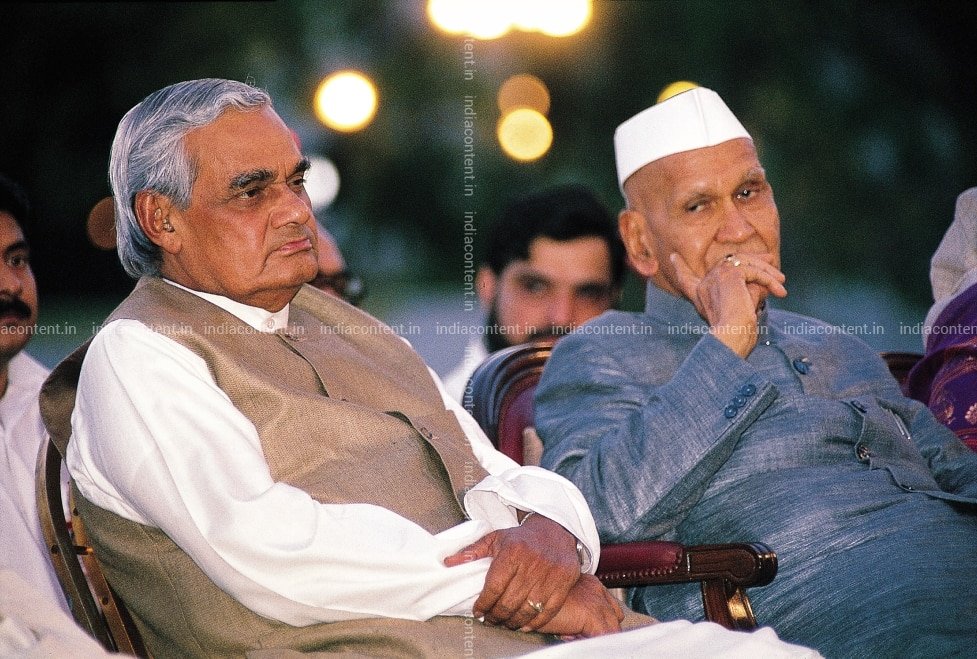
The Congress party also declined and it was up to a "Third Front" made up of parties that were against BJP and the Congress, but with the outside support of Congress to form the government.
HD Deve Gowda followed by IK Gujral became Indian Prime Ministers.
HD Deve Gowda followed by IK Gujral became Indian Prime Ministers.

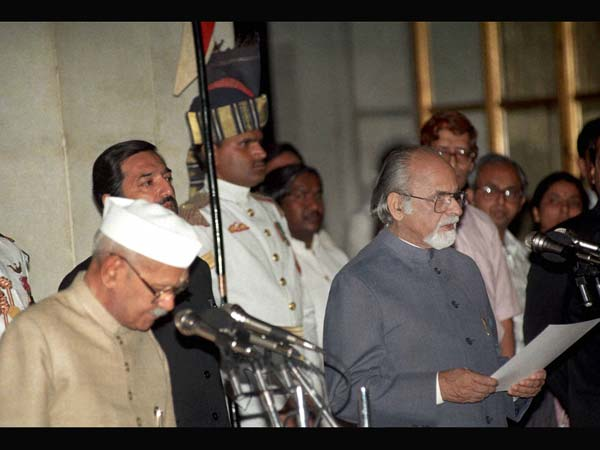
In November 1997, Congress withdrew its support and the third front experiment collapsed. Fresh elections were called in February 1998.
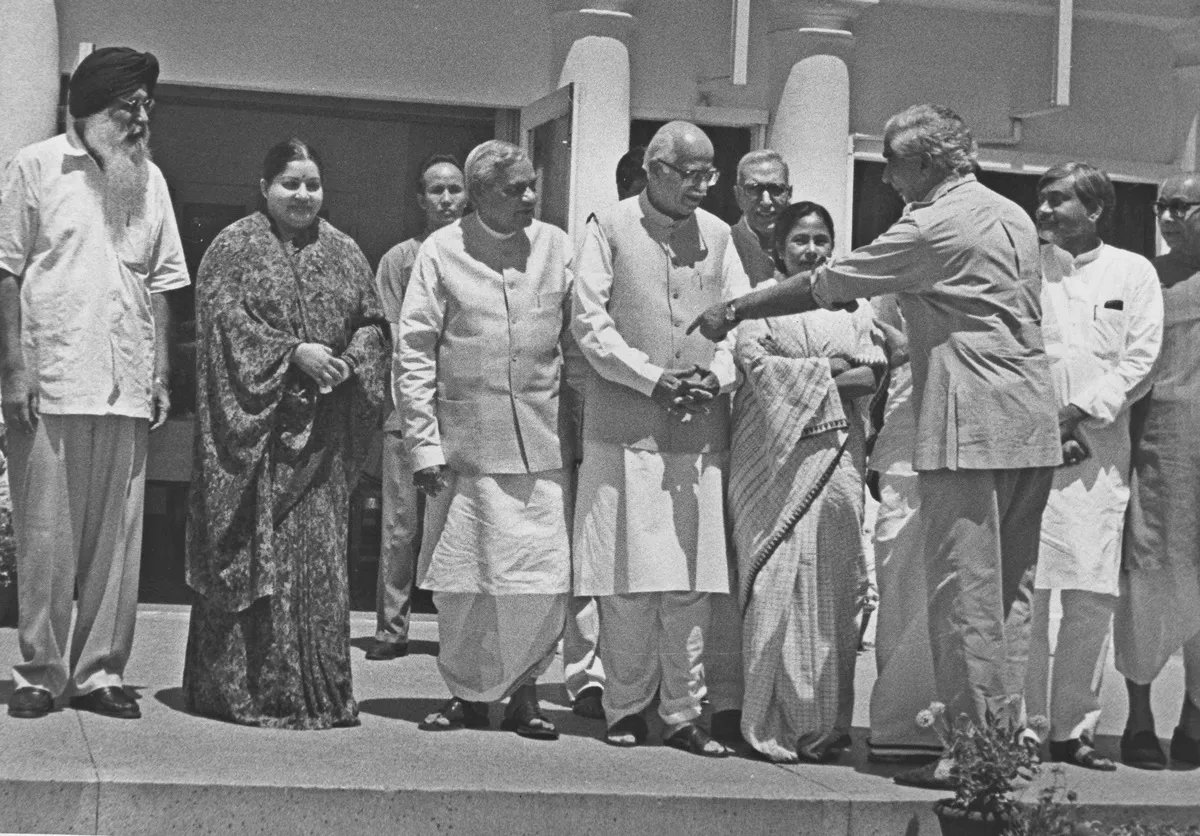
This time BJP cobbled together a 19 party coalition - calling themselves the National Democratic alliance and won the elections.
This time BJP cobbled together a 19 party coalition - calling themselves the National Democratic alliance and won the elections.
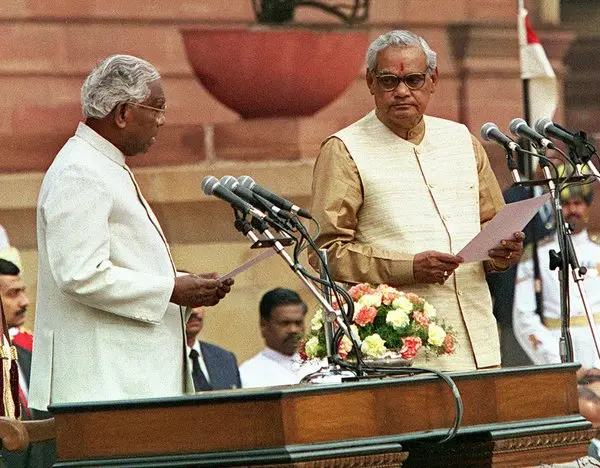
This time Vajpayee was sworn in by K R Narayanan. TDP which joined the NDA at the last moment - got the plum speaker's post and GMC Balayogi became the speaker of the house.
To reach consensus the BJP avoided its core issues
- a temple at Ram Janmabhoomi in Ayodhya
- the abrogation of Article 370
- Uniform Civil Code.
A common minimum programme called the National Agenda for Governance was framed.
- a temple at Ram Janmabhoomi in Ayodhya
- the abrogation of Article 370
- Uniform Civil Code.
A common minimum programme called the National Agenda for Governance was framed.
The term was very difficult for Vajpayee. India decided to expand its nuclear arsenal by having tests at Pokhran. This led to sanctions from multiple countries.
And handling the demands of a burgeoning coalition with multiple parties that were not ideologically aligned with the BJP.
And handling the demands of a burgeoning coalition with multiple parties that were not ideologically aligned with the BJP.
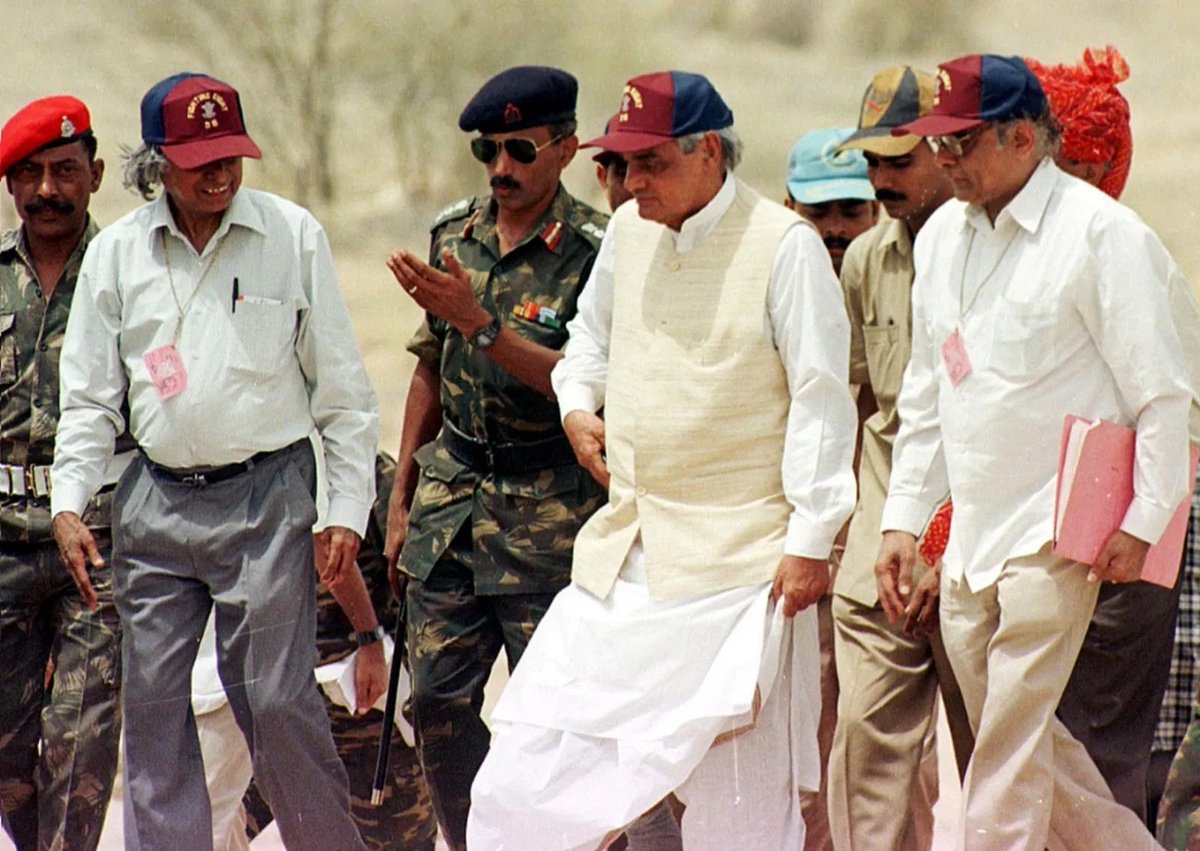
J Jayalalitha, AIADMK general secretary was trying to get back to power in TN after losing the 1996 state elections to DMK.
She was in constant conflict with Vajpayee trying to get more focus on TN. Eventually she withdrew from NDA.
She was in constant conflict with Vajpayee trying to get more focus on TN. Eventually she withdrew from NDA.
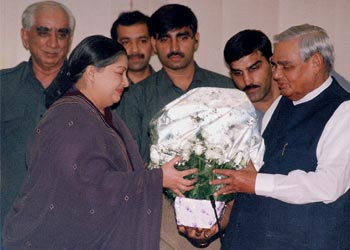
Vajpayee was asked to take a vote of confidence. The 1999 vote of confidence threw a never before or never after seen results in India.
The NDA got 269
The opposition got 270.
And Giridhar Gamang was the MP who claimed credit.
The NDA got 269
The opposition got 270.
And Giridhar Gamang was the MP who claimed credit.
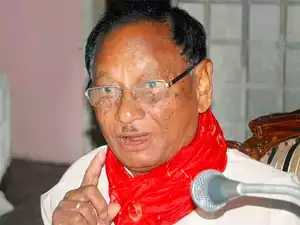
Giridhar Gamang is a 9 time MP from Odisha, but in February 1999 he was made the chief minister of the state.
He had to quit either being CM or the MP office and become MLA, within six months to ensure he could continue as CM.
He had to quit either being CM or the MP office and become MLA, within six months to ensure he could continue as CM.
Despite being a ruling CM, he was allowed to vote in the vote of confidence motion and his vote made it 270 for the opposition.
In case of a tie, the casting vote belongs to the speaker of the house and GMC Balayogi would have voted for the NDA.
In case of a tie, the casting vote belongs to the speaker of the house and GMC Balayogi would have voted for the NDA.
Sources:
1.
2.
3.
4. indianexpress.com/article/explai…
indianexpress.com/article/opinio…
economictimes.indiatimes.com/news/politics-…
moneycontrol.com/news/india/ata…
1.
2.
3.
4. indianexpress.com/article/explai…
indianexpress.com/article/opinio…
economictimes.indiatimes.com/news/politics-…
moneycontrol.com/news/india/ata…
• • •
Missing some Tweet in this thread? You can try to
force a refresh






