1/9. @NASAClimate is not one of the divisions & departments of NASA that do science. It's the "JPL Earth Science Communications Team" in Pasadena, which is comprised of "communicators," not scientists.
NASAClimate is a frequent source of misinformation and outright political propaganda.sealevel.info/learnmore.html
NASAClimate is a frequent source of misinformation and outright political propaganda.sealevel.info/learnmore.html

@NASAClimate 2/9. Many other parts of NASA still employ real scientists, who do excellent work.
Here's a NASA video about some of that work.
CO2 emissions are very beneficial for natural ecosystems, and NASA satellites measure the resulting "greening" of the Earth.
Here's a NASA video about some of that work.
CO2 emissions are very beneficial for natural ecosystems, and NASA satellites measure the resulting "greening" of the Earth.
@NASAClimate 3/9. Do you worry about the Antarctic Ice Sheet melting? This excellent NASA study should put your fears to rest.
Note: Antarctic temperatures average below −40°, so a few degrees of warming obviously cannot melt it. cambridge.org/core/journals/…
Note: Antarctic temperatures average below −40°, so a few degrees of warming obviously cannot melt it. cambridge.org/core/journals/…
https://twitter.com/ncdave4life/status/1646170395169439745

4/9. Here are two photos of the Moana Surfrider Hotel on Waikiki Beach, in Honolulu, one taken in 1925 and the other recently. They illustrate how negligible the sea-level trend is.
(Caveat: the widening of Waikiki Beach in front of the Moana Surfrider Hotel is due to a sand renourishment project. Ignore that, please. It's the negligible change in the elevation of the hotel above sea-level that I want you to notice.)sealevel.info/moana_hotel_19…
(Caveat: the widening of Waikiki Beach in front of the Moana Surfrider Hotel is due to a sand renourishment project. Ignore that, please. It's the negligible change in the elevation of the hotel above sea-level that I want you to notice.)sealevel.info/moana_hotel_19…

@NASAClimate 5/9. The best scientific evidence shows that manmade climate change is modest and benign, and CO2 emissions are highly beneficial, rather than harmful. Here are some relevant scientific papers:
sealevel.info/negative_socia…
sealevel.info/negative_socia…
6/9. The study which NASAClimate is hyping is based on satellite altimetry, not coastal measurements.
Coastal (tide gauge) measurements provide much higher quality data. Measurement of sea-level by satellite altimetry has many problems, which do not affect coastal measurements.
One problem is that the satellites only measure sea-level far out to sea. They cannot measure sea-level near the coasts, where it matters.
Also, satellite altimetry measurement records are generally only about a decade long. In contrast, many coastal measurement records are over a century long.
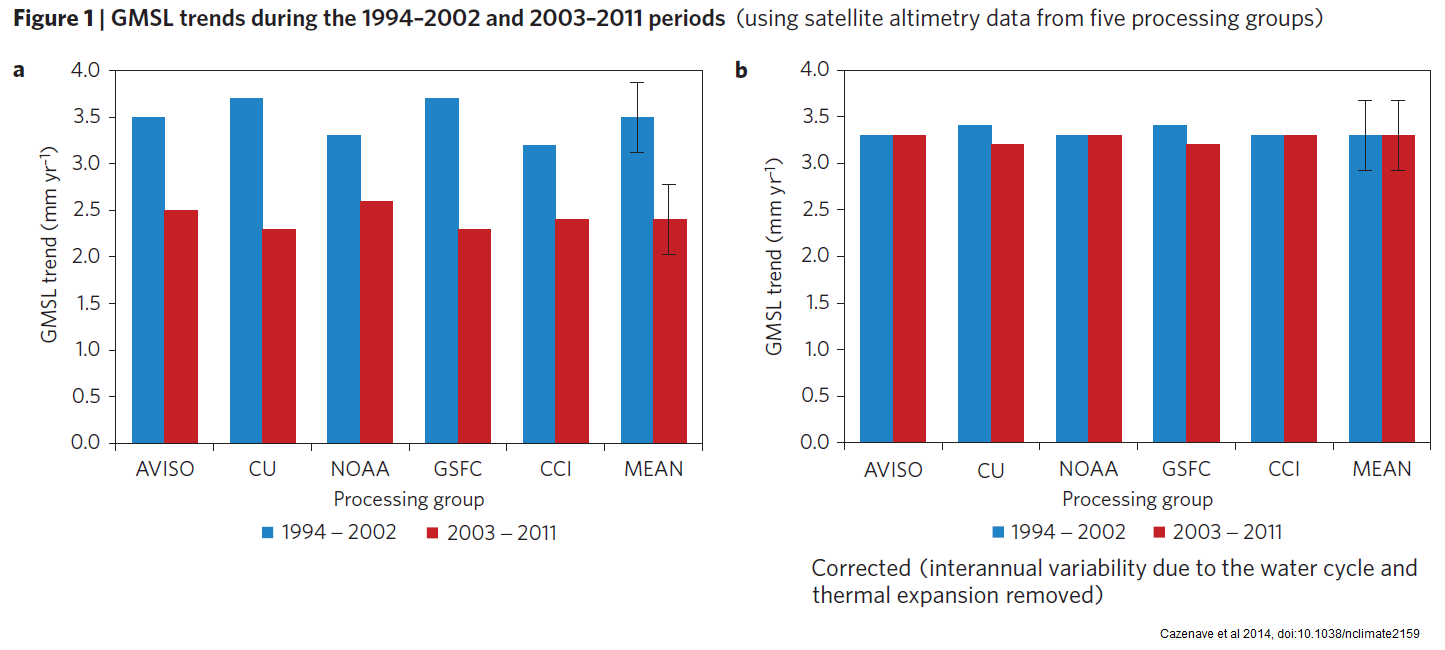
Also, satellite altimetry measurements have proven to be disturbingly malleable. The very same data can show acceleration, deceleration, or linearity, depending on how it is processed! Here's an example from a 2014 paper, which turned apparent deceleration into linearity, by changing ("correcting") the measurements.
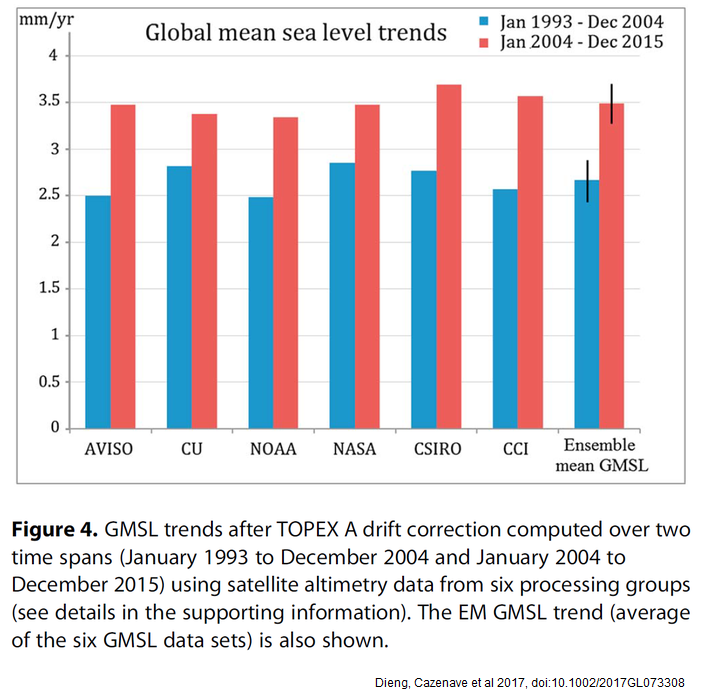
A subsequent paper then turned the linear trend into an acceleration, by a combination of additional corrections and a little bit of additional data:
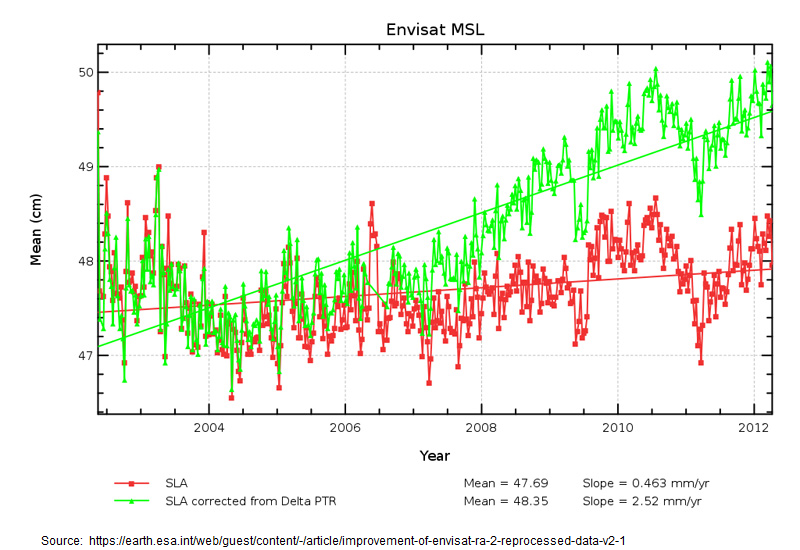
The 2012 Envisat revisions were especially striking:
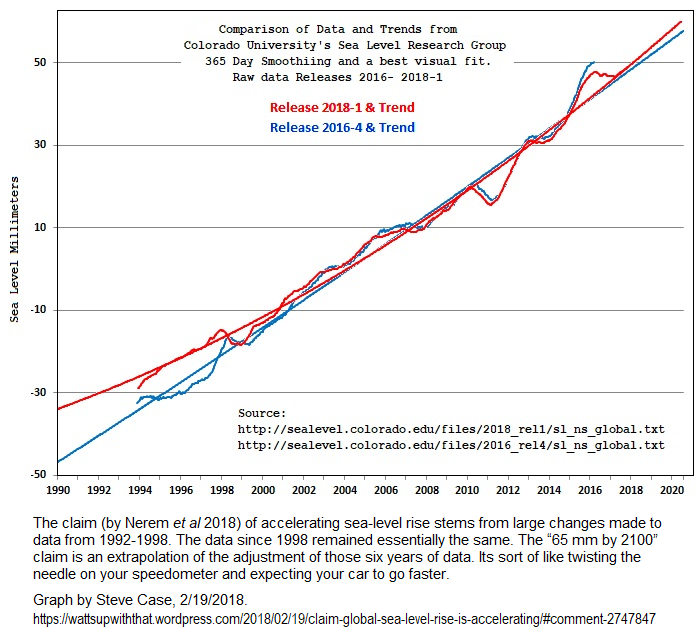
A widely-hyped 2018 paper by U. Colorado's Dr. Steve Nerem et al claimed to have discovered “acceleration” in the satellite altimetry measurement record of sea-level. They did it by reducing the rate of measured sea-level rise in 20 year-old Topex-Poseidon data, thereby making more recent measurements appear to have accelerated, by comparison. H/t Steve Case for this graph:
sealevel.info/satellite_alti…
sealevel.info/nclimate2159-f…
sealevel.info/2017GL073308_f…
sealevel.info/envisat_msl_co…
sealevel.info/CU-2016-2018-W…
Coastal (tide gauge) measurements provide much higher quality data. Measurement of sea-level by satellite altimetry has many problems, which do not affect coastal measurements.
One problem is that the satellites only measure sea-level far out to sea. They cannot measure sea-level near the coasts, where it matters.
Also, satellite altimetry measurement records are generally only about a decade long. In contrast, many coastal measurement records are over a century long.
Also, satellite altimetry measurements have proven to be disturbingly malleable. The very same data can show acceleration, deceleration, or linearity, depending on how it is processed! Here's an example from a 2014 paper, which turned apparent deceleration into linearity, by changing ("correcting") the measurements.
A subsequent paper then turned the linear trend into an acceleration, by a combination of additional corrections and a little bit of additional data:
The 2012 Envisat revisions were especially striking:
A widely-hyped 2018 paper by U. Colorado's Dr. Steve Nerem et al claimed to have discovered “acceleration” in the satellite altimetry measurement record of sea-level. They did it by reducing the rate of measured sea-level rise in 20 year-old Topex-Poseidon data, thereby making more recent measurements appear to have accelerated, by comparison. H/t Steve Case for this graph:
sealevel.info/satellite_alti…
sealevel.info/nclimate2159-f…
sealevel.info/2017GL073308_f…
sealevel.info/envisat_msl_co…
sealevel.info/CU-2016-2018-W…
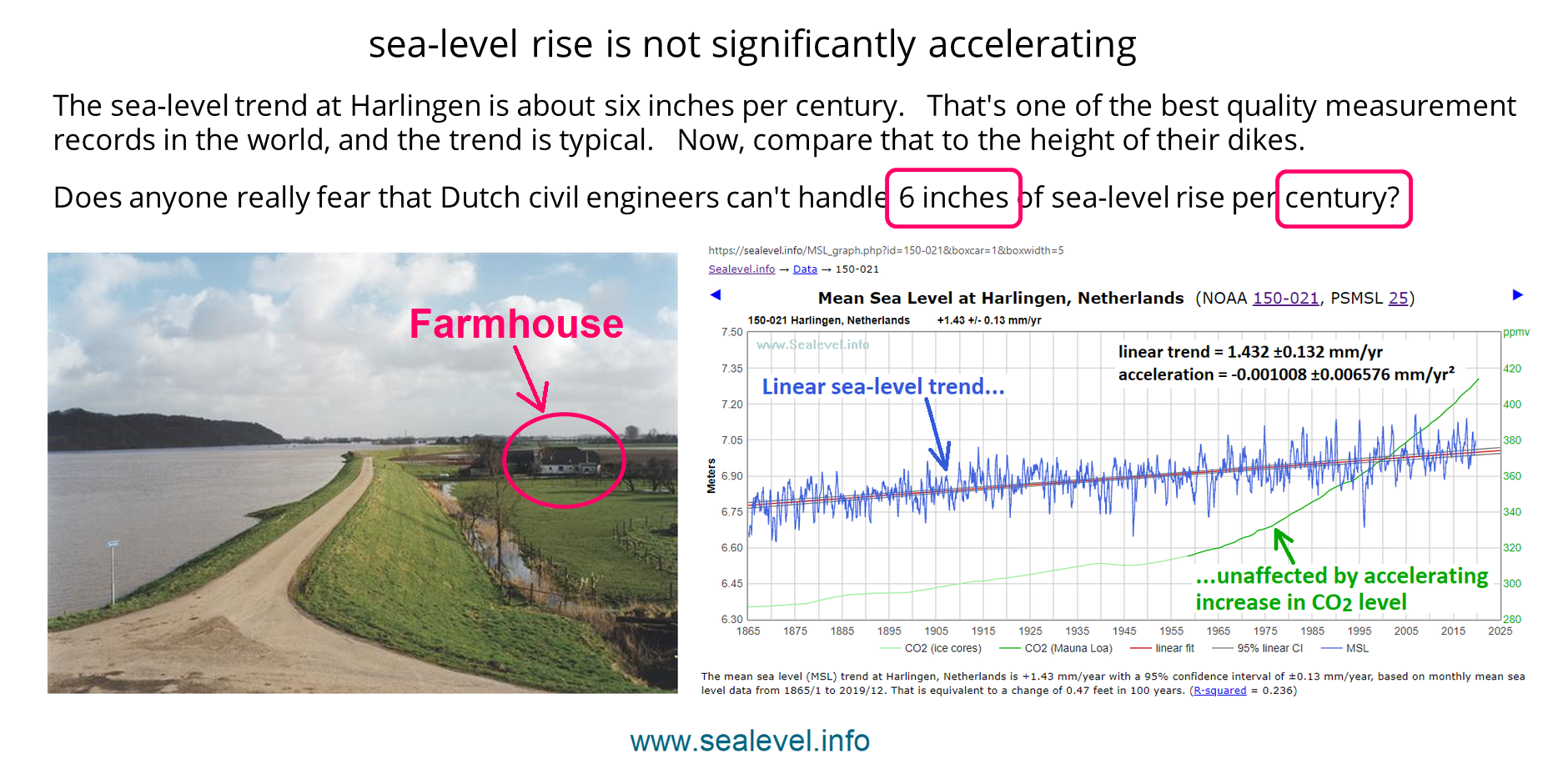
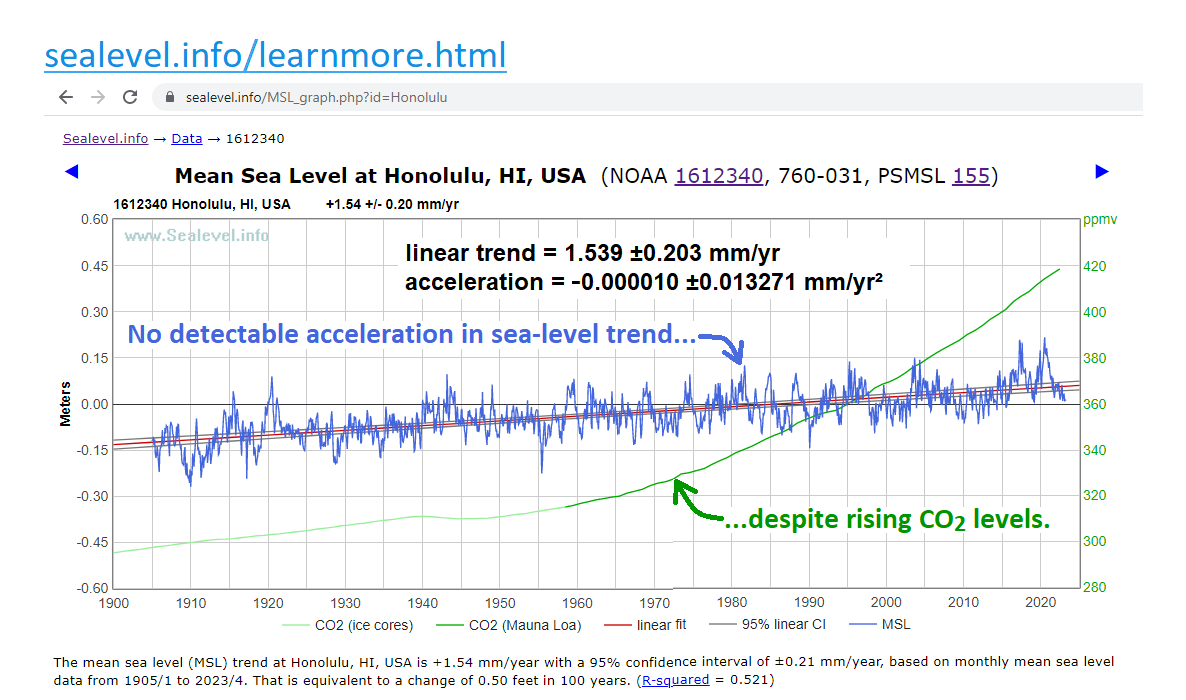
7/9. In contrast to the satellite measurements, most tide gauge (coastal) measurements continue to show little or no acceleration in sea-level trend in the last nine decades or more.
Honolulu is a nearly ideal sea-level measurement site:
One exception to the general linearity of coastal sea-level trends is the southern half of the Atlantic coast of the United States, where the Gulf Stream skirts the coast. Thanks to a (presumably transient) acceleration of the Gulf Stream, sea-level rise there has accelerated strikingly over the last decade:
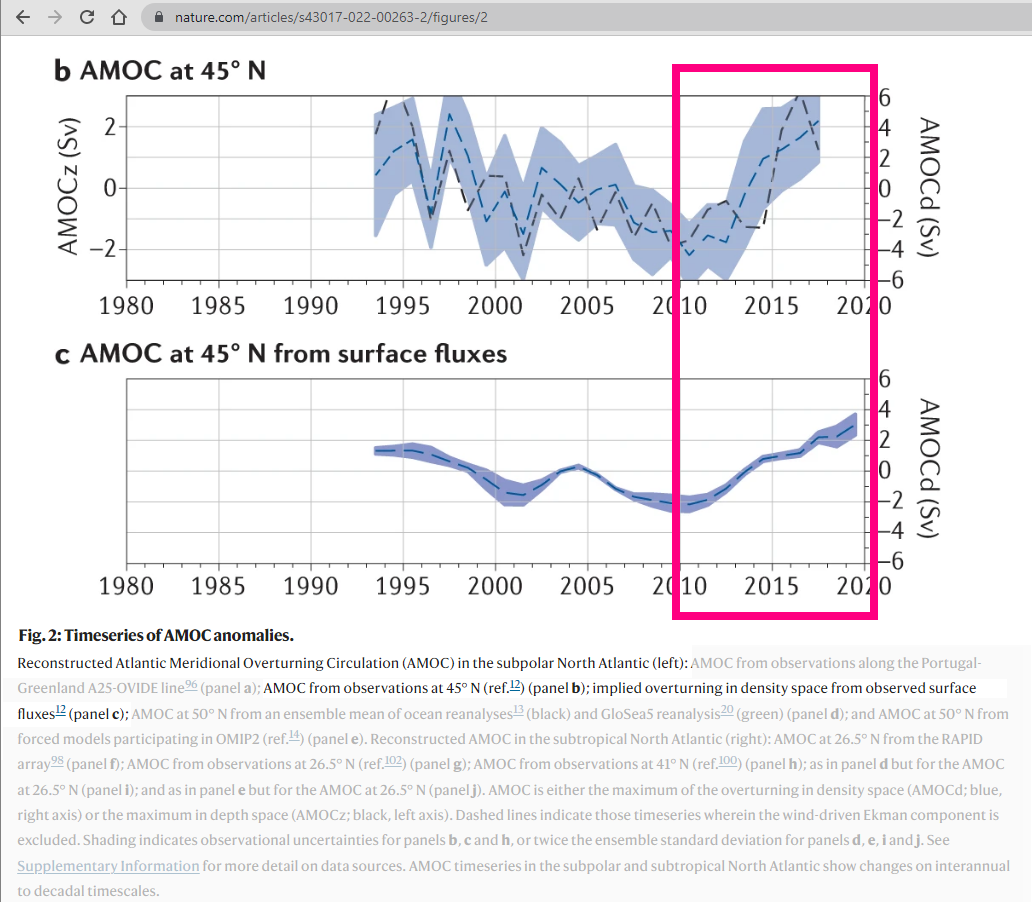
This is the presumed cause:
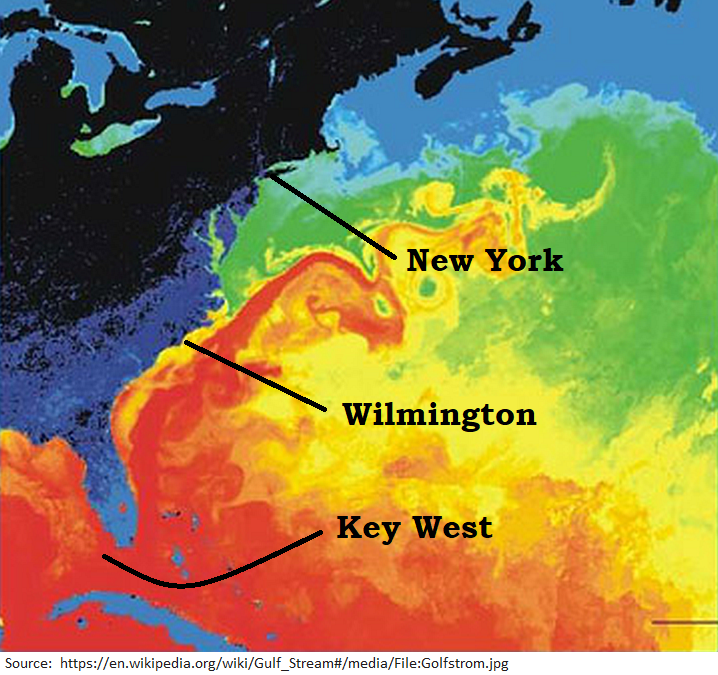
Here you can see how close to the coast the Gulf Stream is, in the SE United States:
Here's nice video animation of a full year of AMOC:
sealevel.info/MSL_graph.php?…
sealevel.info/Dutch_dike_vs_…
sealevel.info/MSL_graph.php?…
sealevel.info/1612340_Honolu…
sealevel.info/MSL_graph.php?…
sealevel.info/SL_Charleston_…
sealevel.info/Jackson2022_FI…
sealevel.info/Gulf_Stream_wi…
Honolulu is a nearly ideal sea-level measurement site:
One exception to the general linearity of coastal sea-level trends is the southern half of the Atlantic coast of the United States, where the Gulf Stream skirts the coast. Thanks to a (presumably transient) acceleration of the Gulf Stream, sea-level rise there has accelerated strikingly over the last decade:
This is the presumed cause:
Here you can see how close to the coast the Gulf Stream is, in the SE United States:
Here's nice video animation of a full year of AMOC:
sealevel.info/MSL_graph.php?…
sealevel.info/Dutch_dike_vs_…
sealevel.info/MSL_graph.php?…
sealevel.info/1612340_Honolu…
sealevel.info/MSL_graph.php?…
sealevel.info/SL_Charleston_…
sealevel.info/Jackson2022_FI…
sealevel.info/Gulf_Stream_wi…

@NASAClimate 8/9. CO2 emissions are highly beneficial, especially for agriculture and for natural ecosystems. The benefits of rising CO2 levels are large and well-measured. The supposed major harms are all merely speculative, and mostly implausible.
https://x.com/ncdave4life/status/1532051188795023360
9/9. To understand a contentious & politicized topic like #ClimateChange, you need balanced information. You won't get it from @NASAClimate, but I'm here to help:
That resource list has:
● accurate introductory climatology information
● in-depth science from BOTH skeptics & alarmists
● links to balanced debates between experts on BOTH sides
● accurate information about impacts of CO2 & climate change, such as the effects on crop yields
● links to the best blogs on BOTH sides of the climate debatesealevel.info/learnmore.html…
That resource list has:
● accurate introductory climatology information
● in-depth science from BOTH skeptics & alarmists
● links to balanced debates between experts on BOTH sides
● accurate information about impacts of CO2 & climate change, such as the effects on crop yields
● links to the best blogs on BOTH sides of the climate debatesealevel.info/learnmore.html…
@NASAClimate Compilation:
@ThreadReaderApp @Rattibha @threaddotblue unroll
@reSeeIt save threadtwitter-thread.com/t/179998159195…
@ThreadReaderApp @Rattibha @threaddotblue unroll
@reSeeIt save threadtwitter-thread.com/t/179998159195…
• • •
Missing some Tweet in this thread? You can try to
force a refresh