@NASAClimate 1/11. When someone talks about a sea-level measurement record starting in 1993 it means they're using low quality satellite altimetry data, and they're ignoring the much higher quality coastal measurements. It's political propaganda, not unbiased science.
sealevel.info/satellite_alti…
sealevel.info/satellite_alti…
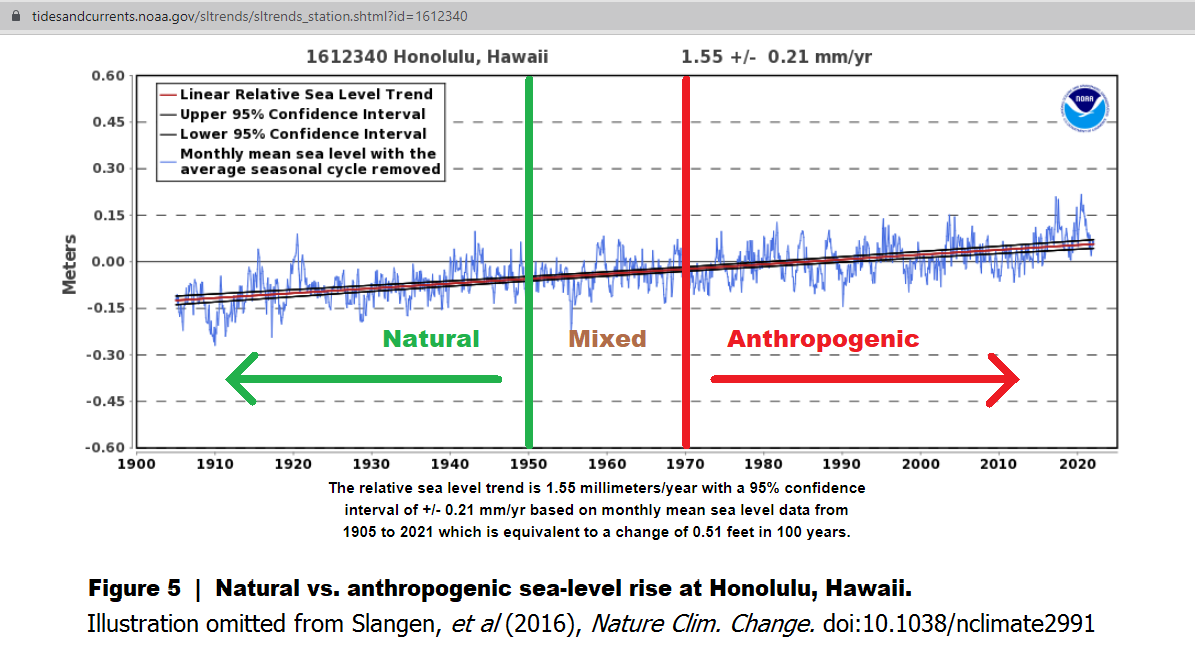
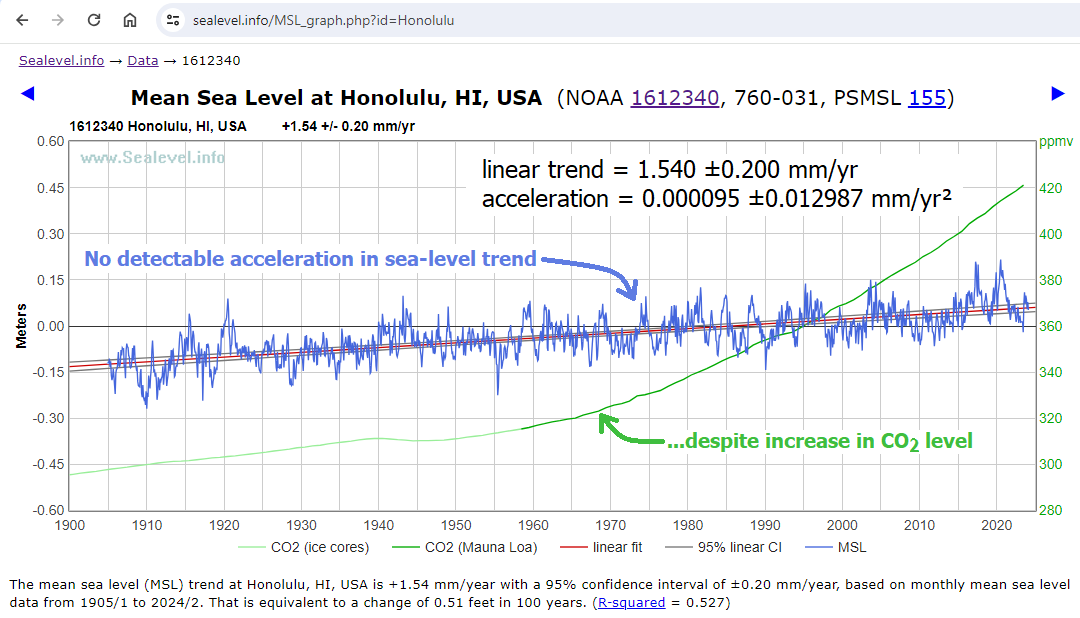
2/11. If you use the (much higher quality) coastal measurement data, it becomes clear that there's nothing to worry about.
That's Honolulu, which has the best quality, well-sited, sea-level measurement record in the world. The "straightness" of the blue sea-level trend means that rising CO2 levels haven't had much effect on sea-level.sealevel.info/learnmore.html…
That's Honolulu, which has the best quality, well-sited, sea-level measurement record in the world. The "straightness" of the blue sea-level trend means that rising CO2 levels haven't had much effect on sea-level.sealevel.info/learnmore.html…
@NASAClimate 3/11. The "straightness" is called "linearity," and it's opposite is called "acceleration." If you don't know how to recognize "acceleration," "deceleration," or "linearity" in a graph, here's a little primer which should help:
sealevel.info/acceleration_p…
sealevel.info/acceleration_p…
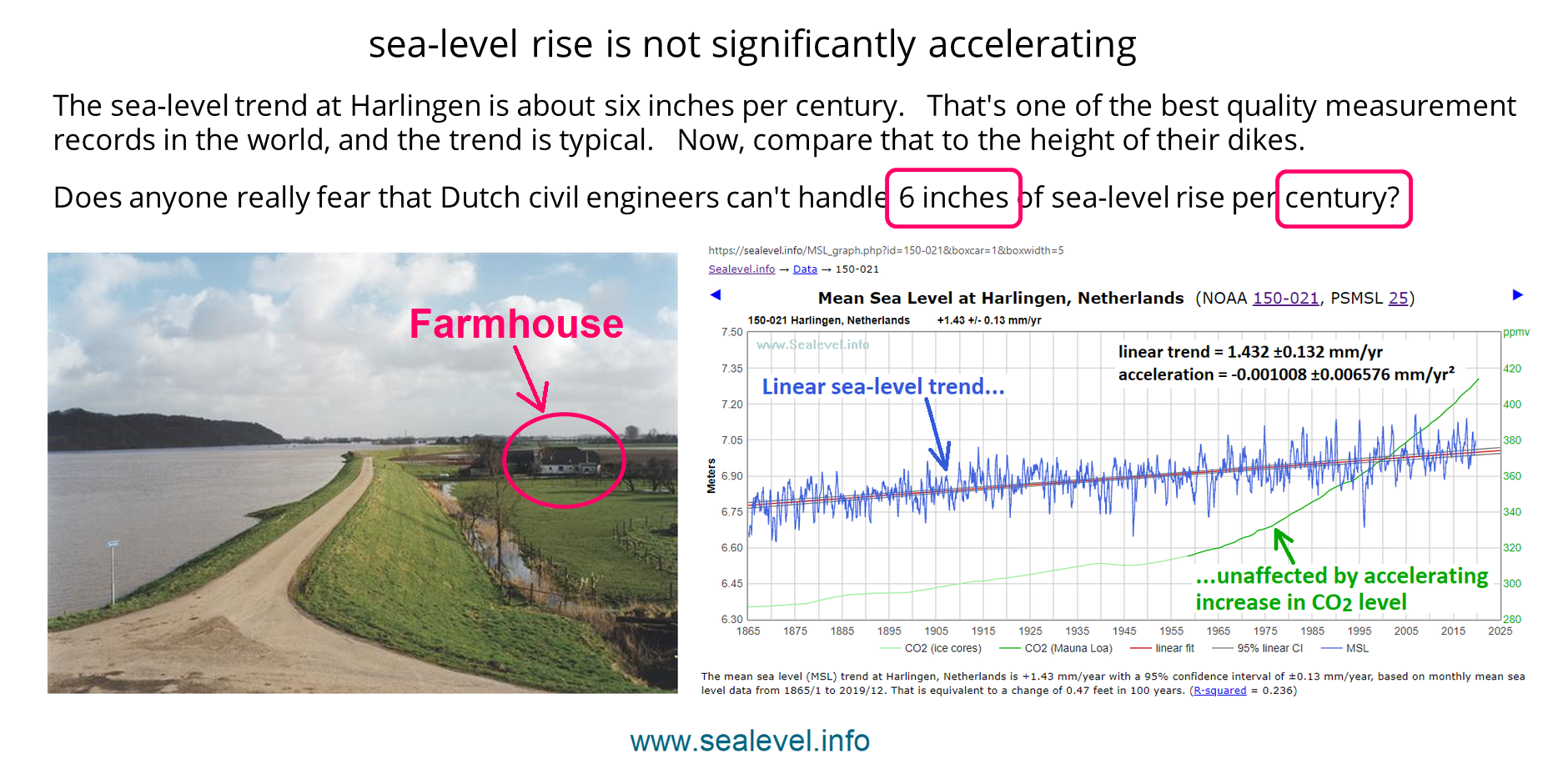
4/11. Honolulu is the best quality, well-sited, sea-level measurement record in the world, but it's not the longest. Here's a Dutch measurement record with 158 years of continuous data!
The linear trend is 1.47 ±0.13 mm/yr
The acceleration is 0.00 ±0.01 mm/yr²
sealevel.info/MSL_graph.php?…
sealevel.info/Dutch_dike_vs_…
The linear trend is 1.47 ±0.13 mm/yr
The acceleration is 0.00 ±0.01 mm/yr²
sealevel.info/MSL_graph.php?…
sealevel.info/Dutch_dike_vs_…

5/11. Some high quality coastal measurement records show a miniscule acceleration, and others show none at all. Hogarth (2014) reported that, "acceleration from extended tide gauge data converges on 0.01 mm/yr²."
That's negligible. That much acceleration, were it to persist for 150 years, would add a total of just 4.4 inches to average coastal sea-level. (That would be in addition to the current rate, which averages about 6 inches per century.)
agupubs.onlinelibrary.wiley.com/doi/full/10.10…
That's negligible. That much acceleration, were it to persist for 150 years, would add a total of just 4.4 inches to average coastal sea-level. (That would be in addition to the current rate, which averages about 6 inches per century.)
agupubs.onlinelibrary.wiley.com/doi/full/10.10…
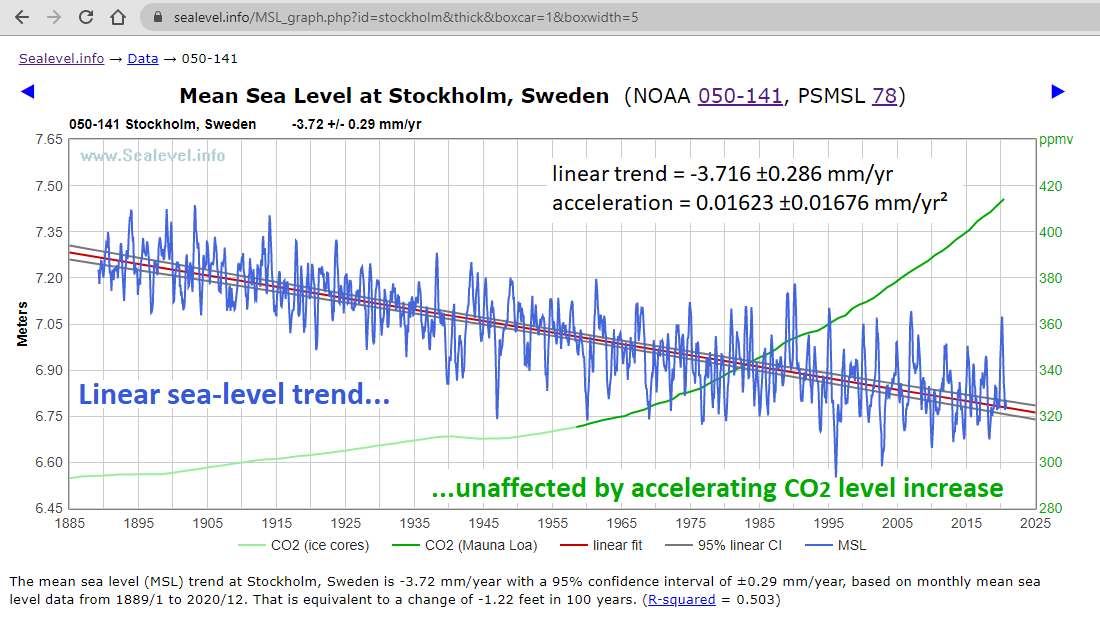
6/11. In fact, the "global" trend is so slow that in many places it's dwarfed by local factors, like erosion, sedimentation, and vertical land motion. Greta Thunberg's hometown is one of those places:
For Stockholm, the main local factor affecting the local sea-level trend is isostatic rebound of the land, due to the retreat of the Fennoscandian Ice Sheet about 11K years ago.sealevel.info/MSL_graph.php?…
sealevel.info/050-141_Stockh…
For Stockholm, the main local factor affecting the local sea-level trend is isostatic rebound of the land, due to the retreat of the Fennoscandian Ice Sheet about 11K years ago.sealevel.info/MSL_graph.php?…
sealevel.info/050-141_Stockh…

@NASAClimate 7/11. If the global sea-level trend were to substantially accelerate, from its current approximately 1.5 mm/year (6 inches/century), that would be good news for Stockholm Harbor, because it would reduce their dredging expenses. Here's an article:
dredgingtoday.com/2014/03/07/swe…
dredgingtoday.com/2014/03/07/swe…

@NASAClimate 8/11. The best evidence shows that manmade climate change is modest and benign, and CO2 emissions are net-beneficial rather than harmful. Here are some relevant scientific papers:
sealevel.info/negative_socia…
sealevel.info/negative_socia…
@NASAClimate 9/11. BTW, if you want to know what makes Honolulu such a great place to measure sea-level, I explained it here:
https://x.com/ncdave4life/status/1800225079298576605
@NASAClimate 10/11. If you want to know how @NASAClimate got this so spectacularly wrong (even though many NASA scientists do excellent work), see:
https://x.com/ncdave4life/status/1799978912887210381
11/11. To understand a contentious & politicized topic like climate change, you need balanced information. You won't get it from @NASAClimate, but I'm here to help. I've compiled a list of high quality resources, here:
It has:
● accurate introductory climatology information
● in-depth science from BOTH skeptics & alarmists
● links to balanced debates between experts on BOTH sides
● accurate information about impacts of CO2 & climate change, such as the effects on crop yields
● links to the best blogs on BOTH sides of the climate debatesealevel.info/learnmore.html
It has:
● accurate introductory climatology information
● in-depth science from BOTH skeptics & alarmists
● links to balanced debates between experts on BOTH sides
● accurate information about impacts of CO2 & climate change, such as the effects on crop yields
● links to the best blogs on BOTH sides of the climate debatesealevel.info/learnmore.html
@NASAClimate Compilation:
@ThreadReaderApp @Rattibha @threaddotblue unroll
@reSeeIt save threadtwitter-thread.com/t/180029560456…
@ThreadReaderApp @Rattibha @threaddotblue unroll
@reSeeIt save threadtwitter-thread.com/t/180029560456…
• • •
Missing some Tweet in this thread? You can try to
force a refresh