
when raz segal, the israeli-american historian, gained attention for calling israel’s war in gaza "a textbook case of genocide" back in october, the name sounded familiar so i googled him and realized he was the author of a book that i had stumbled on by accident several years
ago: "Genocide in the Carpathians: War, Social Breakdown, and Mass Violence, 1914–1945". it’s a history of "subcarpathian ruthenia," a truly cursed region of eastern europe where the final solution was implemented with exceptional efficiency in the spring-summer of 1944:
more than 90% of the region’s jews were rounded up and killed, mostly in auschwitz — including most of my family on my father’s side, who were hungarian speaking jews from a village called koson/kazony (now in the westernmost part of ukraine). until i read segal’s book i
knew little about the region or its history; i didn’t even know it was in "ruthenia"or that the largest ethnic group were the ruthenians. my dad knew almost none of this history either and was amazed to learn some of the details i found in the book. his parents had lived through
all this in their teens and twenties but had never been big on talking about it. (his mother, my grandmother, had survived because she spent the war being hidden by a family in budapest and his father survived i guess because he was an able bodied young man so he spent the
war in some kind of hungarian slave labor camp; but everyone in the family who didn’t manage to leave the village in time went to auschwitz, including my grandmother’s mother, father, and little brother. soon after the war she married and had my dad and the family emigrated
to the US in 1949.) in his book segal narrates the history of the region's ethnonational politics which reads like an exaggerated parody of all the terrible things you think of when you hear the phrase "interwar eastern europe.” the plurality were ruthenians, a slavic group whose
language is (i think) basically equidistant between russian and ukrainian. the jews, mostly hungarian speaking, were the second biggest group. both groups were internally divided — the jews between orthodox and ultra-orthodox, zionist vs nonzionist, right-wing vs left-wing —
and the ruthenians between those who wanted to be "basically russian" versus those wanting to be "basically ukrainian" with an extremely noxious cadre of right-wing ukrainian nationalists lobbying / harassing / intimidating them to go the latter route. pre-1914 the ruthenians and
jews had been friends and allies but after 1918 the region was made part of the new state of czechoslovakia, which drove a wedge between them: the jews supported the czechoslovak state-building project, which had a liberal/cosmopolitan flavor to it, while the ruthenians found
themselves in conflict with the state because it refused to let them have their own ruthenian schools. (incidentally my father is named after tomas masaryk, the founding father of czechoslovakia, and i’ve been told that whenever his parents would pass by a ukrainian church they
would mutter "antiszemiták"). there’s much much more to this story but you get the gist — extremely "byzantine" ethnic politics, though the region was never in Byzantium; highly "balkan" though not actually located in the balkans..... this was segal’s second book — his first,
published by Yad Vashem, was a monograph about the jews of Munkaćs, the "big" town close to my family’s village — and he’s now "Endowed Professor in the Study of Modern Genocide” at Stockton University.
today segal is in the news again because he was about to be hired as the director of the Center for Holocaust and Genocide Studies at the University of Minnesota but the school has "paused" the hiring due to the objections of certain powerful people to segal’s calling israel’s
war genocidal. never mind that he’s a renowned israeli-american genocide scholar whose work has been published by yad vashem or that many other leading authorities on human rights and genocide — including, now, aryeh neier — have now reached the same conclusion as him about
israel’s actions; segal "cannot fulfill the mission of the Center" because of his "perverse allegation that Israel was committing a genocide,” writes one of the 2 board members who resigned in protest at segal’s planned hiring. the famous political pundit norman ornstein
a UMinn alum, has joined in the organized intimidation campaign against segal, along, i’m sure, with many other prominent figures.....
These people arent even trying to disguise what they’re doing: they haven’t bothered to invent a fake case against the quality of segal’s scholarship. they're just sabotaging the careers of anyone who speaks out against israel's genocide, to bully the world into silence.
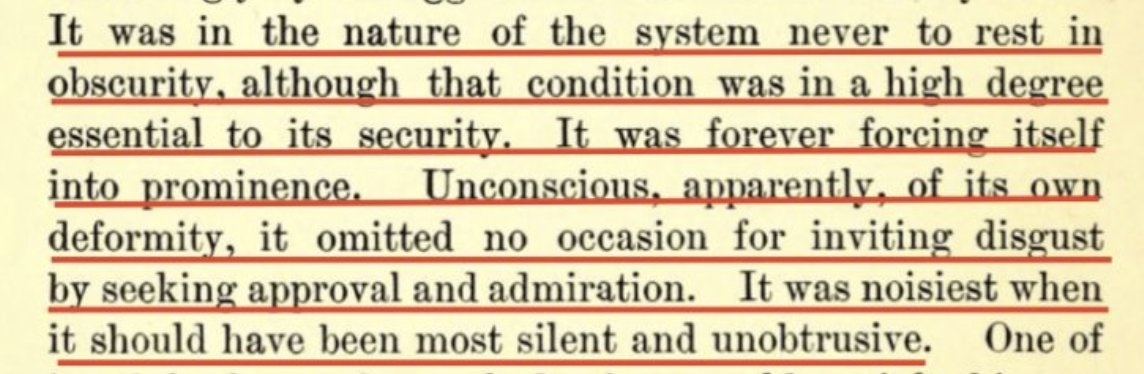
the other day i posted an excerpt from frederick douglass’s memoirs because of the uncanny parallels between the antebellum slavery issue and the israel issue today: not really due to any similarity in the substance of the issues but due to the remarkably similar modus
operandi of the defenders of these indefensible institutions. as is well known, many ordinary northern whites who had never previously cared much about slavery became passionately antislavery simply because they realized that the slave system was posing an increasingly
serious threat to basic personal freedoms in the *north*. the south and its northern sycophants felt so morally insecure about the monstrous system to which they were committed that they felt the need to resort to increasingly harsh repression of even the mildest dissent: the
congressional "gag rule," the banning of abolitionist literature from the mails, the gestapo practices enshrined in the 1850 fugitive slave law, and not least, as douglass notes, the constant efforts of both political parties "to drive from place and power every man suspected
of ideas and principles hostile to slavery”...... I’m hopeful that the result today will be the same as in the 1850s. the very repression intended to protect the system will expand the ranks of its opponents, to include everyone who values basic rights of speech and conscience.
As Douglass put it in one of his elegant turns of phrase, the antislavery movement "could have done very little without the aid rendered them unwittingly by the aggressive character of slavery itself": 
• • •
Missing some Tweet in this thread? You can try to
force a refresh





