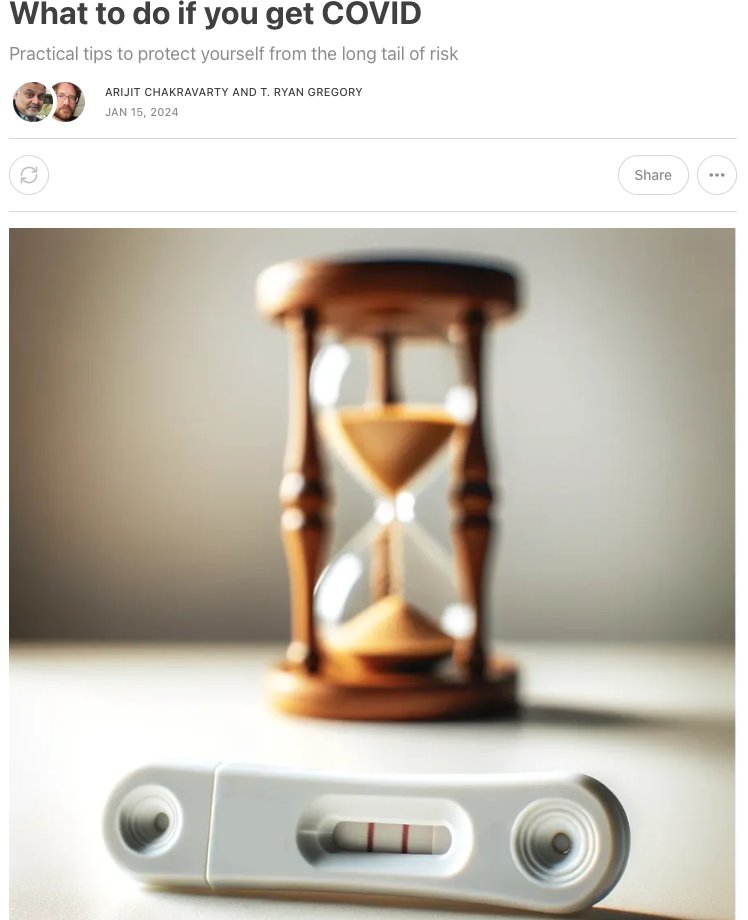
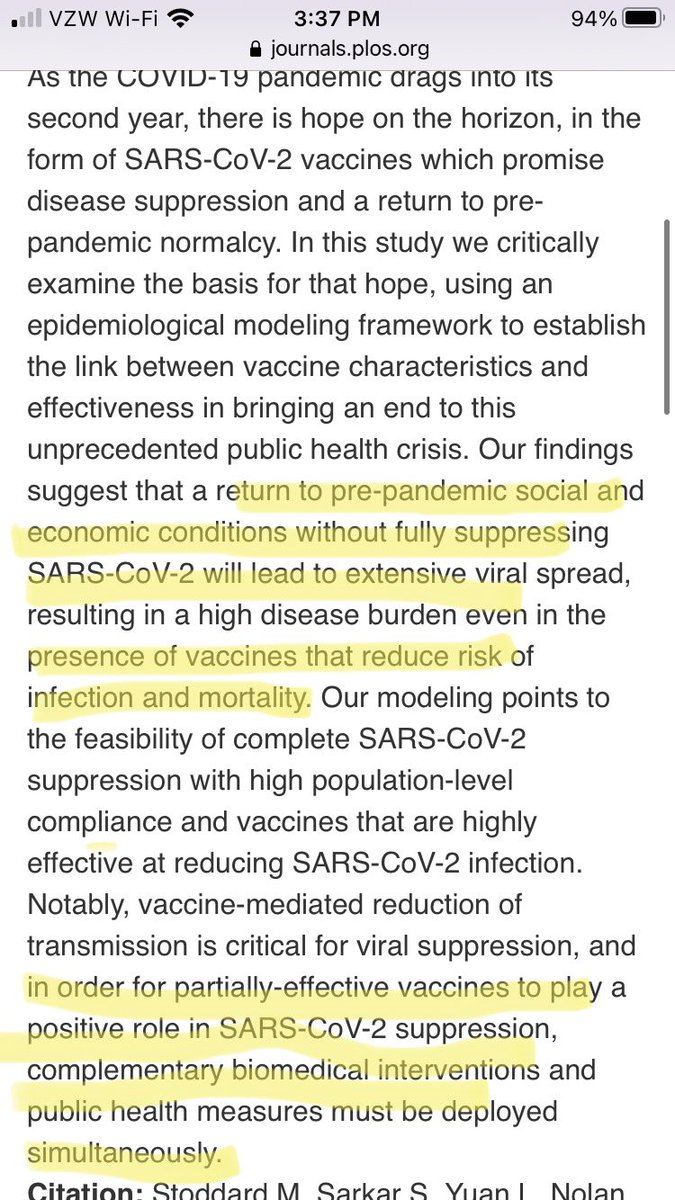
Thread #4 of 5: Suppose the 𝐂0𝕍𝕚𝖉 virus is carcinogenic. Why not wait for "real world" (epi) data to "prove" that the before we do anything? In this 🧵, let's discuss why such "calm-mongering" is a reckless choice & can lead to devastating consequences for public health. (1/)
A recurrent theme during the ongoing pandemic has been the panic about public panic. @Heavyredaction & I tackled this issue last year, in an article for The Nation, making the point that Public Health spends a lot of time providing reassurances. (2/): thenation.com/article/societ…
In a recent 🧵, I pointed out that Sc2 may be carcinogenic. (It causes DNA double strand breaks & chromosomal instability (micronuclei), while suppressing mechanisms that prevent CIN cells replicating. As do carcinogens (& known carcinogenic viruses) (3/)
https://x.com/arijitchakrav/status/1800417027154485678
Because the traditional framework for declaring viruses carcinogenic relies on a dated mental model (the Oncogene Addiction hypothesis), existing criteria for assessing viral carcinogenicity are not appropriate for sc2, which lacks oncogenes. (4/)
https://x.com/arijitchakrav/status/1799971528412635339
Given that, the use of deductive logic is really critical at this point. Science should focus on shoring up the deductive case for Sc2 as a potential carcinogen. (Some live-cell microscopy & micronucleus assay data would be useful!) (5/)
https://x.com/arijitchakrav/status/1800423978885947887
It's pretty easy to anticipate that minimizer tactics will focus on waiting for a clearer epidemiological signal (rise in cancer rates) & questioning the causal association with 𝐂0𝕍𝕚𝖉. This is an old playbook, successfully used by Big Tobacco to create decades of delays. (6/) 

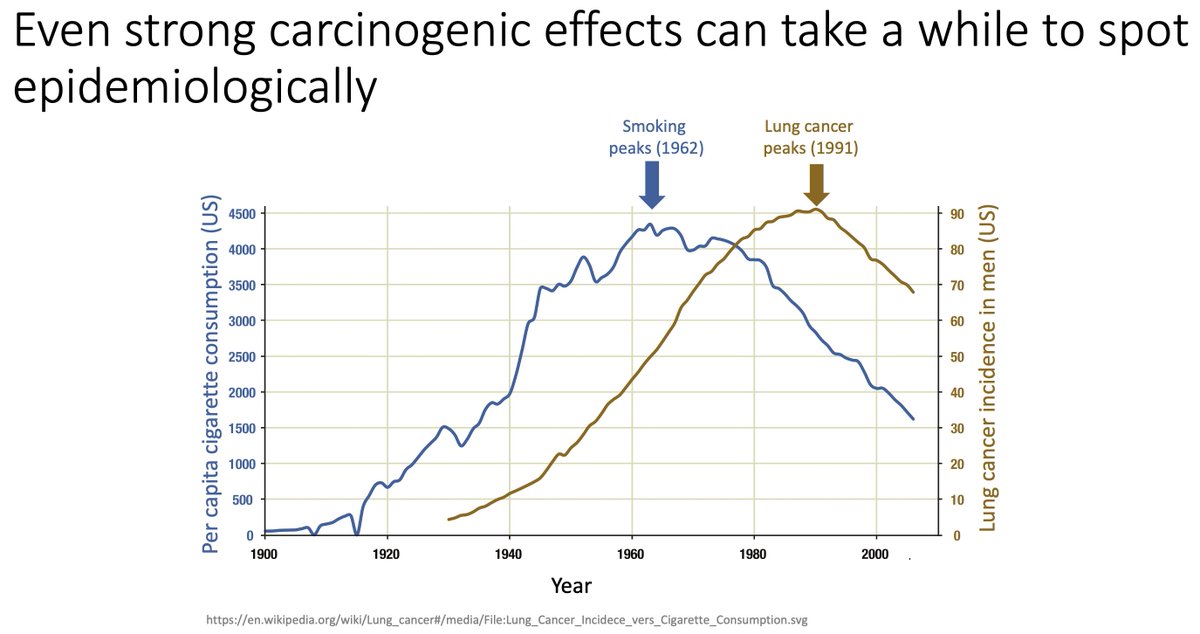
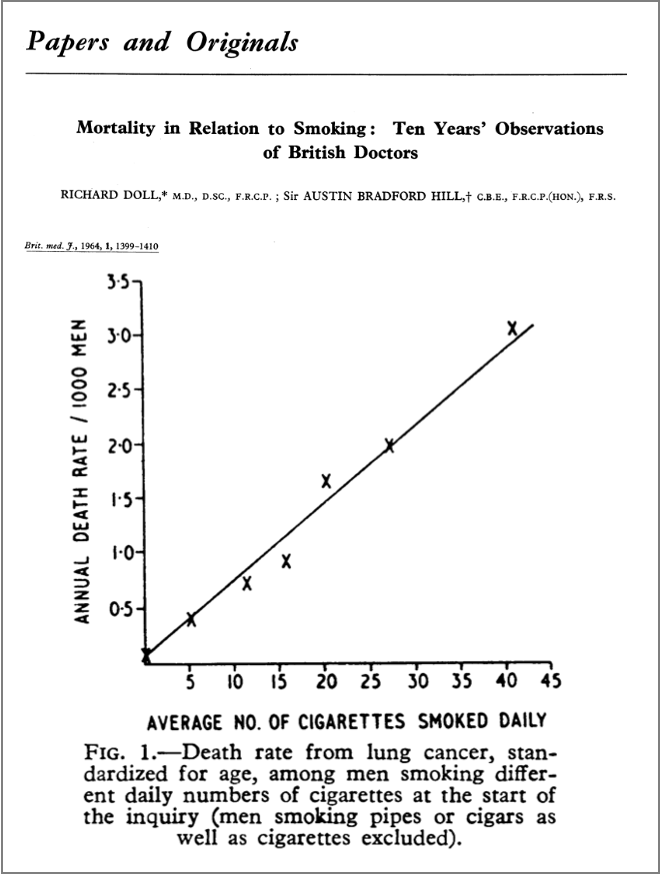
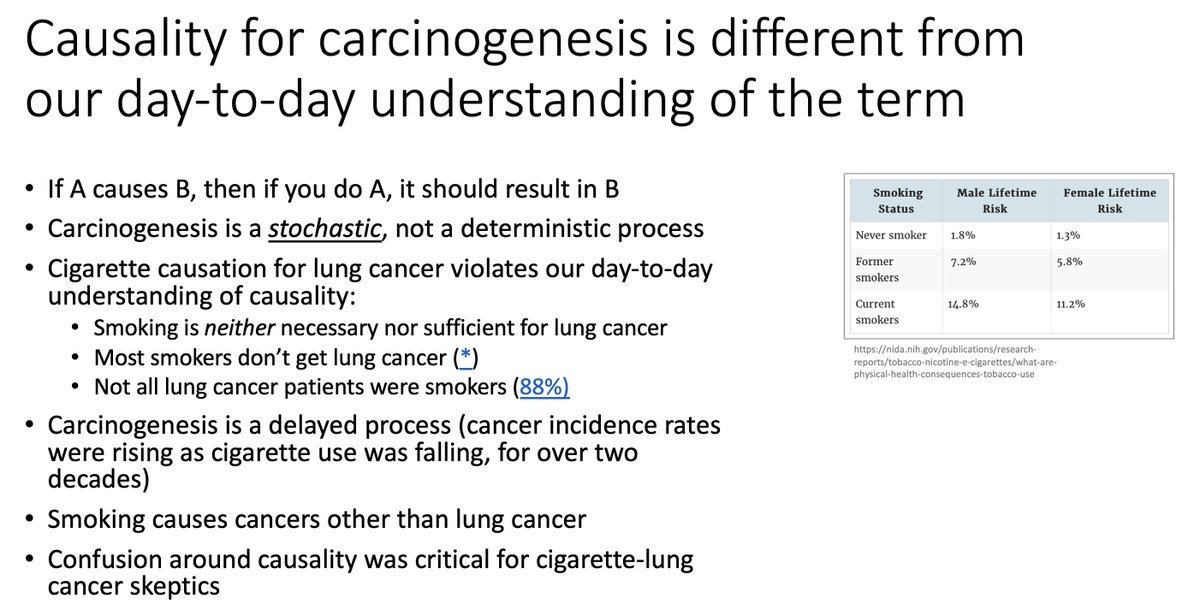
Although cigarette smoking increases your risk of lung cancer 100x, it takes years of smoking. Most smokers don't die of lung cancer, nor are all lung cancer patients smokers. Despite strong associations, it was a long slog to establish cancer causation from epi data! (7/)

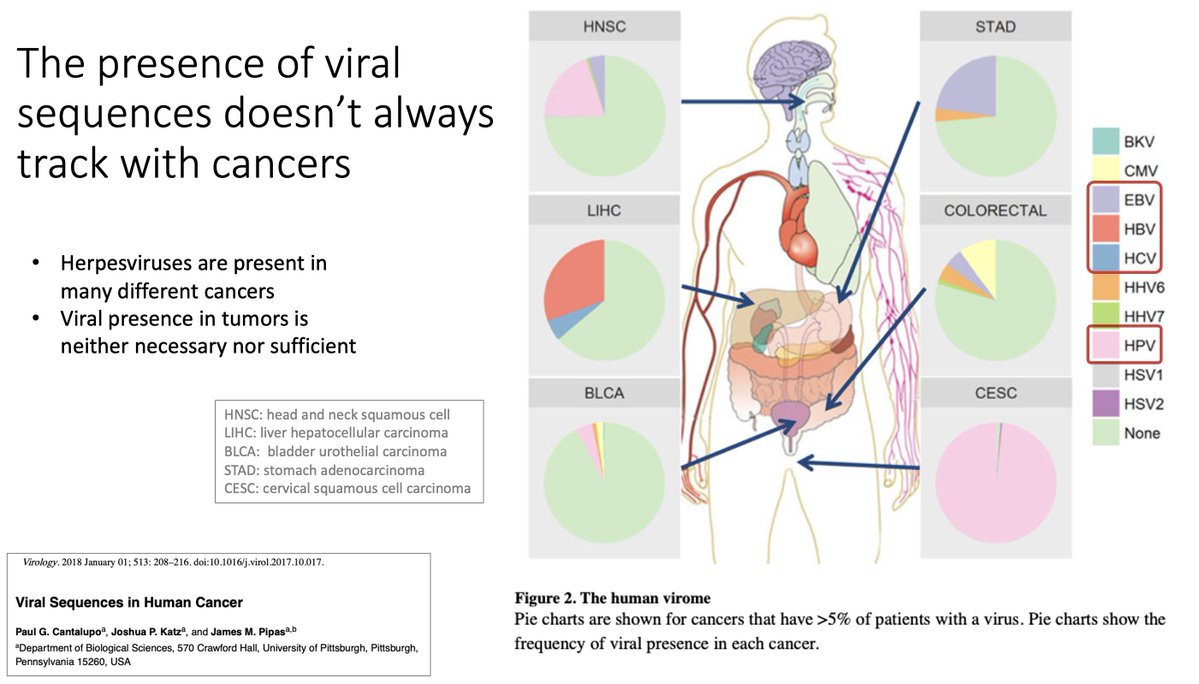
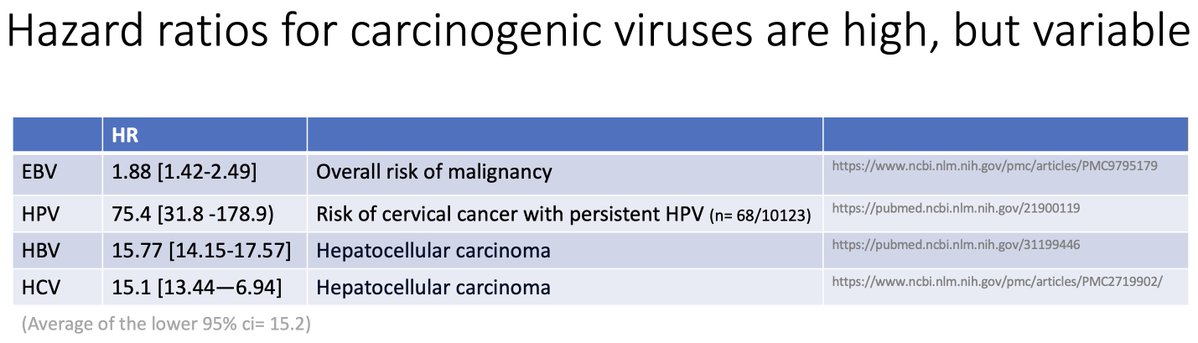
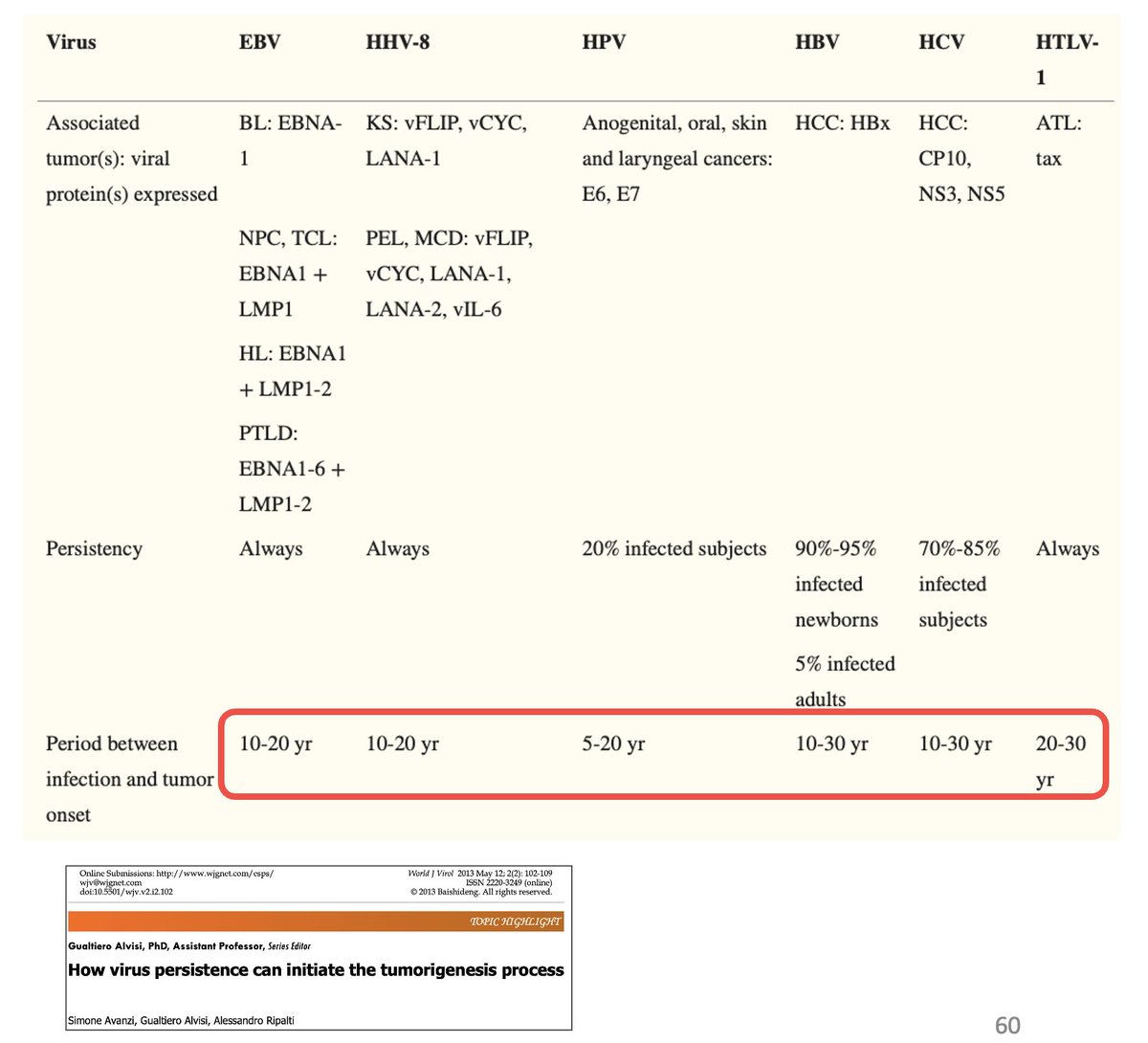
For viruses more broadly, while viral-attributed cancers are common, it has taken us decades to identify these associations. The presence of viral sequences doesn’t always track with cancers, & hazard ratios (HRs, a measure of relative increase in risk) can be very variable. (8/)
Using tissue-specific associations for sc2 won't work- the virus infects many different tissues. Association studies will also fail- need a pool of people who've never had covid. (These people are rare, will be rarer over time &can't be readily identified, even by serology). (9/)
But, you say, if it's really a carcinogen, showing a rise in cancer rates should shut down the debate, right? It takes years for exposure to a carcinogen to lead to cancer. It'll likely be decades before the carcinogenic effects of Sc2 manifest in a rise in cancer rates. (10/)
In the meantime, people who aren't taking precautions can expect to get 𝐂0𝕍𝕚𝖉 1-2x/yr. By the time a potential carcinogenic effect of sc2 is obvious in epi data, most people will have been infected 10-20 times. That'll be too late to be useful. (11/) medrxiv.org/content/10.110…
If Sc2 really is carcinogenic, waiting decades for the epi data will lock in a long tail of disease. (This is a good time to introduce , a neat collab with @gckirchoff that features interactive widgets that illustrate complex sciencey stuff.) (12/) peertopublic.com/posts

This simple model shows a hypothetical scenario where Sc2 is carcinogenic, and governments worldwide decide to wait until cancer cases cross a certain threshold before acting on it. Let's say we wait till cancer cases are 50% higher than baseline before we act on it. (13/)
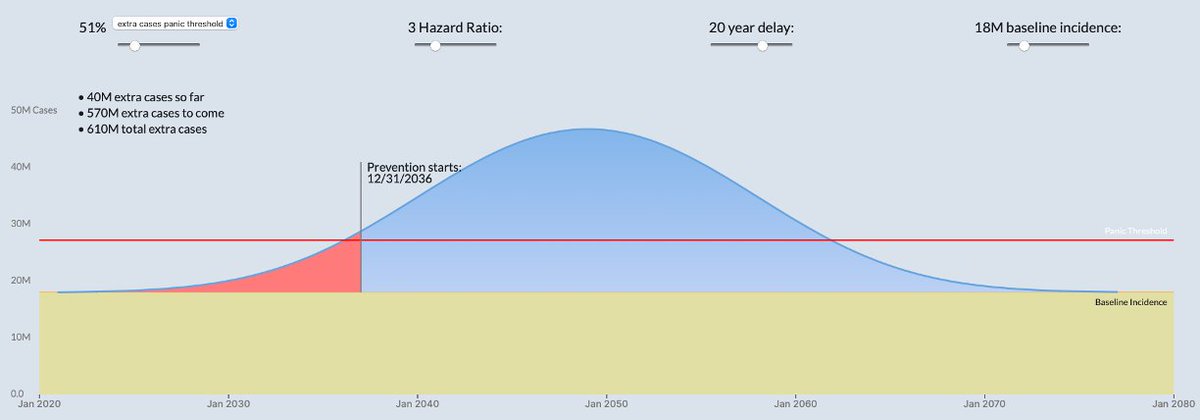
And let's assume that action is instantaneous & all future infections are halted on that day (12/31/2036). The red area (left) shows the number of cases above baseline. Baseline cancer cases worldwide are 18M/yr, so that gives us a total of 40M extra cases by that time. (14/)
That's pretty bad, huh? 40M people got cancer who could've maybe avoided it. Now look at the area on the right of the line corresponding to 12/31/36. It says 570M. If we stopped covid cold on that day, in this scenario, there'd still be 570M more people who will get cancer (15/)
as a result of having not taken precautions over the past 12 years. That's pretty appalling.
This simple 'toy' model shows a 'locked in' burden of disease that manifests after the threat is recognized. (You can a full description of the methods at ) (16/)peertopublic.com
This simple 'toy' model shows a 'locked in' burden of disease that manifests after the threat is recognized. (You can a full description of the methods at ) (16/)peertopublic.com
In this hypothetical case, I used a hazard ratio of 3 (Getting 𝐂0𝕍𝕚𝖉 1-2x/yr elevates your risk of cancer 3x). Of course, the real HR could be higher or lower than that. Similarly, govts could wait until cancer rates are 2 or 3x pre-pandemic rates, (17/)

& the delay before cancers manifest could be shorter or longer.
It doesn't take much imagination to see that some scenarios could be quite disastrous.
Note that the model makes some very optimistic assumptions about covid eradication (instantaneous). (18/)
It doesn't take much imagination to see that some scenarios could be quite disastrous.
Note that the model makes some very optimistic assumptions about covid eradication (instantaneous). (18/)
The example I used was also somewhat optimistic about the virus: an HR of 3 is far on the low end for carcinogenic viruses, and a delay of 20 years is middle-of-the-road.
The model is interactive, you can play with at (19/) peertopublic.com/tools/delayed-…
The model is interactive, you can play with at (19/) peertopublic.com/tools/delayed-…
In the real world, it'll be much harder to see an increase in cancer rates. For one, these datasets are noisy, making it harder to see the signal. For another, baseline cancer rates were rising before the pandemic. The real problem will be far more challenging, because (20/)
it'll require us to see a change in slope (a higher rate of increase in incidence) rather than a simple increase in incidence.
Even if we do see a change in rates, there will be years of debate about other explanations.
Remember, we've been here before with cigarettes. (21/)
Even if we do see a change in rates, there will be years of debate about other explanations.
Remember, we've been here before with cigarettes. (21/)
where there were dozens of associative studies with compelling differences in rates.
It'll be a long time before the epi data is incontrovertible. As the model above shows, this delay will cause a massive bolus of 'locked in' disease that plays out in the decades to follow.(22/)
It'll be a long time before the epi data is incontrovertible. As the model above shows, this delay will cause a massive bolus of 'locked in' disease that plays out in the decades to follow.(22/)
This again underscores why getting into debates about cancer rates is such a trap.
The idea that viruses can cause cancer was first put forth 100+ ago, but the the list of such viruses was small until the 70s. It can take decades to designate a virus carcinogenic. (23/)
The idea that viruses can cause cancer was first put forth 100+ ago, but the the list of such viruses was small until the 70s. It can take decades to designate a virus carcinogenic. (23/)
Arguments from ignorance ("we don't have any proof yet, let's just wait and see") have been weaponized over & over again throughout this pandemic, harming PH outcomes.
Deductive logic & the precautionary principle compel us to take Sc2 seriously as a potential carcinogen.(24/)
Deductive logic & the precautionary principle compel us to take Sc2 seriously as a potential carcinogen.(24/)
H/T @TRyanGregory @SGriffin_Lab @white_bite @0bj3ctivity @kasza_leslie @Falseflag @DavidJoffe64 @RS_Rose_Sauvage
@lisa_iannattone @DaniBeckman @ToshiAkima @FdAdF66 @WesleyWilson @_Lisa_LJ @RolandBakerIII @calirunnerdoc @ejustin46 @RadCentrism @bronterDoc @tohmes1 @DrGrahamLJ
@lisa_iannattone @DaniBeckman @ToshiAkima @FdAdF66 @WesleyWilson @_Lisa_LJ @RolandBakerIII @calirunnerdoc @ejustin46 @RadCentrism @bronterDoc @tohmes1 @DrGrahamLJ
• • •
Missing some Tweet in this thread? You can try to
force a refresh