E.T. THE EXTRA-TERRESTRIAL was released 42 years ago this week. One of the biggest box office hits of all time and among the most popular family films ever made, the behind the scenes story is out of this world…
1/29

1/29


The biggest filmmaker in the world in 1981, Steven Spielberg wanted his next film to be a more personal story. He had an idea for a film – Growing Up. Inspired by his parents divorce, it was about the alienation Spielberg felt as a child.
2/29
2/29
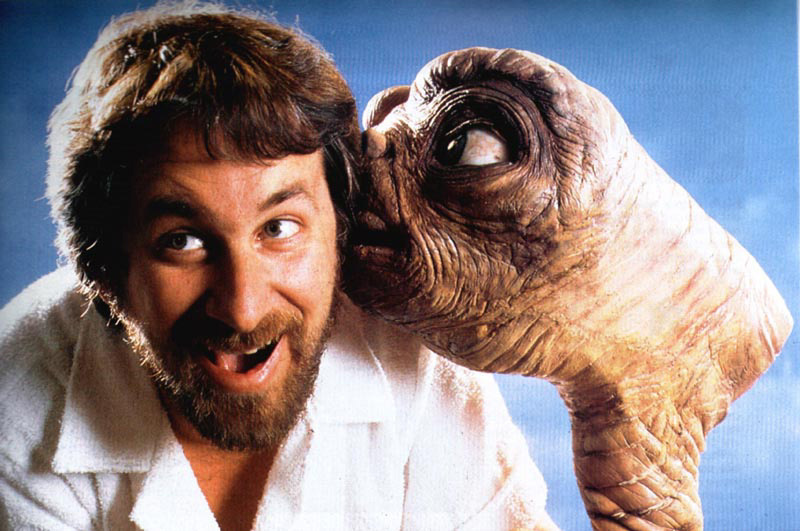
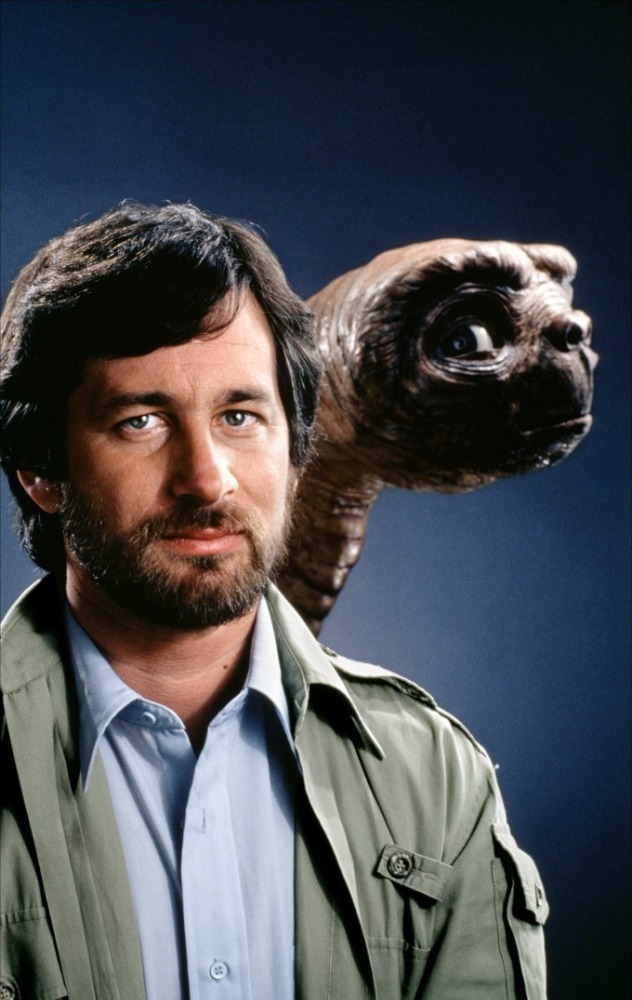
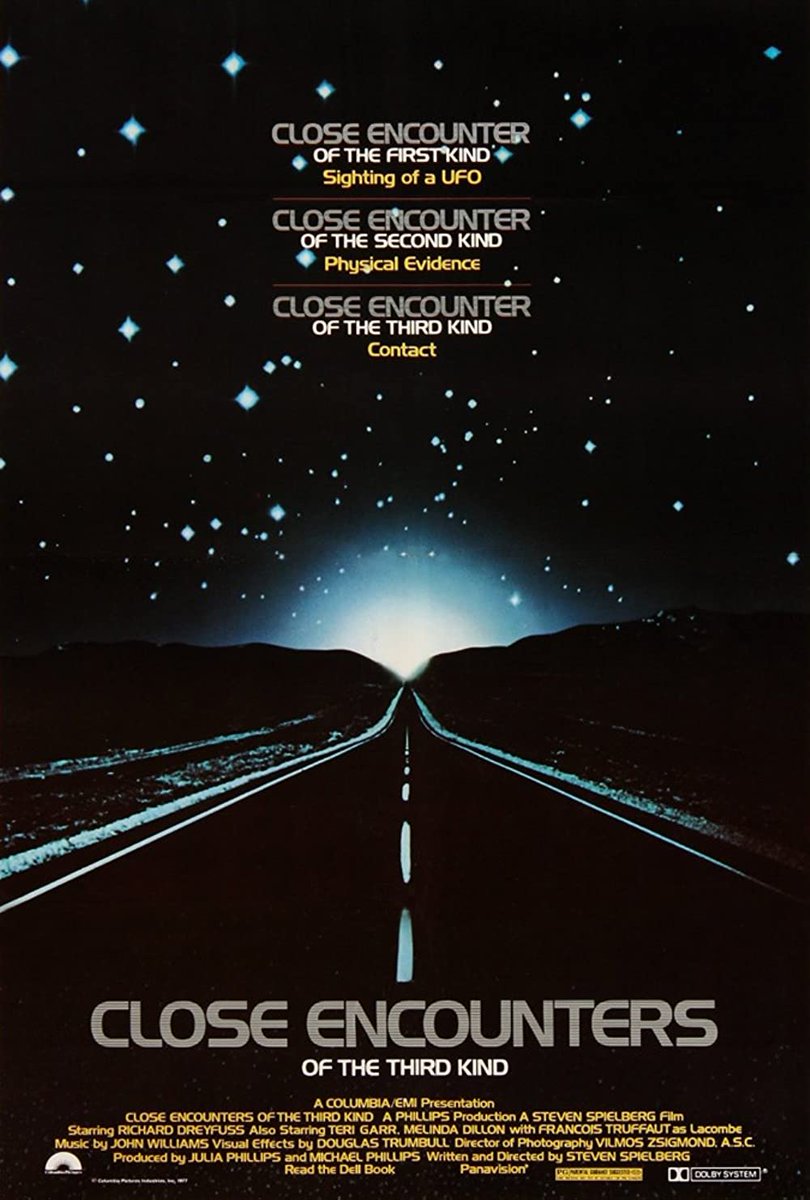
Columbia Pictures demanded a sequel to Close Encounters. Spielberg wasn’t interested, though he did commission John Sayles to write a script called Night Skies, about a family terrorized by a group of aliens. There were even alien designs…
3/29
3/29
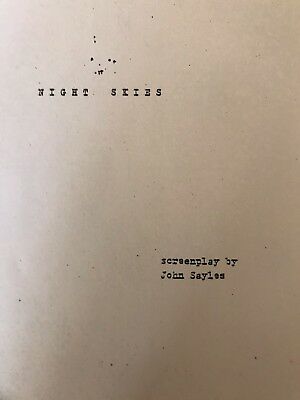

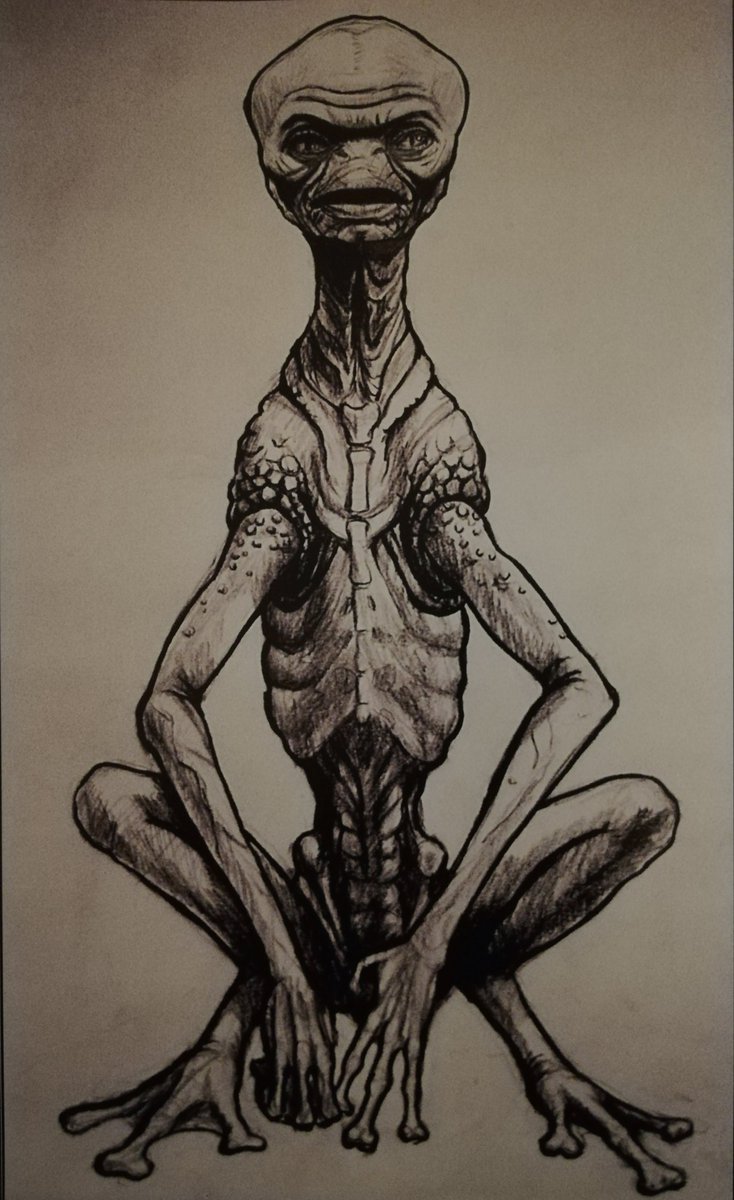
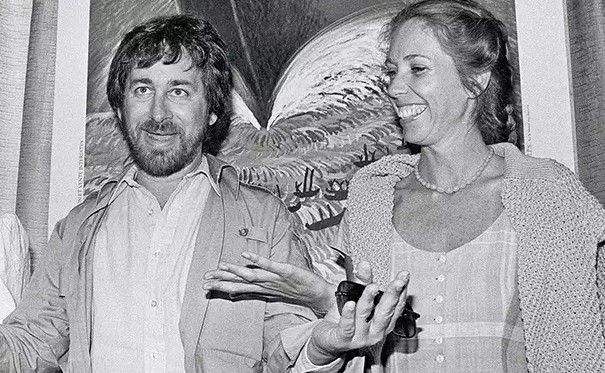
Spielberg and writer Melissa Mathison then combined Growing Up and Night Skies. They came up with a story of a benevolent alien befriending a boy on Earth. They called it E.T. This is Mathison talking about working with Spielberg…
4/29
4/29
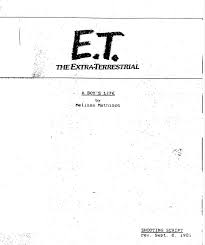
Melissa Mathison wrote the screenplay. Her first draft was so good that Spielberg used it as his shooting script. To maintain secrecy while shooting, the production name was called A Boy’s Life.
5/29
5/29
Spielberg held hundreds of auditions looking for lead character Eliot. Henry Thomas auditioned and blew Spielberg away. He was able to drum up tears by thinking about his recently passed dog.
6/29
6/29
During her audition for Spielberg’s other 1982 production Poltergeist, 6-year-old Drew Barrymore told him she wasn’t really an actress but rather the drummer of a punk band called the Purple People Eaters.
7/29
7/29
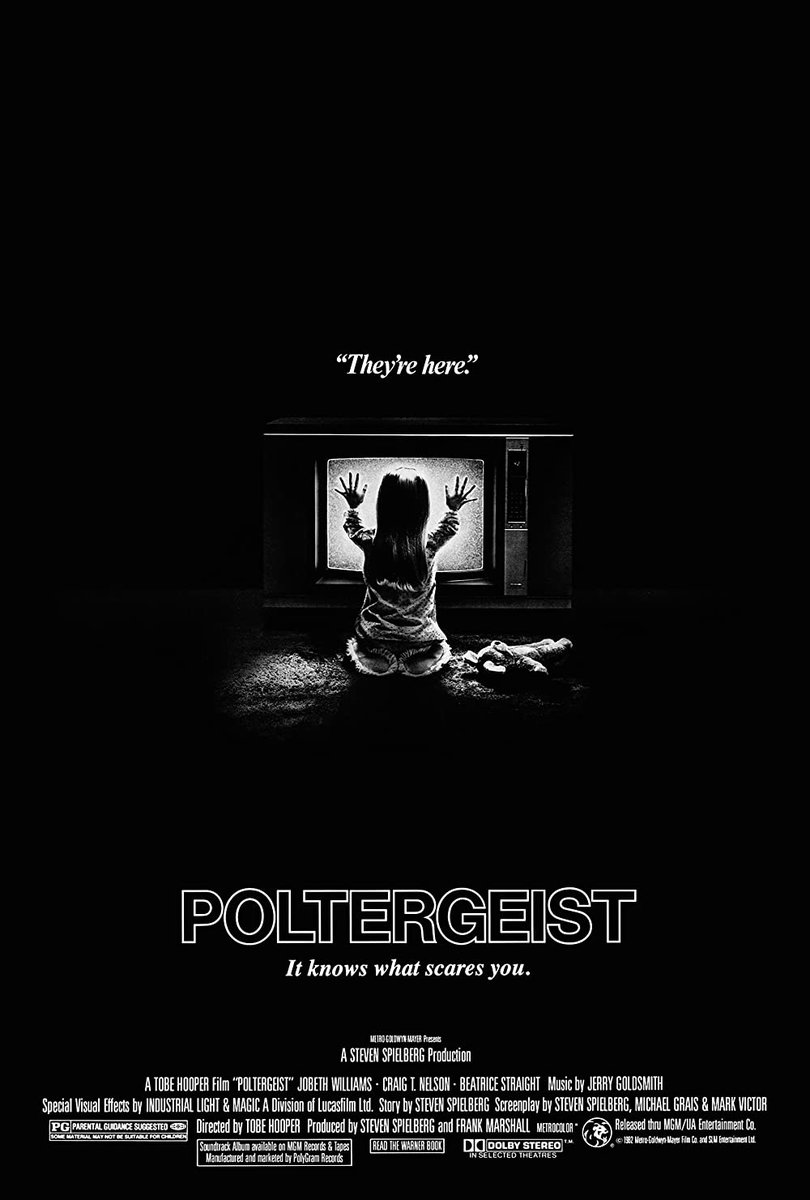

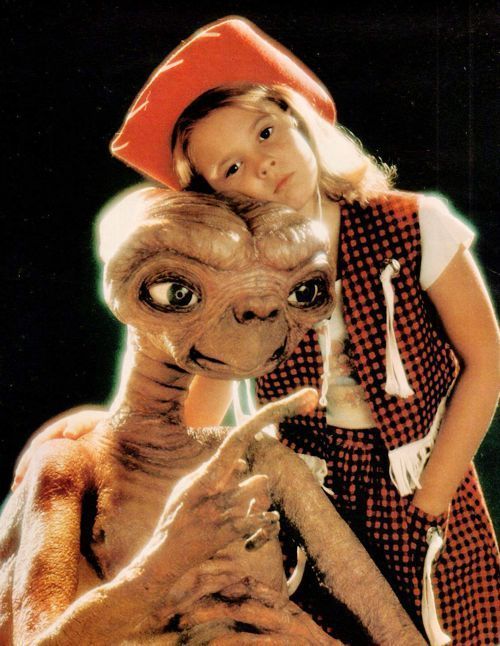
Spielberg said Barrymore wasn’t right for Poltergeist. But loving her imagination, he cast her as Eliot’s sister, Gertie, in E.T.
8/29
8/29
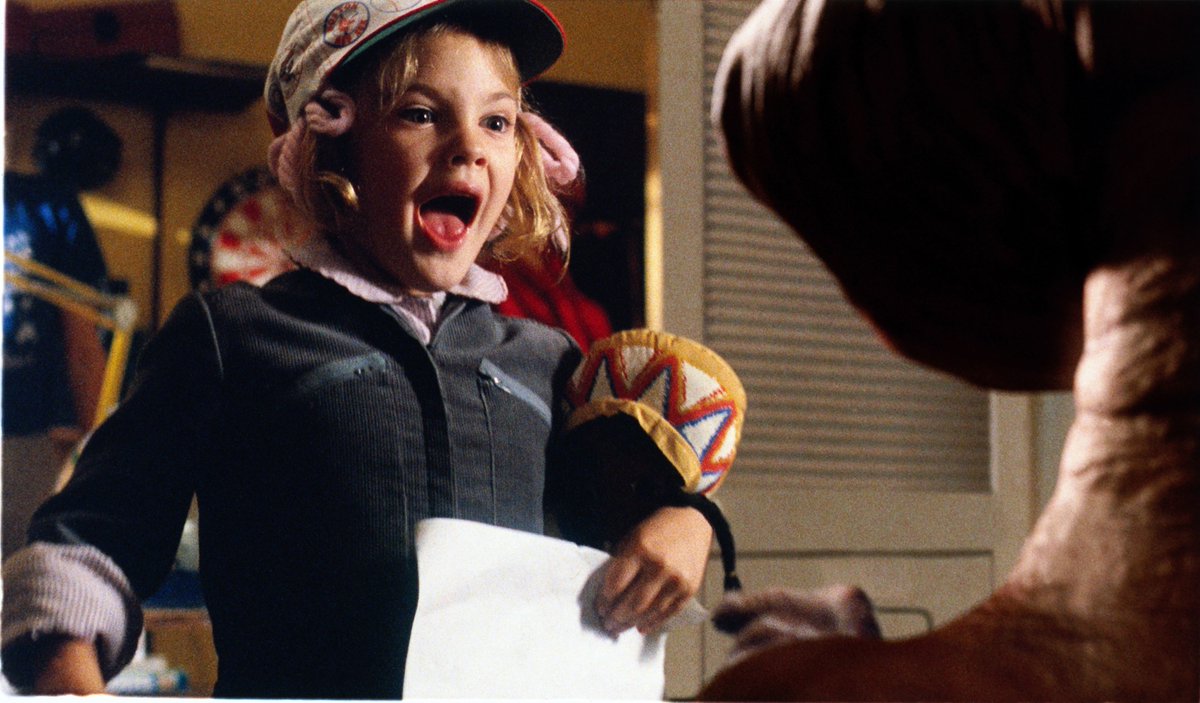
The first time Gertie sees E.T. she says "I don't like his feet." This was Drew Barrymore’s genuine reaction. Spielberg loved it and kept it in.
9/29
9/29
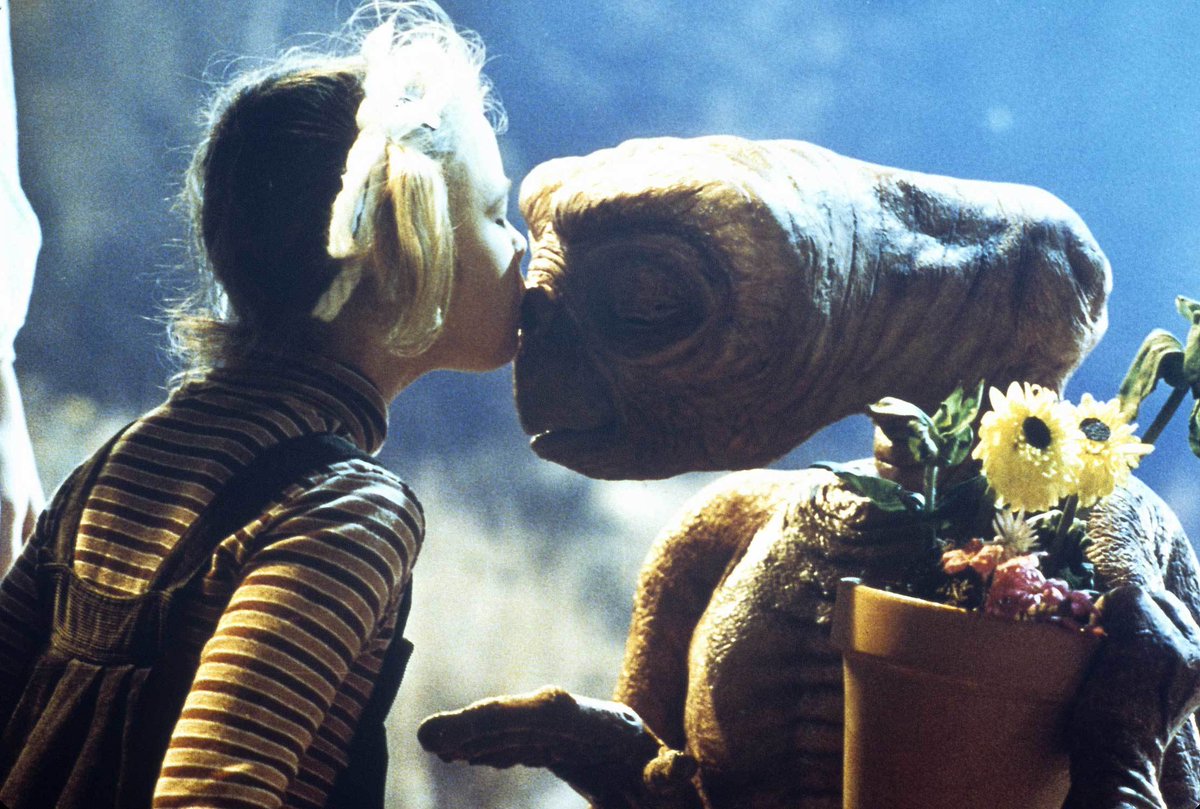
At one point, Drew Barrymore forgot her lines and Spielberg yelled at her. He found out she had came in with a fever. Feeling guilty, he hugged her and apologized as she cried. He then sent her home - with a note from her director.
10/29
10/29
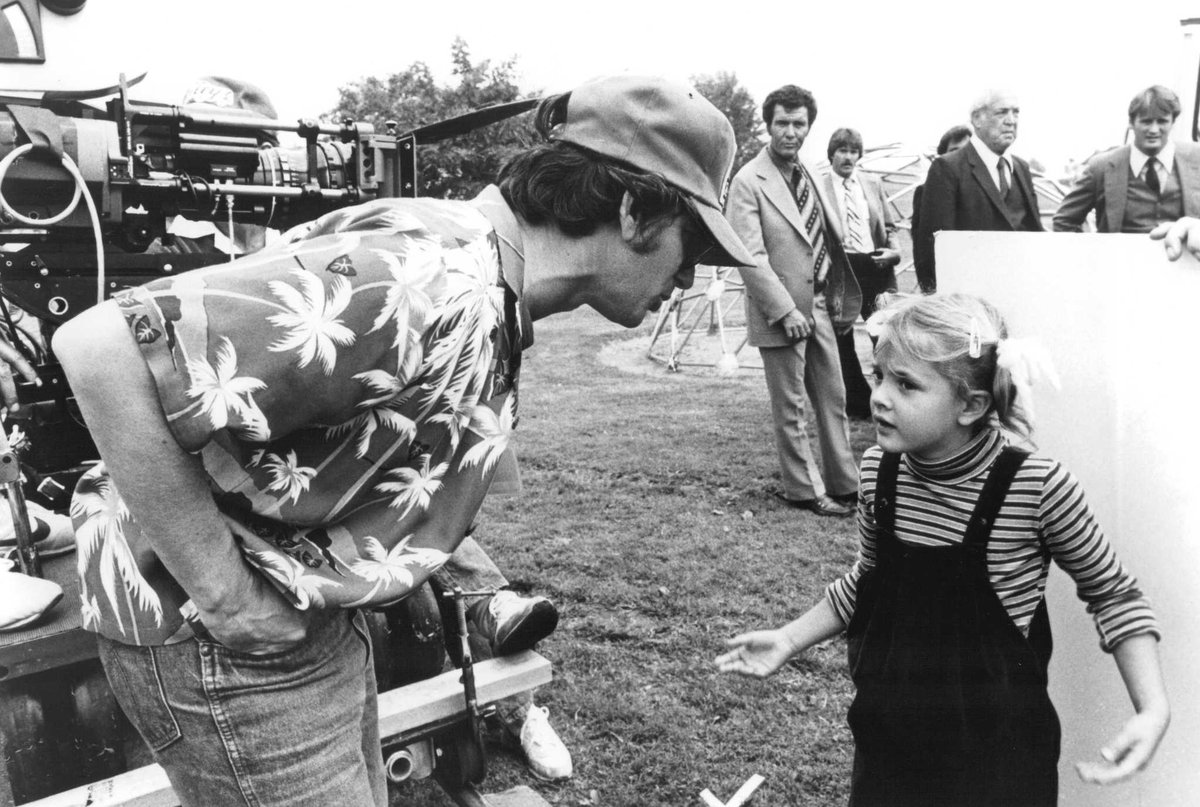
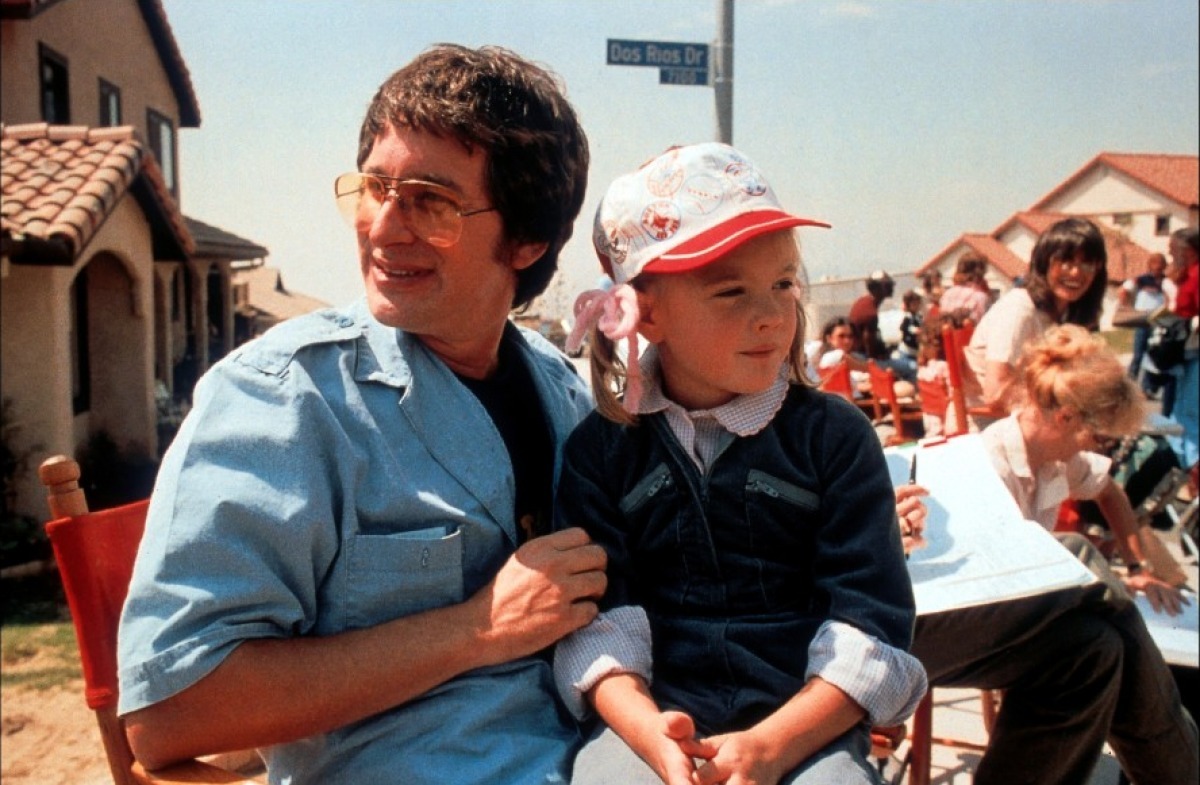
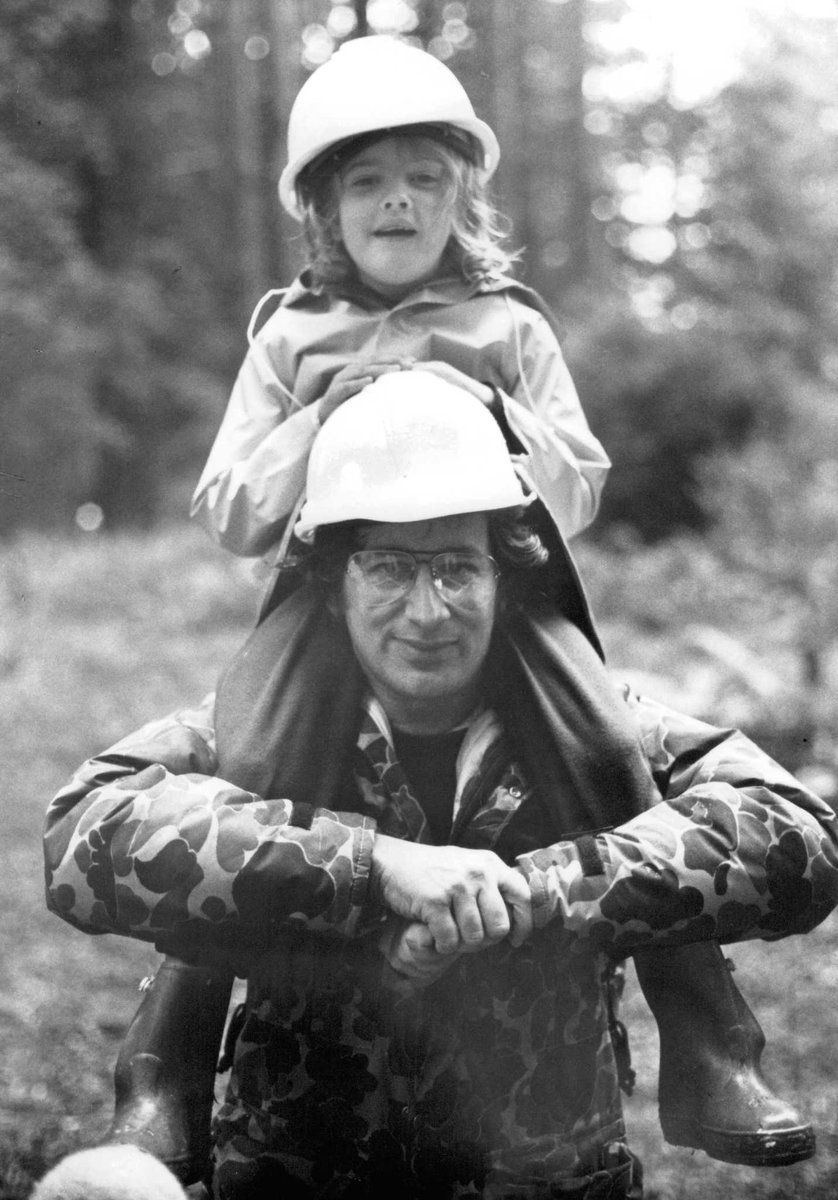
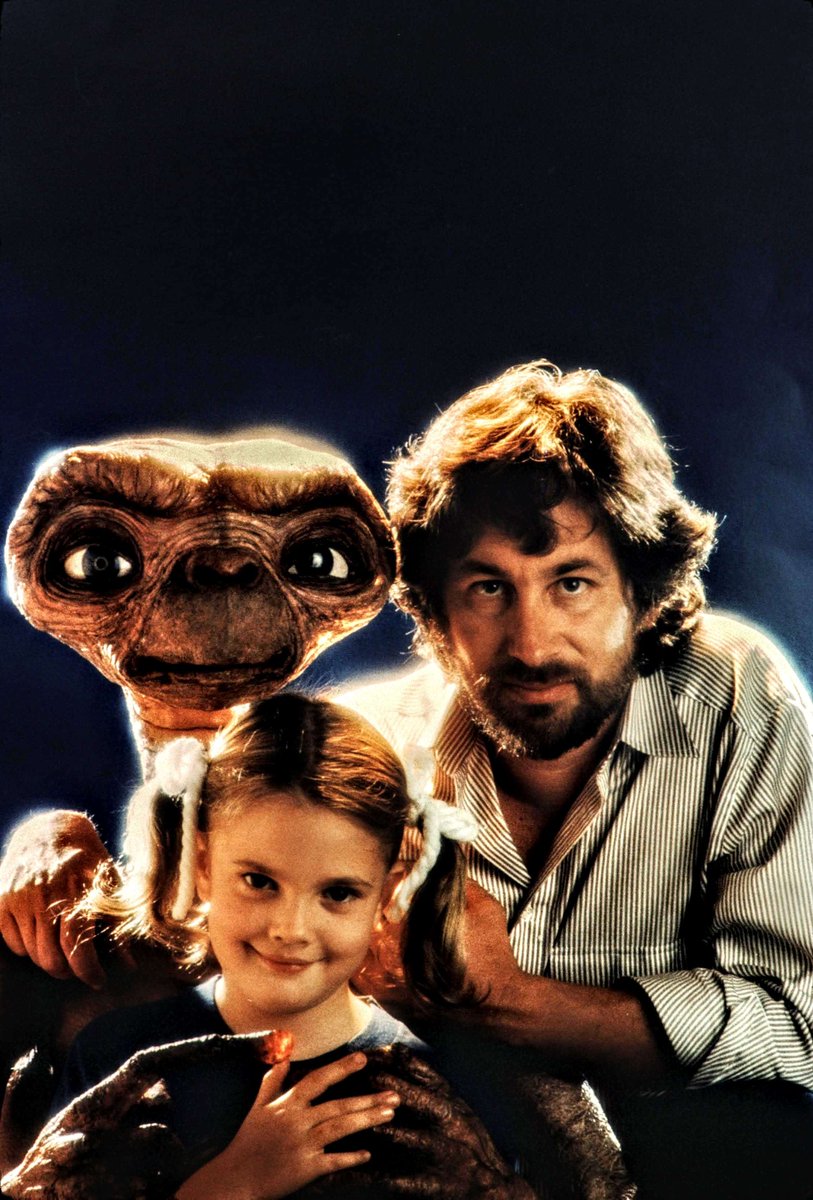
To capture authentic emotions from the child actors, Spielberg filmed the movie in chronological order.
11/29
11/29
Dee Wallace played Elliott and Gertie’s mother, Mary. She was a scream queen having starred in The Hills Have Eyes and The Howling.
12/29
12/29
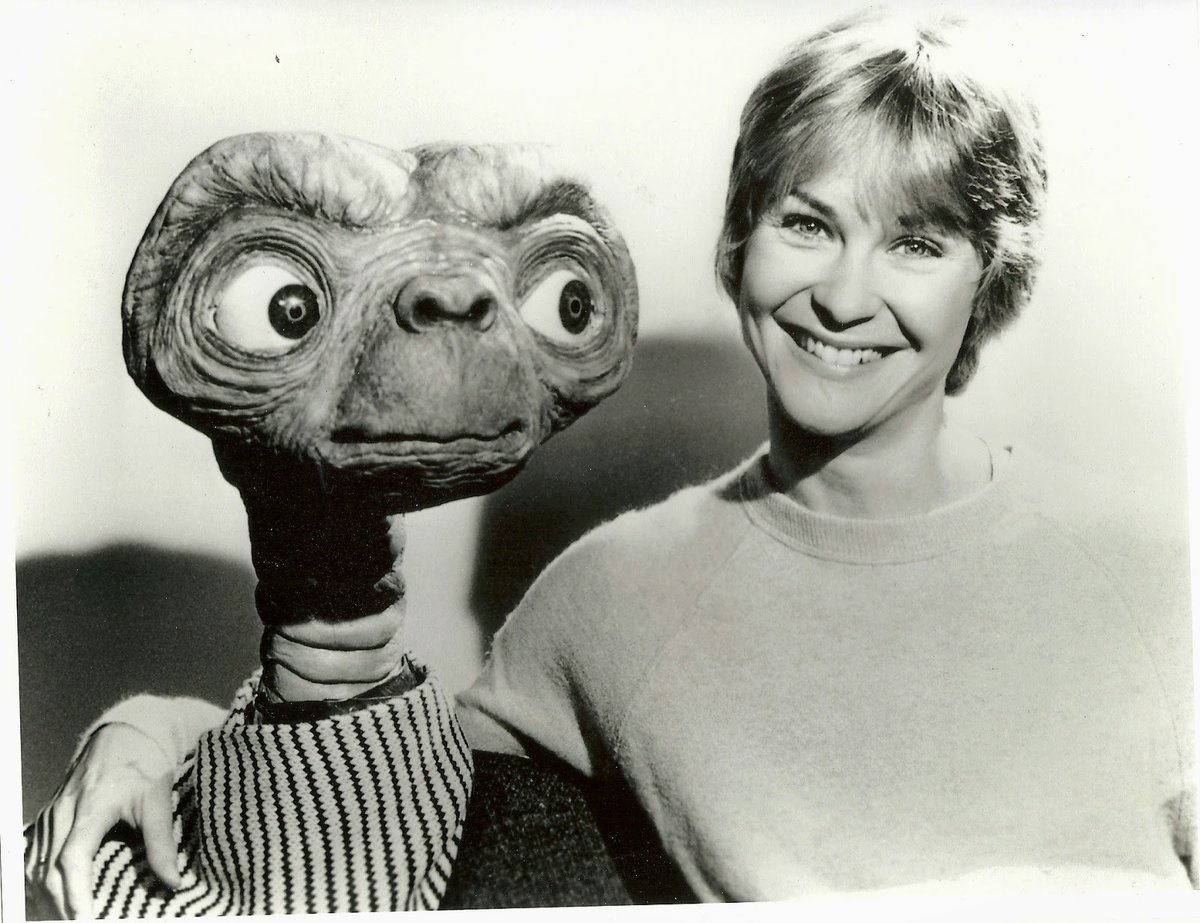
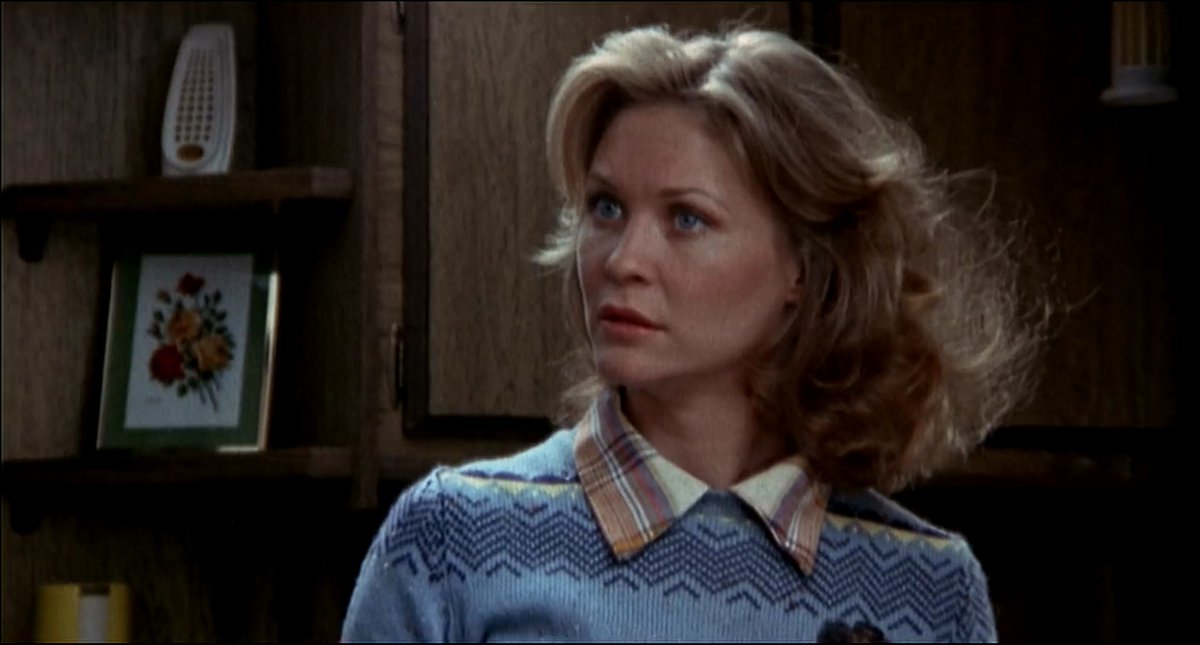
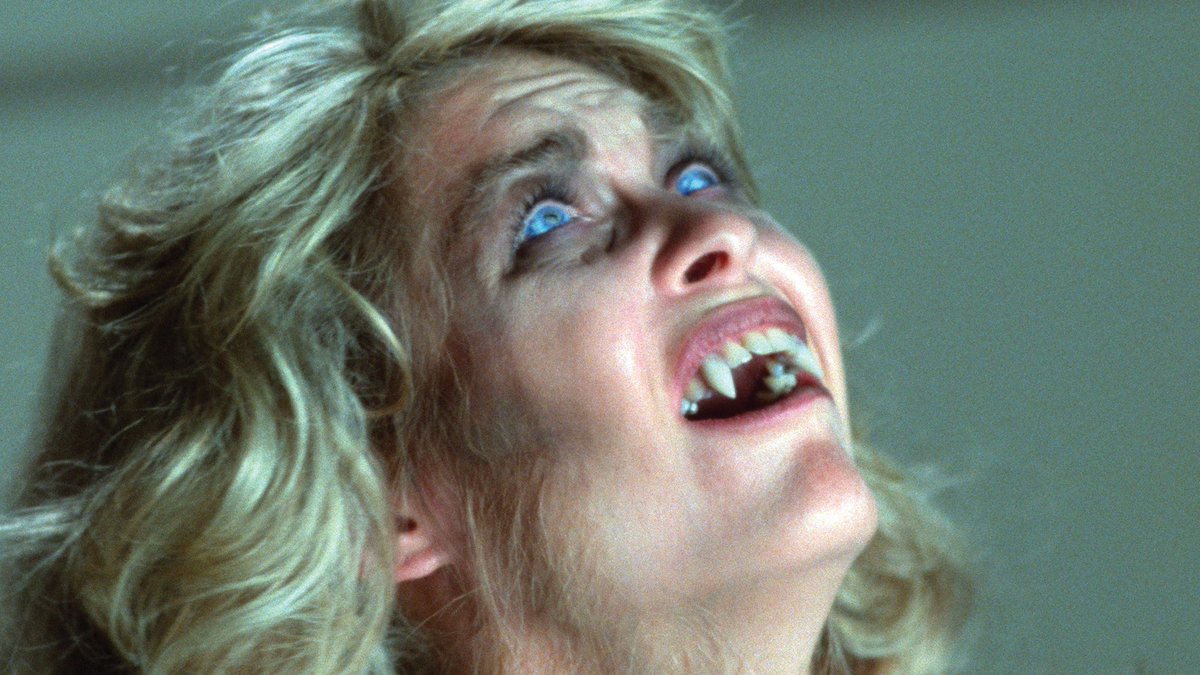
When Elliott insults Michael, the script just said to say something insulting. Dee Wallace was supposed to yell at Elliott to sit down but when she heard what Thomas said (“penis breath”) she couldn’t help laughing.
13/29
13/29
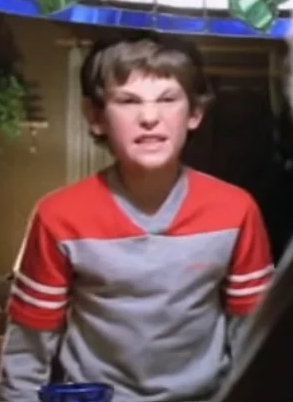
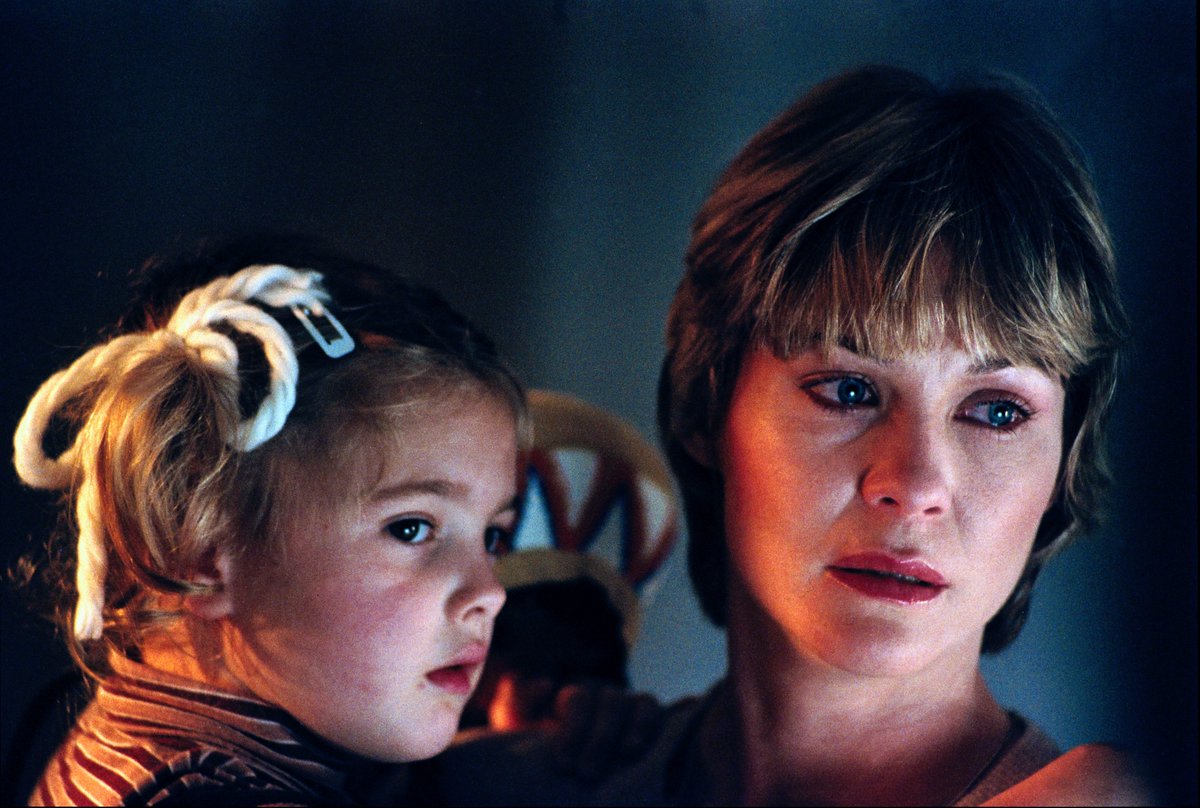
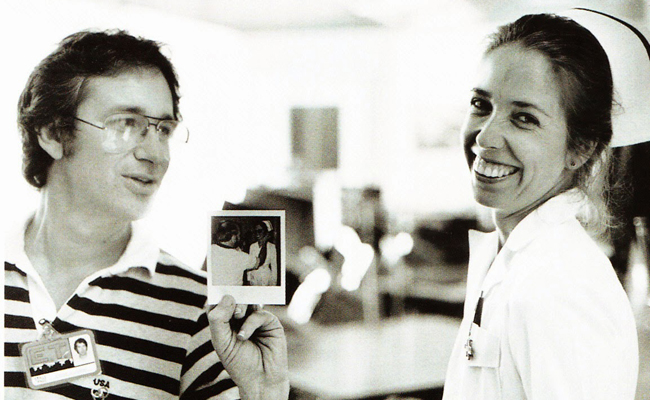
Spielberg wanted authenticity so requested real doctors and nurses be cast in the film. So the dialogue was genuine, he told them to treat E.T. like they would a normal human patient.
14/29
14/29
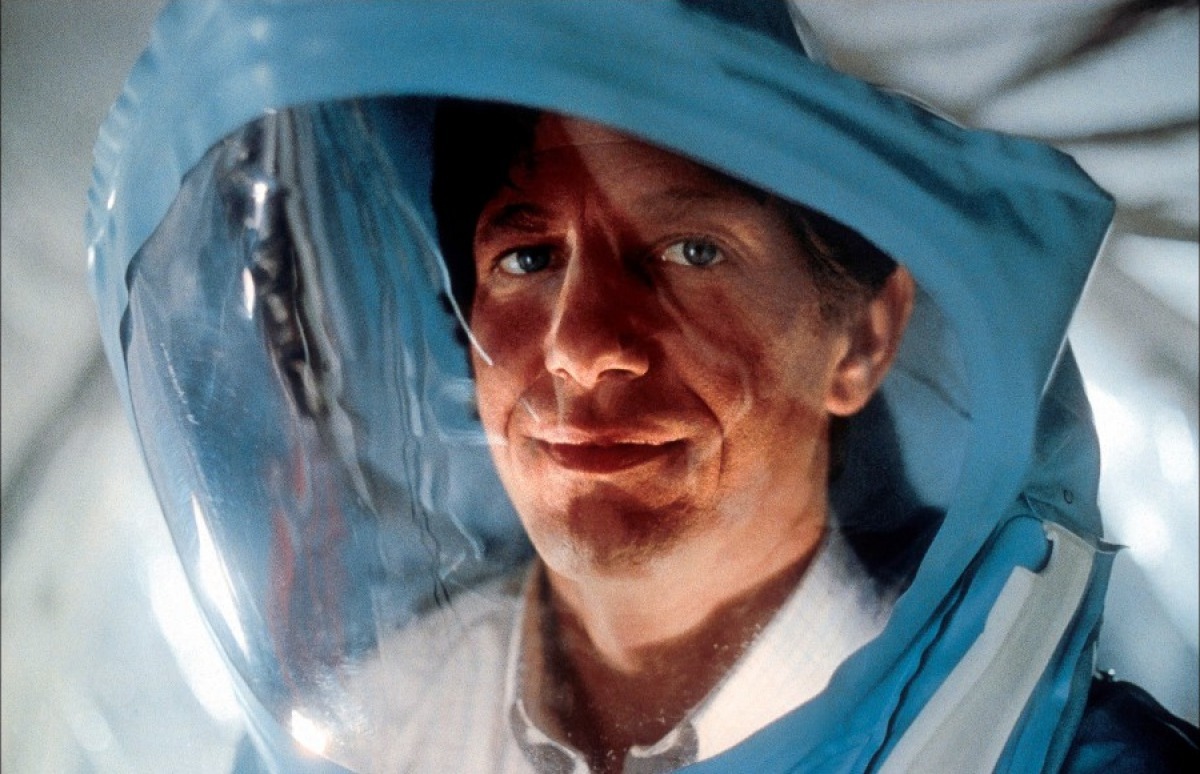
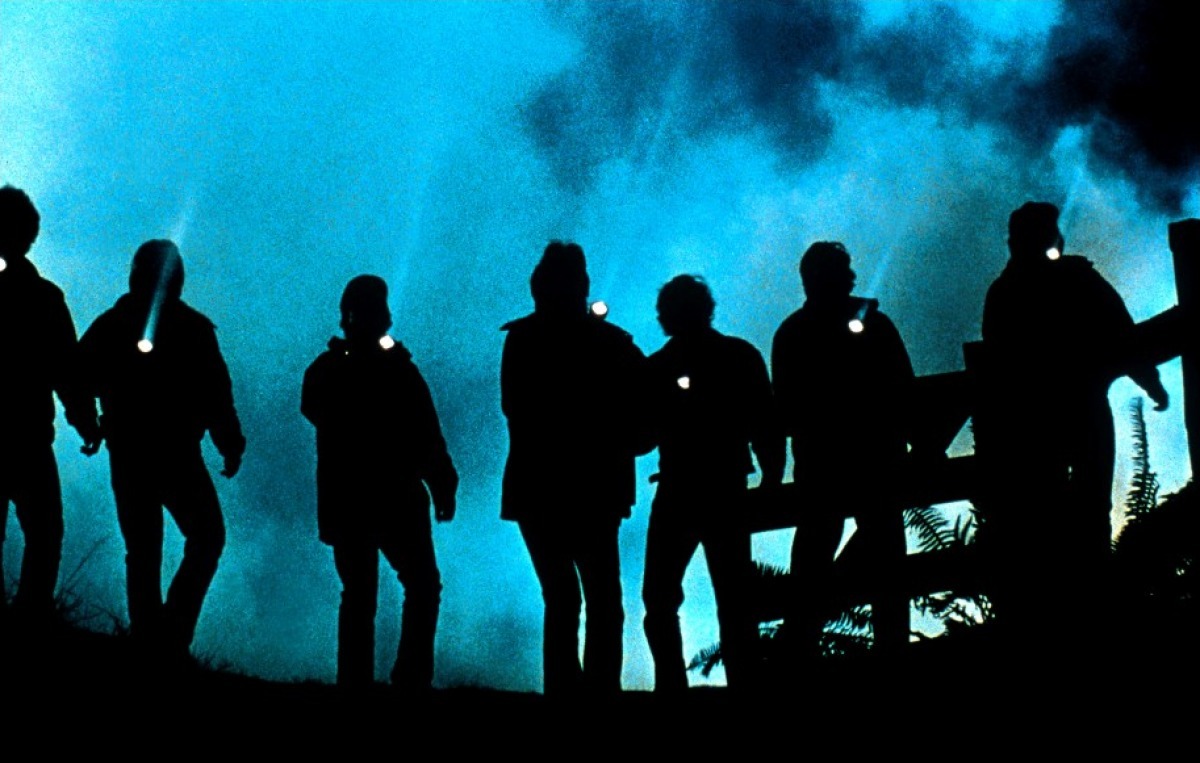
Harrison Ford (who was dating Melissa Mathison) had a cameo in the film as Elliott's principal. However, his scene was left on the cutting room floor.
15/29
15/29
Hollywood legend John Williams wrote the music. Spielberg loved the music so much, instead of Williams editing to the film, Spielberg edited the film to match the music. Williams won an Oscar for his work. This is them working on the famous theme…
16/29
16/29
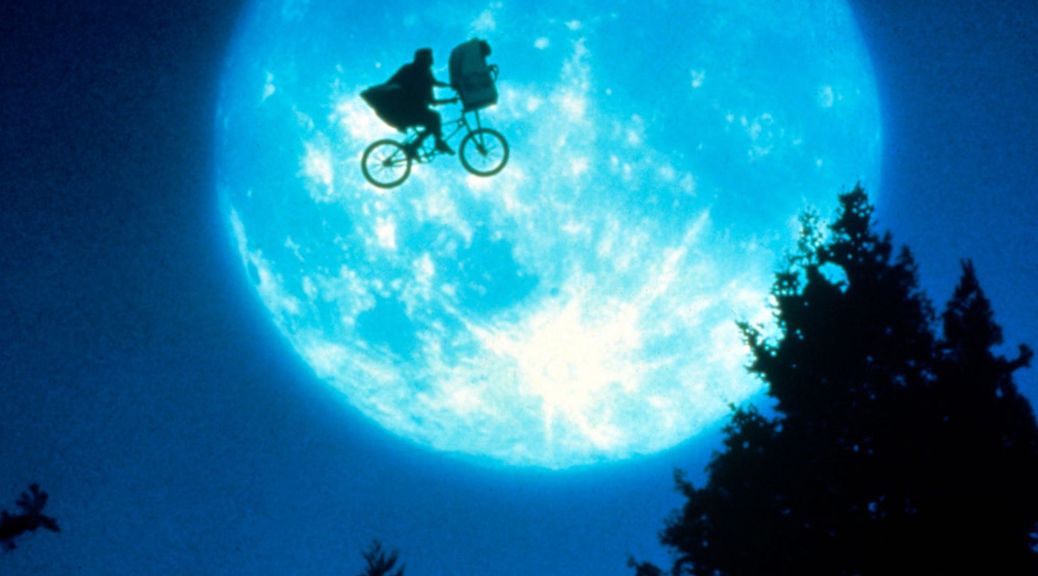
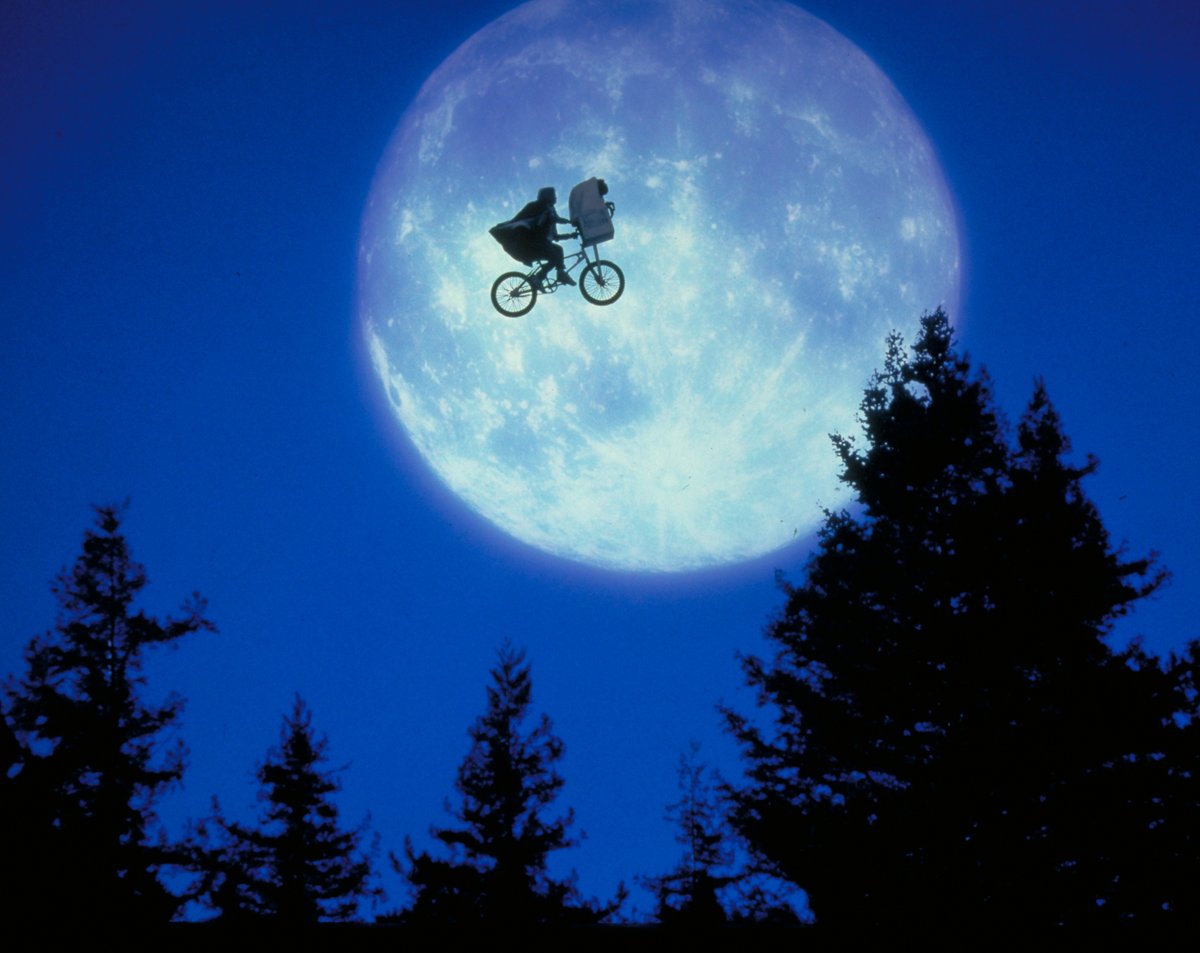
The iconic shot of the bike flying across the full moon was mostly a real shot. It was shot by effects team ILM. Elliott and E.T. are puppets that were added with special effects in post-production. The image went on to be the logo for Spielberg’s Amblin Entertainment.
17/29
17/29

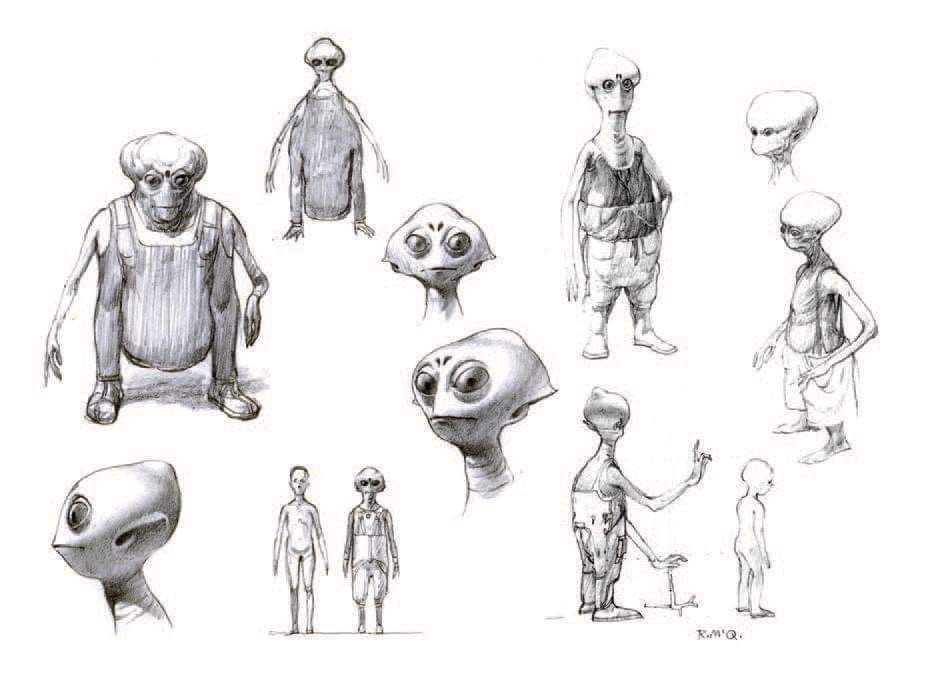
E.T.'s ship was designed by concept artist Ralph McQuarrie (who also designed the mothership for Close Encounters). McQuarrie gave the ship a Victorian, Jules Verne-like appearance. He also did some designs for E.T.
18/29
18/29


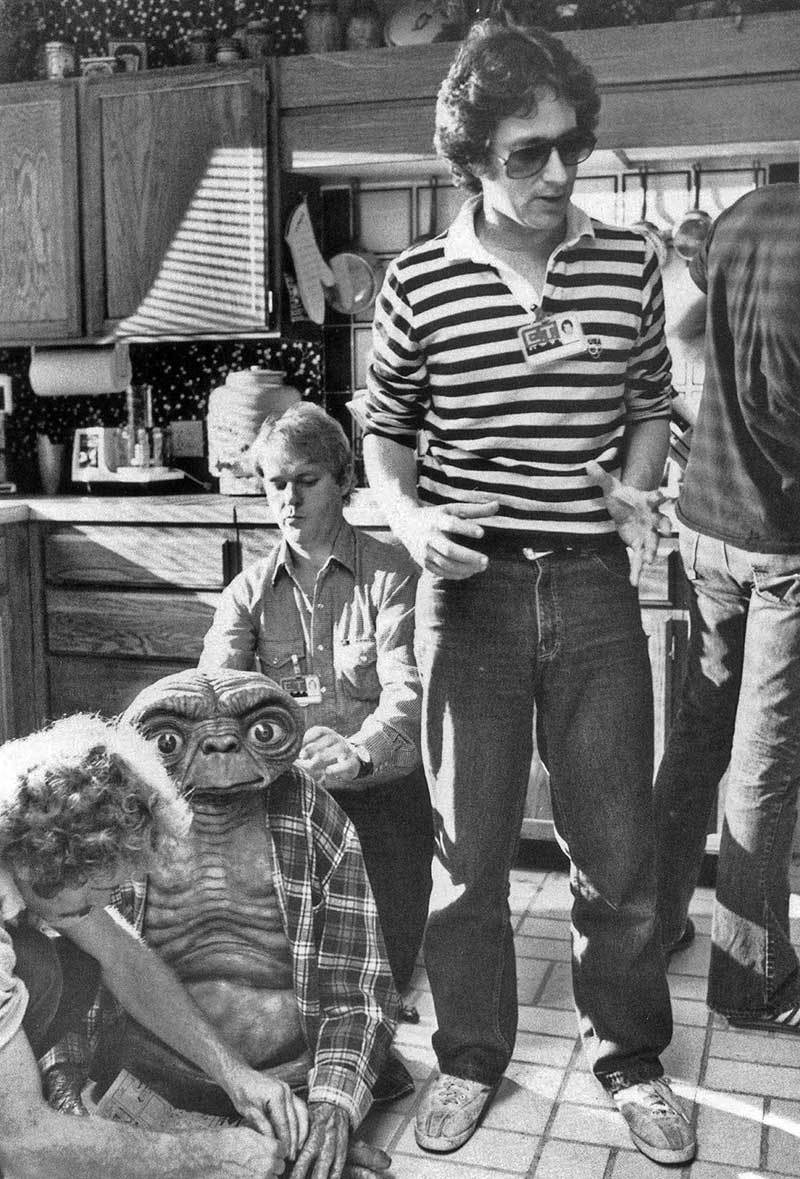
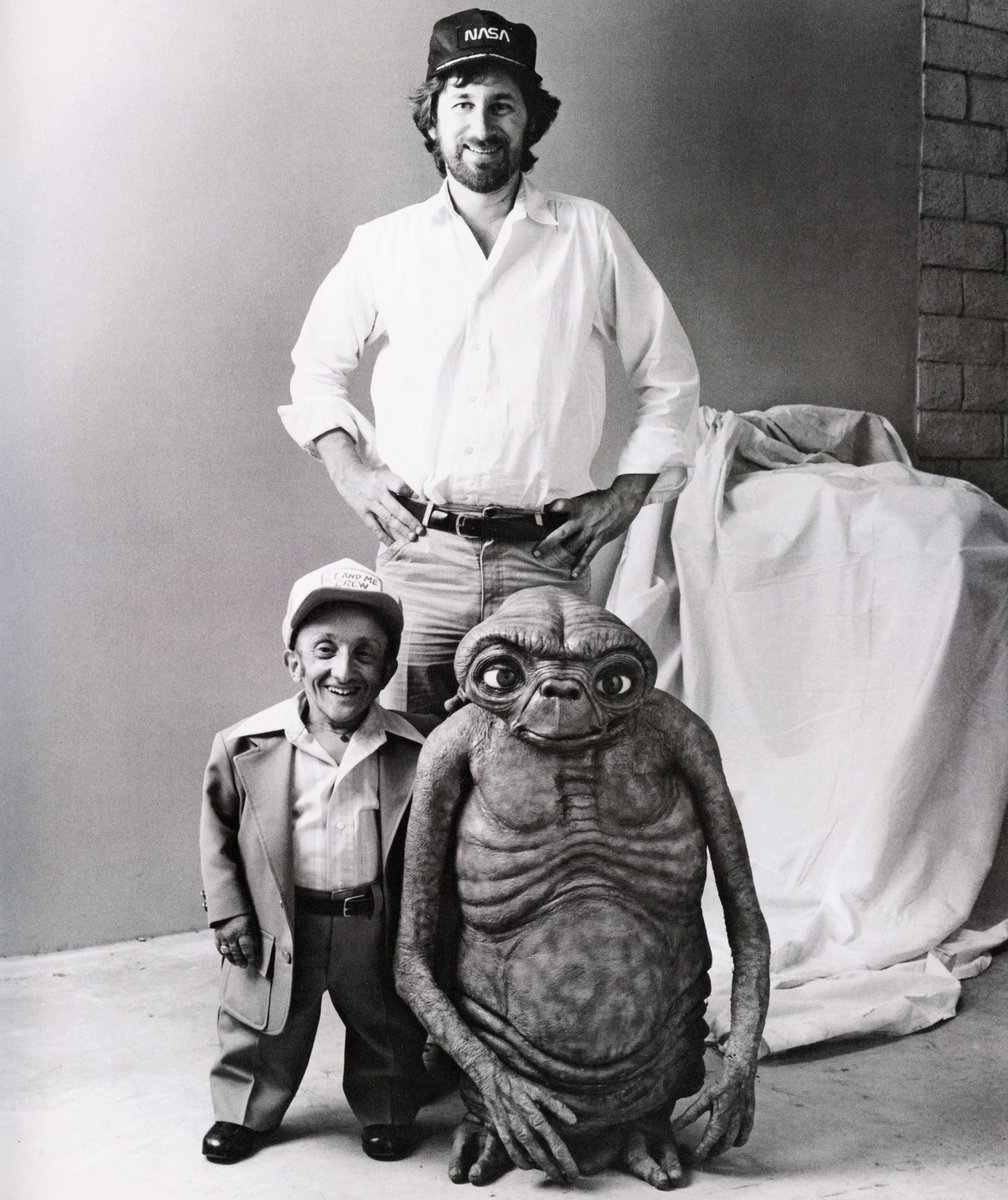
Most of the full-body puppetry was performed by a 2' 10 tall stuntman, but the scenes in the kitchen were done using Matthew DeMeritt - a 10-year old boy who was born without legs but was an expert on walking on his hands.
19/29
19/29
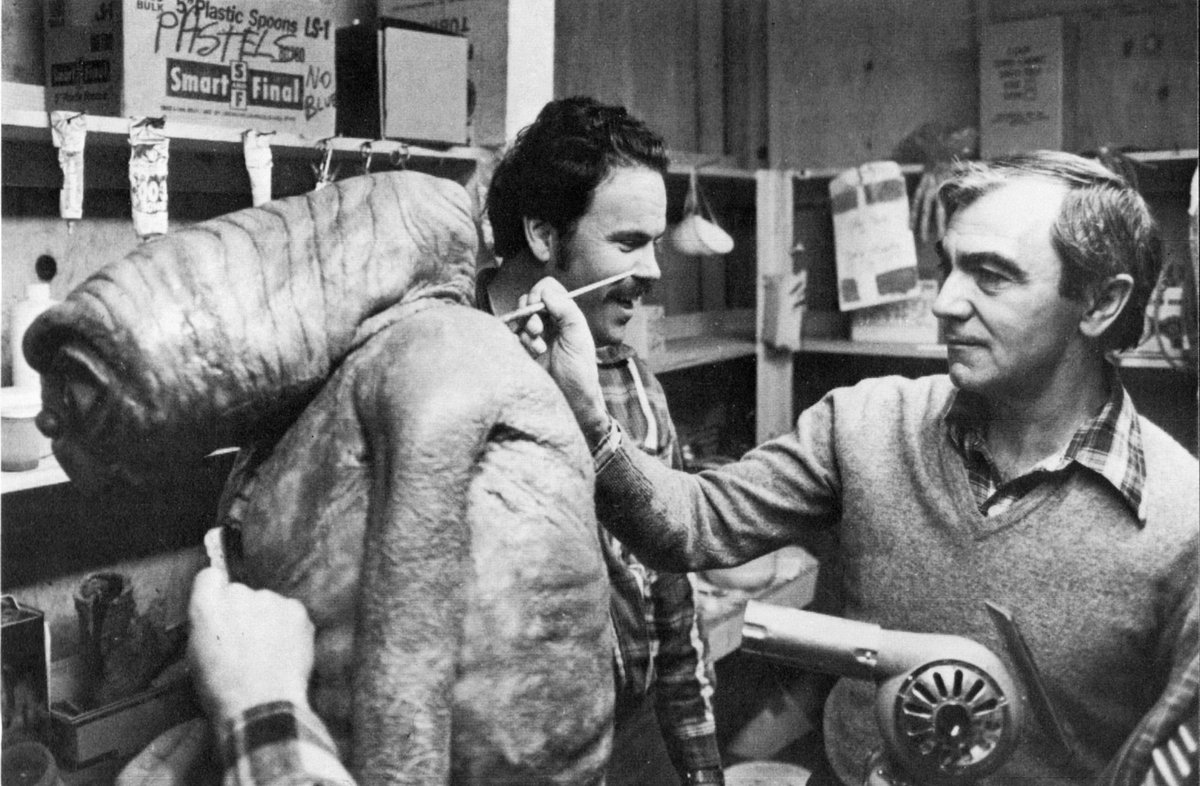
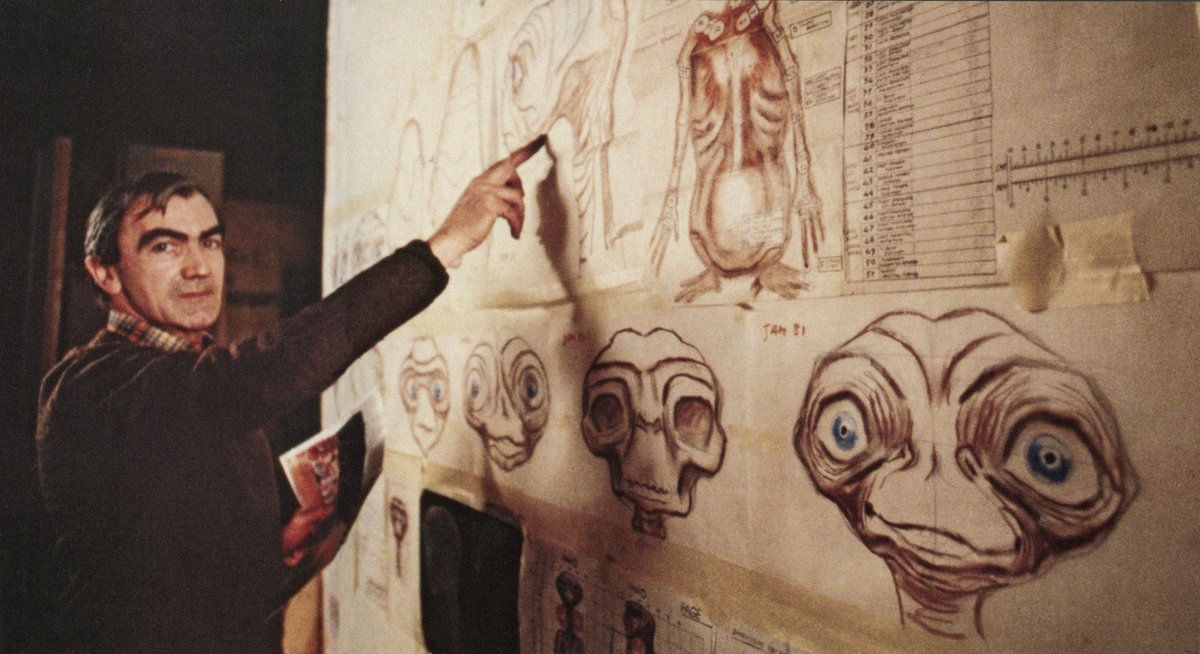
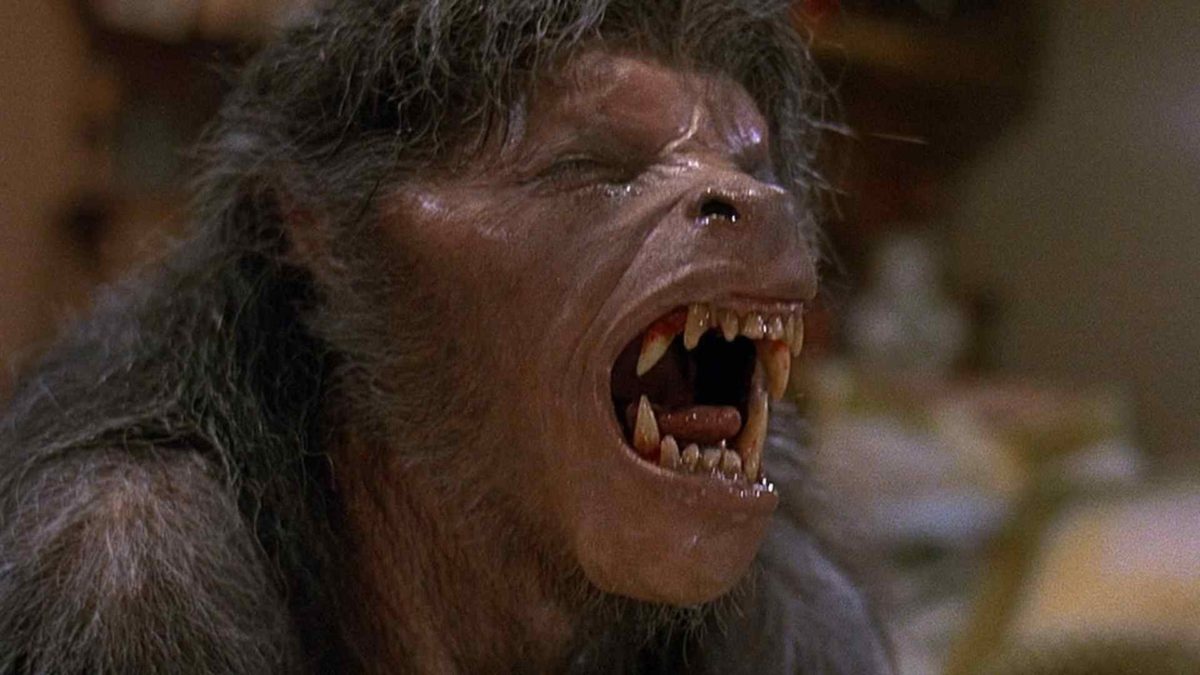
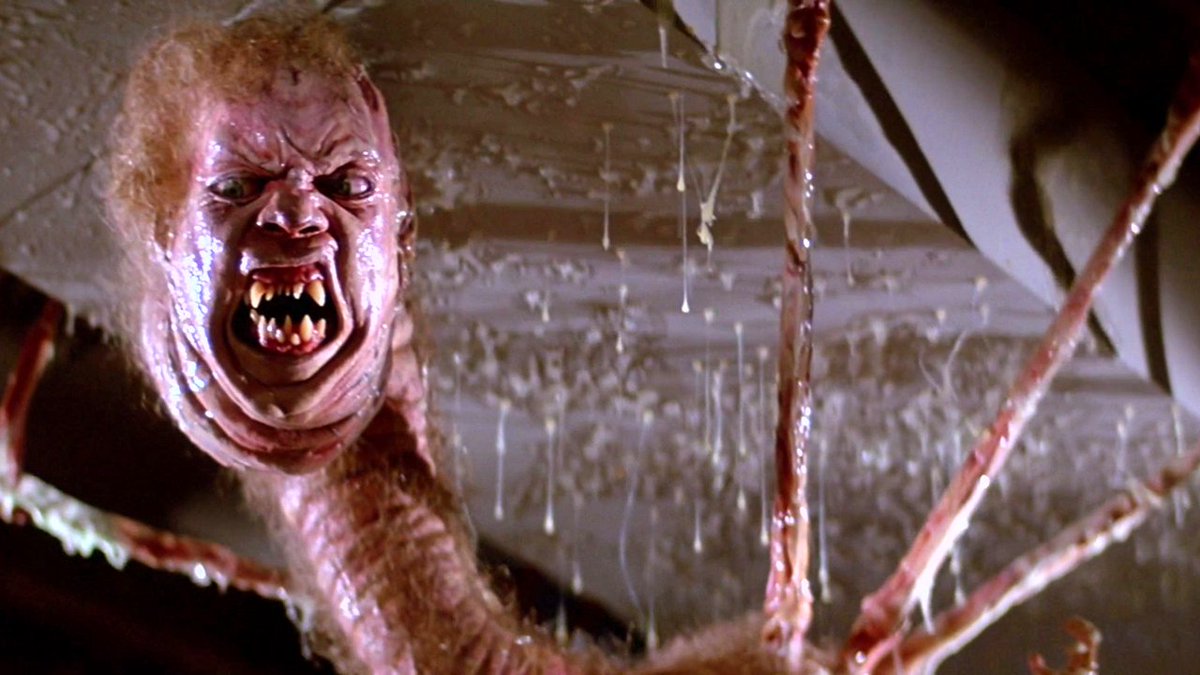
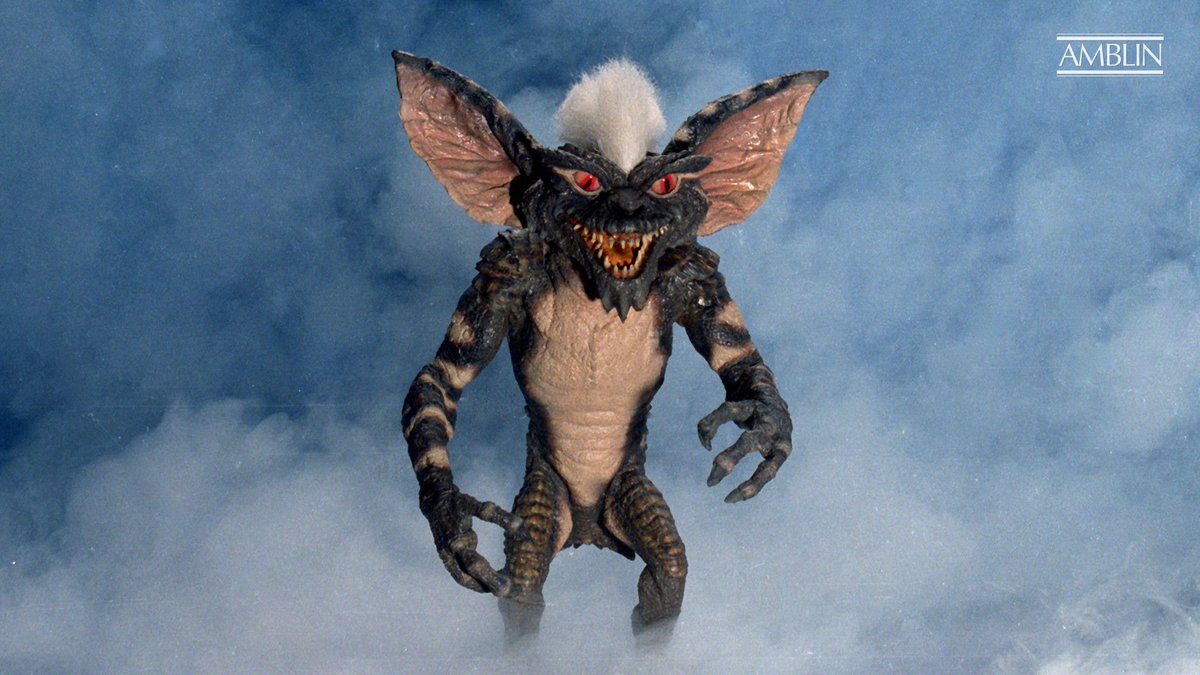
Spielberg approached Rick Baker (American Werewolf), Rob Bottin (The Thing) and Chris Walas (Gremlins) about doing the designs for E.T. before going to Carlo Rambaldi, whom Spielberg worked with on Close Encounters Of The Third Kind.
20/29
20/29
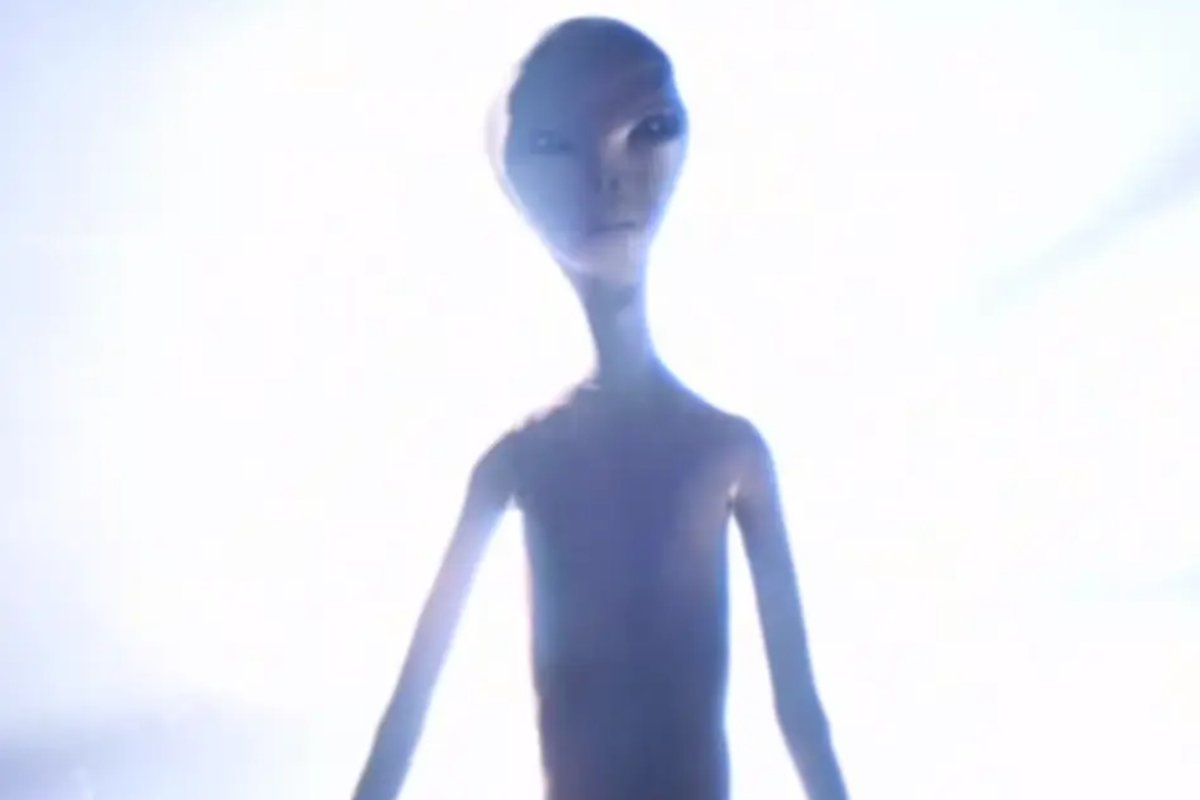
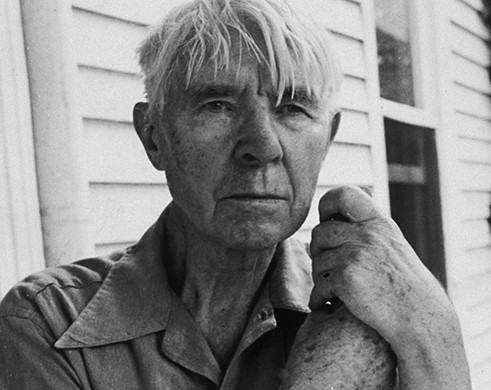
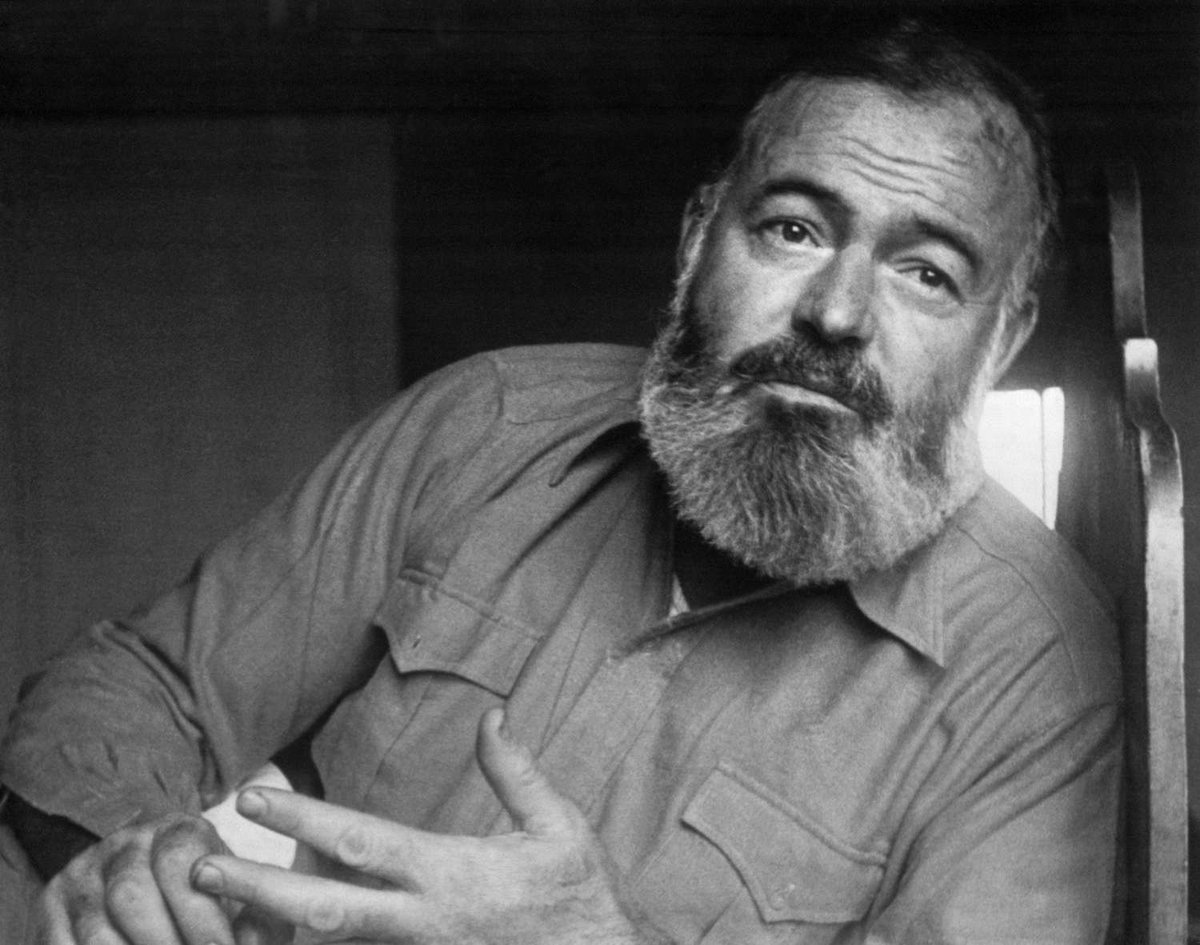
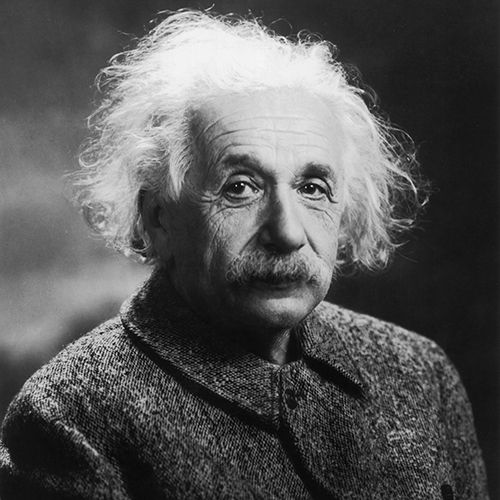
E.T. was designed by special effects artist Carlo Rambaldi. The look of E.T.’s face was inspired by people including the poet Carl Sandburg, Ernest Hemingway, and Albert Einstein.
21/29
21/29

The film had a production budget of $10.5 million and 10% went to alien creature puppets and related animatronics.
22/29
22/29
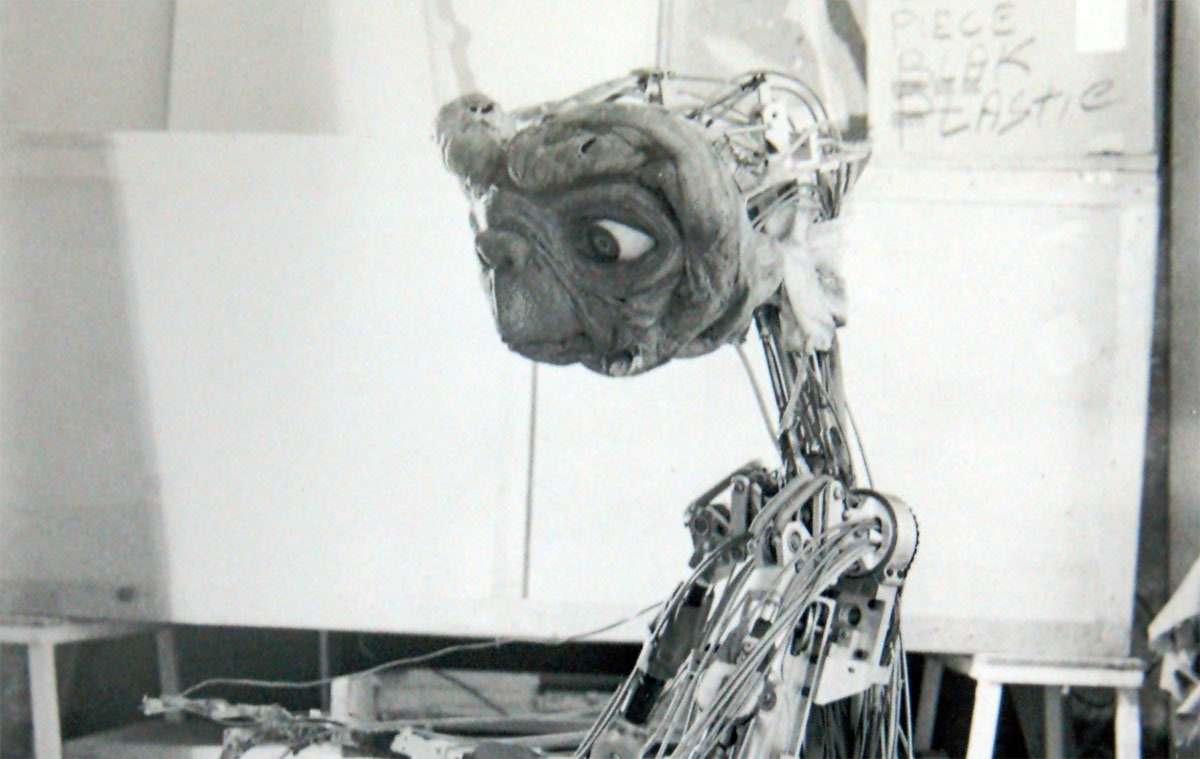
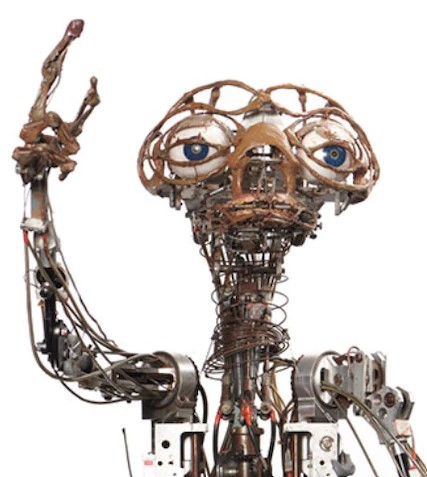
The voice of E.T. was provided by Pat Walsh. She smoked two packs of cigarettes a day and was discovered in a store by sound designer Ben Burtt. She was paid $380 for the gig.
23/29
23/29

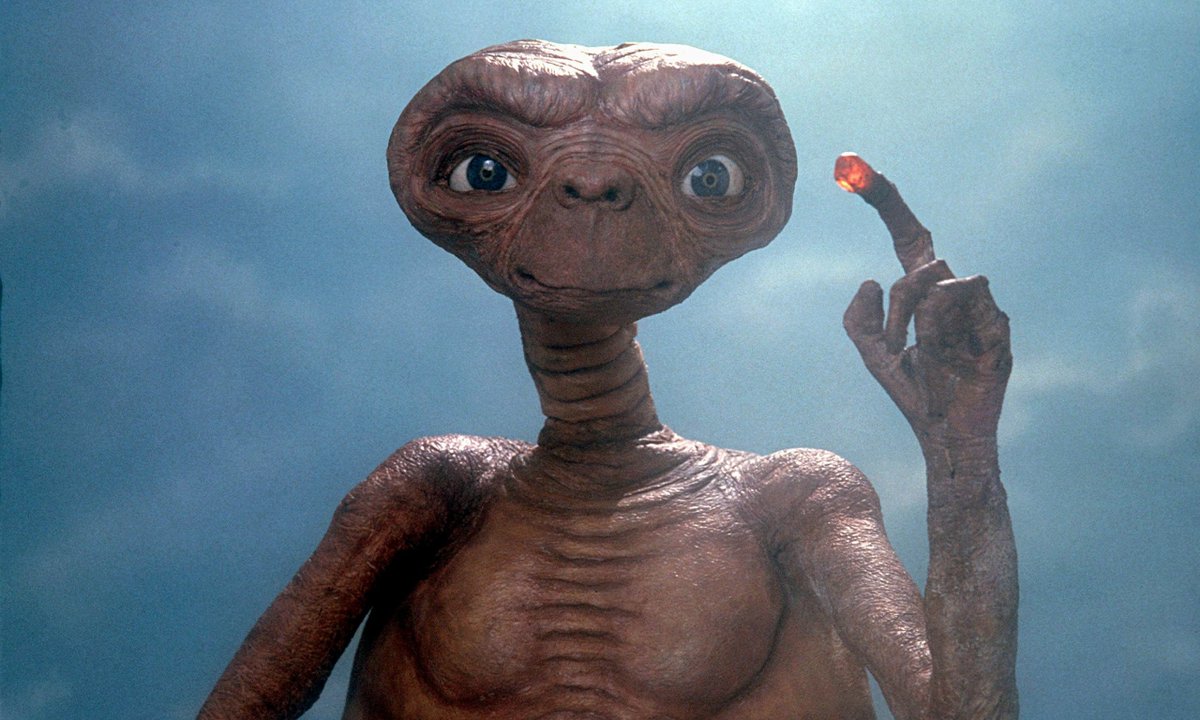
Drew Barrymore was upset when production came to an end and was sorry to say goodbye to E.T. Her tears during E.T. final farewell are genuine and heartfelt.
24/29
24/29
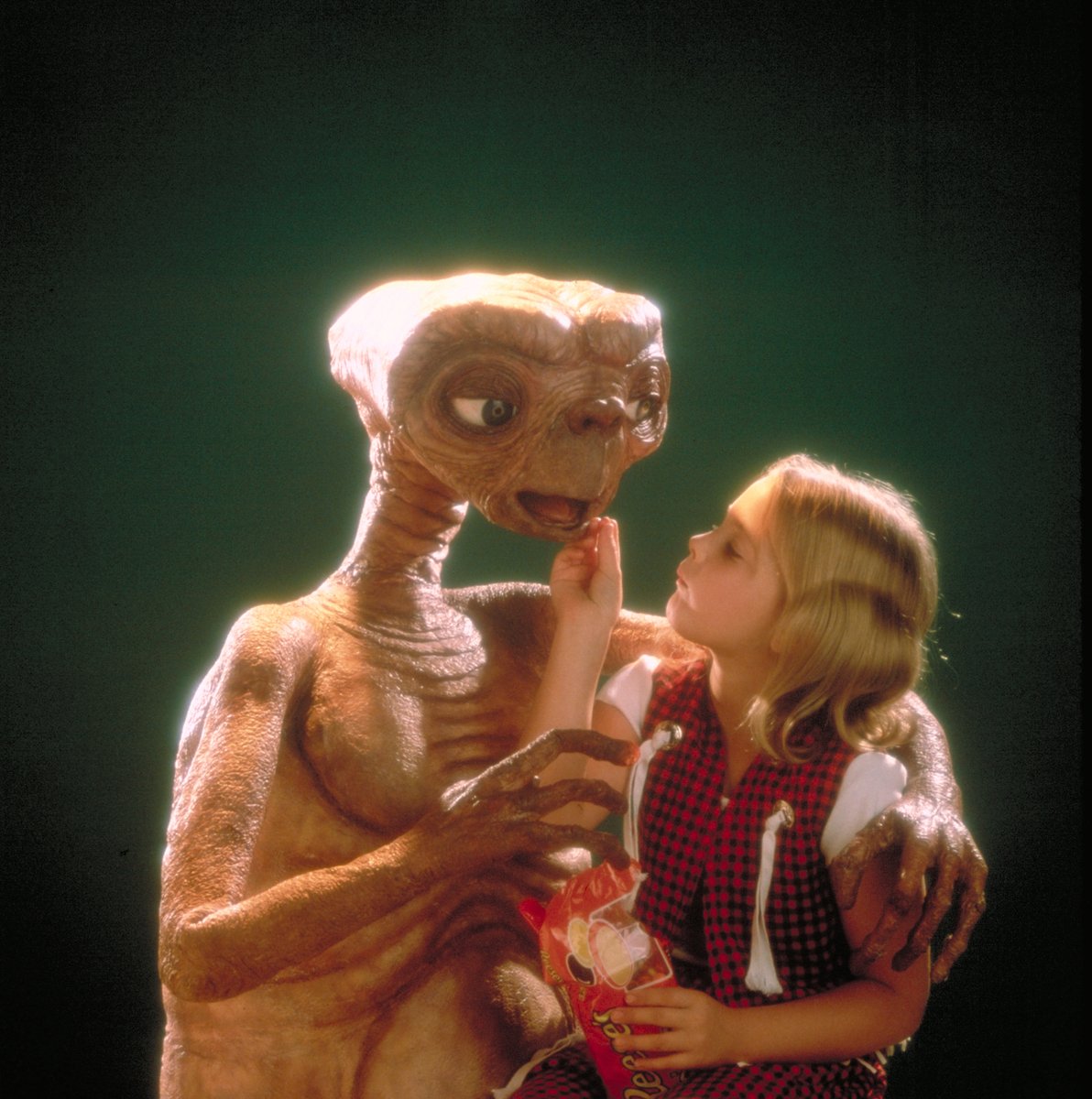
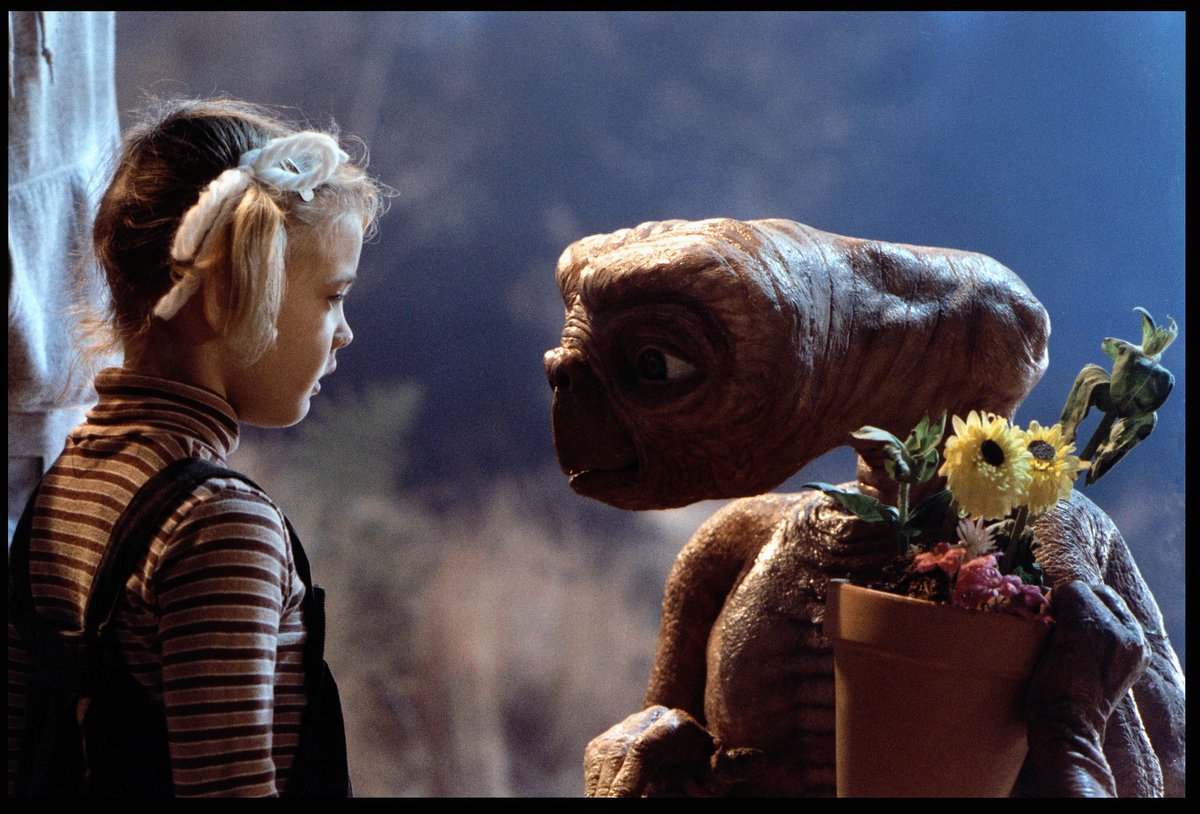
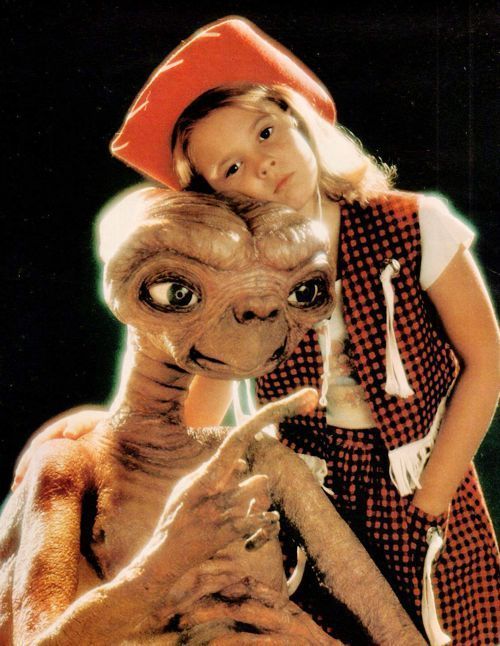
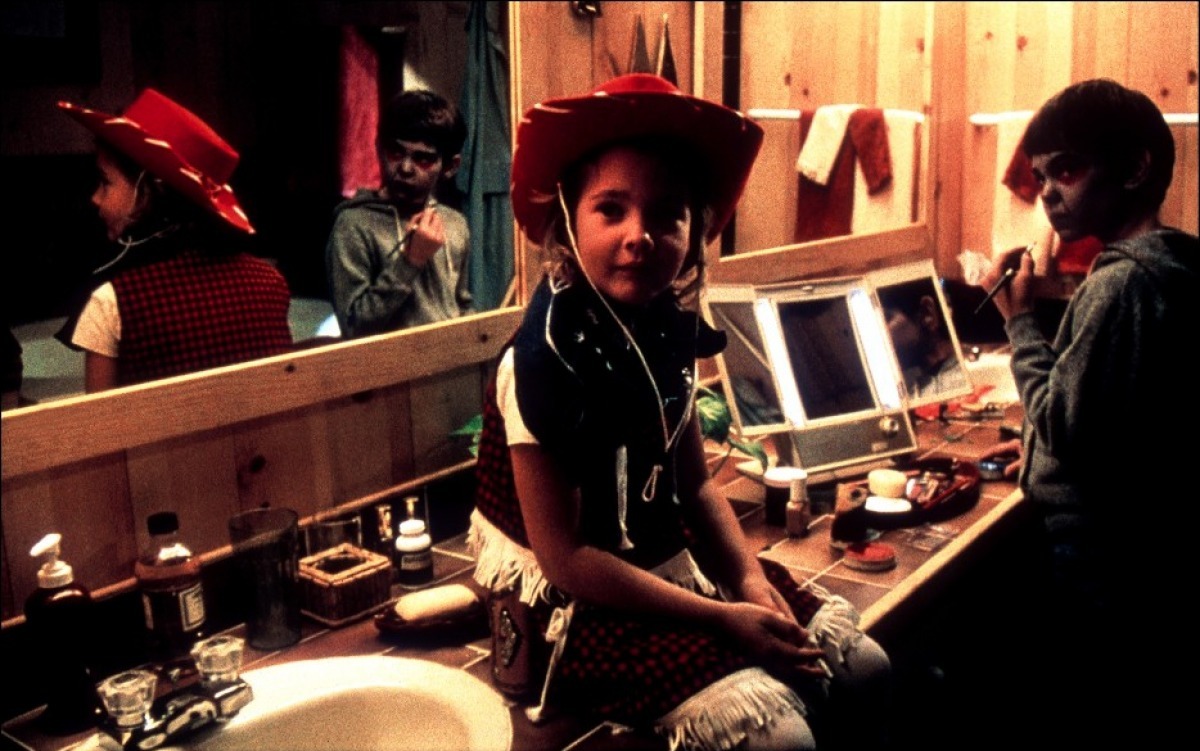
Spielberg and Mathison wrote a treatment for a sequel called E.T. 2: Nocturnal Fears Elliott was kidnapped by aliens. We would find out E.T.’s name is Zrek and he is 10,000,000 years old.
25/29
25/29
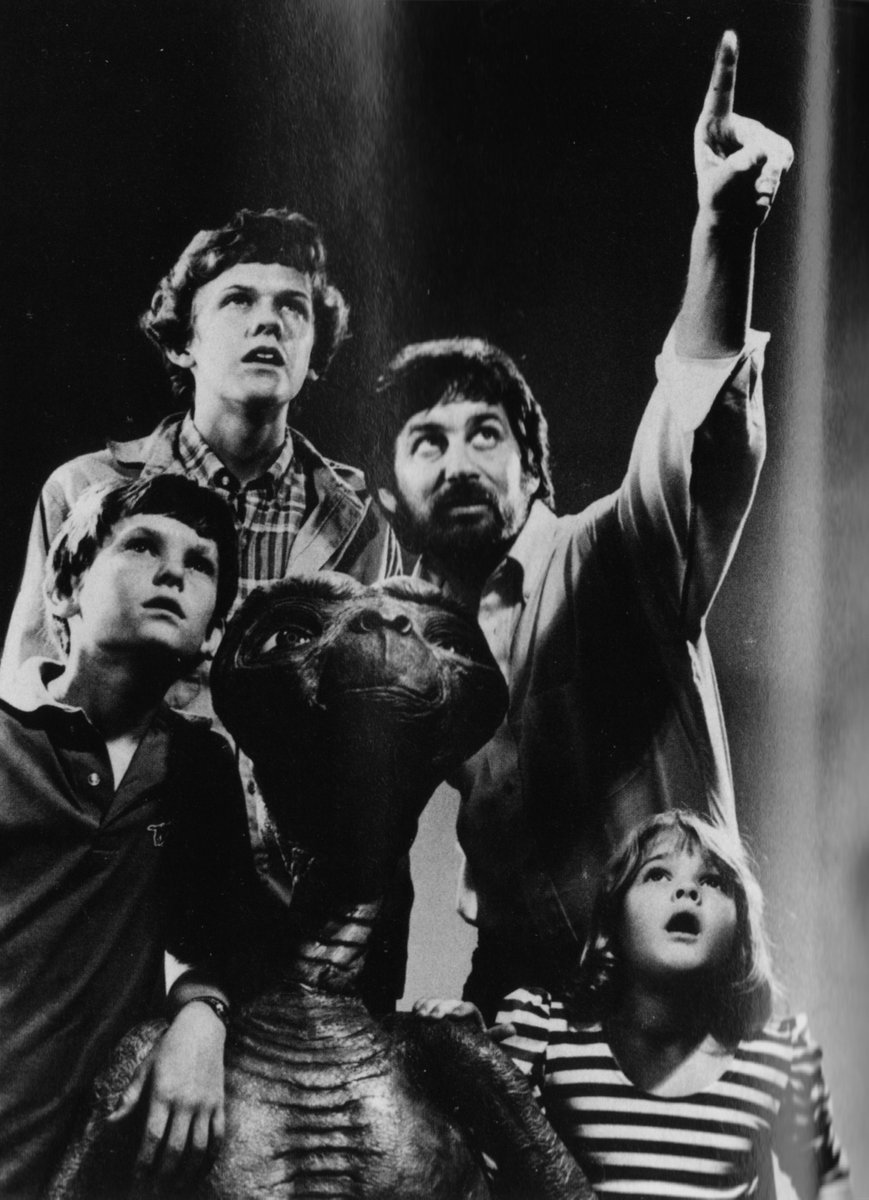
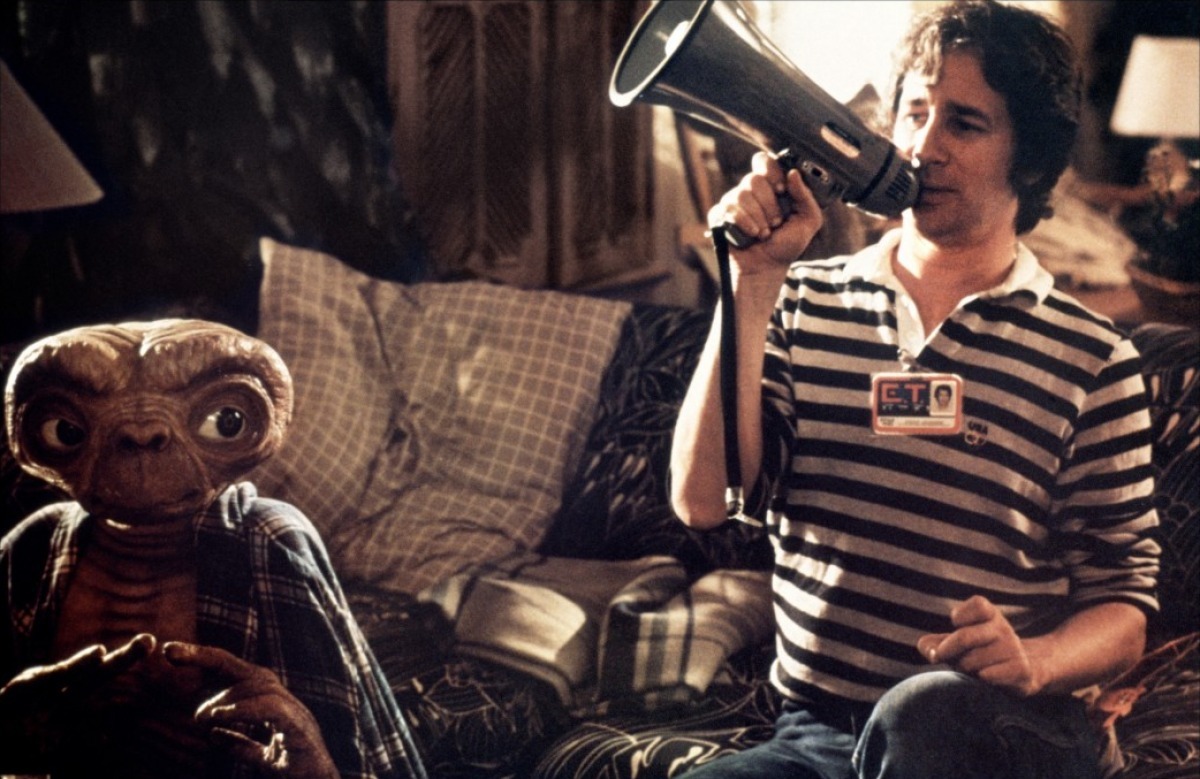
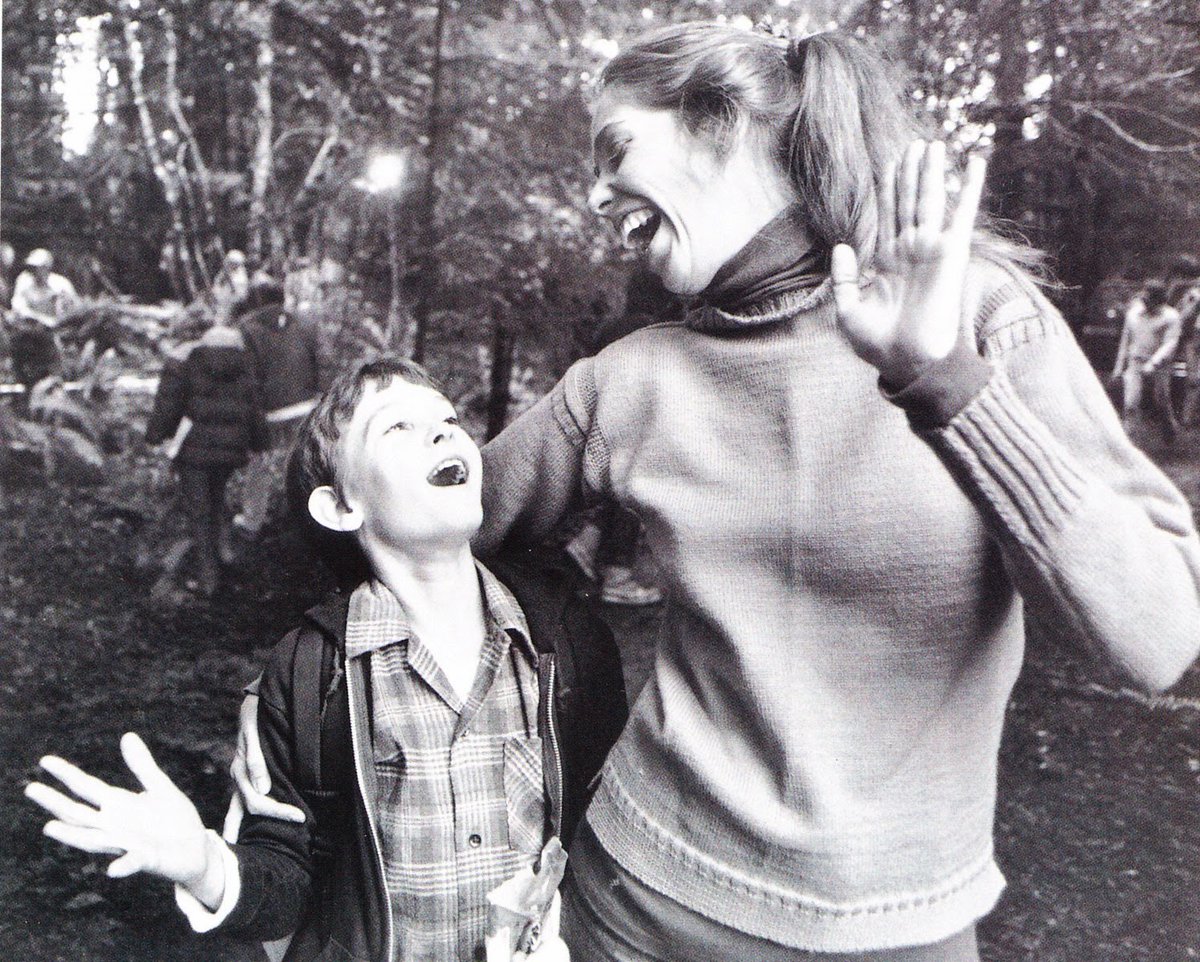
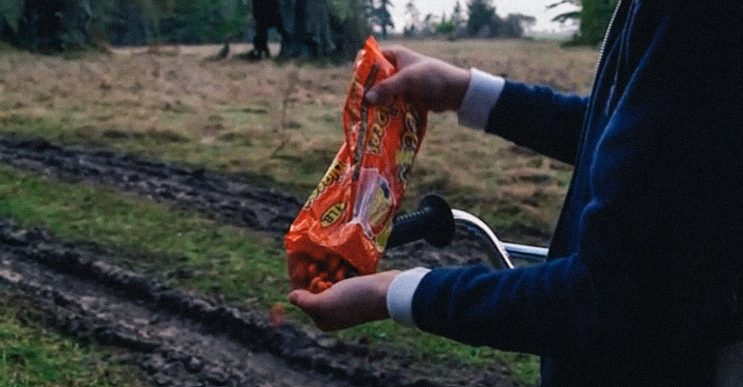
Elliott has E.T. follow him home by laying a trail of Reese's Pieces. Spielberg wanted M&Ms but the Mars Co said no because they thought E.T. was ugly and would scare kids. Sales of Reese's more than tripled in the weeks following the movie's release.
26/29
26/29
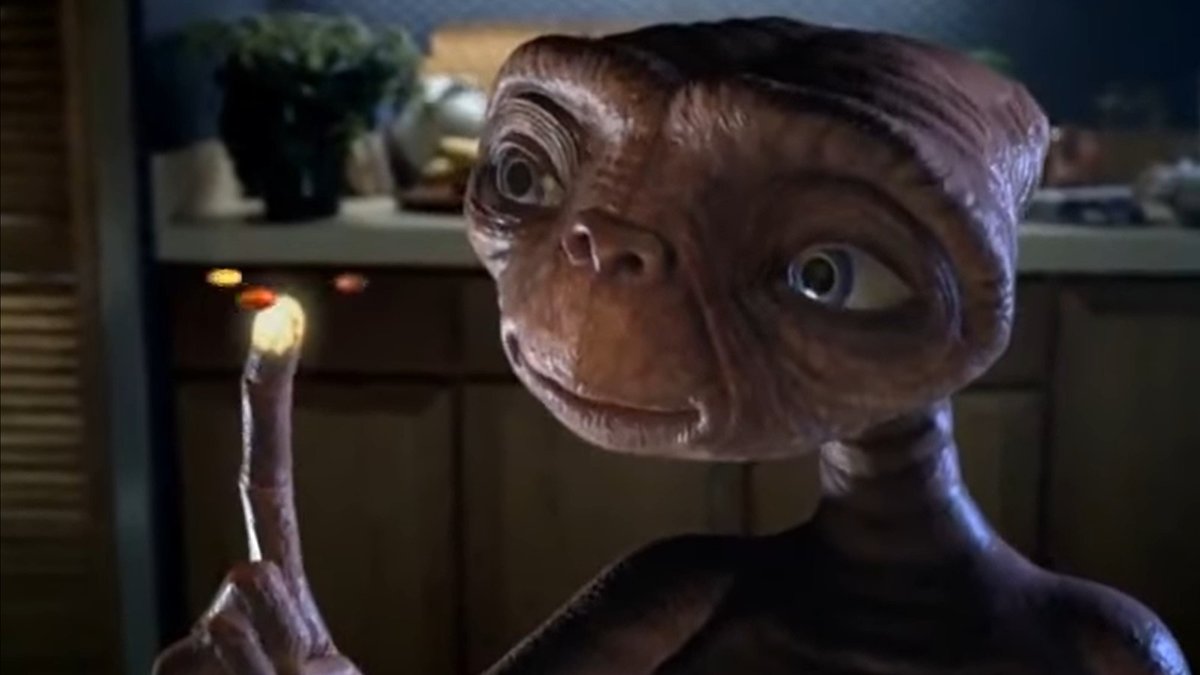
Atari rushed an E.T. video game into production in just 5 weeks. It was a flop and considered a part of the video game industry’s 1983 crash. bunch of the game cartridges were buried in a landfill in New Mexico.
27/29
27/29
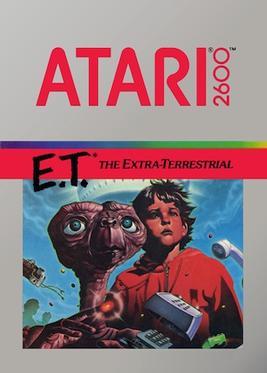

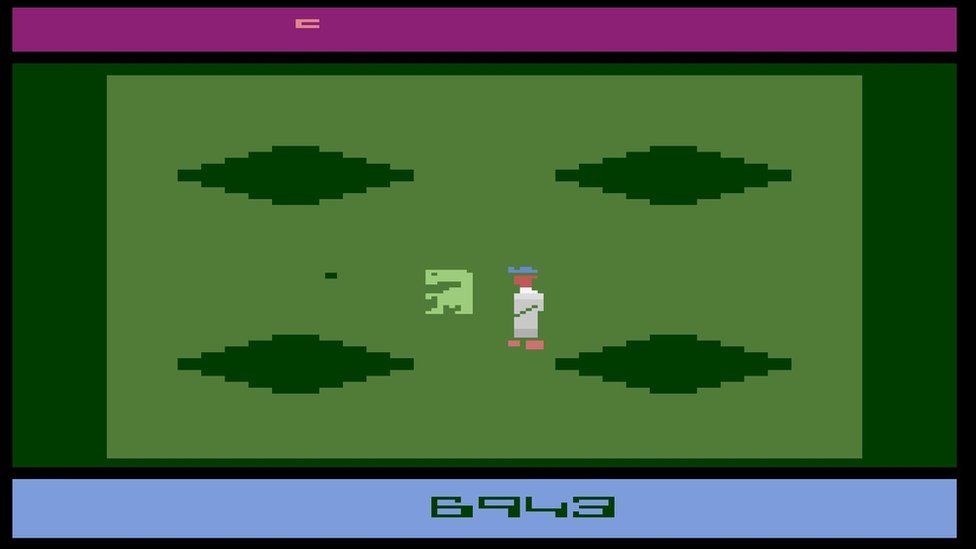
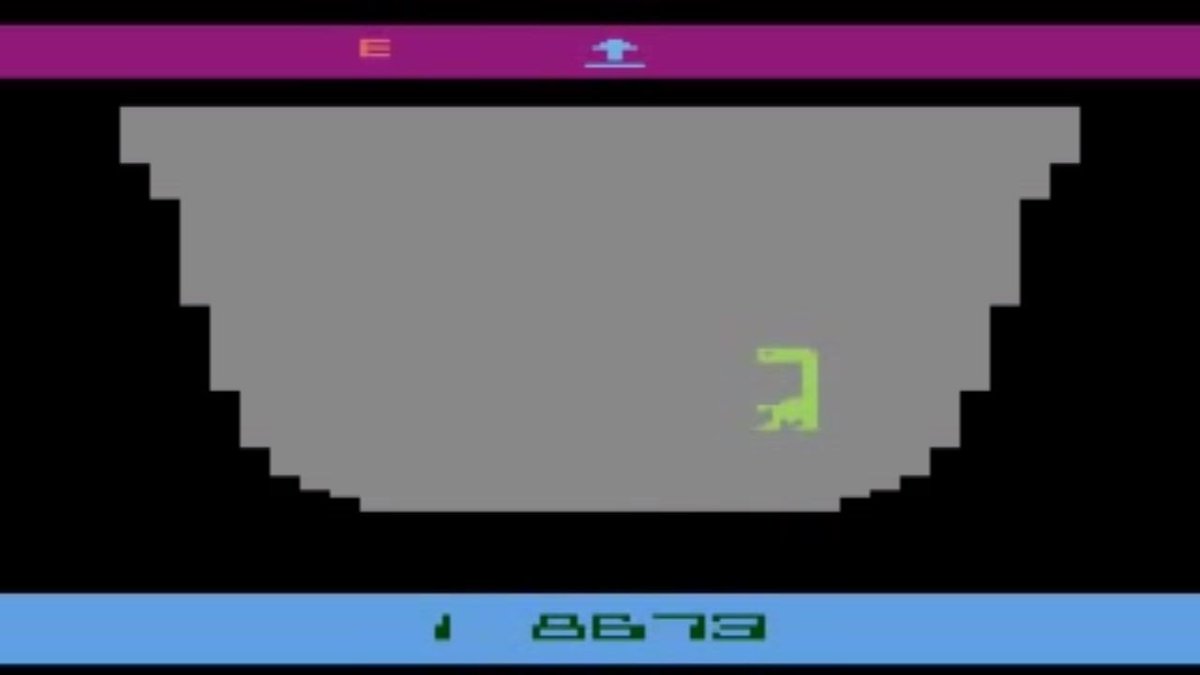
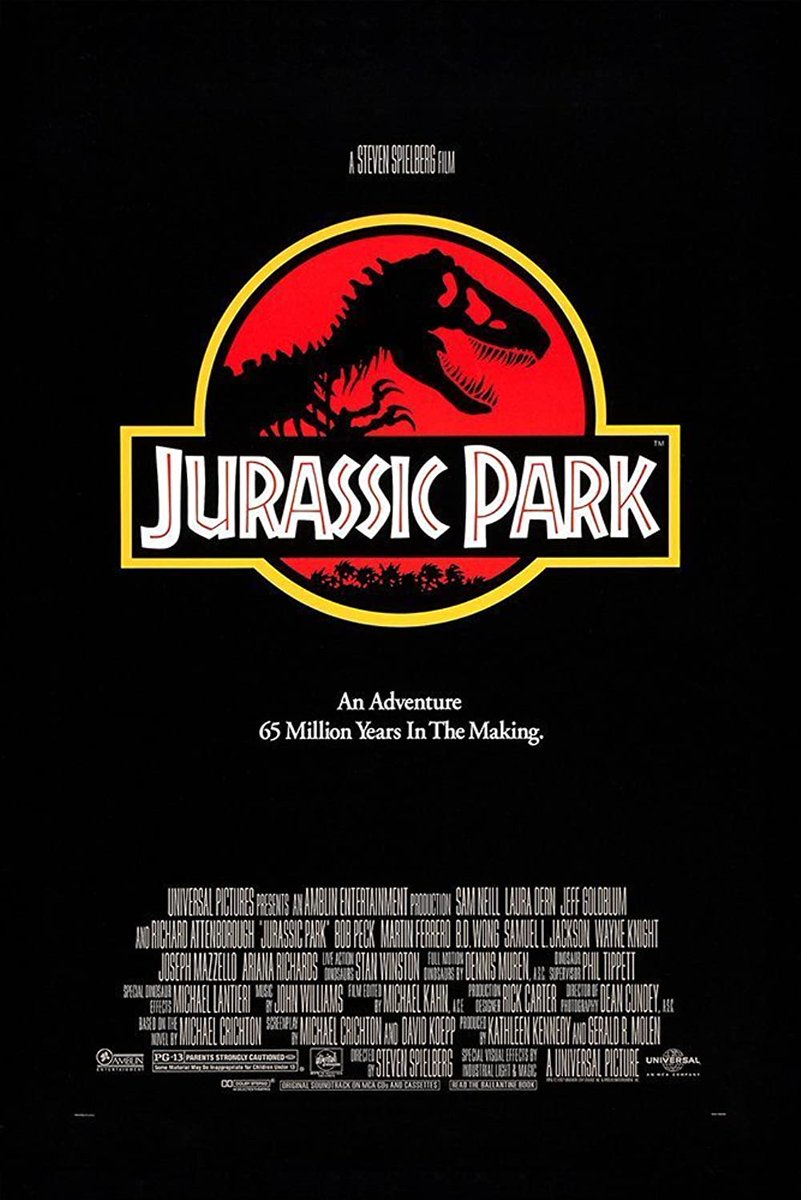
E.T. released on June 11 1982 and was in cinemas over a year — one of the longest runs in history. It grossed $792m worldwide and toppled Star Wars as the highest grossing movie ever. It held the title for 11 years until Spielberg’s Jurassic Park in 1993.
28/29
28/29
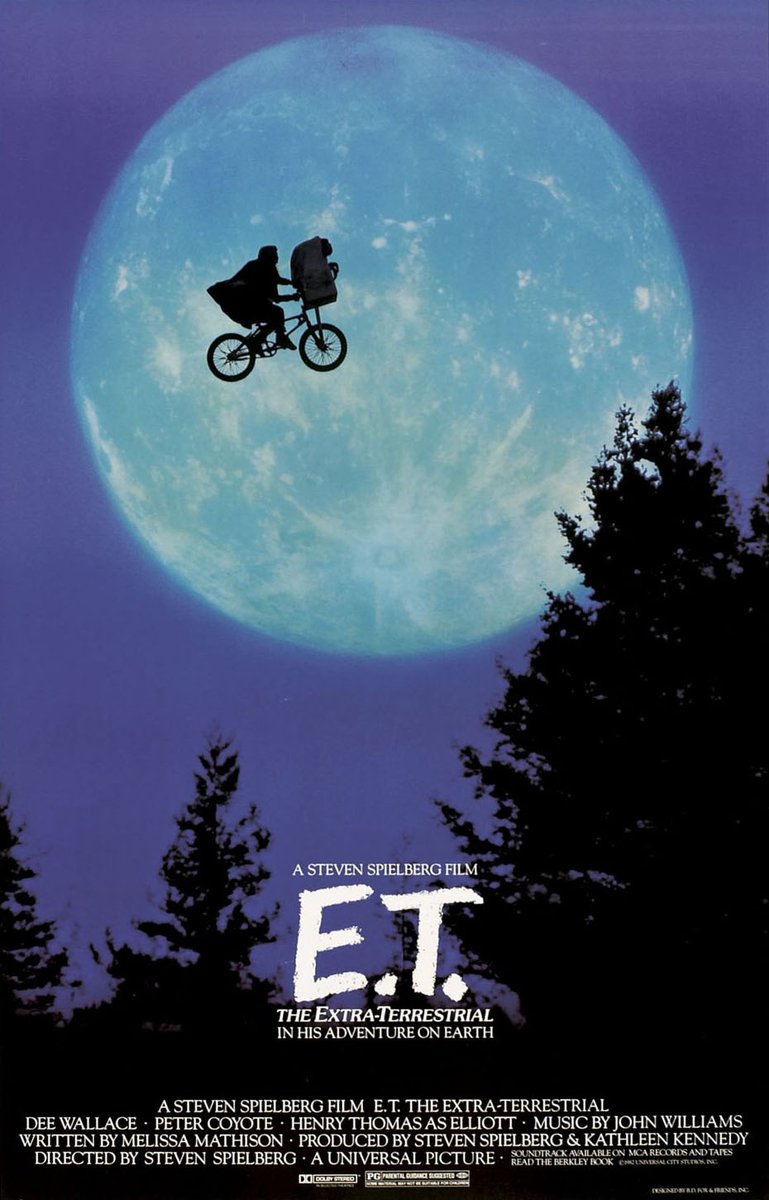
To finish, one of the most famous shots in movies: Elliott, E.T. and the flying bicycles.
29/29
29/29
If you like our making of story of E.T. please share the opening post 😀
https://x.com/ATRightMovies/status/1801182204116062468
Our latest podcast is on THE SIXTH SENSE. Full of big laughs and opinions so please check it out 😀
alltherightmovies.com/podcast/the-si…
alltherightmovies.com/podcast/the-si…
• • •
Missing some Tweet in this thread? You can try to
force a refresh