The AIM-7E-2 "Dogfight Sparrow" is one of the least well-understood variants of the Sparrow, and yet one of the most important ones in the transition between the Sparrow as a bomber-hunter and the Sparrow as a dogfight missile. A short 🧵to explain the changes. 

The first thing to get out of the way is the identification: the AIM-7E-2 is identical to the AIM-7E visually, except for black stripes on the forward wings. A common myth about the 7E-2 is that it incorporated "clipped wings", but this is wrong. (7E | 7E-2 pictured)


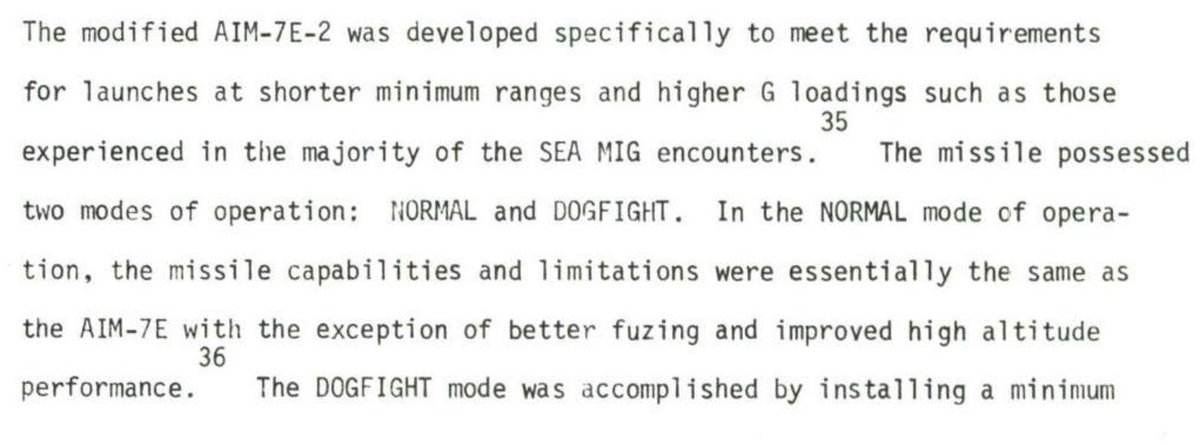
The biggest changes to the AIM-7E-2 were the decrease in the minimum range, from approximately 3,300 feet on the AIM-7E to 1,500 feet on the 7E-2 under ideal situations, and a significant increase in combat maneuverability.


These were accomplished first by decreasing the time between separation from the aircraft and arming/the beginning of guidance, and a different autopilot gain constant.
The arming time change should be self-explanatory, but the autopilot changes require some explanation.
The arming time change should be self-explanatory, but the autopilot changes require some explanation.
AIM-7E-2 had two modes: Dogfight and Normal. The dogfight mode used a boosted autopilot gain constant to improve missile responsiveness to target signals, and therefore would turn harder, increasing the chance of a hit at short range.
An autopilot gain constant in missile guidance adjusts the magnitude of the commands being sent to the control surfaces by the autopilot.
The AIM-7E had automatic switching of some gain constants based on launch altitude and a variable gain value based on the closing velocity.
The AIM-7E had automatic switching of some gain constants based on launch altitude and a variable gain value based on the closing velocity.
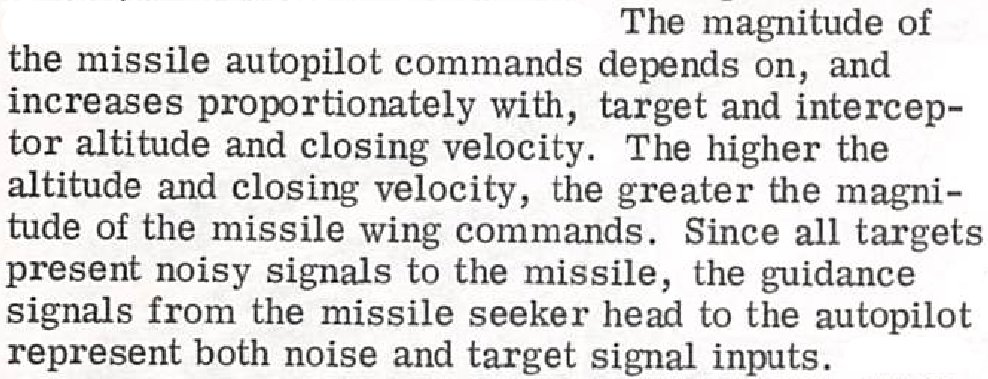
With gain constant C, optimized for high altitude, all incoming signals are processed as maximum value wing deflection commands to be multiplied by closing velocity.
Though this might seem like the best option, at lower altitudes it could cause instability and lowered max range.
Though this might seem like the best option, at lower altitudes it could cause instability and lowered max range.

Below constant C are two other gain constants, B and A. Most shots taken by AIM-7s in Vietnam were taken below 22,000 feet, and therefore used gain constant A, the least responsive.
Combined with the low closing velocity in stern-chase engagements, this meant poor responsiveness.
Combined with the low closing velocity in stern-chase engagements, this meant poor responsiveness.
On the initial applications of the AIM-7E-2, the autopilot gain constant appears to have been changed before takeoff (the first excerpts, from PROJECT CHECO, are incomplete and non-technical).
In modified US Navy F-4s, this switching was automatically done by a digital computer.
In modified US Navy F-4s, this switching was automatically done by a digital computer.
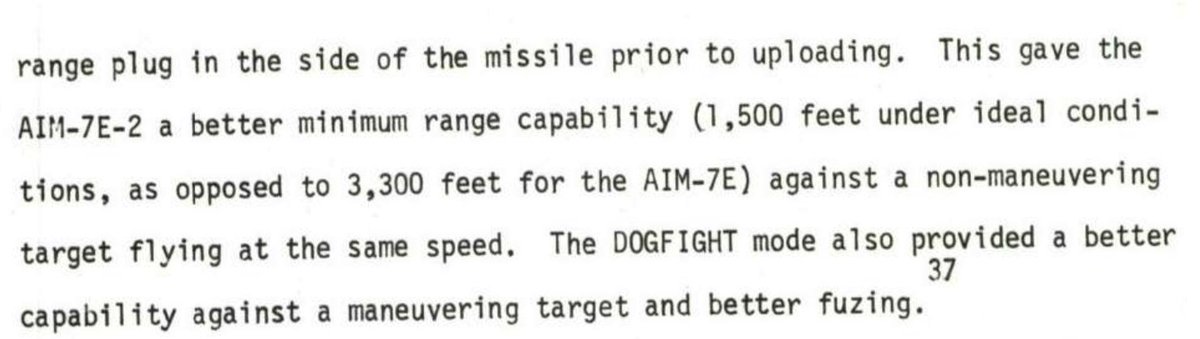
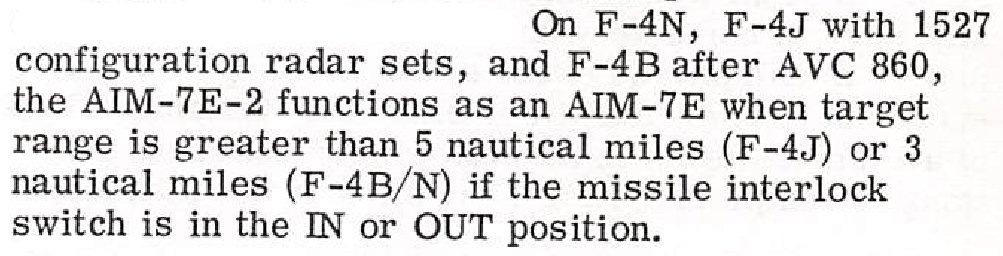
Although I don't have any details about this change besides what I've presented here, I've often seen it claimed that this doubled the short-range rear aspect/combat maneuverability of the AIM-7E-2 when compared to the "base model" AIM-7E.

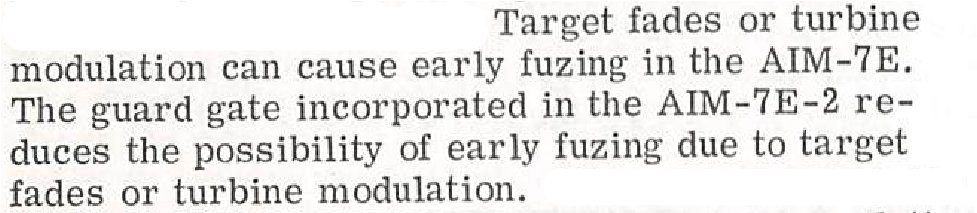
A less significant, but still noteworthy change was the introduction of something called "guard gates" to improve fuzing.
From what I can tell, before the AIM-7F, the Sparrow family relied on the target disappearing from the seeker radar returns to trigger warhead detonation.
From what I can tell, before the AIM-7F, the Sparrow family relied on the target disappearing from the seeker radar returns to trigger warhead detonation.
To explain how these two sentences tie together, we need to go through a short refresher on the guidance of the AIM-7E.
The radar of the launching aircraft provides frequency-modulated continuous-wave RF energy. A triangular FMCW is shown below. The transmitted signal is in red, and the received signal is in green.
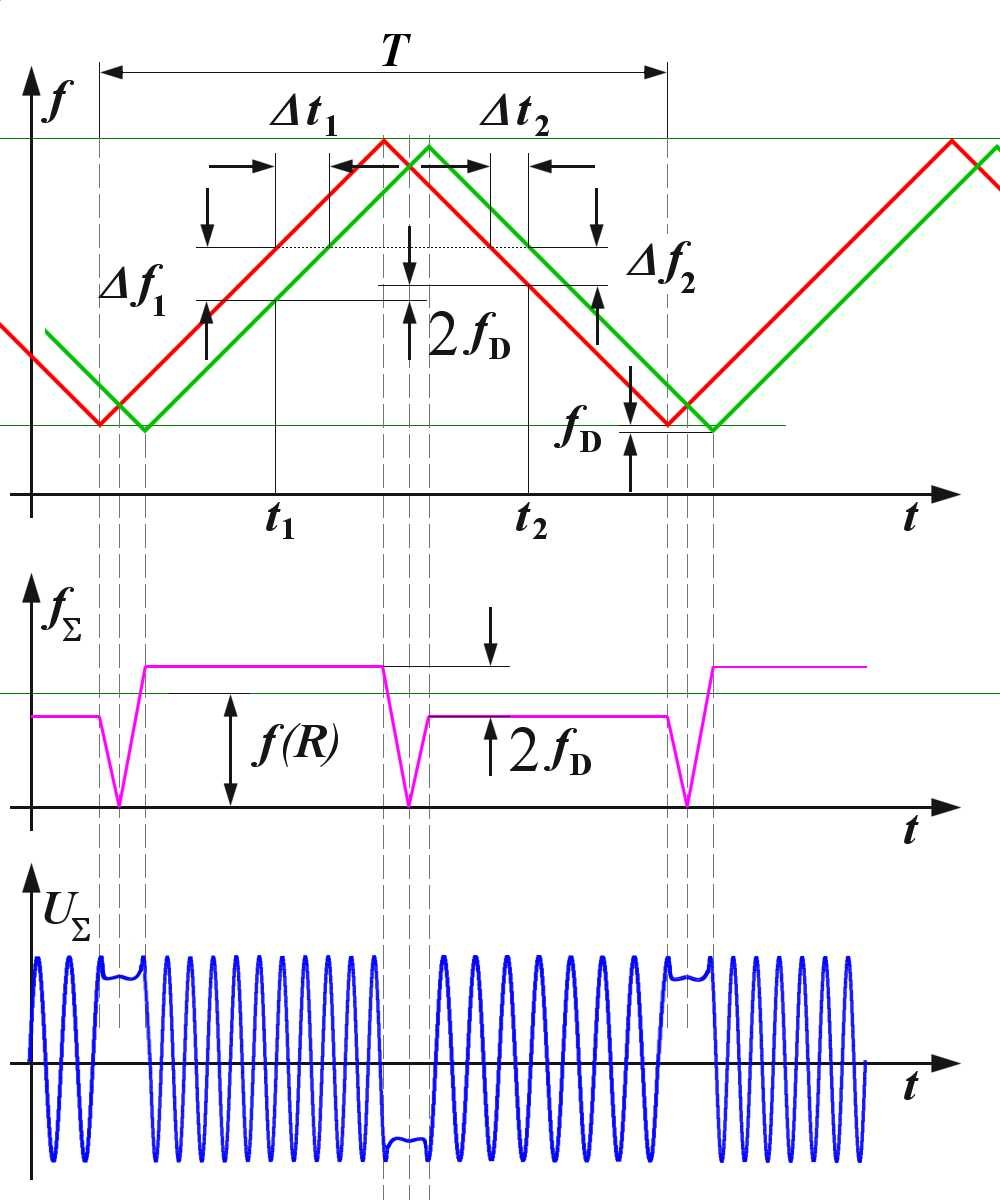
This looks very complicated, and it is, so we're going to skip most of it. But most of this exists to provide the transmitting radar range (f(R)) and velocity information (fD). For the purposes of the missile, we care primarily about the fD, or Doppler shift.
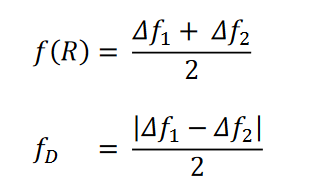
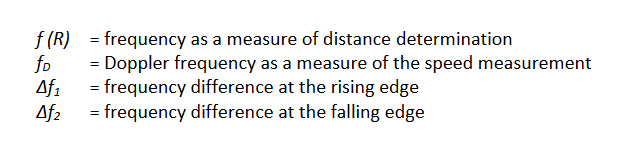
The Sparrow, being a semi-active missile, does not transmit the FMCW signal, so it has to have a separate receiver to allow the missile to compare the transmitted and received signals. The Sparrow III, as originally designed, locks on to the fD of the target.
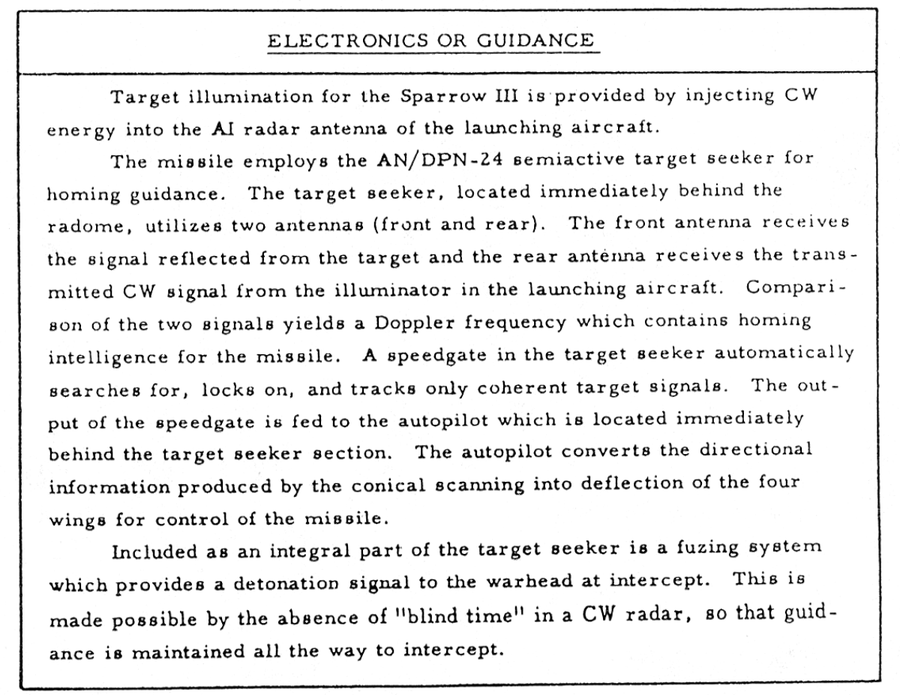
Much like a range gate, a velocity gate tracks a target. However, it tracks it in velocity shift from transmitted frequency, rather than in range return.
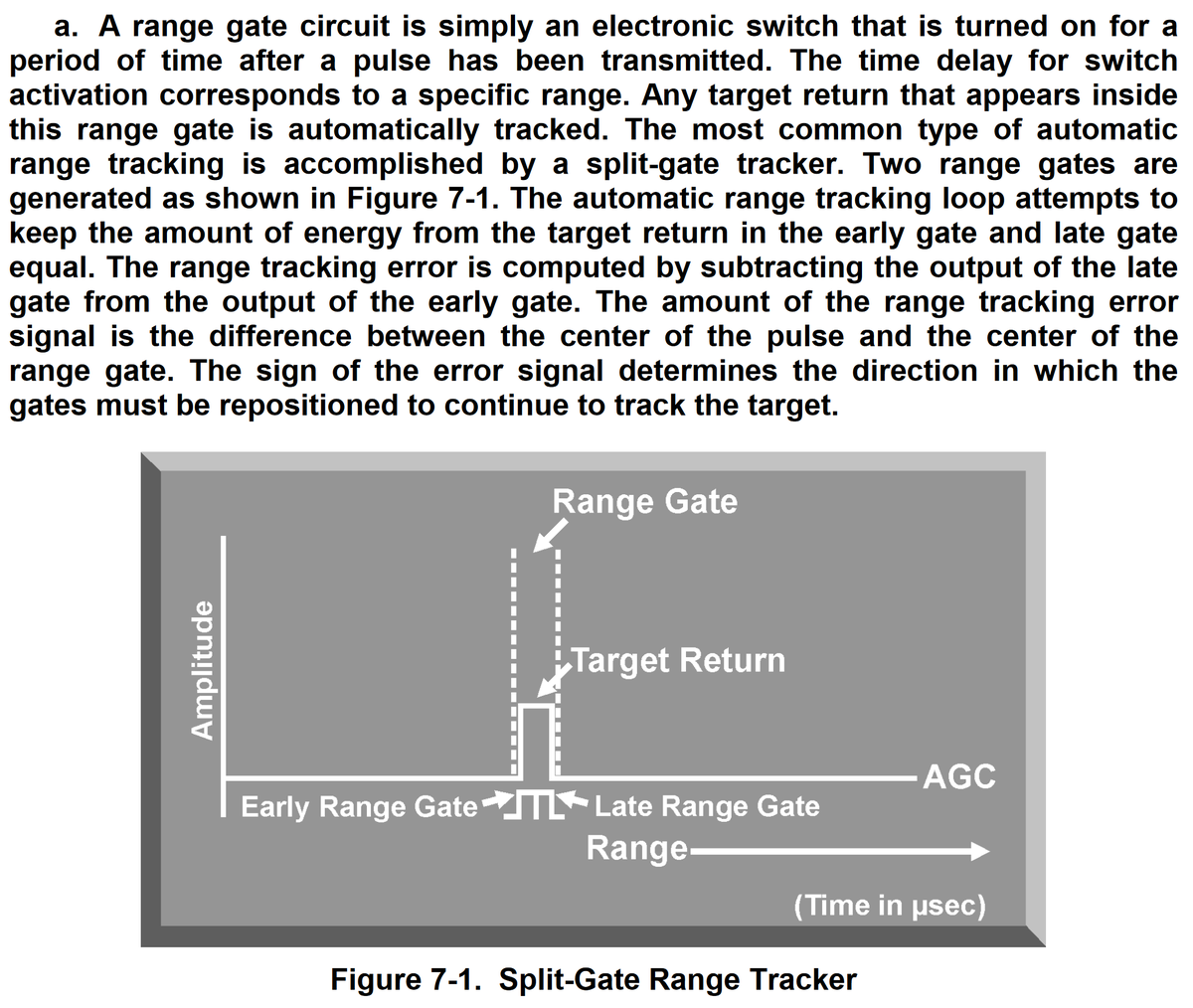
Now for the problems this caused. In a rear-aspect launch against a MiG in Vietnam, the AIM-7E suffered greatly from early fuze detonations.
These could be caused by a plethora of different issues, but the primary ones were automatic gain control and jet engine modulation.
These could be caused by a plethora of different issues, but the primary ones were automatic gain control and jet engine modulation.
Automatic gain control allows a radar or seeker to filter out noise below a certain level, but if the target does not provide a strong enough return above the noise floor, the AGC could lower the strength of the target return enough to accidentally trigger the fuze of the AIM-7.
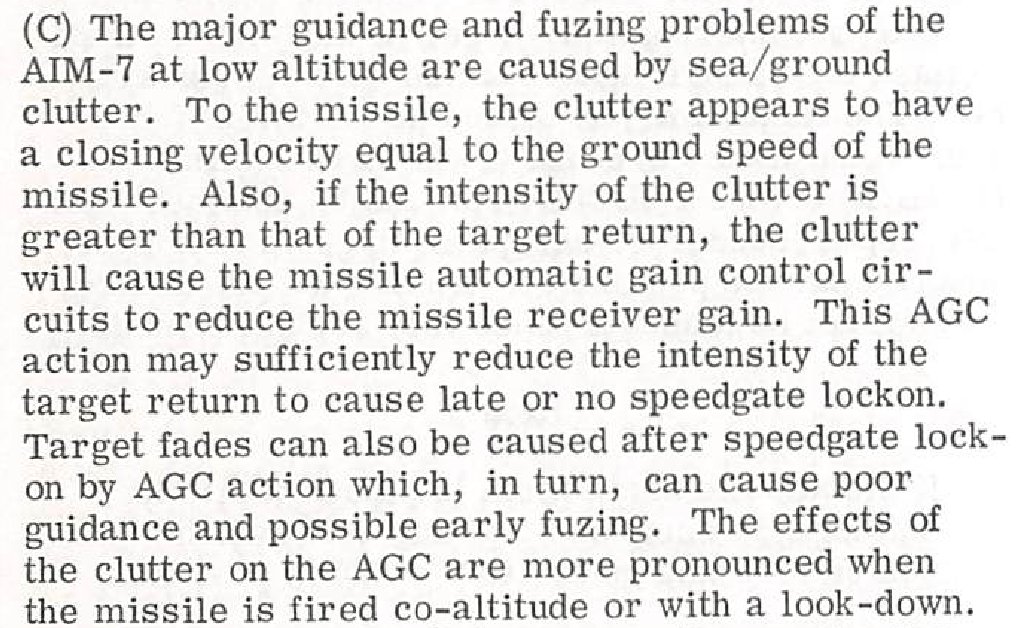
Jet engine modulation could also cause a similar issue.
From certain angles, the turbine blades of jet engines on fighters could provide a stronger Doppler return than the target itself, dragging the velocity gate off of the real target. Once the JEM faded away, the false target would disappear and the warhead would detonate early.

Now for guard gates. These are a pair of velocity gates adjacent to the main tracking gate that, when a target appears in them, interrupt the tracking loop and reset the guidance to "memory", or simulating the previously tracked real target, until the guard gates are empty.
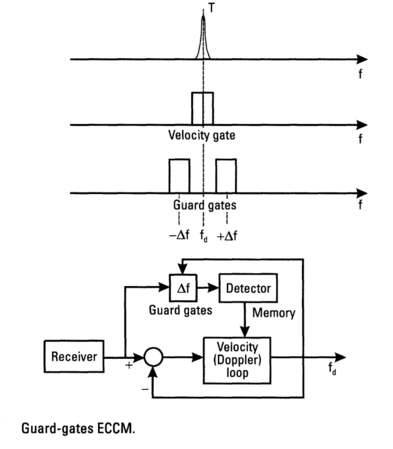
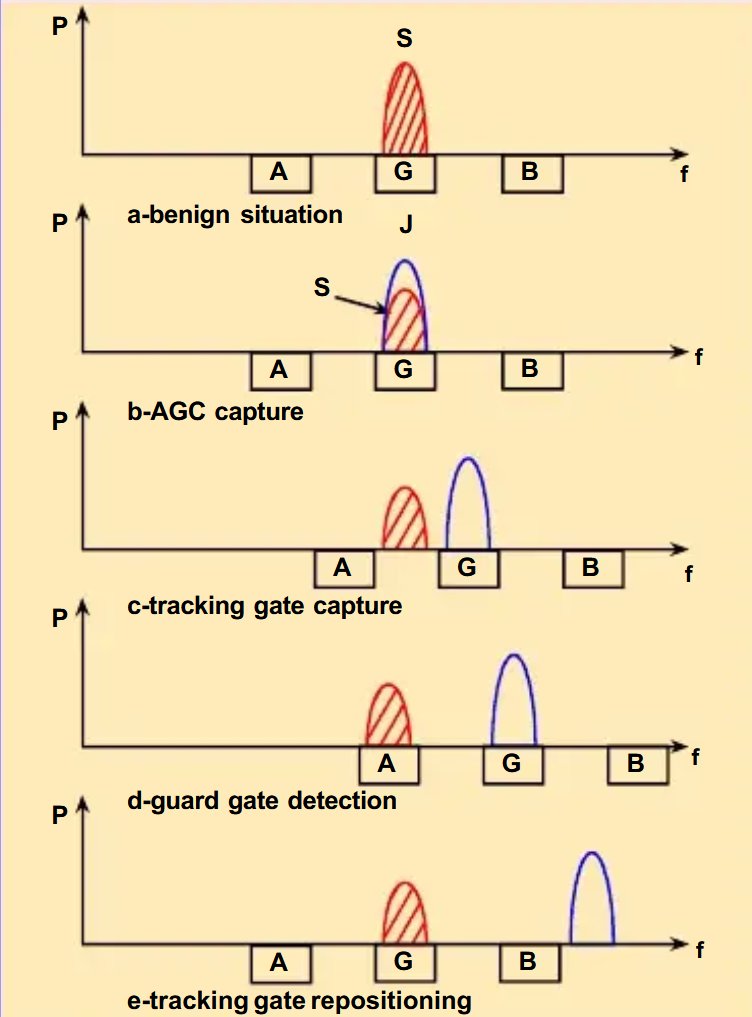
In the AIM-7E-2, which incorporated these guard gates, the fuzing was far more reliable.
This finally allowed the AIM-7E-2 to make the jump from a bomber-destroyer to the first true "dogfight" radar missile. From here, lessons learned in its development would go on to influence the AIM-7F, which proved to be an exceptional dogfight missile.
• • •
Missing some Tweet in this thread? You can try to
force a refresh