THE BLUES BROTHERS was released 44 years ago today. One of the most popular musical comedies and best films to come from Saturday Night Live, the making of story is like a mission from God…
1/34

1/34


The Blues Brothers started on TV when Dan Aykroyd and John Belushi played them in a 1976 SNL sketch, and formed a real Blues Brothers band. Aykroyd liked the idea of a film and, after some moderate success with the band, approached Universal Pictures about a movie.
2/34
2/34
Universal were interested, and Aykroyd took it upon himself to write a screenplay called The Return of The Blues Brothers. There was a problem though – he’d never written one before and produced a script of 324 page. Which would have made a film of about 5 and a half hours!
3/34
3/34


When Aykroyd finished, he called producer Bob Weiss and said “Be on your property tonight." When Weiss got home, he found the huge script. It was so thick, Aykroyd had wrapped in the cover of a Yellow Pages.
4/34
4/34


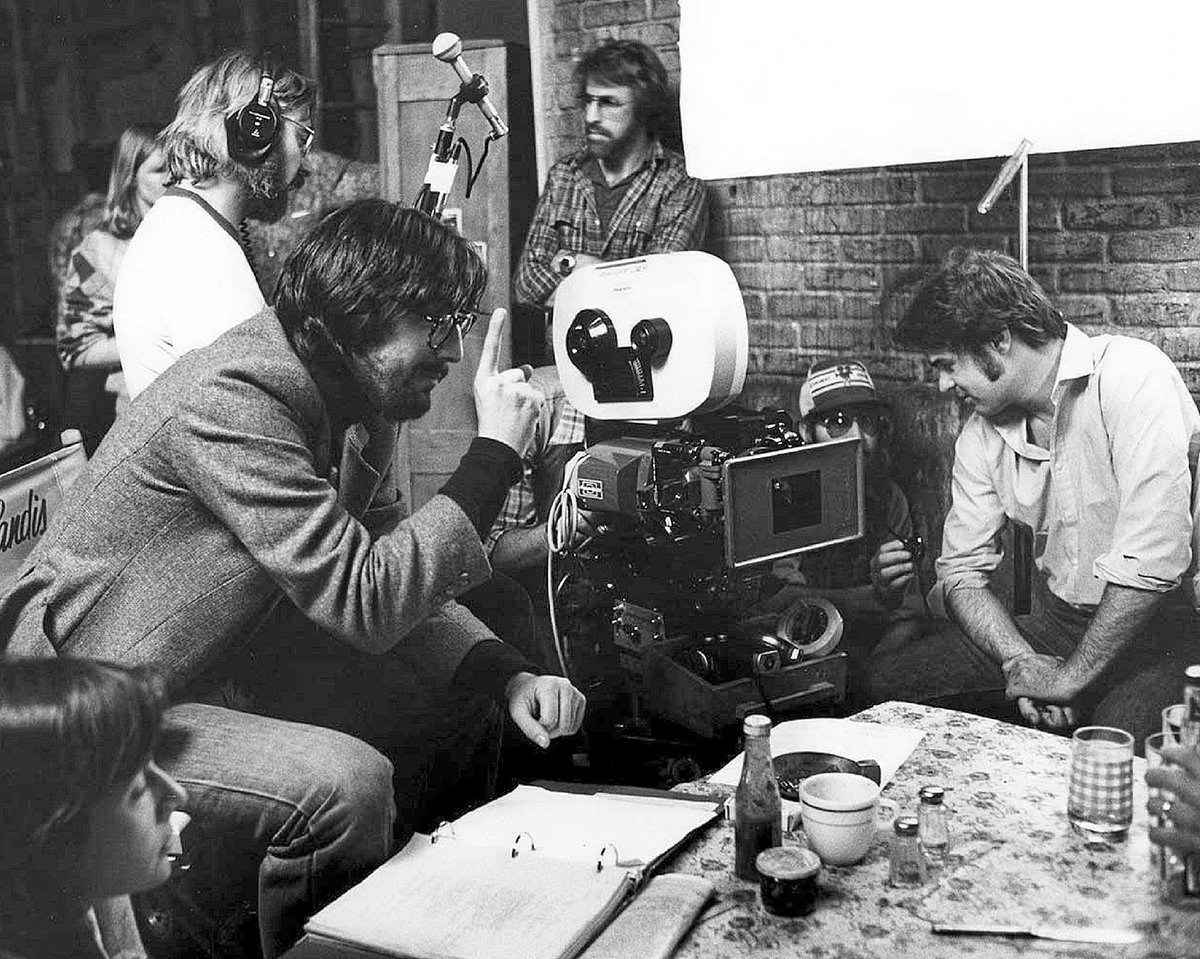
Needing a director, Aykroyd approached Animal House’s John Landis. Landis spent 3 weeks reducing the screenplay down to a more typical 120 pages. A major change was that, originally, the Illinois Nazis were trying to buy the orphanage. Landis reduced the Nazi involvement.
5/34
5/34


Landis has a cameo in the film. He plays the state trooper behind the wheel in the car that chases the Bluesmobile through the shopping mall and flips over.
6/34
6/34


Another famous director has a cameo, too. Steven Spielberg had recently worked with Aykroyd and Belushi on 1941 and appears towards the end of the movie as the Cook County Assessor’s clerk.
7/34
7/34

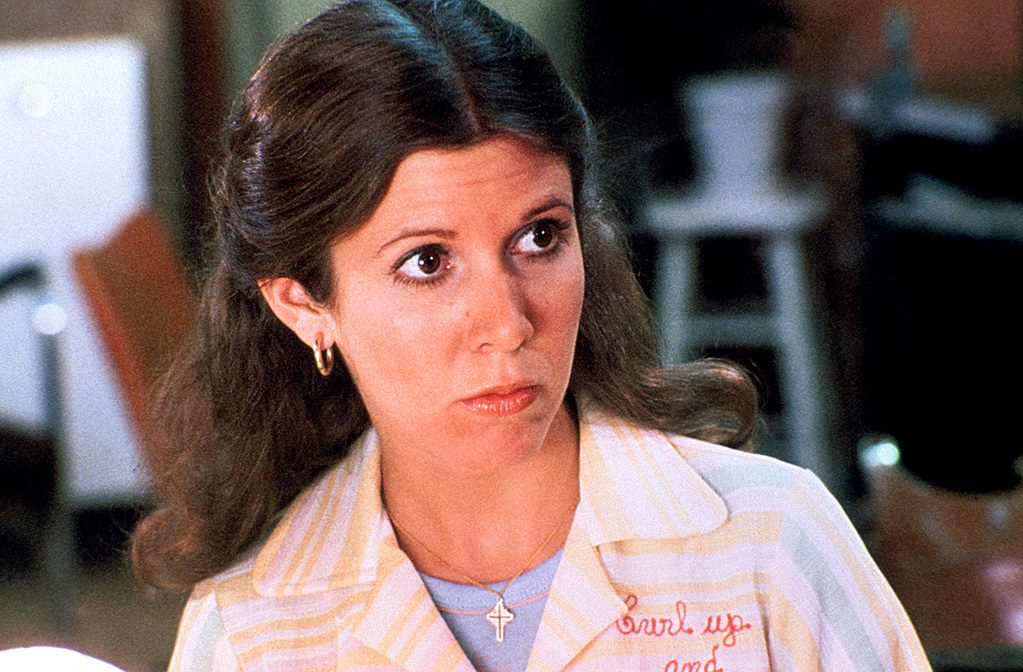
Carrie Fisher was Dan Aykroyd’s girlfriend at the time, and she has a short cameo as Jake’s ex-fiancee. Belushi set them up on the set and Aykroyd gave her the Heimlich manoeuvre on set when Fisher choked on a Brussels sprout.
8/34
8/34


Shortly after the brussels sprout incident, Aykroyd proposed to Fisher. She later said: “I thought, 'I better marry him. What if that happens again?'” They didn’t wed though, as Fisher reconciled with Paul Simon.
9/34
9/34


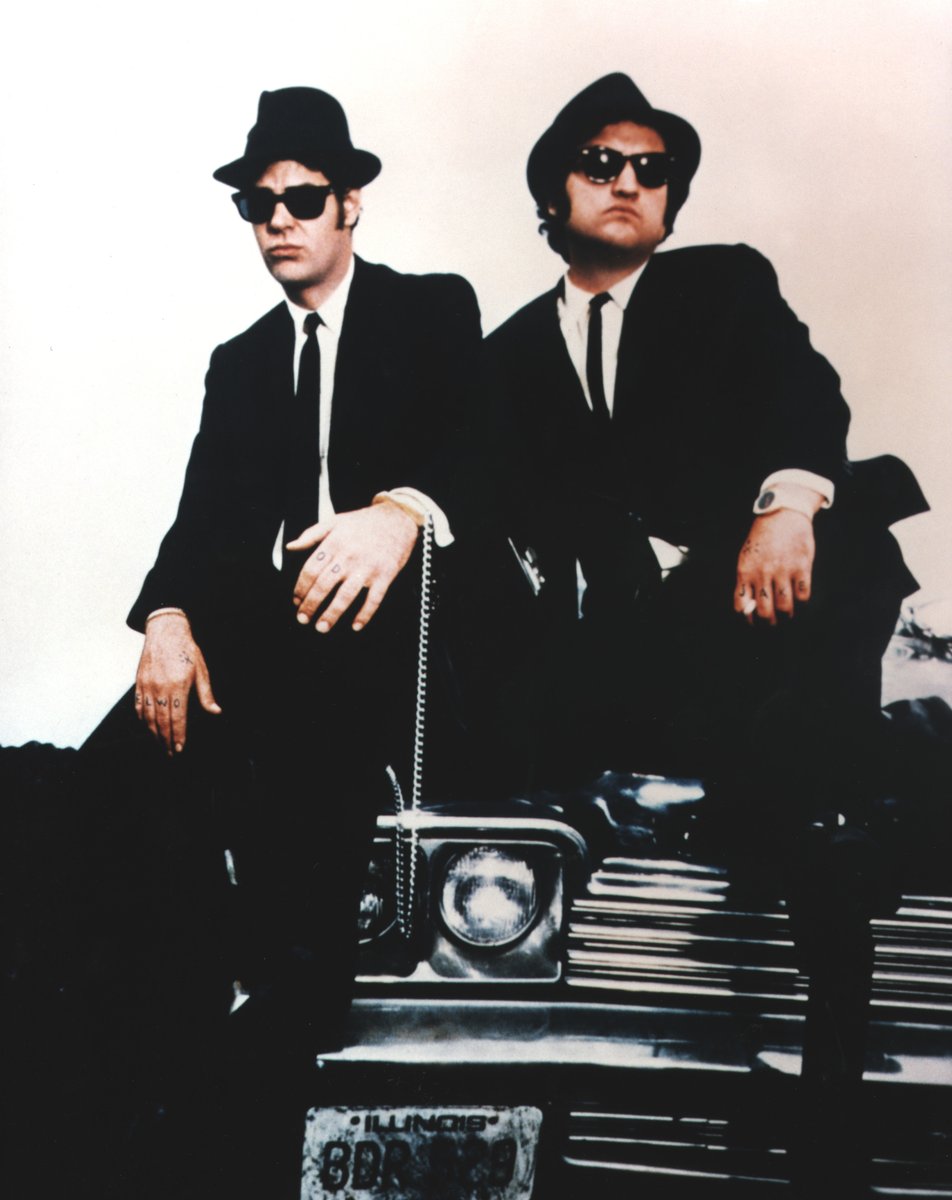
The Bluesmobile's Illinois license plate is BDR-529. This is a reference to Aykroyd's motorcycle club, The Black Diamond Riders. Their clubhouse was located at #529 on a street in Toronto.
10/34
10/34

Our latest podcast is on THE SOCIAL NETWORK. Full of big laughs and opinions so please check it out 😀
alltherightmovies.com/podcast/the-so…
alltherightmovies.com/podcast/the-so…
The actors’ salaries reflected their experience. Aykroyd got paid $250k while Belushi pocketed $500k.
11/34
11/34

Belushi would often disappear on night shoots. One night, Aykroyd went looking for him and saw a house with its lights on. The owner answered and said, "You're here for John Belushi, right?" Belushi had walked in, asked for a glass of milk and crashed on the couch.
12/34
12/34


Belushi was so famous he could do what he like. Producer Mitch Glazer recalled times when police would recognize Belushi on the street, pull over in their cars and shout “Hey! Belushi!” before giving him a ride home in their squad car.
13/34
13/34


Aykroyd called Belushi “America’s Guest” because of such incidents. Landis called Belushi “The Black Hole” because he went through hundreds of pairs of sunglasses during production. He would do a scene, and then lose the pair before filming the next one.
14/34
14/34


Aykroyd later said that cocaine was included in the film's budget to help the cast and crew stay awake during night shoots. Apparently, Belushi took full advantage and was on coke on a daily basis during the shoot.
15/34
15/34


There was a bar set up on the set for the cast and crew and Carrie Fisher said the bartenders basically doubled up as drug dealers, with Belushi their best customer.
16/34
16/34

Landis realised Belushi was off the rails and hired bodyguard Smokey Wendell to watch over Belushi and keep him away from drugs. He had previously worked as a Secret Service agent and protected Richard Nixon.
17/34
17/34


Belushi injured himself on the set too. He sprained his back falling down the stairs in the desk from the Penguin's office. He was in a back brace and on painkillers for the rest of filming.
18/34
18/34


When Aykroyd and Belushi had been putting the band together, they brought on musicians of the calibre of Steve Cropper and Blue Lou Marini. All band members (except Paul Shaffer) appears in the film as a fictionalised version of themselves.
19/34
19/34

After leaving Bob's Country Bunker, we see an ad advertising the movie See You Next Wednesday. Landis slips this into almost all of his movies as a homage to Stanley Kubrick: it's a line from "2001: A Space Odyssey.")
20/34
20/34

The film includes legendary artists like Aretha Franklin, Ray Charles and James Brown. However, the studio wanted more contemporary acts like Rose Royce, who had a hit with Car Wash. Landis and Aykroyd held firm and said only past greats would be in the film.
21/34
21/34


Aretha Franklin performs her song Think and had an issue lip-synching on the set. Because she rarely sang a song the same way live, she couldn’t remember the original recording too well so what we see in the film was cut together from many takes.
22/34
22/34


During filming, James Brown got separated from the crew and drove the Bluesmobile 100 miles to Spring Valley, Illinois. He was arrested by police for no registration and no valid driver's license and a call had to be made to John Landis to confirm Brown’s story.
23/34
23/34


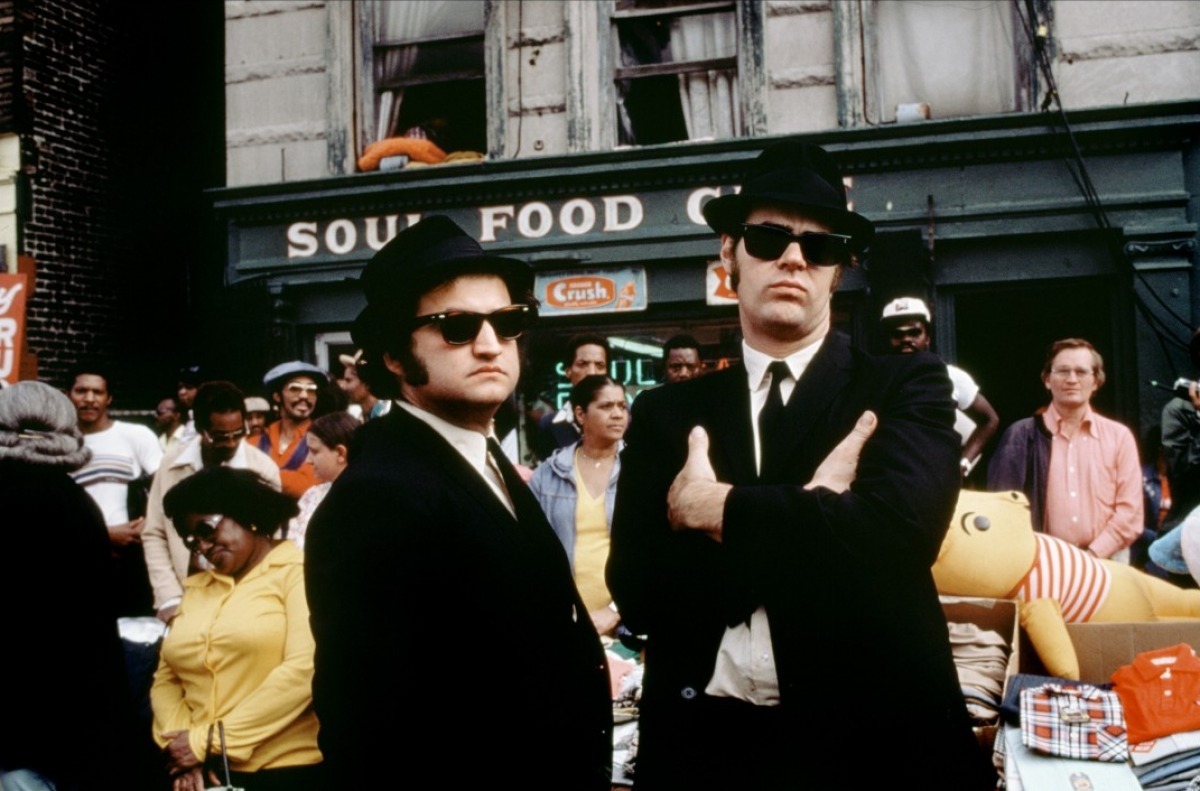
The Blues Brothers wardrobe of dark suits and sunglasses started as Aykroyd and Belushi's costumes on an SNL sketch where they played secret service agents and dressed like Roy Orbison. Landis thought it was a perfect visual for Jake and Elwood.
24/34
24/34


Landis wanted to record on location in downtown Chicago but was having trouble getting permission. Permission was given after Belushi and Aykroyd offered to donate $50,000 to charity after filming.
25/34
25/34

At the time of filming, Pope John Paull II was in Chicago and visited the set. This resulted in the image below of Belushi kissing the Pope’s ring…
26/34
26/34


The film very quickly passed its original budget, and studio exec Ned Tanen came to the set to have it out with Landis. Landis said he didn’t know what the budget was and when Tanen told him $17.5, Landis said “I think we’ve spent that much already.”
27/34
27/34
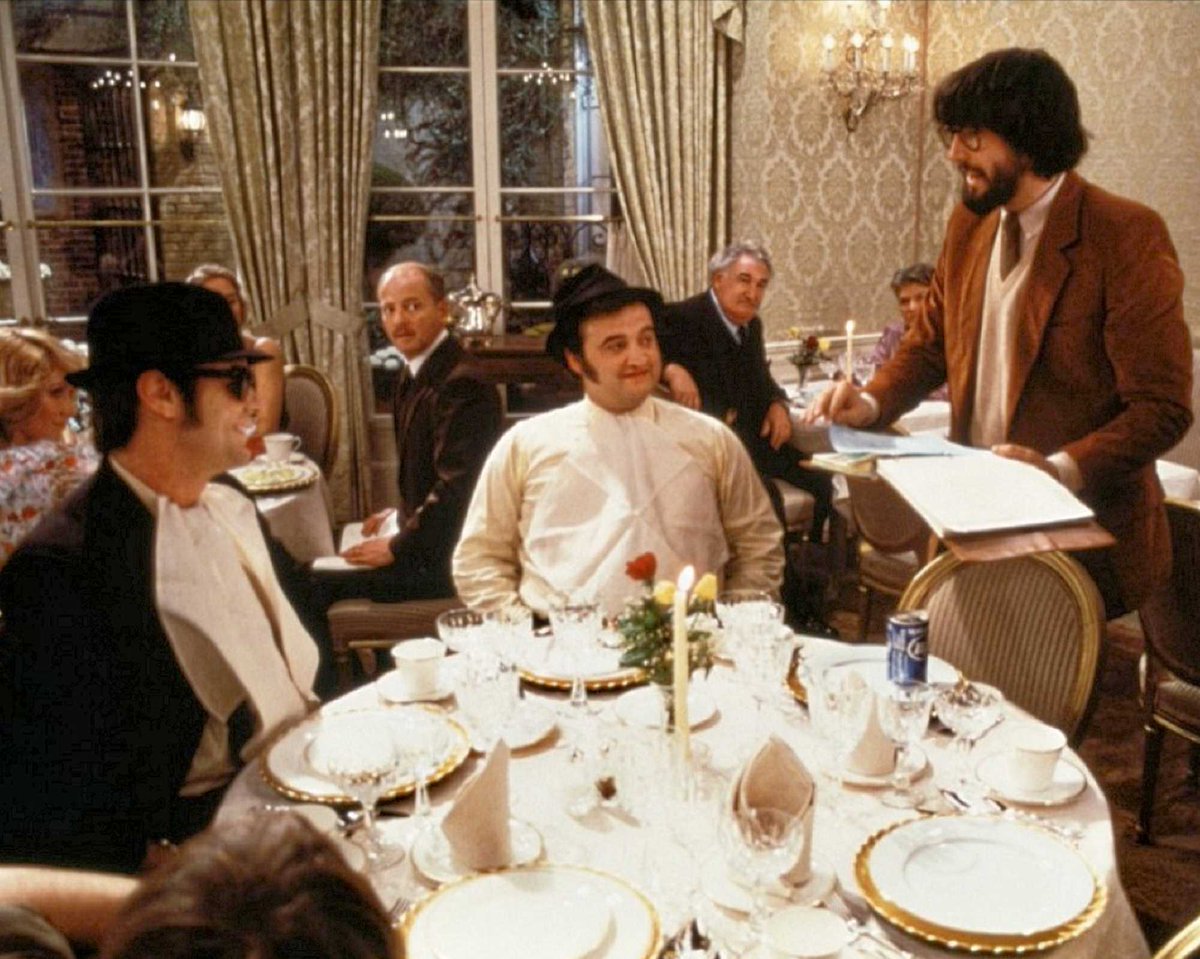

The famous mall scene was filmed in Dixie Square Mall in Harvey, Illinois, which had recently been closed due to crime and gang activity in the area. The empty mall was filled with merchandise from stores, with the promise that any merchandise would be returned.
28/34
28/34


A world record 103 cars were wrecked during filming. That record stood for two years until Gone in 60 Seconds II wrecked 150 cars and a plane. Then in 2003, The Matrix Reloaded wrecked over 300 cars.
29/34
29/34


To get the shot where a car drives off a motorway, Landis had the car dropped from a helicopter at 1200ft. The Federal Aviation Administration feared the car might become get blown and crash into nearby Chicago buildings on the way down. It all worked out safely.
30/34
30/34
Before filming the final scene, Belushi fell off a skateboard and injured his knee. Landis called the top orthopedist in Los Angeles, and made him postpone his weekend until he could shoot Belushi up with enough anaesthetics to get him through filming.
31/34
31/34
Many theaters in the American South refused to show the film because they felt that there were too many African-Americans. When Landis asked Ted Mann of Mann Theaters why he wouldn’t book the film, Mann said “Because I don’t want any Blacks in Westwood.”
32/34
32/34


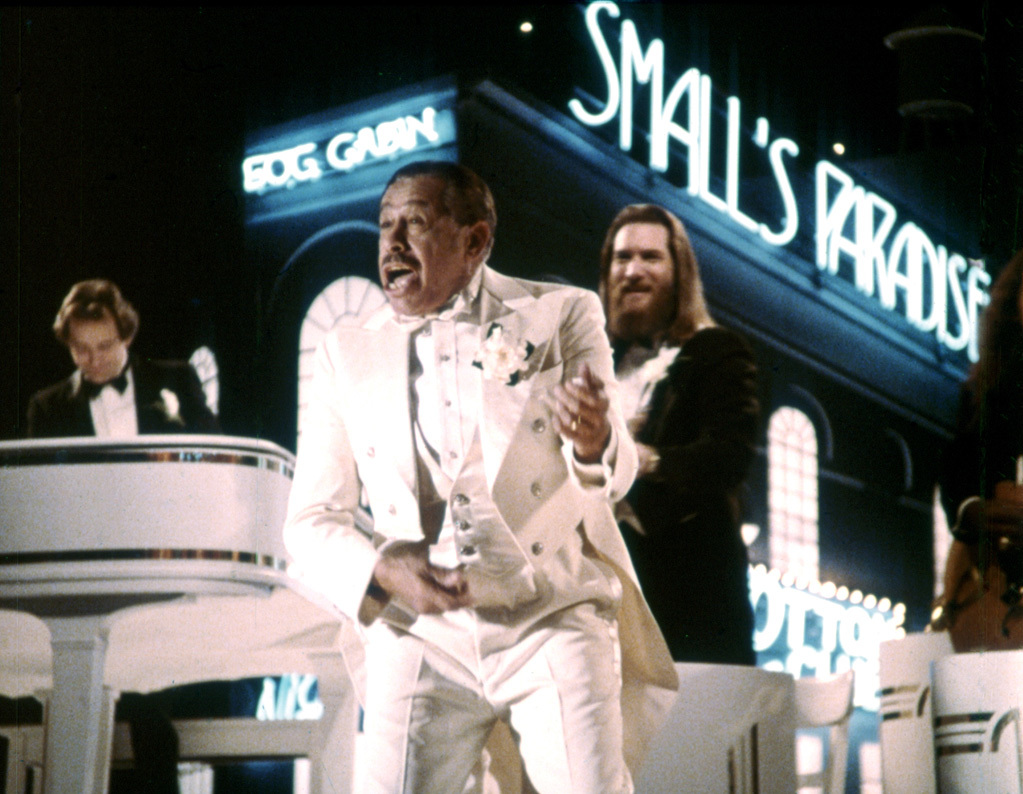
Despite the disgusting racism, the film was a huge hit and took $115.2m from a $27.5m budget. And today is as popular as ever with people all over the world.
33/34
33/34


John Belushi sadly passed in 1982 but now, decades later, the music hasn’t stopped. The band still exists and has played many shows since, led by Dan Aykroyd and, in the place of John, his brother Jim Belushi.
34/34
34/34


If you liked our making of story of THE BLUES BROTHERS, please share the opening post 😀
https://x.com/ATRightMovies/status/1805176837896630468
Our most recent podcast is a deep dive into THE SOCIAL NETWORK. It's full of the satandard ATRM laughs and opinions so please check it out 😀
alltherightmovies.com/podcast/the-so…
alltherightmovies.com/podcast/the-so…
• • •
Missing some Tweet in this thread? You can try to
force a refresh