Heatloss Profile picture
Jun 26 10 tweets 4 min read Read on X
For a long time, I've derided the AIM-54 as being a poor anti-fighter missile. However, I've stumbled across some information that makes me reconsider what I've said. A short🧵 Image
While reading old congressional hearings, I found this passage. There are three major portions to this performance that I think are worth touching on. Increased energy, autopilot efficiency, and control efficiency and design. Image
The first should be pretty self-explanatory. The motor on Phoenix propels it to speeds higher than Sparrow could dream of, at ranges of over 100 nautical miles, about double the aerodynamic range of AIM-7F.
At short ranges, this means vastly increased available missile energy. Image
The second, autopilot efficiency, is a little bit more complicated. Phoenix was one of the first applications of an "adaptive gain" system.
This refers to a system of automatic adjustment of the autopilot control input gain based on target parameters. Image
In the case of the AIM-7E Sparrow, the gain was managed by target speed alone. This proved to be inadequate to deal with sharply maneuvering targets. Image
In Phoenix, I suspect target average angular rate data, in combination with closing velocity, was used to determine the magnitude of autopilot gain, as it did not track in range, and therefore range could not be used to influence the autopilot gain. Image

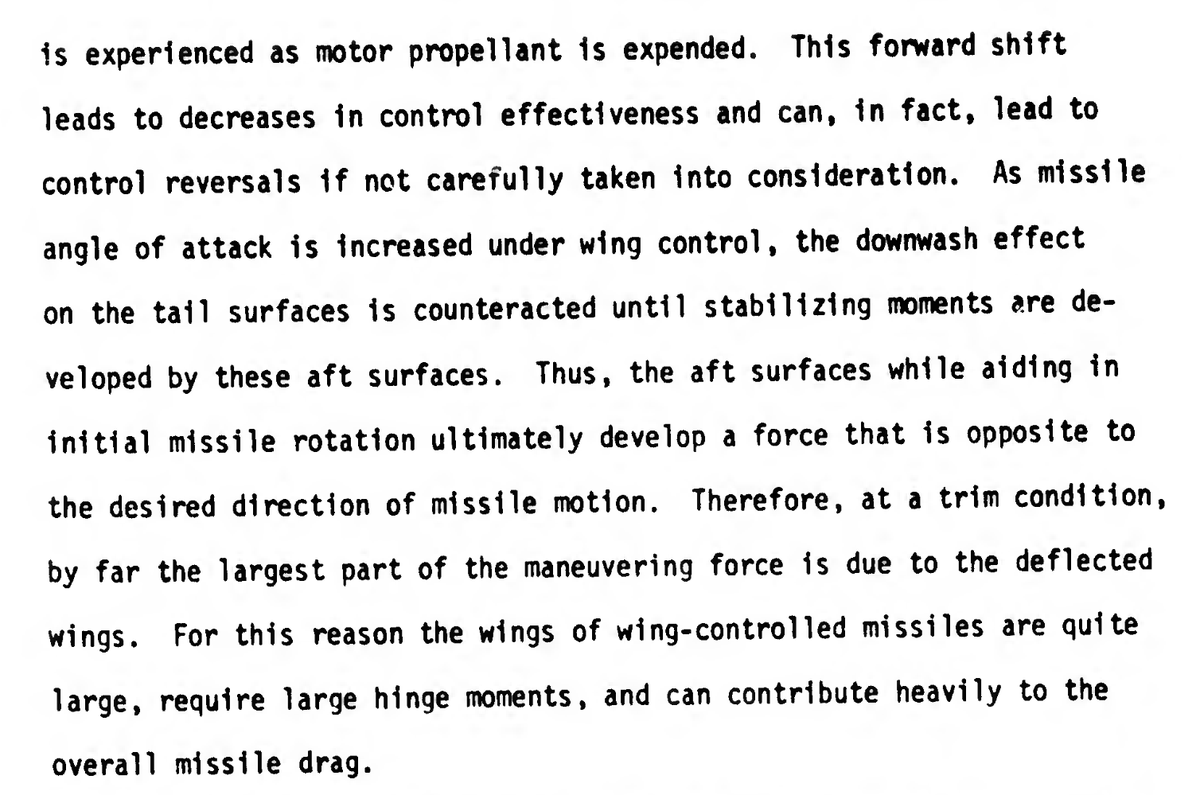
The final point to touch on is the control systems. Wing control, a system used in the Sparrow, is quite reactive to inputs but requires high wing area due to its proximity to the center of gravity of the missile.
For numerous reasons, wing control missiles are high-drag.
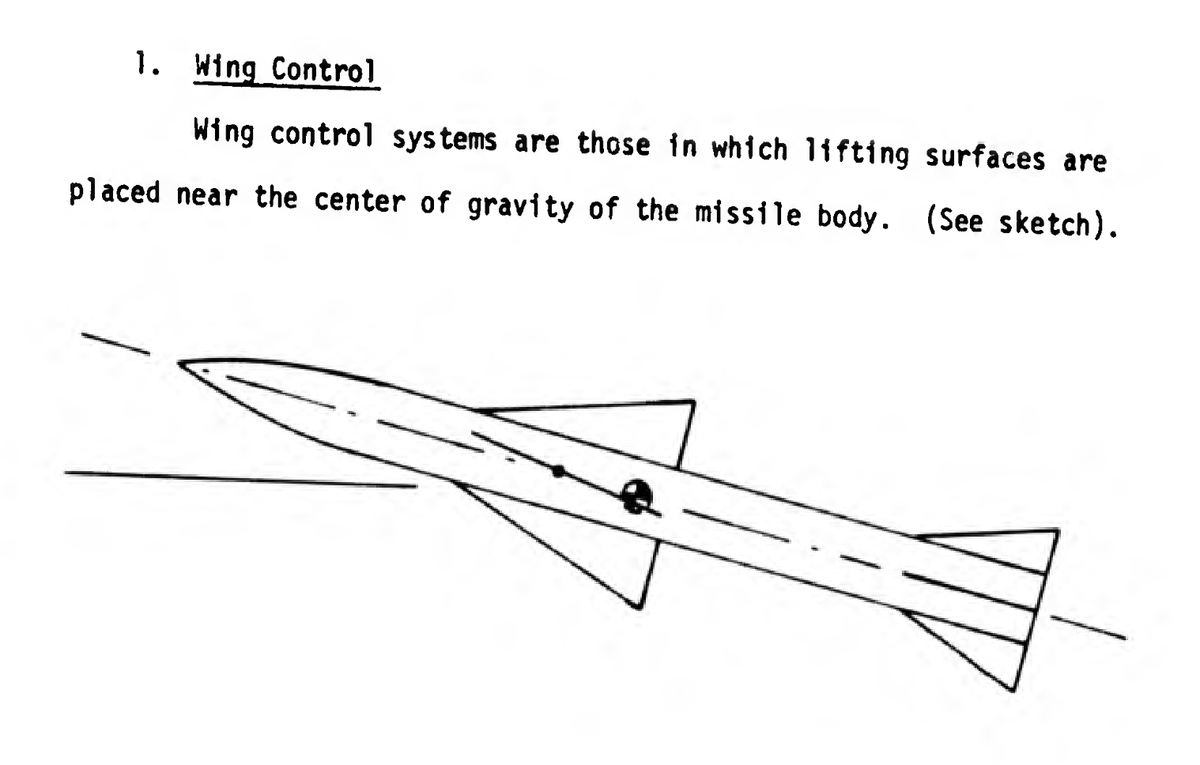
Image
Image
Image
One of the primary reasons wing control was used in the Sparrow was likely proximity to the seeker and control systems due to the narrow width of the missile body.
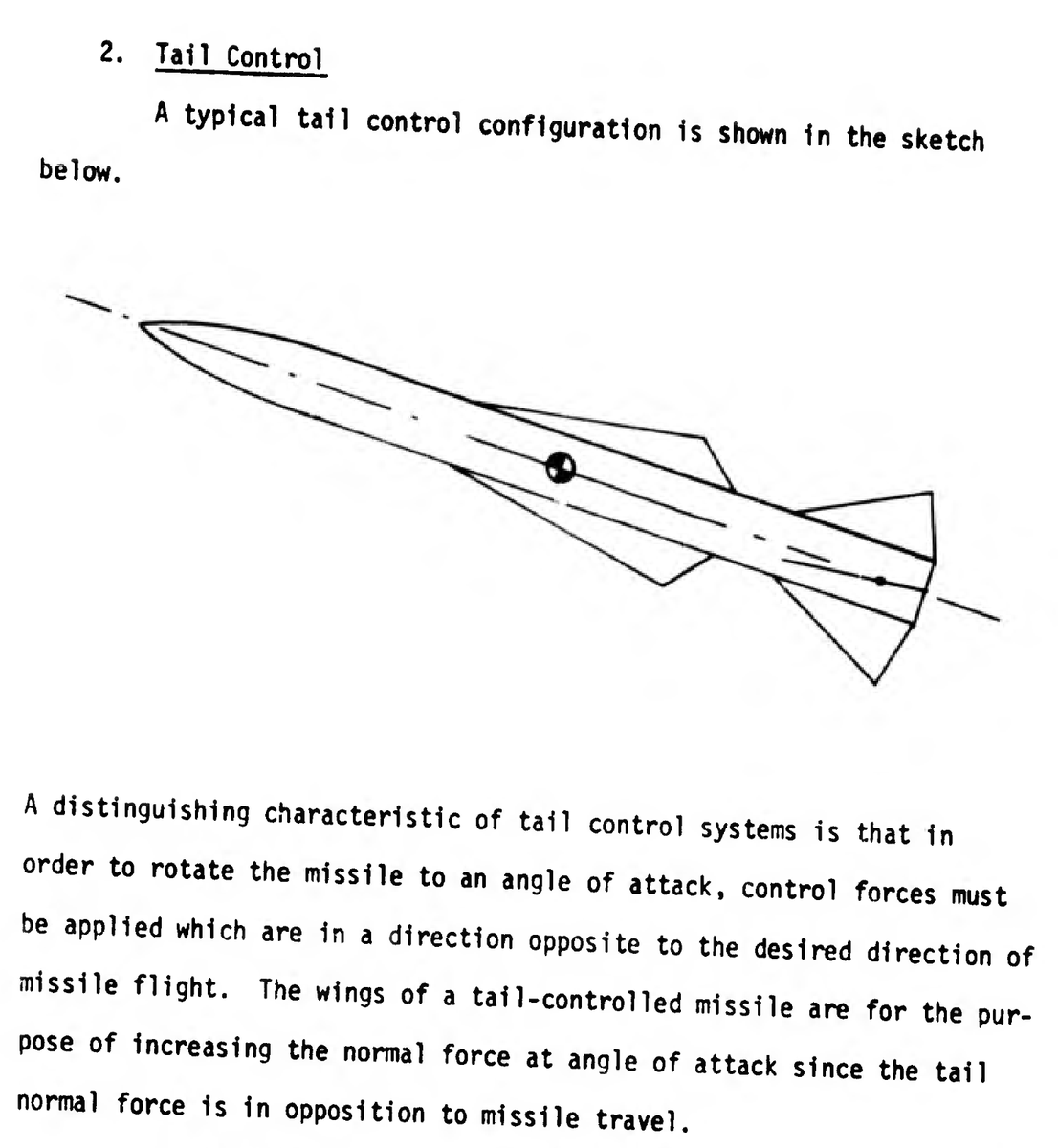
The Phoenix, with a much larger missile body, took advantage of a much more efficient system: Tail control.
Though tail control requires higher angles of attack to make hard maneuvers, it tends to provide lower drag than comparable wing control systems in maneuvers, meaning that the Phoenix could achieve longer ranges against maneuvering targets than Sparrow. Image
For these reasons stated above, I believe that the Phoenix was a much more effective anti-fighter missile than I gave it credit for, at least on par with the later versions of the AIM-7 Sparrow (7F/M).

• • •

Missing some Tweet in this thread? You can try to force a refresh

 

Keep Current with Heatloss

Heatloss Profile picture

Stay in touch and get notified when new unrolls are available from this author!

Read all threads

This Thread may be Removed Anytime!

PDF

Twitter may remove this content at anytime! Save it as PDF for later use!

Try unrolling a thread yourself!

how to unroll video
  1. Follow @ThreadReaderApp to mention us!

  2. From a Twitter thread mention us with a keyword "unroll"
@threadreaderapp unroll

Practice here first or read more on our help page!

More from @heatloss1986

Jun 27
I'm sure by now most of you have seen this... contraption. And I know for a fact that there's been a lot of speculation as to what it was. Well, I've got answers. Mini🧵 Image
Right off the bat, the term "MRASM BKEP" needs to be deciphered a bit.
MRASM, or AGM-109, was a version of Tomahawk designed for launch by aircraft, thus the AGM designation. They shared significant components, so the -109 designation was retained. Image
AGM-109L was the true stubby tomahawk, but AGM-109H is where the minihawk of legend comes from. Image
Read 7 tweets
Jun 16
The AIM-7E-2 "Dogfight Sparrow" is one of the least well-understood variants of the Sparrow, and yet one of the most important ones in the transition between the Sparrow as a bomber-hunter and the Sparrow as a dogfight missile. A short 🧵to explain the changes. Image
The first thing to get out of the way is the identification: the AIM-7E-2 is identical to the AIM-7E visually, except for black stripes on the forward wings. A common myth about the 7E-2 is that it incorporated "clipped wings", but this is wrong. (7E | 7E-2 pictured)
Image
Image
The biggest changes to the AIM-7E-2 were the decrease in the minimum range, from approximately 3,300 feet on the AIM-7E to 1,500 feet on the 7E-2 under ideal situations, and a significant increase in combat maneuverability.
Image
Image
Read 23 tweets
Jun 6
Finally, more information on Diamondback!
There are a few frames in here which display the seeker design. This is fascinating. A short thread to describe what's going on:🧵
In short, this is another fantastic design out of China Lake. This is a dual mode seeker, likely using the lower error or stronger of the two returns at a given point in time, which allows for long range guidance over radar and short range, more accurate guidance over IR. Image
The mesh used for the radar reflector would have to be very thin wire, so as not to disrupt the IR signal. However, mesh makes for a very good radar reflector material. The radar reflector was likely angled to create a conical scan, like that of AIM-9C.
Read 9 tweets
Jun 4
The early F-106's Airborne Moving Target Indication (AMTI) system was an unusual method for dealing with the threat of Soviet bombers flying at low altitudes to avoid detection by radar. Though no pictures or official explanations exist, I think I can describe this system.🧵
First, I must admit that AMTI is only a partially correct method of describing the "clutter" function on the F-106's MA-1.
While it provided MTI based on target Doppler shift, it did so with a "coherent on receive only" system rather than a fully clutter-referenced MTI system.
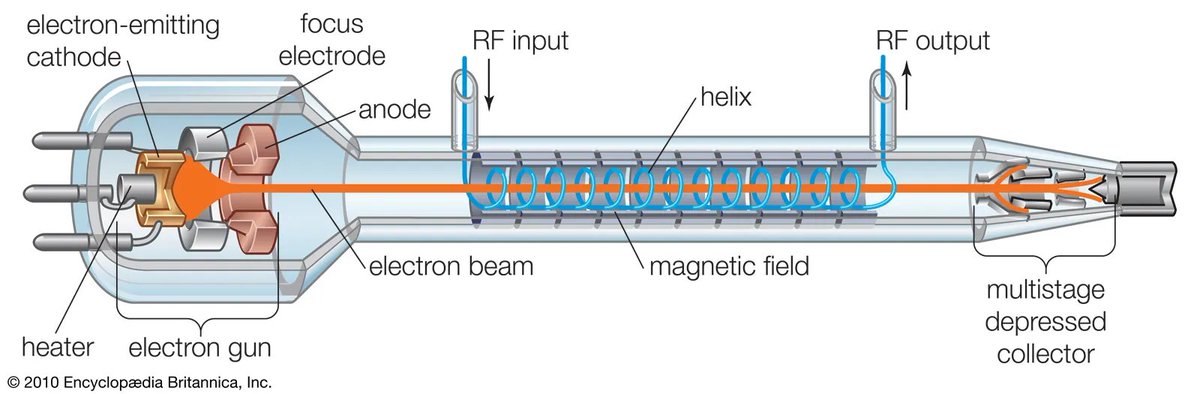
Radar coherency is critical to Doppler processing. A fully coherent radar has a single, frequency-stable, continuous oscillator generating the frequency to be used by the radar. This is then amplified to produce the output power by a Klystron or Traveling Wave Tube. (Image: TWT) Image
Read 15 tweets
May 24
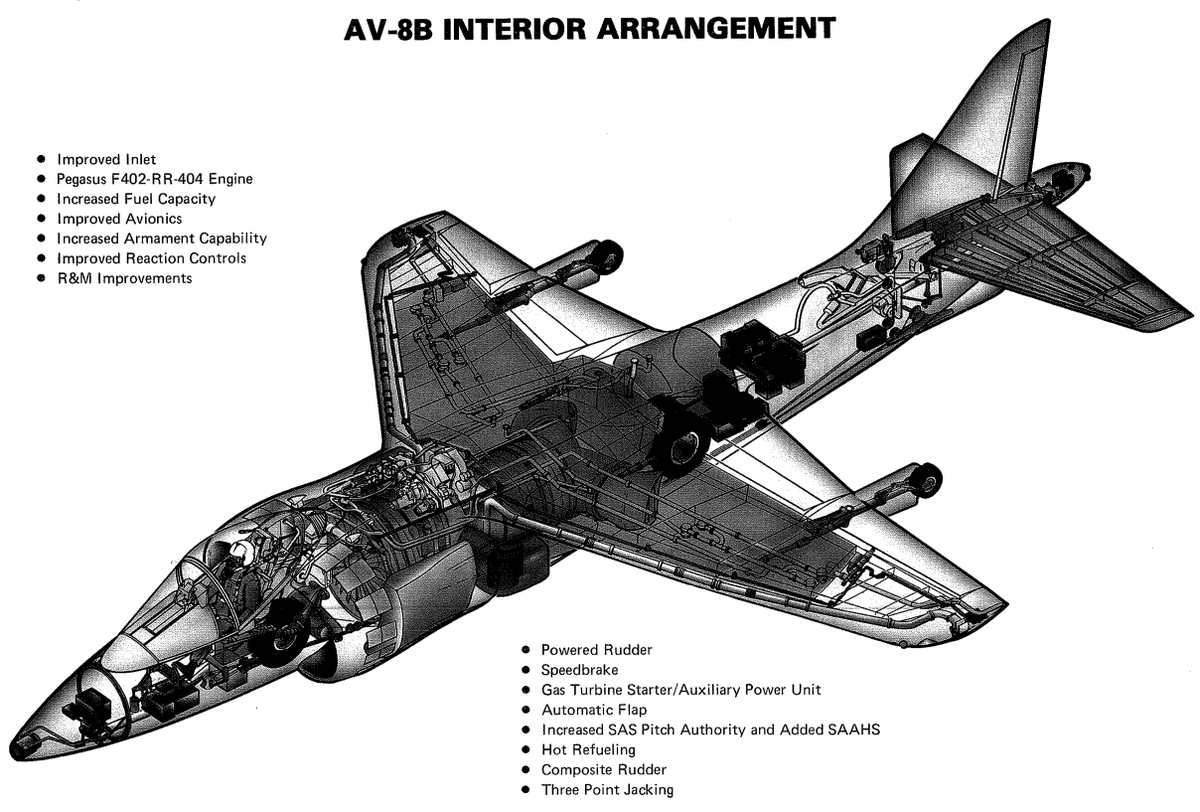
I've mentioned previously that I prefer the AV-8B to the earlier Harriers. This will be a short overview of the changes and improvements compared to the AV-8A. 🧵 Image
The first thing to consider is the point of the Harrier II. The USMC appreciated the flexibility that the Harrier I provided, but was concerned about low payload, short range, outdated avionics, and a poor safety record.
The Harrier II solved these issues.
Like usual, we're gonna start at the front with this one.
At the tip of the nose, the AN/ASB-19 Angle Rate Bombing system is covered by a glass dome. Right behind this, the aircraft computer is mounted, and the airframe structure is designed for but not with an APG-65 radar. Image
Read 15 tweets
May 9
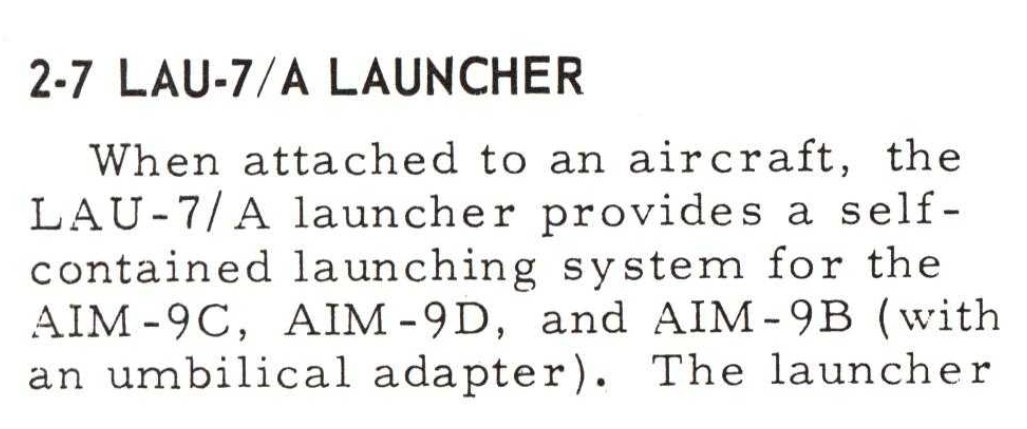
A short thread on a less appreciated part of air-to-air missiles, the launchers. In this case, the LAU-7/A launcher for the AIM-9, as applied to the D/G/H. 🧵 Image
LAU-7/A had everything you needed for an AIM-9D. A power supply, a retaining assembly, fire control system tie-ins, a tone generator, safety devices, and most importantly, compressed gas.

Image
Image
Image
Dimensions. Image
Read 11 tweets

Did Thread Reader help you today?

Support us! We are indie developers!


This site is made by just two indie developers on a laptop doing marketing, support and development! Read more about the story.

Become a Premium Member ($3/month or $30/year) and get exclusive features!

Become Premium

Don't want to be a Premium member but still want to support us?

Make a small donation by buying us coffee ($5) or help with server cost ($10)

Donate via Paypal

Or Donate anonymously using crypto!

Ethereum

0xfe58350B80634f60Fa6Dc149a72b4DFbc17D341E copy

Bitcoin

3ATGMxNzCUFzxpMCHL5sWSt4DVtS8UqXpi copy

Thank you for your support!

Follow Us!

:(