INDEPENDENCE DAY was released 28 years ago this week. An enormous box office hit and one of Hollywood’s biggest productions, the behind the scenes story is as spectacular as a spaceship blowing up the White House…
1/42

1/42


In 1994, director Roland Emmerich and writer Dean Devlin were promoting their film, Stargate. In an interview, they got into a conversation with a journalist about aliens and what a visitation might look like. Later, Emmerich said to Devlin “I’ve an idea for our next film.”
2/42
2/42


Emmerich and Devlin wrote the script in 4 weeks and sent it to all major studios in Hollywood (except MGM, who they hadn’t liked working on Stargate with). It was sent on Thursday, they received offers on Friday, and were in pre-production with 20th Century Fox by Monday.
3/42
3/42


Fox later said what interested them was Devlin’s pitch. He said it was “War of the Worlds meets Pulp Fiction.” When Emmerich backed him up with “it’s got 15-mile wide spaceships in it” Fox were sold on the idea.
4/42
4/42


Emmerich knew he wanted Will Smith as action lead Captain Steven Hiller. Just in case though, he thought about Eddie Murphy as a back-up. The studio asked him to consider Tom Cruise and Ethan Hawke, but he was set on Smith.
5/42
5/42


Emmerich later said the casting of Will Smith met with resistance and even racism from some studio execs, but he stood firm. The film launched Smith's movie career and made him a huge movie star overnight.
6/42
6/42


Hiller’s partner is Jasmine Dubrow. Smith’s future wife Jada Pinkett Smith turned the role down because of a clash with The Nutty Professor, so Emmerich turned to and cast Vivica A. Fox.
7/42
7/42


Fox almost blew her audition though. Knowing her character was an exotic dancer, she turned up “In tight, pad-leather white pants and a jumpsuit with the boobs and everything” as she put it, and had to explain her outfit to Emmerich.
8/42
8/42


President Whitmore was intended to be a Richard Nixon-like character and written with Kevin Spacey in mind. Fox said Spacey wasn’t a big enough star so the part was re-written to be more likeable and Bill Pullman was hired instead.
9/42
9/42


MIT-educated scientist David Levinson plays a key role in taking down the aliens. Matthew Broderick was offered the part but had scheduling conflicts. The studio suggested Jeff Goldblum, who had played a similar role in Jurassic Park, and Emmerich agreed.
10/42
10/42


Independence Day pays a little tribute to Jurassic Park too. When Hiller and David are escaping the alien ship, David says “Must go faster. Must go faster.” The same line Goldblum’s Dr Malcolm says when chased by a T. Rex in Jurassic Park.
11/42
11/42


Emmerich knew he wanted Judd Hirsch as David’s father but as he was only 18 years older than Goldblum, Hirsch had to be heavily made up. Also, Hirsch asked the character’s name to be changed from Moishe to Julius, after Julius Caesar.
12/42
12/42


Devlin later said that a lot of the dialogue in the scenes between Goldblum, Smith and Judd Hirsch (Julius Levinson, David’s father) was improvised between the three actors.
13/42
13/42


Robert Loggia was another first choice for the role of General William Grey. After he was cast, Devlin suggested Loggia watch Airplane! For reference. He meant to say Airport, so Loggia thought he’d been conned to appear in a spoof film.
14/42
14/42


Ally Walker was cast as David’s ex-wife Connie, but became unavailable before filming. Emmerich liked the idea of Margaret Colin for the part but Colin told a casting assistant (as a joke) she was 22 so deemed too young. It was cleared up and she was filming 1 day later.
15/42
15/42


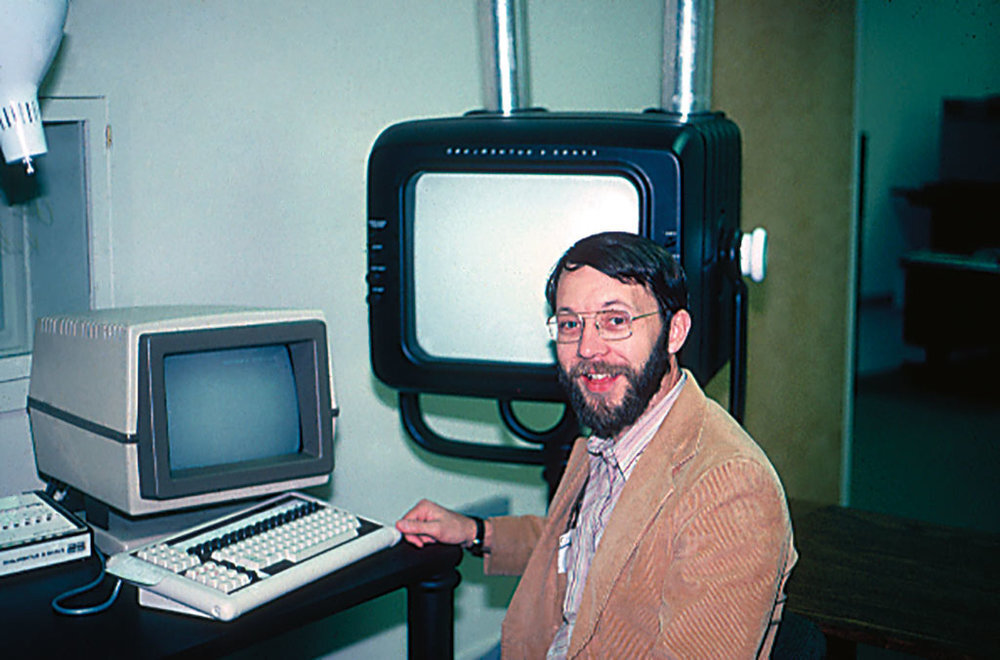
Area 51 scientist Dr Okun was played by Brent Spiner, known as Data in Star Trek: The Next Generation. He was based on Jeffrey A. Okun, digital effects supervisor on Stargate and is an accurate imitation of Okun, down to the hair, costume and mannerisms.
16/42
16/42


The role of Captain Jimmy “Raven” Wilder was offered to, and accepted by, Matthew Perry. He had to pull out before filming and Harry Connick, jr was cast. However, Perry’s father, John Bennett Perry, plays a Secret Service agent in the film.
17/42
17/42


Co-writer Dean Devlin has a cameo. He’s the voice of the fighter pilot who says "I see ‘em" to the President and is blown out of the sky seconds later.
18/42
18/42


The film became known as ID4 in marketing. This came about due to legal issues with ‘Independence Day’. Warner Bros had the rights to the title and before an agreement was reached, Fox suggested Invasion, Sky On Fire, Doomsday and The End of the World as titles.
19/42
19/42


Production designer Patrick Tatopoulos gave Emmerich two concepts for the aliens. Emmerich liked both so had the idea to use one design as the alien and the other as a bio-mechanical suit. Both concepts are in the film.
20/42
20/42


To give the aliens a slimy appearance, K-Y Jelly was used. It had to be added to the alien costumes over and over in outdoor scenes as the heat of the Utah desert made the jelly melt and evaporate in a few minutes.
21/42
21/42


Independence Day has the record for the amount of scale model/miniature work for any film. Model Supervisor Michael Joyce estimated more miniatures were used for this film than any other two films combined. With CGI now everywhere, this record is unlikely to be broken.
22/42
22/42
The alien spacecraft in Area 51 was built as a full-scale model. It measured 65 feet wide.
23/42
23/42


Emmerich hired Stargate composer David Arnold to write the score and he locked himself in an L.A, hotel for 4 months to write. Also, the drum rhythm heard near the beginning of the film are Morse Code letters D-I-E.
24/42
24/42


Production was well on schedule mid-shoot until it was delayed for a few days when filming the L.A. International Airport scenes. Unabomber Ted Kaczynski had made a threat against the airport so shooting was halted.
25/42
25/42


Props from other films were re-used. The submarine in the Persian Gulf came from Crimson Tide. The stealth bomber was from Broken Arrow. And the White House interior sets were the same ones as featured in Nixon and The American President.
26/42
26/42


The helicopter used during the "Welcome Wagon" scene was fitted with an array of flashing lights. Dean Devlin said when they first test-flew the helicopter, over 150 calls were received that reported it as a U.F.O. sighting.
27/42
27/42


The most famous moment is the White House exploding. The model was 10ft x 5ft. 9 cameras filmed the explosion at various speeds, one of which was 12x faster than normal then played back at normal speed to make the explosion seem larger on film.
28/42
28/42


In the same attack sequence, the shots of cars landing on other cars was achieved by using huge cranes that dropped hollowed-out cars onto other cars loaded with explosives.
29/42
29/42


Hillard’s line "What the hell is that smell?" was ad-libbed by Will Smith. It was filmed in Great Salt Lake, home to brine shrimp. When the wind picks up, the smell of millions of decaying shrimp can be hard to take, as Smith found.
30/42
30/42


Over seventy mock news broadcasts were created for the film. They all used real-life newscasters, as Emmerich thought that actors would not be as convincing. The one below caused a stir when aired on TV.
31/42
31/42
In preparation for their roles, Smith and Pullman went through Air Force basic training. They spent 24 hours inside a decommissioned F-16, while Air Force recruits shook it from the outside to simulate the feeling of flight turbulence.
32/42
32/42


In the briefing room scene at Area 51 there is a night vision pan of the base. These are real shots of Area 51. They were taken by a conspiracy theorist. The ridge they were taken from has since been taken over by the US government, and not accessible to the public.
33/42
33/42


Dean Devlin later said the U.S. military had agreed to support the film by allowing filming at bases and providing consultation to actors. However, after learning of the Area 51 references in the script, they withdrew support.
34/42
34/42


The scene where Major Mitchell shoots a wounded alien at point blank range was not in the script. It was added after test screenings when audiences reportedly complained the aliens weren't suffering enough.
35/42
35/42


President Whitmore’s speech was based on the St Crispin’s Day speech in Shakespeare’s Henry V. It was filmed in front of a hangar that once housed the Enola Gay. The crowd wasn’t supposed to cheer but they reacted to Bull Pullman’s delivery.
36/42
36/42


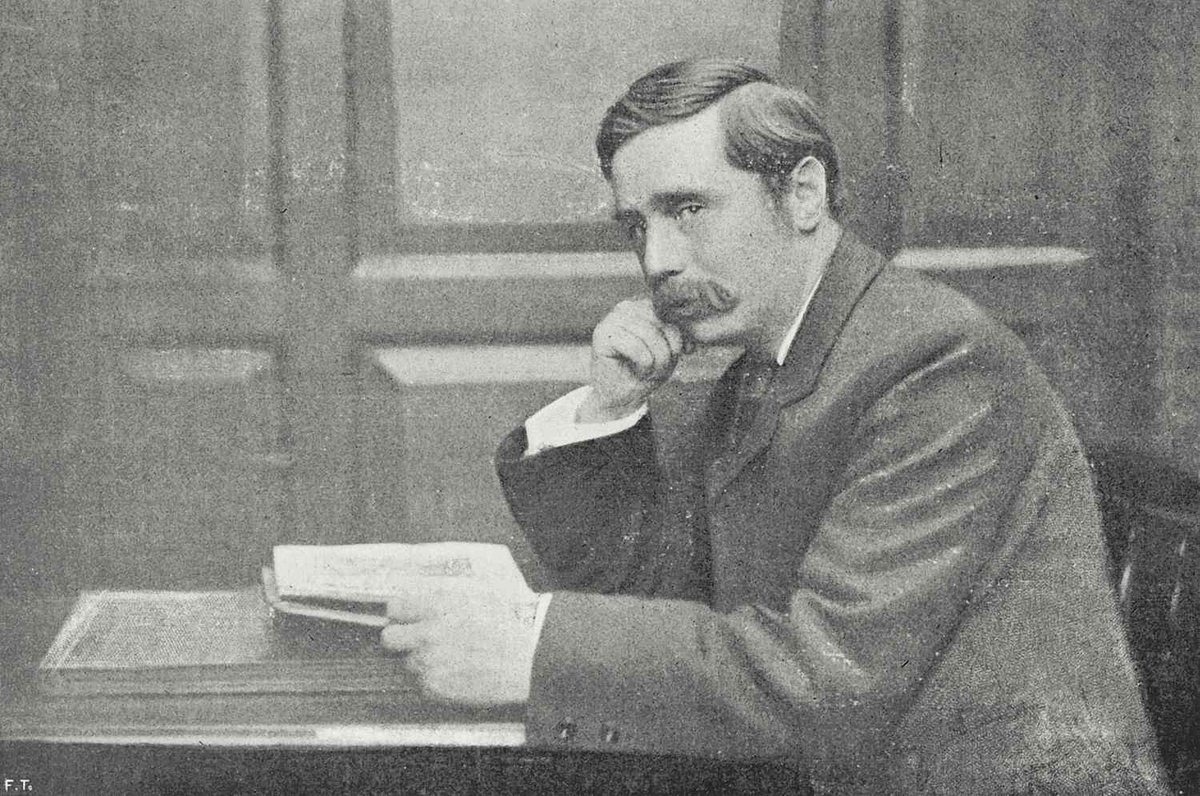
H.G. Wells’ The War of the Worlds inspired the ending. In Wells’ classic, the Martian invaders are taken down by the viruses in Earth’s atmosphere. Emmerich and Devlin adapted that for modern times with human victory coming in a computer virus.
37/42
37/42


The moment Russell Casse (Randy Quaid) flies his plane into the alien energy beam was different. Originally, he was deemed unworthy to fight & ended up appearing in his biplane with a missile strapped to the wing. Emmerich realised this made no sense, so rewrote the script.
38/42
38/42


The moment the beam backfired, the ship starts to screech. In creating this sound effect, the team used Godfather of Soul James Brown’s famous scream as part of the mix.
39/42
39/42


The huge hype that the film began generating in early 1996 caused Warner Bros. to postpone the release of Mars Attacks! from summer to Christmas. And even Steven Spielbergtemporarily cancelled his plans to direct War of the Worlds.
40/42
40/42


The film was a humongous hit. On a budget of $75m, it grossed $817.4m at the box office, at the time second only to Jurassic Park.
41/42
41/42


To finish on Independence Day, some great behind the scenes pics…
42/42
42/42


If you liked this thread, please RT the opening tweet…
https://x.com/ATRightMovies/status/1808793808303210895
Our latest podcast is on THE SOCIAL NETWORK. Full of big laughs and opinions, please give it a listen
alltherightmovies.com/podcast/the-so…
alltherightmovies.com/podcast/the-so…
• • •
Missing some Tweet in this thread? You can try to
force a refresh