1/15≫ Dr. Belch (why oh why isn't she a gastroenterologist?) seems not to recognize the significance of the story.
Climate activists predicted that if Earth's average temperature got to 1.5°C above the pre-industrial (late Little Ice Age) baseline it would be a disaster. But they did, and nothing bad happened.
The significance of that is that it means the climate activists were completely wrong.
Climate activists predicted that if Earth's average temperature got to 1.5°C above the pre-industrial (late Little Ice Age) baseline it would be a disaster. But they did, and nothing bad happened.
The significance of that is that it means the climate activists were completely wrong.
2/15≫ In case you're wondering, the 4 known factors which caused 2023 to be so mild were:
1. A strong El Niño spike. And
2. IMO 2020 shipping regulations drastically reduced sulfate aerosol air pollution (The IMO says they resulted in "an estimated 46% decrease in ship-emitted aerosols," which equates to a sudden 10% decrease in total global SO2 emissions, which is a large improvement in a short time, with a significant warming effect). And
3. The unusual 2022 Hunga Tonga eruption, which humidified the stratosphere. And
4. Also a little bit of warming from the ongoing slow rise in atmospheric CO2 levels (though only about 25 ppmv/decade).
It's all good, though (unfortunately) #1 & #3 are temporary.
1. A strong El Niño spike. And
2. IMO 2020 shipping regulations drastically reduced sulfate aerosol air pollution (The IMO says they resulted in "an estimated 46% decrease in ship-emitted aerosols," which equates to a sudden 10% decrease in total global SO2 emissions, which is a large improvement in a short time, with a significant warming effect). And
3. The unusual 2022 Hunga Tonga eruption, which humidified the stratosphere. And
4. Also a little bit of warming from the ongoing slow rise in atmospheric CO2 levels (though only about 25 ppmv/decade).
It's all good, though (unfortunately) #1 & #3 are temporary.
3/15≫
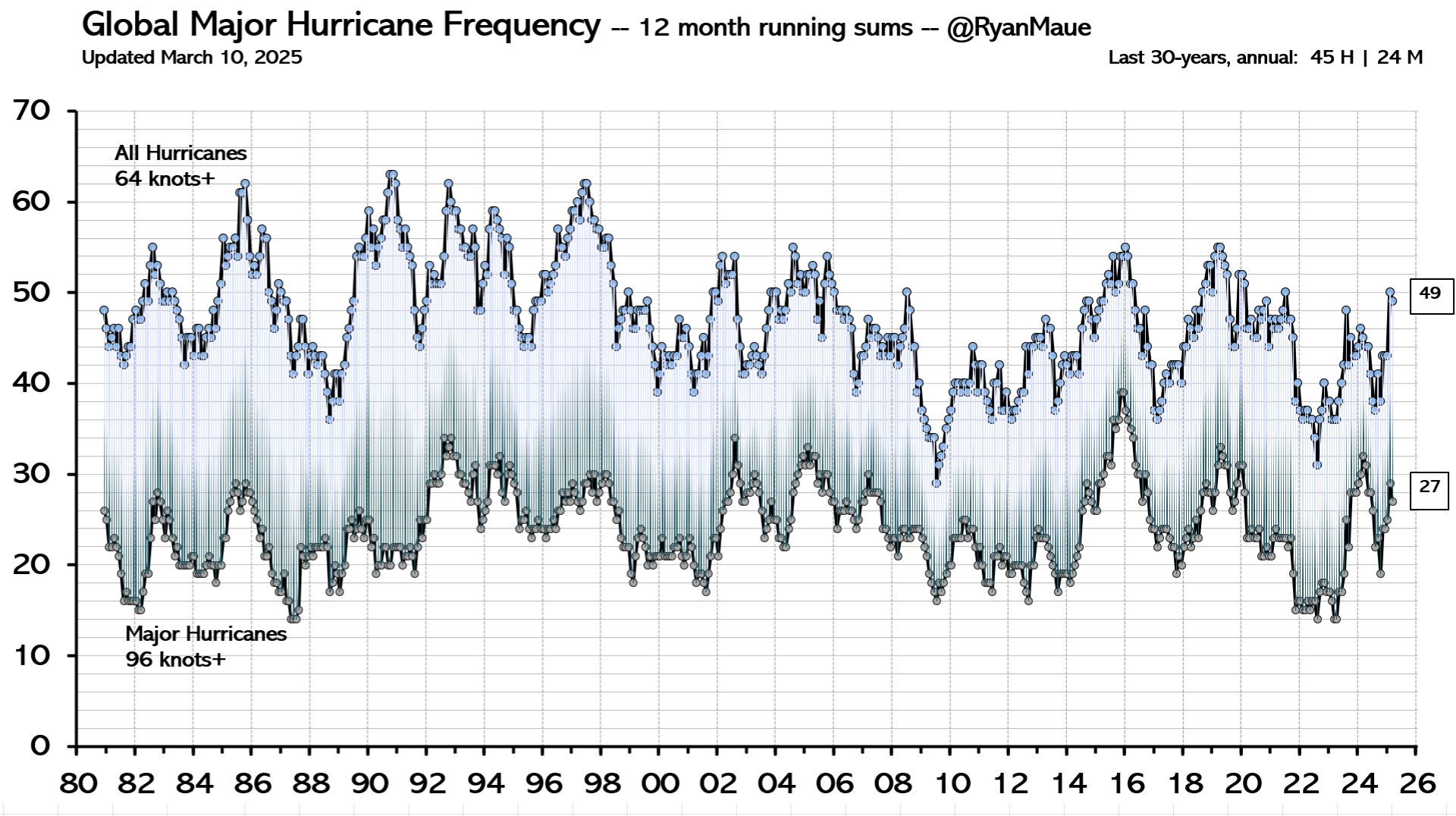
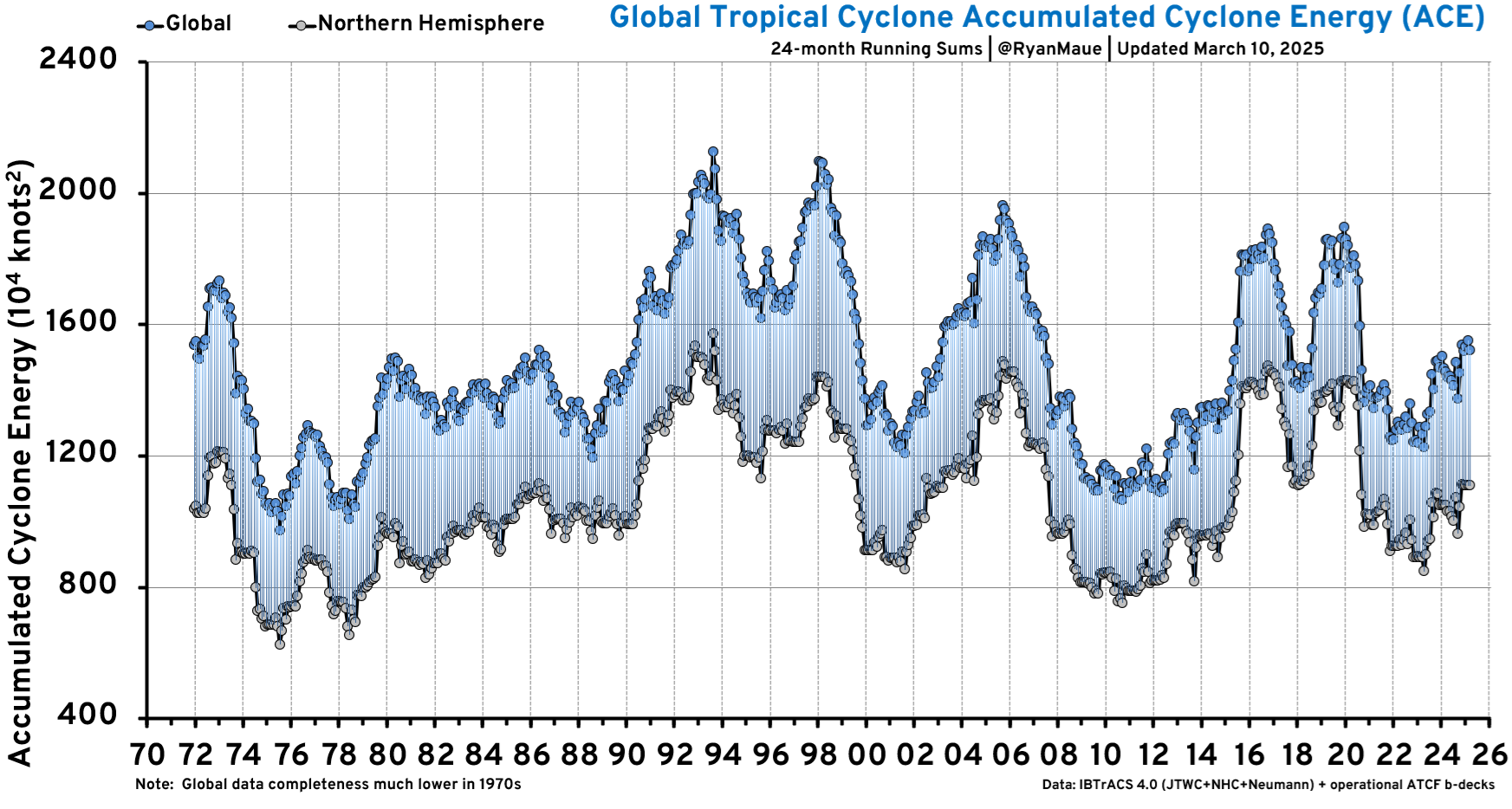
Q: And what was the result of all that warmth?
A: Nothing. Nothing bad, anyhow.
We still get storms, but they're no worse than in the past.
sealevel.info/learnmore.html…
Q: And what was the result of all that warmth?
A: Nothing. Nothing bad, anyhow.
We still get storms, but they're no worse than in the past.
sealevel.info/learnmore.html…
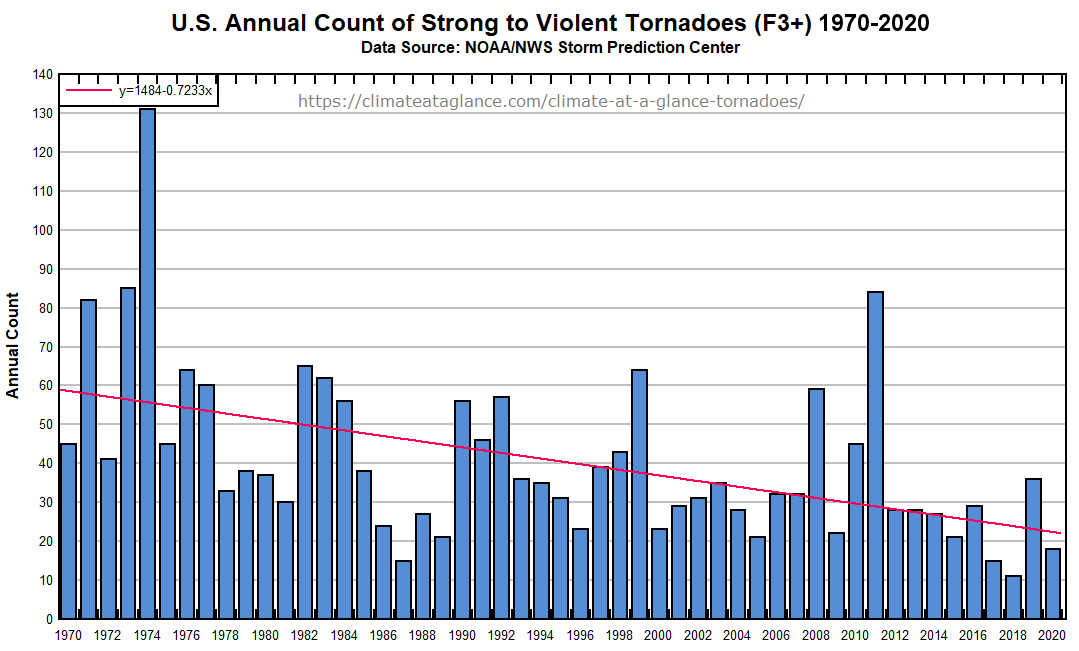
4/15≫ In fact, some categories of storms have decreased.
climateataglance.com/climate-at-a-g…
climateataglance.com/climate-at-a-g…
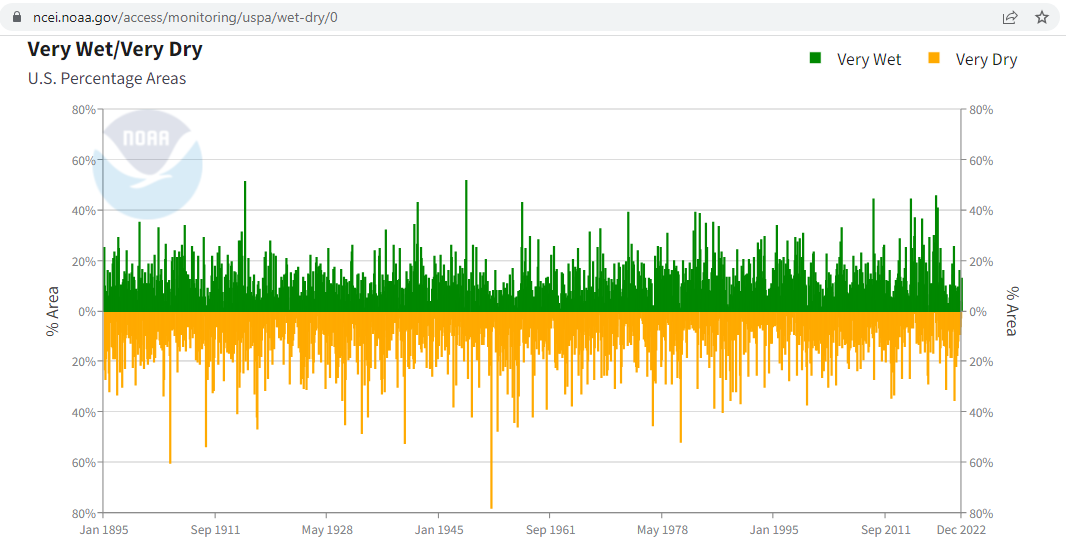
5/15≫ Although droughts still happen, drought impacts are reduced, because elevated CO2 levels make plants more water-efficient and drought resilient. Refs:

https://x.com/ncdave4life/status/1803182387733602496

6/15≫ Along with improved crop yields from "CO2 fertilization," that has greatly improved global food security and decreased famine risk. Global crop yields are near or above all-time records. Refs:
ourworldindata.org/crop-yields
sealevel.info/ourworldindata…
ourworldindata.org/crop-yields
sealevel.info/ourworldindata…

7/15≫ Thanks to mild 2022-23 and 2023-24 winters, Germany got by without needing Russian gas — which is a very good thing, since they can't get it anymore.
brookings.edu/articles/how-d…
brookings.edu/articles/how-d…
8/15≫ Coastal sea-level trends are about the same as they were seventy years ago (i.e., very slow/slight).
sealevel.info/learnmore.html
sealevel.info/learnmore.html
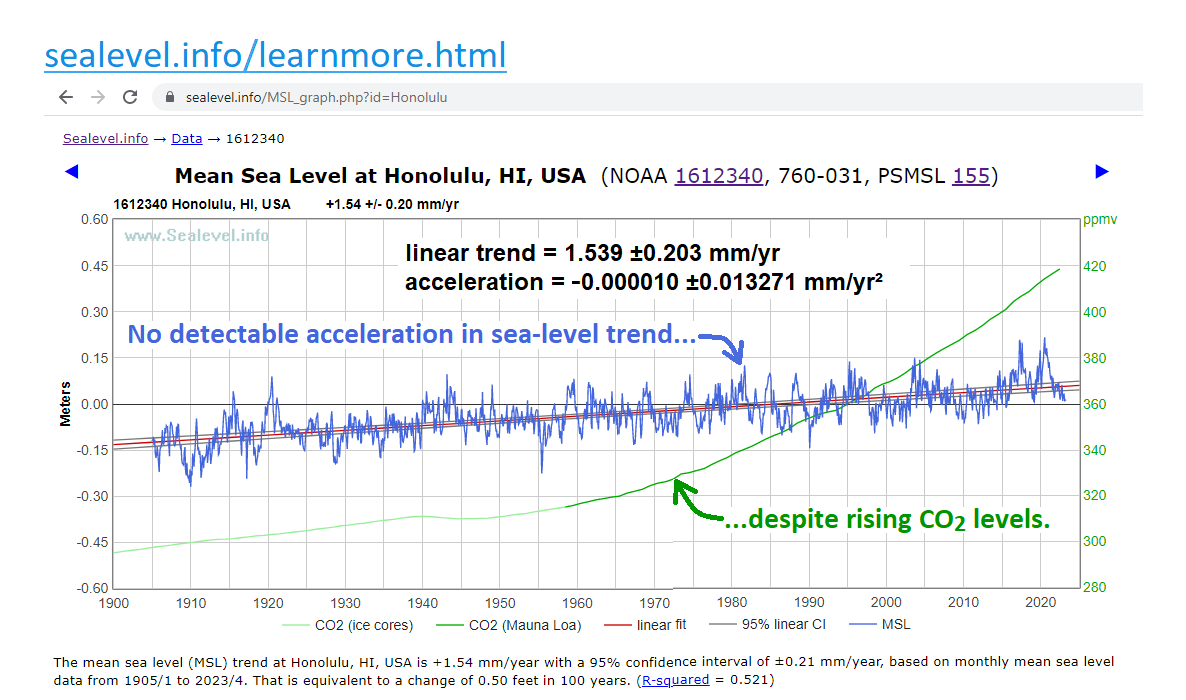
9/15≫ Honolulu is arguably the best quality sea-level measurement record in the world. It's near the middle of the world's largest ocean. It has 119 years of continuous measurements, from a near ideal location, without even a single missing month of data. It shows:
Linear trend = 1.54 ±0.20 mm/yr (6 inches/century)
Acceleration = 0.000 ±0.013 mm/yr² (perfectly linear)sealevel.info/MSL_graph.php?…
sealevel.info/1612340_Honolu…
Linear trend = 1.54 ±0.20 mm/yr (6 inches/century)
Acceleration = 0.000 ±0.013 mm/yr² (perfectly linear)sealevel.info/MSL_graph.php?…
sealevel.info/1612340_Honolu…

10/15≫ Note that there's been no detectable acceleration in the sea-level trend there. That's typical: some long measurement records show negligible acceleration, and others show none at all.
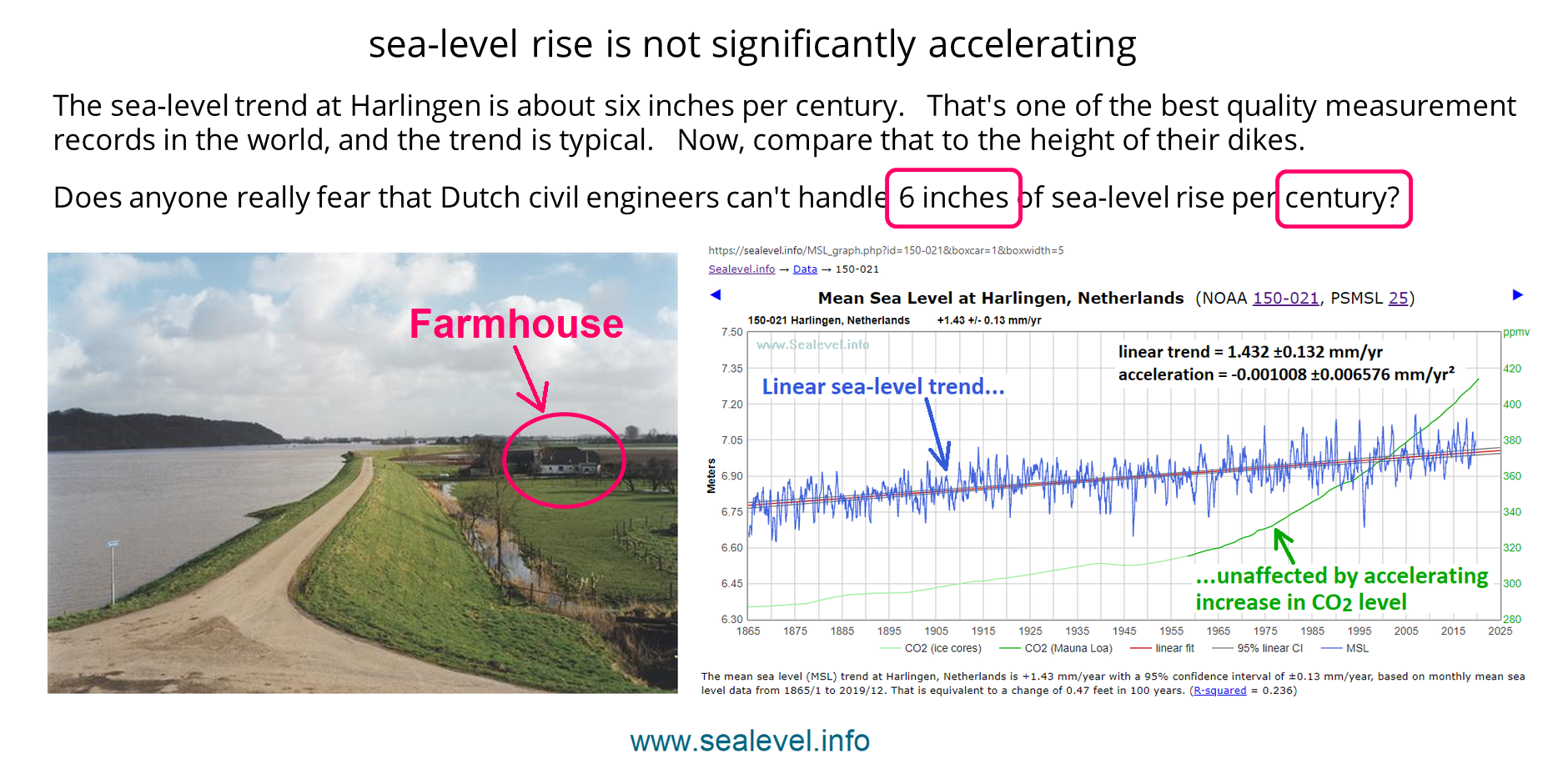
Here's a Dutch measurement record with 158 years of continuous data!
sealevel.info/MSL_graph.php?…
sealevel.info/Dutch_dike_vs_…
Here's a Dutch measurement record with 158 years of continuous data!
sealevel.info/MSL_graph.php?…
sealevel.info/Dutch_dike_vs_…

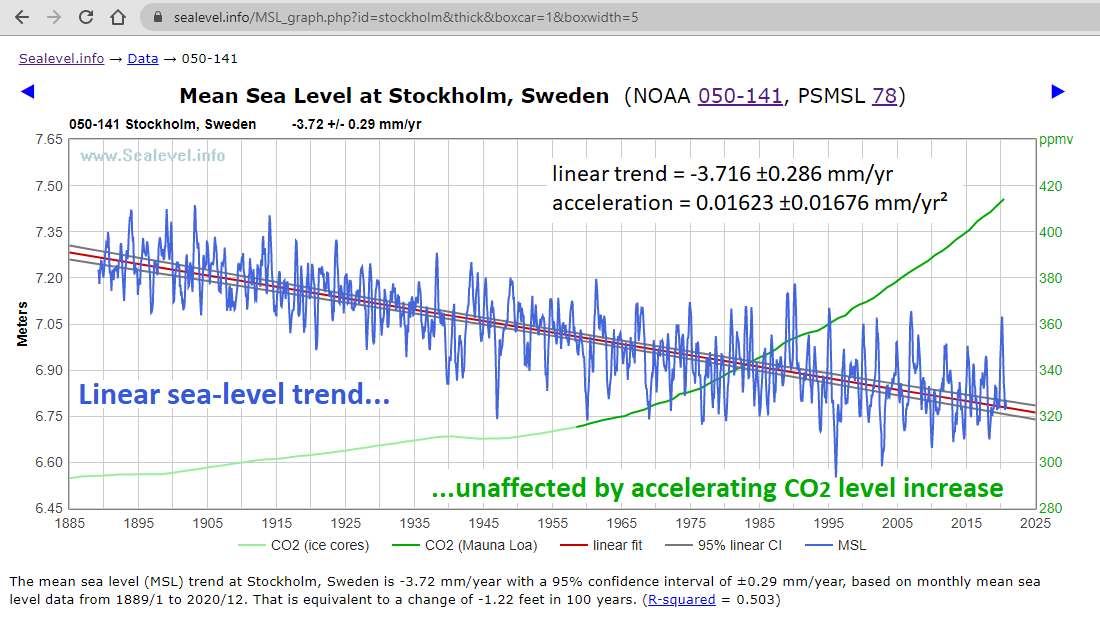
11/15≫ In fact, the "global" (average) coastal sea-level trend is so slight & slow that in many places it is dwarfed by local factors, like erosion, sedimentation, and/or vertical land motion. @GretaThunberg's hometown of Stockholm is one such place.
sealevel.info/MSL_graph.php?…
sealevel.info/050-141_Stockh…
sealevel.info/MSL_graph.php?…
sealevel.info/050-141_Stockh…

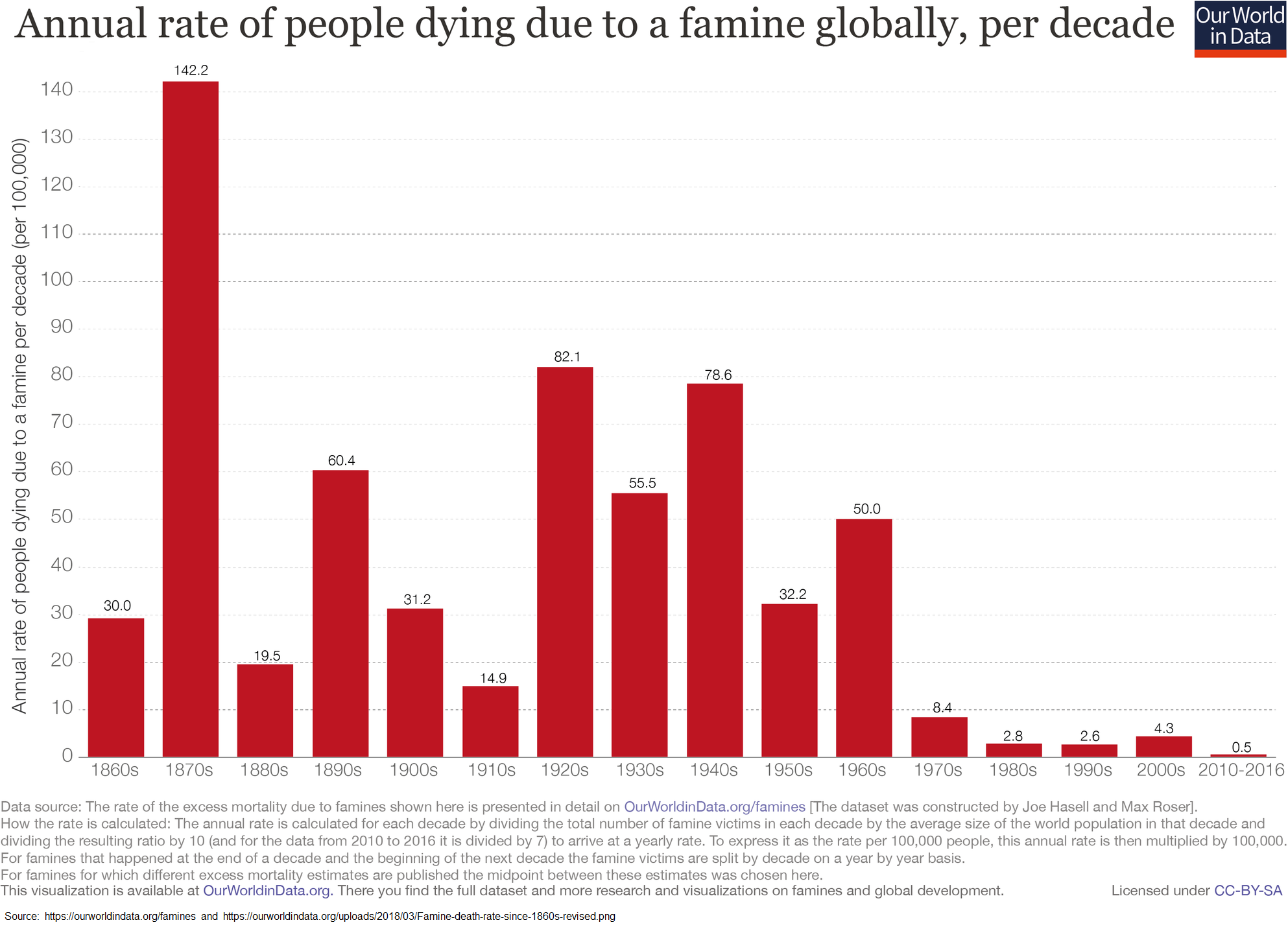
12/15≫ The one really important change due to carbon emissions is a monumentally important improvement over the the last half century or so: the end of catastrophic famines.
References:
sealevel.info/Famine-death-r…
References:
https://x.com/ncdave4life/status/1803182867402596772
sealevel.info/Famine-death-r…

13/15≫ That's right: catastrophic famines are fading from living memory, for the very first time. For all of human history, famine (usually caused by drought) was one of the great scourges of mankind, the Third Horseman of the Apocalypse — until now!
https://twitter.com/ncdave4life/status/1326372060445237248

@GretaThunberg 14/15≫ If you're too young to recognized what a miracle that is, count yourself blessed. In large part because of elevated CO2 levels, catastrophic famines no longer happen.
https://twitter.com/ncdave4life/status/1753786160399229149
15/15≫ To understand a highly politicized issue like climate change, you need balanced information. I'm here to help:
It has:
● accurate introductory climatology information
● in-depth science from BOTH skeptics & alarmists
● links to balanced debates between experts on BOTH sides
● accurate information about climate impacts
● links to the best blogs on BOTH sidessealevel.info/learnmore.html…
It has:
● accurate introductory climatology information
● in-depth science from BOTH skeptics & alarmists
● links to balanced debates between experts on BOTH sides
● accurate information about climate impacts
● links to the best blogs on BOTH sidessealevel.info/learnmore.html…
@GretaThunberg Compilation:
@ThreadReaderApp @Rattibha @threaddotblue unroll
@reSeeIt save threadtwitter-thread.com/t/181068876064…
@ThreadReaderApp @Rattibha @threaddotblue unroll
@reSeeIt save threadtwitter-thread.com/t/181068876064…
• • •
Missing some Tweet in this thread? You can try to
force a refresh