There's been a meme running around showing solar carports. Usually, the "take" is we should be installing solar carports instead of using farmland for solar. Here's the thing: no one is stopping you from installing solar carports. So why don't we do it more often? A thread...
First, parking lots are unusual things. They can be privately owned (a landlord), or publicly owned (city/school/etc.). Public owned lots/garages have to get budget line items through local/state appropriations. Private can go quicker, but still need permits, etc.
Next, regardless of parking lot ownership type, if the lot owner doesn't have a way to use the solar (like a net meter agreement with a utility), or access to a wholesale market (being able to sell directly into the grid), they won't recoup their costs.
Net metering policies have been under attack in the U.S. Many states have a cap on the size a project can be, usually well less than 100 kilowatts. That may be enough for maybe 10 houses. That ain't nothing, but we're not powering the U.S. economy with that.
Additionally, carports are estimated to cost upwards of $4 per watt. A rooftop system may cost just $2.5 per watt. Meanwhile, a large "farm" based system may only cost $1 watt. Carports must be tall for vehicles, tearing up asphalt is more expensive than dirt. More work and materials.
There are side benefits to carports - increased shading, happy customers. But there's not great ways for the lot owner to monetize these benefits.
About 3 million acres of parking lots exist in the U.S. It may take 20 acres of parking lots for 1 megawatt of solar. If 100% of parking lots were covered with solar, that'd be 148,187 MW. The U.S. uses 10x that amount of power - 1.3 million MW. We need more power.
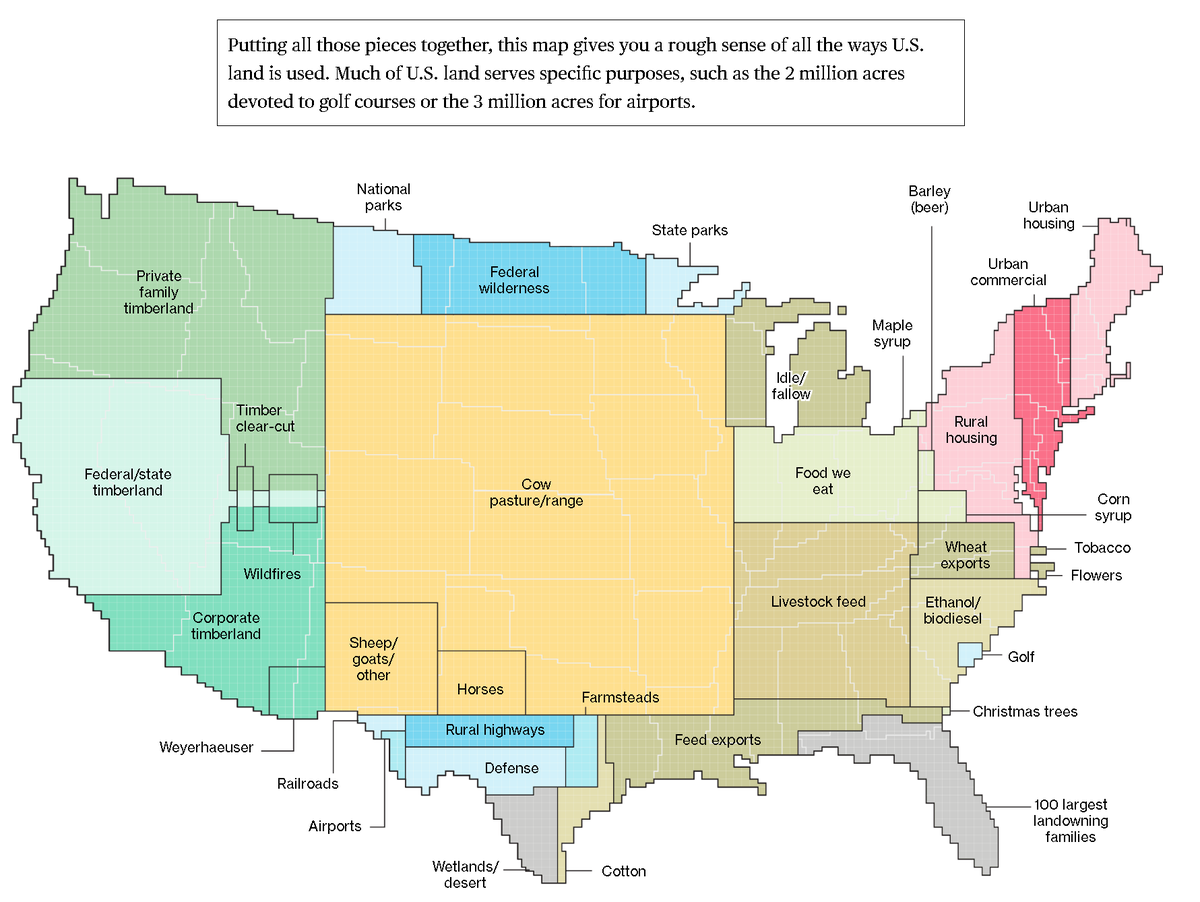
Meanwhile, 38 million acres of farmland is used for corn ethanol - fuel. Acreage that requires tons of fertilizers, herbicides, gasoline for harvesting, etc. We're romanticizing farmland. It ain't pure/small.10x more land is used for ethanol production than for parking lots!
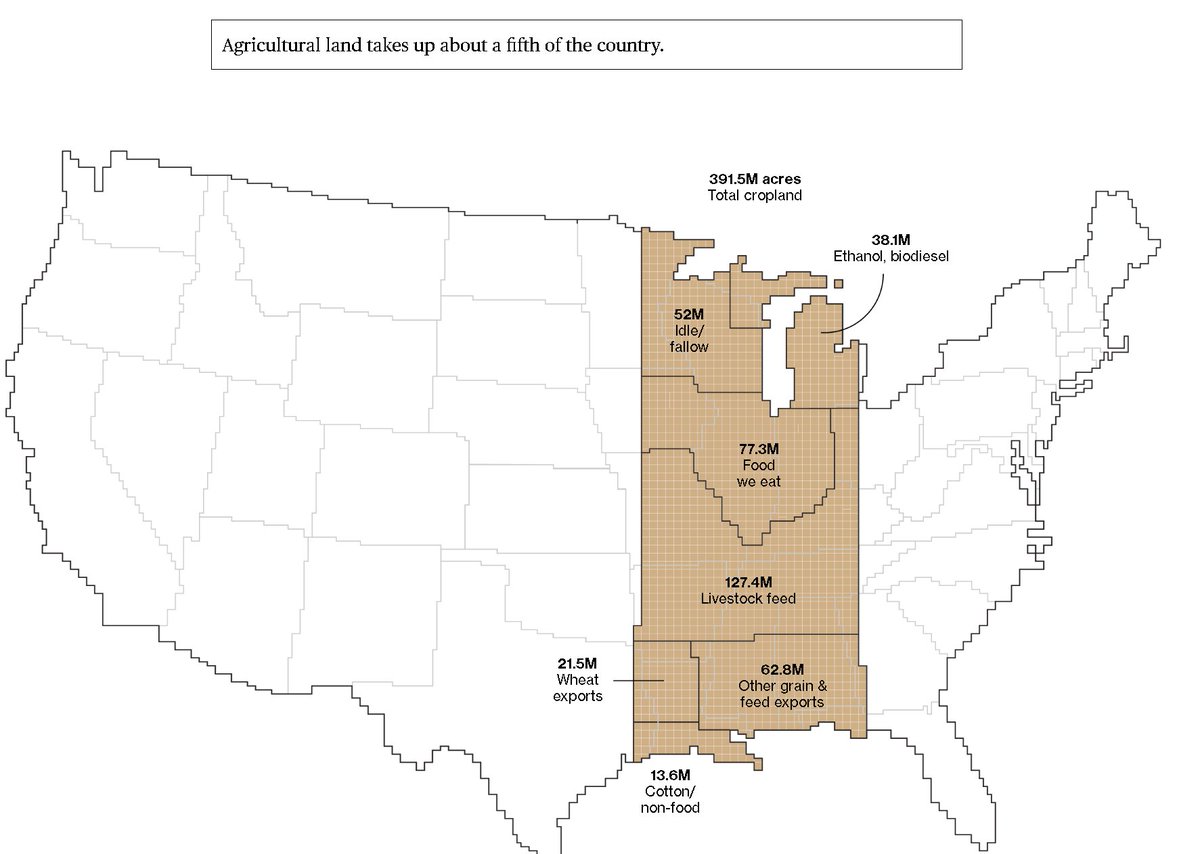
Don't misread me: carports are great, but their usefulness is highly, highly specialized. We won't power the U.S. with parking lots. Farmland is private property, and the local owners are voluntarily leasing/selling their land. It's a better deal for them.
Back to the meme...the "let's do carports instead of farms" is from solar opposition groups. They're not actively advocating FOR carports. Given the opportunity, they'd oppose carports too (eyesore! subsidies! poison!). These aren't serious clean energy people.
This is all Nirvana Fallacy: that unless something is perfect, it should be opposed. Instead, I propose we let the markets work, let private property owners do with their property as they wish, while also pushing for improvements. This isn't this/that, it's yes/and. /fin
• • •
Missing some Tweet in this thread? You can try to
force a refresh

Some argue data centers should pay 100% of their own transmission costs. Sounds fair on the surface — but that’s not how our electric system was built. Transmission has always been socialized across customers and classes. In defense of data center transmission cost allocation.🧵
Data centers are new. Cost allocation isn't. 100 yrs ago, Samuel Insull pioneered cost allocation by spreading fixed costs across users. That’s how electricity became affordable and universal — economies of scale. Resi pays most, then commercial, then industry the lowest rate.
Industrial, commercial, and residential customers don't each build their own wires and plants. Costs are pooled. Rate classes balance out peaks and valleys in use, keeping the grid reliable and prices stable for everyone. Today, "cost of service" studies underpin our rates.
What tax credits are disappearing, and when?
or
When should you buy your heat pump, water heater, battery, solar, EV?
or
How to avoid taxes, because no one likes taxes, except Congress who is raising taxes on good things so buy quick
An HR1, Big Beautiful Bill Summary thread
SEC. 70501. TERMINATION OF PREVIOUSLY-OWNED CLEAN VEHICLE CREDIT. Section 25E(g) is amended by striking ‘‘December 31, 19 2032’’ and inserting ‘‘September 30, 2025’’.
Buy a used EV for $4k off by Sept. 30th.
SEC. 70502. TERMINATION OF CLEAN VEHICLE CREDIT. (a) IN GENERAL.—Section 30D(h) is amended by striking ‘‘placed in service after December 31, 2032’’ and inserting ‘‘acquired after September 30, 2025’’.
The vast majority of Americans support wind power. Just 4% have “strongly unfavorable” opinions of wind energy. One of the most commonly used arguments against wind energy is that wind turbines are too big, or use too many resources. Compared to what? A thread...
Here is a modern scale 2 megawatt (MW) wind turbine: One of these turbines has an annual energy output of 7,200 megawatt hours (MWh).
The average household uses about 12 MWh of electricity a year. So, a single 2MW wind turbine can power approximately 600 homes annually!
The National Association of Regulatory Utility Commissioners put out a statement on the new FERC Order 1920: they're big mad. Who is this group, why are they upset? Here's a brief thread...
NARUC is a 501c4 nonprofit group that represents "the state public service commissions who regulate the utilities that provide essential services". PSC's are the state regulators for electric utilities. NARUC is the United Nations of state Public Service Commissions.
In response to Order 1920, NARUC (the umbrella org of state PSCs) issued a statement saying the org is "generally disappointed by the significantly diminished state role...we hope there will be future opportunities to ensure that state voices are heard." ..pubs.naruc.org/pub/B5974FE8-F…
You've probably heard about Georgia Power's incredible load growth and their plans to add more gas power plants. Today, intervening parties, including SREA, filed testimony in the docket. Let's do a thread but start with some background... psc.ga.gov/search/facts-d…
Georgia Power files an IRP every three years, with the last filed in 2022. There the company was approved to add 2.1 GW of new renewables, 500 MW of batteries, and some coal retirement decisions were delayed until the '25 filing.
The IRP process concluded in July '22. In August '22, the Inflation Reduction Act passed (to everyone's surprise). In November '22, ChatGPT was released. Georgia Power started getting flooded with new economic development requests. Now they're projecting they're short. Soon.
This new report from Grid Strategies, led by @Wilson_Energy, is shocking. Load growth projections are skyrocketing all across the country, and especially in the southeast. What's going on? A thread... gridstrategiesllc.com/wp-content/upl…
Increased new industrial load, data center growth, electrification, extreme weather events, and future growth (e.g., hydrogen) are leading the investments. AI is a hungry industry.
The southeastern US is experiencing huge growth across all sectors. A lot of folks have heard of Georgia Power's latest IRP showing load growth of 6,600 MW. The question I often get: Is it real? As states restrict growth, GA hasn't been. Water flows downhill.



