Explaining the cycling iceberg: Froome waits for Wiggins and gets mad. 1/25
#cyclingiceberg

#cyclingiceberg


Bradley Wiggins (Sky) was the man to beat in the 2012 Tour.
The Briton started his career as a track rider. He had success on the velodrome. He won multiple world & olympic titles in the Individual pursuit, Team pursuit & Madison. 2/25
The Briton started his career as a track rider. He had success on the velodrome. He won multiple world & olympic titles in the Individual pursuit, Team pursuit & Madison. 2/25


In 2005 Wiggins started taking road more serious. Before he had mainly raced the classics, but he started focusing on GT GCs. Backed by a strong TT, he finished 4th (later 3rd) in the 2009 Tour de France. In 2011 he ended 3rd (later 2nd) in the Vuelta. 3/25


In 2012 Wiggins was dominant all season. He won Paris-Nice, Tour de Romandie & the Criterium du Dauphine.
His main rivals for the tour were 2011 winner Cadel Evans (BMC), Jurgen Van den Broeck (Lotto) & Vincenzo Nibali (Liquigas). 4/25
His main rivals for the tour were 2011 winner Cadel Evans (BMC), Jurgen Van den Broeck (Lotto) & Vincenzo Nibali (Liquigas). 4/25

A final outsider was Wiggins' teammate Chris Froome. Froome's career followed a remarkable trajectory. Until summer 2011 he had no results. He was at risk of losing his ride at Sky & only got added to the Vuelta startlist as last minute replacement for Lars Petter Nordhaugh. 5/25


Froome was flying uphill in the Vuelta. When Wiggins exploded in the final week, he took over team leadership. He came 13s short of winning, but winner Cobo got scrapped for doping. It was later revealed Froome had previously suffered from schistosomiasis. 6/25


Froome was again a domestique for Wiggins in the 2012 tour, but Froome had reservations about his leader. He didnt publicly state them, but he later said he had a hard time trusting Wiggins after his bonk in the Vuelta. Froome had worked for Wiggins whilst in the GC lead. 7/25


Wiggins started the Tour well. He finished 2nd in the short prologue through the streets of Liege. Froome also did well, ending 11th. The next day Froome however had a puncture and lost 1.25. Froome also crashed in the 3rd stage, but lost no time. 8/25

The first Moutain stage was stage 7 to the Planche Des Belles Filles. The Sky train went to work. Slowly but surely the leading group got reduced. When Froome took over from Richie Porte there were just 5 riders left: Froome, Wiggins, Evans, Nibali & Rein Taaramae (Cofidis). 9/25

The stage was decided in a sprint between those 5 riders. Evans launched with 400m to go. Froome dropped back to 3rd, but had something left despite his work. He flew by Evans & Wiggins to take the stage win. Evans placed 2nd, Wiggins third. 10/25


Wiggins moved into the yellow jersey and added to his lead after the rest day. He set the fastest time in the Stage 9 TT of 40k. He gained 1.40 on Evans & 2.10 on Nibali. Froome ended 2nd in the TT & moved into 3rd in GC. 11/25
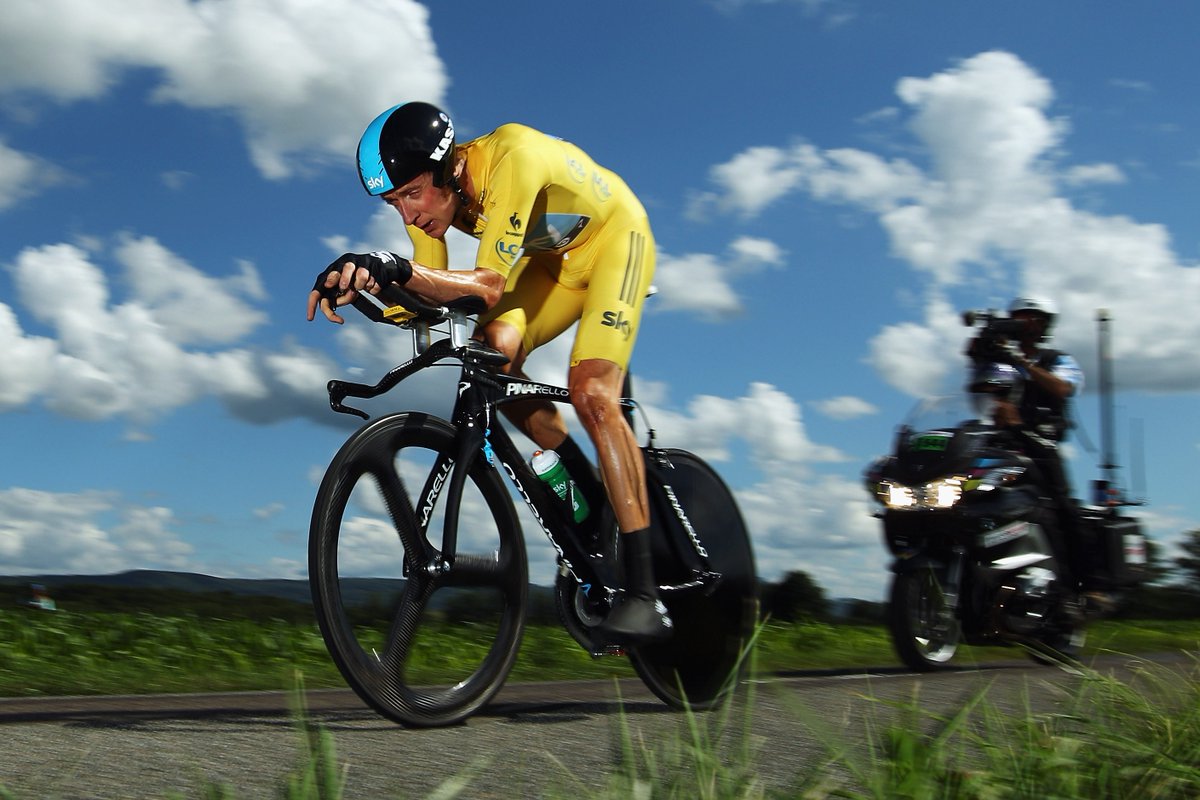
The mountainous 10th stage had little action. Van den Broeck attacked & gained 30s, jumping to 8th in GC. Nibali attacked downhill with Peter Sagan as satellite rider, but to no effect.
Stage 11 was the Queen Stage. It featured the Madeleine, Croix du Fer & Les Sybelles. 12/25
Stage 11 was the Queen Stage. It featured the Madeleine, Croix du Fer & Les Sybelles. 12/25

Being over 2min down, Evans made a move on the Croix du Fer with 60k to go. He bridged up to his teammate Tejay van Garderen, who attacked 2km earlier. Evans made a bad impression. He struggled to follow Van Garderen, before they were brought back by the sky train. 13/25
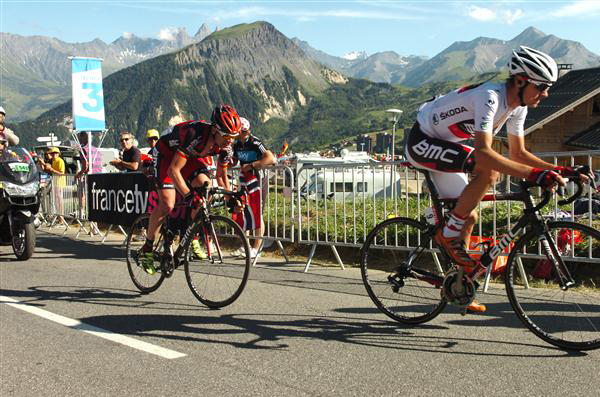

Evans cracked on the final climb. He lost 1.30 & dropped to 4th in GC.
Up Les Sybelles, others put pressure on Wiggo. Nibali attacked as did Thibaut Pinot (FDJ) & Van den Broeck. Wiggins didn't bat an eye, sticking to the wheel of Froome who brought him back to the others. 14/25
Up Les Sybelles, others put pressure on Wiggo. Nibali attacked as did Thibaut Pinot (FDJ) & Van den Broeck. Wiggins didn't bat an eye, sticking to the wheel of Froome who brought him back to the others. 14/25

Froome attacked as soon as the Nibali group was caught. Froome attacked his own team leader, but got team orders to wait since Nibali was dropping Wiggins as well. Froome obeyed and waited for Wiggins to come back. He paced the final 3km & there were no attacks. 15/2


Froome made a statement by sprinting away in the final meters. He was now 2nd in GC, 2.05 behind.
Sky played down the incident, but it caused a media frenzy. Internally, it also caused struggles.
It was later revealed Wiggins texted General Manager Dave Brailsford: 16/25
Sky played down the incident, but it caused a media frenzy. Internally, it also caused struggles.
It was later revealed Wiggins texted General Manager Dave Brailsford: 16/25

'I think it would be better for everyone if I went home'.
Wiggins felt Froome had stabbed him in the back. The agreement was that Foome would only attack in the final 500m, so the position of Wiggins wasn't in danger. 17/25
Wiggins felt Froome had stabbed him in the back. The agreement was that Foome would only attack in the final 500m, so the position of Wiggins wasn't in danger. 17/25

The peloton went into the Pyrenees in stage 14. Spectators had sabotaged the course with carpet tacks. Wiggins neutralized the peloton in an act of sportsmanship. 2 days later Nibali attacked a couple of times, but Froome brought back Wiggins every time. Evans lost 5min. 18/25

Stage 17 to Peyragudes was the final mountain stage. Nibali tried putting pressure on Wiggins in the downhill of Port de Bales, but failed. Sky was simply too strong. On the final climb Froome & Wiggins rode away from the rest. With 3k to go Alejandro Valverde (Movistar)... 19/25

was 45s up the road. Froome wanted to go all out for the stage win. He set a high pace, which a distracted Wiggins couldnt follow.
Froome dropped Wiggins twice, making hand gestures towards him. Valverde won the stage, 18s ahead of Froome & Wiggins. 20/2
Froome dropped Wiggins twice, making hand gestures towards him. Valverde won the stage, 18s ahead of Froome & Wiggins. 20/2


After the stage the partners of Wiggins & Froome bickered on this platform.
Wiggins added to his winnign margin by winning the
final TT. He won the tour by 3.20 on Froome. Nibali was 3rd at 6min. A month later Wiggins became Olympic TT champion. 21/25
Wiggins added to his winnign margin by winning the
final TT. He won the tour by 3.20 on Froome. Nibali was 3rd at 6min. A month later Wiggins became Olympic TT champion. 21/25


Wiggins won the tour thanks to Froome, who felt undervalued. The relationship between the 2 was really bad. Wiggins refused to pay Froome his share of the prize money. In spring 2013 the 2 finally cleared the air. Froome blamed the British tabloids for making things worse. 22/25
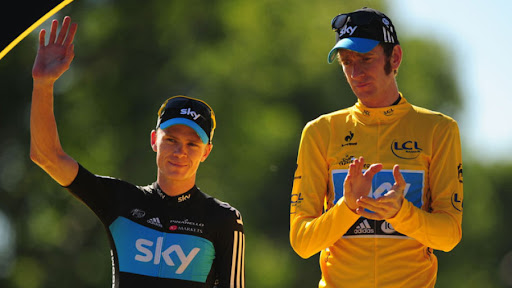

In 2013 Wiggins went to the Giro as leader, but crashed in multiple wet descents. He withdrew from the race. He didn't start the Tour due to an injury.
In the years that followed Wiggins struggled with his status of Tour de France champion. 23/25
In the years that followed Wiggins struggled with his status of Tour de France champion. 23/25

The added pressure meant Wiggo shifted focus away from GTs. He became TT world champion in 2014 & raced spring classics. He set the hour record in 2015 & retired by winning his 5th Olympic gold in 2016, this time on the track. 24/25


For Froome things had just gotten started. The Brit, born in Nairobi Kenya, won the 2013 Tour de France in dominant fashion. In the span of 5 years he would win the Tour de France 4x. He also won the Giro & Vuelta. 25/25
Video:
Video:


Sources: road.cc/content/news/9…
dailymail.co.uk/femail/article…
nrc.nl/nieuws/2012/07…
cyclist.co.uk/news/froome-ad…
theguardian.com/sport/2012/jul…
cyclingweekly.com/news/latest-ne…
eurosport.com/cycling/tour-d…
dailymail.co.uk/femail/article…
nrc.nl/nieuws/2012/07…
cyclist.co.uk/news/froome-ad…
theguardian.com/sport/2012/jul…
cyclingweekly.com/news/latest-ne…
eurosport.com/cycling/tour-d…
• • •
Missing some Tweet in this thread? You can try to
force a refresh