A thread on the origin of the Arvanites.
Covering genetics (3-6), physical anthropology (7-9), how, when and why Greeks were assimilated (10-15) aswell as Albanian revisionism (16)
Covering genetics (3-6), physical anthropology (7-9), how, when and why Greeks were assimilated (10-15) aswell as Albanian revisionism (16)
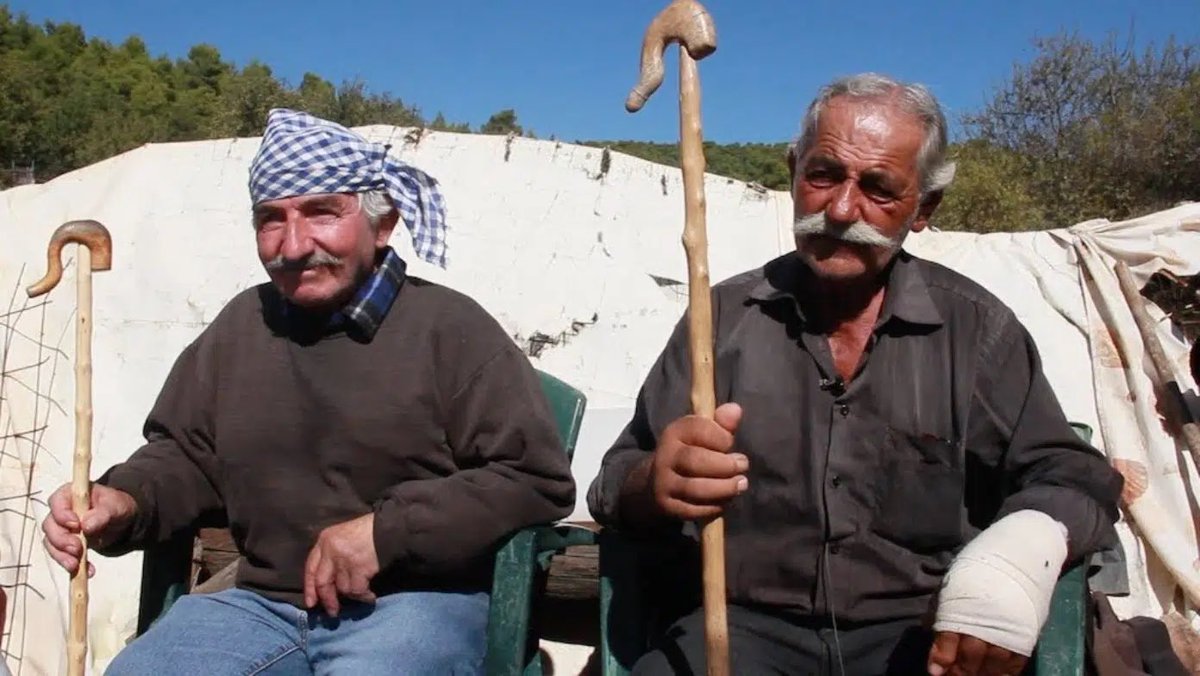
1/ The Arvanites are Albanophone communities that migrated to southern Greece between the 13th and 15th centuries.
They arrived in waves from Epirus and nearby regions, some repopulating deserted areas by invitation and others serving as mercenaries for the Venetians.
They arrived in waves from Epirus and nearby regions, some repopulating deserted areas by invitation and others serving as mercenaries for the Venetians.

2/ By the 15th century, the Venetians estimated 30,000 Arvanites in the Peloponnese.
Many of them fled to Sicily and central Calabria between 1479 and 1534, becoming known as the Arbereshe. These communities were largely Albanized locals of Greece, as will be elucidated next.
Many of them fled to Sicily and central Calabria between 1479 and 1534, becoming known as the Arbereshe. These communities were largely Albanized locals of Greece, as will be elucidated next.

3/ Although they inhabited the Peloponnese for only a few generations, Southern Arbereshe remain almost indistinguishable from their Greek source population.
Three distinct genetic studies highlight this with uniparental markers (Y-, and MtDNA), PCA, and Admixture-like barplots:
Three distinct genetic studies highlight this with uniparental markers (Y-, and MtDNA), PCA, and Admixture-like barplots:

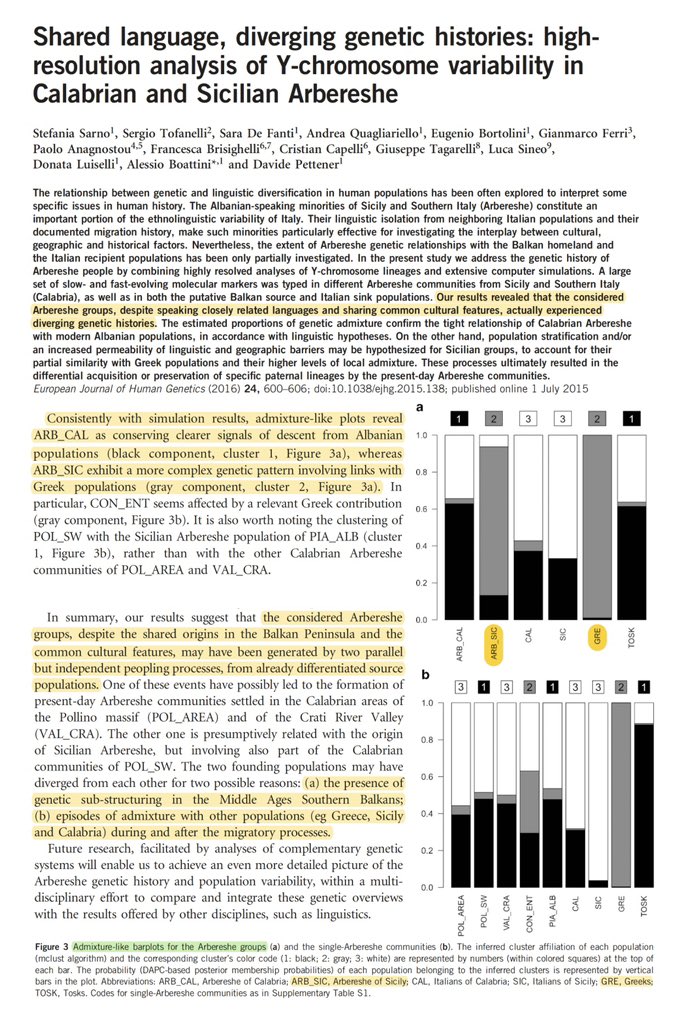
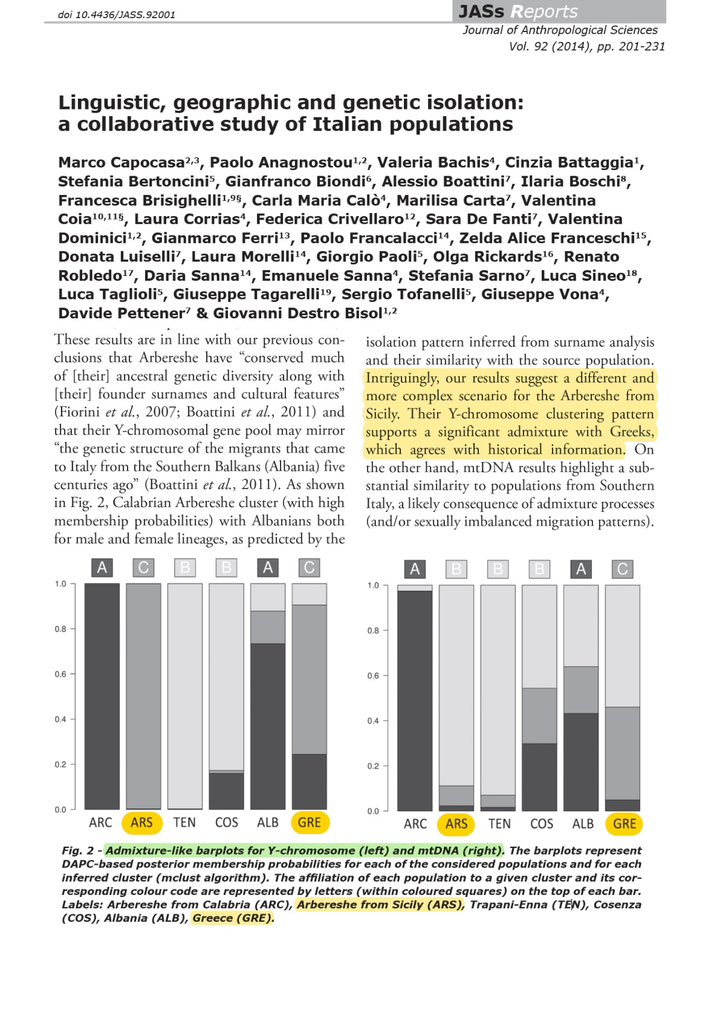
4/ A few generations of presence in the Peloponnese led to significant genetic deviation from Albanians. The Arvanites who stayed further diluted their small and distant Albanian ancestry over the 5 centuries that followed.

5/ We see this in the Arvanites genotyped by Stamatoyannopoulos et al., who show no genetic deviation from their Grecophone neighbours. Instead, they overlap with them and cluster in a continuum with other surrounding Greek subpopulations.


6/ These publicly available samples can be utilized to model and compare Arvanites with modern and ancient populations.
You can read more about this in the post below, which also includes phenotypic data.
You can read more about this in the post below, which also includes phenotypic data.
https://x.com/philosofveritas/status/1784248038073999475?s=46
https://twitter.com/philosofveritas/status/1784248038073999475
7/ The similarities are evident in both genotype and phenotype. While the following data has been well-known by anthropologists, linguistics have dominated interpretations.
Arguments like "they speak Albanian, thus they must be Albanian" have been pervasive among scholars. But…
Arguments like "they speak Albanian, thus they must be Albanian" have been pervasive among scholars. But…


8/ Anthropologists such as Carleton S. Coon, Pittard, and others, conducted cephalofacial measurements of these populations.
They found Albanians to deviate strongly from southern Arbereshe, Arvanites and surrounding Greeks in all aspects of cephalic and facial morphology.
They found Albanians to deviate strongly from southern Arbereshe, Arvanites and surrounding Greeks in all aspects of cephalic and facial morphology.


9/ Meanwhile, Theodoros Pitsios, Antonio Garbiglietti, and Klon Stephanos independently arrived at similar conclusions with their own data.
Note: objective science mandates that data be perfectly replicable, and not only is this the case here, but it agrees with genetics too.
Note: objective science mandates that data be perfectly replicable, and not only is this the case here, but it agrees with genetics too.


10/ The Albanization process began around the 12th century when Albanians infiltratrated Epirus and coastal central Albania. Greek communities in the north persisted at least as late as the 14th century however, as evident by two Irish pilgrims who passed through Durres in 1322.


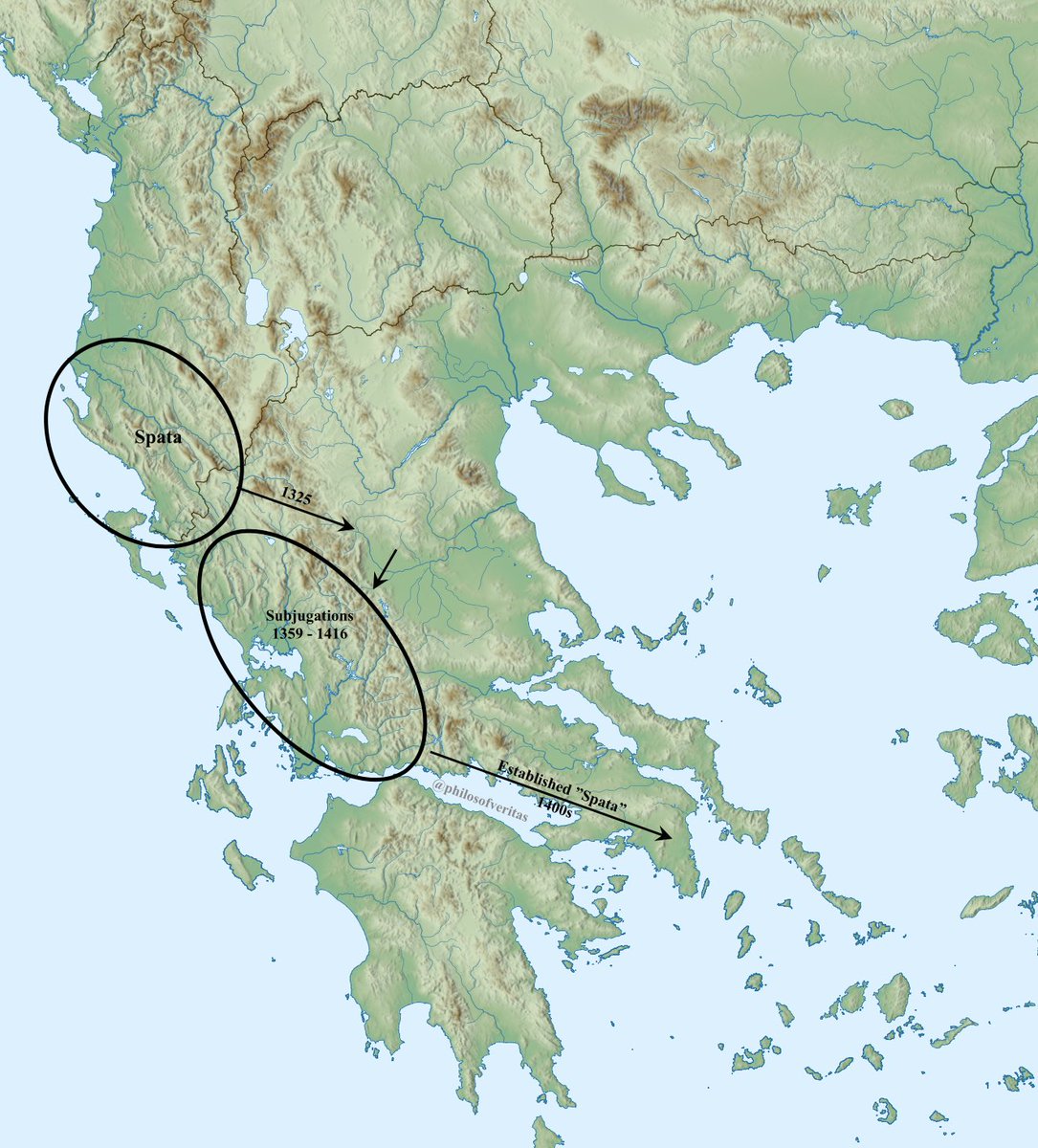
11/ The second phase of assimilation and adoption of Albanian unfolded through subjugation, as Byzantine Greek territories, as far south as Aetolia, fell under Albanian noble rule in the mid-14th to early 15th centuries, just before the Albanophone migrations into the Peloponnese

12/ The Boua clan, for instance raided Thessaly in the 14th century. They subjugated and ruled Aitoloakarnania and Arta from the 1360s to 1416, and appeared in Venetian territories in the Peloponnese by 1423. After the Ottoman conquest in 1479, they fled and settled in Italy.

13/ The Spata clan raided Thessaly in 1325, subjugated and ruled western Greece from 1359 to the late 1410s, and finally founded the village of Spata in Attica.
A notable native is Takis Tsoukalas, who, like the rest of the town’s residents, would hardly be mistaken for Albanian
A notable native is Takis Tsoukalas, who, like the rest of the town’s residents, would hardly be mistaken for Albanian

14/ The third phase of Albanization was driven by favourable Ottoman taxation policies for Albanian speakers between 1458/1460 and 1514 in southern Greece.
Similar to the Jizyah, which prompted some to convert to Islam, this policy incentivized some communities to adopt Albanian
Similar to the Jizyah, which prompted some to convert to Islam, this policy incentivized some communities to adopt Albanian

15/ The fourth phase, as described by native Athenian revolutionary Dionysios Sourmelis unfolded as The Hellenes of the villages were compelled to adopt the language of the Arvanites, in order not to face ”the cruel inhumanity of the pillagers”.
For more, see the image below:
For more, see the image below:

16/ Misinformation about the origin of the Arvanites is widespread across all platforms. This includes the Wikipedia article, which contains outright false claims, and urgently requires revision, as well as fabricated medieval Arvanite samples such as:
https://x.com/philosofveritas/status/1662257455022080000?s=46
https://twitter.com/philosofveritas/status/1662257455022080000
17/ Synopsis: The Arvanites descend mainly from local Greeks who, between the 13th-18th centuries, adopted Albanian for various reasons and became bilingual.
Arguments based on "they speak Albanian, thus descend from Albanians" are refuted by genetics and physical anthropology.
Arguments based on "they speak Albanian, thus descend from Albanians" are refuted by genetics and physical anthropology.
• • •
Missing some Tweet in this thread? You can try to
force a refresh