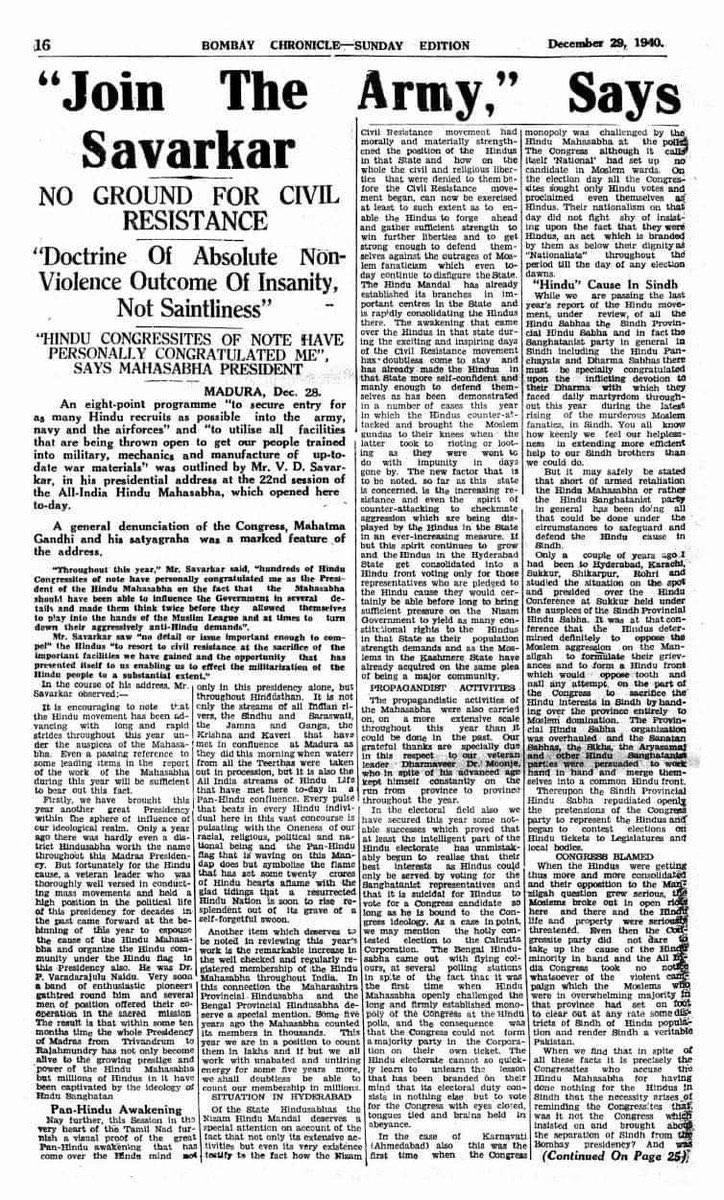
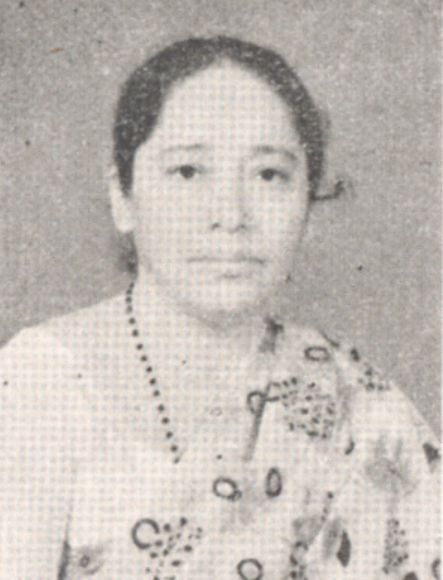
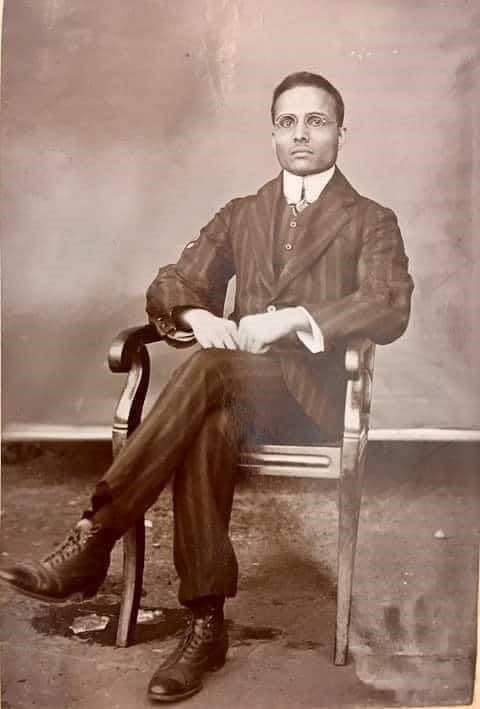
Thread 🧵
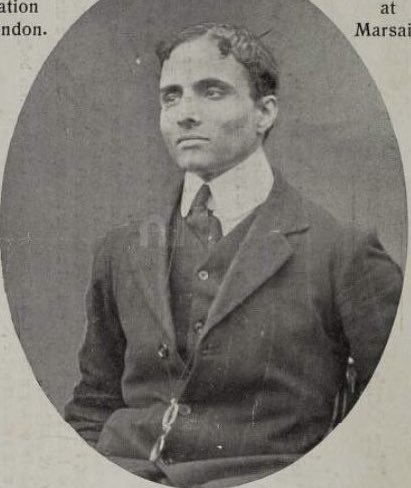
Along with Sir George Sydenham Clarke, the various statements from british officials eventually concludes that Vinayak Damodar Savarkar was "The most dangerous man, India has produced"
Six IB Reports excavated from National Archives, the foremost & authentic source.

Along with Sir George Sydenham Clarke, the various statements from british officials eventually concludes that Vinayak Damodar Savarkar was "The most dangerous man, India has produced"
Six IB Reports excavated from National Archives, the foremost & authentic source.

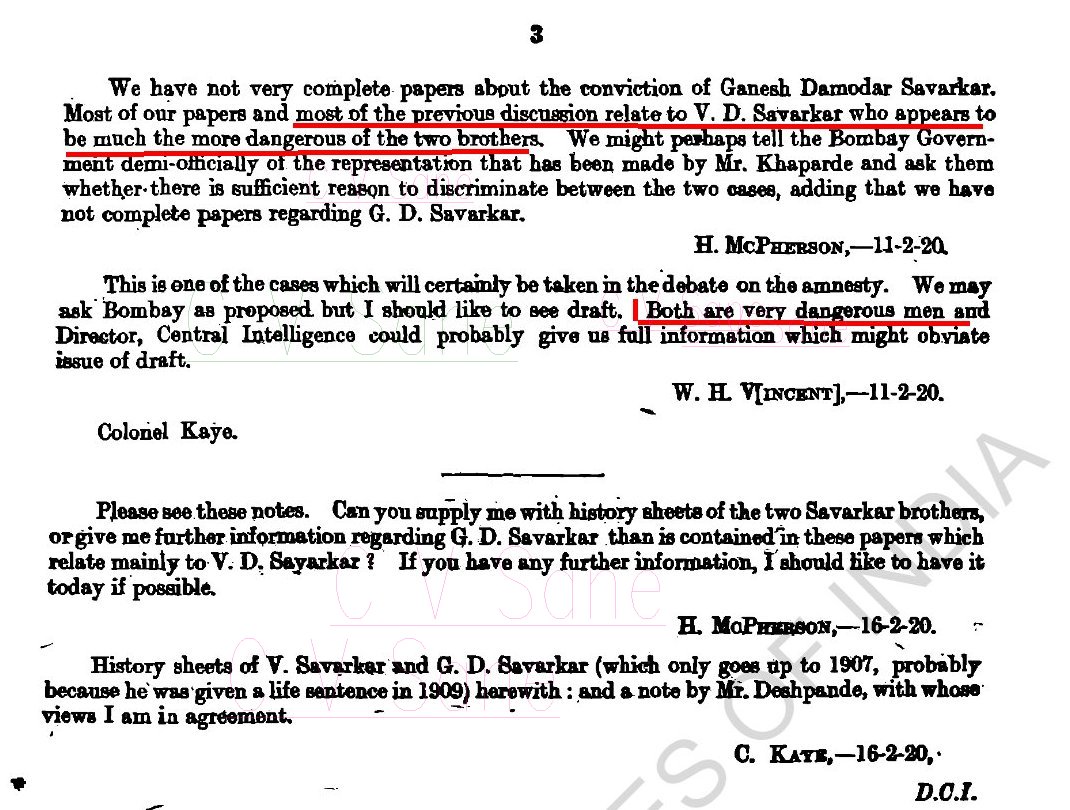
"Most Dangerous" legacy.
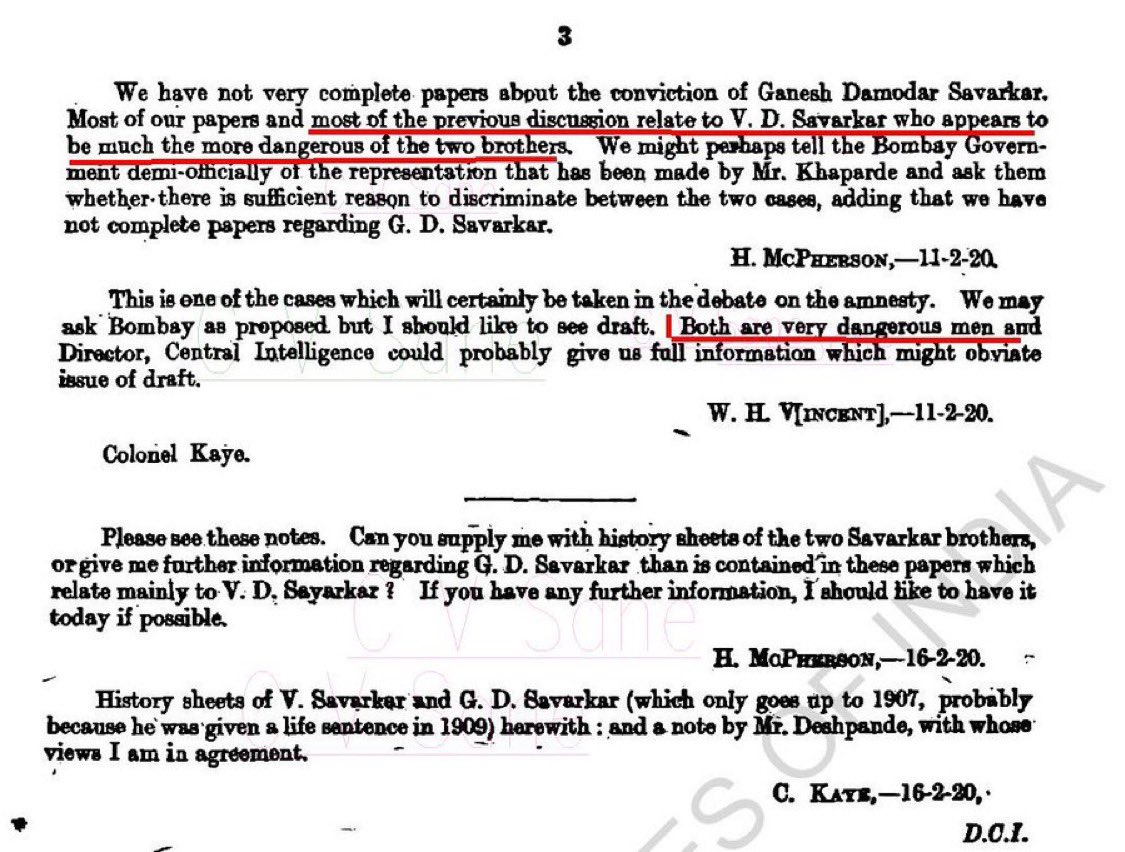
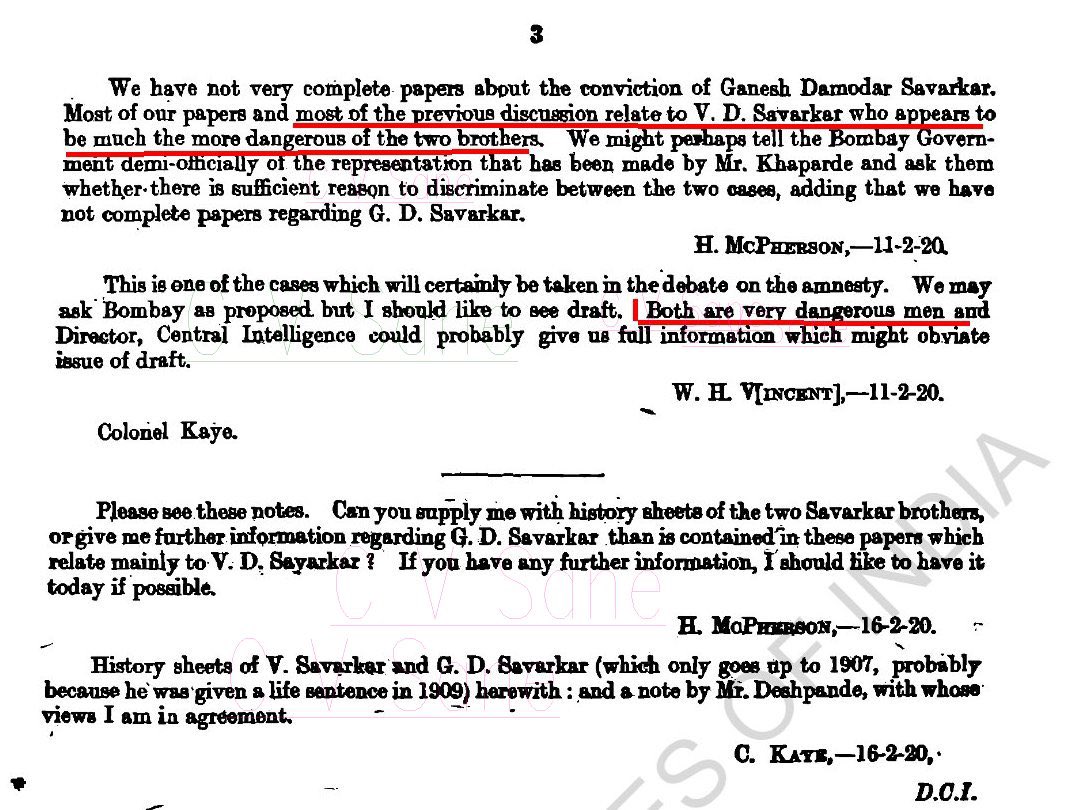
IB report with further testimonies by H. McPherson & W. H. Vincent on 11 Feb 1920 post Lord George Sydenham Clerk (Governor of Bombay)
"Most of our papers & most of the previous discussions relate to V. D. Savarkar who appears to be much more dangerous"
IB report with further testimonies by H. McPherson & W. H. Vincent on 11 Feb 1920 post Lord George Sydenham Clerk (Governor of Bombay)
"Most of our papers & most of the previous discussions relate to V. D. Savarkar who appears to be much more dangerous"
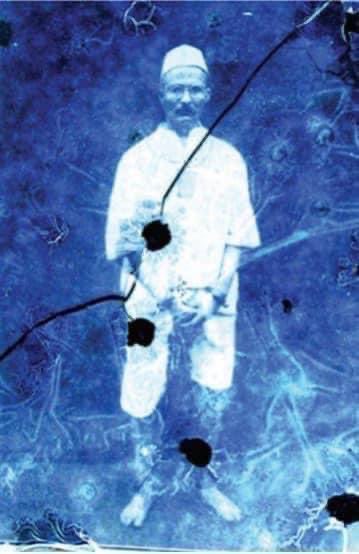
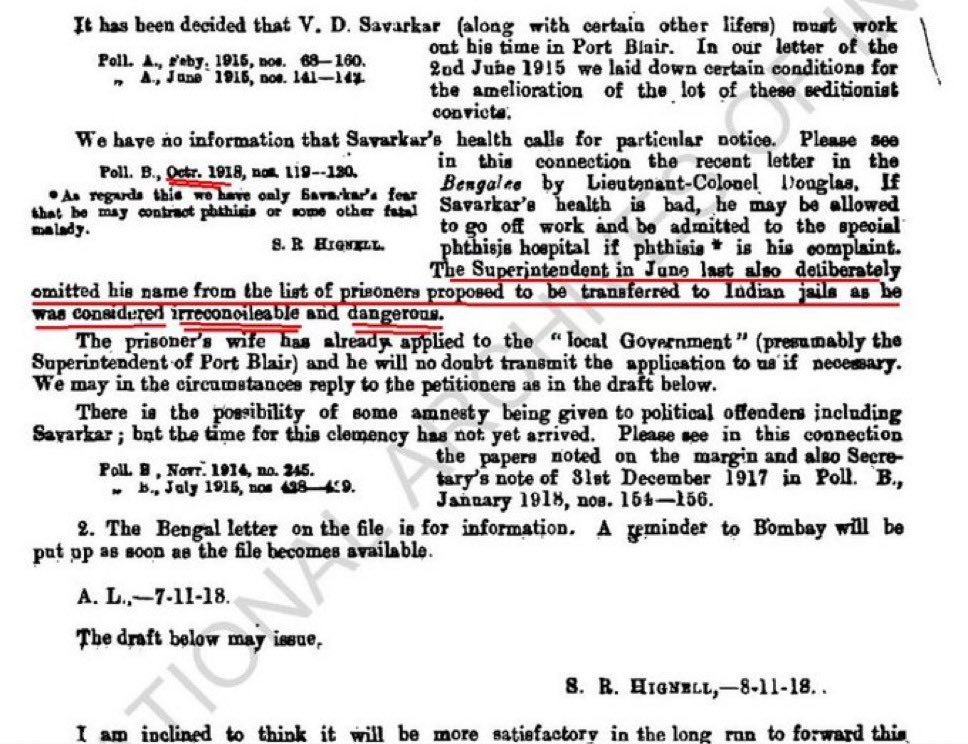
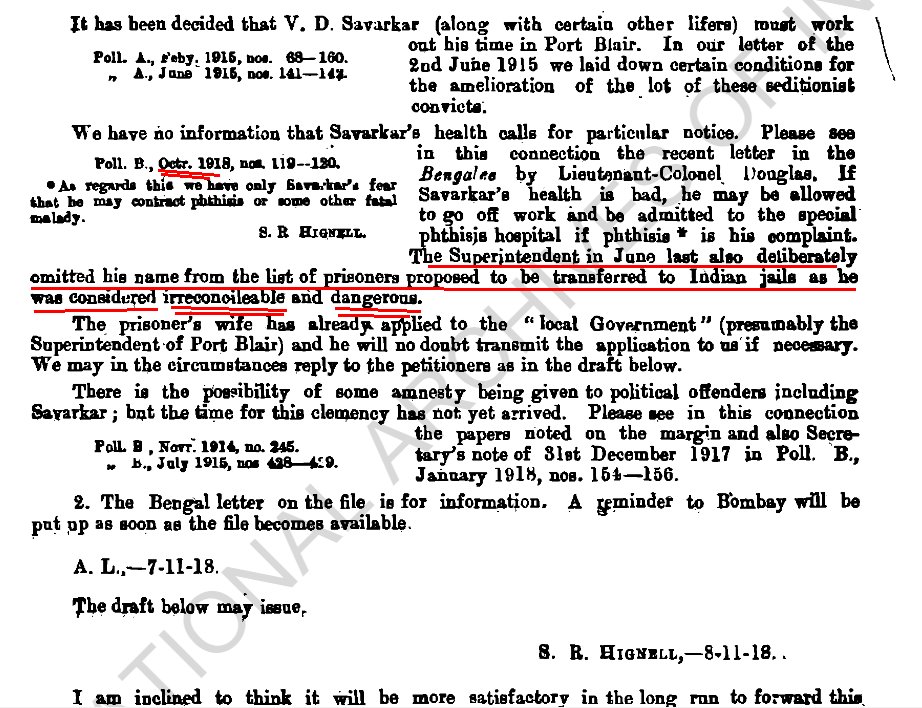
Secret IB report depicting the "status" on father of Indian revolutionaries from Andaman jail.
"Superintendent omitted his name (V. D. Savarkar) proposed to be transferred to Indian Jails as he was considered irreconcilable and dangerous"
-S. R. Hignell (8/11/1918)
"Superintendent omitted his name (V. D. Savarkar) proposed to be transferred to Indian Jails as he was considered irreconcilable and dangerous"
-S. R. Hignell (8/11/1918)
One more extremely confidential IB report to Viceroy & British parliament on father of Indian revolutionaries Vinayak Damodar Savarkar during his Andaman jail tenure, probably during first world war.
Report is self explanatory. Refer each line for his "Status" to British empire.
Report is self explanatory. Refer each line for his "Status" to British empire.

IB report from Andamans, 1920.
"It has been decided not to extend clemency to 2 Savarkar brothers on the ground that their release would not at present be compatible with the public safety"
"It has been decided not to extend clemency to 2 Savarkar brothers on the ground that their release would not at present be compatible with the public safety"

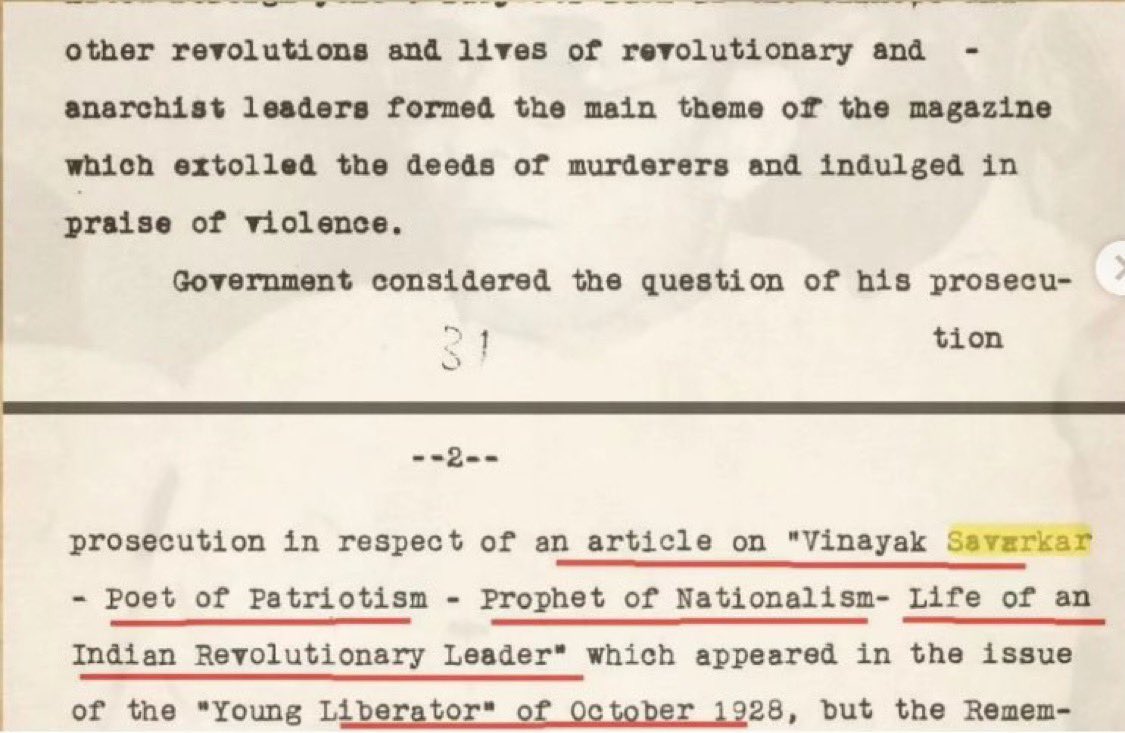
Home Dept. report in May 1934 depicting Swatantryaveer Savarkar's involvement in inciting the revolutionaries across India despite of being in house arrest confinement.
The reason why the British empire was seeing him as a "Most dangerous man India has produced"
The reason why the British empire was seeing him as a "Most dangerous man India has produced"

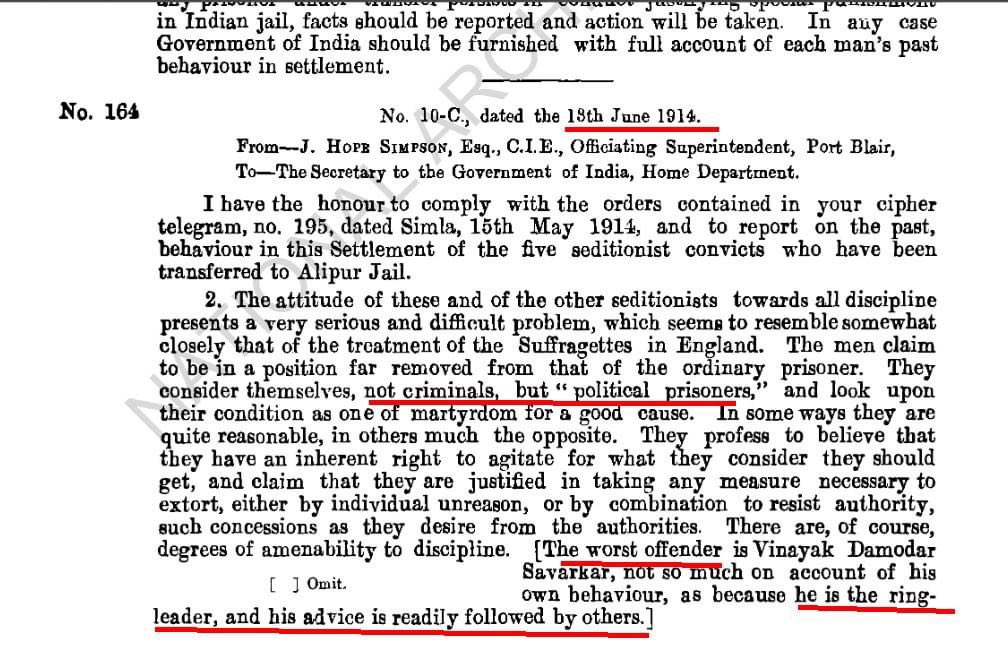
British Home Dept. report from Cellular Jail, Andaman, 18 June 1914 on ‘Master of Indian revolutionaries’
“The worst offender is Vinayak Damodar Savarkar, not so much on account of his own behaviour, as because he is the Ring-Leader and his advice is readily followed by others”
“The worst offender is Vinayak Damodar Savarkar, not so much on account of his own behaviour, as because he is the Ring-Leader and his advice is readily followed by others”
@RandeepHooda @vikramsampath @Aabhas24 @ShefVaidya @apratim1998 @ARanganathan72 @Prasadwakte @Prakharshri78 @parijit @JoshiGargiGoyal @shivanigokhale @Joshikaka56 @peshwaspeaks @Pushpendraamu @UdayMahurkar @spandanantweet @curiosweetie @lilastories @aparanjape @RanjitSavarkar
• • •
Missing some Tweet in this thread? You can try to
force a refresh