
DEAD WEIGHT LOSS…
(no im not talking about YOUR MOMMA)
THREAD 🧵 ON MARKET MAKING, DEFI, AND DOG SHIT PROTOCOL DESIGN
1/n
(no im not talking about YOUR MOMMA)
THREAD 🧵 ON MARKET MAKING, DEFI, AND DOG SHIT PROTOCOL DESIGN
1/n
I did very fun panel at ETHCC thanks to the @SorellaLabs team.. and wanted to do a writeup here on the panel as many enjoyed…
I think DeFi trading has been trending on in one direction over the years… namely, minimizing DEAD WEIGHT LOSS (DWL)...
2/n
I think DeFi trading has been trending on in one direction over the years… namely, minimizing DEAD WEIGHT LOSS (DWL)...
2/n
First I explain DWL… if value in a market is leaking to third parties that add little to no value, then that value lost is called DWL. The goal of many fields in Microeconomics is studying and minimizing DWL in various real world applications.
3/n
3/n
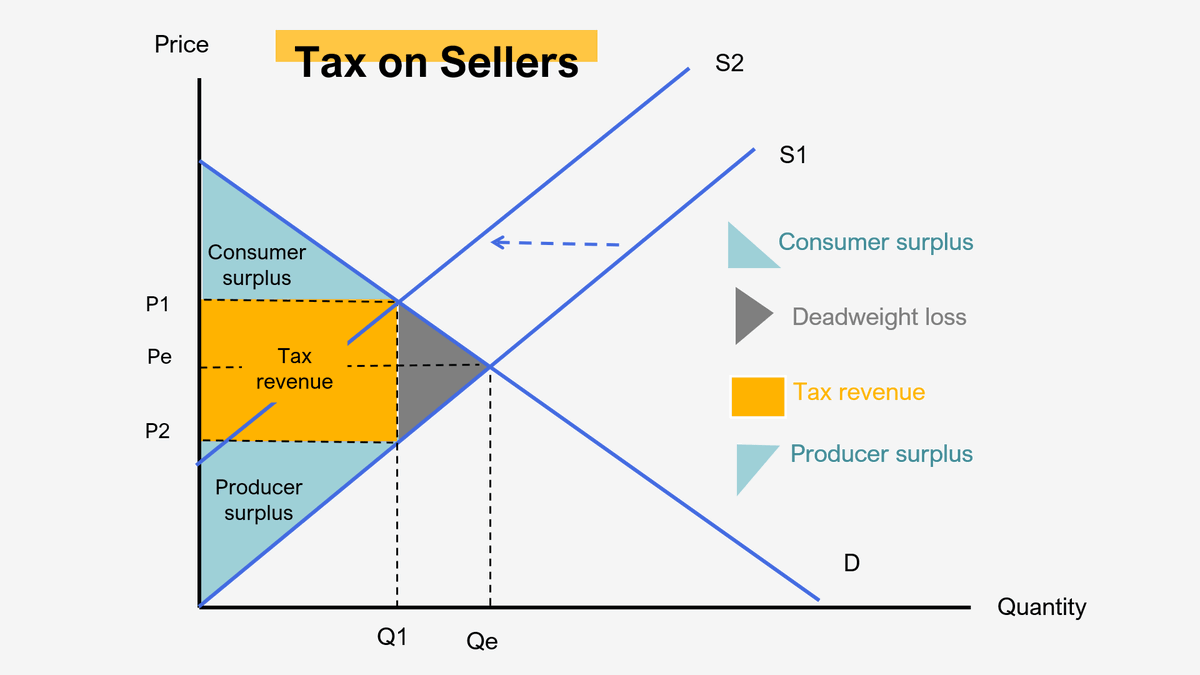
This is true of DeFi trading as well, but through the evolution of trading mechanisms. I consider the first generation of DeFi trading to be the “AMM” phase. Uniswap V2, V3, Balancer, Bancor, etc etc. I define this generation of trading venues as having the following properties:
-Assets stored in smart contracts
-Pricing mechanism is on chain (XYK, Range based, etc..)
-Assets stored in smart contracts
-Pricing mechanism is on chain (XYK, Range based, etc..)
This is the most naive version of market making in DeFi possible, and again for simplicities sake market making = agreeing to provide buy side and sell side liquidity for anyone who wishes to make a swap or trade.
So why is it so bad?
5/n
So why is it so bad?
5/n
Gen 1 trading protocols have proven to be catastrophic failures as they’ve matured and shown that no one has or will be able to solve either the issue of Impermanent Loss (IL) or Arbitrage profit leaking to external parties. There have been more failures than I can list that have attempted to solve these issues through complex mechanisms like dynamic fees, LP options to hedge out IL, and range based liquidity…
All massive fucking failures that I’ve seen more than enough BULLSHIT cope about.. Anyone who hand waves the tens of billions of dollars of leakage is FUCKING you over. This is my concern. I do not like nor tolerate what can only be considered LYING about these failures… but I digress..
6/n
All massive fucking failures that I’ve seen more than enough BULLSHIT cope about.. Anyone who hand waves the tens of billions of dollars of leakage is FUCKING you over. This is my concern. I do not like nor tolerate what can only be considered LYING about these failures… but I digress..
6/n
Next up is what I consider Gen 2 trading platforms. These are directly inspired by Gen 1, and seek to remedy through abandoning the AMM framework for more traditional/innovative structures
-On chain orderbooks
-Off-chain auctions
7/n
-On chain orderbooks
-Off-chain auctions
7/n
While I genuinely am incredibly grateful for these projects for making serious innovations to move us on from the 1 billion papercuts of AMMs, these projects have a few issues. I’ll start with the orderbooks.
8/n
8/n
The main issue with on-chain CLOBS is twofold:
-You can only update your maker orders every block, which means market makers have to widen their spreads out to not get arbitraged because they couldnt update their stale order in time
-No matter how cheap gas is on your chain, it’ll eventually get spammed enough (see solana) to cause the spread to widen even further because of the gas cost of updating all orders on-chain
9/n
-You can only update your maker orders every block, which means market makers have to widen their spreads out to not get arbitraged because they couldnt update their stale order in time
-No matter how cheap gas is on your chain, it’ll eventually get spammed enough (see solana) to cause the spread to widen even further because of the gas cost of updating all orders on-chain
9/n
And my issue with auctions:
-I think auctions are actually substantially better than orderbooks or AMMs for assets that we do not know the true value of and need some kind of price discovery. This is why art and many rare goods use auctions…
-The problem comes when you run an auction selling something like ETH that we do have much more liquid venues than an auction for. If I am a bidder I will not bid the fair value on an auction for ETH, because I have to make FUCKING MONEY! If ETH is at 3k why the FUCK would I bid 3k? I have family to feed! I bid 2.99k! (this is called collusion in economics if u want to read more)
10/n
-I think auctions are actually substantially better than orderbooks or AMMs for assets that we do not know the true value of and need some kind of price discovery. This is why art and many rare goods use auctions…
-The problem comes when you run an auction selling something like ETH that we do have much more liquid venues than an auction for. If I am a bidder I will not bid the fair value on an auction for ETH, because I have to make FUCKING MONEY! If ETH is at 3k why the FUCK would I bid 3k? I have family to feed! I bid 2.99k! (this is called collusion in economics if u want to read more)
10/n
Gen 3 is what I am most excited about. I consider what we’re building at Aori to be Gen 3, but there ofc are others in this space now. Gen 3 to me is the next step in DWL minimization, and while I think we’re by far the best at minimizing it, to say we’ve SOLVED MEV is an exaggeration and one I do not claim to make.
There will be many small innovations to further minimize it but MEV by definition cannot be zero. But we can get it as close as possible…
11/n
There will be many small innovations to further minimize it but MEV by definition cannot be zero. But we can get it as close as possible…
11/n
So I detail Gen 3 now. Gen 3 = off-chain orderbooks with exclusively post-matching settlement on chain. This is in effect an off-chain auction, except for the fact that rather than discrete (meaning set time frame, like 30 second in some), everything on Aori is continuous.
Solvers and market makers quote and compete in realtime as fast as possible to provide best intra-block pricing.
12/n
Solvers and market makers quote and compete in realtime as fast as possible to provide best intra-block pricing.
12/n
-This eliminates the risk of collusion as intents are non-binding
-This eliminates gas expenses of updating orders for solvers/users
-This eliminates the risk of atomic frontrunners
While these are big steps I detail next our plans on further improving Aori
13/n
-This eliminates gas expenses of updating orders for solvers/users
-This eliminates the risk of atomic frontrunners
While these are big steps I detail next our plans on further improving Aori
13/n
-We need to further improve the speed of settlement. We’ve cut our execution on L2’s from hundreds of milliseconds to under 25 in most trades
-We can minimize gas even more by building order batching for our solvers
14/n
-We can minimize gas even more by building order batching for our solvers
14/n
-We can support more chains, asset types/derivatives, and cross-chain execution
These are just a few of how we can further optimize what we’ve built so far but I believe it’s a great roadmap
15/n
These are just a few of how we can further optimize what we’ve built so far but I believe it’s a great roadmap
15/n
It is my belief that all trades in the next few years will move to either Aori or other Gen 3 trading infrastructure. I sincerely pray as an industry we do move to these types of mechanisms because if we don’t we’re going to keep FUCKING retail and that is unacceptable.
16/n
16/n
I made a bet with a member of the Sorella panel audience that TVL of on-chain AMMS will decline by >90% over the next few years. I do not wish for this out of animosity of any AMM protocol, but rather out of hope that we can stop FUCKING the users of DeFi.
17/n
17/n
I apologize for long rant that may offend some, but I just want to always be honest about my opinions on these things… thank you for reading long thread
18/18
18/18

• • •
Missing some Tweet in this thread? You can try to
force a refresh






