My newest post is the first in a new series where, starting with Denmark, I will investigate the topic of immigration and crime in a given country.
Are immigrants overrepresented in crime? If so, which immigrants? And why?
In Denmark, immigrants are overrepresented in criminal convictions and in imprisonments.
The figure below illustrates crime rates relative to Danish origin for various offense types.
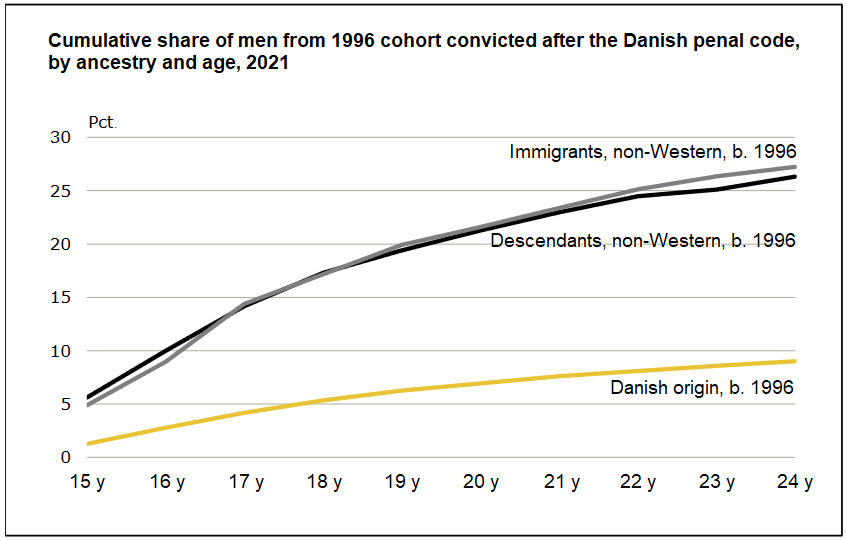
By age 24, a little more than 1 in 4 of male non-Western immigrants/descendants have received a criminal conviction. For men of Danish origin, the figure is a little less than 1 in 10.
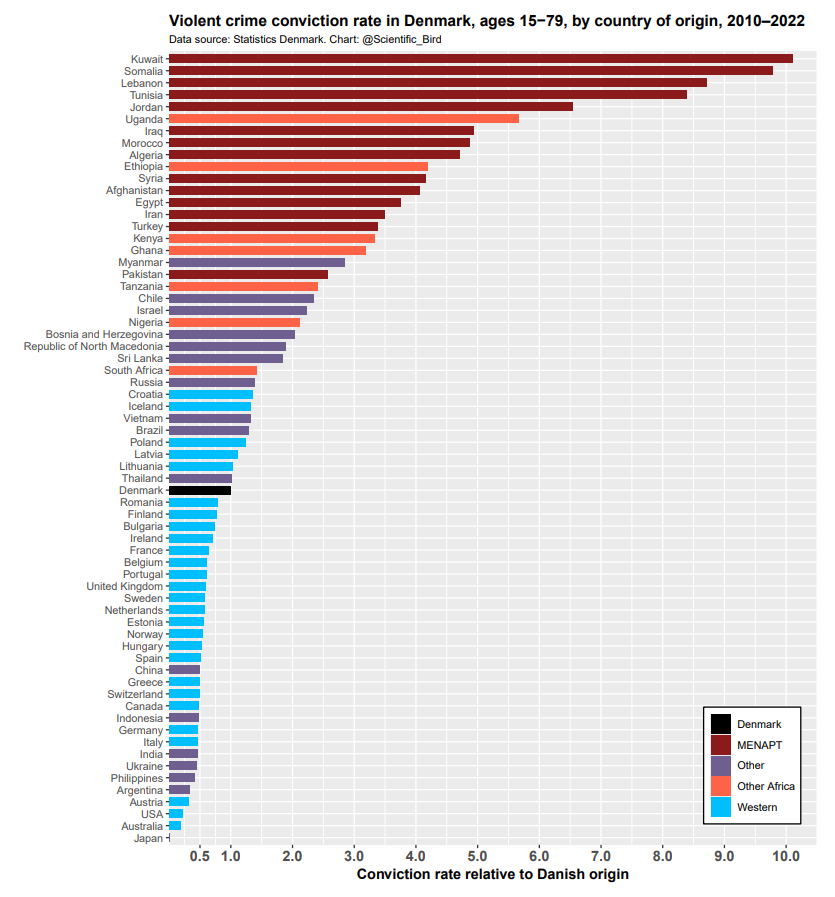
The most detailed analysis we can make is at the level of individual countries.
This figure displays the violent crime conviction rate by origin country relative to people of Danish origin.
Lastly, there is the obvious question of why the rates differ so much.
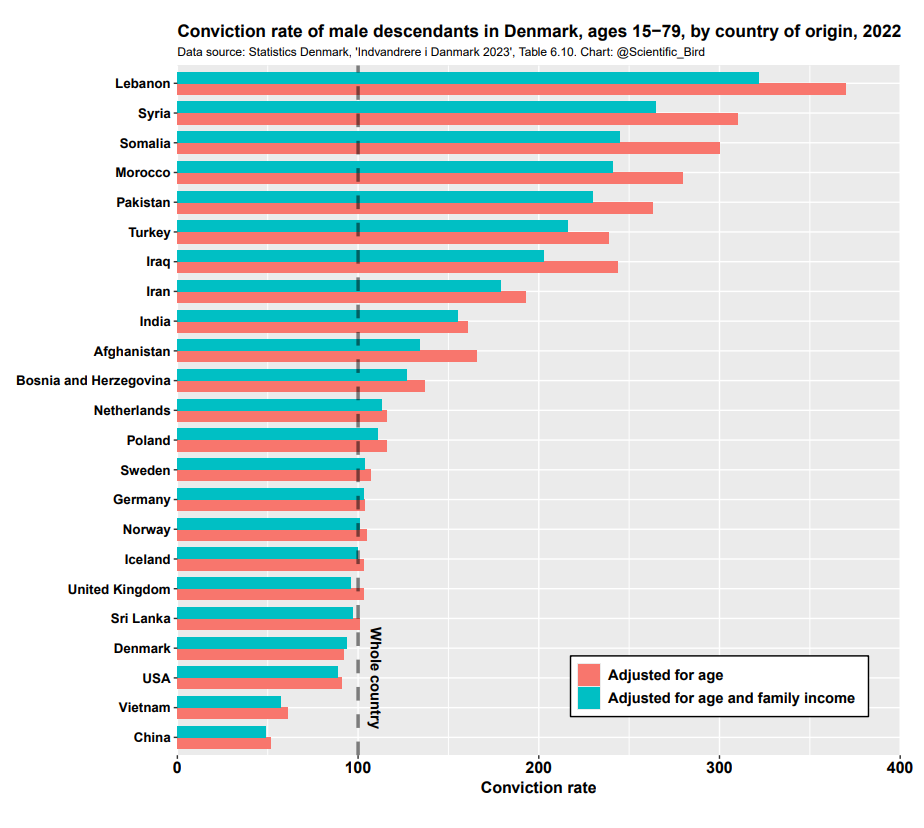
It is impossible to answer in full, but age, sex and socioeconomic status are insufficient explanations.
Substantial differences remain in the second generation after such adjustments.
This and more is discussed at greater length in the full post. If you're curious, check it out below.
In a new piece, I discuss more myths about Norwegian recidivism and rehabilitation. Many say that prior to '90s rehabilitation reforms, Norway had a recidivism rate of 60 to 70%, and reforms greatly reduced the recidivism rate. Is this true?
These sorts of claims are made on the Wikipedia page for "Incarceration in Norway", and a large number of articles repeat them.
I first look into this claim, and find that it is not supported by the evidence. I collected official recidivism data spanning from the 1950s to now, and systematically tracked changes in recidivism.
In a new post, I show that the Nordic countries, despite common belief, have not rehabilitated their way to remarkably low recidivism rates.
When properly compared, their recidivism rates are, perhaps surprisingly, not much better than the United States.
Short thread.
It is common to see comparisons between the United States and the Nordic countries. For example, US NEWS reports that Norway has a recidivism rate of only 20%, compared to 76.6% in the United States.
But such comparisons are often misleading, as they are not measuring the same thing. It is especially egregious in this case, as the Norwegian figure is *resentence* within *2 years*, and the American is *rearrest* within *5 years*. They cannot be compared.
In a new post I argue that poverty has little causal effect on violent crime. I interrogate why poverty and violence are correlated and conclude that it is primarily due to selection and reverse causality.
Short thread below.
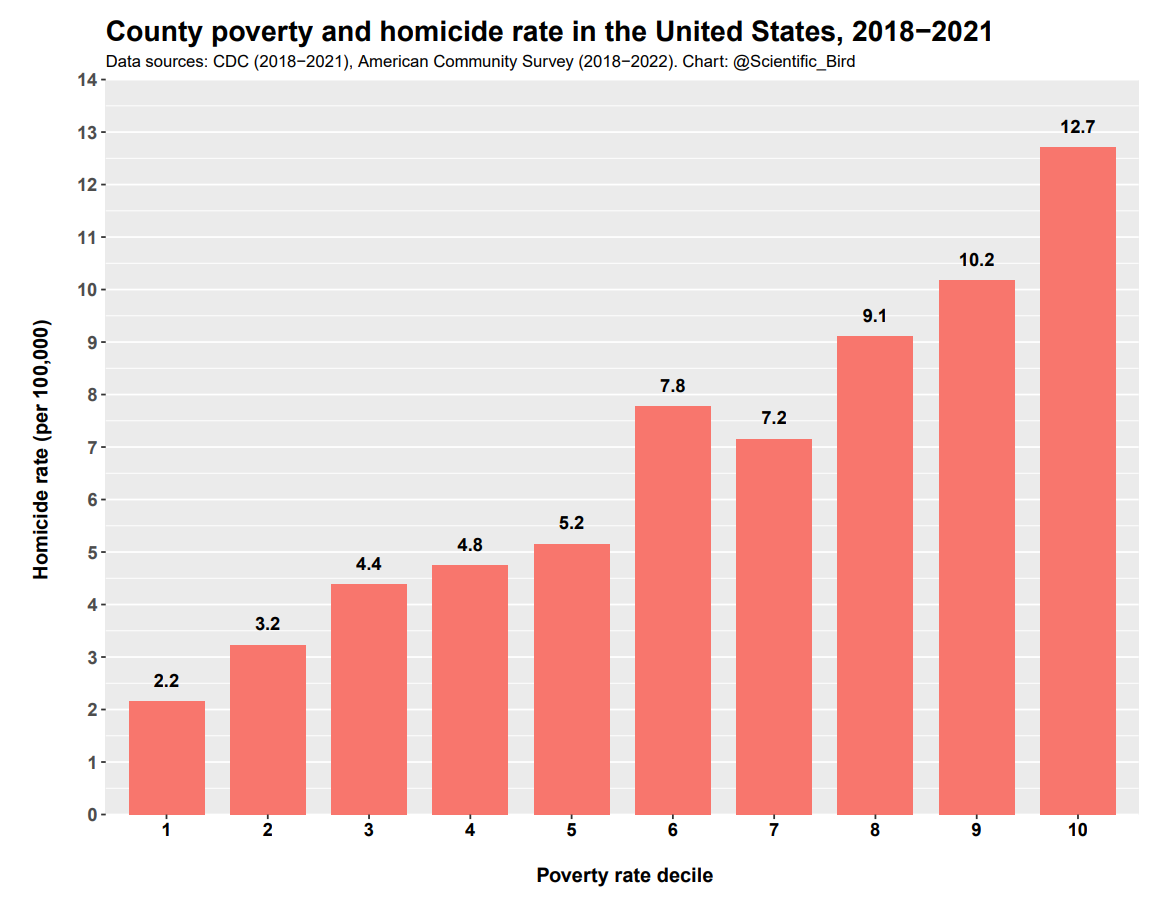
It is well known that a correlation between poverty and violent crime exists. Here I have illustrated it for poverty- and homicide rates across counties in the United States. Unsurprising, but importantly it does not show that poverty causes violence.
There are three reasons why poverty and violence could be correlated:
1) Poverty causes violence (causality). 2) Crime harms economic conditions (reverse causality). 3) Lurking variables affect both economic conditions and propensity for violence (confounding/selection).
In a new post, I investigate whether black-white homicide disparities in the United States can be accounted for economic disparities.
In short, I find that large systematic homicide disparities remain, even when economically similar people are compared.
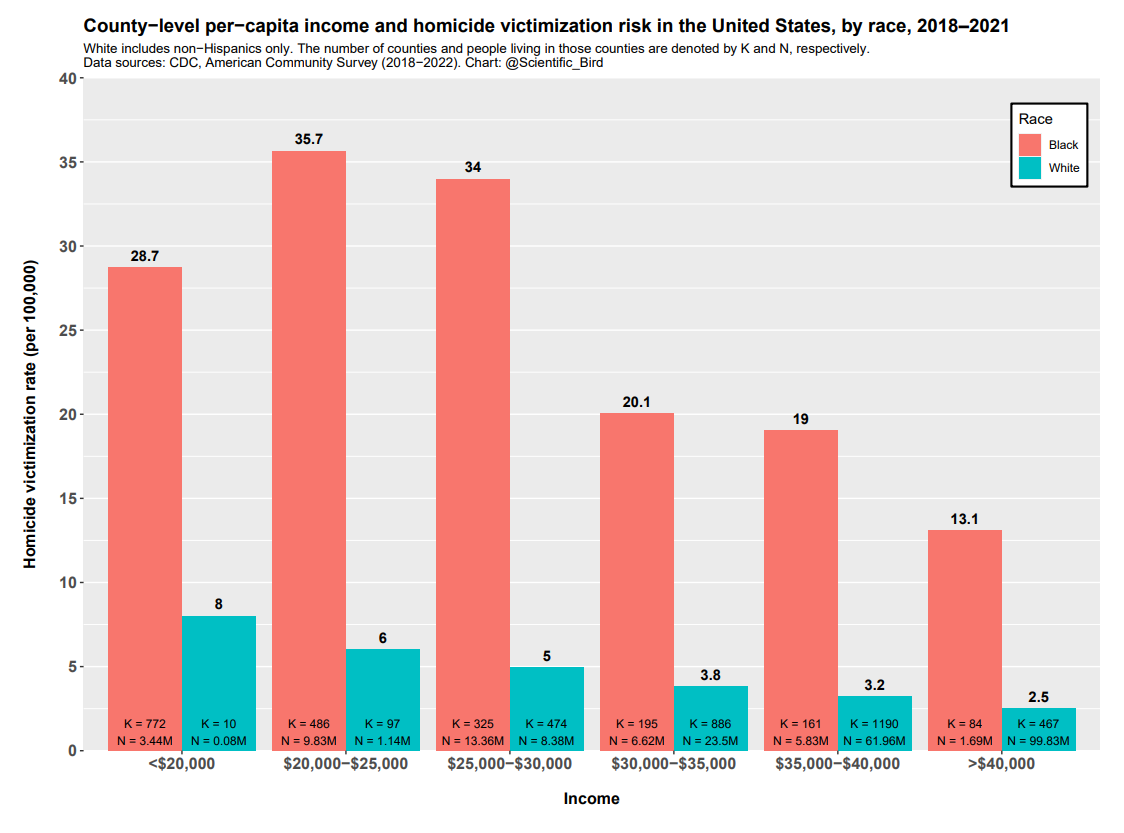
To address the question, I combine economic data from the American Community Survey, and homicide victimization data from the CDC; both at the geographical level of counties. Importantly, both being separated by race, so I can properly compare the groups.
When I compare black and white people with similar per-capita incomes, the black homicide victimization rate remains substantially higher. This is illustrated below.
I also repeat the analysis for other economic indicators, including poverty rate.
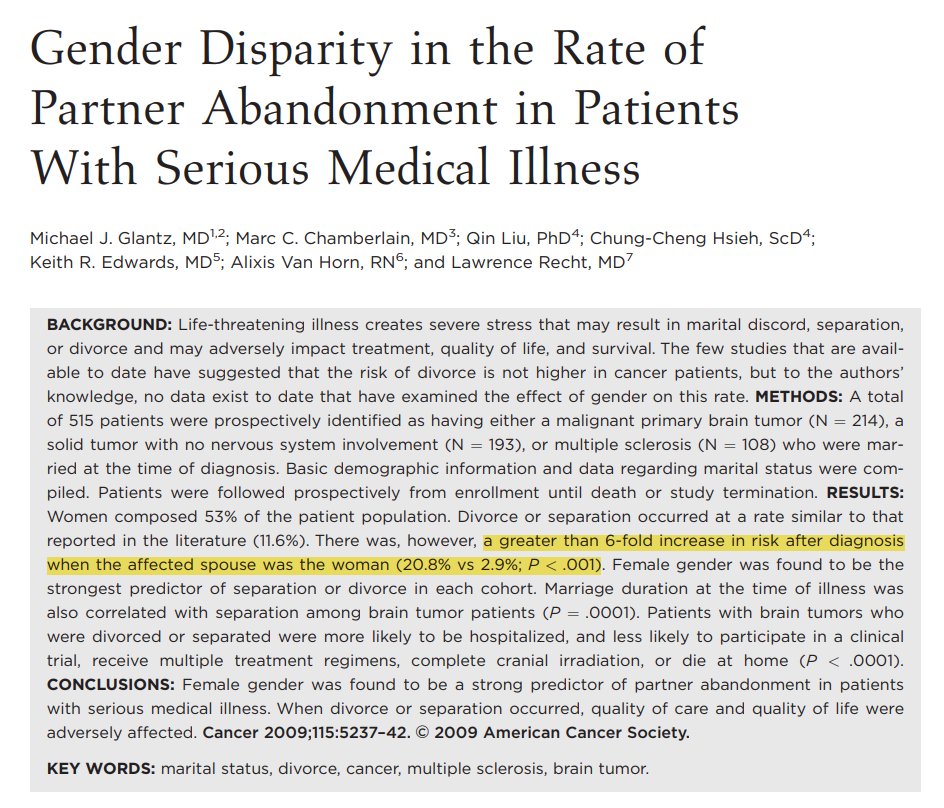
In the comments, critics argued that the original conclusion of the retracted paper was correct, pointing to a different 2009 paper in support.
But as this was the sole paper forwarded, and the sample was small (515 patients), I wanted to check whether the results replicate.
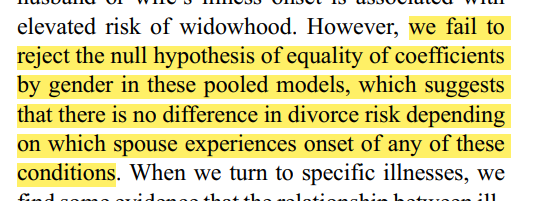
First, it's important to note that the retracted paper was actually republished after the error was corrected. In the corrected version, they found no significant sex difference when all illnesses were pooled together. This study was substantially larger than the 2009 one.
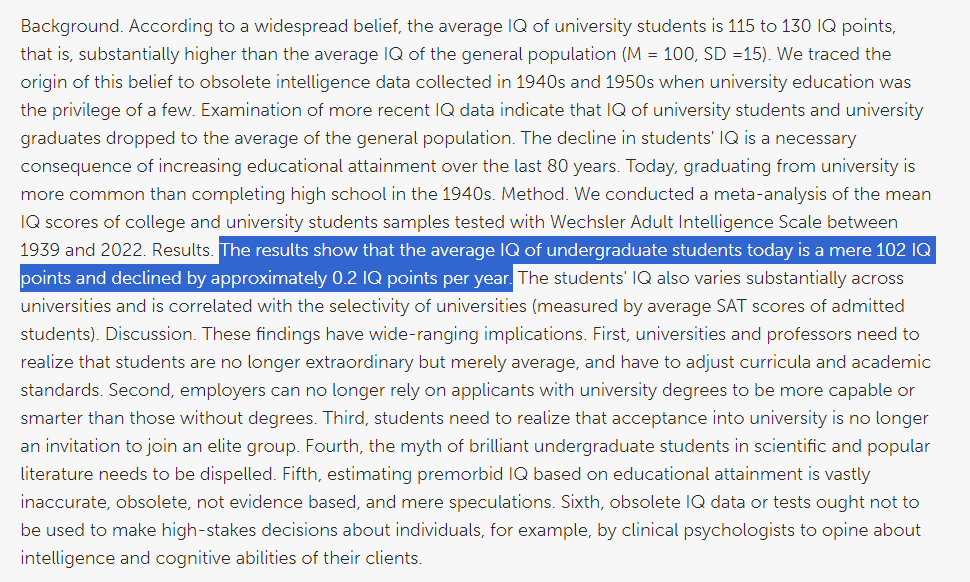
A new meta-analysis finds that undergraduate IQ has declined to a mere 102 on avg.
As they note, a great decline is a necessary consequence of the increasing share who enroll into college.
Imagine the extreme: if everyone goes to college, their IQs must necessarily be average.
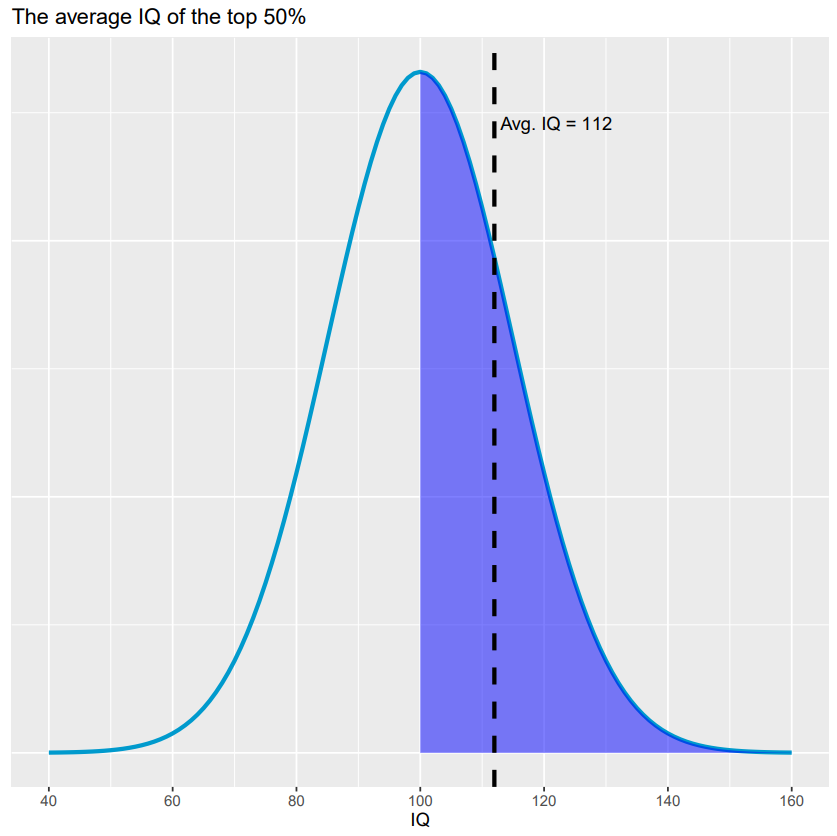
Imagine that 50% of the population go to college: the average IQ can at most be that of the top 50% (112).
In practice, the average IQ will be substantially lower as there is not perfect sorting into college (some high IQ individuals don't attend college, and some lower IQ do).
This result is consistent with a recent Norwegian study finding a decrease in the correlation between cognitive ability and educational attainment over cohorts.
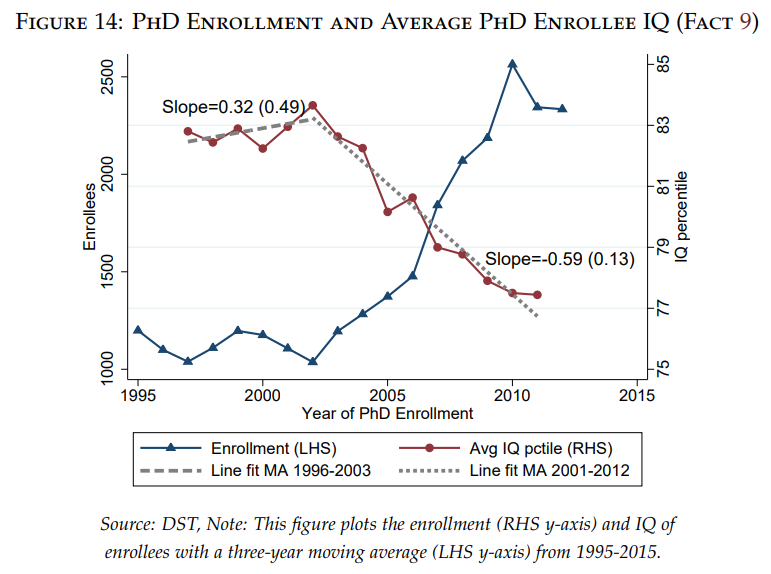
And another study using Danish data showed that the average PhD IQ fell with the increasing PhD enrollment.