The Great Sedition Trial of 1944:
FDR, with the help of ADL spies, leftist provocateurs, and a corrupt FBI, conducted a massive show trial - attempting to criminalize criticism of his administration, his war policy, and his cozy relationship with the USSR.🧵/26

FDR, with the help of ADL spies, leftist provocateurs, and a corrupt FBI, conducted a massive show trial - attempting to criminalize criticism of his administration, his war policy, and his cozy relationship with the USSR.🧵/26

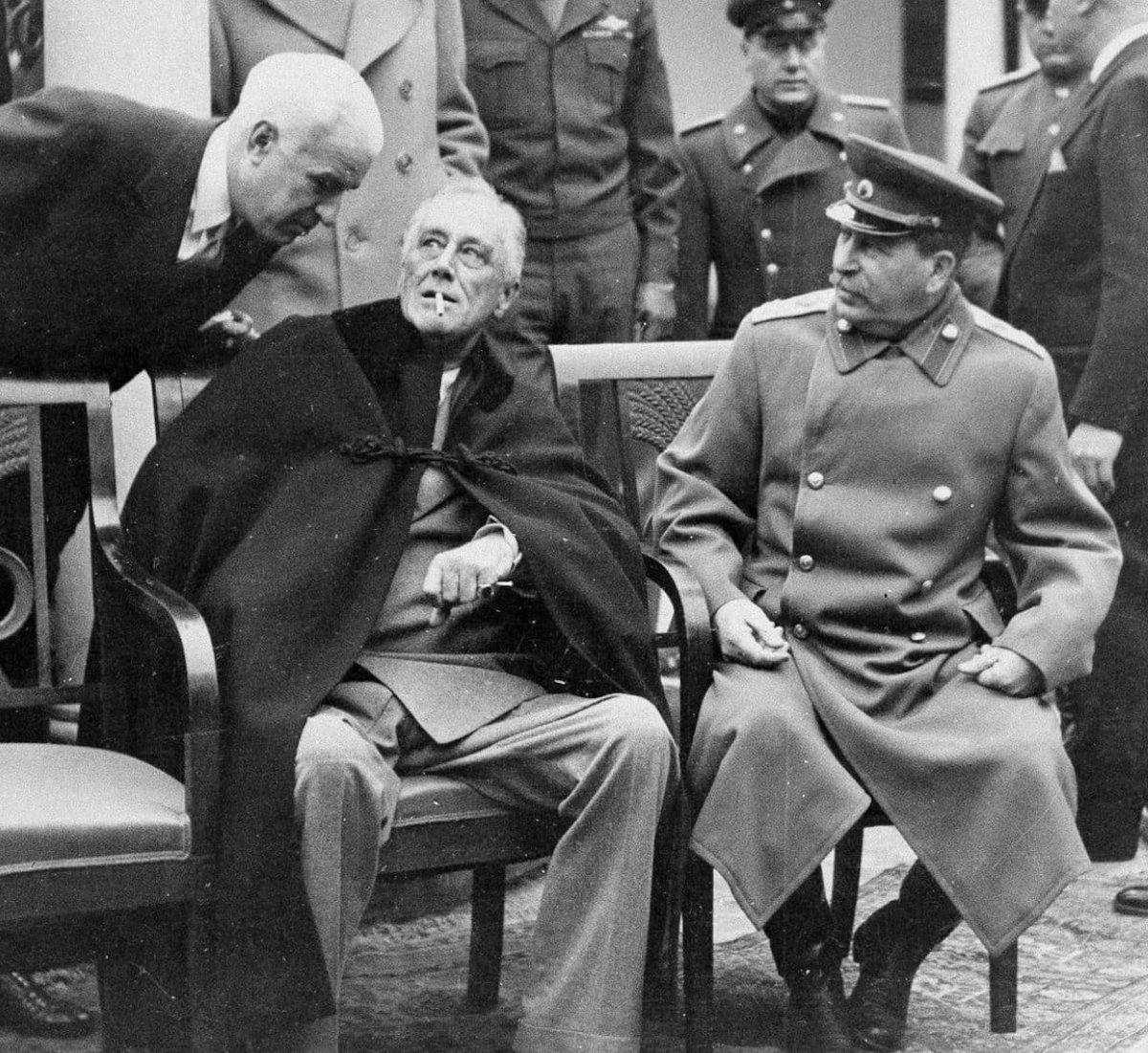

The Trial demonstrates the early stages of the now familiar cooperative relationship between the FBI, the press, and NGOs like the ADL - and how they conspired to harass and even imprison America First patriots and anti-war activists.
2/26
2/26


The order to persecute FDR’s critics came straight from the President himself. FDR claimed “Freedom of Speech” as a fundamental value – one of his celebrated “Four Freedoms.” In truth, he relished opportunities to harass and silence his America First opponents.
3/26
3/26


Attorney General Biddle is remembered as a First Amendment hero for his determination to avoid repeating the hysterical witch hunts of WW I, and for at least trying to restrain FDR’s war on Free Speech. But apparently preventing the sedition show trial was a bridge too far.
4/26
4/26


FDR had a host of comrades in the left-wing press, war-enthusiasts, communists, and fellow-travelers. It would later emerge that the ADL played a key role in smearing the defendants and the America First movement.
5/26
5/26


A key instigation for the trial was the book "Under Cover”- which purported to be an expose of America’s "far right." Hyped relentlessly by the communist-friendly press, the book was actually a “wilderness of lies” designed to smear the America First movement.
6/26
6/26


The author of “Under Cover” – Armenian-born Avedis Boghos Derounian - is portrayed heroically in Leftist histories. In reality, he was a serial liar - “willing to do anything for a dollar” - who was repeatedly forced to retract his libelous smears.
7/26
7/26


The perennially spooky, reliably pro-war Washington Post conspired with FDR’s DoJ to entrap the defendants and established jurisdiction in DC’s Federal Court. Thus 30 defendants, most of whom had never set foot in DC, were dragged to the swampy Capitol for a prolonged trial.
8/26
8/26


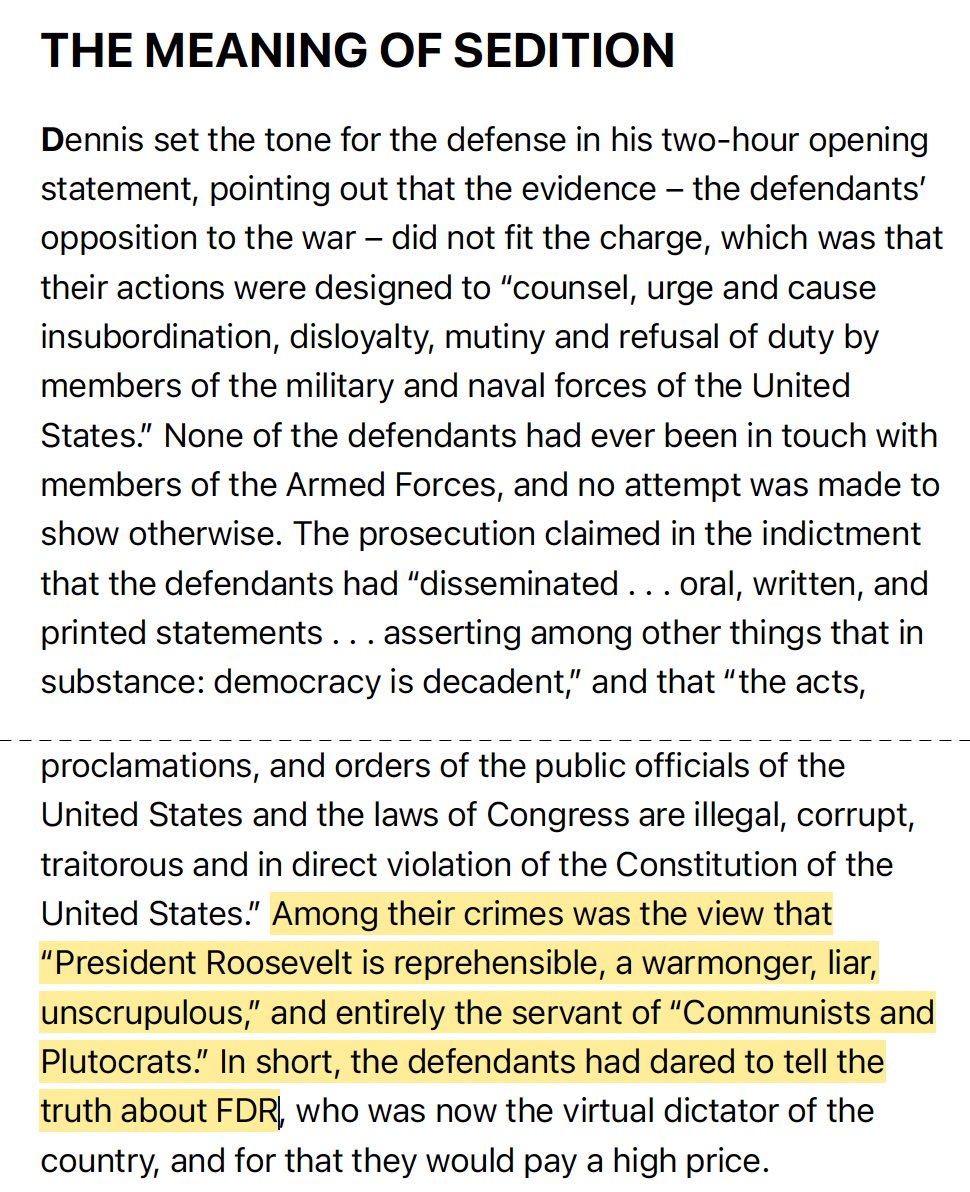
At trial, defendants were accused of conspiring “to undermine the morale of the armed forces” - Apparently this included criticism or the President or the Soviet "Allies." Thus FDR's prosecutor conveniently helped portray opposition to FDR and communism as “sedition.”
9/26
9/26

Defendant Lawrence Dennis made a similar observation about the trial - The prosecution believed that because the USSR was communist, and the USSR was a war ally, critics of communism were interfering with the war effort and should be sent to prison.
10/26
10/26


The real “crime” of the defendants was opposing FDR, and disagreeing with the proposition that the U.S. should expend enormous quantities of blood and treasure to save the British and Soviet empires (and in reality of course, only the Soviet empire would be saved).
11/26
11/26

Dennis - a staunch isolationist and associate of Charles Lindberg - was one of the more notable defendants. A graduate of Philips Exeter and Harvard, he was smeared as a racist by Leftists. Ironically, it was confirmed many years later that Dennis was “passing” racially.
12/26
12/26


Many of the defendants were harmless “one man” publishers reaching small audiences. Some were thoughtful commentators. Others, eccentric cranks – The 1940s equivalent of modest Substack or X accounts. But FDR had determined to crush all anti-interventionists.
13/26
13/26


Defendant David Baxter would later learn that ADL was “the catalyst" behind the entire trial. Indeed, in many cases it was the ADL that conducted the investigation for the FBI. Not surprisingly, much of the information in Baxter's file was "as false as anything could be."
14/26
14/26


The ADL’s spying on Baxter was not a one-off. Even before the U.S. had entered the war, the ADL was spying on thousands of American citizens. And this would not be the last time.
15/26
15/26


The ADL and its fellow-travelers engaged in harassment that will seem familiar to current-year observers. One of the defendants worked as a waiter during the trial. The ADL and one of its allies in the press – columnist Walter Winchell – managed to get him fired.
16/26
16/26
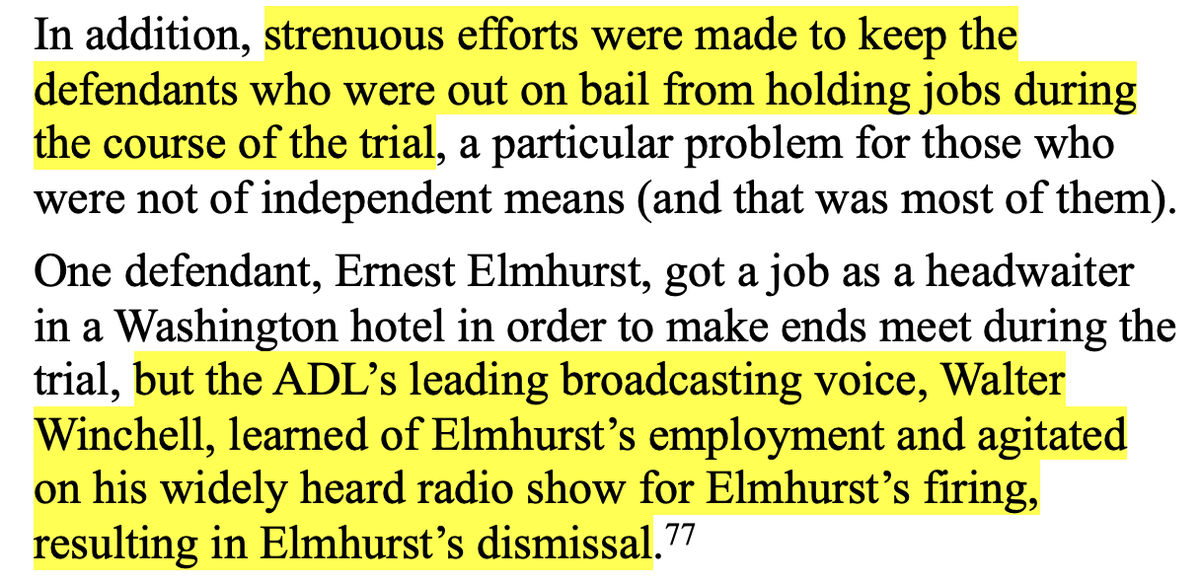
Awkward, perhaps, for the ADL - one of the most vehement and effective defense attorneys at the trial was Henry H. Klein, “an outspoken Jewish anti-communist.” Klein warned that the FBI and groups like the ADL were acting as provocateurs and intentionally stoking fear.
17/26
17/26
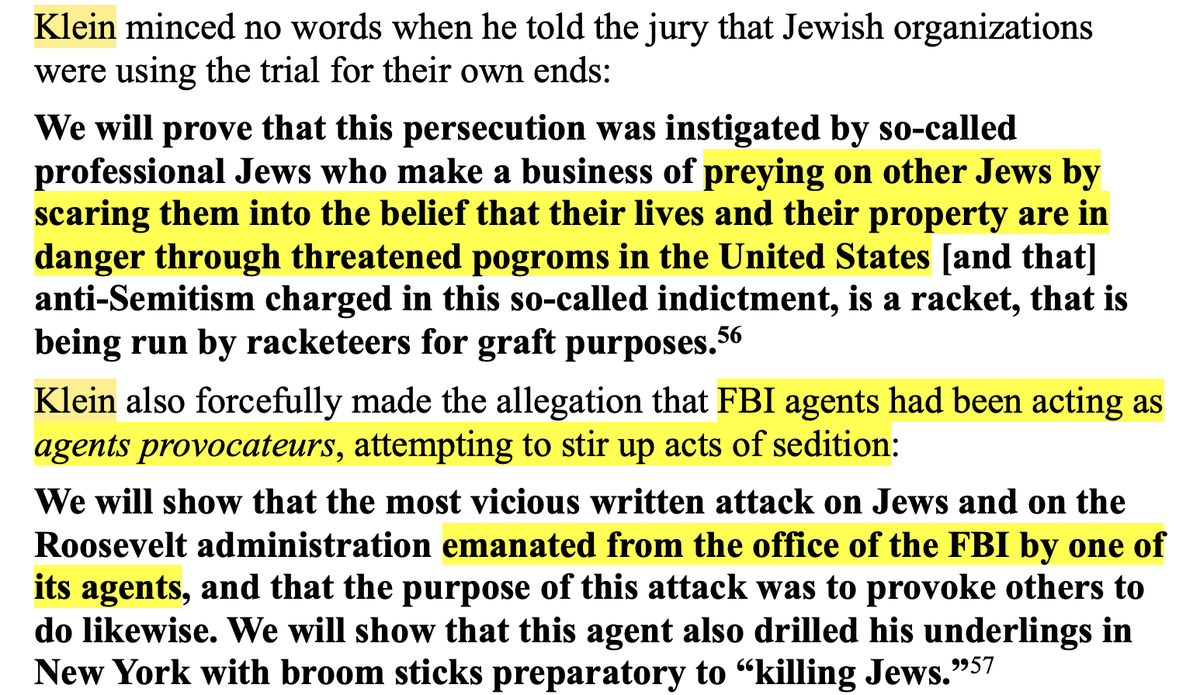
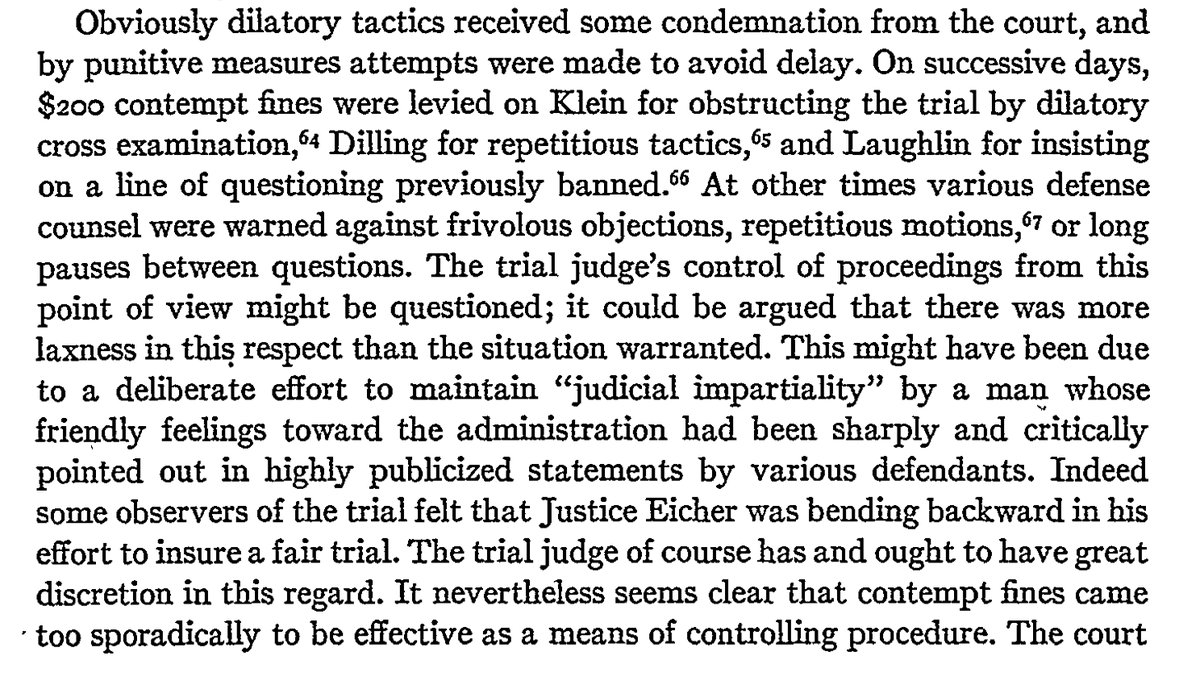
Pundits at the time (and prosecution-apologists later) criticized the defense for prolonging the trial with excessive objections and interruptions – as if a trial of 30 defendants with 30 different sets of facts could have resulted in anything other than a prolonged circus.
18/26
18/26

During this highly contentious trial, one of FDR’s closest advisers - Secretary of the Interior Harold Ickes – thought it appropriate to send a note to Judge Eicher (a long-time FDR loyalist) – endorsing “vigorous action” to put the defense counsel "in their place."
19/26
19/26


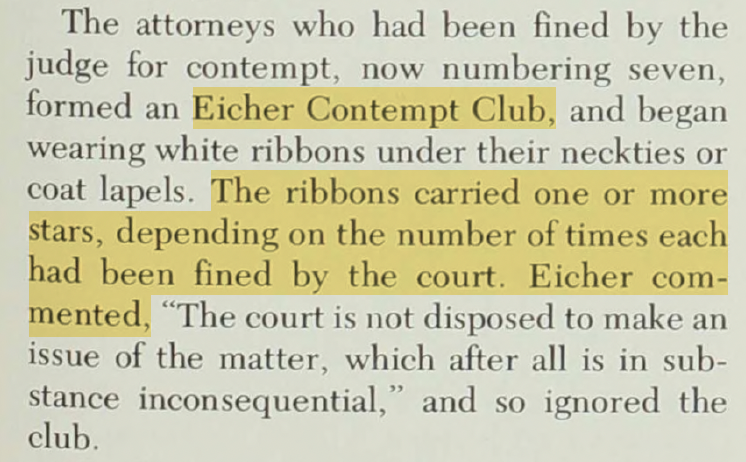
Judge Eicher (allegedly hand-picked by FDR for the trial) handed-out contempt citations like candy. Uncowed, the sanctioned defense attorneys awarded themselves ribbons, with stars signifying how many times they had been cited for contempt.
20/26
20/26



As the trial wore on, Defense Attorney James Laughlin joined the counter-attack against the ADL - He called for the ADL’s investigation files to be seized and entered into evidence at the trial. Laughlin's move "placed the spotlight on the big secret of the case."
21/26
21/26

Apparently the spotlight on the ADL made certain parties very uncomfortable. The Washington Post - which had done so much to instigate the prosecution - suddenly lost interest in the case.
22/26
22/26

Indeed, this belated, mysterious change of heart was so complete that Post editorials now called the trial "a black mark against American justice" and worried that the process was undermining public confidence in the justice system.
23/26
23/26
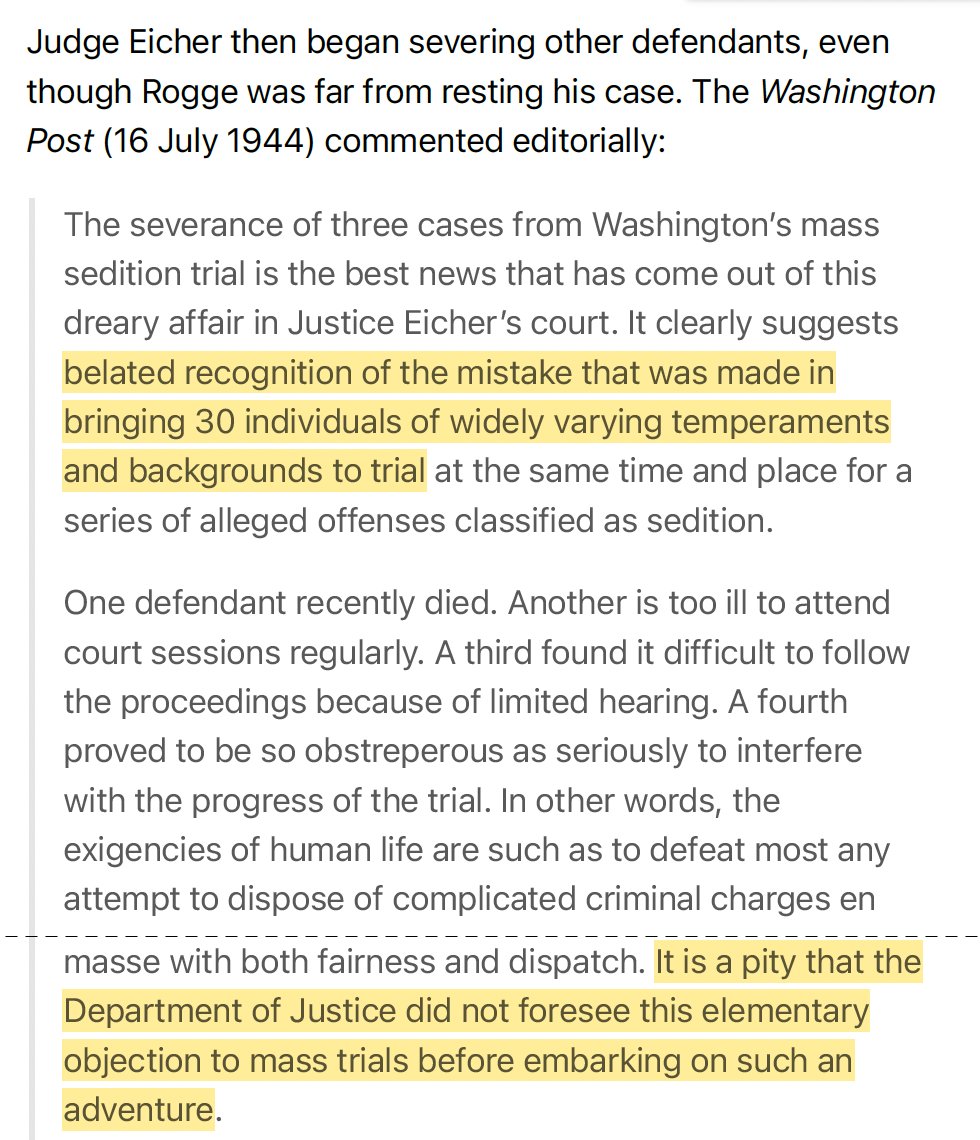

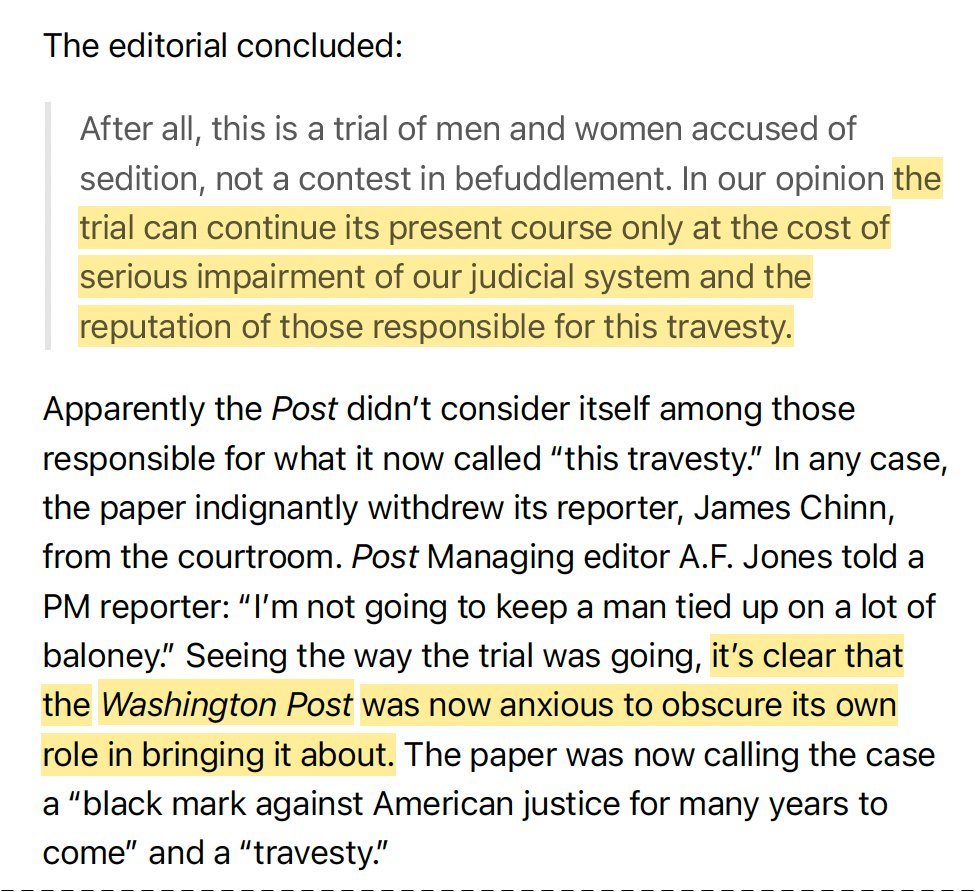
The sedition case seemed to be in a shambles, but prosecutor John Rogge (the defense, of course, insisted on pronouncing his name “rogue”) was determined to press on. Rogge was a fervent leftist who would spend his later years defending communists and pornographers.
24/26
24/26


Fate intervened on November 29, 1944 when Judge Eicher died suddenly, and eventually a mistrial was declared. Rogge had tried to carry on, going so far as to search in vain for evidence in Germany, and taking an ADL-funded propaganda tour. He was later fired by DoJ.
25/26
25/26
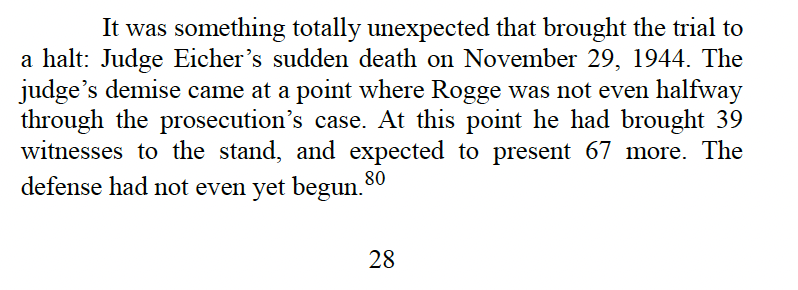
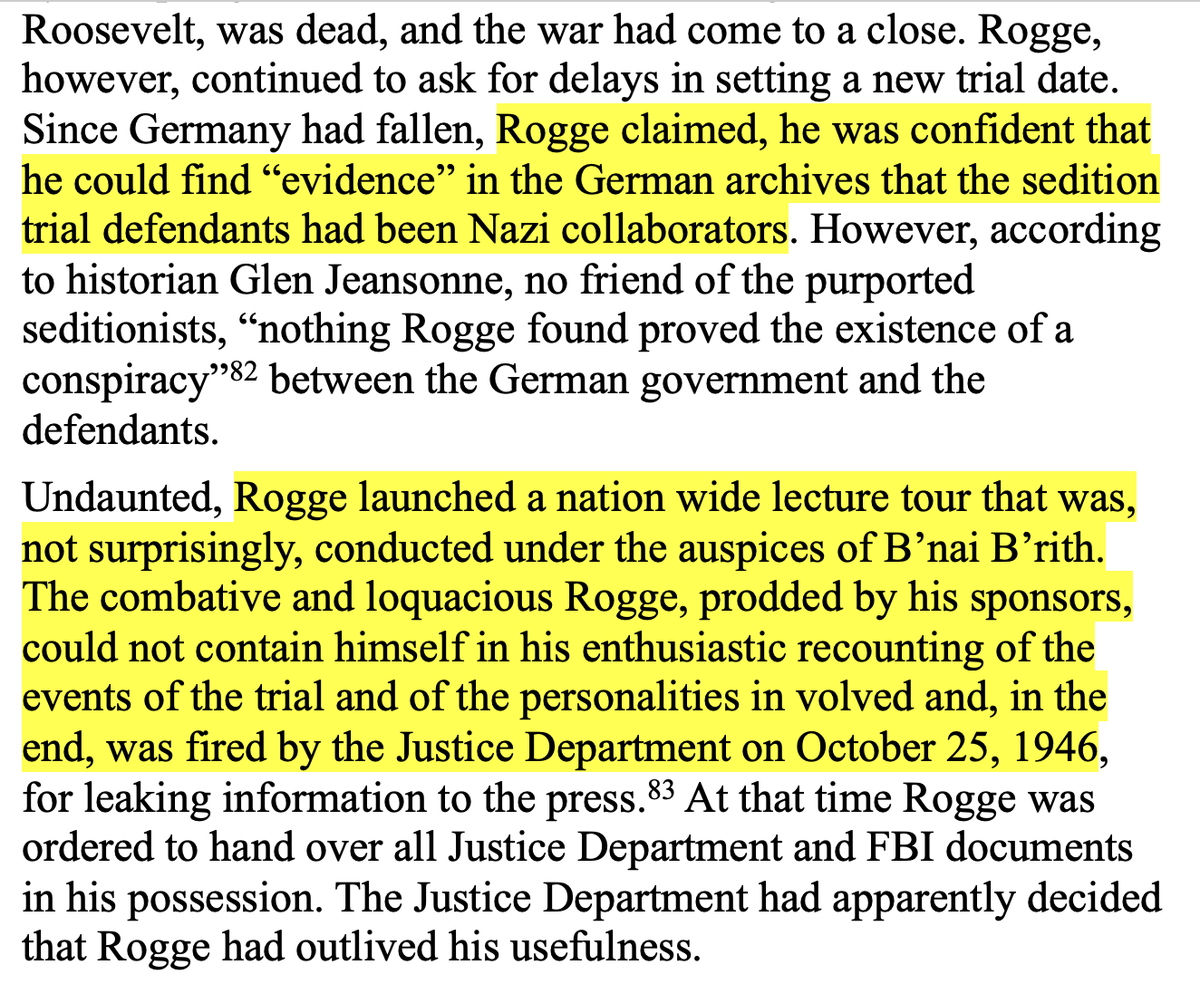
Epilogue – Despite the embarrassing result of the Great Sedition Trial, the ADL did not stop its spying on American citizens, and the FBI’s love affair with the ADL continues to this day.
/fin
/fin

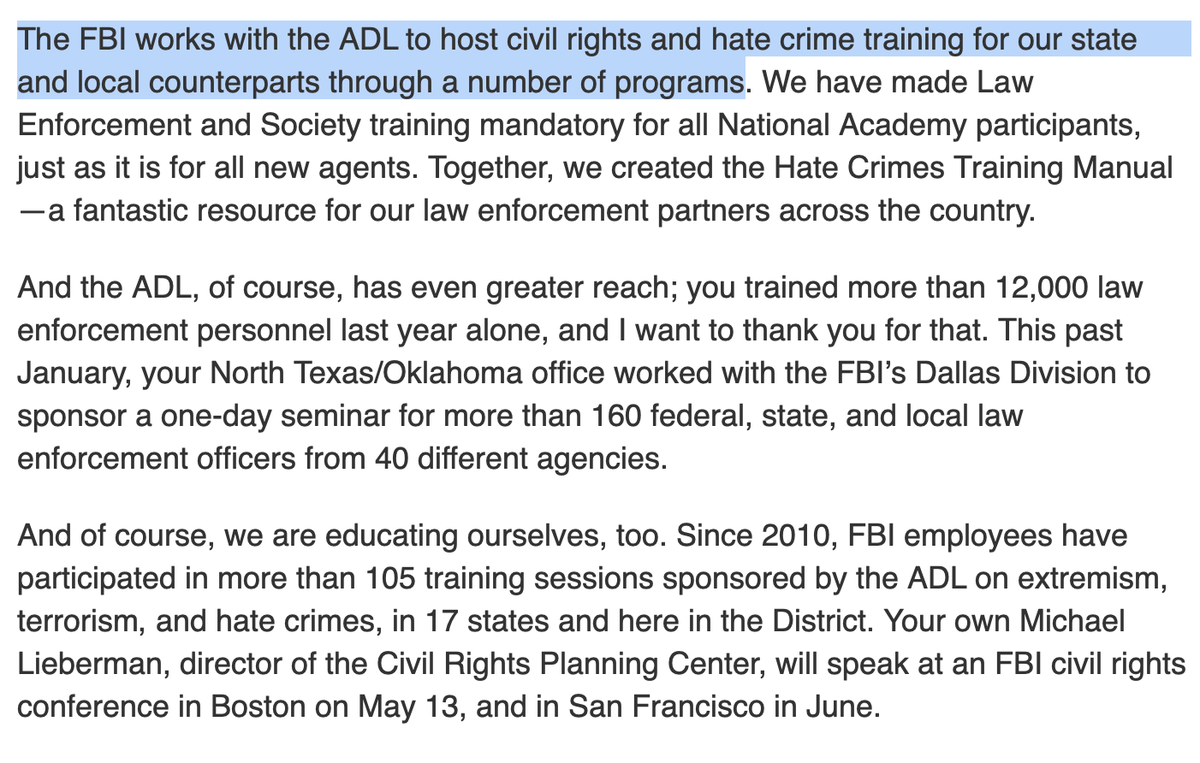
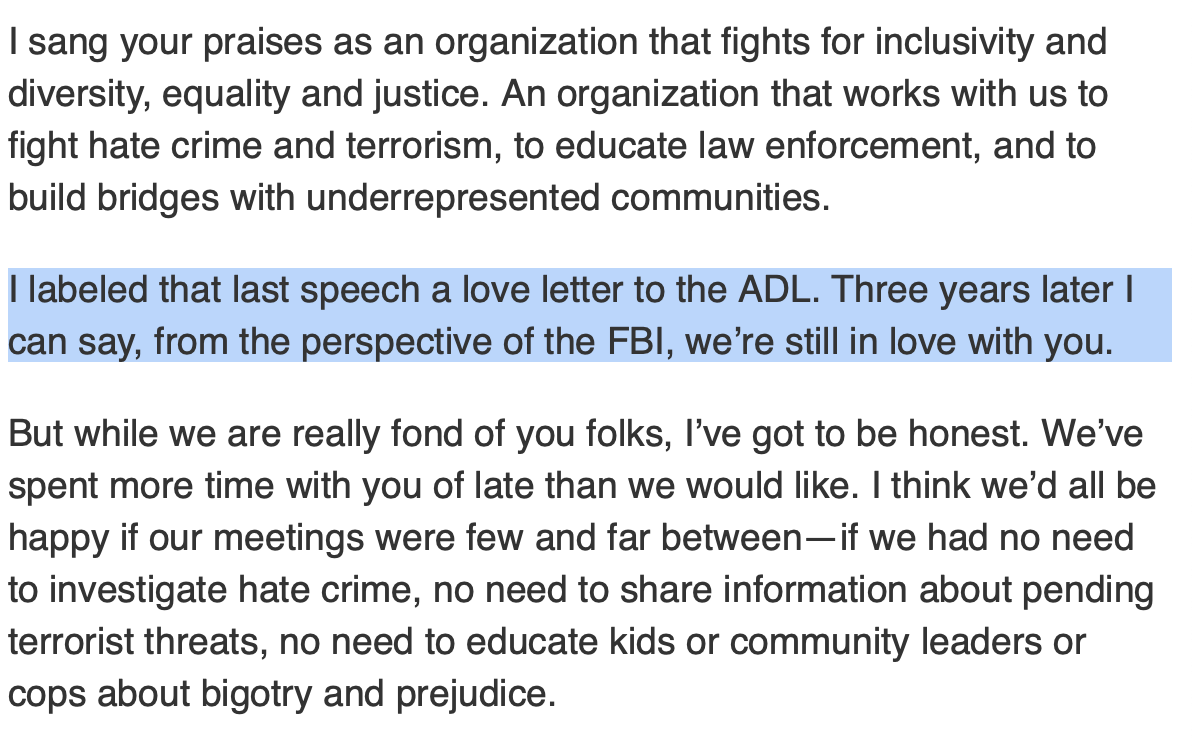
Additional sources:
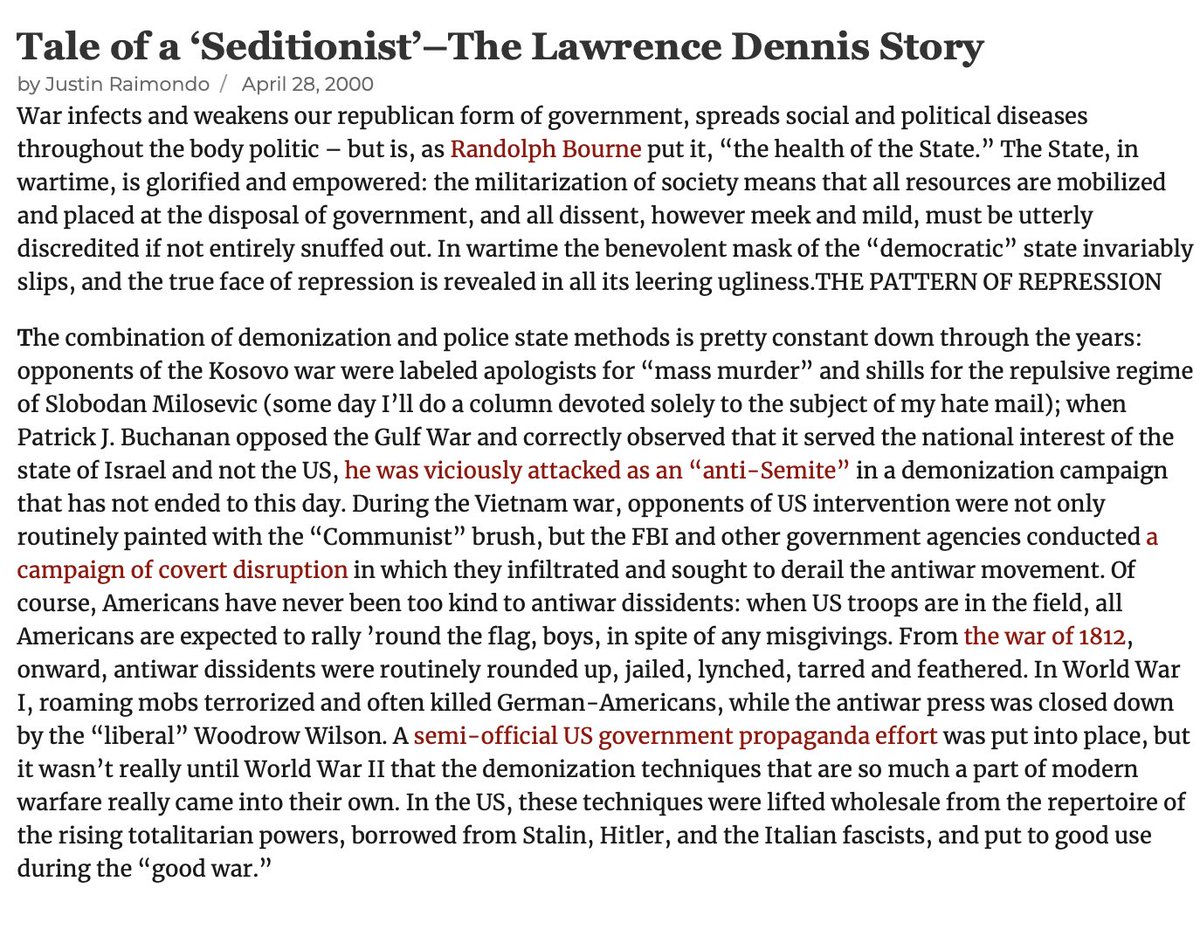


And h/t to @j_arthur_bloom for his review of "Under Cover":
arthuriana.substack.com/p/review-under…
arthuriana.substack.com/p/review-under…
• • •
Missing some Tweet in this thread? You can try to
force a refresh