Do you ever wonder how Venice seems to float on the Adriatic Sea?
Well, the entire city was built on a forest of 10 million tree trunks — over a thousand years ago... (thread) 🧵
Well, the entire city was built on a forest of 10 million tree trunks — over a thousand years ago... (thread) 🧵

How did one of the world's greatest cities get built on small patches of marshland in the Venetian lagoon?
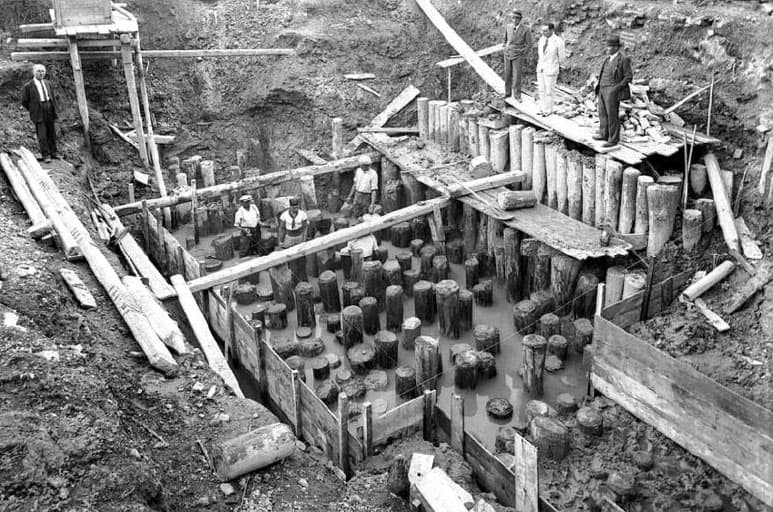
By driving millions of wooden stakes deep into the clay...
By driving millions of wooden stakes deep into the clay...

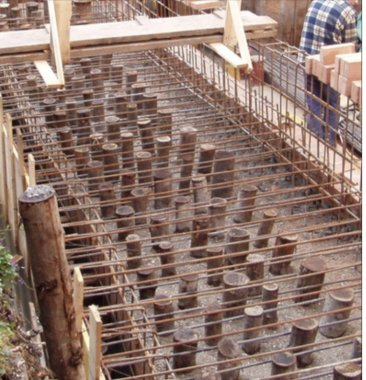
The stakes go deep enough to reach firmer ground, and then a wooden base is placed on top.
Next, Istrian limestone (resistant to erosive seawater) forms a platform, on top of which entire buildings can be stably constructed.
Next, Istrian limestone (resistant to erosive seawater) forms a platform, on top of which entire buildings can be stably constructed.

From there, brick or stone facades rise up 3 or 4 stories.
Istrian stone was more than beautiful enough for the visible sections, but intricately-carved marble was the material of choice for the wealthy.
Istrian stone was more than beautiful enough for the visible sections, but intricately-carved marble was the material of choice for the wealthy.


Why doesn't the wood rot, you ask?
Because the posts are submerged below water, where oxygen can't reach. As long as this is the case, the wood will last another thousand years — mineralization is effectively turning it to stone.
Because the posts are submerged below water, where oxygen can't reach. As long as this is the case, the wood will last another thousand years — mineralization is effectively turning it to stone.
Over time, hundreds of individual islands expanded into each other, forming a city divided up by canals.
The Grand Canal cuts through as the only major waterway, crossed by just a single bridge until the 19th century.
The Grand Canal cuts through as the only major waterway, crossed by just a single bridge until the 19th century.

Of the 472 bridges, the most photographed (and painted) is the Rialto — a keystone of Renaissance design.
Engineers dug more than 12,000 tree trunks into the clay banks to support it.
Engineers dug more than 12,000 tree trunks into the clay banks to support it.

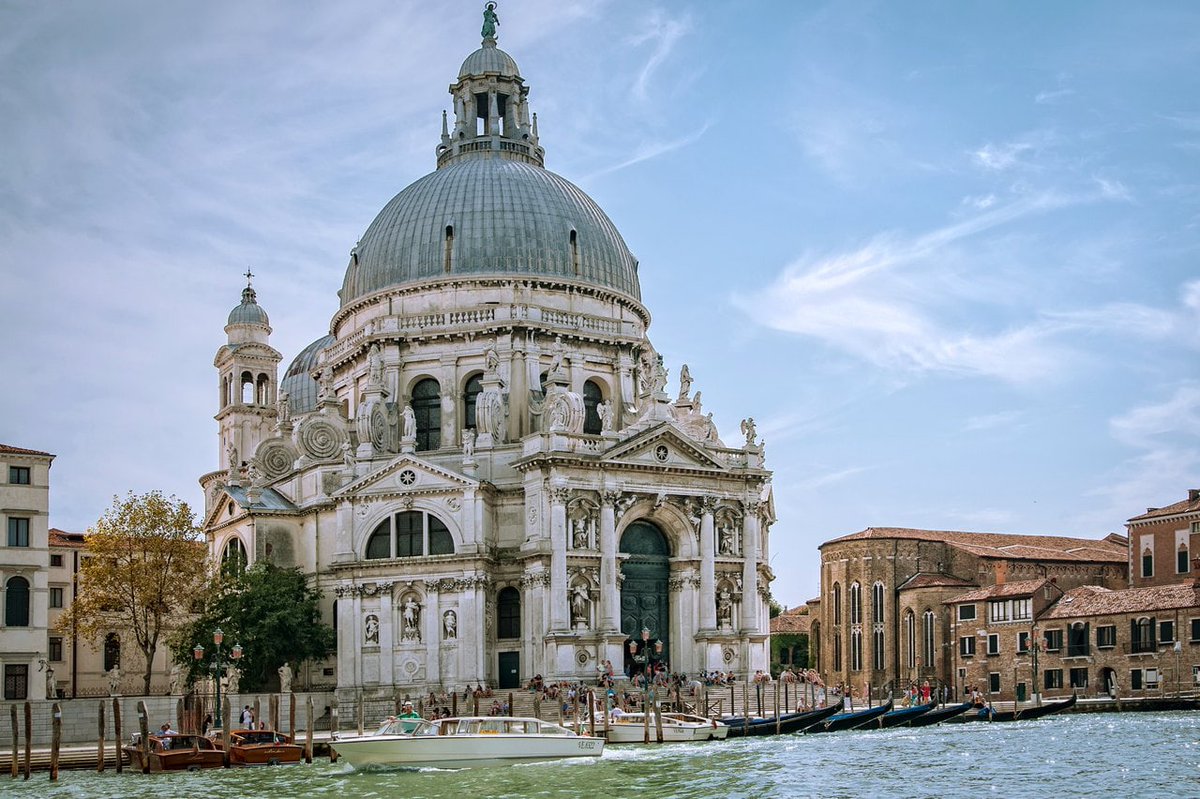
And 1.1 million of them were necessary to support the Santa Maria della Salute, an enormous church built to commemorate the end of the great Italian plague.
Because it all expanded organically from island to island, Venice is a far cry from your standard Roman grid plan.
But of course, this isn't a Roman city — it was founded much later...
But of course, this isn't a Roman city — it was founded much later...


When the Roman Empire fell apart, power concentrated in cities like Milan and Ravenna.
Venice was then a mere fishing village. It had to earn its reputation as a trading outpost, before eventually becoming its own republic in 697 AD.
Venice was then a mere fishing village. It had to earn its reputation as a trading outpost, before eventually becoming its own republic in 697 AD.

On its surprisingly stable, wooden foundations, Venice built huge wealth and military might; producing a war ship a day at its peak.
But it was missing something. To be more than a commercial powerhouse, it needed religious significance...
But it was missing something. To be more than a commercial powerhouse, it needed religious significance...

In 828 AD, Venetian merchants visiting Muslim-controlled Alexandria stole the remains of a very important saint: Mark the Evangelist.
They hid them in a case of pork, got past the customs officials, and smuggled them to Venice.
They hid them in a case of pork, got past the customs officials, and smuggled them to Venice.

Mark's symbol, the winged lion, quickly became Venice's emblem and now rises above St. Mark's Square.
But then they had to build a church befitting of a Gospel writer…
But then they had to build a church befitting of a Gospel writer…


This was the result: St. Mark's Basilica.
Its architecture reflected the expansive reach of Venetian ships, both in its Byzantine style and the stolen artifacts adorning it.
Its architecture reflected the expansive reach of Venetian ships, both in its Byzantine style and the stolen artifacts adorning it.
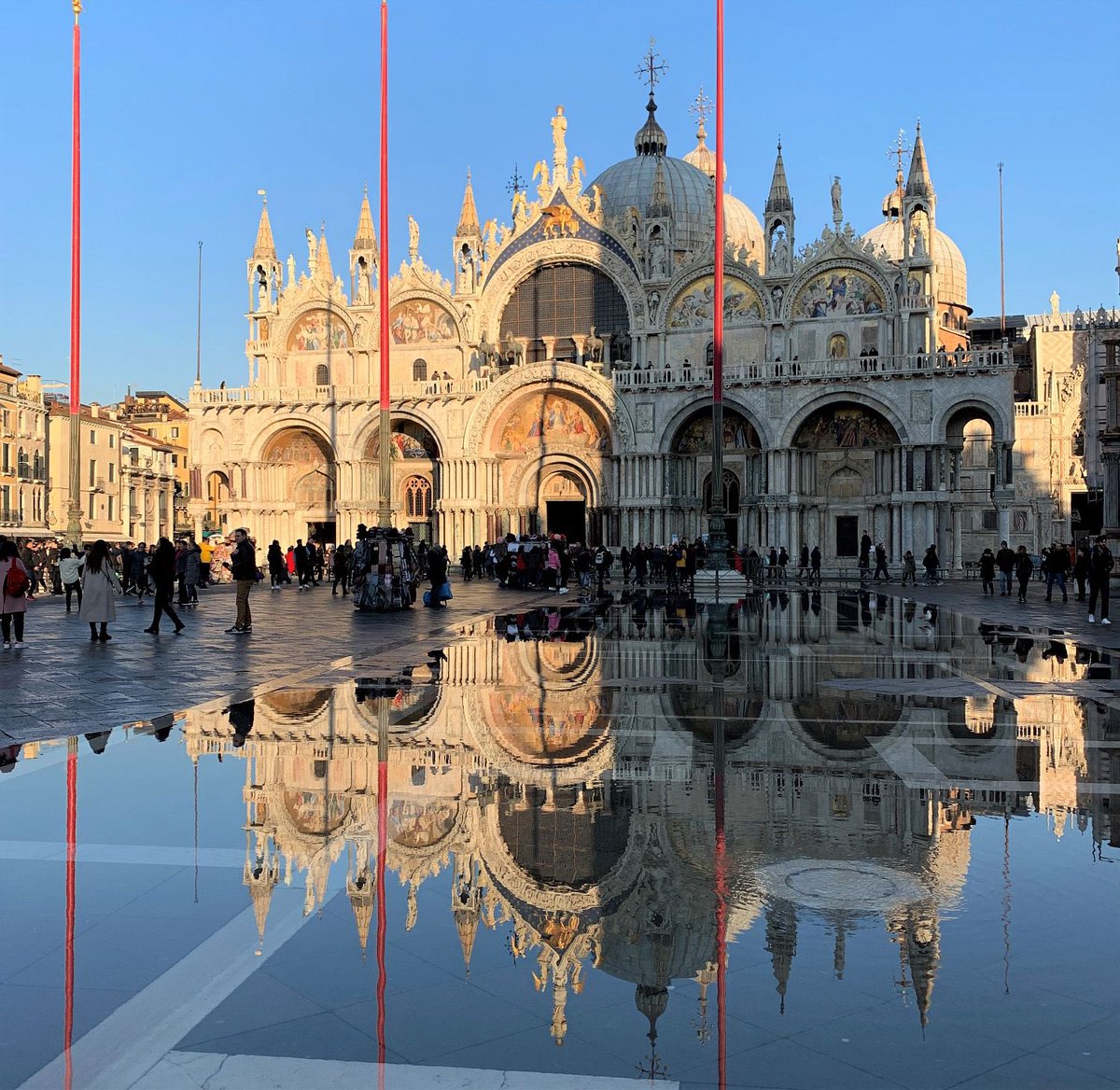
Those marble columns were seized from all across the Mediterranean, and crusaders furnished it with even more riches in 1204 — like the bronze horses that stood at the Hippodrome of Constantinople.


Today you can see both sides of Venice.
Its humble medieval beginnings are almost unchanged, but its palazzos are infused with some of the greatest riches ever assembled in the Christian world...
Its humble medieval beginnings are almost unchanged, but its palazzos are infused with some of the greatest riches ever assembled in the Christian world...

I go deeper on topics like this every week in my FREE newsletter — do NOT miss tomorrow!
70,000+ people read it: art, history and culture 👇
culture-critic.com/welcome
70,000+ people read it: art, history and culture 👇
culture-critic.com/welcome
• • •
Missing some Tweet in this thread? You can try to
force a refresh