A Few Fact Checks of The New Attack on the Cass Review
🧵A pair of doctors who worked for the UK's pediatric gender clinic, GIDS, and its nascent successor, have put onto a public Google doc an attack of the Cass Review of pediatric gender care. Most notably, they claim that Dr. Hilary Cass told them before she started work on the review at that they should read @AbigailShrier's Irreversible Damage book.
Otherwise, there are a few errors that I spotted in the Google doc, which I'll post in the thread below.
🧵A pair of doctors who worked for the UK's pediatric gender clinic, GIDS, and its nascent successor, have put onto a public Google doc an attack of the Cass Review of pediatric gender care. Most notably, they claim that Dr. Hilary Cass told them before she started work on the review at that they should read @AbigailShrier's Irreversible Damage book.
Otherwise, there are a few errors that I spotted in the Google doc, which I'll post in the thread below.

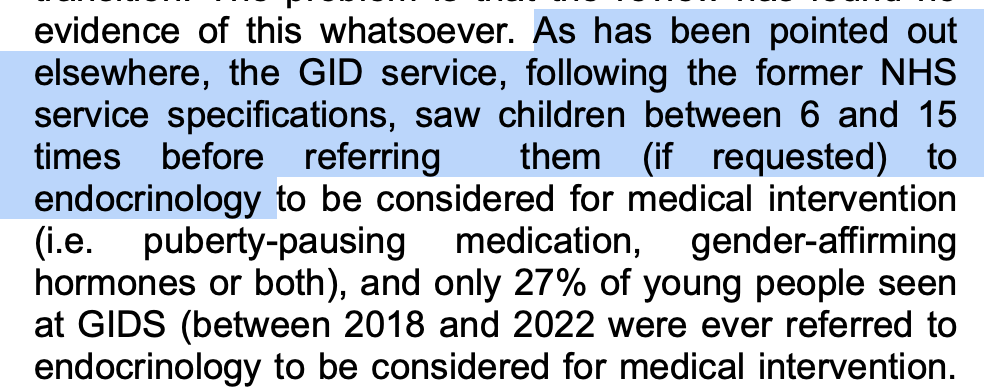
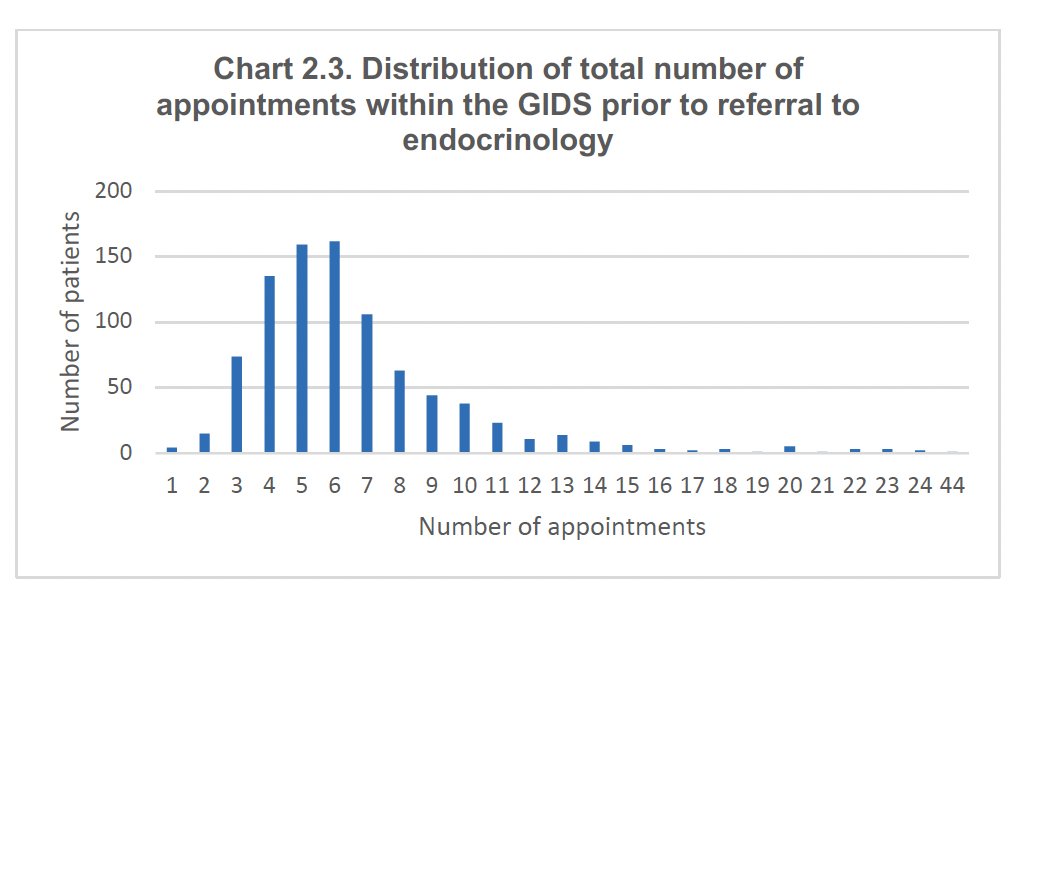
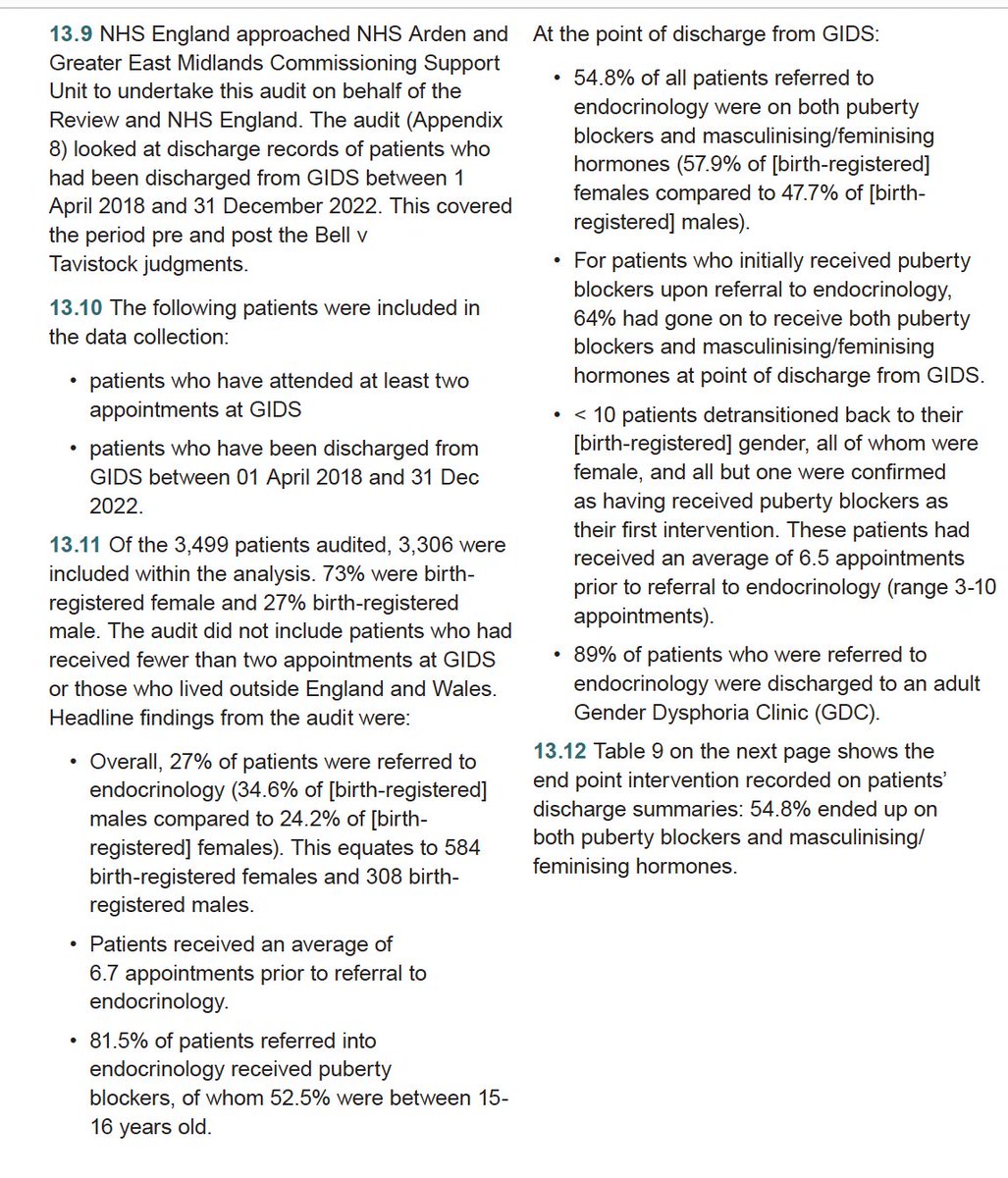
The Google doc paper, shown in the screenshot on the left, claims that an audit of GIDS patients, detailed in Appendix 8 of the Cass Review, showed that kids had 6 to 15 appointments prior to a referral to endocrinology. This is incorrect, as the chart from that appendix demonstrates (the screenshot on the right). A substantial proportion of kids were referred to endocrinology after 2-5 appointments. And as the authors of the Google doc paper noted, the average number of appointments prior to the Dec 2020 Bell v Tavistock decision was 6.7. (Note that for some reason, the Google doc piece sometimes refers to GIDS as GID.)
docs.google.com/document/d/e/2…
cass.independent-review.uk/home/publicati…
docs.google.com/document/d/e/2…
cass.independent-review.uk/home/publicati…
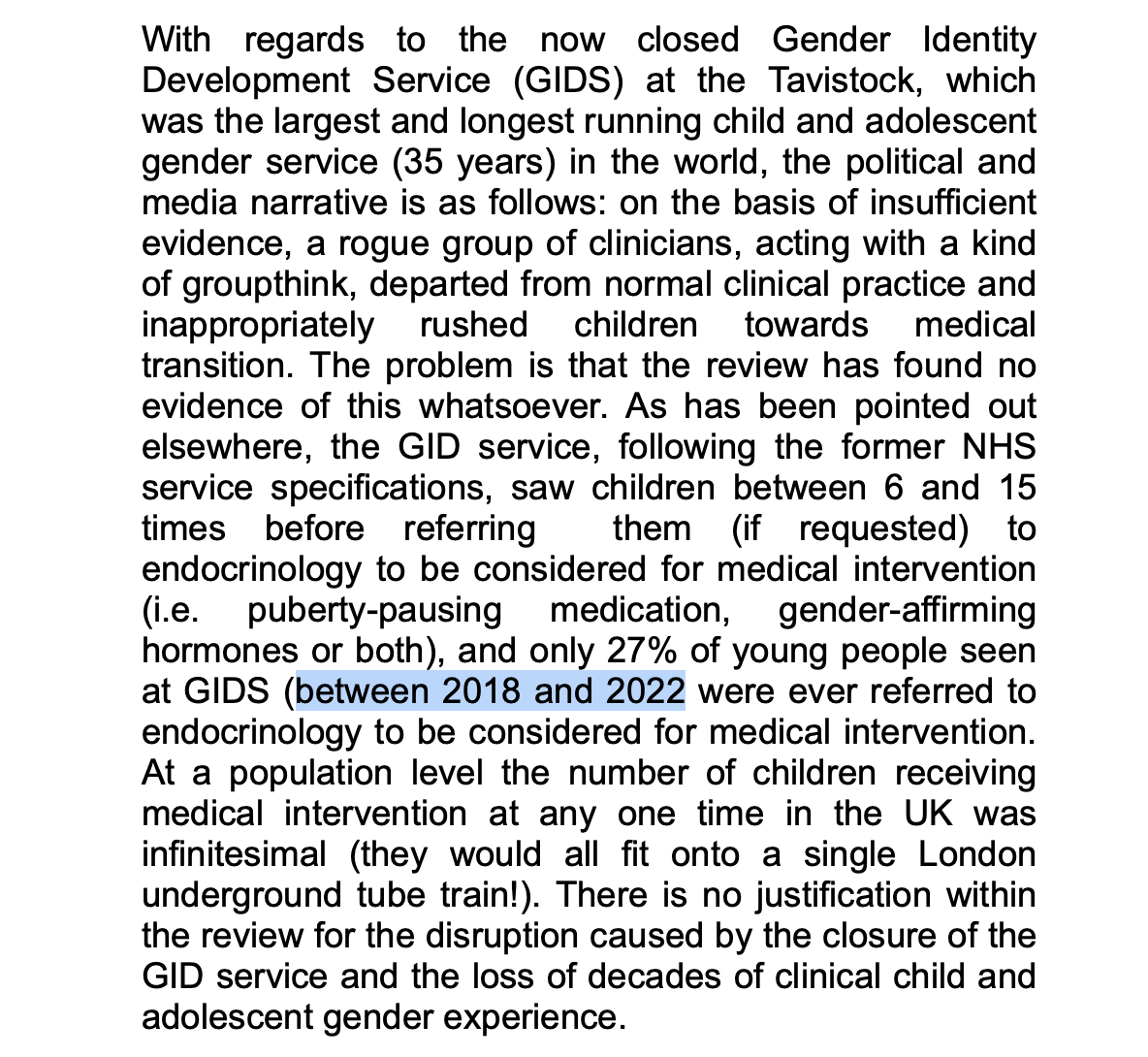
It's also important to note that the audit data included in Appendix 8 of the Cass Review only includes data on GIDS patients who were discharged, whether because they left the clinic or because they aged out. It is not a comprehensive sweep of all children seen by GIDS from 2018 to 2022 as the Google doc asserts.
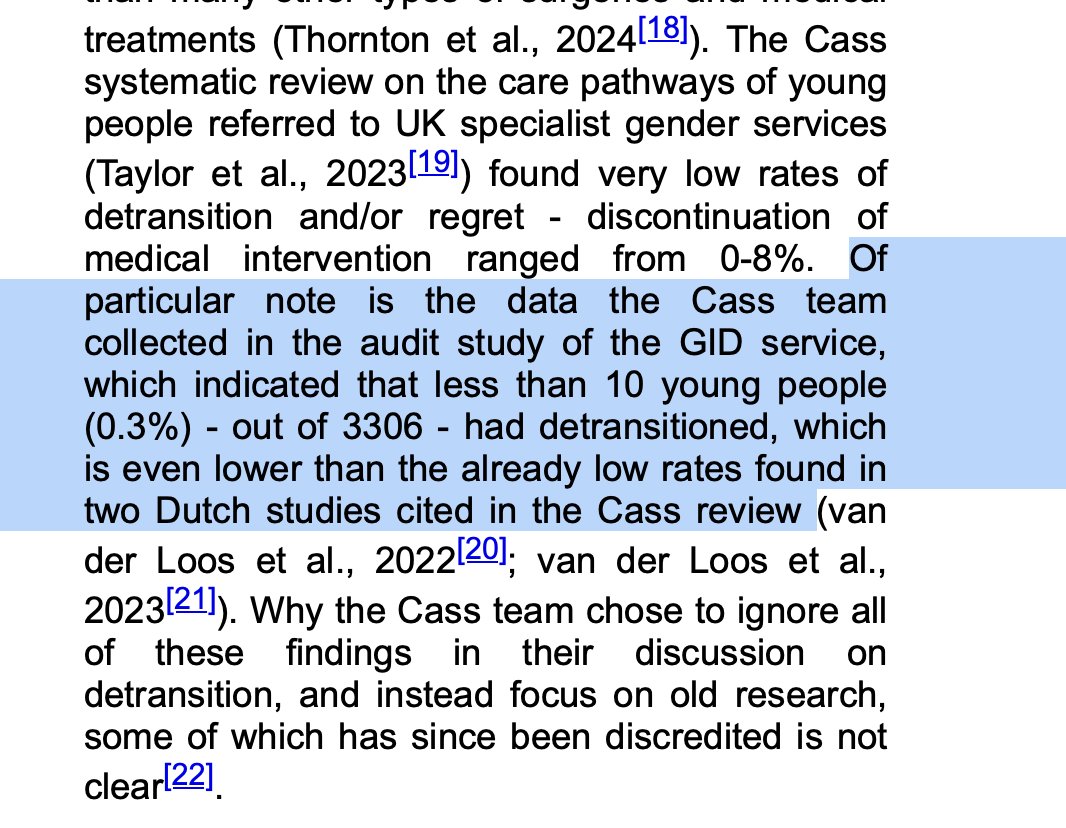
I have repeatedly corrected the math and the logic in the following claim about detransitioning at GIDS, but here we go again. In the Google doc, the authors claim that just 0.3% of the kids at GIDS detransitioned.
Firstly, because the audit only included discharge data, it could only capture GIDS patients up to age 18. It had no information on their young-adult lives; the NHS adult clinics refused to share with Cass any data on former GIDS patients. And since it can take quiet a few years after a medical transition for detransition to occur (Cass said experts told her it can take 5-10 years), this audit is incapable of capturing a comprehensive account of any detransitioning. This is especially true considering that the typical GIDS patient only started puberty blockers at age 15 or 16 and had to be on them for a substantial period (I believe it was 1 year) before they were allowed to start hormones, leaving a very short window for any detransitioning to occur by age 18.
Second, the Google doc authors have the denominator wrong. To detransition, someone would need to have taken cross-sex hormones. Only 516 of the young people included in the audit took CSHs. If fewer than 10 detransitioned by age 18, let's say that's 8 people. 8/516 = 1.5%
The screenshot on the left is from the Google doc. The one on the right is p 168 of the Cass Review.
docs.google.com/document/d/e/2…
cass.independent-review.uk/home/publicati…
Firstly, because the audit only included discharge data, it could only capture GIDS patients up to age 18. It had no information on their young-adult lives; the NHS adult clinics refused to share with Cass any data on former GIDS patients. And since it can take quiet a few years after a medical transition for detransition to occur (Cass said experts told her it can take 5-10 years), this audit is incapable of capturing a comprehensive account of any detransitioning. This is especially true considering that the typical GIDS patient only started puberty blockers at age 15 or 16 and had to be on them for a substantial period (I believe it was 1 year) before they were allowed to start hormones, leaving a very short window for any detransitioning to occur by age 18.
Second, the Google doc authors have the denominator wrong. To detransition, someone would need to have taken cross-sex hormones. Only 516 of the young people included in the audit took CSHs. If fewer than 10 detransitioned by age 18, let's say that's 8 people. 8/516 = 1.5%
The screenshot on the left is from the Google doc. The one on the right is p 168 of the Cass Review.
docs.google.com/document/d/e/2…
cass.independent-review.uk/home/publicati…
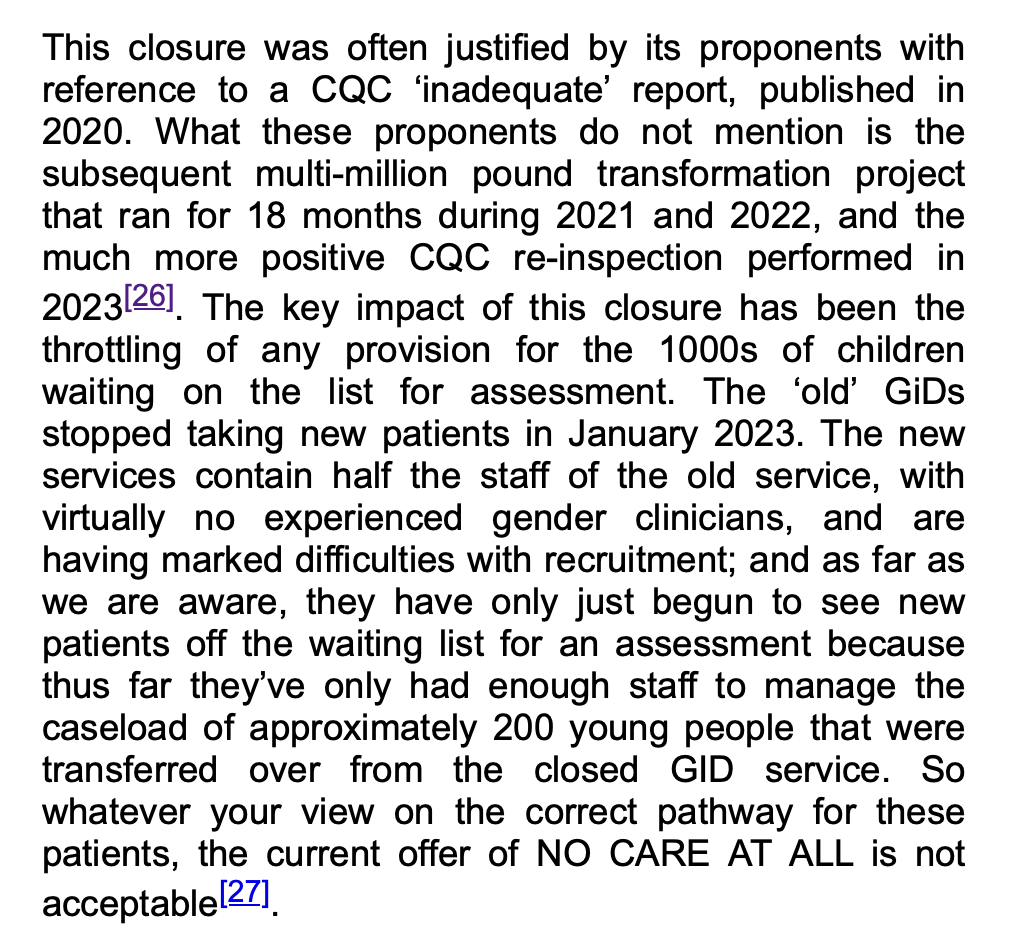
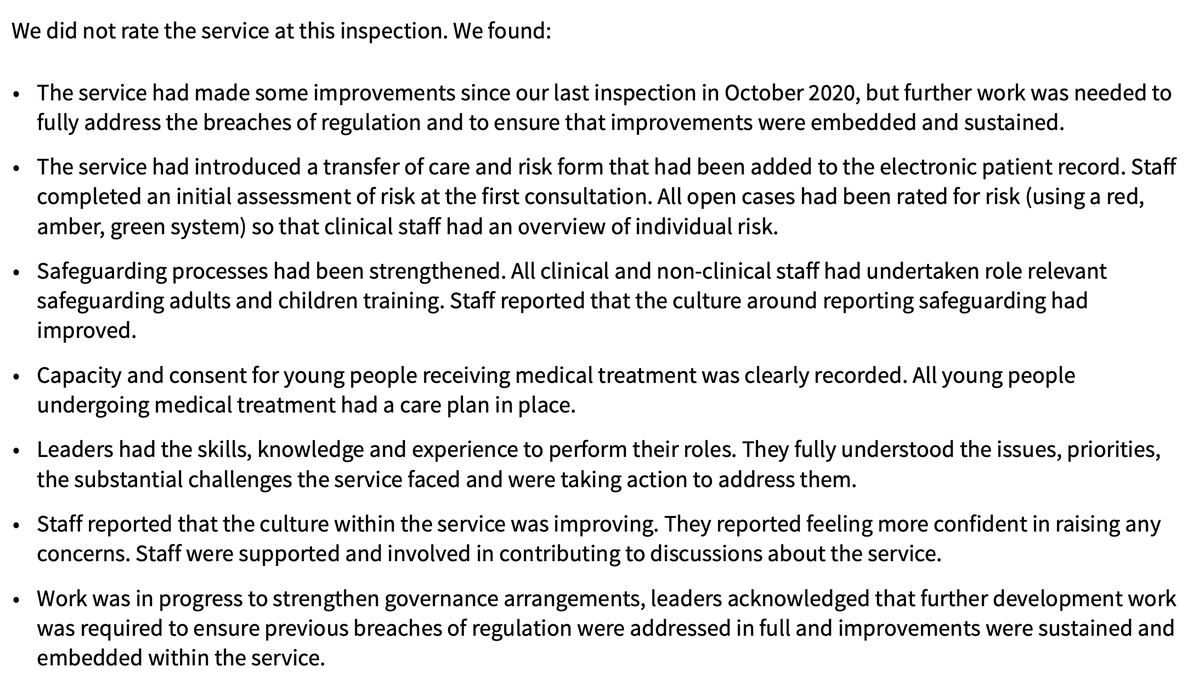
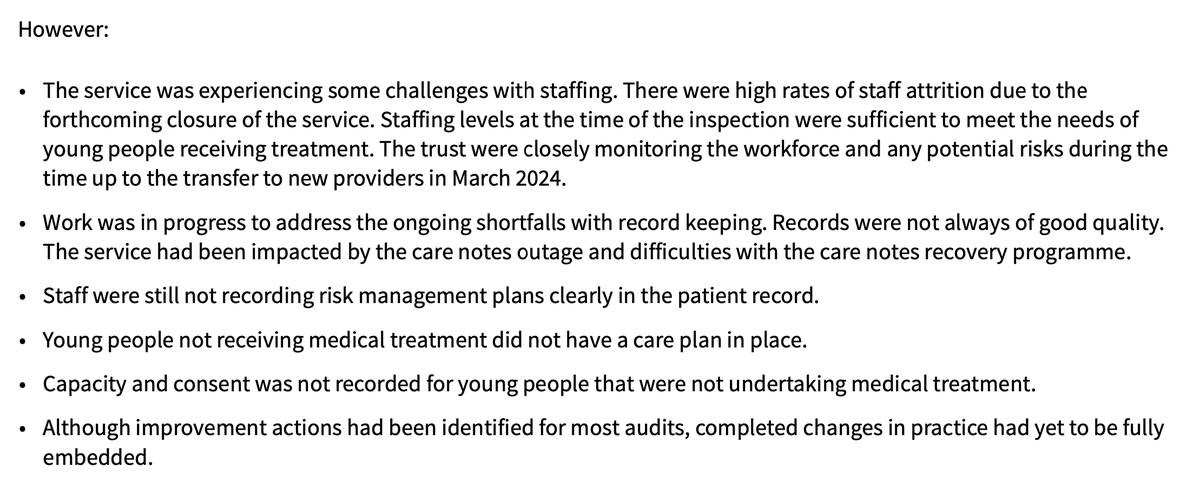
The authors of the Google doc attack on the Cass Review also claim that that after the Care Quality Commission gave the GIDS gender clinic at Tavistock a grade of "inadequate" in 2021, the CQC came back and gave them a "much more positive" assessment in 2023. In the link that the Google doc provides in the footnotes, the CQC states of its inspection of GIDS: "Inspectors did not re-rate the service following this latest inspection. Therefore, the ratings from the previous inspection remain in place until the service closes." While all of Tavistock had a good rating, GIDS's remained "inadequate".
Screenshots: 1) The Google doc paper; 2) The ratings of the various components of Tavistock, per the CQC; 3) and 4) The main findings of the 2023 CQC re-assessment of GIDS.
docs.google.com/document/d/e/2…
cqc.org.uk/press-release/…
cqc.org.uk/provider/RNK?r…
api.cqc.org.uk/public/v1/repo…
Screenshots: 1) The Google doc paper; 2) The ratings of the various components of Tavistock, per the CQC; 3) and 4) The main findings of the 2023 CQC re-assessment of GIDS.
docs.google.com/document/d/e/2…
cqc.org.uk/press-release/…
cqc.org.uk/provider/RNK?r…
api.cqc.org.uk/public/v1/repo…

I remain surprised when academics and doctors, such as the authors of the Google doc paper, deny the very well documented shift in demographics of young people presenting at gender clinics. I recently wrote: "As recently as the late 2000s, this was a tiny group comprised largely of biological males who displayed marked gender incongruence starting in early childhood. Now these clinics are inundated by a ballooning population of predominantly natal girls, many of whom had no apparent early-childhood gender incongruence and first expressed a trans identity only in adolescence."
capmh.biomedcentral.com/articles/10.11…
reuters.com/investigates/s…
pubmed.ncbi.nlm.nih.gov/31619510/
cass.independent-review.uk/home/publicati…
capmh.biomedcentral.com/articles/10.11…
reuters.com/investigates/s…
pubmed.ncbi.nlm.nih.gov/31619510/
cass.independent-review.uk/home/publicati…
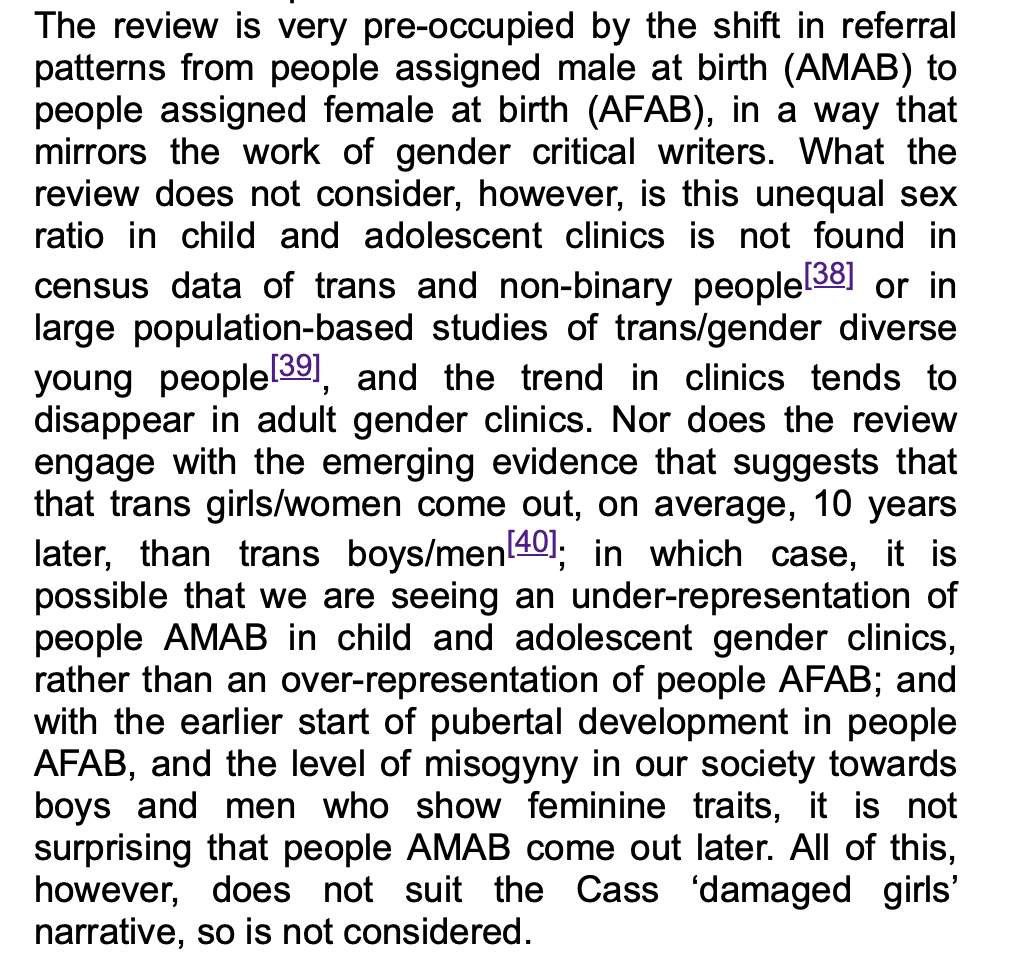
In their attack on what is sometimes known as exploratory therapy, the Google doc paper authors refer uncritically to activist and transfeminine jurist Florence Ashley, who has claimed that any therapy that is not by definition gender affirmative is, in fact, conversion therapy. Psychologists Laura Edwards-Leeper and Erica Anderson, who wrote about what's been called exploratory therapy in the Washington Post, disagree. Edwards-Leeper helped found the first pediatric gender clinic at Boston Children's in 2007. Anderson is the former head of USPATH. Both of them have become critical of the movement to medicalize gender transition of children. But neither support bans and both believe that for some children, a medical pathway may indeed be appropriate.
docs.google.com/document/d/e/2…
washingtonpost.com/outlook/2021/1…
pubmed.ncbi.nlm.nih.gov/36068009/
docs.google.com/document/d/e/2…
washingtonpost.com/outlook/2021/1…
pubmed.ncbi.nlm.nih.gov/36068009/
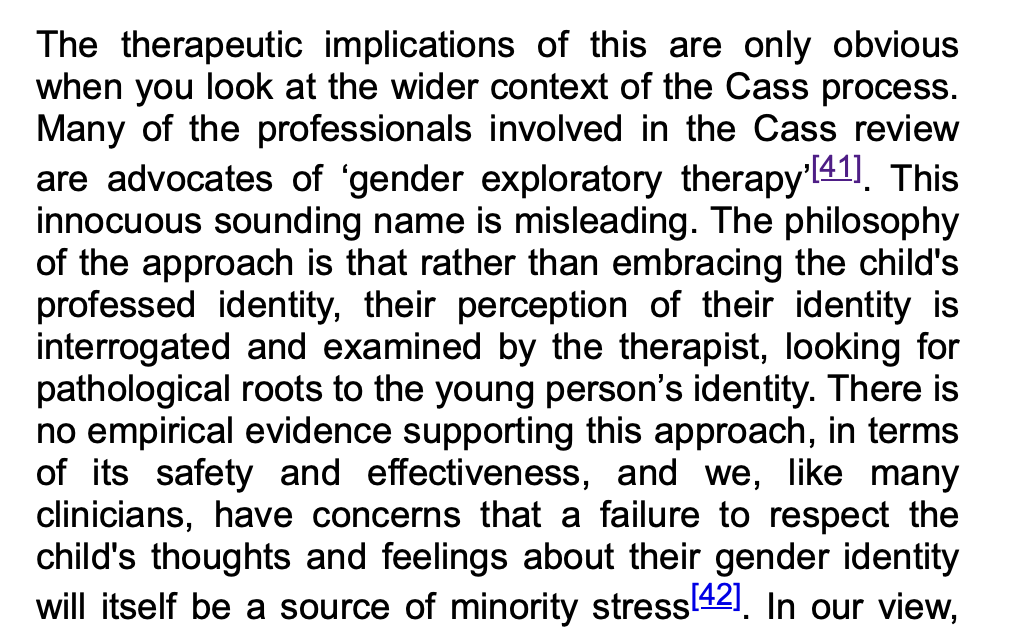
The Google doc paper attacking the Cass Review states that prescribing puberty blockers and cross-sex hormones to gender dysphoric minors "may have an uncertain evidence base, but one which broadly indicates benefit." I recently wrote: "Dr. Kathleen McDeavitt, a psychiatrist at the Baylor College of Medicine, recently analyzed 14 key studies of pediatric gender-transition treatment that followed participants over time, including many on Dr. Turban’s list. She reached a markedly different conclusion in her review paper, published in June, than he does. Dr. McDeavitt found 'inconsistent demonstration of benefit with respect to depression and suicidality' from providing gender-distressed kids with blockers, hormones or both. Some study authors, she further concluded, 'articulated positive outcomes about hormonal interventions even in the setting of insignificant, small or negative findings.'”
docs.google.com/document/d/e/2…
onlinelibrary.wiley.com/doi/10.1111/ap…
docs.google.com/document/d/e/2…
onlinelibrary.wiley.com/doi/10.1111/ap…
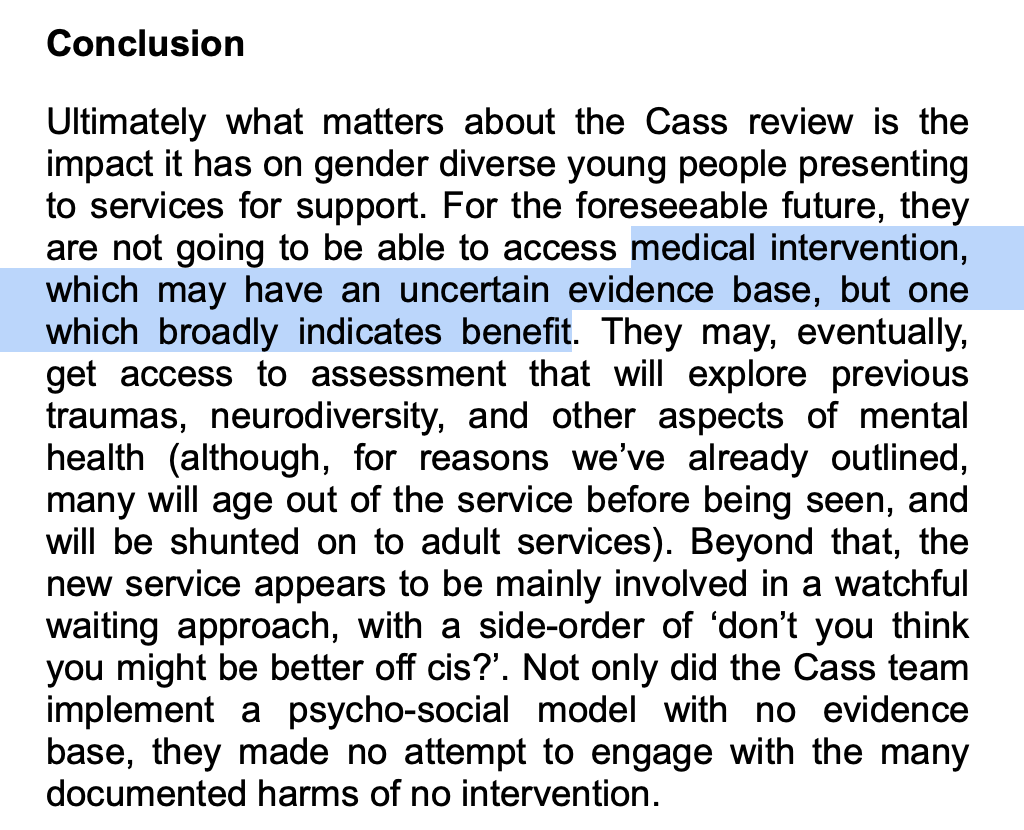
The Google doc paper claims that it is untrue that the GIDS clinic launched its medical gender transition program based on only one study. It absolutely is true that the GIDS program as it was known until it was shuttered in March 2024 was based on the 2011 paper on the Dutch model.
Regardless of whether today there are over 100 studies about gender-transition treatment in minors, that was the first longitudinal cohort study ever to published about prescribing puberty blockers and cross-sex hormones to treat gender dysphoria in children.
It's also important to note that there have been not much more than a dozen longitudinal cohort studies of pediatric gender-transition treatment.
pubmed.ncbi.nlm.nih.gov/20646177/
Regardless of whether today there are over 100 studies about gender-transition treatment in minors, that was the first longitudinal cohort study ever to published about prescribing puberty blockers and cross-sex hormones to treat gender dysphoria in children.
It's also important to note that there have been not much more than a dozen longitudinal cohort studies of pediatric gender-transition treatment.
pubmed.ncbi.nlm.nih.gov/20646177/
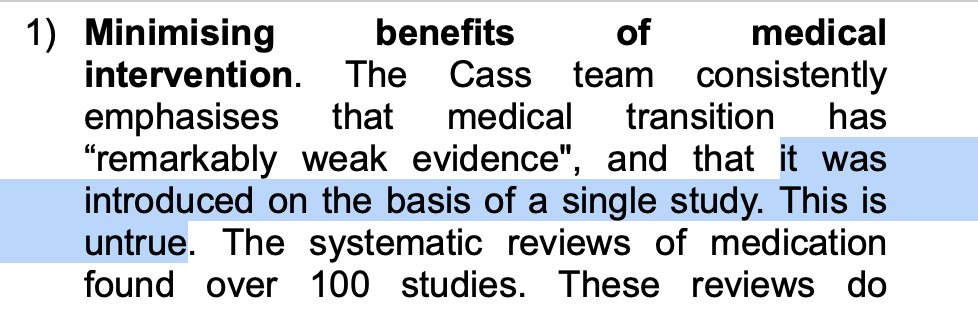
Nowhere in the Google doc paper do they mention the two most important ethical concerns about prescribing puberty blockers and cross-sex hormones to children: infertility and sexual dysfunction.
docs.google.com/document/d/e/2…
docs.google.com/document/d/e/2…
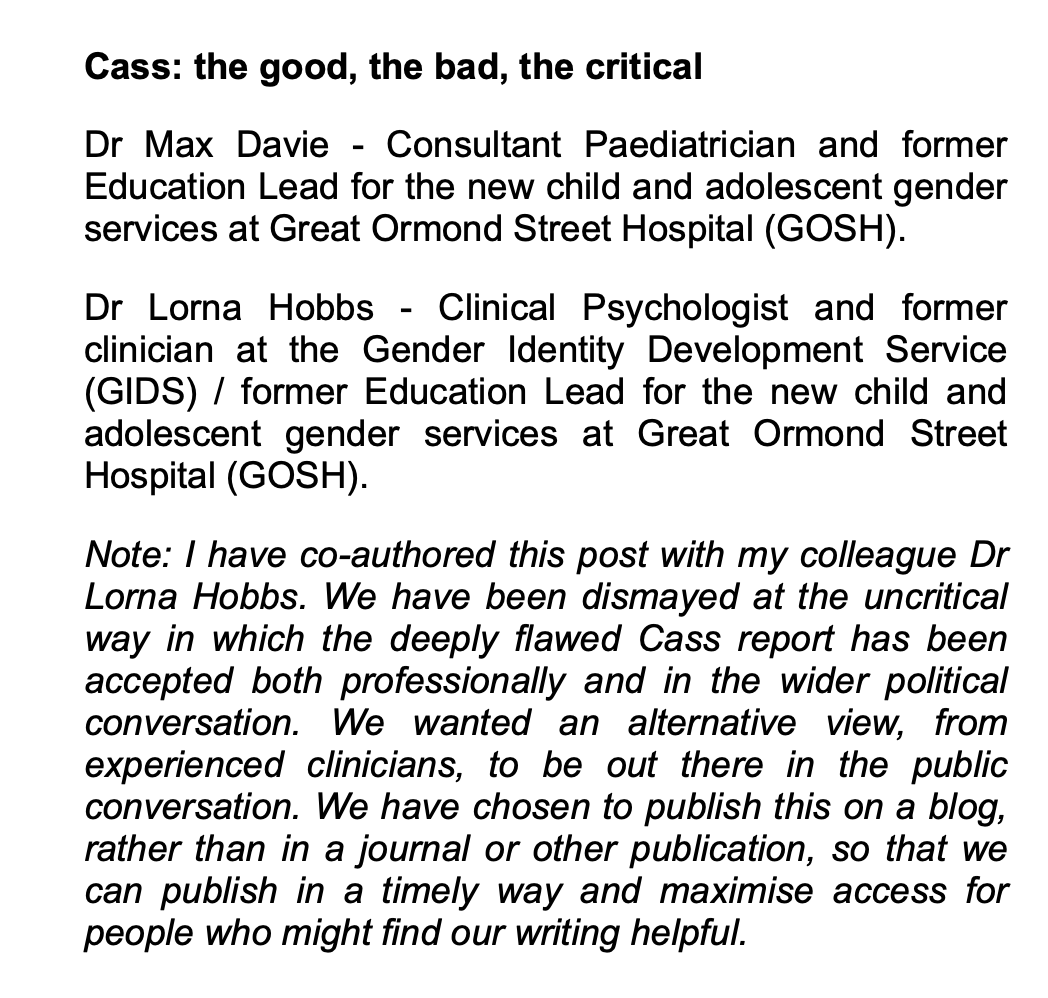
Yesterday, the NHS published a blueprint of how it intends to implement the recommendations of the Cass Review over the next two years. I wrote about those plans here: benryan.substack.com/p/englands-nat…
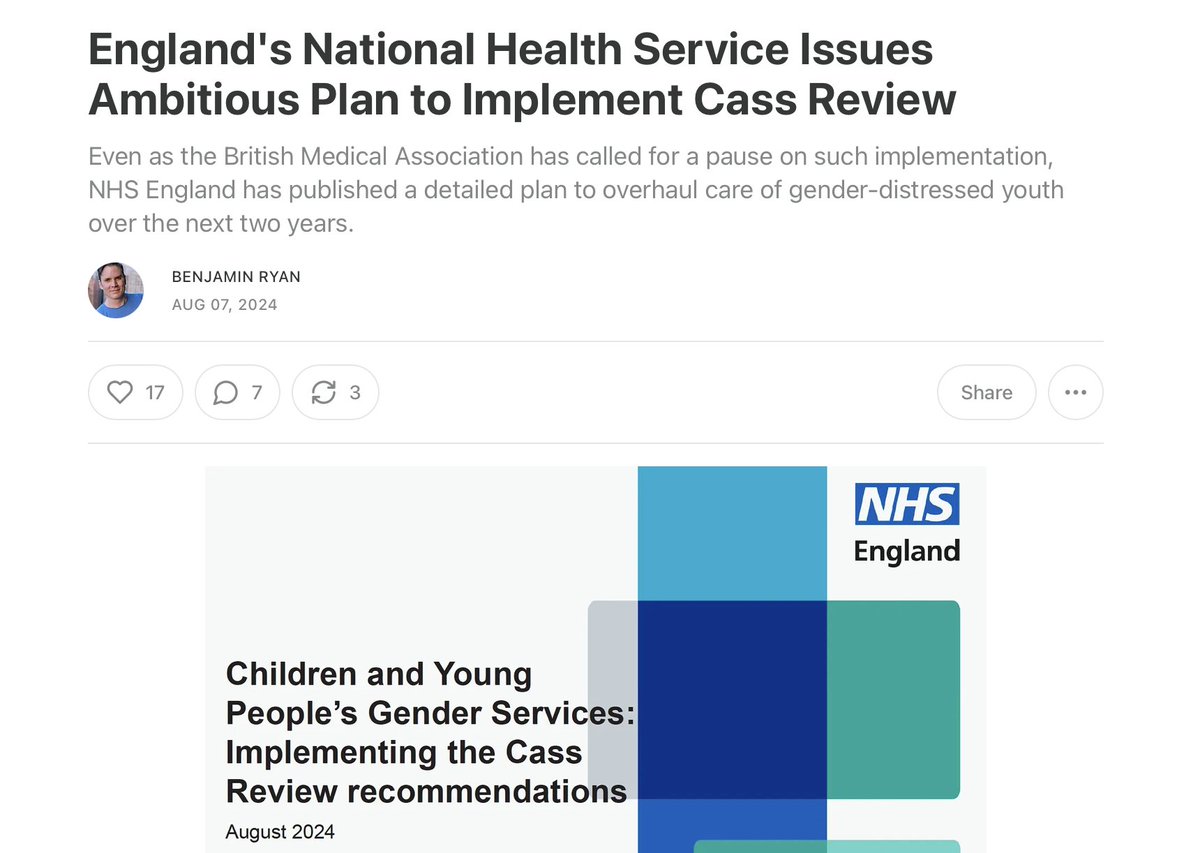
Among those whom @MaxDavie, one of the authors of the paper attacking the Cass Review, thank are activist Mallory Moore @Chican3ry and debunking podcaster Michael Hobbes @RottenInDenmark. Moore, along with activist Alejandra Caraballo @Esqueer_, was centrally responsible for the misinformation about the Cass Review that it supposedly simply discarded most studies about pediatric gender medicine. Dr. Cass ultimately denounced Moore's efforts put children at risk and were "unforgivable."
Hobbes' podcasts and tweets about the Cass Review have been masterclasses in misinformation peddling.
bbc.com/news/health-68…
Hobbes' podcasts and tweets about the Cass Review have been masterclasses in misinformation peddling.
bbc.com/news/health-68…
https://x.com/benryanwriter/status/1793830026854768805
https://x.com/benryanwriter/status/1797667270166253943
https://x.com/benryanwriter/status/1794017414859952238
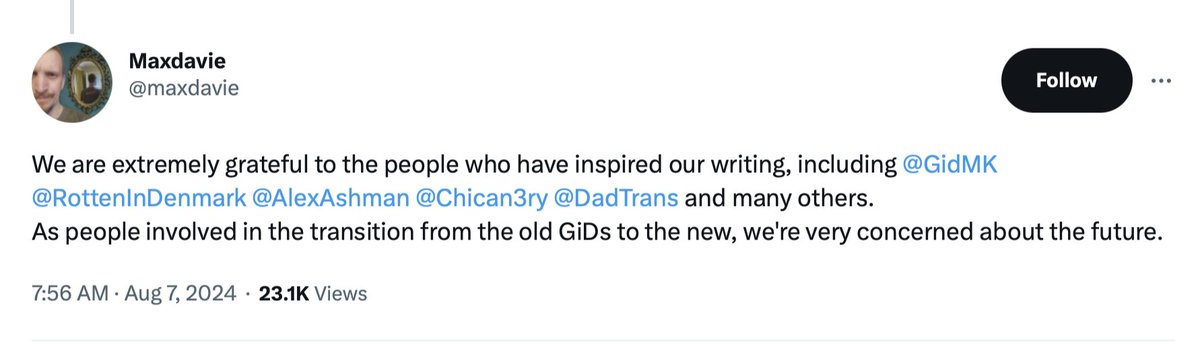
@maxdavie @Chican3ry @RottenInDenmark @Esqueer_ The coauthor on why they didn’t seek peer review for the paper they put in a Google doc attacking the Cass Review:
https://twitter.com/maxdavie/status/1821195577809678356
@BolyardLaura osf.io/preprints/osf/…
A coauthor of the Google-doc paper attacking the Cass Review distances himself from the activists and pundits he thanked as inspiration for his paper.

• • •
Missing some Tweet in this thread? You can try to
force a refresh