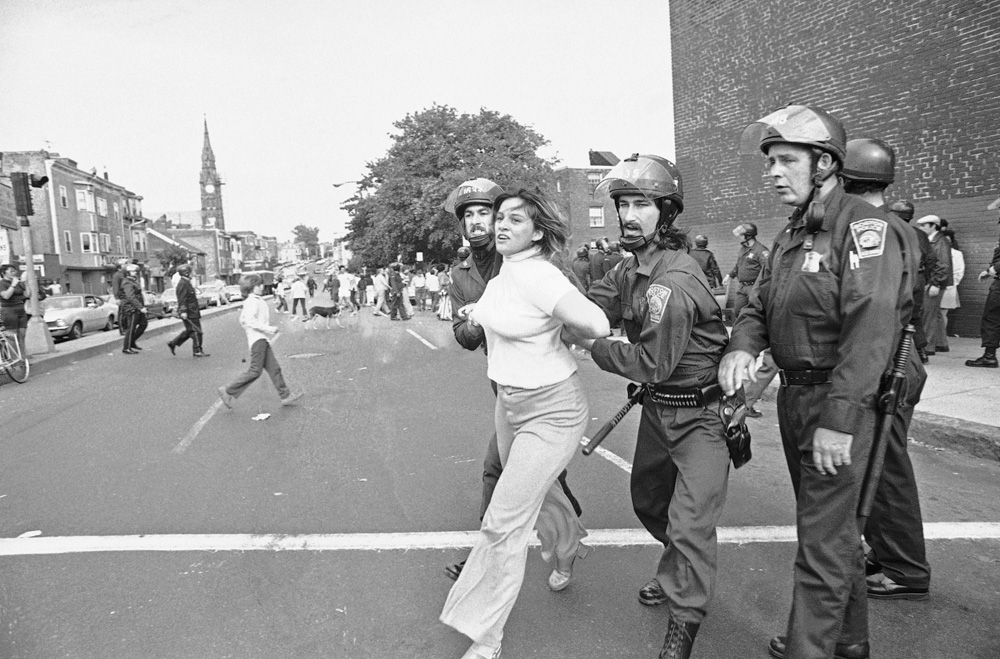
The East New York Race Riots, Mayor Lindsay, and the Gallo Crew:
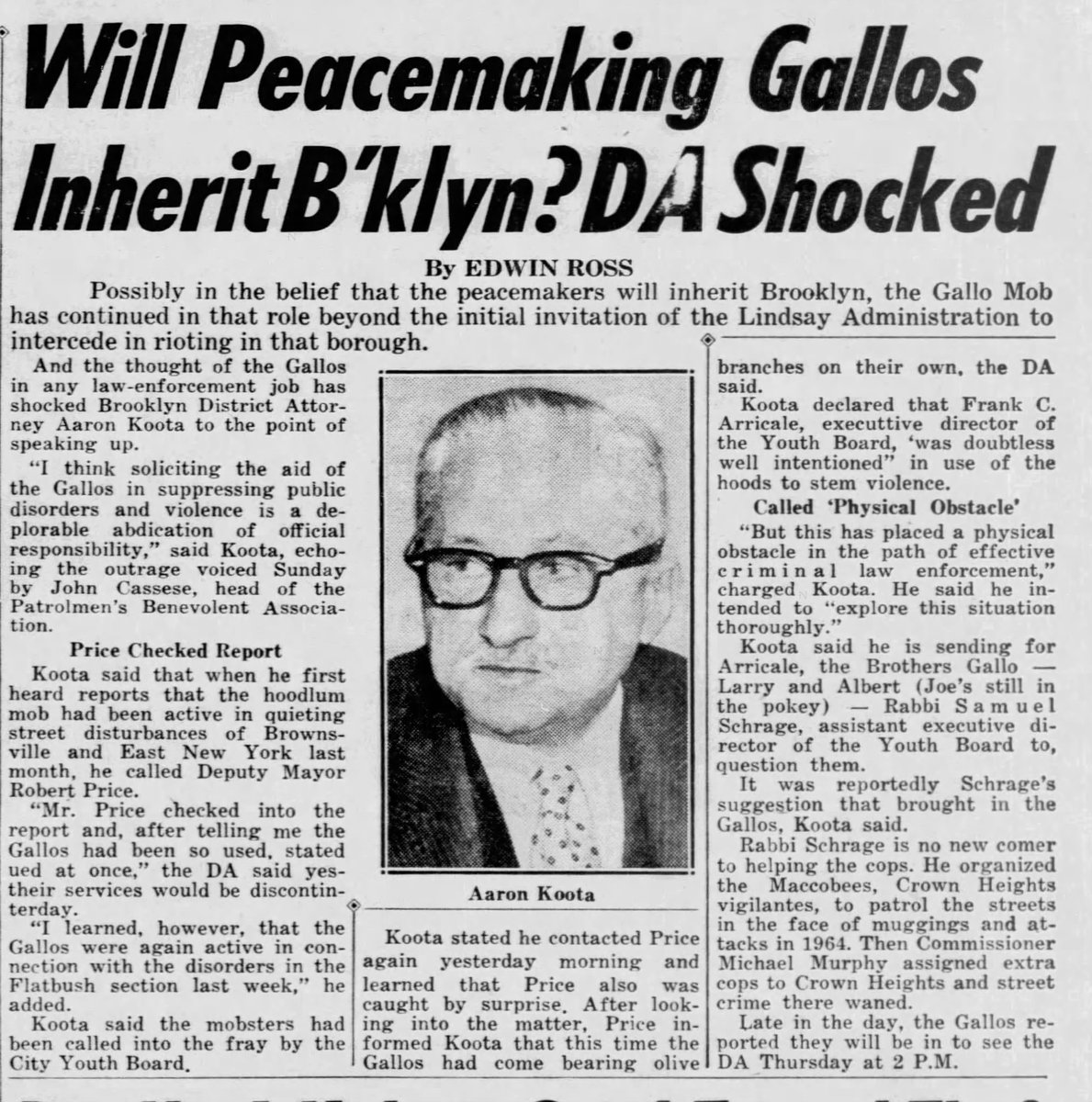
In the Summer of 1966, liberal New York City Mayor John Lindsay took an unusual step in an attempt to calm Brooklyn racial unrest. He asked for help … from the Mafia.
🧵/14
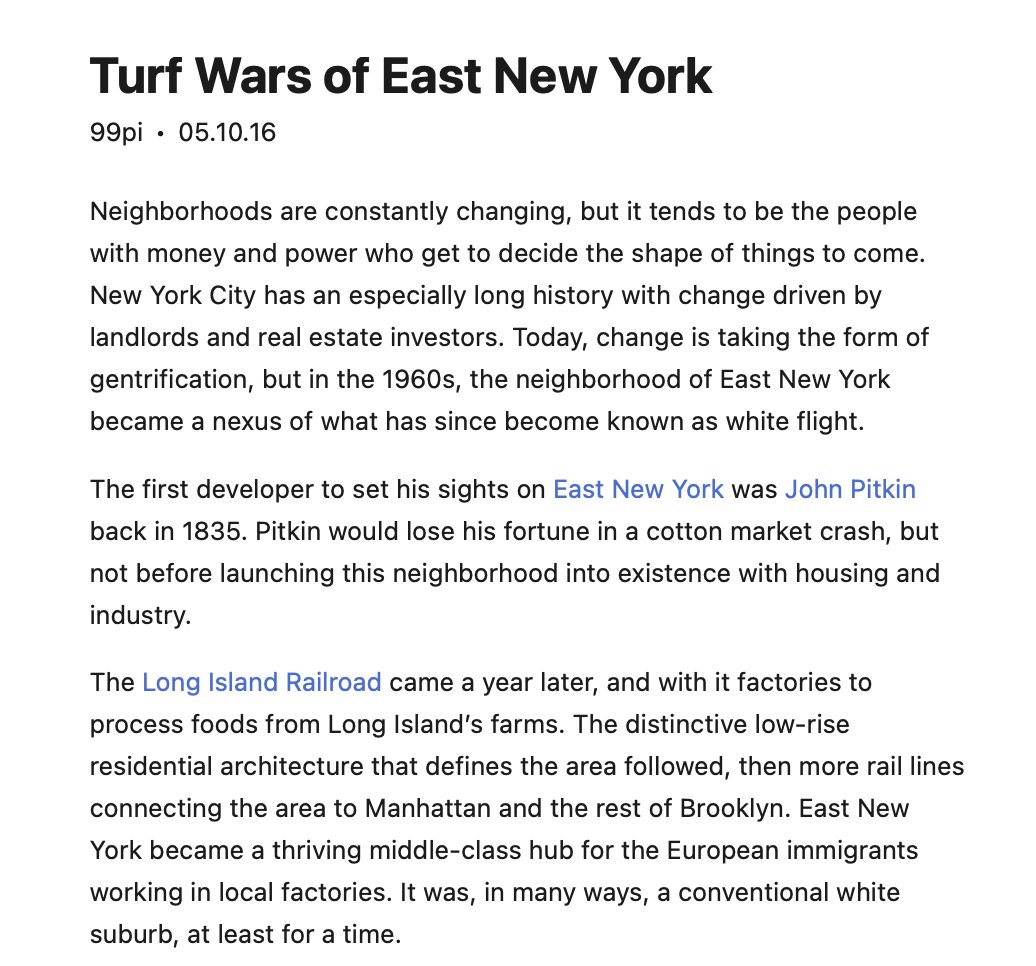
In July 1966 racial violence seemed to be spiraling out of control in East New York. The unrest had been sparked by rapid demographic change - as Blacks and Puerto Ricans had flooded into neighborhoods that had formerly been dominated by Jews and White ethnics.
2/14
As late as 1960, East New York had been 85 percent White. By 1966, Whites were down to 20 percent. In East New York, one ethnic group stubbornly defied the racial transition of the area, occasionally resisting “with fists and lug wrenches” - the Italians.
3/14
The Italian resistance fit a recognized pattern: “Catholic resistance to racial change is a constant theme in studies of almost every American city. "
4/14
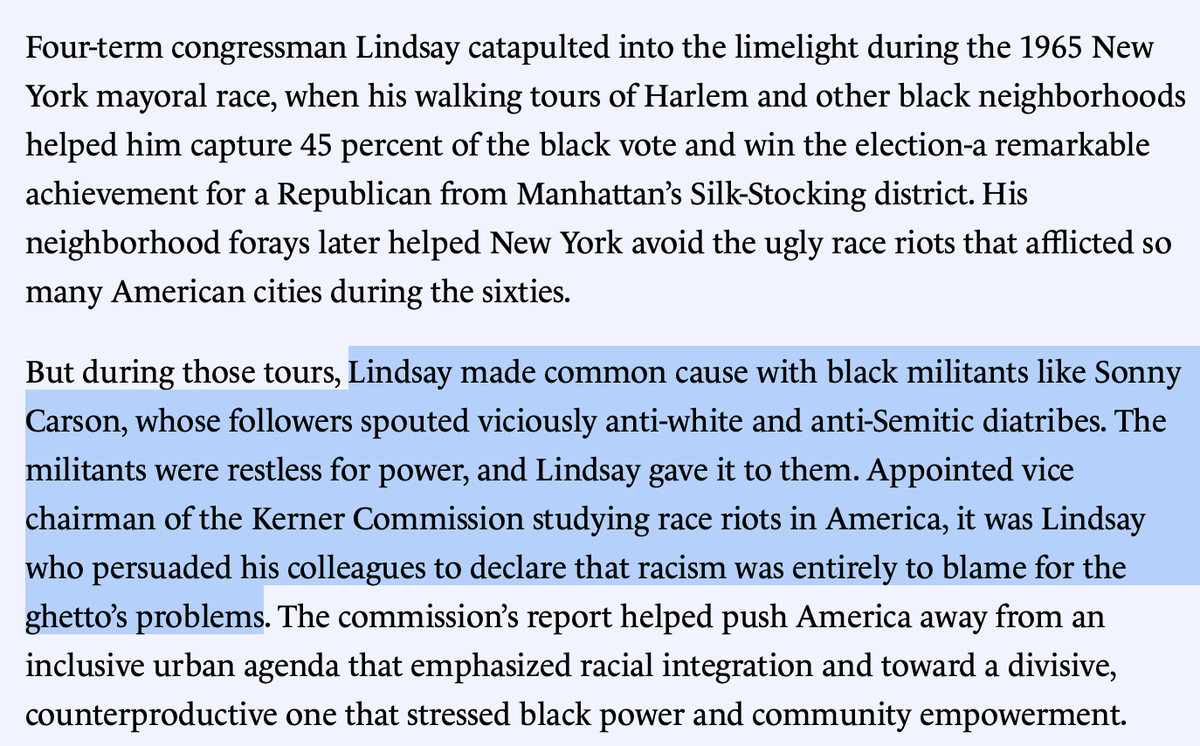
Though Lindsay had run for Mayor as a Republican, he was a committed liberal (his conservative opponent was National Review’s William F. Buckley). And his core supporters were Manhattan liberals – not working-class White ethnics in the outer-boroughs.
5/14
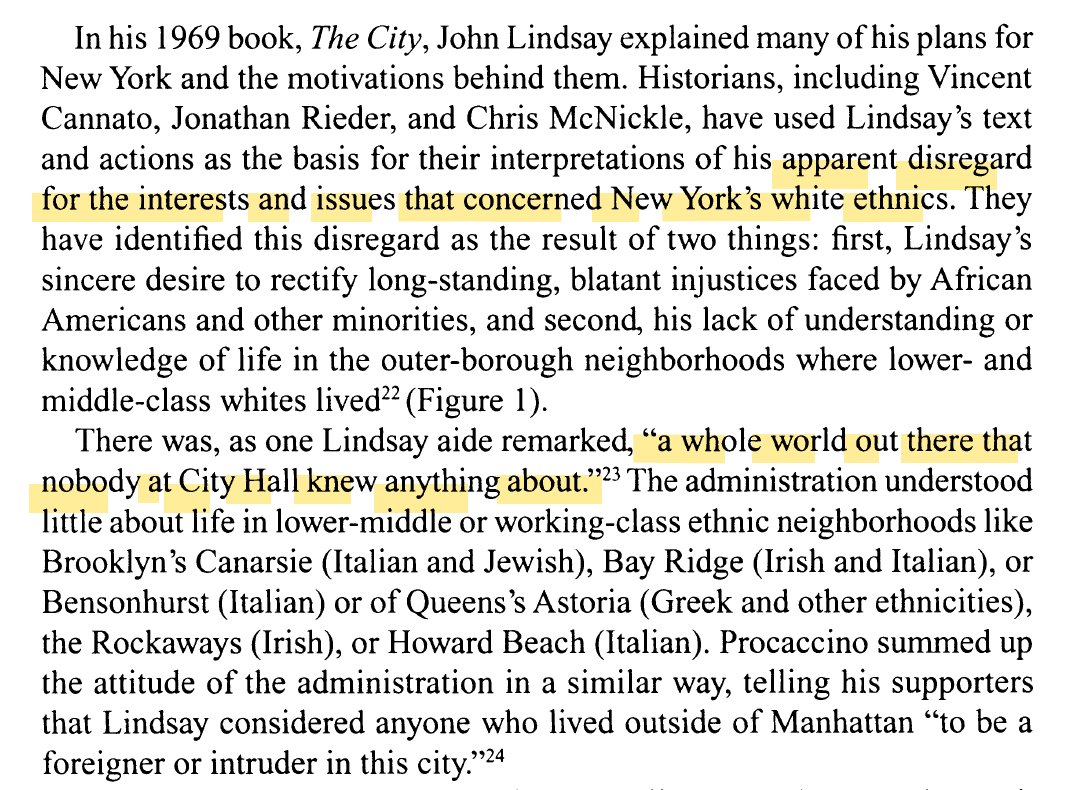
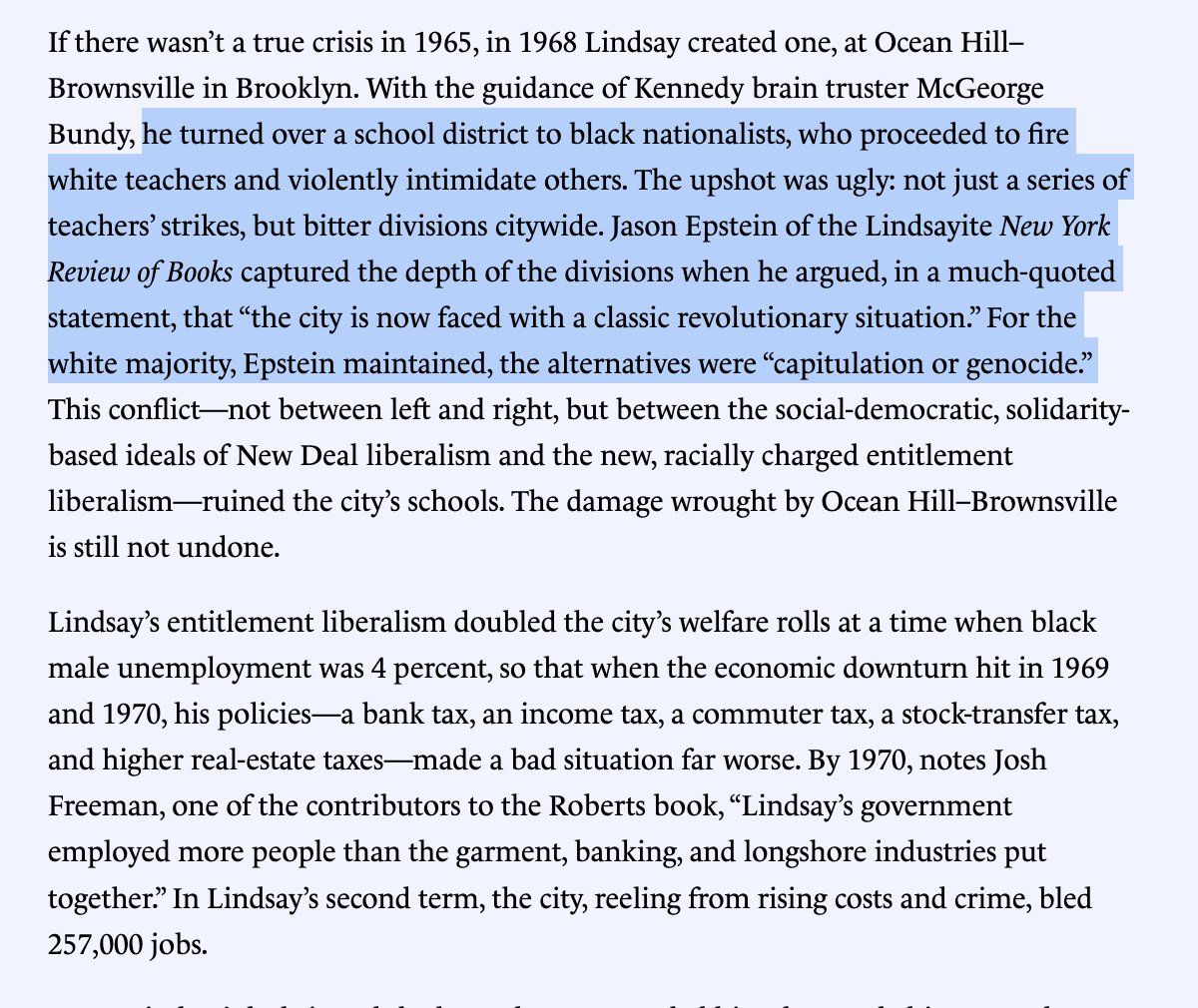
Lindsay was focused on addressing the grievances of Blacks, and other minority constituents. Many White ethnic voters felt alienated from his administration, and Italians in particular blamed the liberal Mayor for the increasing crime and decreasing home values.
6/14
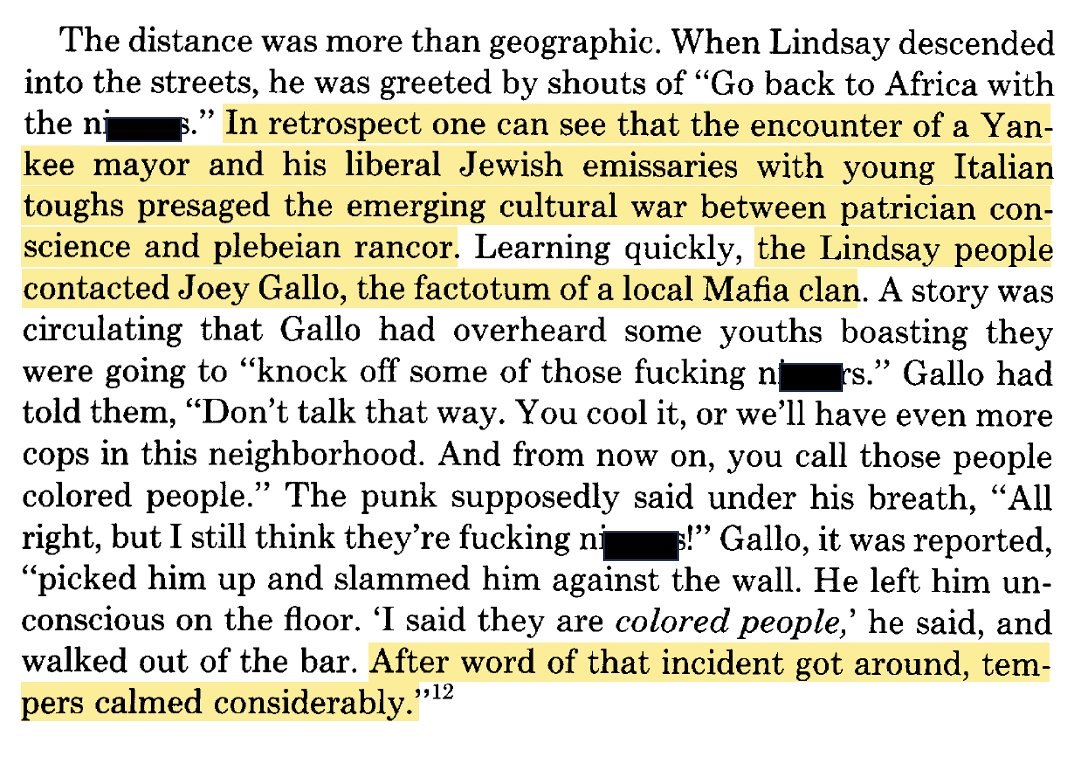
Trying to appease the Italians, Lindsay was out of his element: "In retrospect one can see that the encounter of a Yankee mayor and his liberal Jewish emissaries with young Italian toughs presaged the emerging cultural war between patrician conscience and plebeian rancor."
7/14
Lindsay’s difficulties connecting with White ethnics, and the downright hostile reception he received from young Italian men, apparently inspired the mayor’s team to reach out to the Mafia - "to check the behavior of Italian American youths in the area."
8/14
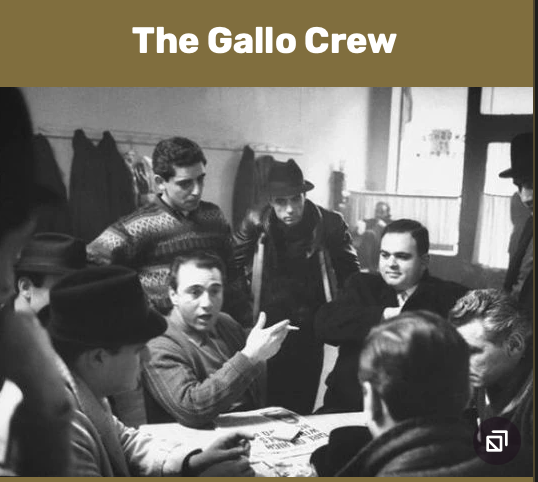
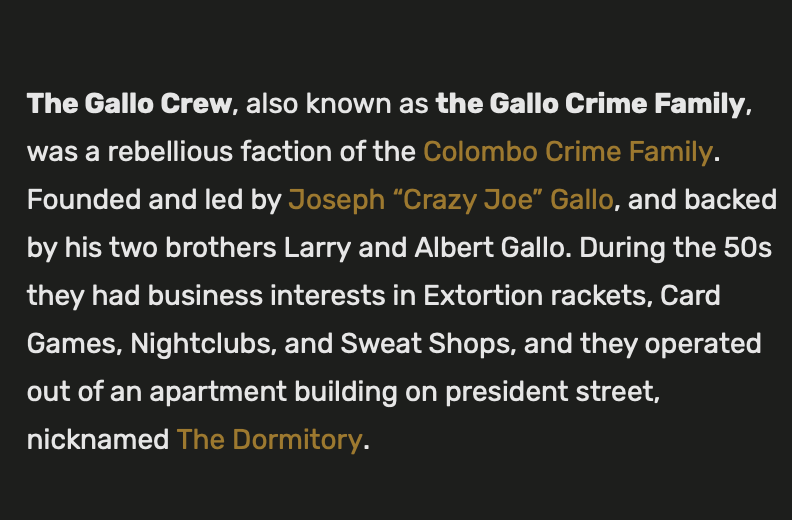
The Gallos were an extremely rough crew, involved in a host of rackets. And they were veterans of more than one bloody gang war. When Mayor Lindsay’s administration formed this modus vivendi with an organized crime outfit, many New Yorkers were appalled.
9/14
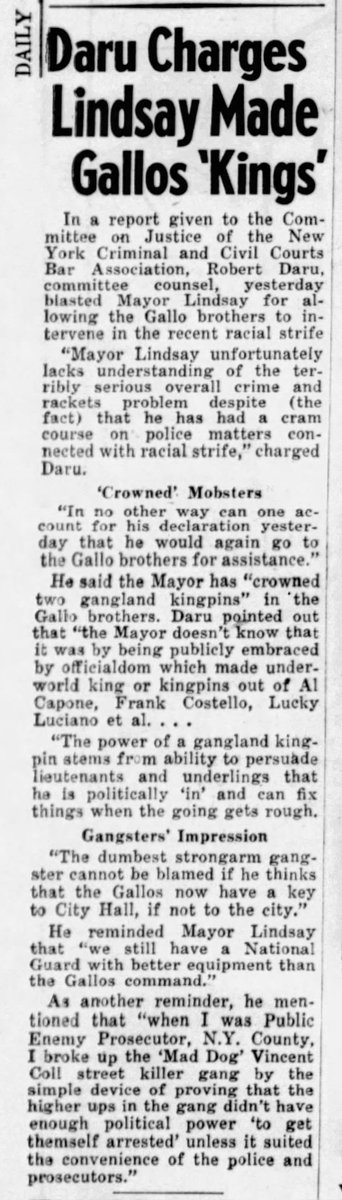
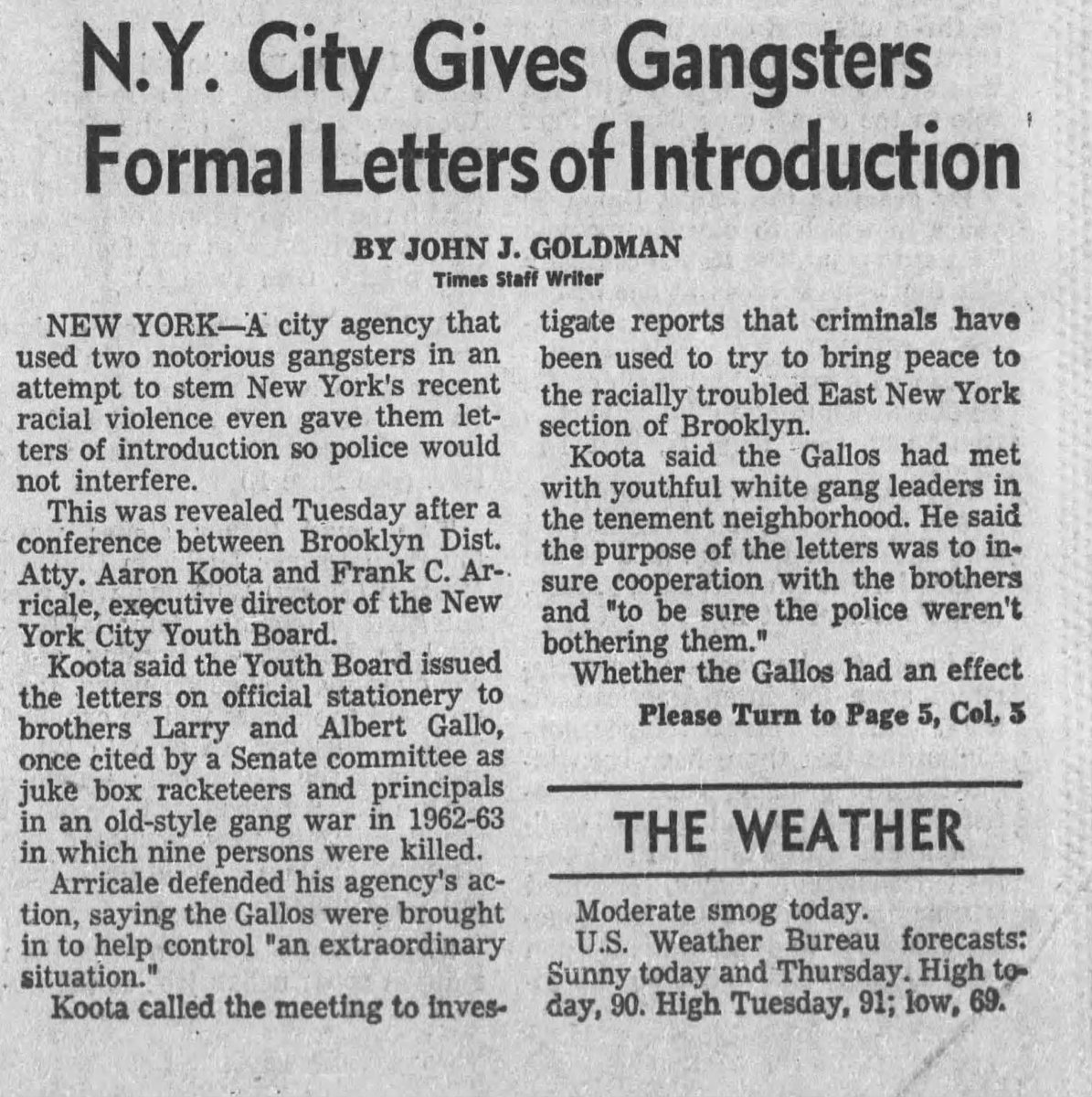
Critics pointed out that by deputizing a criminal gang, the Mayor had increased their prestige and power (they were even given letters of introduction). Why had Lindsay made deals with the Mafia, instead of deploying the National Guard?
10/14
Mayor Lindsay seemed confident his interventions with the Mob had helped get the racial conflict under control. More likely it was the deployment of hundreds of police reinforcements to Brooklyn – and that the unrest eventually burned itself out, as it usually does.
11/14
Lindsay’s gimmick of calling in the Mafia was not a long-term solution to NYC racial unrest and violence. Race riots would erupt again in 1967 (Puerto Ricans and Blacks) and 1968 (Blacks). Violent crime continued to skyrocket in the city.
12/14
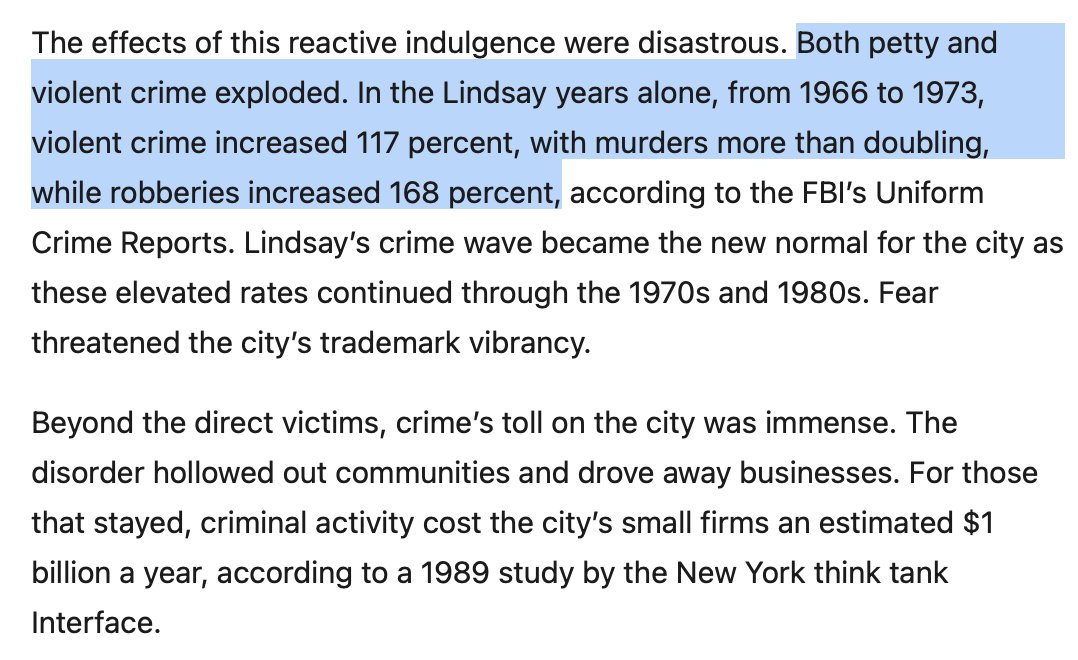
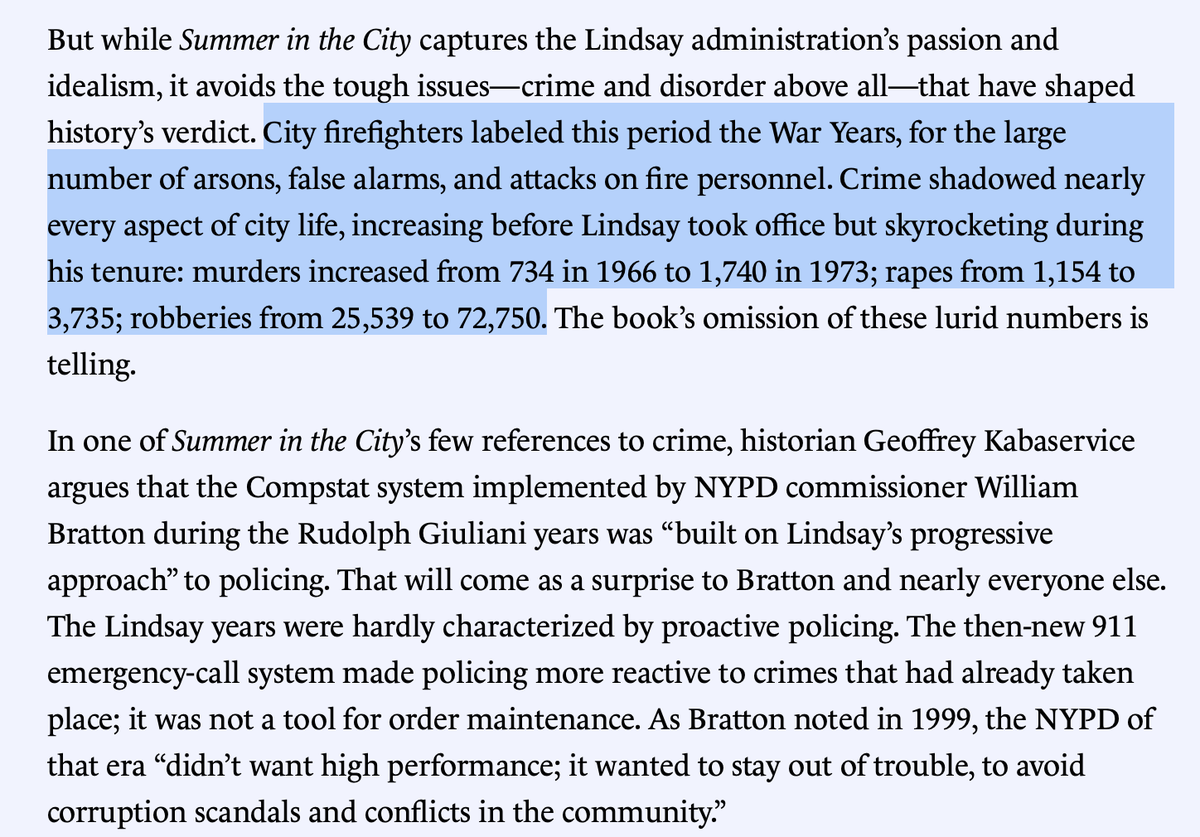
On the whole, Lindsay mayoralty was a disaster. His free spending and soft-on-crime tenure in office set the city on the path for the “Drop Dead” fiscal crisis of 1975, and the apocalyptic “Warriors” / “Escape from New York” vibes of the late 70s to early 80s.
13/14
Epilogue: “Crazy” Joe Gallo was not around for the end of Mayor Lindsay’s term. Gallo met his fate on April 7, 1972. His demise was depicted by Sebastian Mancuso in Martin Scorsese’s “The Irishman:”
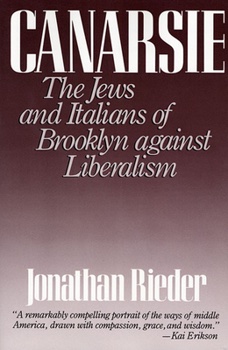
Some sources:
• • •
Missing some Tweet in this thread? You can try to
force a refresh

Dresden and the Allied campaign of terror-bombing:
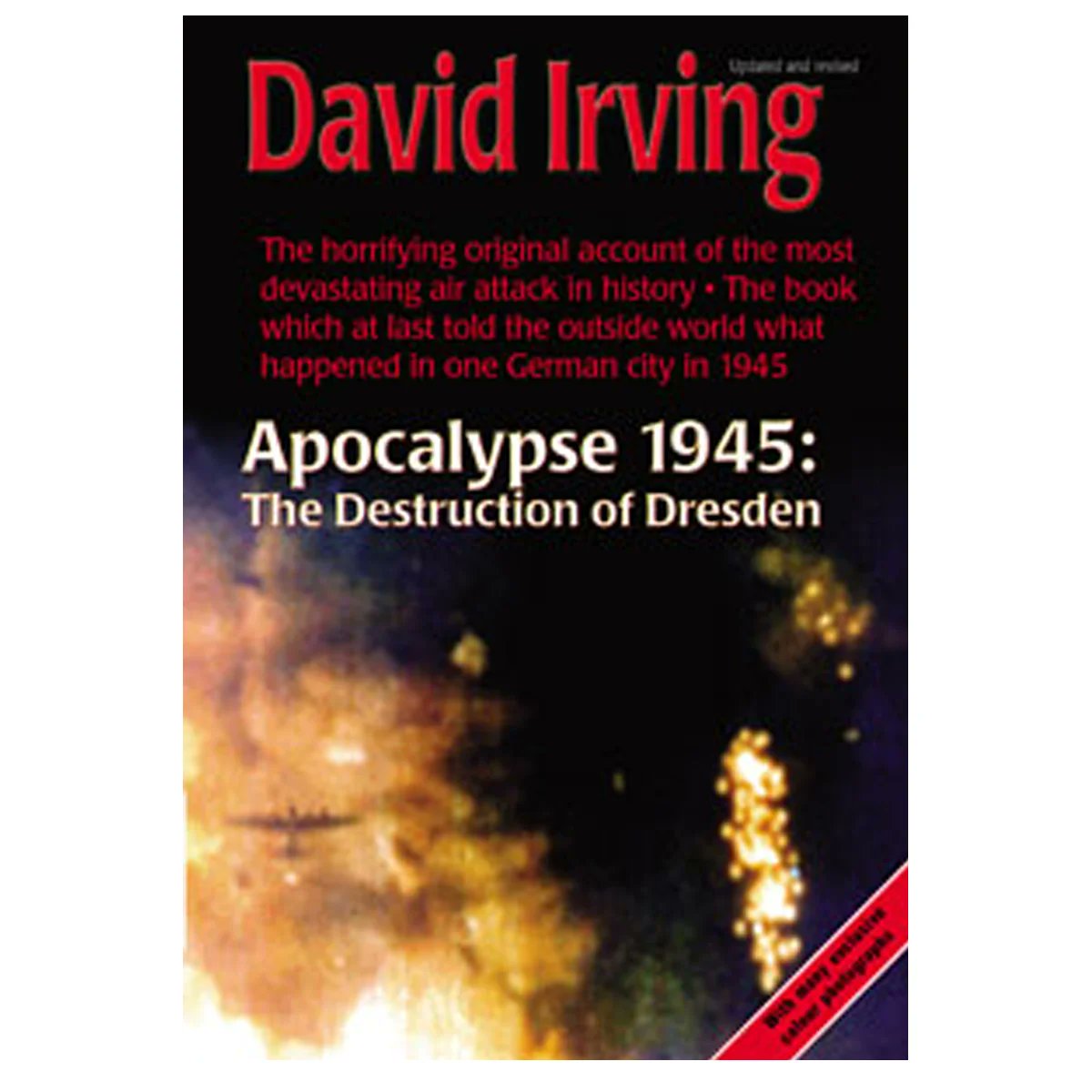
With Allies on the verge of victory in 1945, and enjoying overwhelming superiority on land and in the air, why were British and American air forces focused on massacring German civilians? Who was responsible?

/🧵
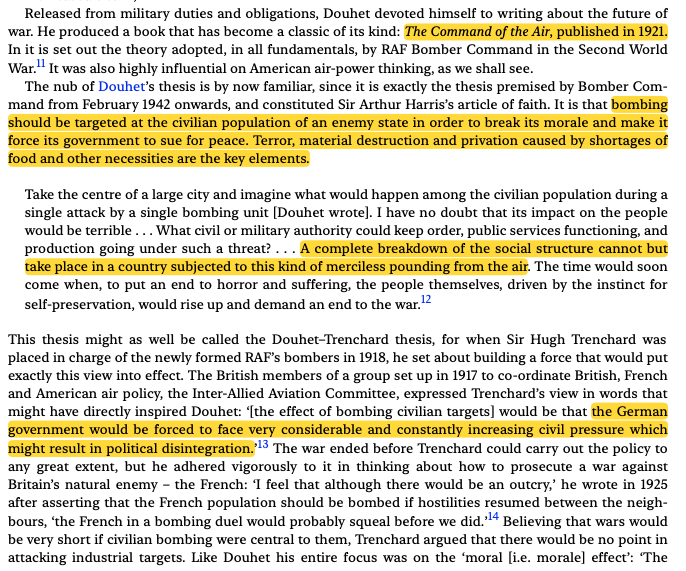
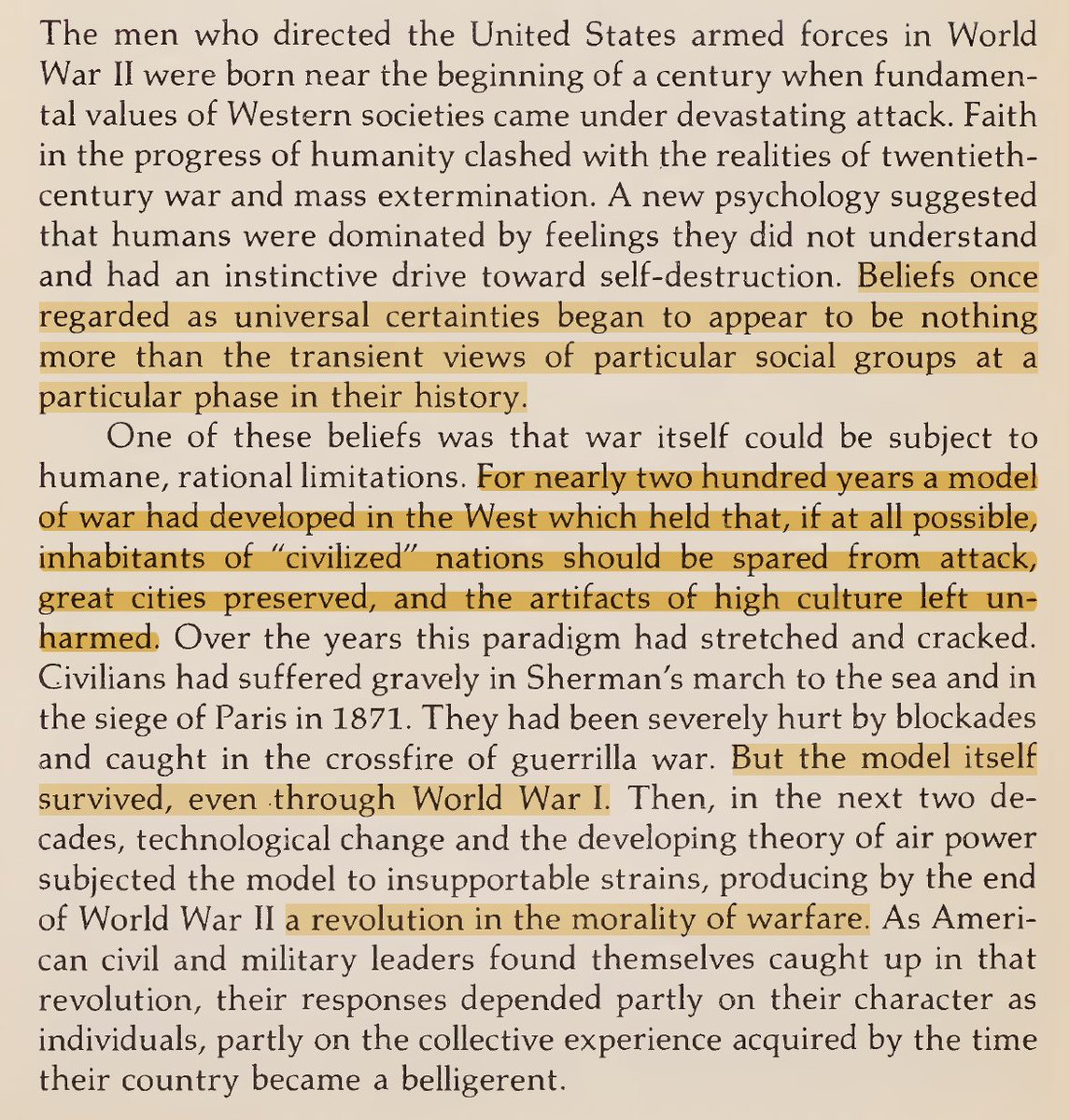
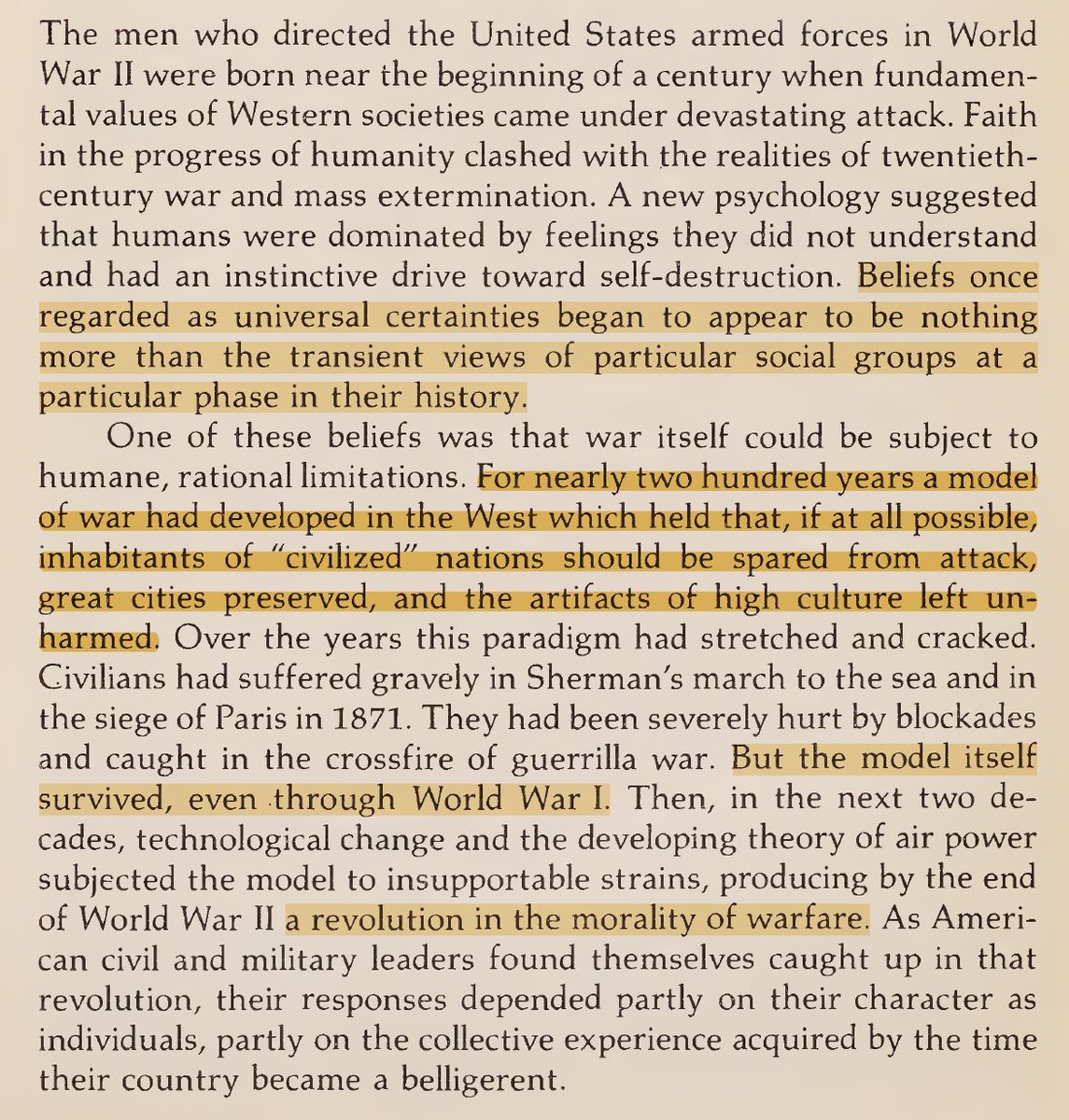
Background: Western “Jus in Bello" traditions prohibited attacks against innocent civilians and non-combatants. But some 20th Century air-power enthusiasts argued that civilian population areas should be *deliberately* targeted.

/2
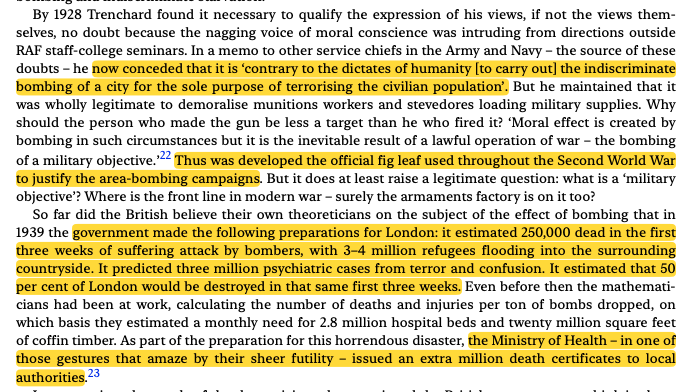
The strategy of attacking civilians came to prominence in the RAF in the person of Sir Hugh Trenchard. Trenchard developed the “official fig leaf” used by the British during the war – that the attacks were aimed at munitions workers, rather than civilians in general.
/3
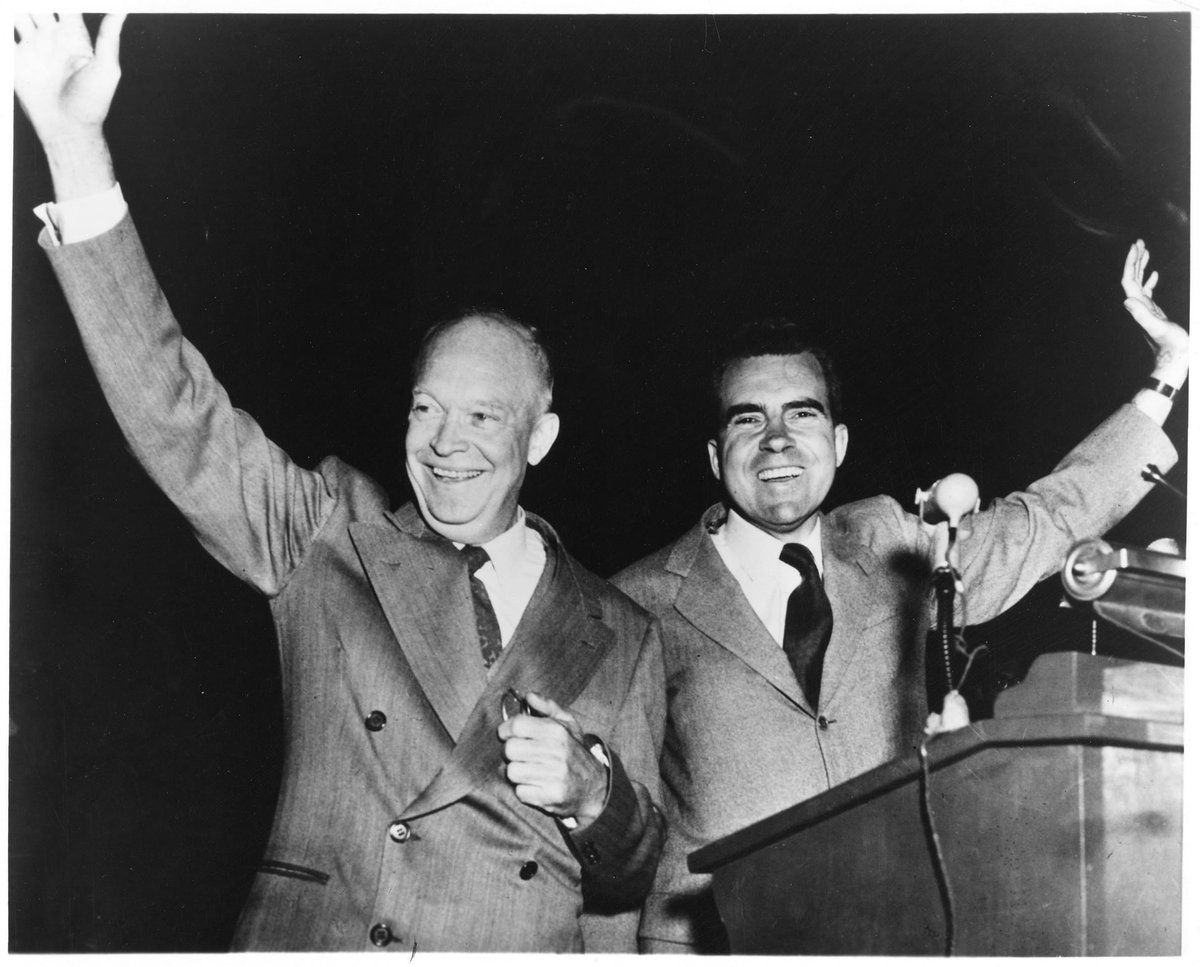
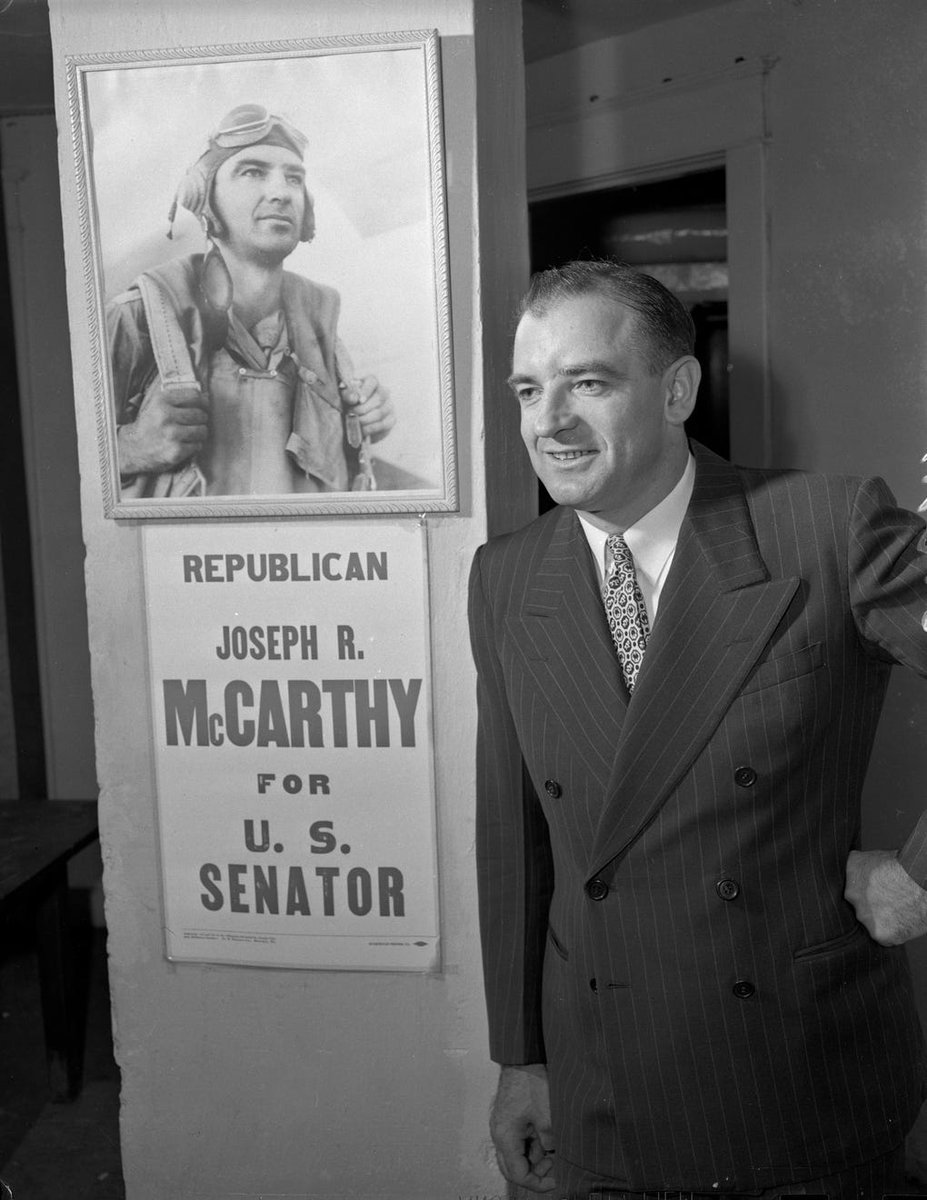
By the 1950s, anti-communism was a key issue for Catholic voters. Catholics strongly supported Senator Joseph McCarthy. Catholic anti-Communism would help President Eisenhower carry the largest share ever of the Catholic vote for a Republican candidate up to that time.
/🧵
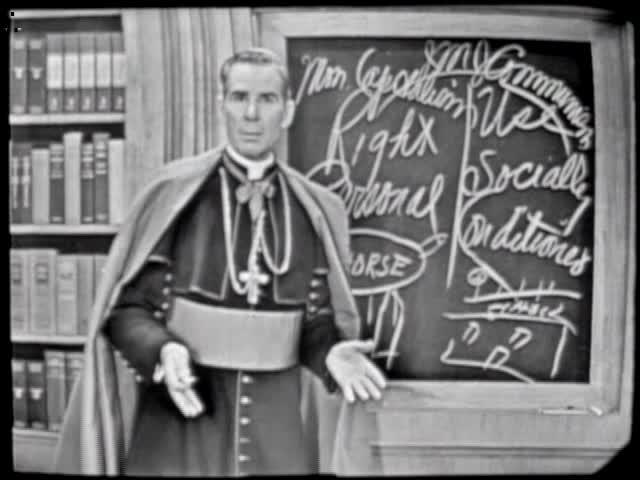
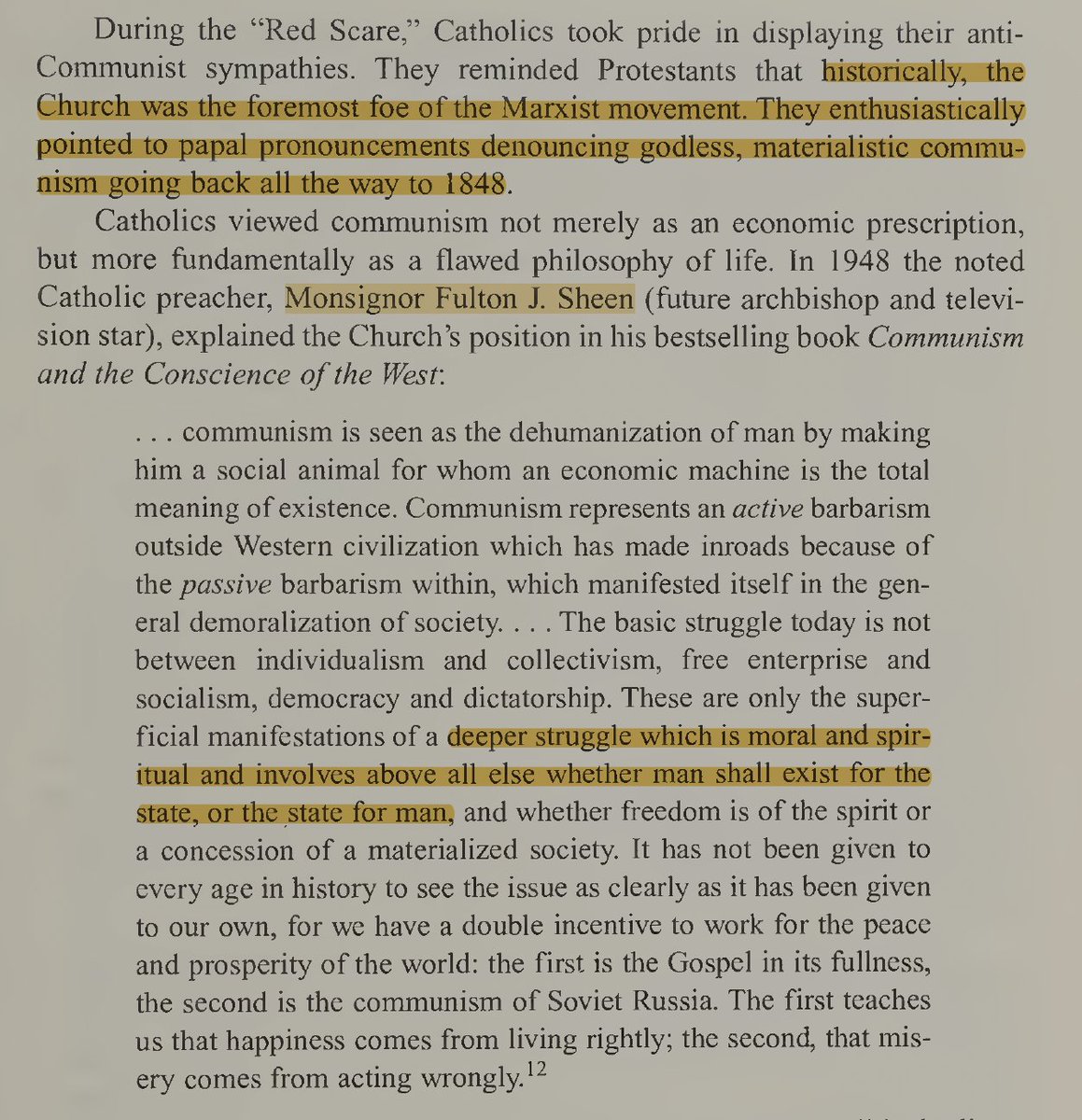
Historically, the Catholic Church was "the foremost foe of the Marxist movement" - dating back to Pope Pius IX's 1846 encyclical against communism titled "Qui pluribus." By 1948, Monsignor Fulton J. Sheen had taken up the anti-communist struggle in America.
/2
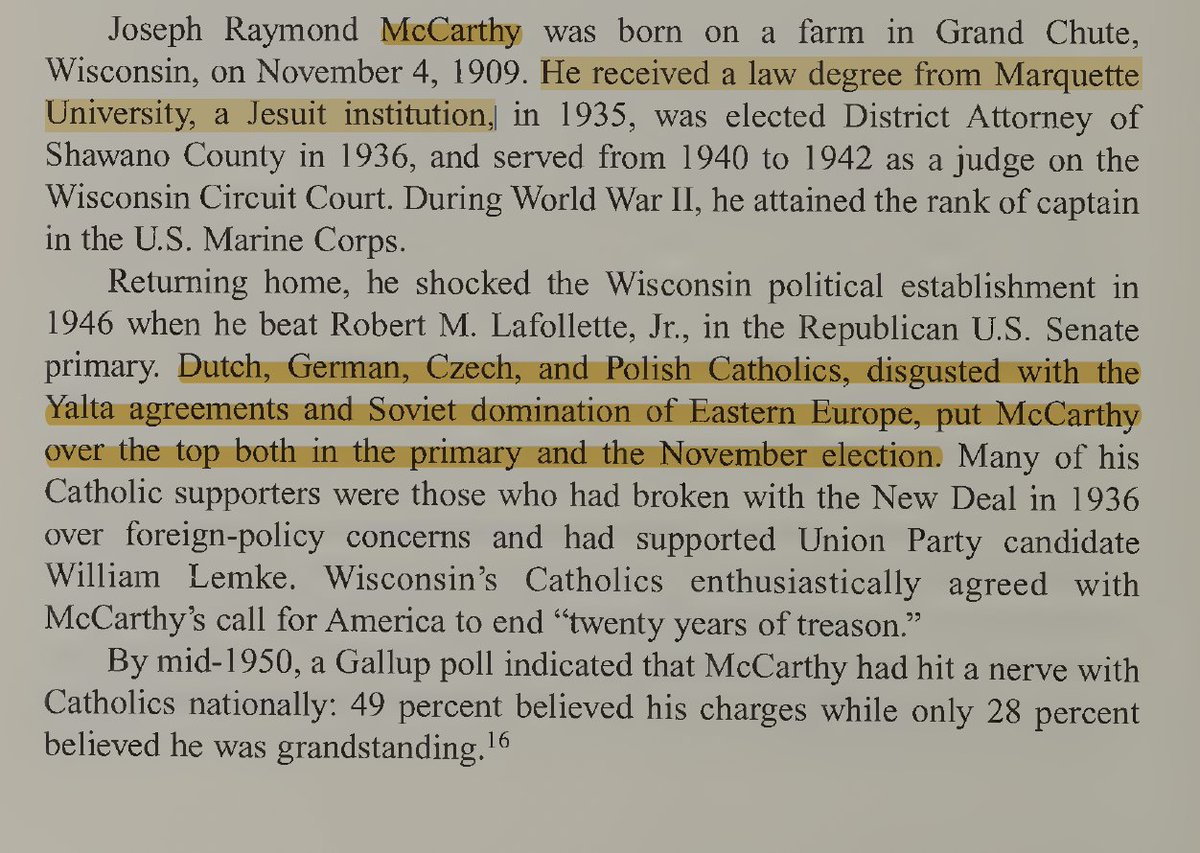
Joseph McCarthy was elected to the Senate in 1946. Ethnic Catholics, "disgusted with the Yalta agreements and Soviet domination of Eastern Europe, put McCarthy over the top both in the primary and the November election."
/3
The Battle for South Boston:
Busing in Boston resembled a military occupation, where the invading forces had identified three “centers of gravity” that needed to be controlled – the high schools in South Boston, Hyde Park, and Charlestown. "Southie" was the most important.
🧵/31
“The struggle over Boston school desegregation is the perfect fight for the Irish. They were doomed before they started. Therefore, they can be expected to fight on.”
Jimmy Breslin, 1975
/2
Why Southie? It was partly symbolic – The resistance to forced integration in Boston was led by the Irish, and Southie was the neighborhood with the strongest Irish identity. It was home to the Saint Patrick’s Day parade, and well-known Irish politicians.
/3
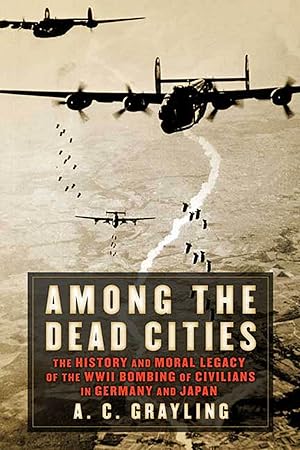
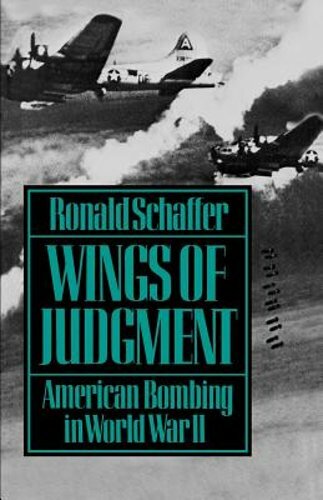
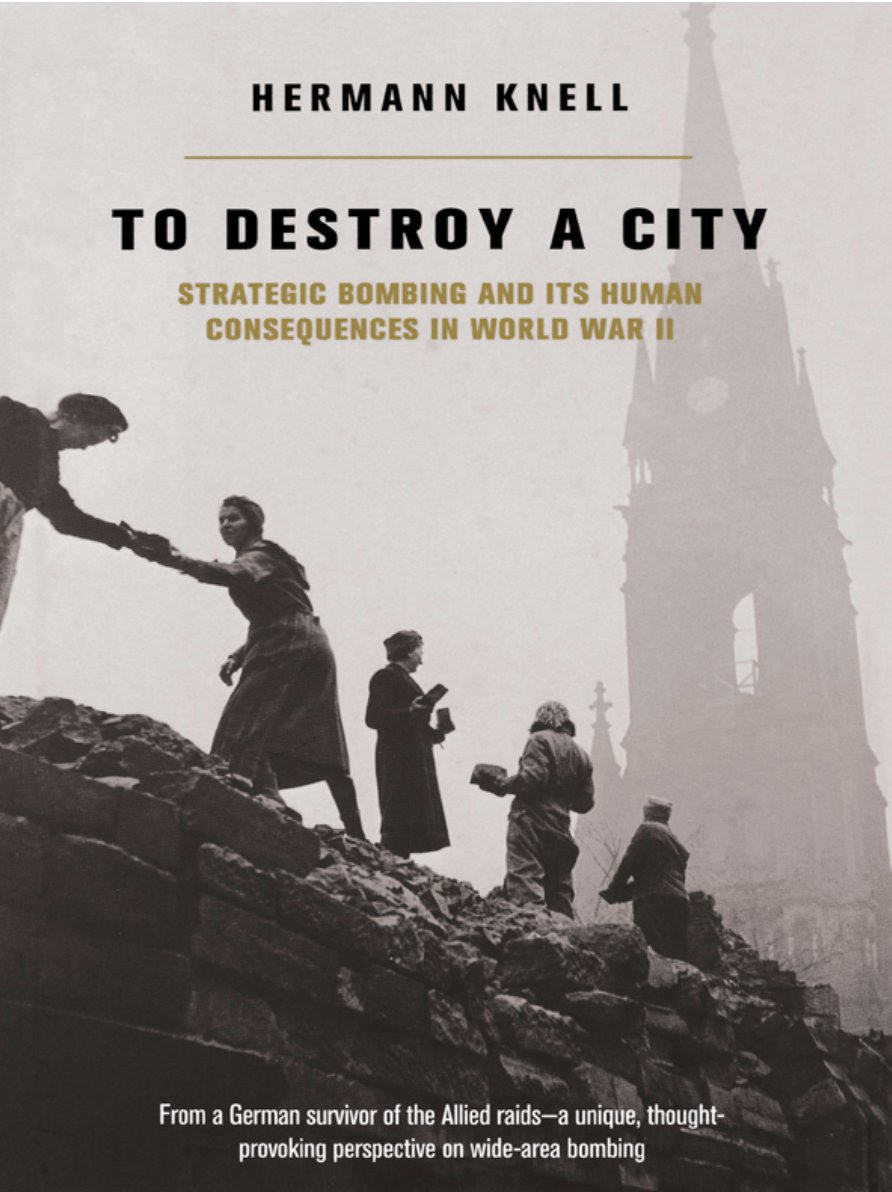
Bombing Germany – From Douhet to Dresden: How British and American air forces came to employ a strategy of massacring civilians.
> Instead of engaging enemy forces, peak American technology and some of its best, bravest men were put to work killing women and children.
🧵/23
"Jus in Bello" traditions had endured for nearly two hundred years in the West. But after WW I, the new theories of air warfare and the new technology of the heavy four-engine bomber set the stage for the indiscriminate destruction of cities and the mass-killing of civilians.
/2
Pre-WW II air-power theorists like Douhet had argued that terror-bombing of civilians would actually *shorten* a war and save lives. Although bombing of military targets continued throughout the war, proponents of terror bombing were allowed to put their theory into practice.
/3
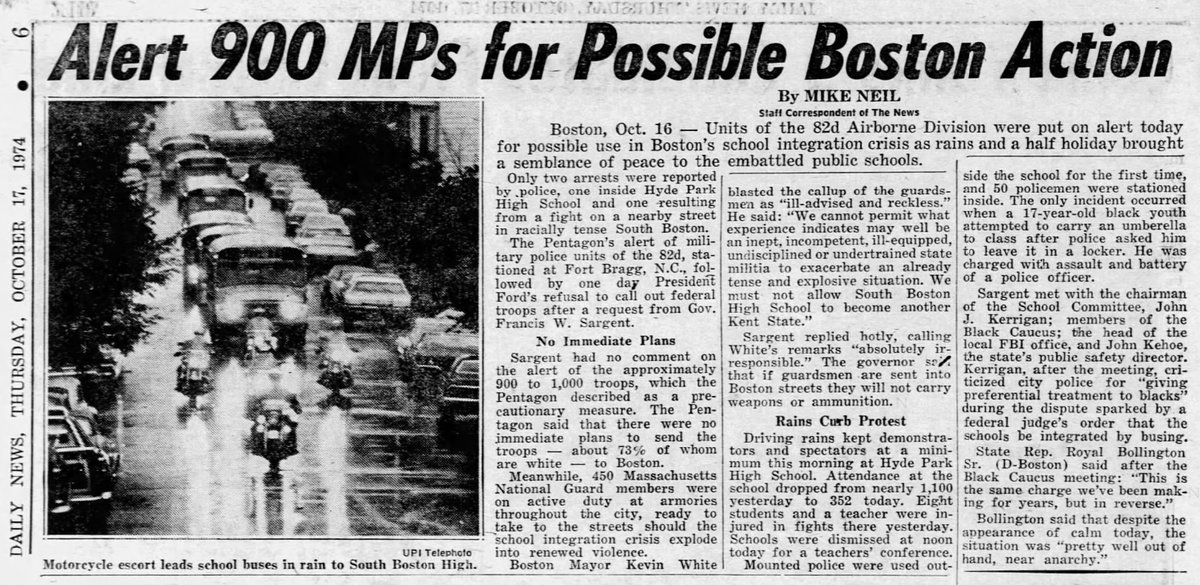
In 1974, in the second month of the disastrous court-ordered integration in Boston, violence spread and the crisis escalated, with national implications. President Ford weighed-in, and the 82nd Airborne Division at Fort Brag was put on standby alert.
🧵
In September of 1974, the often violent resistance in South Boston had grabbed national attention. Hopes that the turmoil could be contained to one neighborhood were soon shattered. In early October, Blacks rioted in neighborhoods across the city. 2/
On October 8, following news of a beating of a Haitian immigrant in South Boston, turmoil broke out at English High school. Blacks rioted and battled police around Mission Hill. "Some 1,500 black students began walking up Tremont Street "smashing windows and hurling rocks." 3/
> 1960: America seems to be entering an era of hope and prosperity.
> End of the 1960s: Complete break-down of law and order. Half the country afraid to go out at night. A crime wave of "epic proportions."
From 1960 to 1970, rates of violent crime (essentially, murder, rape, robbery, and serious assaults) in the U.S. more than doubled, from 161 per 100,000 to 364. Murder rates rose 55 percent, while robbery rates climbed over 91 percent. And it continued to rise into the 1990s.
There was some evidence of rising crime in other western countries. But crime was *falling* in Japan. And Korea, Hong Kong, and Singapore did not see a significant crime increase.