The East New York Race Riots, Mayor Lindsay, and the Gallo Crew:
In the Summer of 1966, liberal New York City Mayor John Lindsay took an unusual step in an attempt to calm Brooklyn racial unrest. He asked for help … from the Mafia.
🧵/14
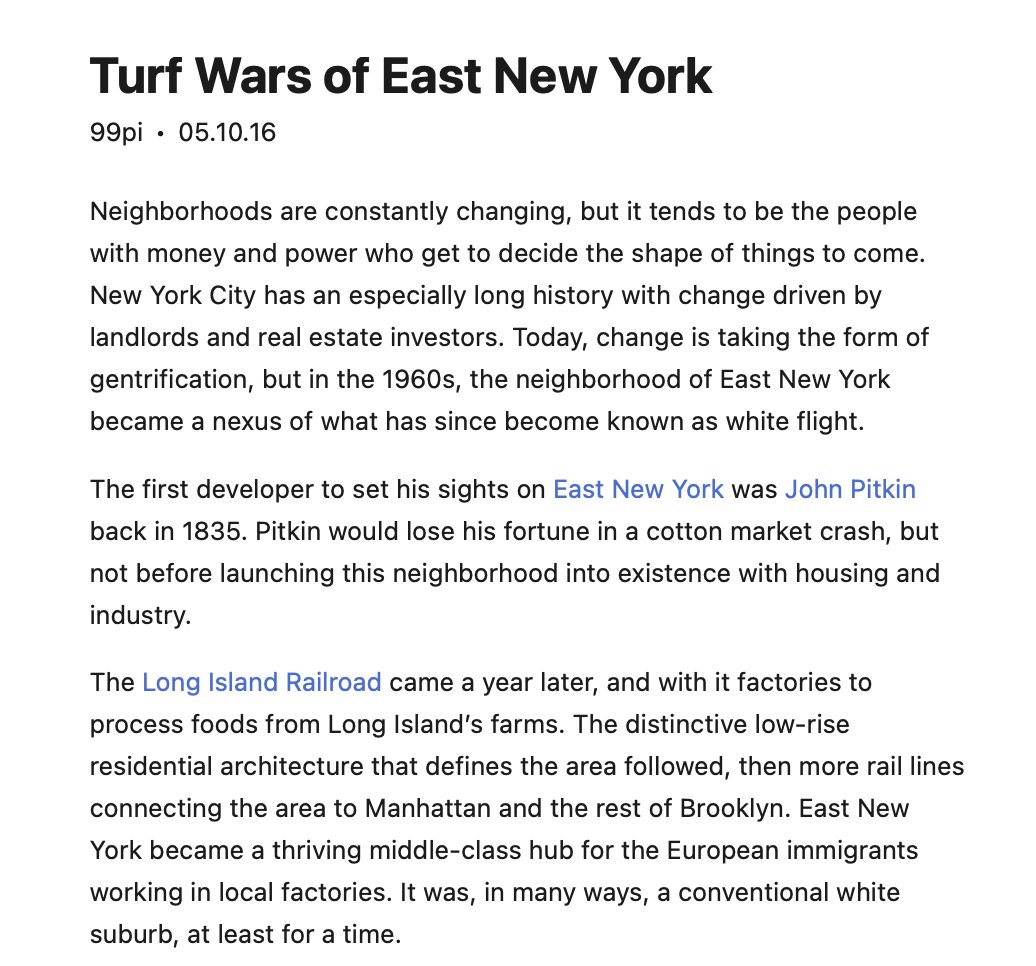
In July 1966 racial violence seemed to be spiraling out of control in East New York. The unrest had been sparked by rapid demographic change - as Blacks and Puerto Ricans had flooded into neighborhoods that had formerly been dominated by Jews and White ethnics.
2/14
As late as 1960, East New York had been 85 percent White. By 1966, Whites were down to 20 percent. In East New York, one ethnic group stubbornly defied the racial transition of the area, occasionally resisting “with fists and lug wrenches” - the Italians.
3/14
The Italian resistance fit a recognized pattern: “Catholic resistance to racial change is a constant theme in studies of almost every American city. "
4/14
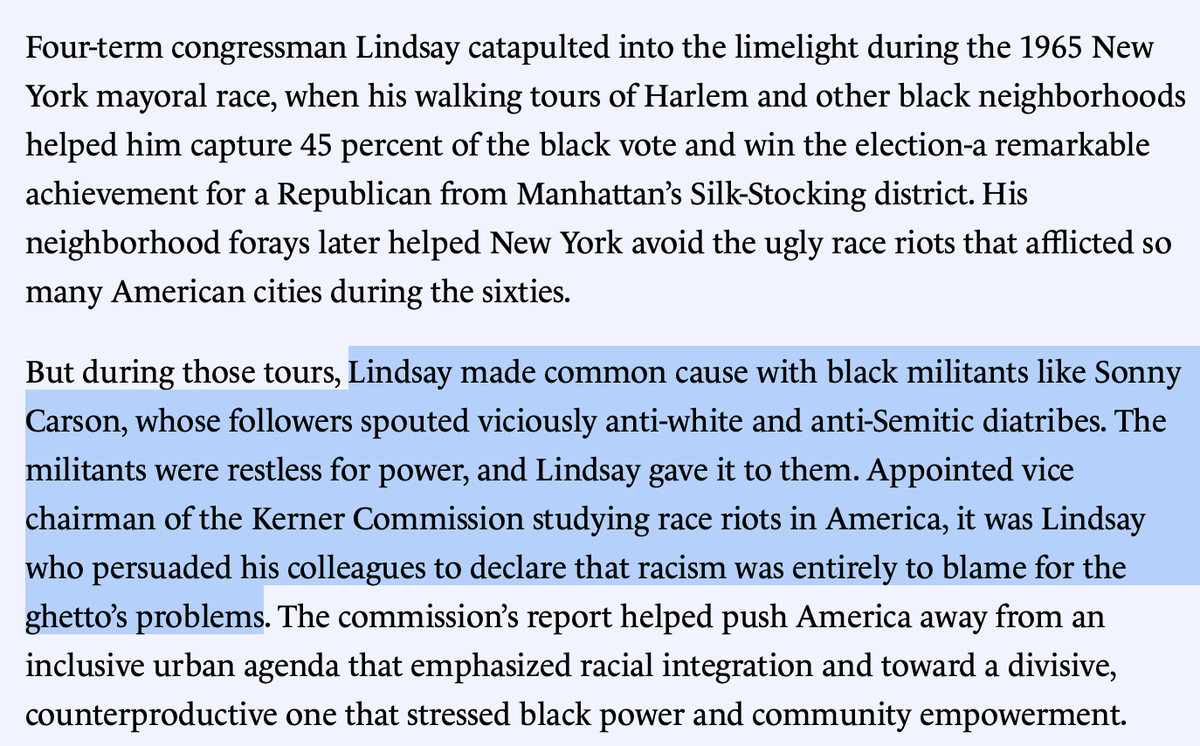
Though Lindsay had run for Mayor as a Republican, he was a committed liberal (his conservative opponent was National Review’s William F. Buckley). And his core supporters were Manhattan liberals – not working-class White ethnics in the outer-boroughs.
5/14
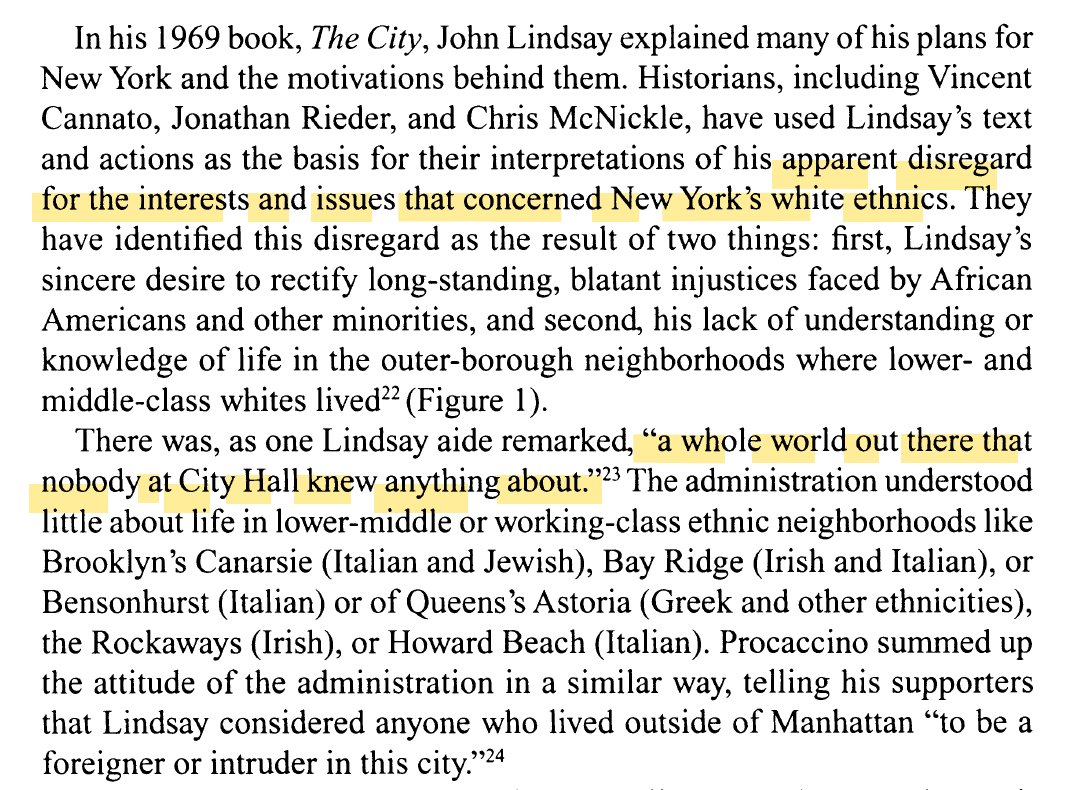
Lindsay was focused on addressing the grievances of Blacks, and other minority constituents. Many White ethnic voters felt alienated from his administration, and Italians in particular blamed the liberal Mayor for the increasing crime and decreasing home values.
6/14
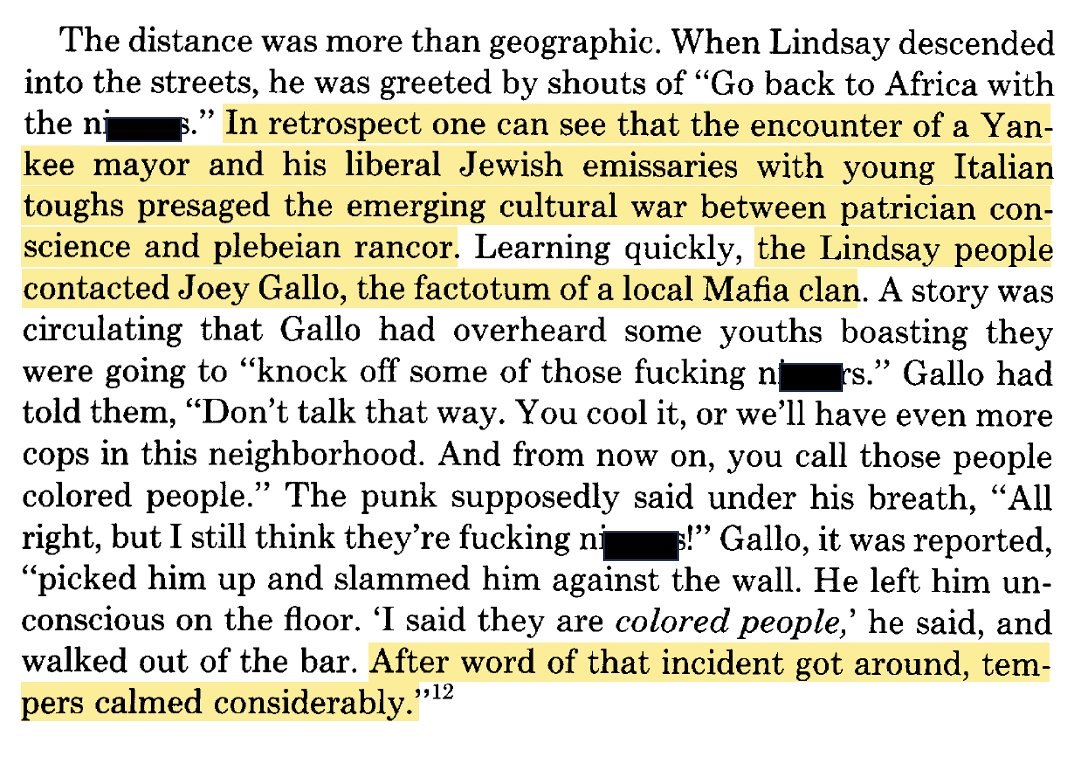
Trying to appease the Italians, Lindsay was out of his element: "In retrospect one can see that the encounter of a Yankee mayor and his liberal Jewish emissaries with young Italian toughs presaged the emerging cultural war between patrician conscience and plebeian rancor."
7/14
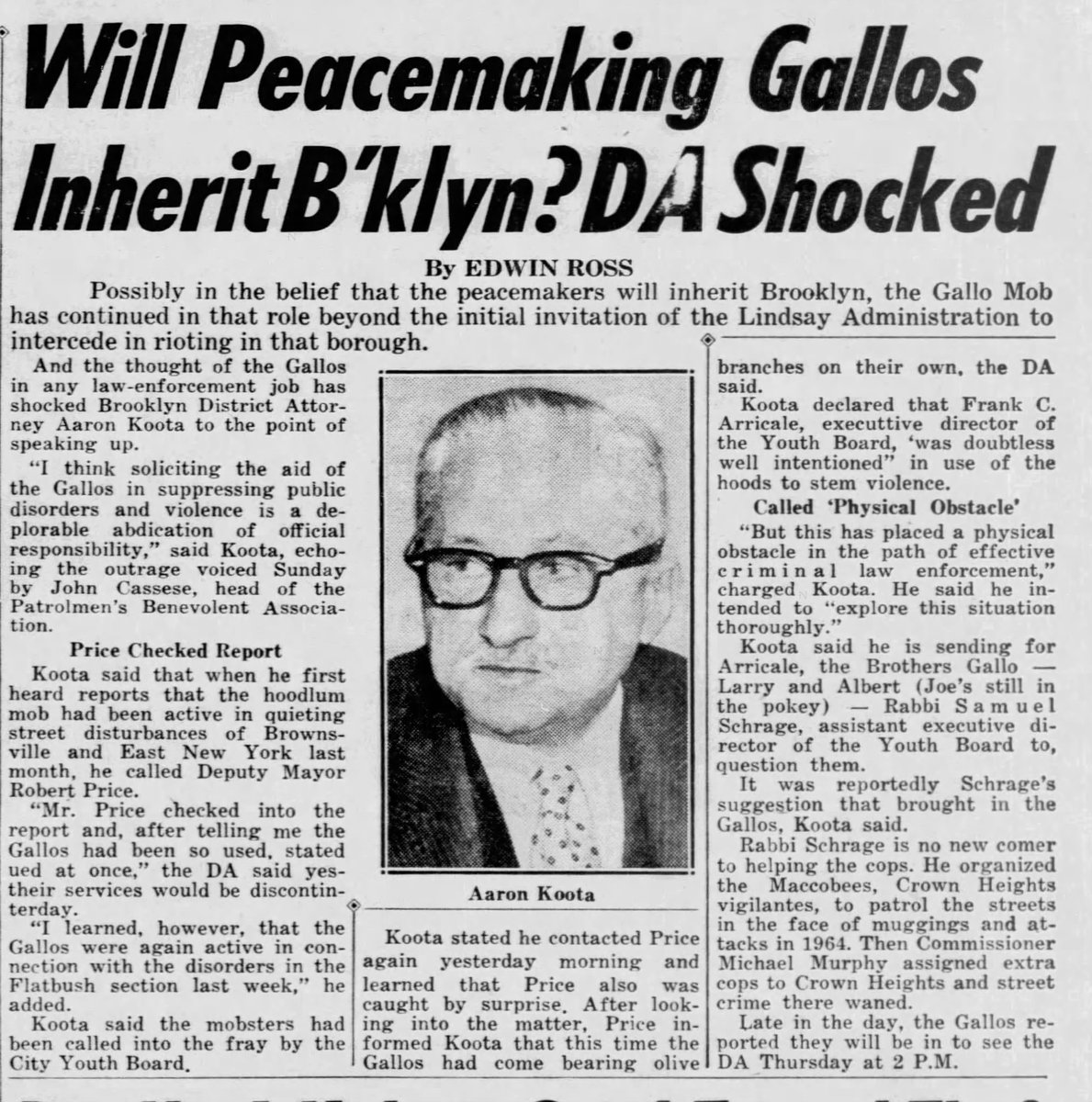
Lindsay’s difficulties connecting with White ethnics, and the downright hostile reception he received from young Italian men, apparently inspired the mayor’s team to reach out to the Mafia - "to check the behavior of Italian American youths in the area."
8/14
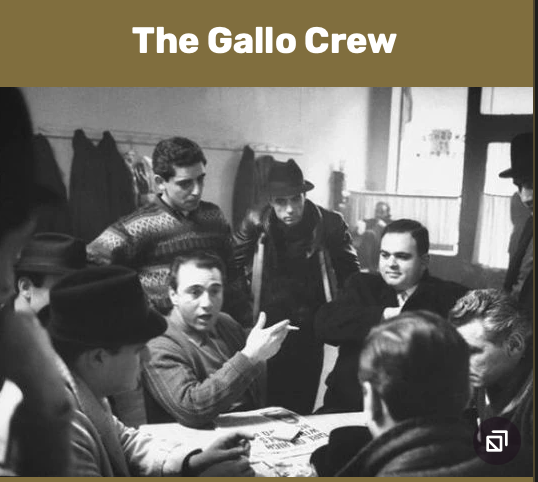
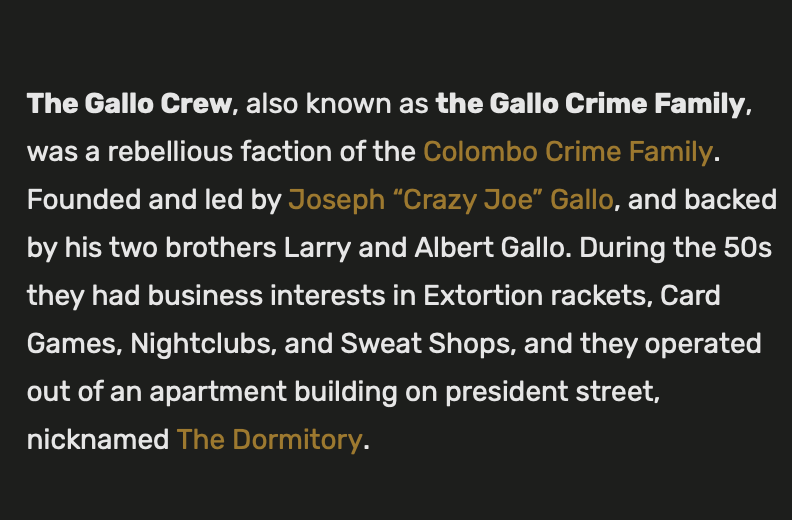
The Gallos were an extremely rough crew, involved in a host of rackets. And they were veterans of more than one bloody gang war. When Mayor Lindsay’s administration formed this modus vivendi with an organized crime outfit, many New Yorkers were appalled.
9/14
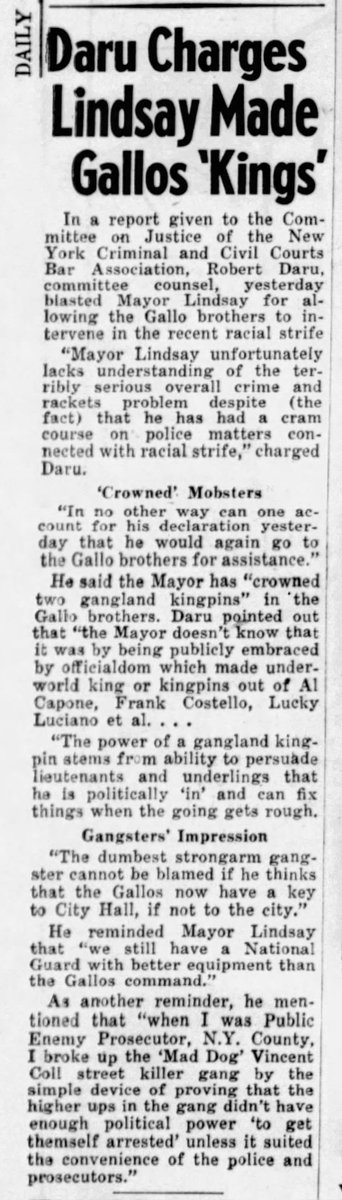
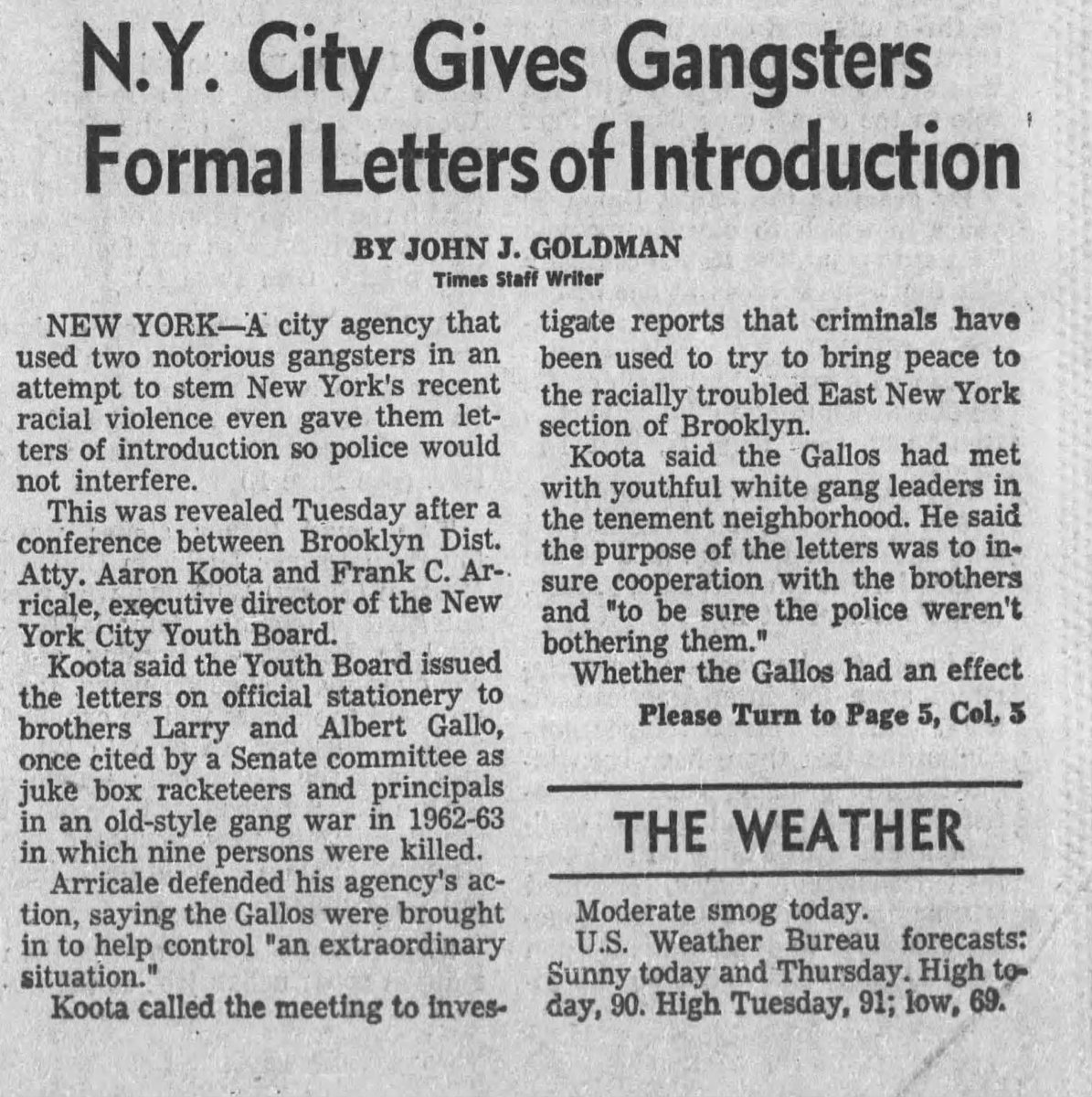
Critics pointed out that by deputizing a criminal gang, the Mayor had increased their prestige and power (they were even given letters of introduction). Why had Lindsay made deals with the Mafia, instead of deploying the National Guard?
10/14
Mayor Lindsay seemed confident his interventions with the Mob had helped get the racial conflict under control. More likely it was the deployment of hundreds of police reinforcements to Brooklyn – and that the unrest eventually burned itself out, as it usually does.
11/14
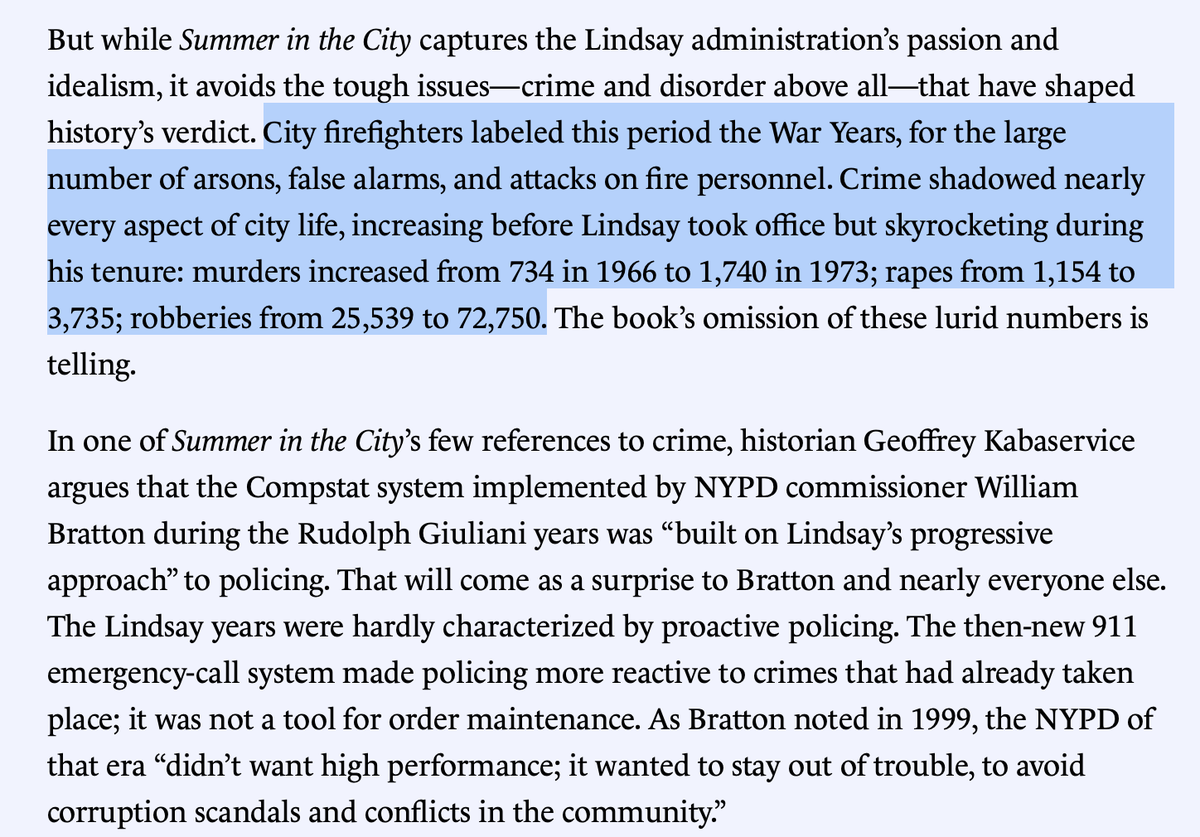
Lindsay’s gimmick of calling in the Mafia was not a long-term solution to NYC racial unrest and violence. Race riots would erupt again in 1967 (Puerto Ricans and Blacks) and 1968 (Blacks). Violent crime continued to skyrocket in the city.
12/14
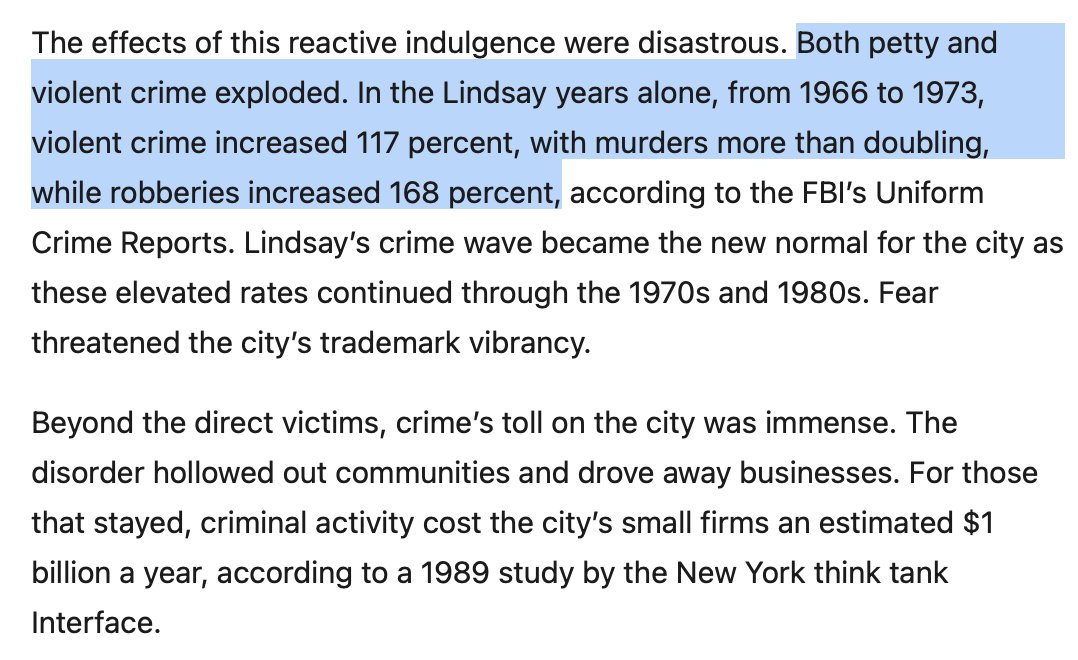
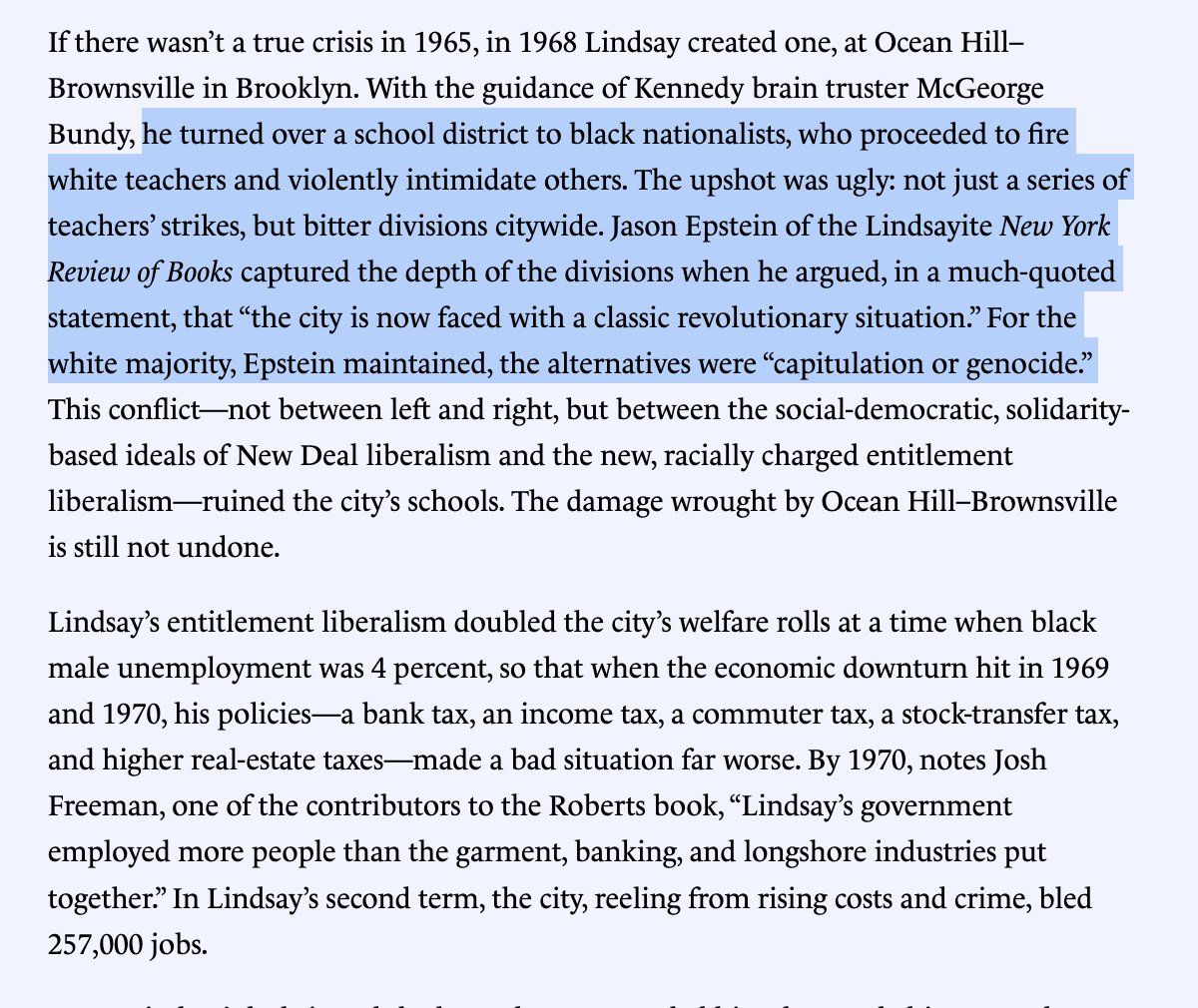
On the whole, Lindsay mayoralty was a disaster. His free spending and soft-on-crime tenure in office set the city on the path for the “Drop Dead” fiscal crisis of 1975, and the apocalyptic “Warriors” / “Escape from New York” vibes of the late 70s to early 80s.
13/14
Epilogue: “Crazy” Joe Gallo was not around for the end of Mayor Lindsay’s term. Gallo met his fate on April 7, 1972. His demise was depicted by Sebastian Mancuso in Martin Scorsese’s “The Irishman:”
Some sources:
• • •
Missing some Tweet in this thread? You can try to
force a refresh

The Great Sedition Trial of 1944:
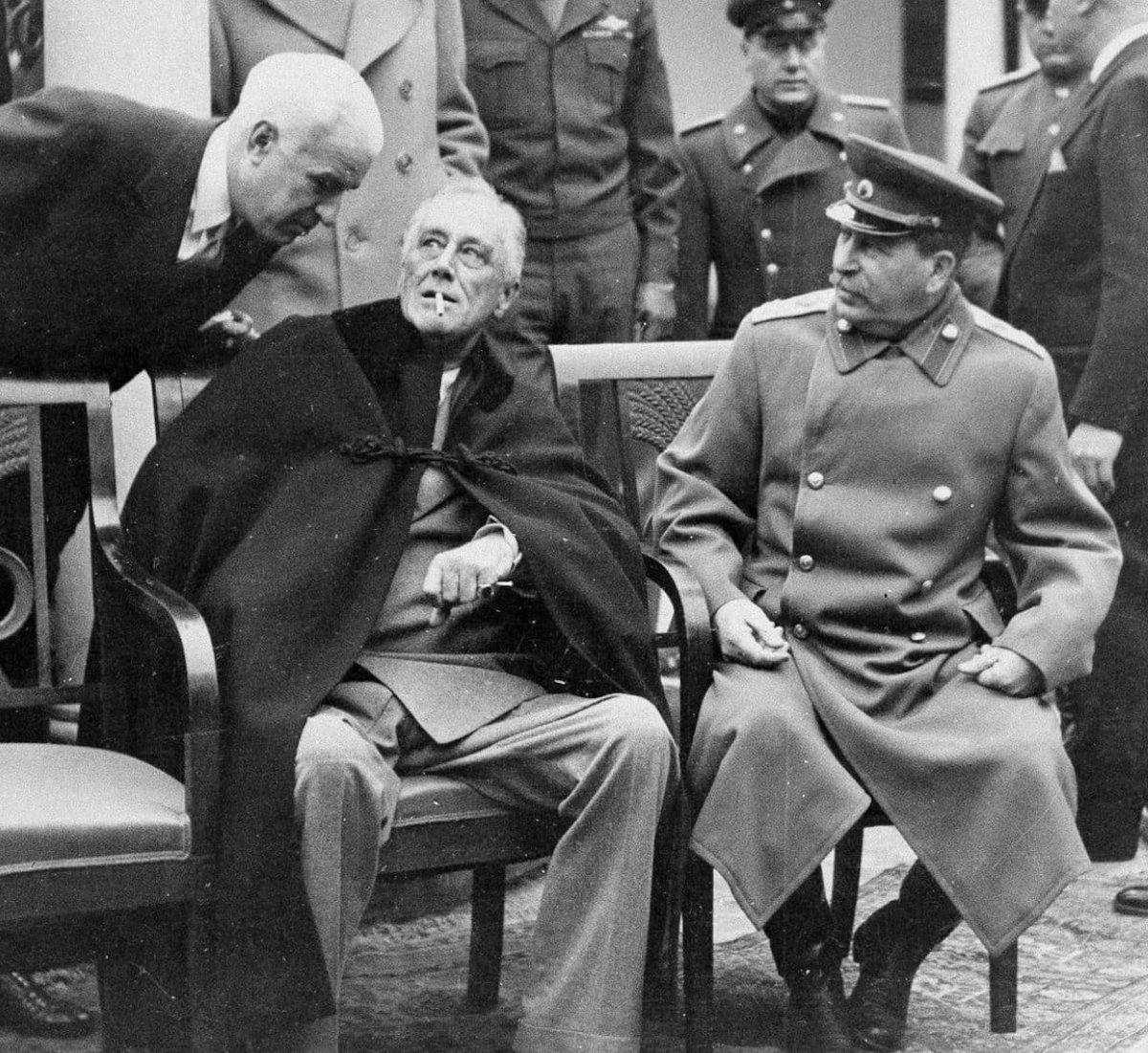
FDR, with the help of ADL spies, leftist provocateurs, and a corrupt FBI, conducted a massive show trial - attempting to criminalize criticism of his administration, his war policy, and his cozy relationship with the USSR.🧵/26
The Trial demonstrates the early stages of the now familiar cooperative relationship between the FBI, the press, and NGOs like the ADL - and how they conspired to harass and even imprison America First patriots and anti-war activists.
2/26
The order to persecute FDR’s critics came straight from the President himself. FDR claimed “Freedom of Speech” as a fundamental value – one of his celebrated “Four Freedoms.” In truth, he relished opportunities to harass and silence his America First opponents.
3/26
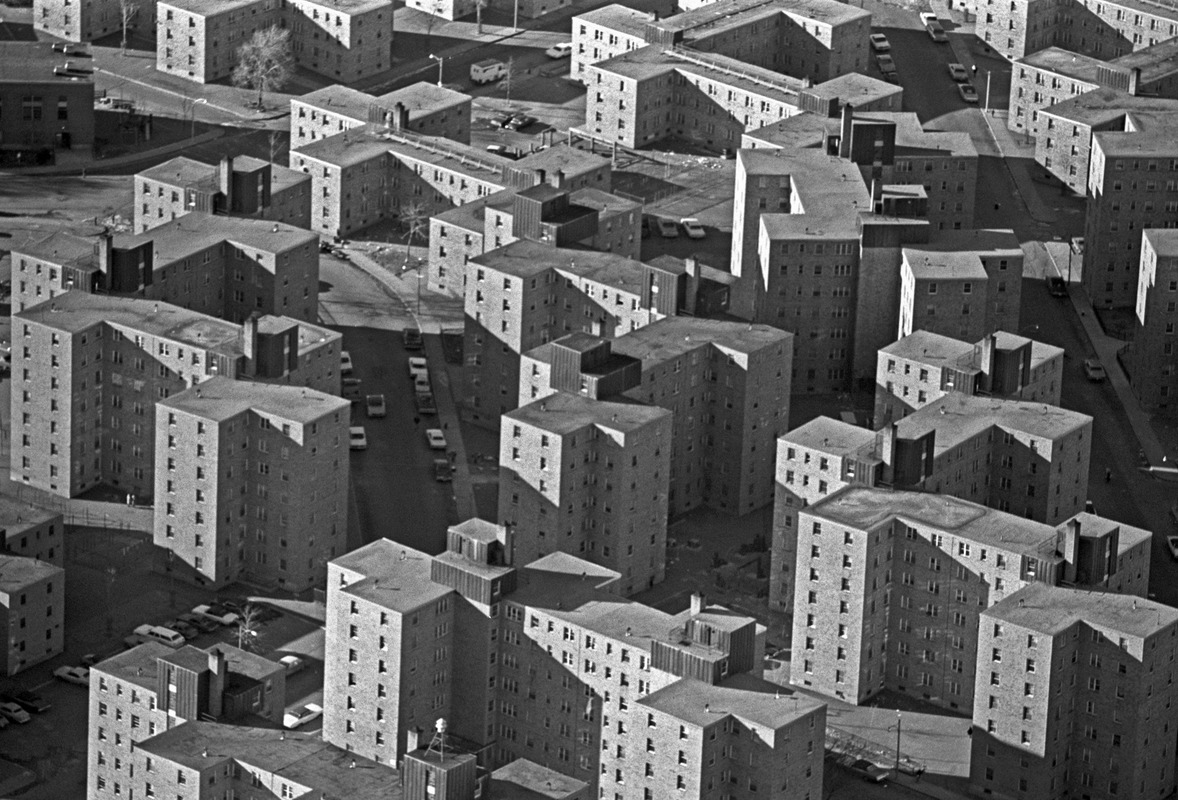
Public Housing and the Rise and Fall of Columbia Point:
From cow pasture, to unlikely working-class Shangri-La, to near “Escape from New York”-level apocalyptic urban wasteland, to demolition, and rebirth.
🧵/22
Columbia Point was the historic landing-site of Puritan settlers in 1630. Later, the area was used as a cow pasture, a dumping ground, and then as a WW II POW camp. Isolated and nearly contaminated, it seemed like a less-than-ideal site for a massive public housing project.
2/22
During the Depression, Public Housing programs were focused on creating jobs. But after WWII the emphasis had shifted to “slum clearance” and the need to alleviate the acute the post-war housing shortage.
3/22
On January 14, 1940 the FBI announced the arrest 18 men alleged to be members of the Christian Front.
They were charged with plotting to overthrow the U.S. government. At trial, the men argued that they were actually patriots, opposing the threat of Communism in America.🧵1/24
The origins of the Christian Front could be traced to Arnold Lunn, a British Catholic incensed by anti-Catholic atrocities in the Spanish Civil War. As a defense against Communist “Popular Fronts” Lunn envisioned a “ecumenical” Christian Front of Catholics and Protestants.
2/24
The idea of an ecumenical Christian Front battling against murderous atheistic Communism was picked-up by Eugenio Cardinal Pacelli, the Vatican secretary of state (and future Pope Pius XII), and then by “radio priest” Father Charles Coughlin in the U.S.
3/24
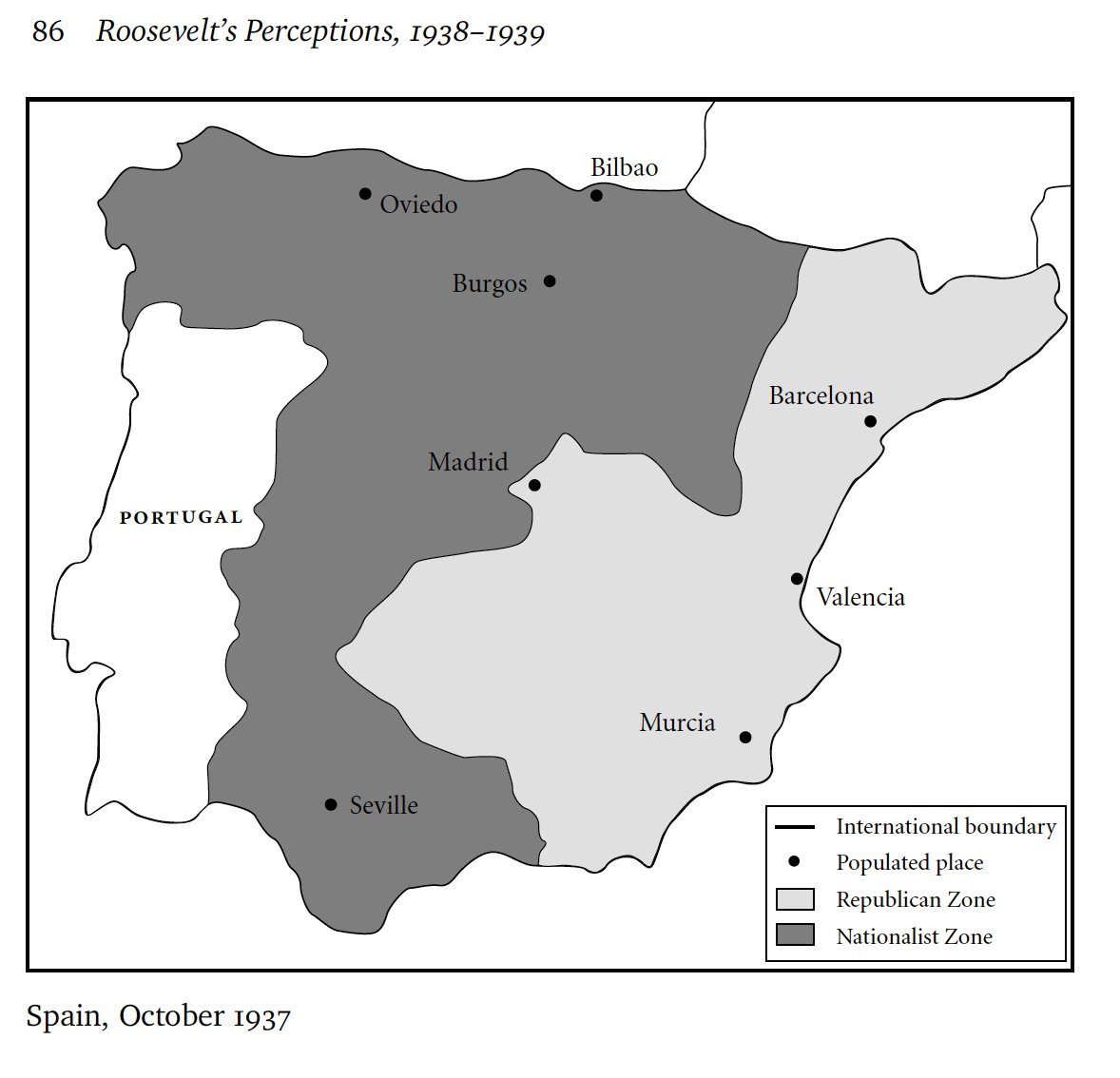
The U.S. arms embargo of the Spanish Civil War, and FDR’s Illegal, bumbling attempt to send covert military aid to Spanish Reds in 1938.
🧵1 /17
As Spain was engulfed by civil war, both the American people and FDR’s State Department were firmly opposed to any U.S. intervention in the conflict. Secretary of State Cordell Hull was a strong advocate for an arms embargo. 2/17
FDR’s Ambassadors in Europe were suspicious the radicalism of Spain’s Loyalists, and their ties to the USSR. Many in the State Department believed that a victory by the Loyalists would be a victory for the Bolsheviks in Europe. 3/17
The “De Mau Mau” gang terrorized the Chicago area in 1972: They murdered at least nine Whites - Including with home-invasions that drew comparisons to the Manson Family murders. 🧵/20
The origins of broader “Mau Mau” movement are somewhat murky. But it seems clear that several of the Chicago Mau Mau killers were disgruntled Vietnam veterans. This included Marines Ruben Taylor, Michael Clark, and Nathanial Burse.
2/20
Several of the Chicago Mau Maus met at Malcom X College. They managed to get expelled for intimidating and beating up teachers and fellow students.
3/20
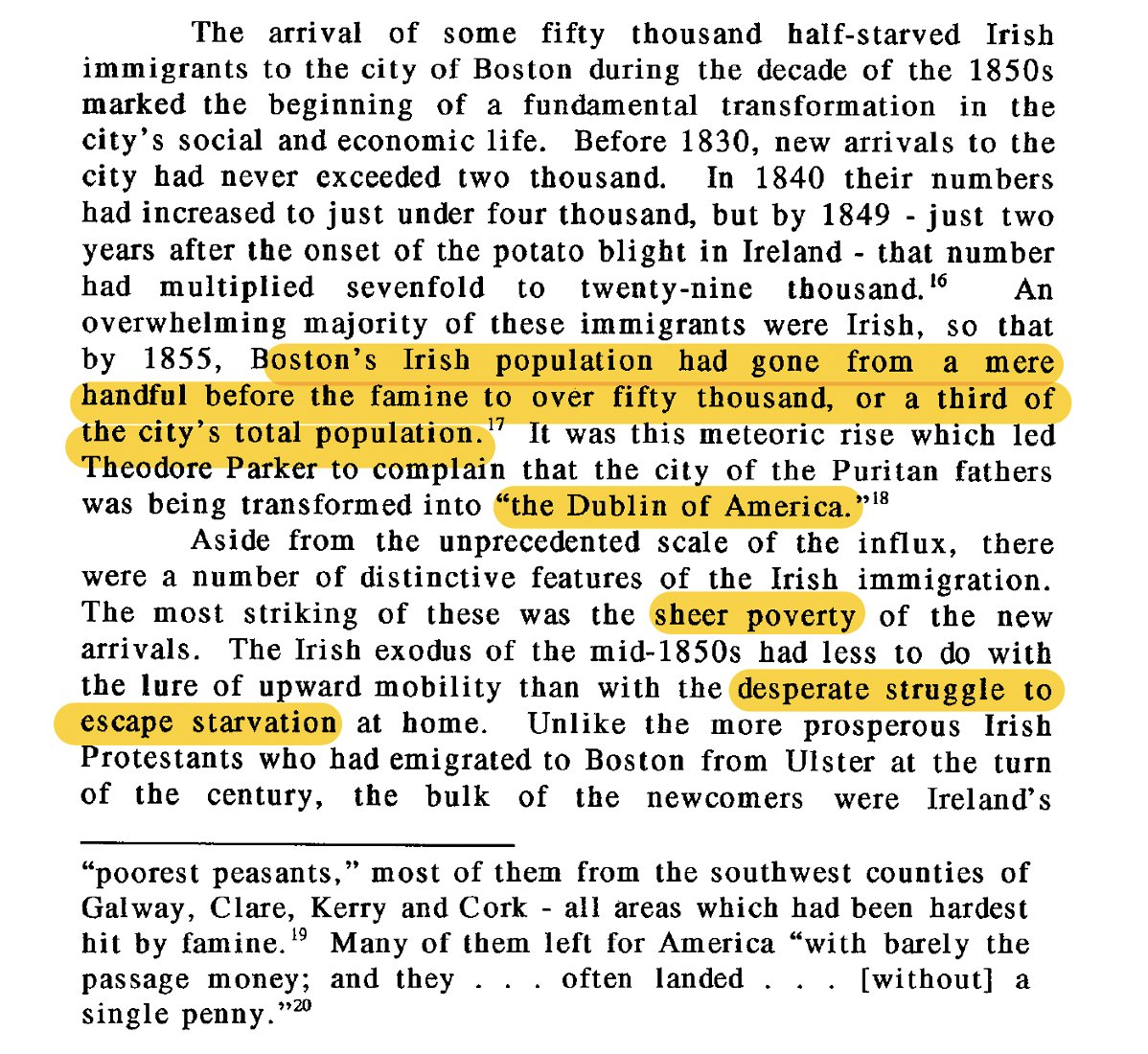
Yankee-Irish conflict and the Boston Draft Riot of 1863: Refugees from the Great Famine caused Boston’s Irish population to explode - rising from a mere handful, to over a third of the city’s population.
One Yankee complained that Boston had become the “Dublin of America." 🧵/26
The city simply could not cope with the deluge. Poverty stricken and unskilled, the new arrivals were packed into crowded tenements. Disease and unsanitary conditions took a terrible toll. During a cholera epidemic, the life-expectancy of Irish males fell to fourteen years. 2/26
Not surprisingly, this tidal-wave of poverty-stricken Catholic immigrants did not receive a warm welcome from the Puritan-descended Yankees of Boston. The “shattering of Boston’s ethnic homogeneity” created an intense anti-Irish, anti-Catholic backlash. 3/26