SMT is the most 𝗣𝗢𝗪𝗘𝗥𝗙𝗨𝗟 trading confluence you can use.
Here’s exactly how you can use SMT to 𝘀𝘂𝗽𝗲𝗿𝗰𝗵𝗮𝗿𝗴𝗲 your trading results.
A Thread 🧵
Here’s exactly how you can use SMT to 𝘀𝘂𝗽𝗲𝗿𝗰𝗵𝗮𝗿𝗴𝗲 your trading results.
A Thread 🧵
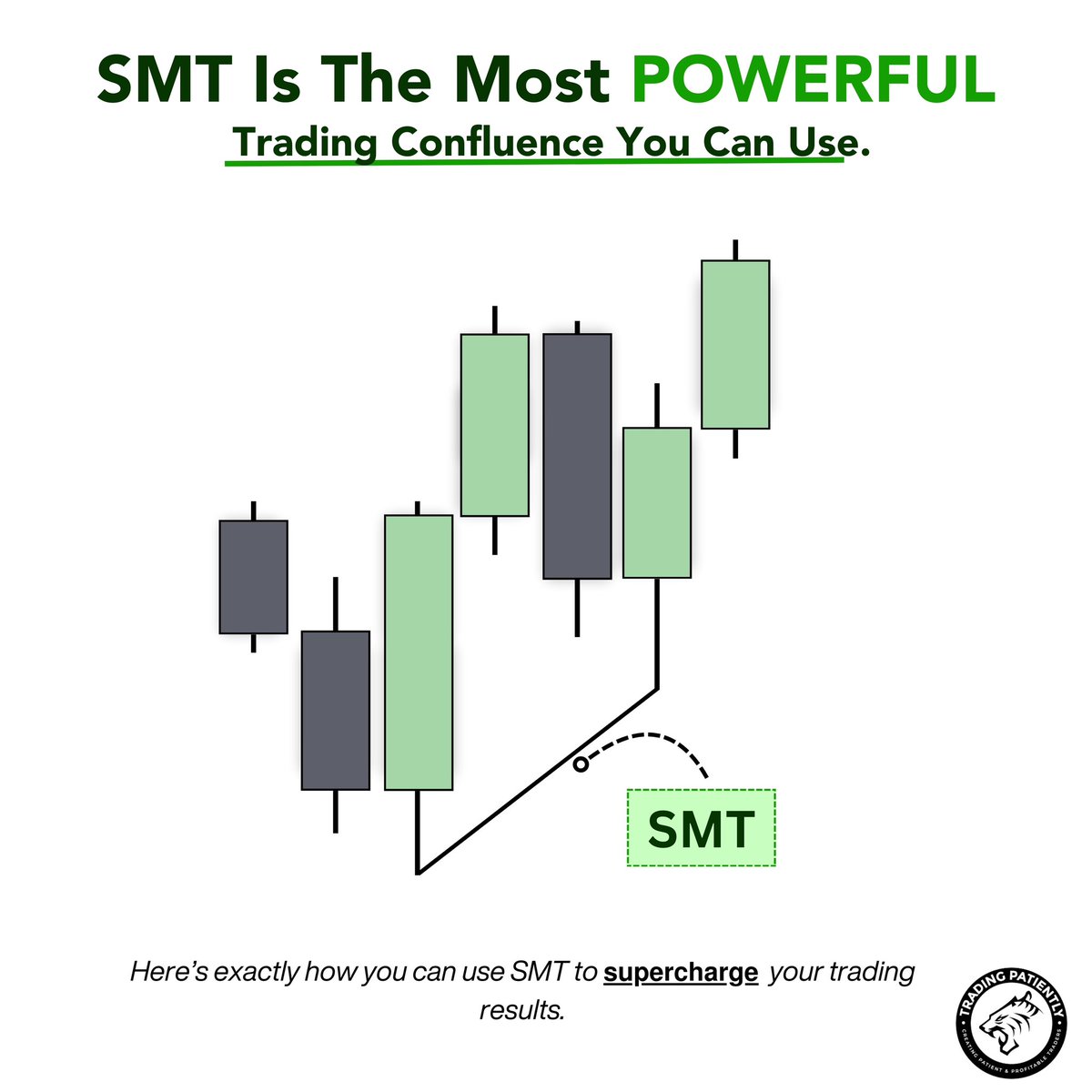
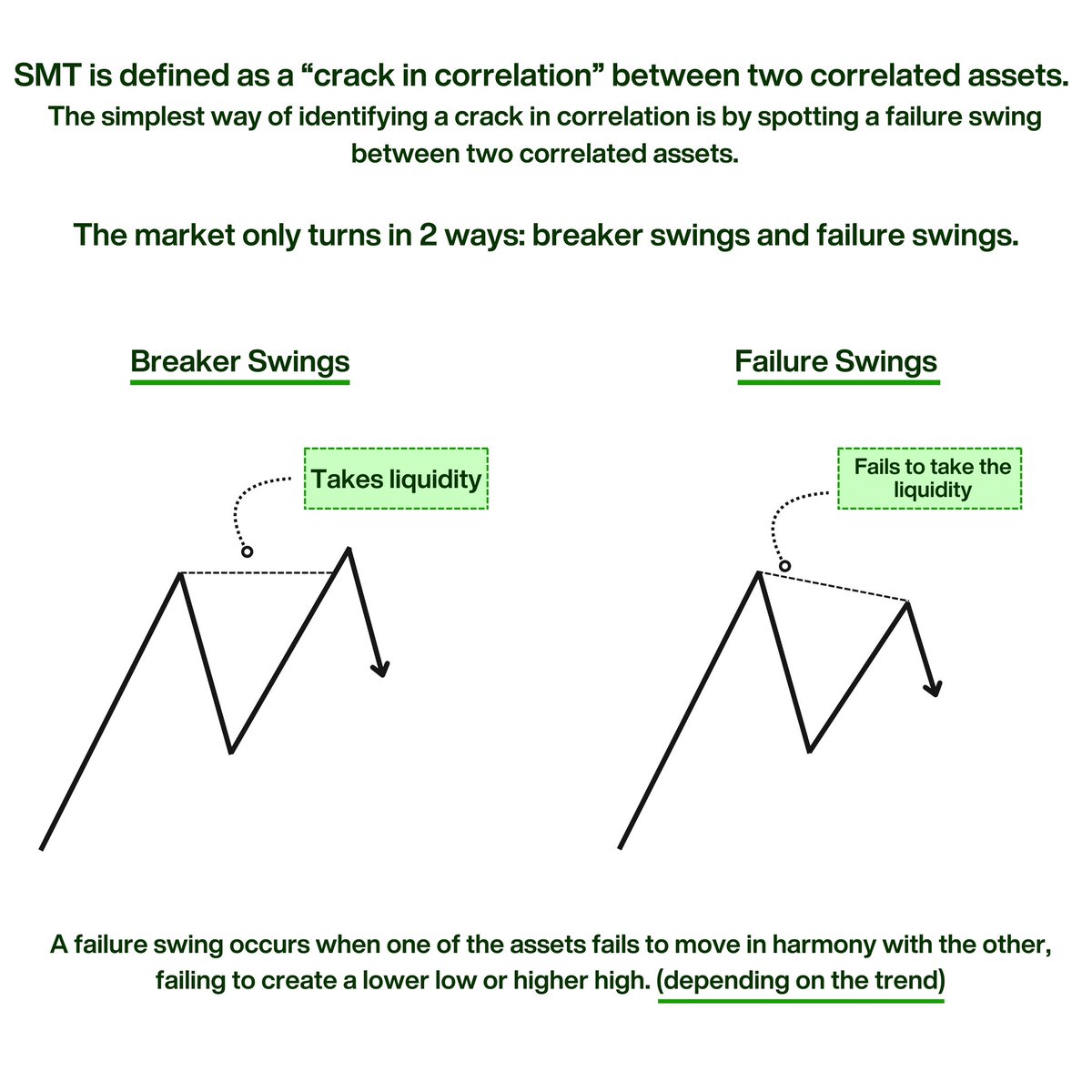
SMT is defined as a “crack in correlation.” This is the market showing its hand.
The simplest way to spot a crack in correlation is by identifying a failure swing between correlated assets.
The market only turns in 2 ways: breaker swings or failure swings.
The simplest way to spot a crack in correlation is by identifying a failure swing between correlated assets.
The market only turns in 2 ways: breaker swings or failure swings.
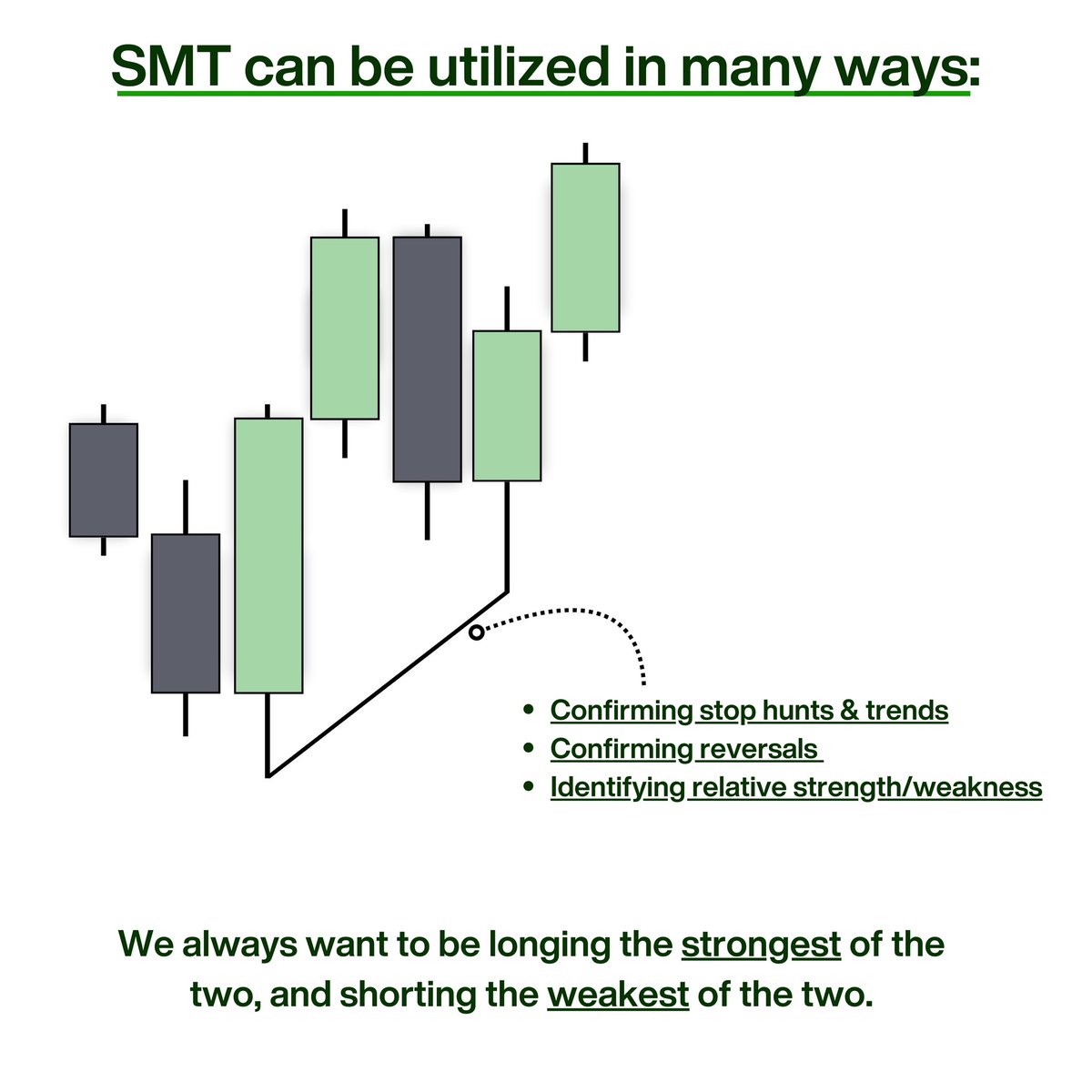
SMT can be utilized in many ways:
Confirming stop hunts & trends
Confirming reversals
Identifying relative strength/weakness
𝗥𝗘𝗠𝗘𝗠𝗕𝗘𝗥.. we always want to be longing the strongest of the two, and shorting the weakest of the two. This is relative strength/weakness.
Confirming stop hunts & trends
Confirming reversals
Identifying relative strength/weakness
𝗥𝗘𝗠𝗘𝗠𝗕𝗘𝗥.. we always want to be longing the strongest of the two, and shorting the weakest of the two. This is relative strength/weakness.
But 𝗪𝗔𝗜𝗧, before you go mindlessly looking for SMT in your charts, it is important to know TWO things:
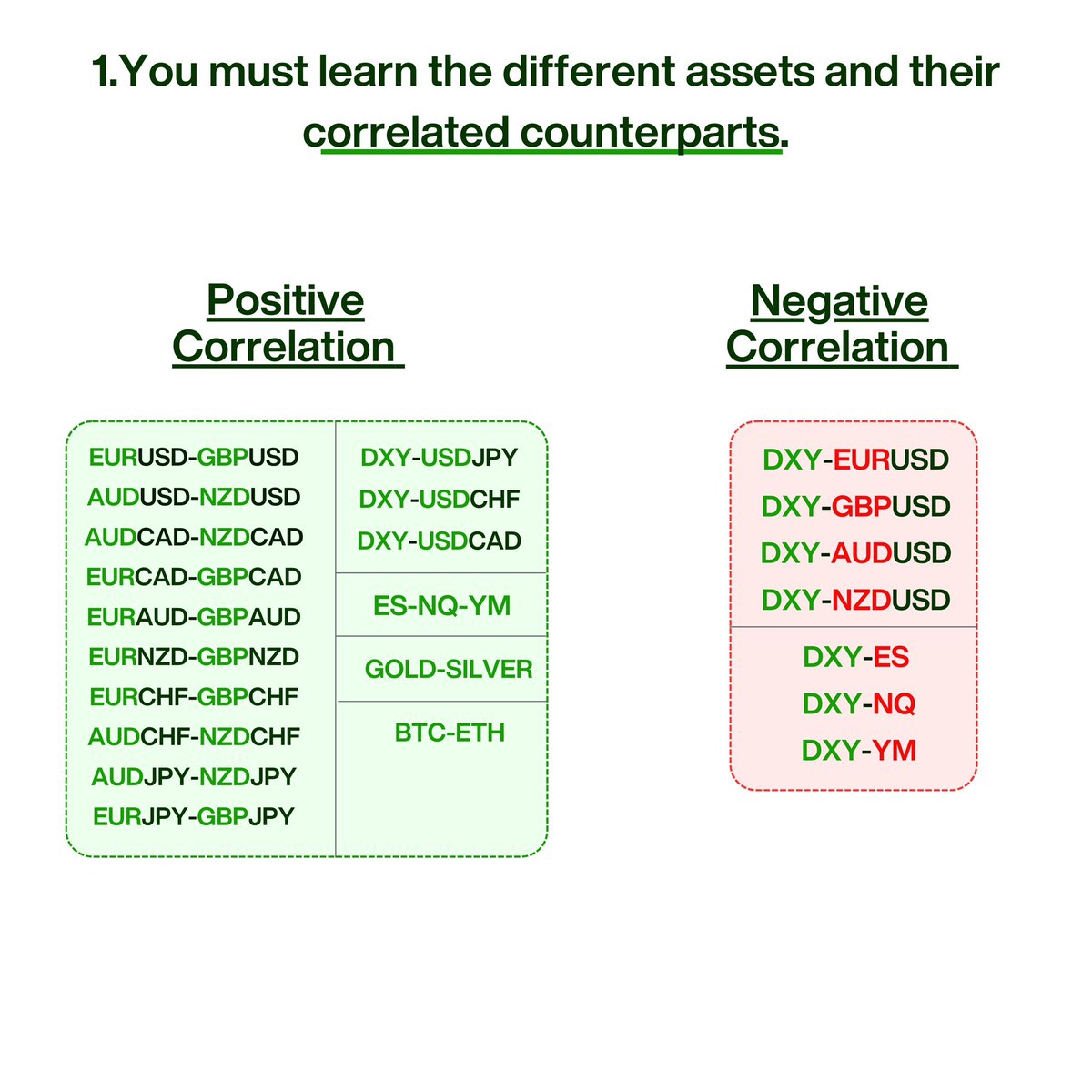
1. You must learn the different assets and their correlated counterparts.
Here is a list of all correlated assets in the forex, index, and commodities markets:
1. You must learn the different assets and their correlated counterparts.
Here is a list of all correlated assets in the forex, index, and commodities markets:
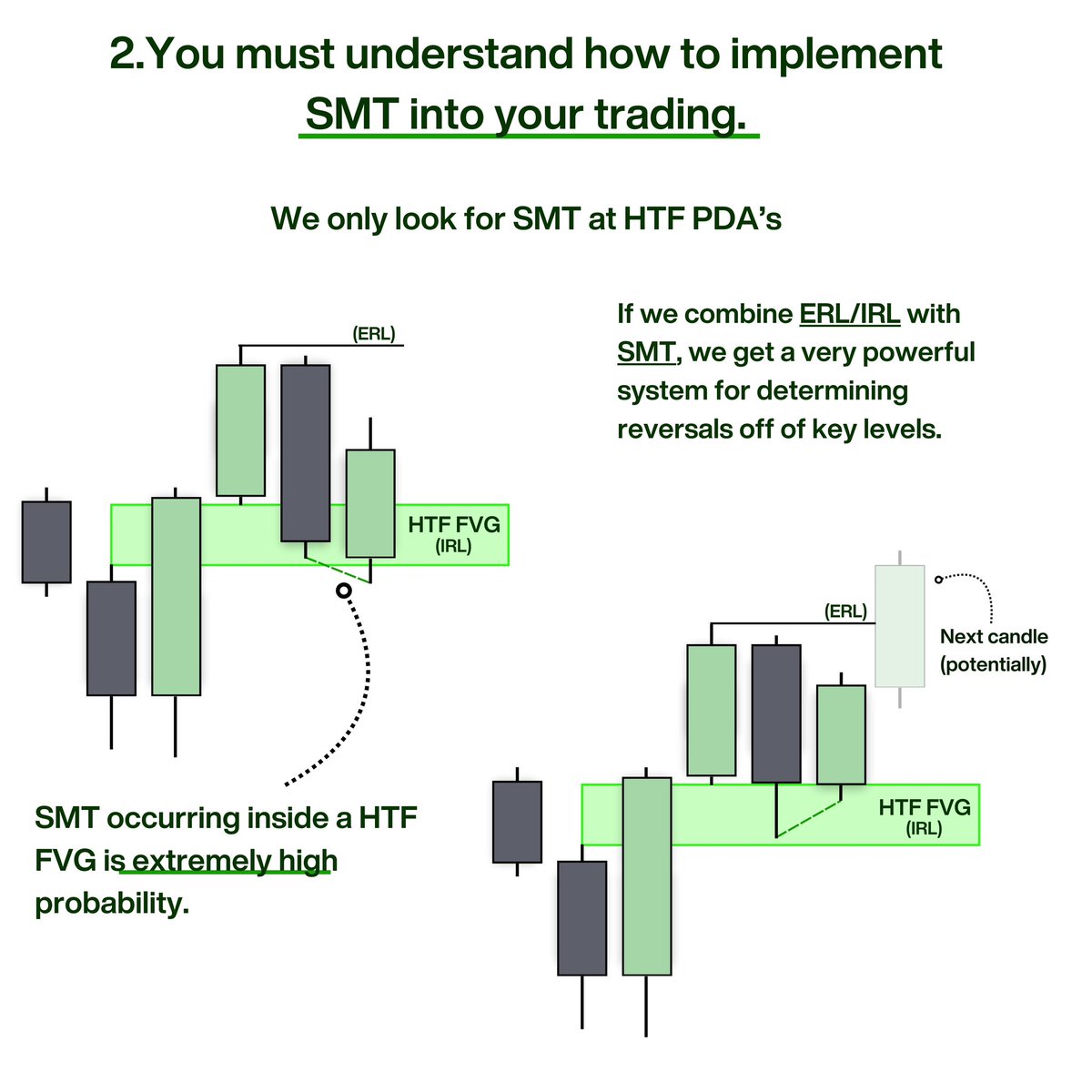
2. You must understand how to implement SMT into your trading.
SMT should be used as a confluence to a pre-existing trade idea.
We only look for SMT @ HTF PDA.
There has to be proper context behind WHY price is likely to reverse off a certain level before we look for the SMT.
SMT should be used as a confluence to a pre-existing trade idea.
We only look for SMT @ HTF PDA.
There has to be proper context behind WHY price is likely to reverse off a certain level before we look for the SMT.
SMT is an 𝗲𝘅𝘁𝗿𝗲𝗺𝗲𝗹𝘆 powerful tool when used properly. It is an amazing way of confirming reversals @ HTF PDA and identifying the relatively stronger/weaker asset to trade. I highly recommend giving it a try!
For direct access to me, educational content & resources click here:
↓ ↓ ↓ ↓ ↓
discord.gg/tradingpatient…
↓ ↓ ↓ ↓ ↓
discord.gg/tradingpatient…

Show some love if you found this post insightful 💞

• • •
Missing some Tweet in this thread? You can try to
force a refresh