How a Kabbalist Accidentally Became an Arsonist: A True Tale of the Rabbi who Burned Down the Jewish Ghetto of Frankfurt in 1711 🔥🧵 
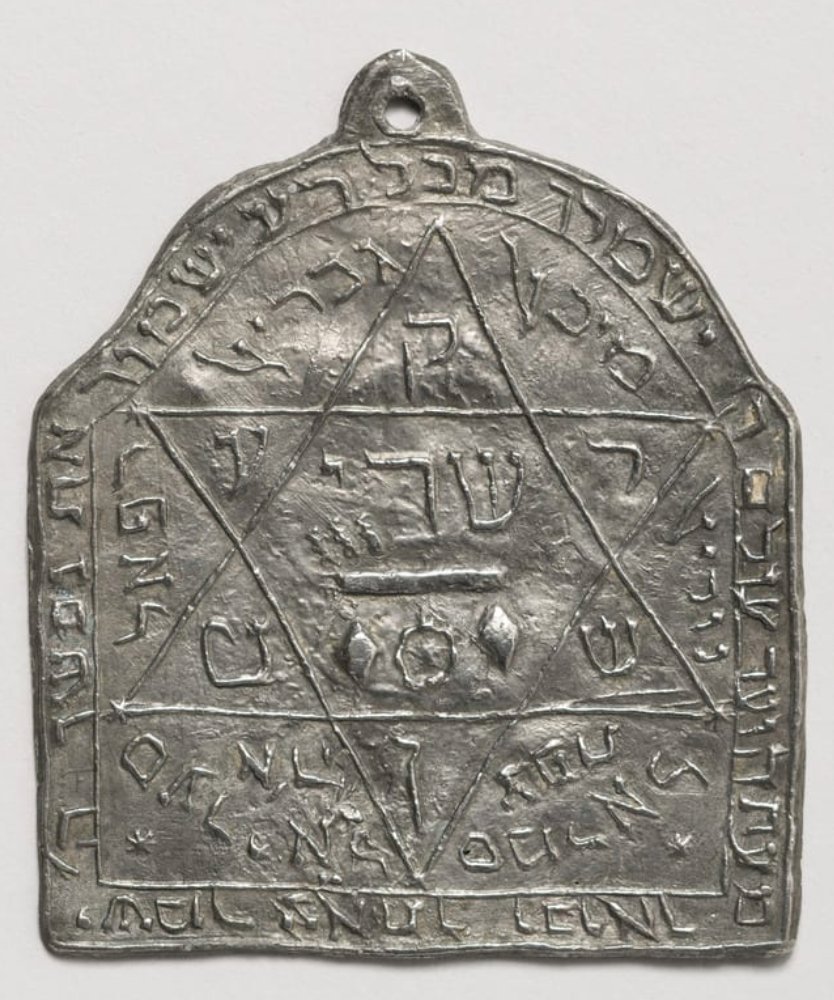
By 1704, when he was invited to become Chief Rabbi of Frankfurt, Rabbi Naphtali Katz had gained renown throughout Ashkenaz as a Ba'al Shem—a shamanic healer, amulet writer, and kabbalist.

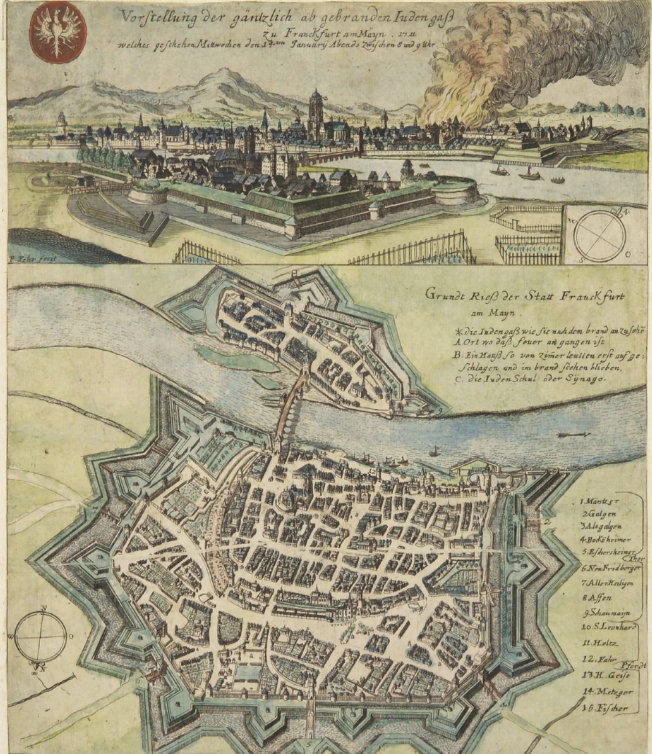
His tenure in Frankfurt was brief. It ended on Jan. 14th, 1711, when a fire spread from his home & reduced the Judengasse—then the largest Jewish community in Germany—to ashes.
He was arrested by German authorities on claims of arson & witchcraft and was held for five months before being exiled from Frankfurt.
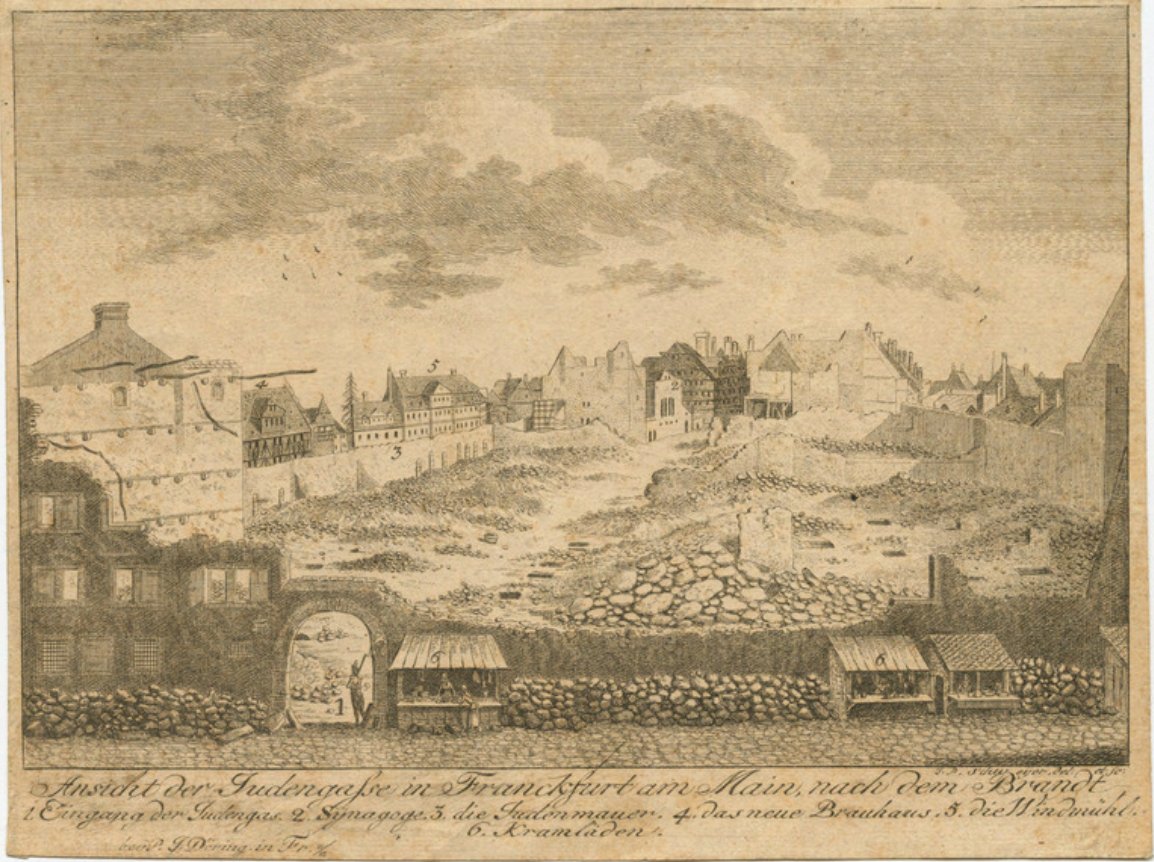
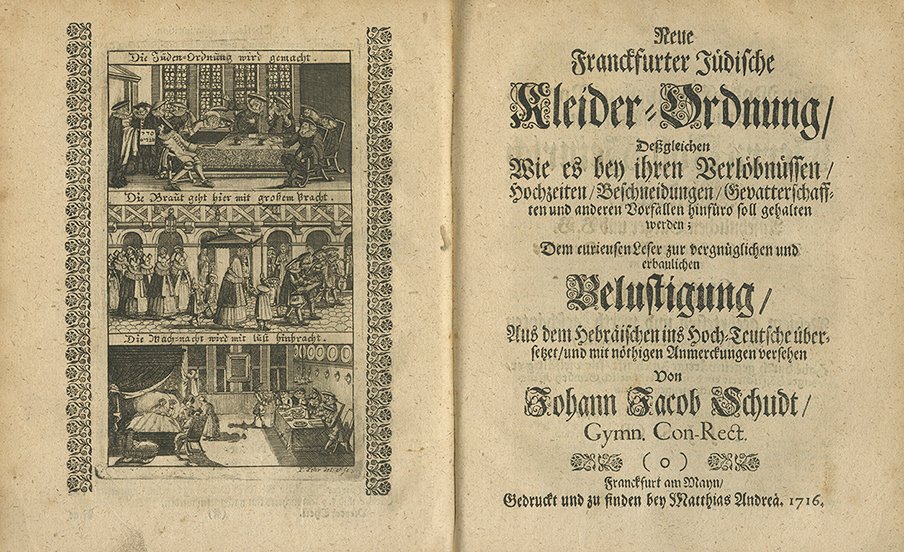
Soon after the fire, this poster was hung by Christians throughout the Judengasse. The left side depicts the Jews fleeing the flames.

The right side reads (in part):
"Alas! The happiest [and] most unhappy day
On which at Frankfurt am Main
The Jewish quarter having been set ablaze
With Rabbi Naphtali the Pole being the cause
Within the space of 24 hours burned to the foundations."
"Alas! The happiest [and] most unhappy day
On which at Frankfurt am Main
The Jewish quarter having been set ablaze
With Rabbi Naphtali the Pole being the cause
Within the space of 24 hours burned to the foundations."
How exactly did Rabbi Naphtali cause this urban wildfire? Johann Jacob Schudt, in his "Jewish Oddities"(1714, Frankfurt) records several rumors. One popular account blamed his kabbalistic malpractice...
"The Rabbi, who was a great kabbalist, had himself set the fire to show his students how he could extinguish the fire...(but) in his haste to put it out he had summoned the Prince of Fire instead of the Prince of Water & that is why the fire grew." Oops!
This is a painting made by the German Jewish artist Johann Nothnagel entitled, "Rabbi Naphtali Cohen with two Schoolchildren" (1772). It portrays this scene of angelic conjuring & accidental arson.
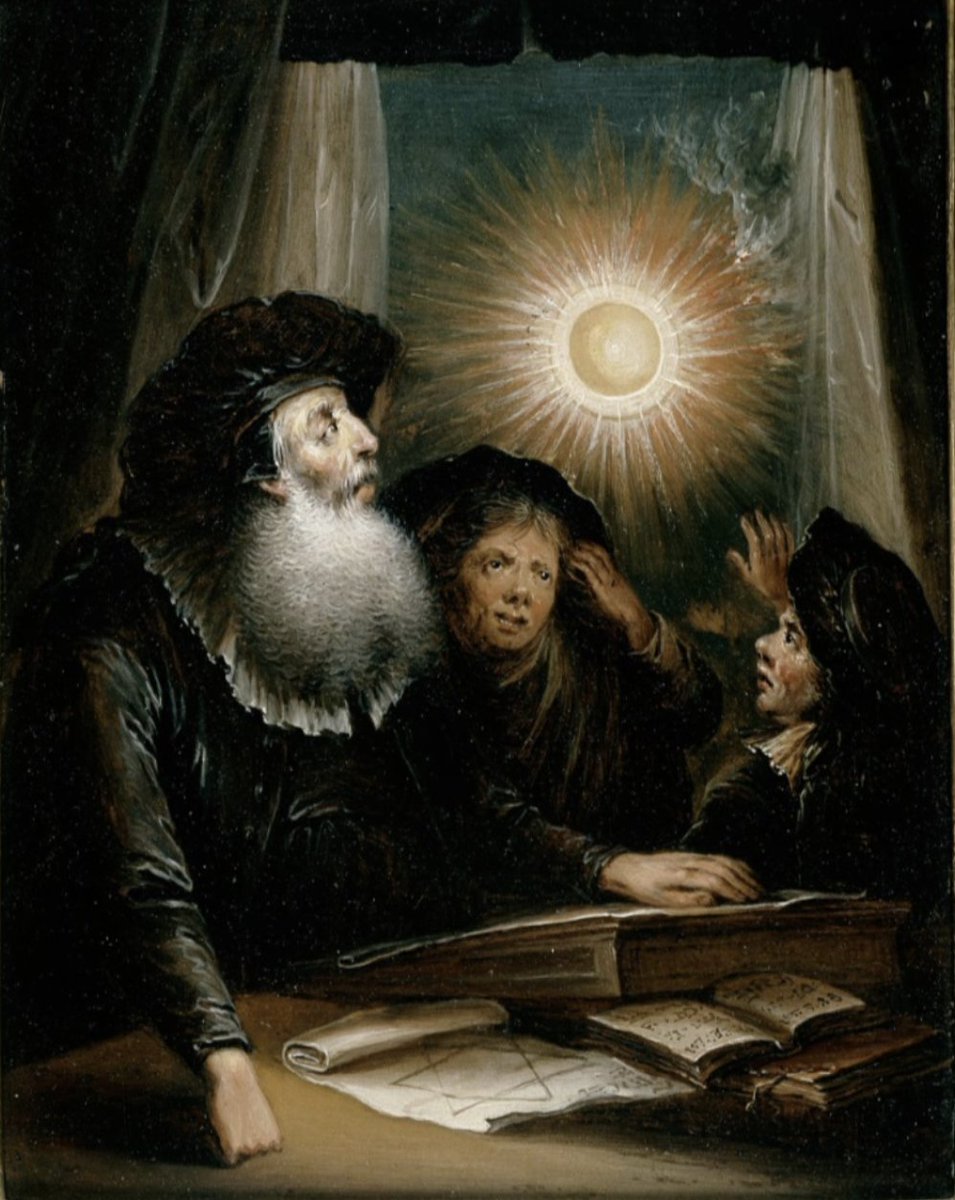
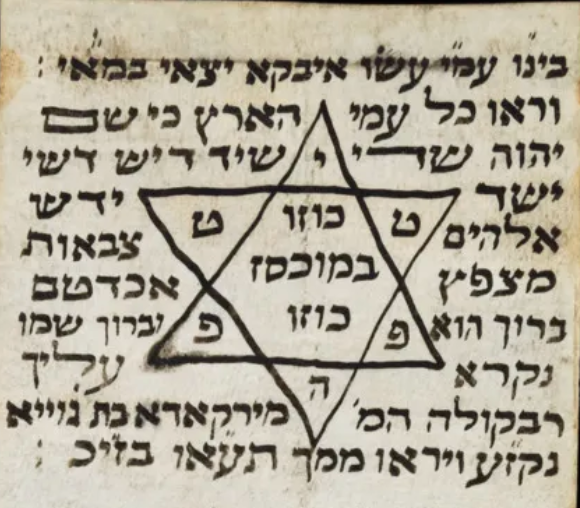
The Magen David image before him was part of a popular kabbalistic recipe for extinguishing fires. The radiant and hovering disk = the angelic Prince of Fire. Smoke emerges from the top right & the student's faces flash concern.
Nothnagel made a copy of this painting a few years later with one significant change: The abstract disk is replaced with a more concrete angelic figure.
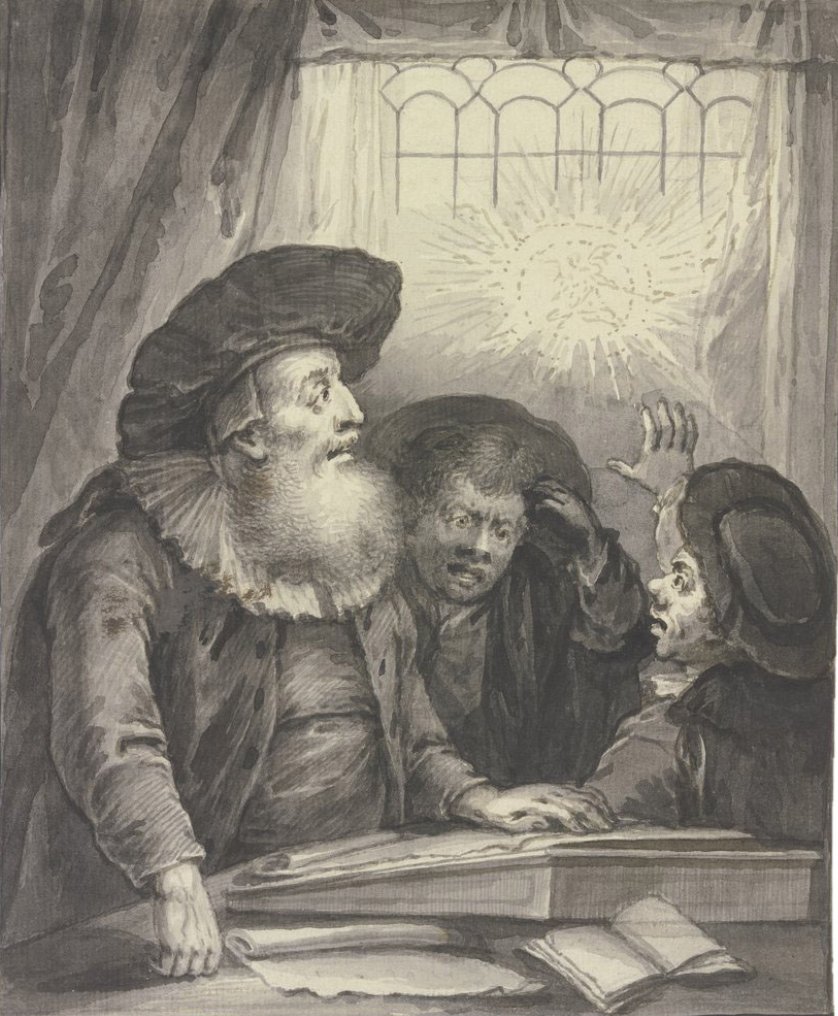
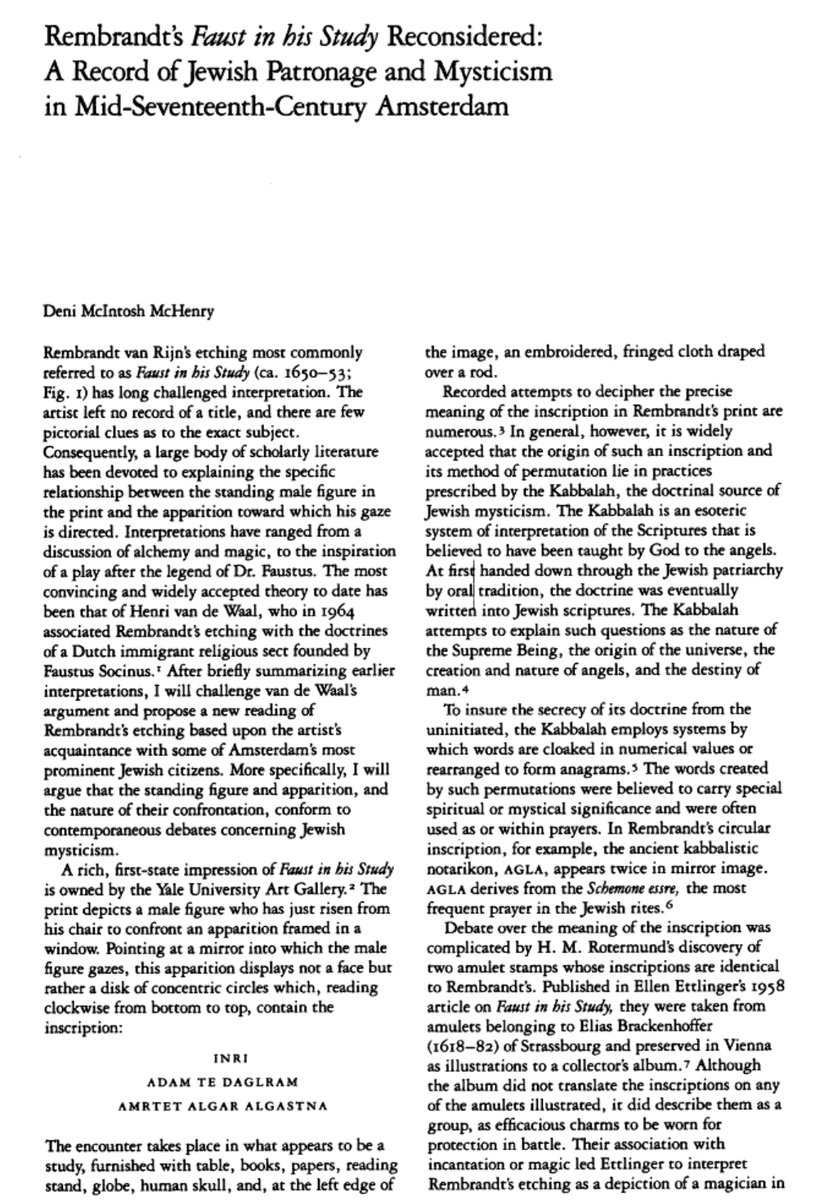
Notice how this version has been modeled after another scene of angelic conjuring: Rembradnt's "Faust" (1652).

In a sort of full-circle, Rembrandt was likely modeling his portrait on tropes of Kabbalah popular during his time.
Who is the Prince of Fire (Sa'ar Ha-Esh)? Midrashic sources identify him with the archangel Gabriel.
"Michael is the angel of snow and Gabriel of fire; this one does not extinguish that one, and that one does not harm this one." (Shir Ha-Shirim Rabbah 3:11)
"Michael is the angel of snow and Gabriel of fire; this one does not extinguish that one, and that one does not harm this one." (Shir Ha-Shirim Rabbah 3:11)
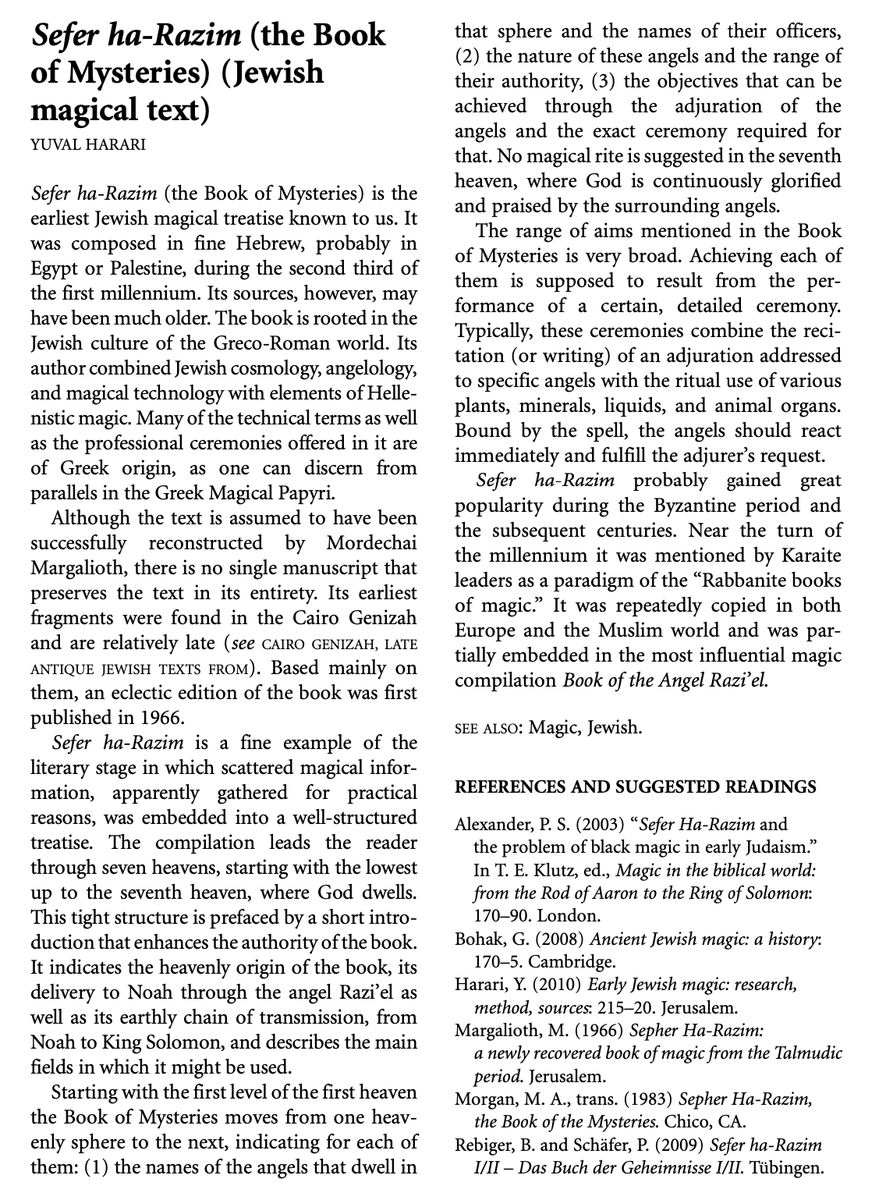
Sefer Ha-Razim, a magic text from the time of the Midrash, identifies two other angelic fire-archons: "Yabniel is in charge of all things concerning the igniting & extinguishing of fire... Deleqiel is in charge of flames of fire, to kindle or quench them."
Rashi (1040-1105) already reports that summoning these angels was uniquely difficult.

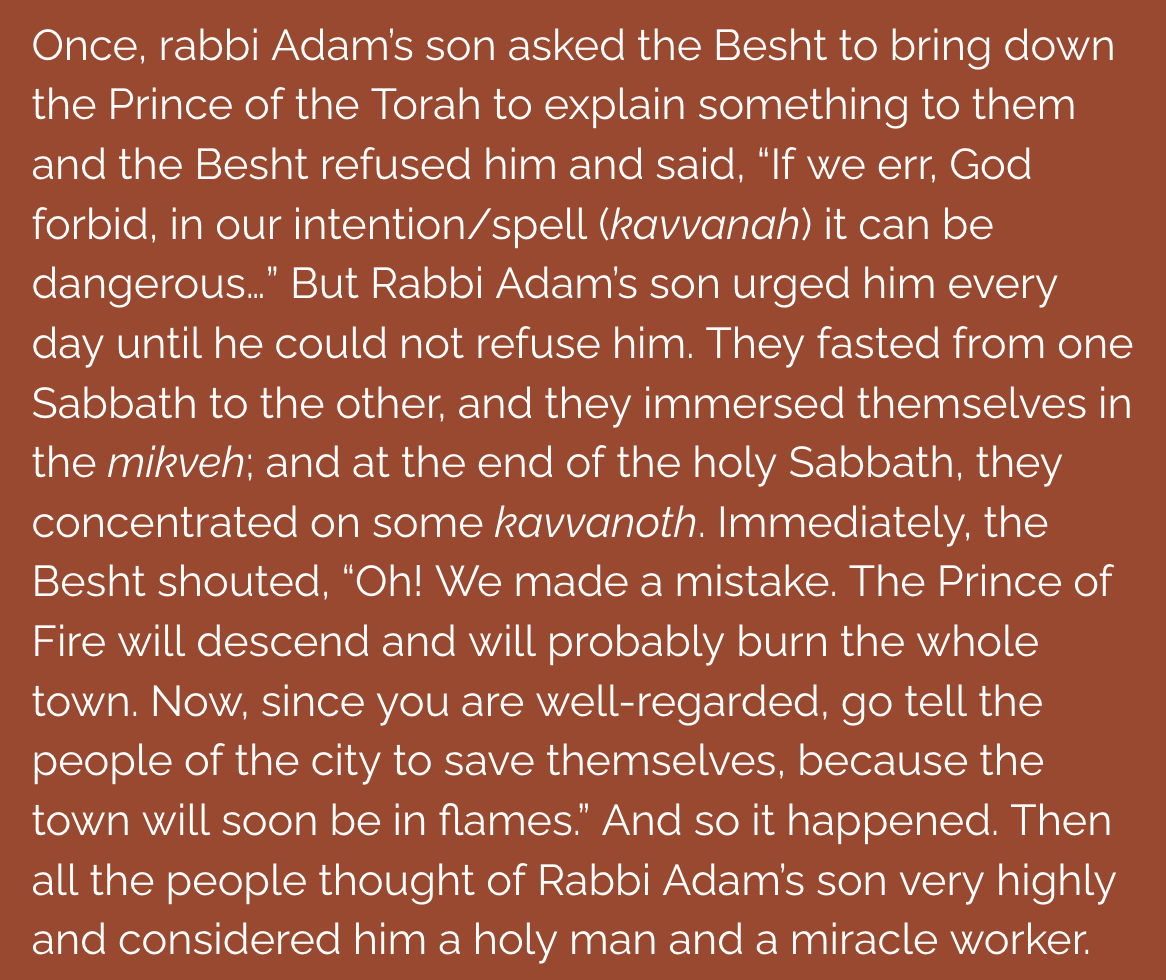
Interestingly, a very similar story to Rabbi Naphtali's arson is told about another Ashkenazi Ba'al Shem—The Ba'al Shem Tov/Besht. This version is from "In Praise of the Besht" (Kopust, 1814).
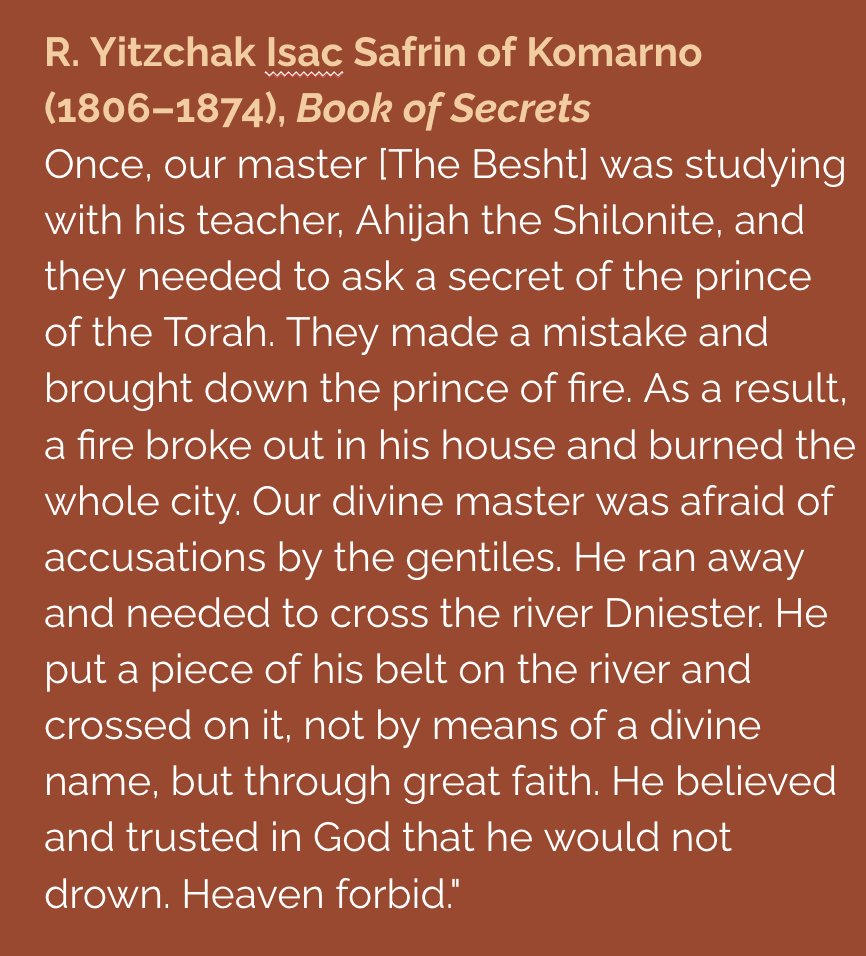
A second version of this story is told by a later hassidic master.
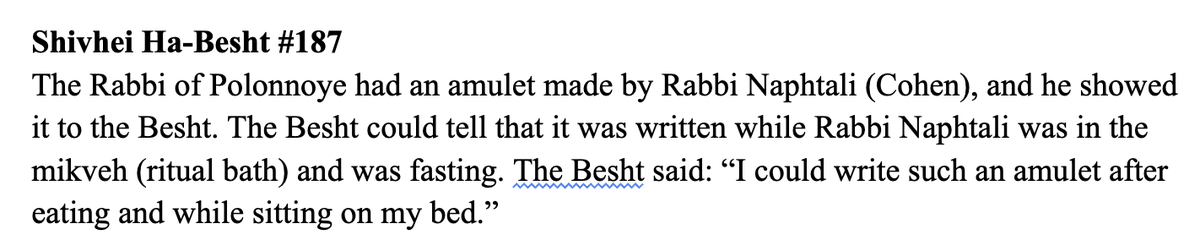
This incident would have occurred not long after 1711 (the Besht is born in 1698 & these tales occur in his youth). And, reportedly, the Besht knew of Rabbi Naphtali & mocked his ascetic model of practical Kabbalah.
The upshot? Don't start a fire to prove you can put it out + When Kabbalah is no longer theoretical but also "practical," its relationship to the elements and society is more acute & mistakes have material & historical consequences.
• • •
Missing some Tweet in this thread? You can try to
force a refresh