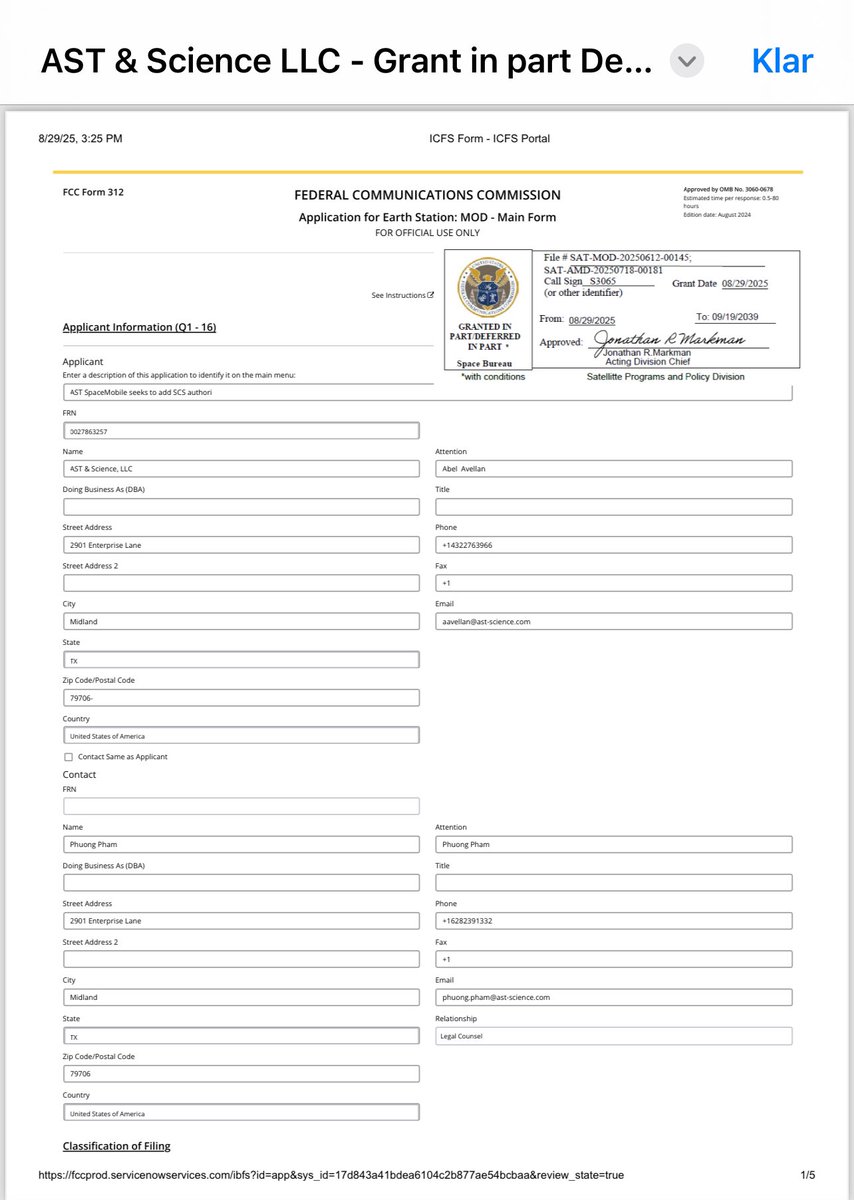
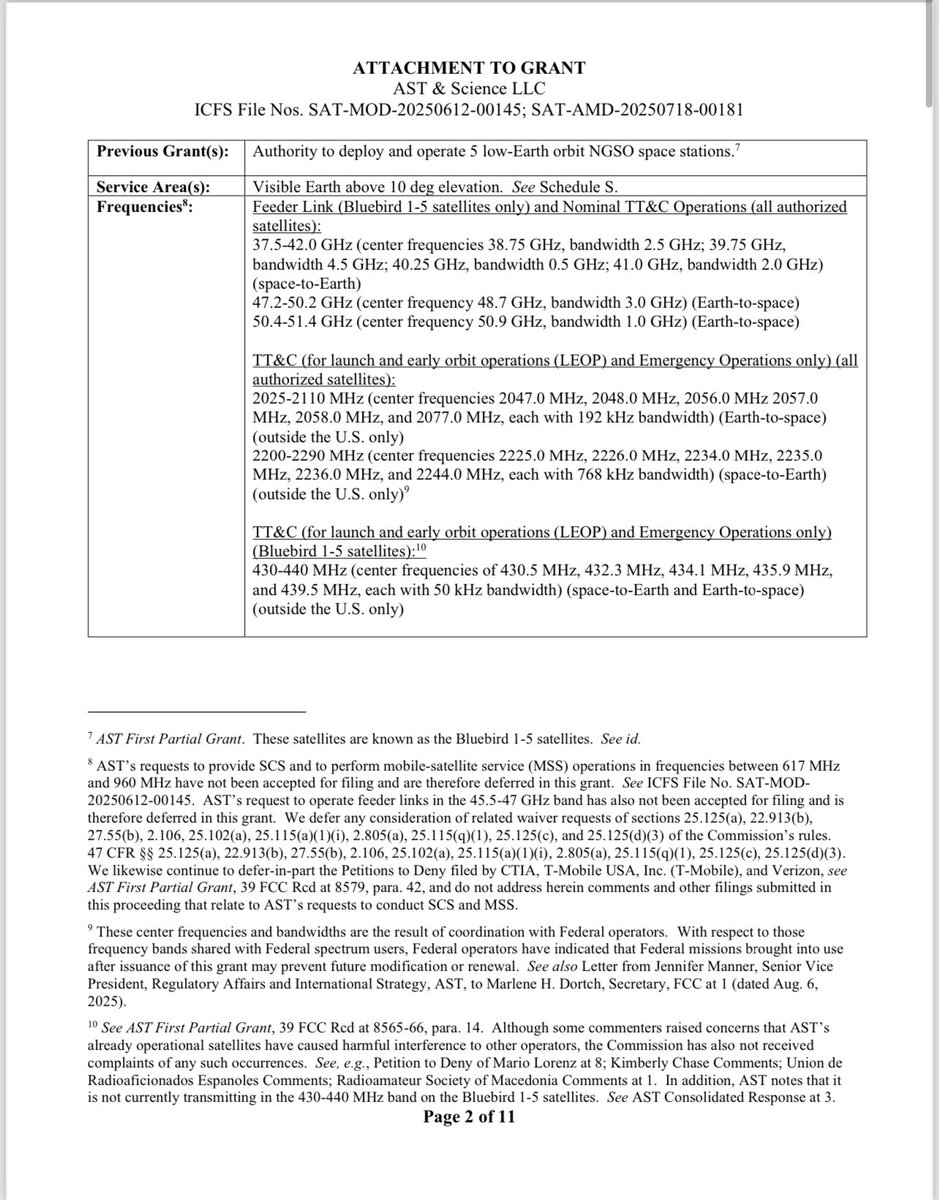
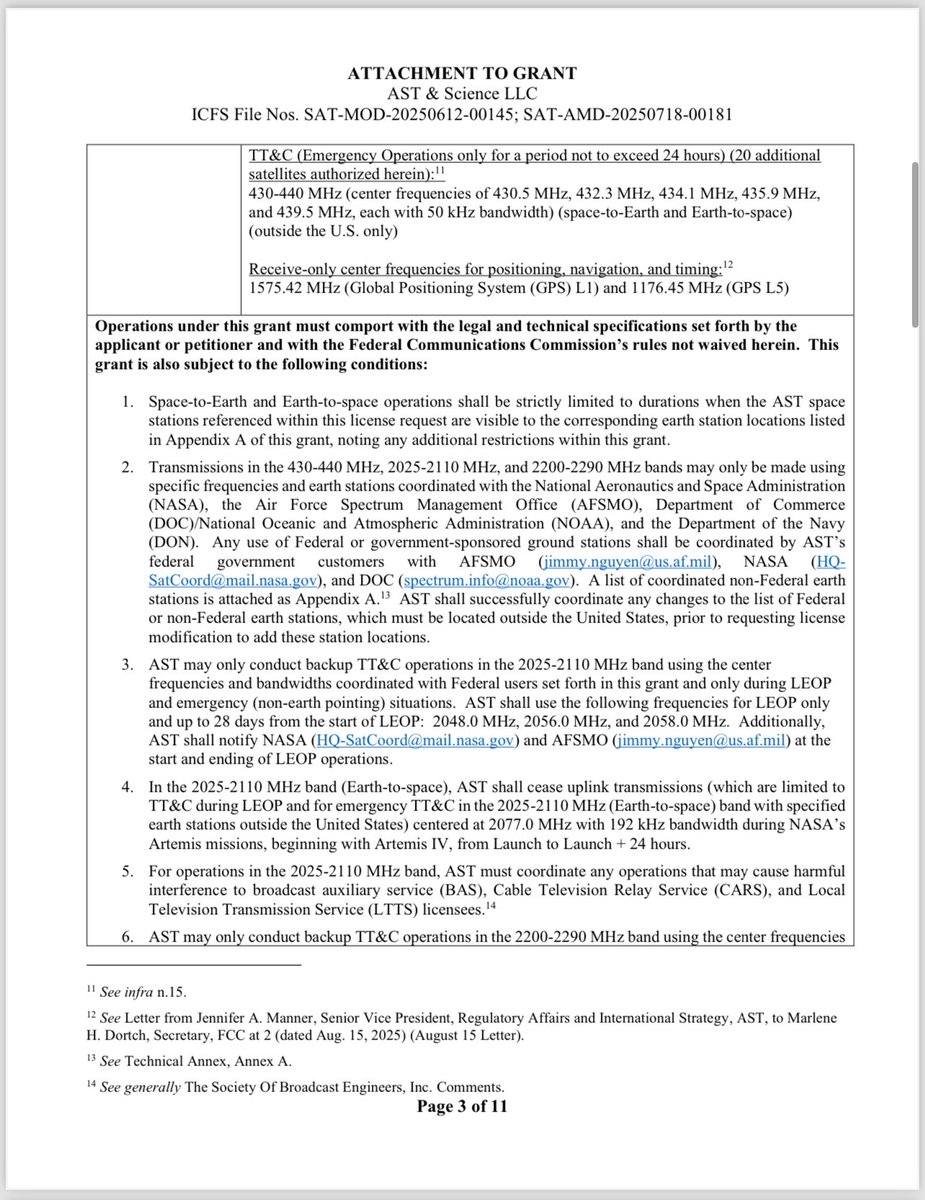
Scotia analysts apparenly read some of the DD shared by the SpaceMob community.
If You want Alpha or ”edge” investing in the nascent SCS market, so should You.
Previously thought by many to be the more technically advanced satcom operator Starlink is not getting approval.
1/n
If You want Alpha or ”edge” investing in the nascent SCS market, so should You.
Previously thought by many to be the more technically advanced satcom operator Starlink is not getting approval.
1/n
https://twitter.com/catse___apex___/status/1833538524571963589
🐾 ACLR. Adjacent Channel Leakage Ratio.
Recent requests by Starlink and some math (I was more kind to them than RKF engineering)
Is for Starlink ~-24.6 dBW/m2/MHz
And for AST ~-45 dBW/m2/MHz
This relates to quality of RF equipment.
A 20dB delta.
2/
Recent requests by Starlink and some math (I was more kind to them than RKF engineering)
Is for Starlink ~-24.6 dBW/m2/MHz
And for AST ~-45 dBW/m2/MHz
This relates to quality of RF equipment.
A 20dB delta.
2/
https://twitter.com/catse___apex___/status/1832574789128454191
It’s important to understand how AST beats Starlink by a lot in multiple different dimensions.
ACLR is focus in the frequenzy domain. How good a system is at not spamming adjacent _channels_.
And the 20dB difference is log scale.
AST is 100 times better.
3/
ACLR is focus in the frequenzy domain. How good a system is at not spamming adjacent _channels_.
And the 20dB difference is log scale.
AST is 100 times better.
3/
Let me show you what a 20dB or 100x better ACLR performance looks like on a linear scale.
ASTs RF quality moat is no subtle difference.
4/
ASTs RF quality moat is no subtle difference.
4/

It provides edge in two major ways.
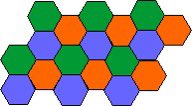
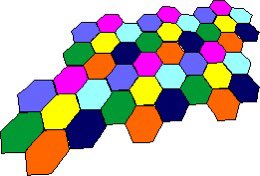
One is that frequenzy reuse patterns (here 3 and 7) means in a service area / a country an SCS operator themselves operate a lot of adjacent channels, in adjacent cells.
And so good ACLR means you don’t degrade your own traffic.
6/
One is that frequenzy reuse patterns (here 3 and 7) means in a service area / a country an SCS operator themselves operate a lot of adjacent channels, in adjacent cells.
And so good ACLR means you don’t degrade your own traffic.
6/
🐾🐾The other effect is that unless your ACLR isn’t good enough you will not be allowed to operate at all because you are spamming not just your own cells, but also traffic of other satellite and mobile network operators.
Starlink is well into this category.
7/
Starlink is well into this category.
7/
AT&T saying Starlink would degrade their terrestrial traffic by 18% in a recent filing.
True or not 1% is too much and enough to kill Starlink as the terrestrial incumbent MNO is protected primary use and SCS is supplementary on no interference basis.
8/
True or not 1% is too much and enough to kill Starlink as the terrestrial incumbent MNO is protected primary use and SCS is supplementary on no interference basis.
8/
In short Starlink must get their ACL leakage below the noise floor.
And get their degradation of other protected networks to zero.
Or they will not be allowed to operate.
And that is where FCC found their metric for PFD level.
9/
And get their degradation of other protected networks to zero.
Or they will not be allowed to operate.
And that is where FCC found their metric for PFD level.
9/
A PFD level Starlink themselves say they can not meet in aggregate from their constellation using existing technology.
It is a very dire situation for 100+ Starlink d2c sats already launched.
10/
It is a very dire situation for 100+ Starlink d2c sats already launched.
10/
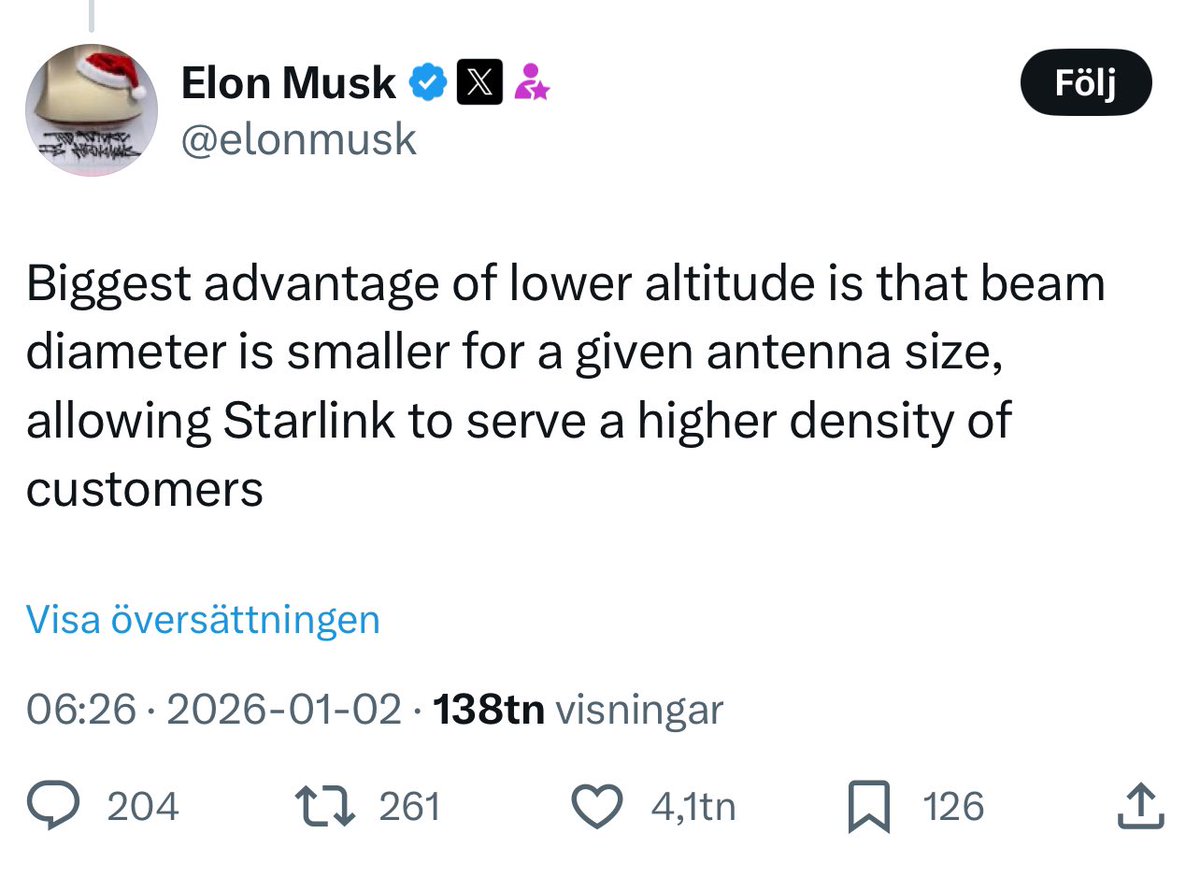
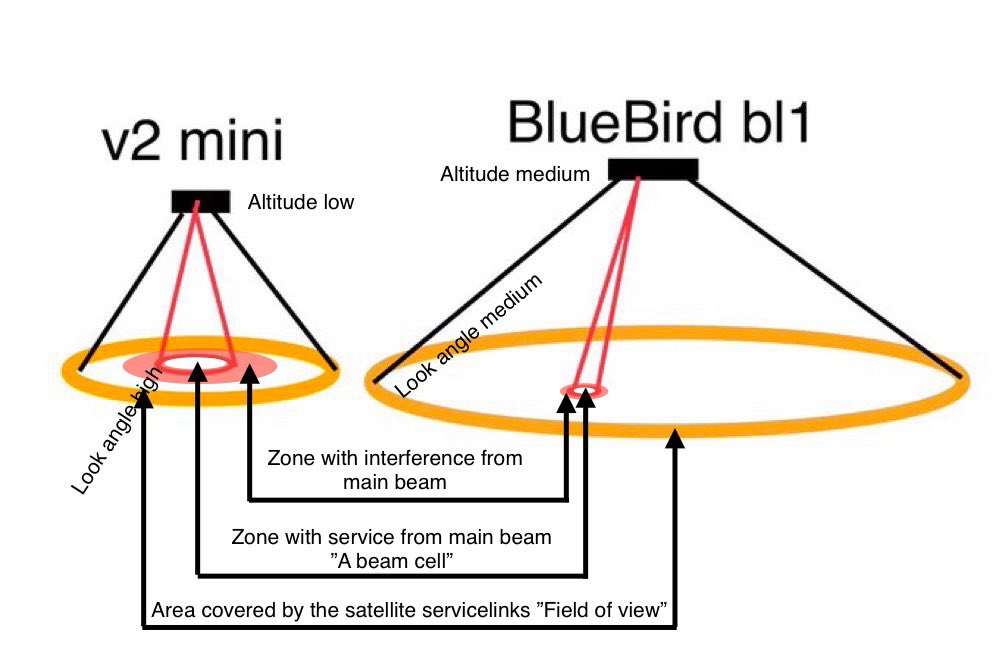
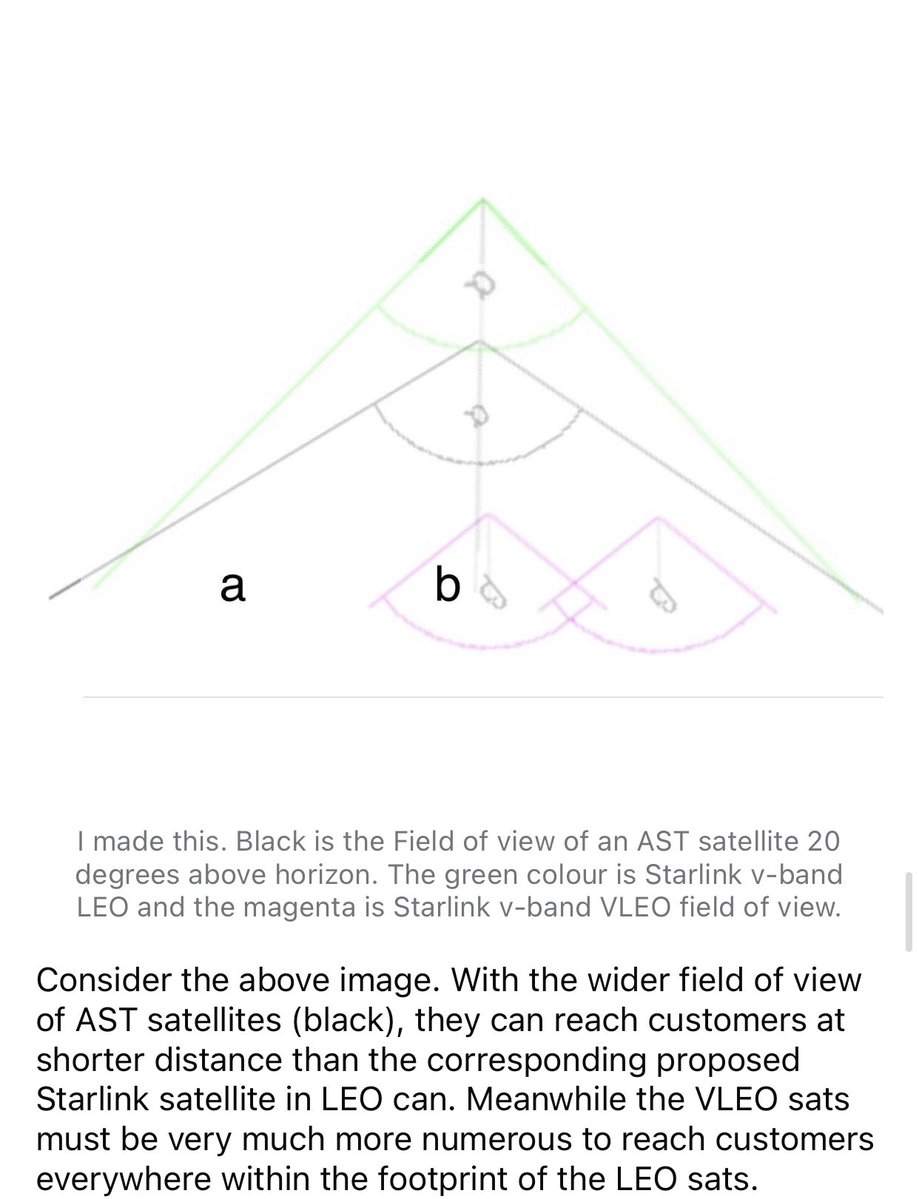
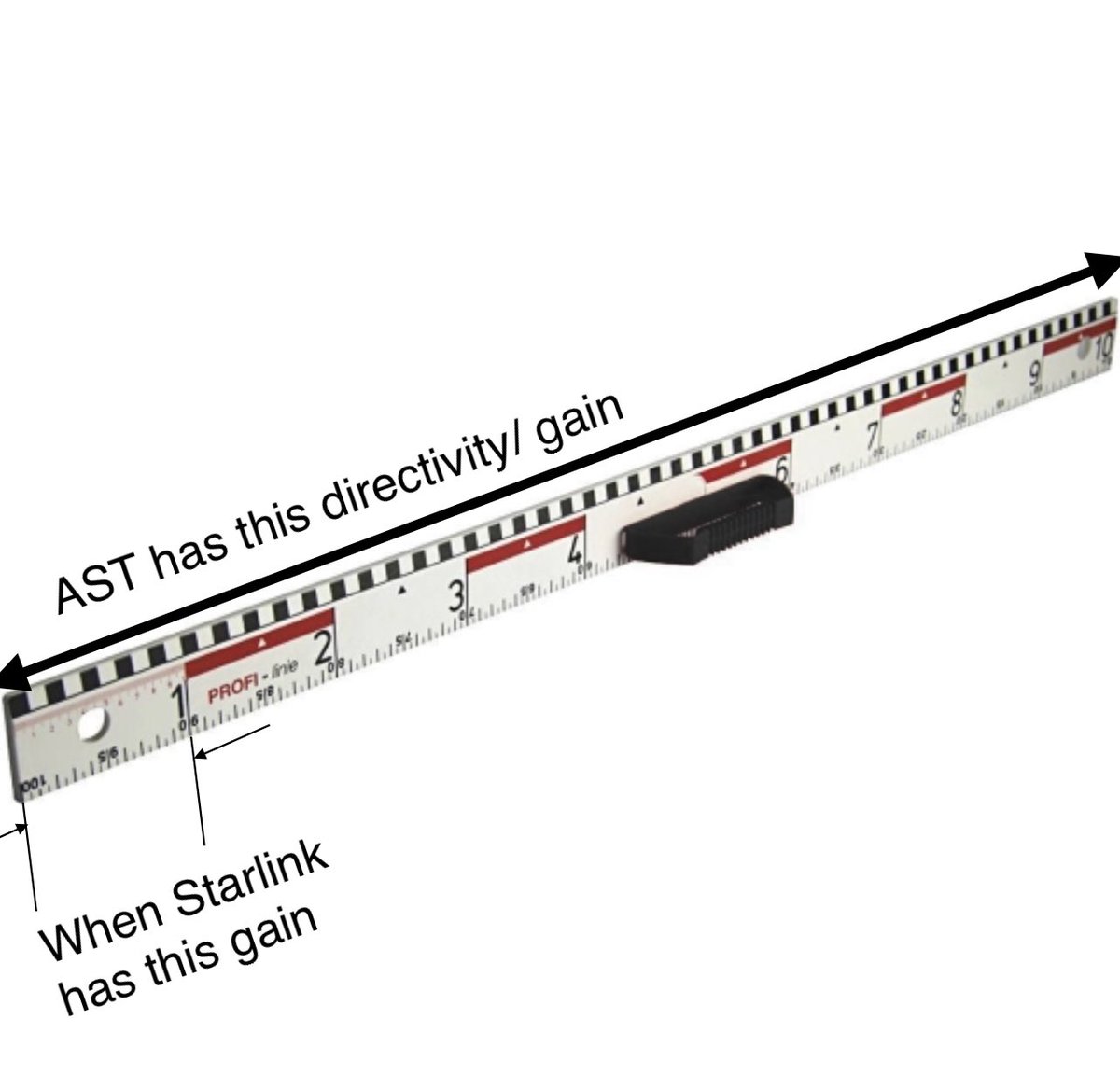
The other dimension is about directivity and gain.
First aspect, size.
🐾🐾🐾ASTs larger arrays can fit more elements as they are spaced approximately 1/2 a wavelength appart.
I have alluded to this in my pinned tweet.
A 10dB difference in Starlink SCS bands 🍎to 🍎
11/
First aspect, size.
🐾🐾🐾ASTs larger arrays can fit more elements as they are spaced approximately 1/2 a wavelength appart.
I have alluded to this in my pinned tweet.
A 10dB difference in Starlink SCS bands 🍎to 🍎
11/
https://twitter.com/catse___apex___/status/1742457630428172470
Again. It is no subtle difference.
This extreme directivity comes to shine a lot and mostly so in the uplink.
The uplink is the hardest part of the connection.
12/
This extreme directivity comes to shine a lot and mostly so in the uplink.
The uplink is the hardest part of the connection.
12/
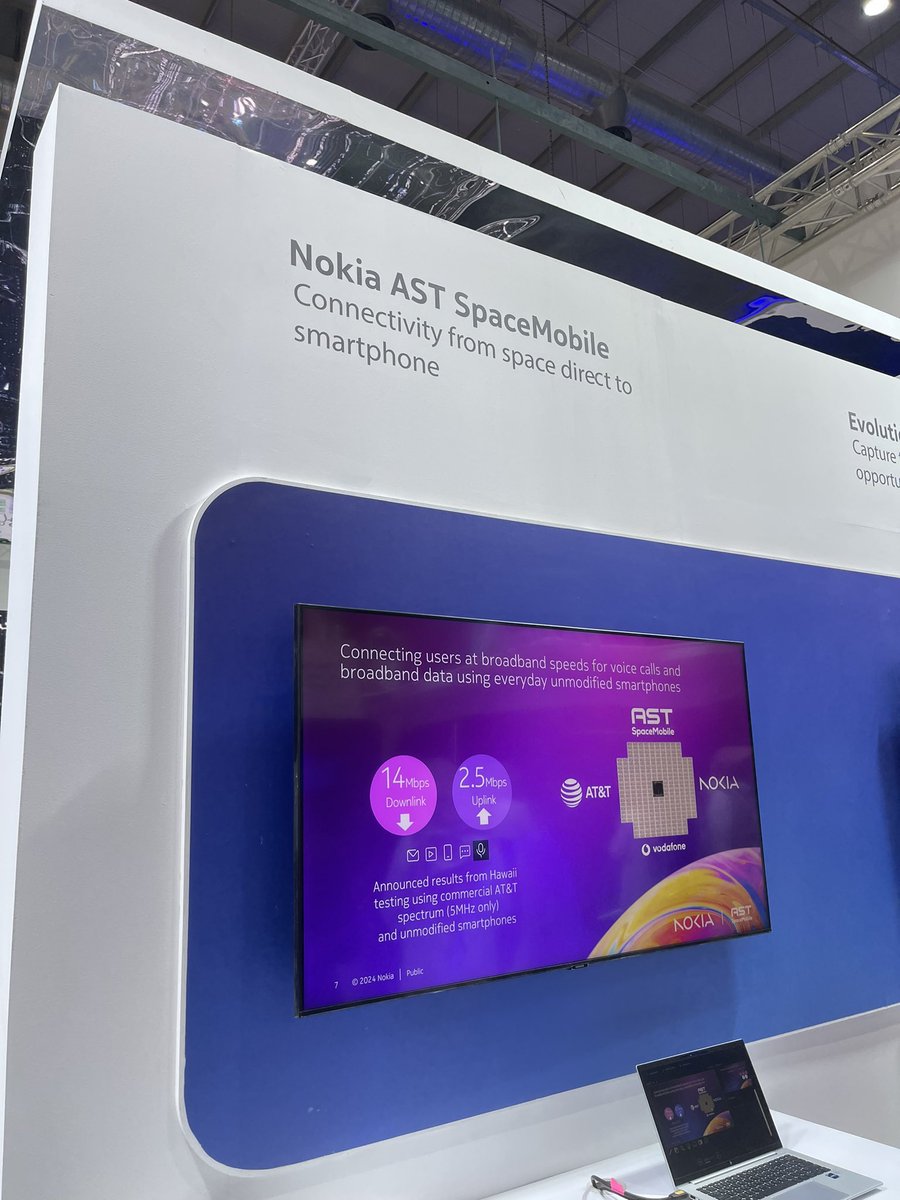
ITU studies estimates SCS system uplink to achieve 10% of downlink.
Here President of Mobile Networks at Nokia proudly showed the world AST is doing 18%
Which blowed me away at the time. It’s extremely good.
13/
Here President of Mobile Networks at Nokia proudly showed the world AST is doing 18%
Which blowed me away at the time. It’s extremely good.
13/
https://twitter.com/tommiuitto/status/1764570597051252798
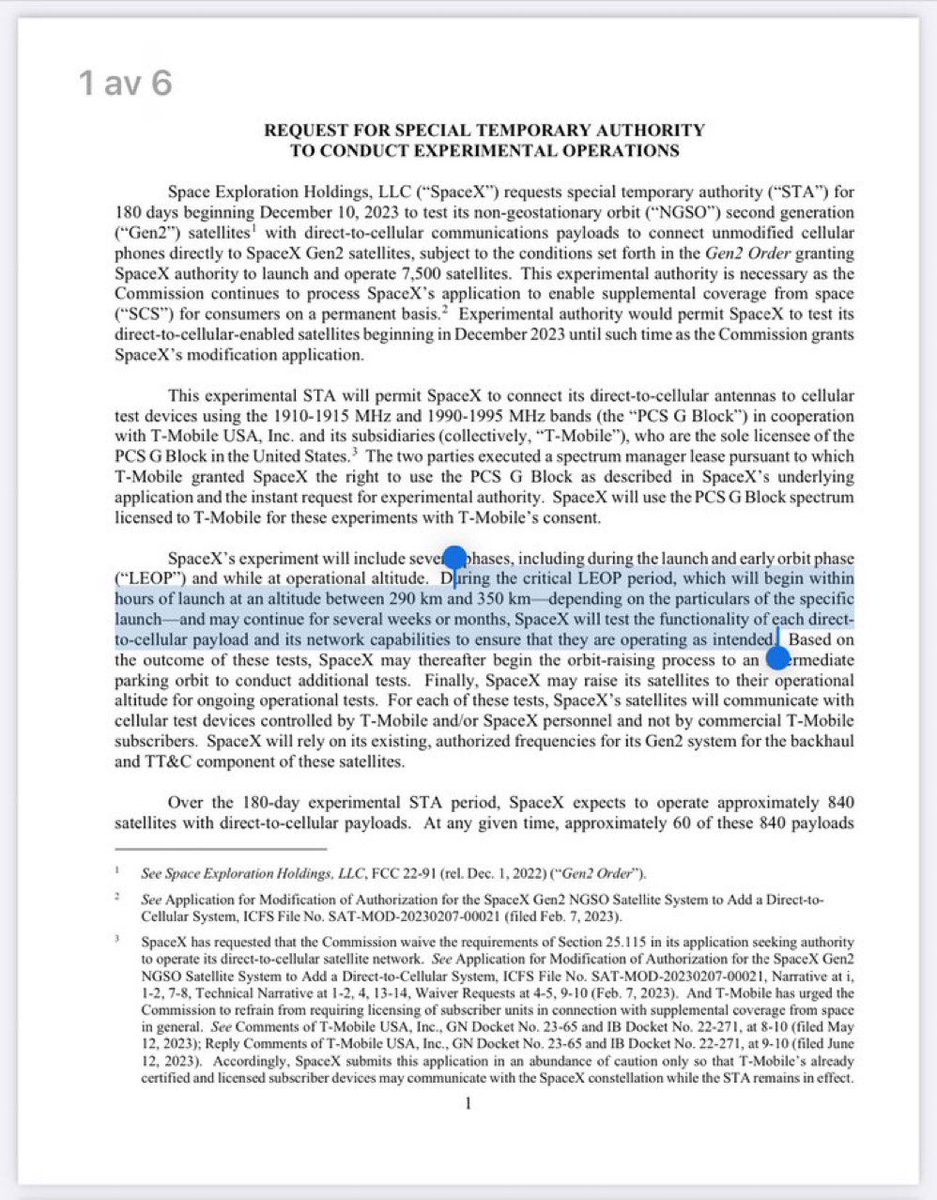
It should be noted that Starlink has not revealed their uplink metrics.
I don’t think they are anything to boast about given their RF quality issues with ACLR.
14/
I don’t think they are anything to boast about given their RF quality issues with ACLR.
14/
🐾🐾🐾🐾
Antenna element gain contour.
New AST antenna element itself has a gain of 8dB.
I’ve sort of arrived at 7dB just looking at the element but. They actually published 8dB which again, blows you away.
It’s how their now 15x15 m block2s are as efficient as 30x30 of 2019
Antenna element gain contour.
New AST antenna element itself has a gain of 8dB.
I’ve sort of arrived at 7dB just looking at the element but. They actually published 8dB which again, blows you away.
It’s how their now 15x15 m block2s are as efficient as 30x30 of 2019
It’s not the first time I think about concepts that would be beneficial only to later find out AST has been designing them for years already.
16/
16/
https://twitter.com/catse___apex___/status/1756833642863542747
I mean finding this.
It’s brilliant to make elemts with higher gain toward edges of the Fov as it is there an phased array strugles with directivity and link distances are longest.
17/
It’s brilliant to make elemts with higher gain toward edges of the Fov as it is there an phased array strugles with directivity and link distances are longest.
17/
https://twitter.com/catse___apex___/status/1805151855510421628
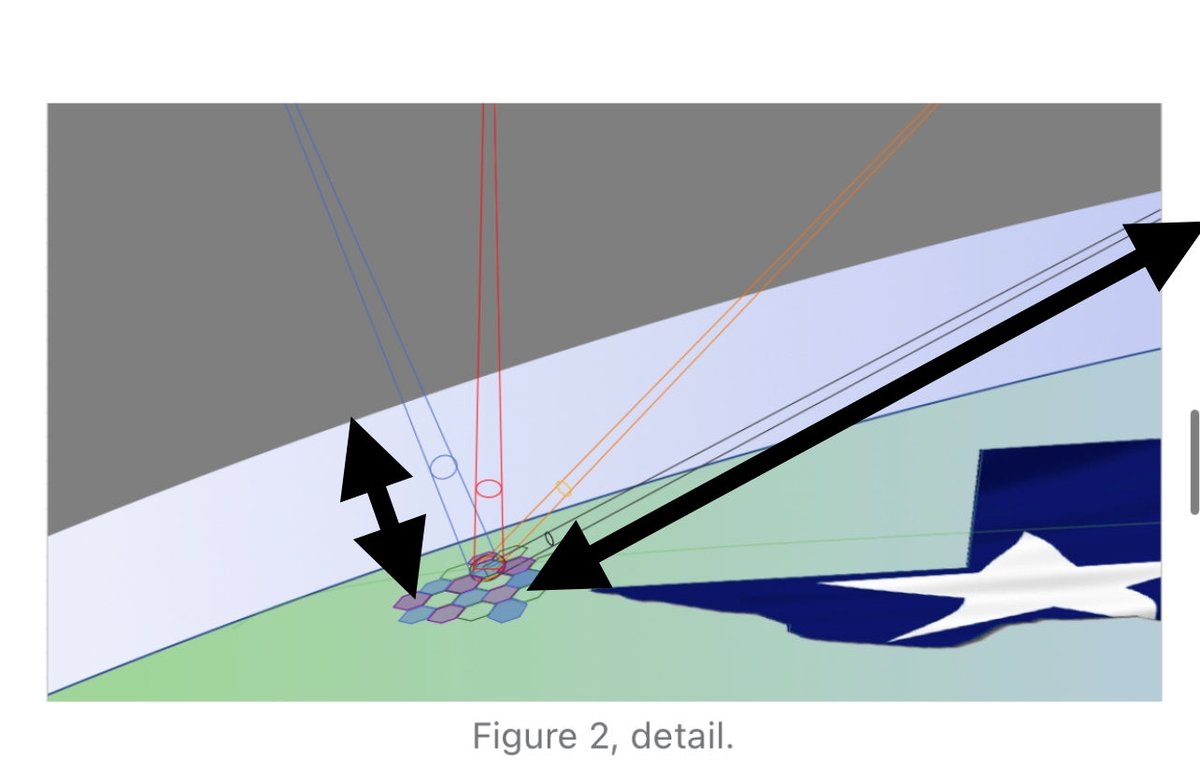
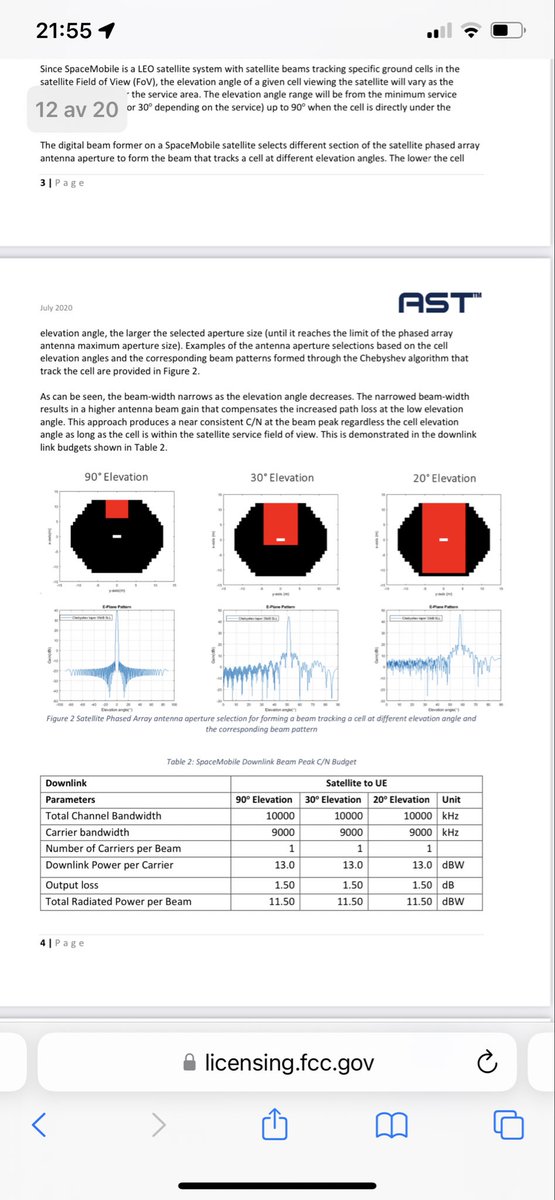
🐾🐾🐾🐾🐾Then there is using an assymetric portion of the array to form circular footprints also at edge of FoV to focus signal where it does good.
Blue beam circular cross section.
Black beam elliptic cros section.
Both hits a perfect circle on earths surface.
18/
Blue beam circular cross section.
Black beam elliptic cros section.
Both hits a perfect circle on earths surface.
18/
🐾🐾🐾🐾🐾🐾
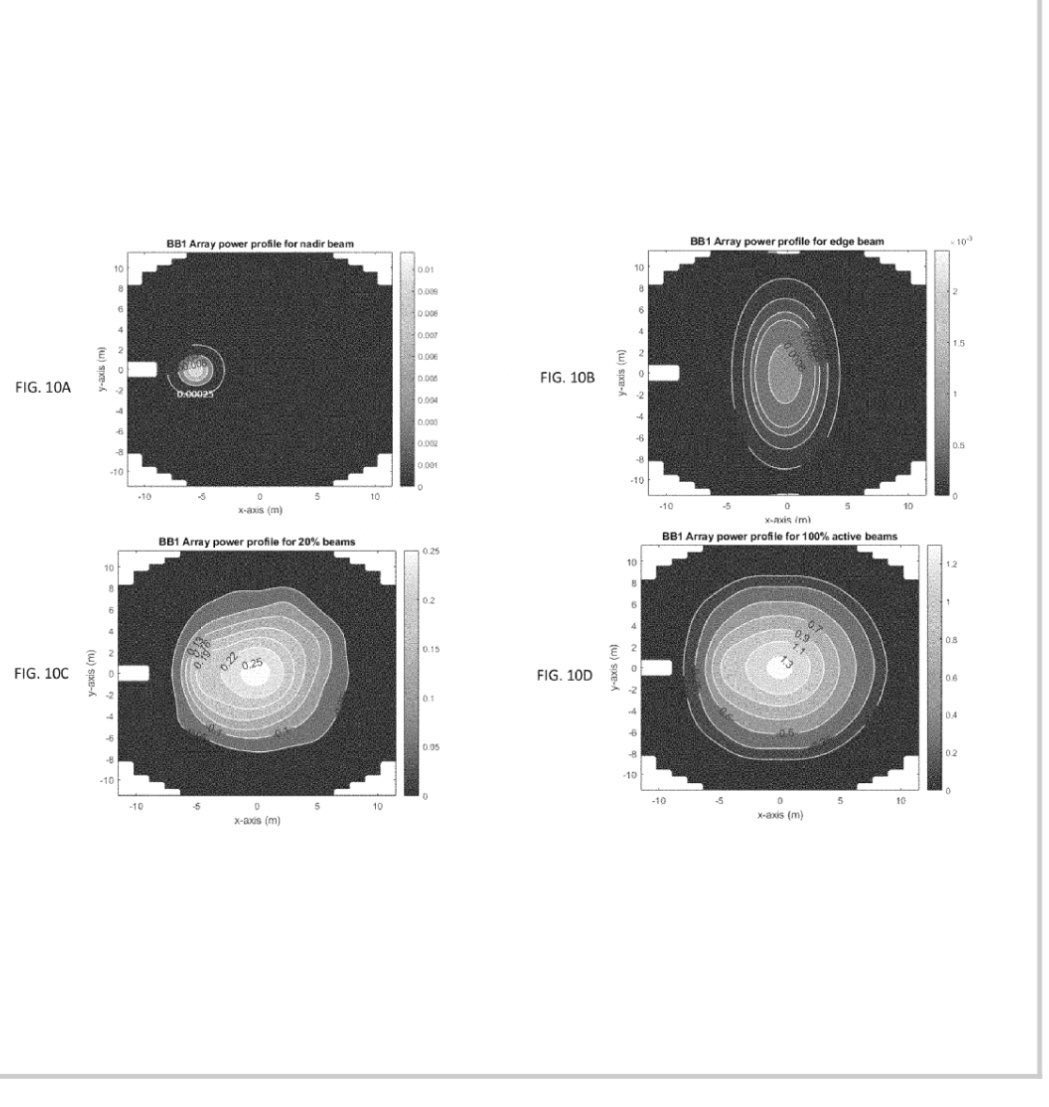
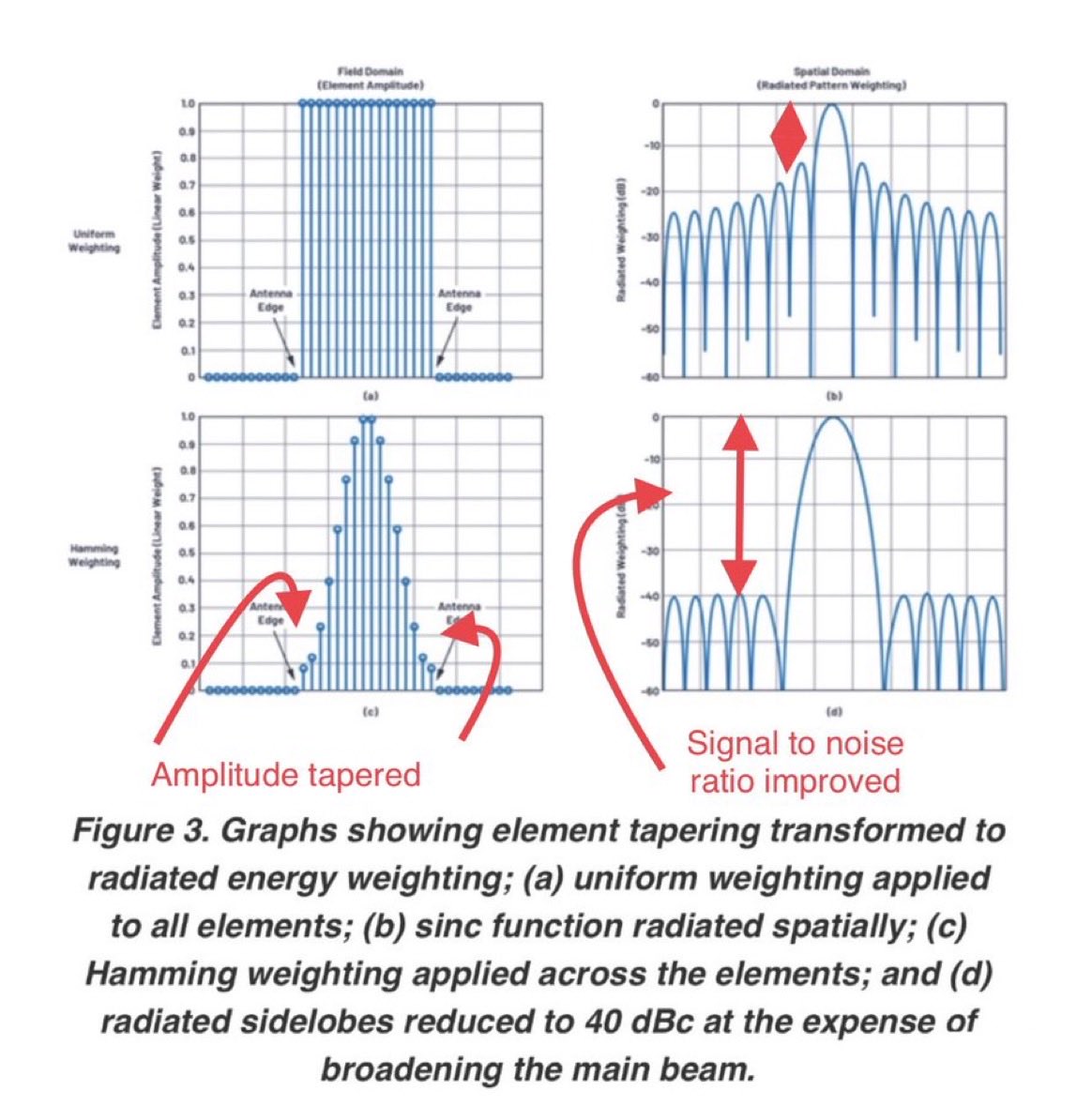
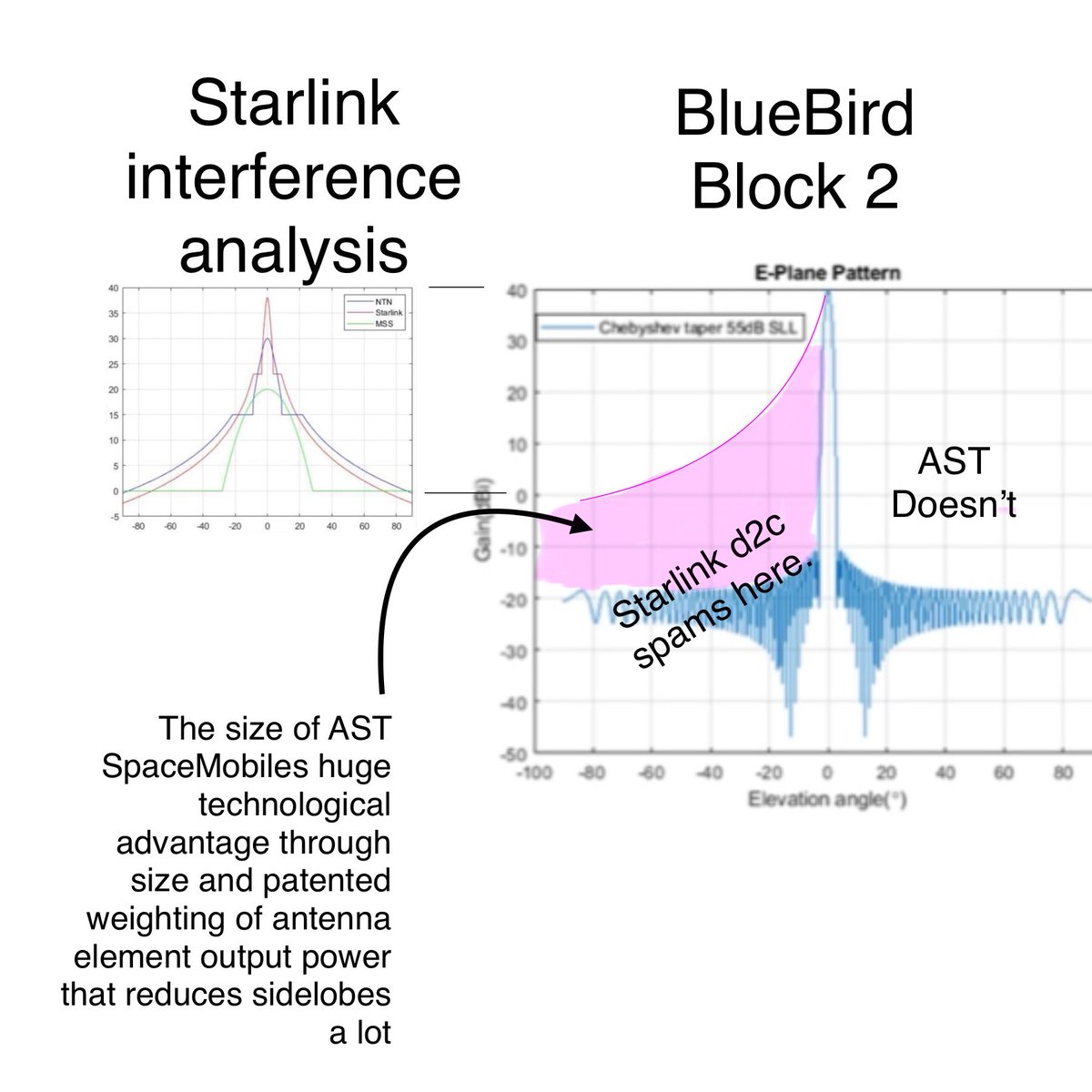
Then there is weighting or tapering.
This is an important AST patent.
It is active drastical reduction of unwanted sidelobes.
That in Starlinks case causes severe aggregate interference with other MNOs, other satellite operators and their own network.
19/
Then there is weighting or tapering.
This is an important AST patent.
It is active drastical reduction of unwanted sidelobes.
That in Starlinks case causes severe aggregate interference with other MNOs, other satellite operators and their own network.
19/
🐾^n
AST has a whole collection of other patents regarding the antenna / RF tech.
I told you about a few.
What does this mean for competitiveness?
20/
AST has a whole collection of other patents regarding the antenna / RF tech.
I told you about a few.
What does this mean for competitiveness?
20/
https://twitter.com/catse___apex___/status/1723694133531865105
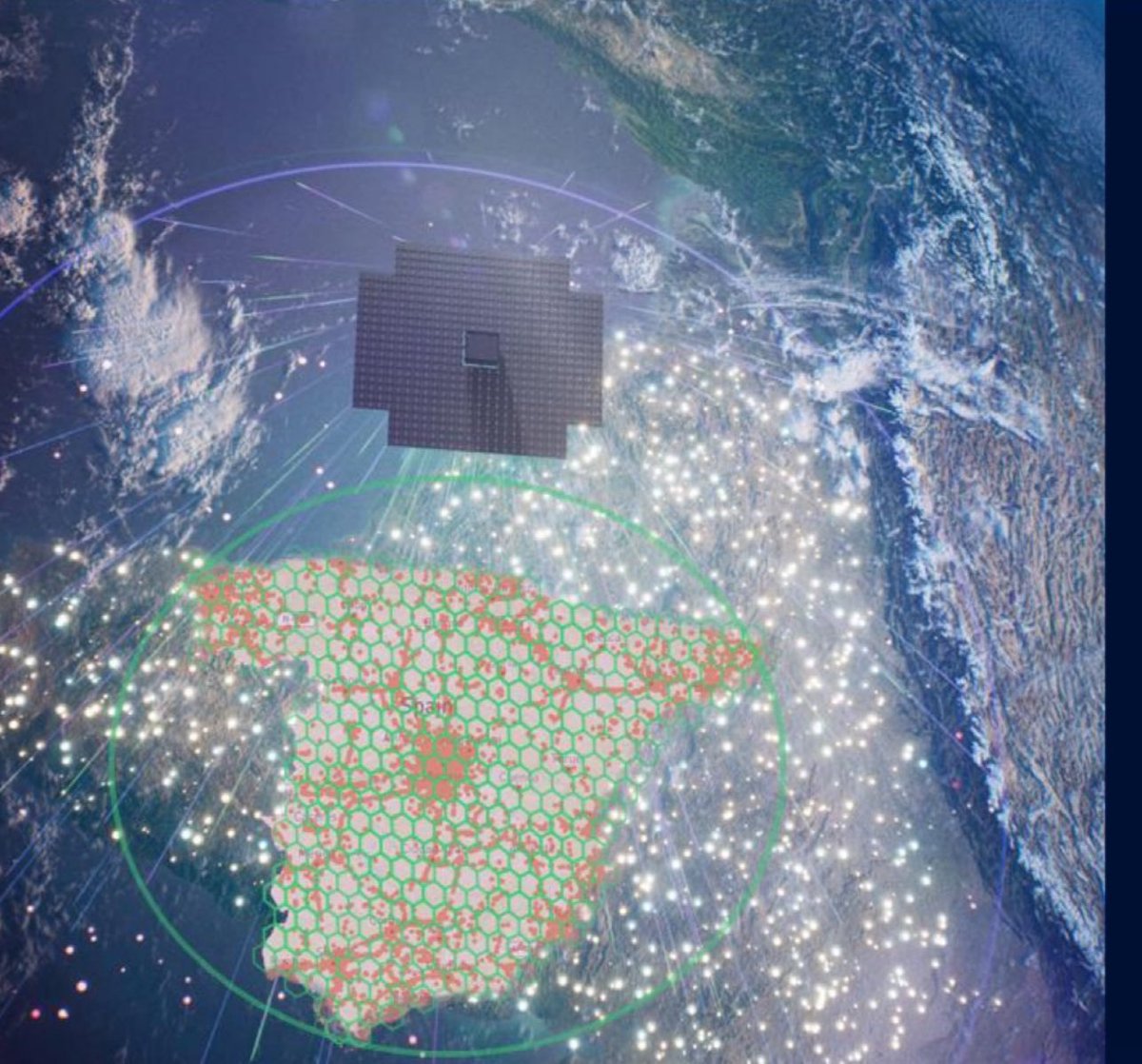
It means that AST can add a base coverage NTN layer over all land blasting at full power.
While Starlink will need complete redesign. And _at best_ be allowed to operate existing d2c sats well away from any tower infrastructure and at reduced power.
21/
While Starlink will need complete redesign. And _at best_ be allowed to operate existing d2c sats well away from any tower infrastructure and at reduced power.
21/
This is the reason why T-Mobile signed MoU with Starlink conditioned on Starlink meeting FCC downlink -120 PFD limit. (Which Starlink can’t with their current tech w/o throtteling power down to text message only.
Current Space-x bad RF tech _is_ a deal breaker for any MNO.
22/
Current Space-x bad RF tech _is_ a deal breaker for any MNO.
22/
But it needs to be understood just how large and multi dimensonal ASTs moat is.
5G and 6G has more services than just coms. Such as very precise positioning.
MNOs wants that everywhere.
23/
5G and 6G has more services than just coms. Such as very precise positioning.
MNOs wants that everywhere.
23/
And then there is the Business Intelligence value of lighting up AST _everywhere_ (which Starlink can’t won’t by T-MUS admission).
MNOs will get intel worth Bn they never had before. As they suddenly see all phones out of tower coverage.
You can use that intel to optimize.
24/
MNOs will get intel worth Bn they never had before. As they suddenly see all phones out of tower coverage.
You can use that intel to optimize.
24/
The power savings alone will be in the hundred of million dollars from such optimization as the NTN can carry rural low load on itself for example and be used to deploy direct and wake up towers as needed.
25/25
25/25
Ran out of tweets in a single thread.
🐾🐾🐾🐾
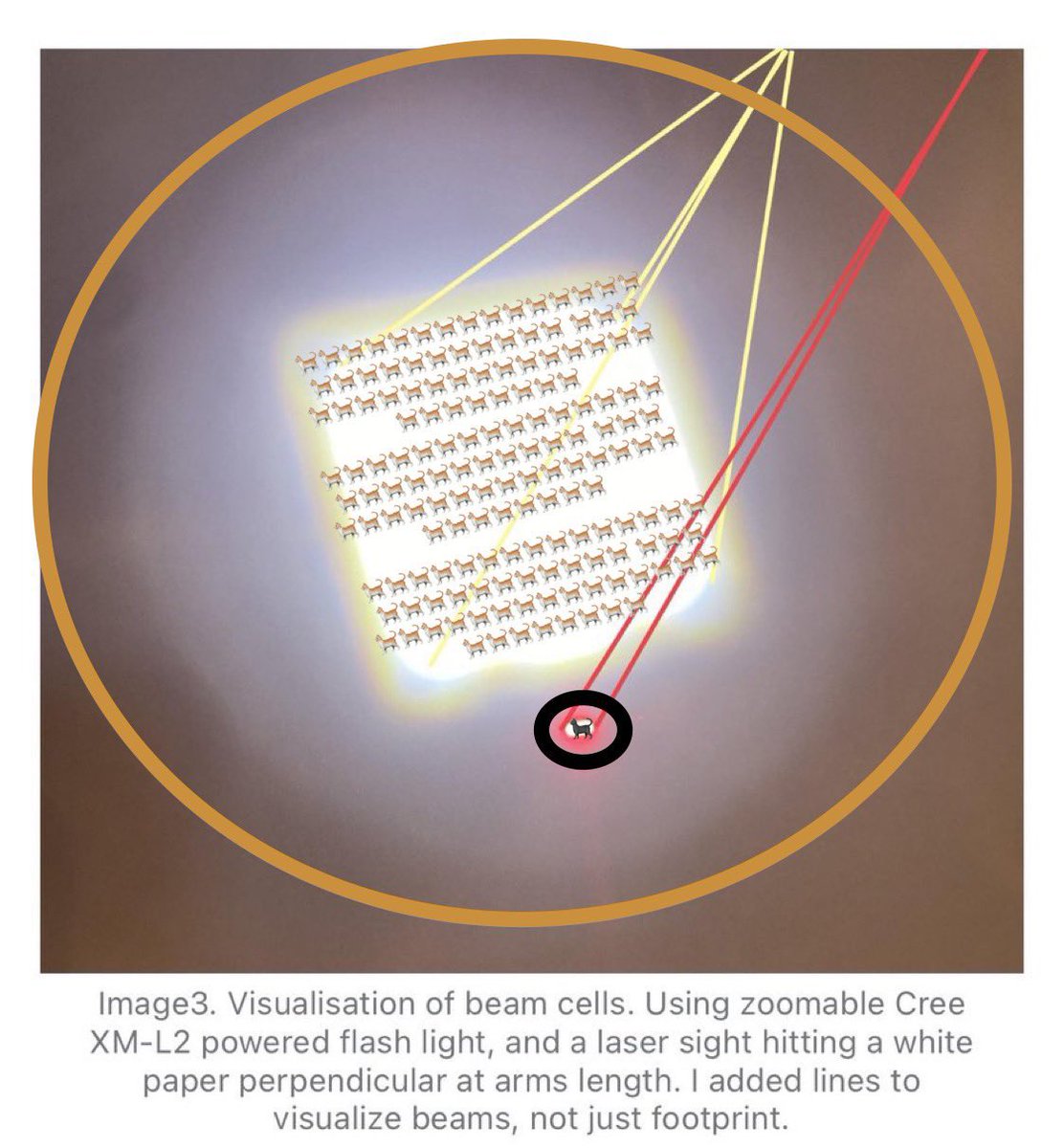
I’ll als highlight the area part of area Spectral Efficiency as it relates to directivity.
The extreme spatial focus of ASTs beams is mentioned in my pinned tweet.
Small cell means more bandwidth per user
🐾🐾🐾🐾
I’ll als highlight the area part of area Spectral Efficiency as it relates to directivity.
The extreme spatial focus of ASTs beams is mentioned in my pinned tweet.
Small cell means more bandwidth per user
https://x.com/catse___apex___/status/1651240663919280129?s=46&t=IAdas7XGtpsHUboQt8WQJA
• • •
Missing some Tweet in this thread? You can try to
force a refresh