Ukrainian defender Oleksandr Antonenko spent 10 months in Russian captivity. He was beaten and tortured by electric shocks, cold, and hunger. Please share.
WARNING: This story contains descriptions of torture and violence.
WARNING: This story contains descriptions of torture and violence.
"For the first three weeks in captivity, we were fed about four times. Porridge was served on one tray, and we were given four spoonfuls each." /1
"A few times a week, they took us out for execution and then brought us back. They did this to try to force us to cooperate." /2
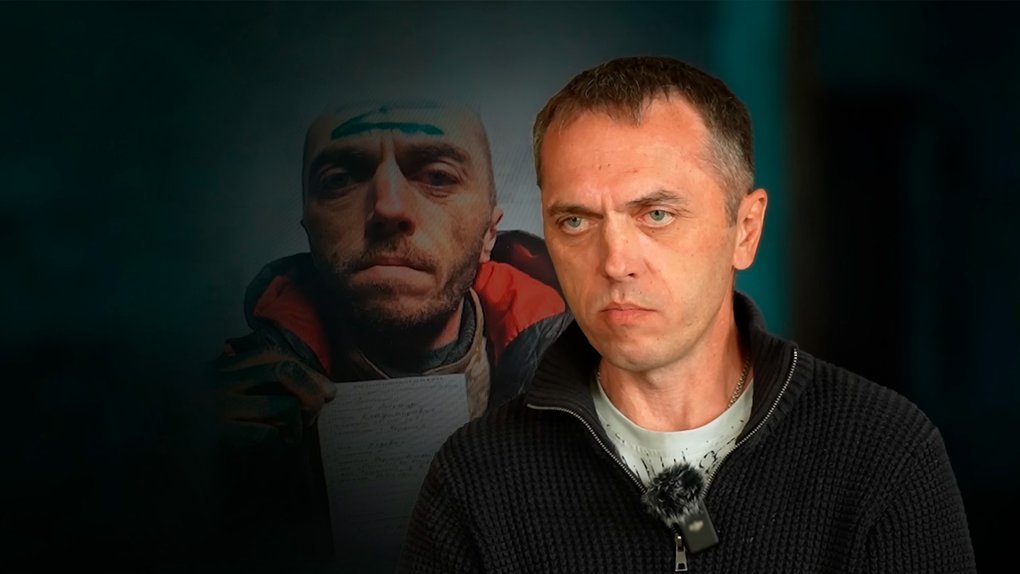
"In the tent camp in Kursk, they drew a 'Z' on my forehead with green paint because I refused to cooperate with them." /3
"I lay on the ground for a long time, and my legs started to hurt and go numb from the cold. I asked for help, and they asked me where it hurt. When I showed them, they started hitting that spot with a stick." /4
"In the Kursk detention center, they threw me out of the bus onto the asphalt. Then they kicked me about 10 meters into the building like a football." /5
"During the intake process, we had to strip, and they beat us the whole time, even using electric shockers." /6
"I arrived at 11 a.m. but didn’t enter the cell until 5 p.m. They just beat us the entire time." /7
"There was a guy who was beaten to death. I don’t know how people endure this… maybe the fact that I practiced martial arts helped, as I knew how to block and protect my head." /8
"Once, I shielded myself with my elbow, and the guard injured his hand. He then took me out and beat me until he was completely exhausted—hitting me with a stick, his hands, and even a belt." /9
"At one point, they found out I had been in prison before [Oleksandr spent 4 years in prison in the 2000s for robbery]. They called in special forces, and four of them beat me nonstop. They broke my ribs, and I lost control of my bowels... /10
...At that moment, I regretted surrendering and thought it might have been better if they had thrown grenades at our position." /11
"At one point, they beat me so much that I no longer felt pain or anything." /12
"In one room, they mainly beat us with electric shockers. They targeted my wet and naked body after I’d showered." /13
"One time, they said, 'He’s been in jail before; let’s make him 'lowered'' [prison slang for male rape victims]. But then another said he had a better idea: They put me on all fours, held my arms and legs, then applied a fully charged shocker to my anus... /14
...I thought my eyes would pop out—I felt the pain throughout my whole body." /15
"After that, I lost consciousness. They brought me back and started interrogating me. I said I was married and had three children. They then said I no longer needed my genitals and held me down again, pressing something like a guillotine... /16
...I was ready to say goodbye to my genitals, but just then, an officer arrived and said the colony commander had come, and they had to take me." /17
"To date, I’ve identified and recognized 7 people from photographs, including the head of the Kursk detention center. I saw him in another room, and he asked about my time in prison, even about my tattoos." /18
"The women there also treated us with hatred. They said they were going easy on us and needed to be tougher." /19
"After the exchange, a psychologist asked me why I thought they acted this way... I don’t know, maybe because we live better than them?" /20
"I don't have a higher education, but I spoke there with FSB agents and others who should have been educated... but they were all so dumb, with zero logic." /21
"I was in shock when I saw myself in the mirror for the first time after a long time. I couldn’t believe it." /22
"There was a civilian in our cell with schizophrenia or a similar condition. When they stopped giving him medication, he started having problems, acting without understanding what he was doing... /23
...They provoked him to create a reason to punish us again with more severe beatings." /24
"Of the civilians I saw, it seems none were exchanged... In Tula, there were many civilians, about 50 people." /25
"For the first 4 weeks in Tula, things were normal. They fed us, and we thought they were preparing us for an exchange. Then they started beating us, waking us up multiple times at night." /26
"They made us squat. Once, I did around 500 squats and lost consciousness. The most I did without stopping was 1,226." /27
"The cell was so cold that over time, we figured out where the cameras couldn’t see us, and in that corner, we did push-ups and sit-ups just to warm up." /28
"There was a woman there, a psychologist or something similar, and every time she visited, new rules would be introduced. Sometimes they’d wake us up at night, stop giving us food, or change the torture methods, using different kinds of sticks... /29
...She’d just look at us and say, 'Wow, they’re resilient.'" /30
"I overheard them talking, and they didn’t believe we were civilians before the war because they couldn’t understand how we withstood such torture." /31
"They beat us severely, but those in solitary confinement were beaten even worse. Over time, I started having psychological episodes when I heard others being beaten. It felt like epilepsy, where you can’t control yourself and just fall." /32
"Oleksiy Anulya [interview summary below] wished me a happy birthday. He said he had nothing to give and took his piece of bread and split it in half. When I think about it, I get tears in my eyes... /33
https://twitter.com/1082338523309633537/status/1836074223359389883
...It wasn’t just a basic item; it was the most important and precious thing we had. Our food was slop, salty cabbage, and rotten potatoes. That bread was the most valuable gift of my life." /34
"The water made our teeth fall out. Almost all of mine are gone; I have only 5 teeth left." /35
"Once, they told us to gather our things, and they took us somewhere. The journey was long—planes, trucks. Then I heard dogs barking and realized we were probably in another colony, not being exchanged." /36
"I can’t fully convey what they did. There were so many screams and moans. The worst part was the anticipation of being beaten rather than the beating itself. You’d hear them drag someone from solitary, beat them, and then you knew it would be your turn. " /37
"When they gave us herring, many were disgusted. I ate it, bones and all. My goal was to survive." /38
"My main motivation to survive was my children. I wanted them to have a father. I also wanted to get out and tell everyone what happened." /39
"Many guys who were released from captivity don’t want to stay in touch. Not everyone wants to talk about it, and I understand them." /40
"They passed us on to the next shift, telling them how to beat us correctly." /41
"They took us out for haircuts, 6 at a time. While one was getting a haircut, the other 5 were just beaten. They told me I’d be cut separately later." /42
"They said, 'You can’t cut him, but can you beat him?' They took me out of the cell and started hitting me with different batons. One was shaped like an eggplant; it didn’t hurt much but stung a lot. They would hit specific spots, like my shoulder, several times... /43
...While I was lying down, they forced two guys from my cell to kiss each other. They called them 'bitches' and made them kiss. They resisted but eventually kissed on the cheek, and they said, 'No, on the lips.' They beat them badly until they kissed the way they wanted." /44
"They found all this amusing. When someone lay there groaning in pain, they called them names and said they whined like a prostitute." /45
"Once, I undressed after a beating and was shocked by my body. I was covered in bruises from knees to shoulders." /46
"Then, four of us were taken out, told to gather our things, and put on a plane. I couldn’t walk because of leg problems and fell, hitting my nose. They told me to hold my hat so I wouldn’t stain the bus." /47
"Then they took us to a place with an empty pool... There were volunteers there who gave us some medical assistance and food." /48
"On the way to the exchange, for the first time, we met Russians who seemed to empathize. They stopped—though it wasn’t allowed—and bought us sausages, water, and bread. We didn’t know if it was allowed or another provocation... /49
...When we started eating, the guy next to me took a bite and began crying." /50
"The people transporting us asked us not to tell anyone because they could be punished. They said they’d never seen prisoners in such a state, even though they had transported others before." /51
"When I saw photos of myself after captivity, I was shocked. Seeing yourself is different from seeing a photo." /52
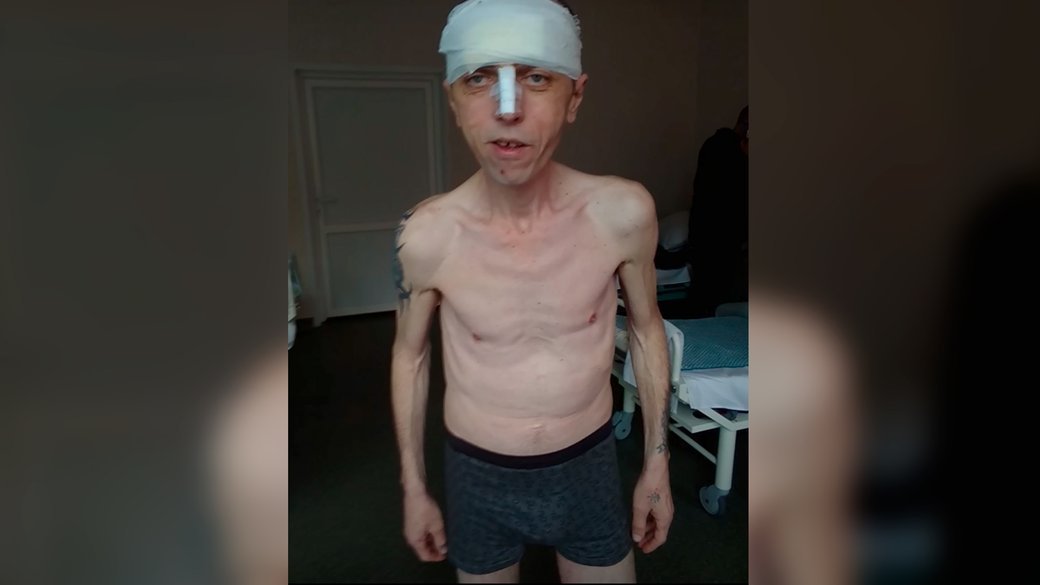
"For a year after captivity, I hardly left the hospital. I’d finish one procedure, then go back for another." /53
"They’ll talk about Azov members and Marines, but no one mentions the defenders of Chernihiv. I wish more people were exchanged. The other guys who were with me are still in captivity. [Chernihiv was surrounded in March 2022]." /54
• • •
Missing some Tweet in this thread? You can try to
force a refresh