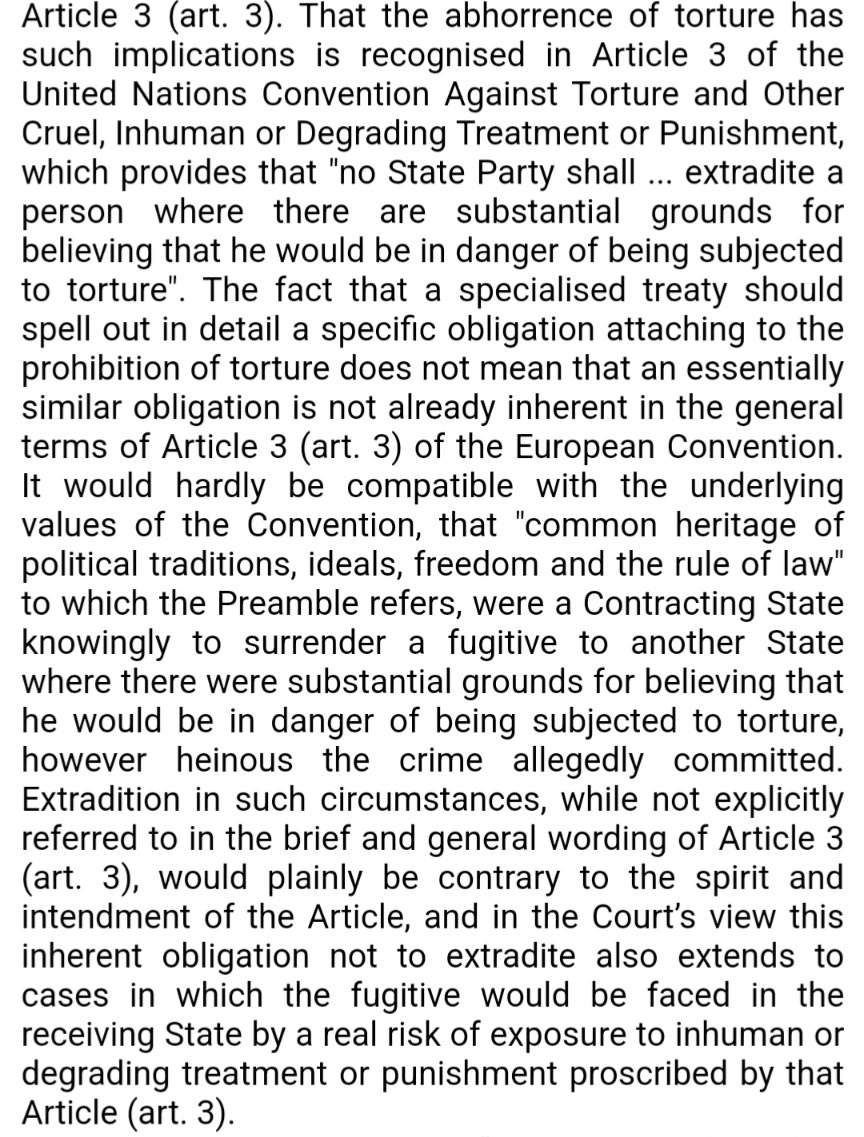
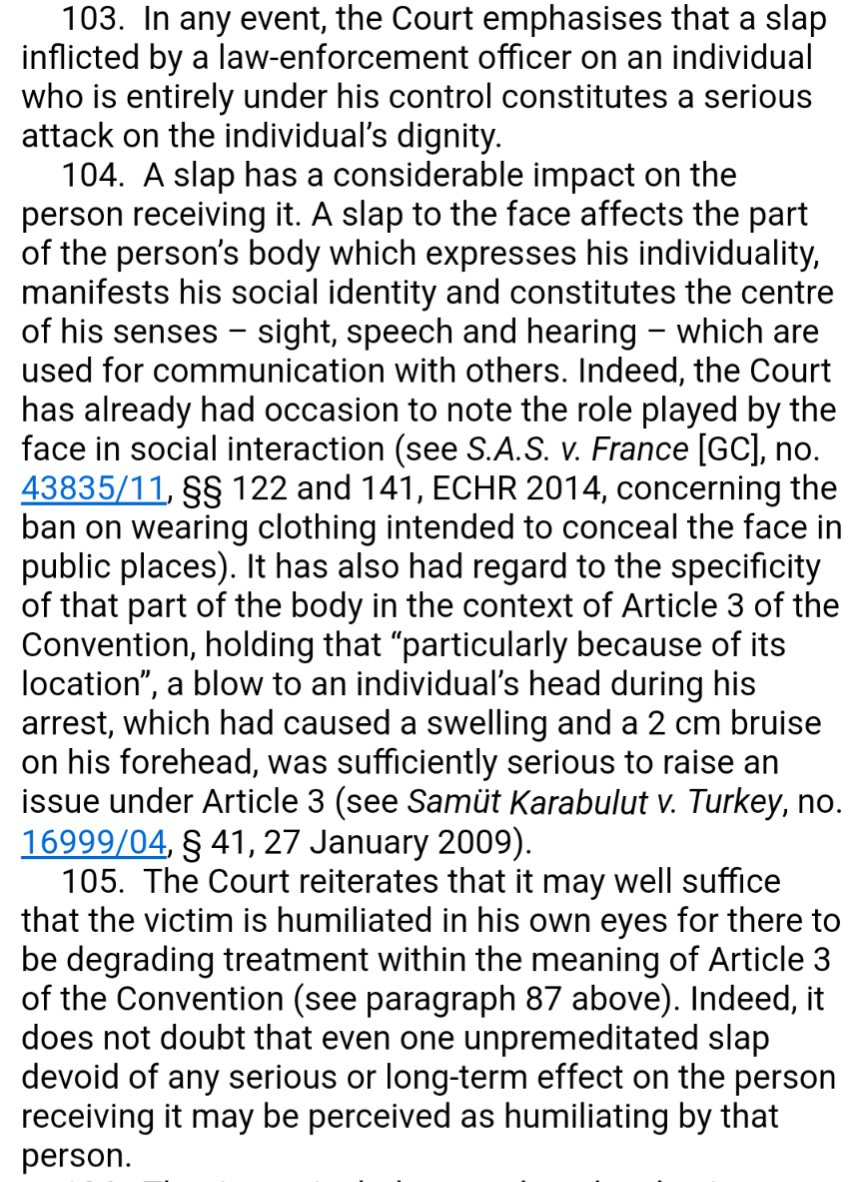
Seeking to leave the ECHR and replace it with a British Bill of Rights is a big mistake
Human rights law is problematic because it gives judges the power to decide what should be questions of political morality
A British Bill of Rights would lead to the same problems 🧵
Human rights law is problematic because it gives judges the power to decide what should be questions of political morality
A British Bill of Rights would lead to the same problems 🧵
https://twitter.com/KateEMcCann/status/1841436105192656962
First up, that living instrument doctrine everyone on the right hates. Guess who invented it? Not the Strasbourg Court but our very own Law Lords all the way back in 1929 in a case called Edwards v AG of Canada (the Law Lords were the ultimate court of appeal) 

Our courts have used that principle to interpret the bill of rights of Caribbean countries in a progressive direction, particularly in death penalty cases. So much so that Lord Hope accused his fellow judges of just imposing their personal views ukconstitutionallaw.org/2020/06/18/lew…
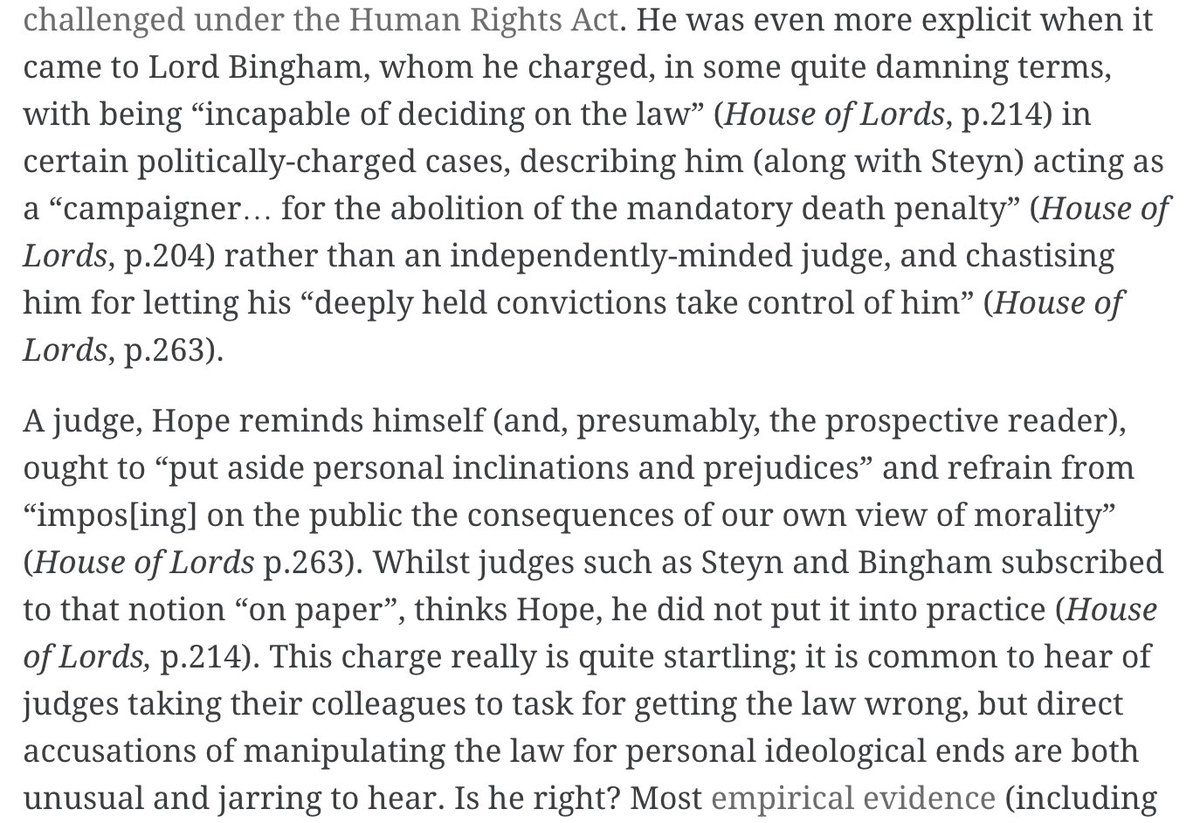
Issue with HR law is that by asking judges to interpret vaguely worded provisions expressed in moral terms, it is necessarily inviting judges to decide what their understanding of those concepts are and it's hard to do that w/o letting one's own views in
https://x.com/philipmurraylaw/status/1840674737090896144
But could we avoid those problems by drafting the new Bill of Rights very carefully? I'm sceptical. Judicial activism is a feature of all human rights instruments everywhere in the world (and frankly the Strasbourg Court is the least bad)
And secondly, do we really think that politically such a document could be drafted? As @MarcoLDuranti has shown the ECHR was intended to be a conservative document to protect us against socialist/progressives and look how it has turned out
https://x.com/HumanRightsHere/status/1795008905270972821
Do we really think that it is realistic to think that in 2029 we would be able to draft a more conservative document than we did in 1951? If the project didn't work in 1951, it's unlikely to work today
As Professor @JTasioulas said we need to rescue human rights from human rights law, and we do not do that by setting up a new Bill of Rights. As @michaelpforan said, that does not mean that no new legislation might be required (on the contrary)
https://x.com/michaelpforan/status/1840715011917762748
Call for a British Bill of Rights is a policy by slogan which should be confined to the 2010-2024 era. Leadership contenders should not call for it and party members should not clap when it is proposed
• • •
Missing some Tweet in this thread? You can try to
force a refresh