My last job was as Senior Stellarator Engineer at an early stage fusion startup. I was the lead design 'ideas' guy for stellarator systems - here's some things I learned about the art and science of stellarator design 🧵
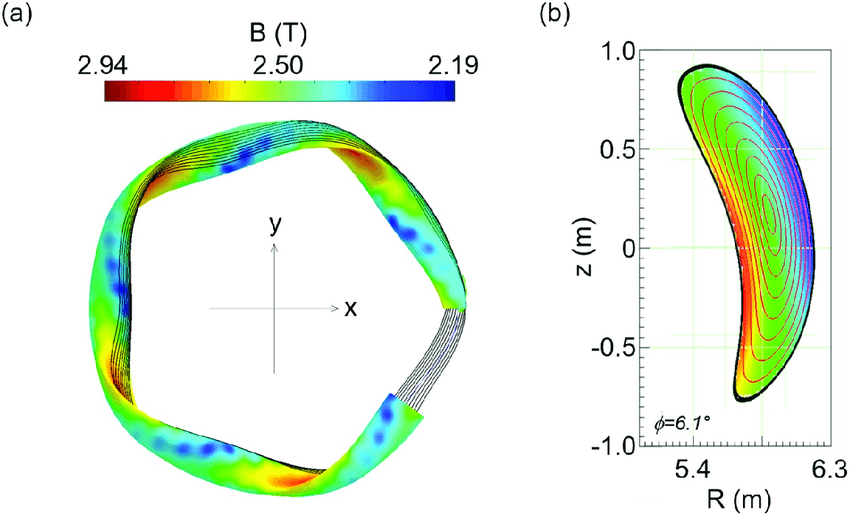
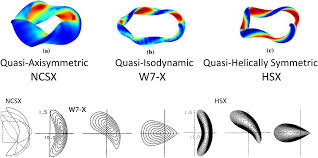
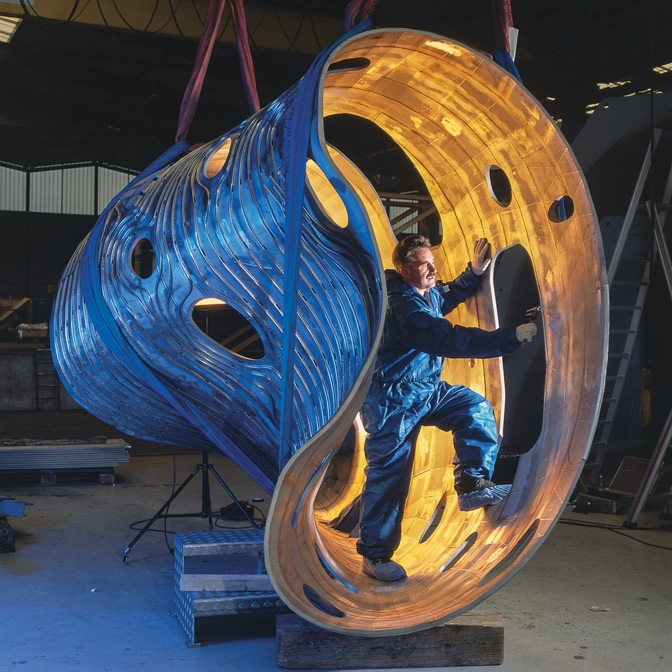
First off, a stellarator is indeed a work of art:
First off, a stellarator is indeed a work of art:

Like Tokamaks stellarators have a kind of periodic symmetry in the coordinate space of the magnetic field enclosing the plasma, but, unliked Tokamaks this doesn't translate into nice symmetries in our 3 dimensions.
A Stellarator is every CAD designers nightmare
A Stellarator is every CAD designers nightmare

The key to having good confinement in a Tokamak or Stellarator is as-perfectly as-possible reconstructing the 'last closed magnetic flux surface' with superconducting magnets.
If the magnetic field is perfectly closed then charged particles can't escape, helping trap heat
If the magnetic field is perfectly closed then charged particles can't escape, helping trap heat

This would be easy if you had a completely closed surface with current running through it, but any real fusion device is made up of discrete finite magnets.
Invariably you get magnetic field components normal to where the closed flux surface should be, meaning energy loss
Invariably you get magnetic field components normal to where the closed flux surface should be, meaning energy loss
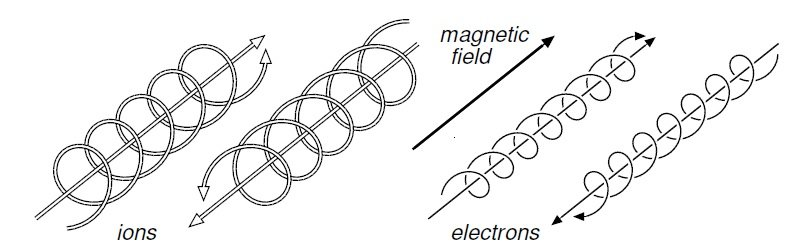
Since the ultimate goal of magnetic fusion is to trap ionized particles and have them 'race' around the toroidal circuit, you want the magnetic field lines to lie along the flux surface. Charged particles then spiral aroudn these field lines
An issue however is that the facts of geometry mean the magnets in a Tokamak are closer together on the inside of the doughnut than the outside, meaning the magnetic field is stronger there. You get a net drift of particles away from the high B field region
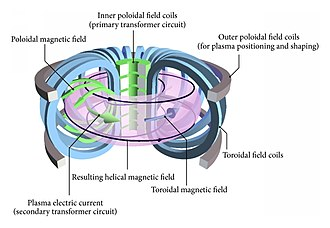
Tokamaks get around this by using a magnetic field from the plasma current itself, which when combined with the field from the toroidal magnets creates a spiraling path around the circuit that ions follow, spending equal amounts of time on the inside and outside of the torus
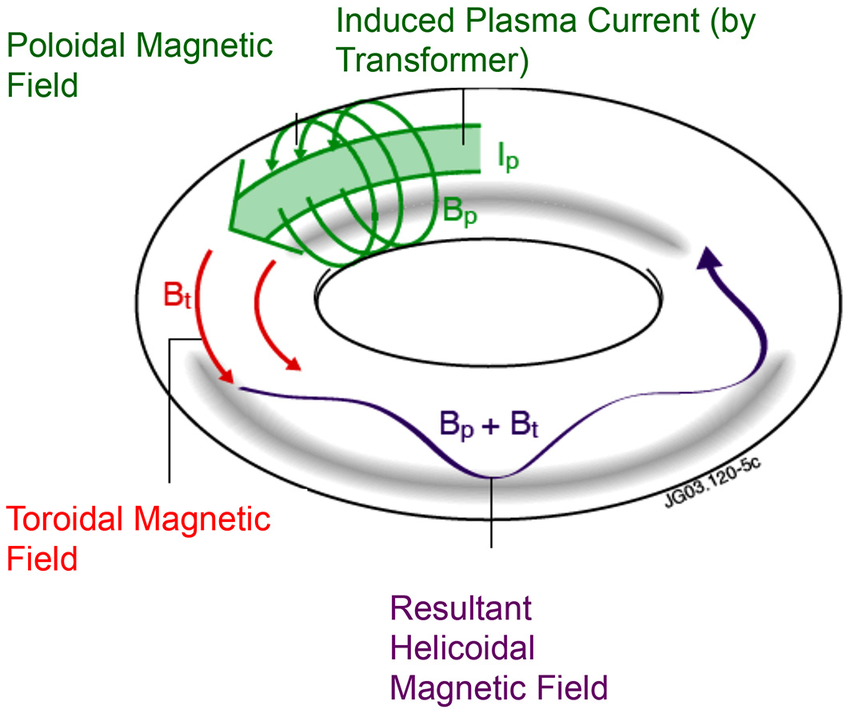
The downside with needing a high plasma current is you have to produce it by ramping a magnetic field - since you can't ramp forever, a Tokamak is inherently a pulsed power device.
This is not true of Stellarators and is where the magic begins:
This is not true of Stellarators and is where the magic begins:

Stellarators produce a rotational transform in the magnetic field by the coil geometry itself, and so don't require any magnet ramping to achieve the helical ion orbits that ensure good confinement of energy.
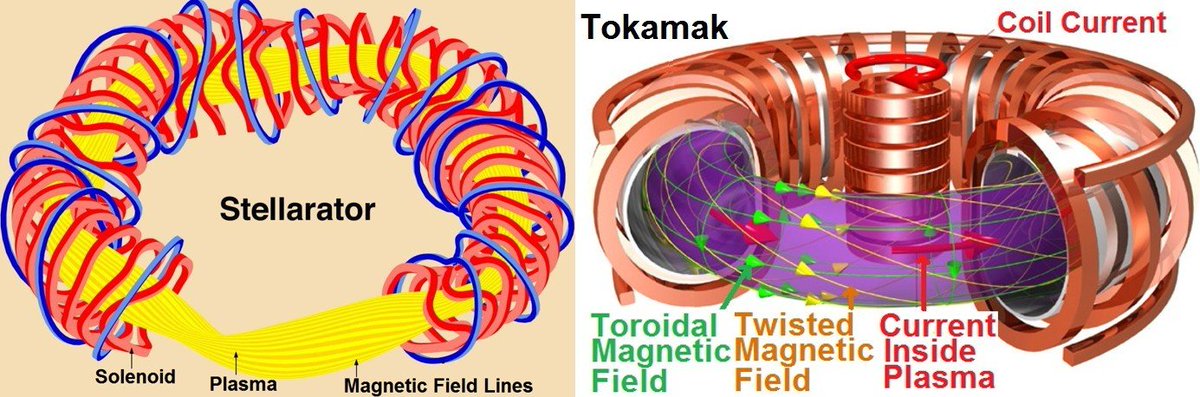
This means a Stellarator can actually run steady state, producing energy continuously so long as the the superconducting magnets are energized.
All you have to do is navigate the pathological design problem of Stellataor Magnet Design:
All you have to do is navigate the pathological design problem of Stellataor Magnet Design:
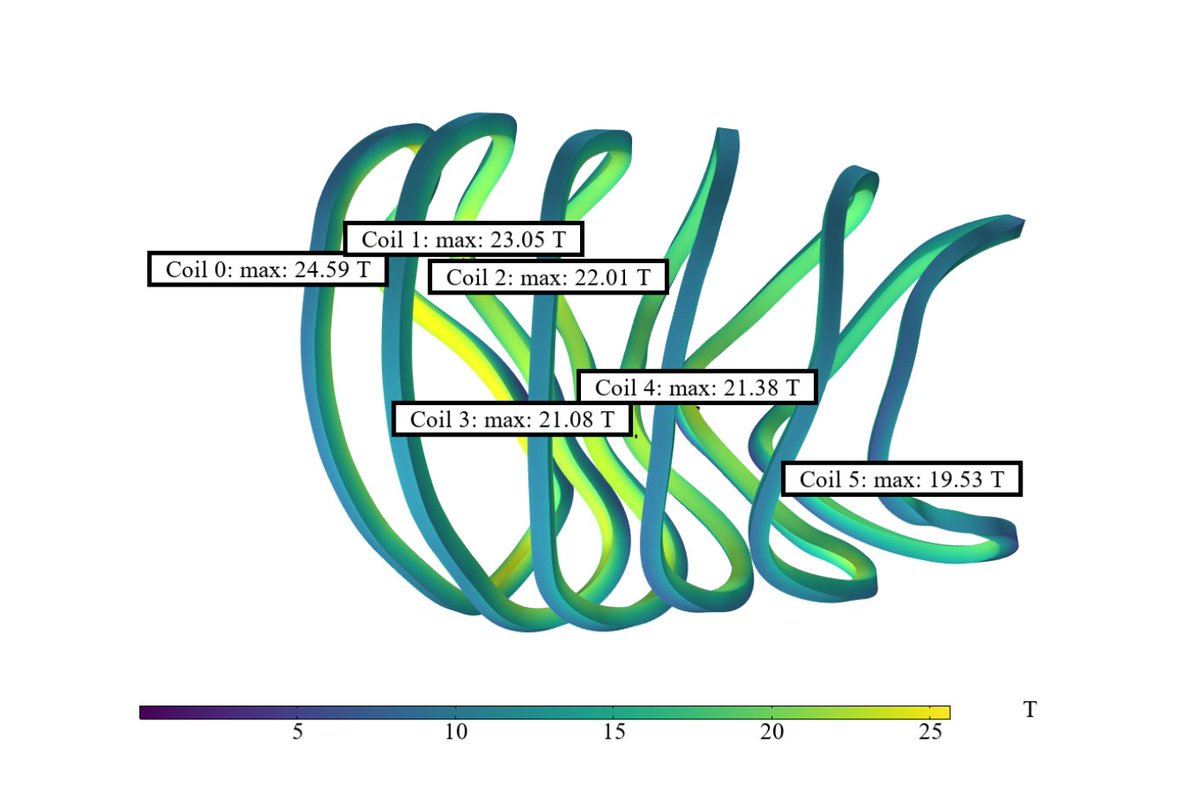
To reconstruct the closed flux surface as perfectly as possible Stellarator magnets often have positioning requirements down to the millimeter scale while being meters across. The winding current path also means assaembling the structure is mechanically incredibly challenged
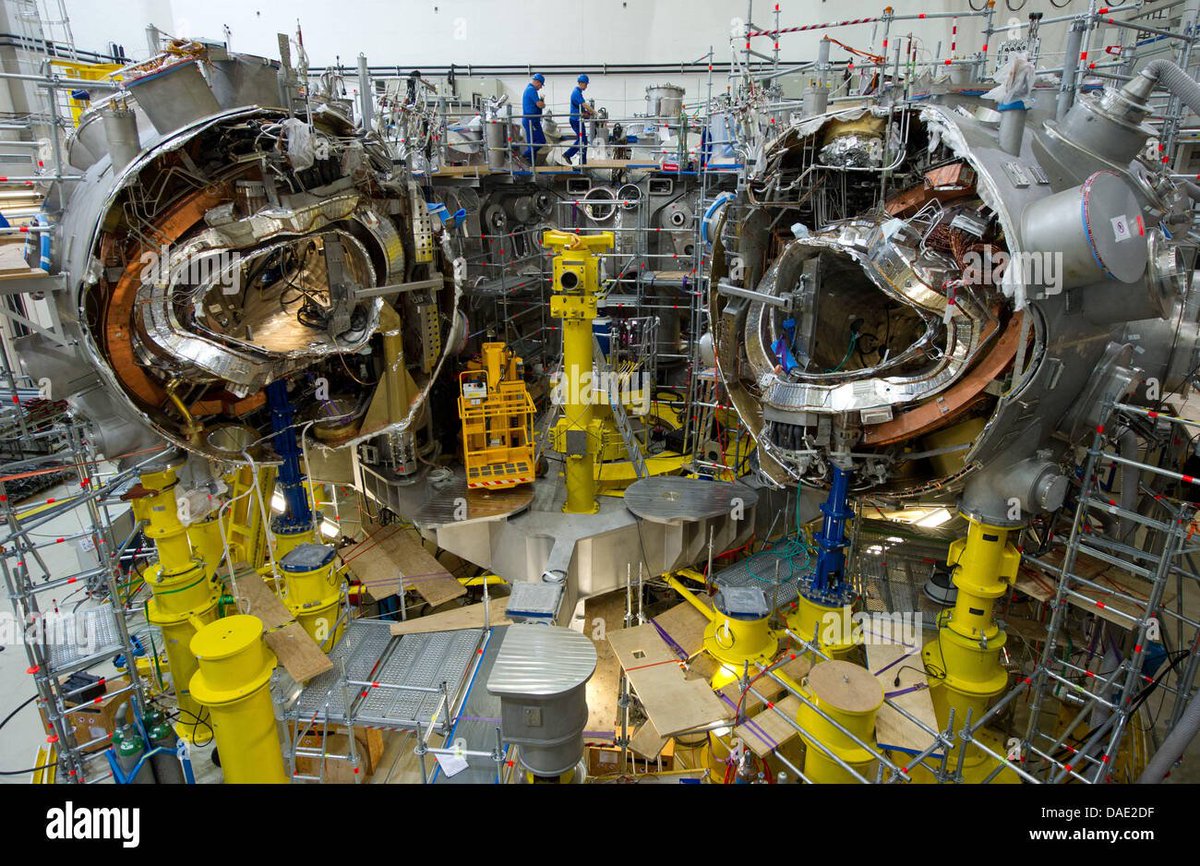
Tiny anomalies in the magnet positioning or design can produce 'magnetic islands' - regions where you have small pockets of a closed magnetic field that end up leaking out the energy you're trying to trap to reach fusion temperatures
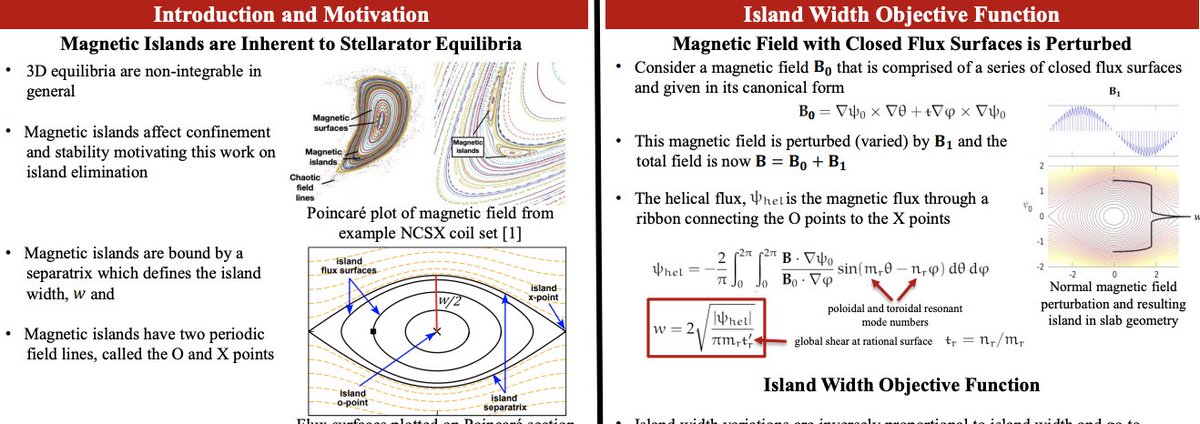

Since the desired magnetic fields from the winding stellarator coils are very complex, they quickly lose their desired shape and become weaker over increases in distance.
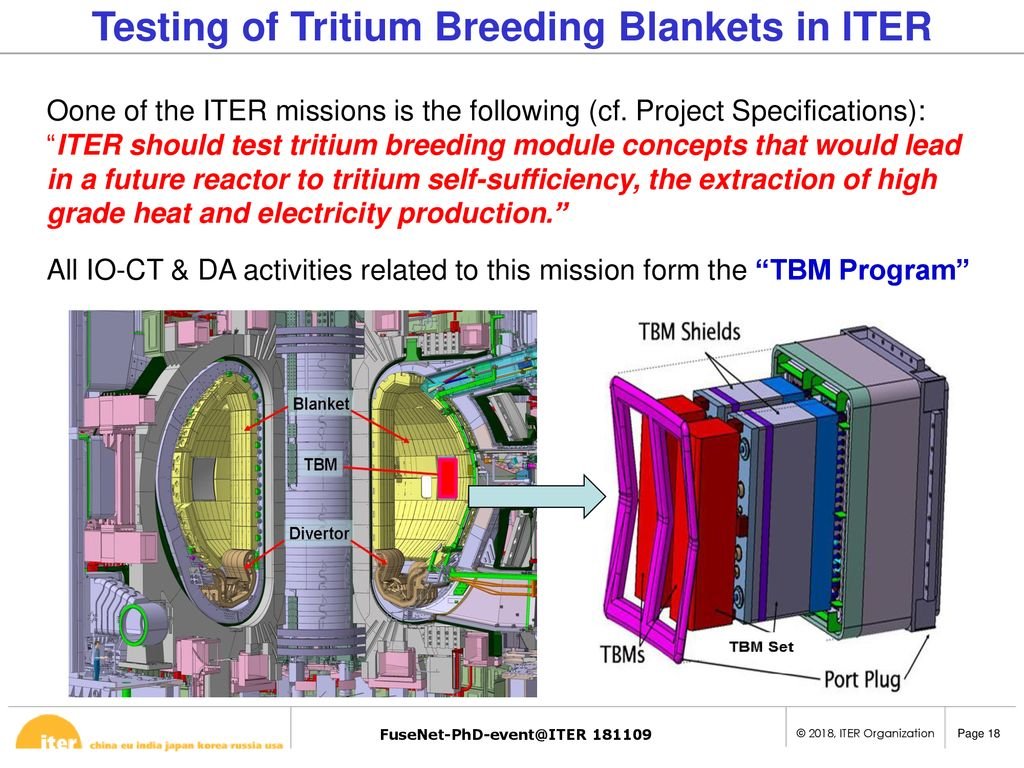
But you still need all the same blanket shielding as a Tokamak since you're producing high energy neutrons
But you still need all the same blanket shielding as a Tokamak since you're producing high energy neutrons

This drives the number one design constraint in Stellarators - how to get the magnets as close as possible to the desired closed flux surface, while still leaving enough room for blanket materials not to mention all the diagnostic, particle beam injection and vacum ports

Side Note - most DT burning reactors want to breed their own tritium fuel in the blanket, and so need to circulate lithium-6. This also reduces the required blanket thickness and is why I invested into Hexium - its a no brainer for anyone from the fusion world.
So, Stellarators have an incredibly complex geoemetry which makes them hard to design and build, but far better plasma properties that outperform Tokamaks. How do you get the best of both worlds?
Introducing the Planar Coil Stellarator @TheaEnergy
Introducing the Planar Coil Stellarator @TheaEnergy
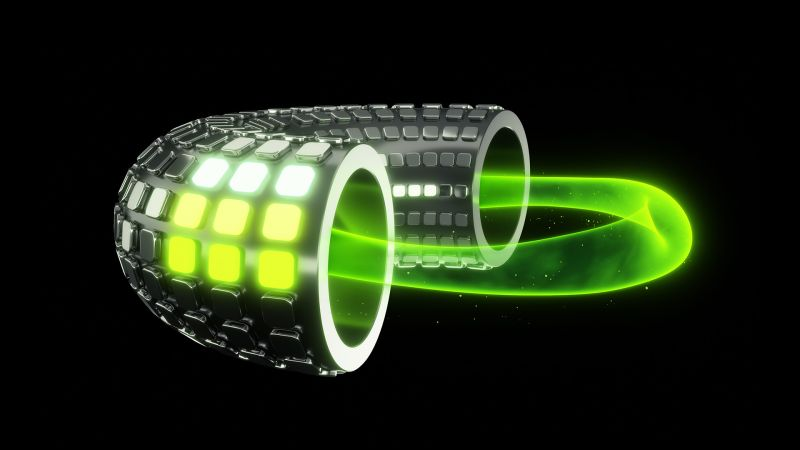
By tiling the surface with individually controlled HTS magnets, a planar-coil Stellarator can achieve the required rotational magnetic field while also having the same easier-to-make mechanical symmetry of a Tokamak.
Best of both worlds - you just need to design it in CAD
Best of both worlds - you just need to design it in CAD
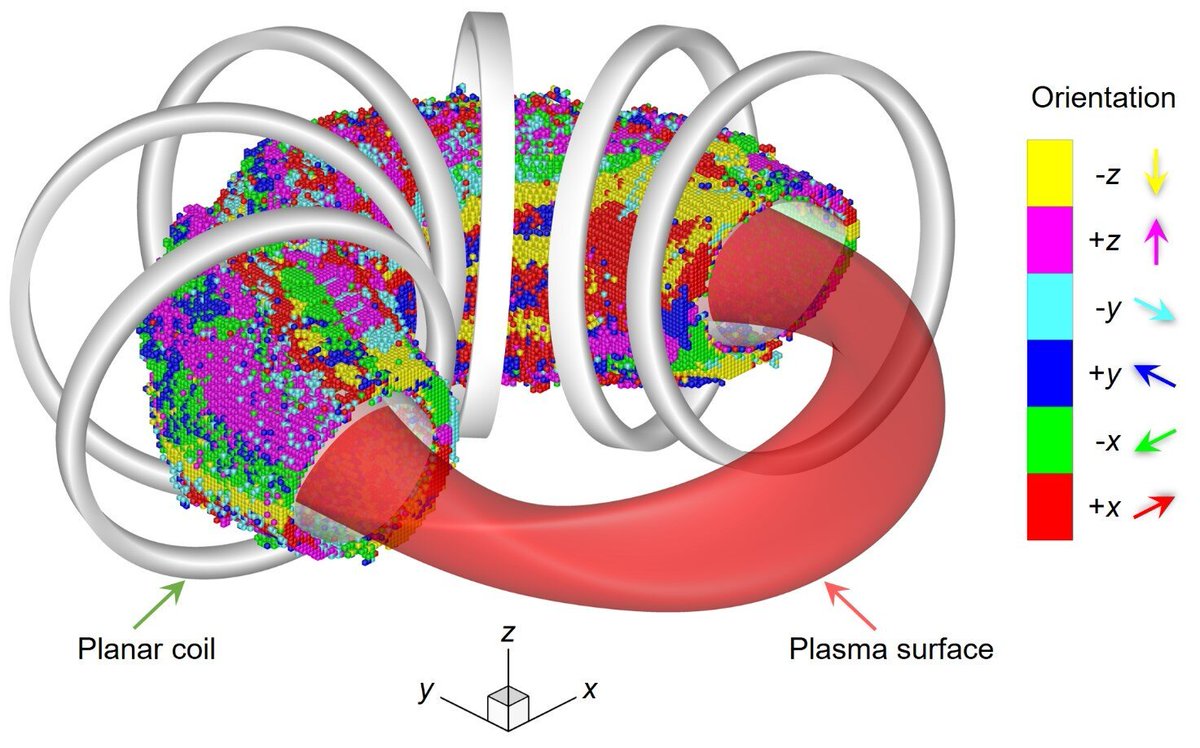
A stellarator plasma surface is fully parameterized in the coordinate space of the magnetic field and obeys a unique symmetry or periodicity depending on the specific kind of stellarator plasma desired (they all have trade-offs with each other).

Unfortunately the big names in CAD are not well-suited to designing large complicated assemblies - like vacuum chambers, magnet supports, blanket modules - in a top-down parametric way. You have to write C code from scratch to generate parts in 30-year old CAD kernels - it sucks
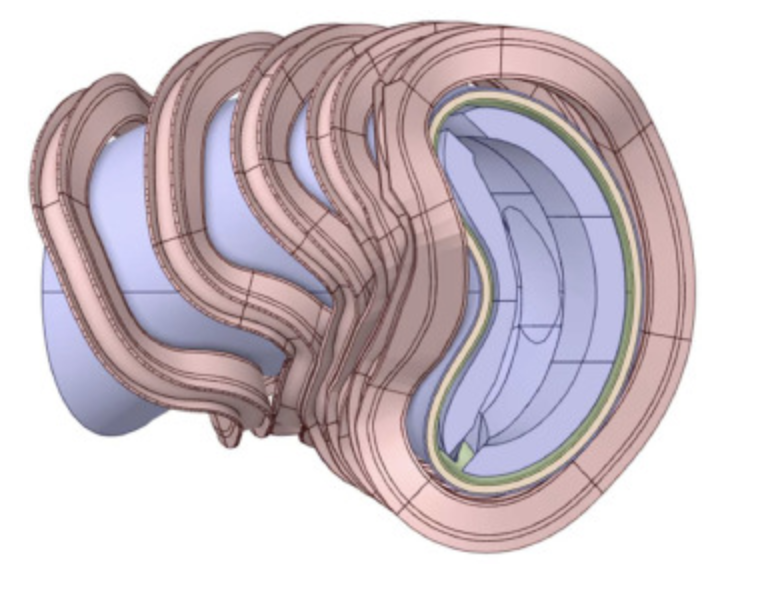
The future of CAD is parametric, driving entire assembly designs by adjusting a few key design points that drive dynamic regeneration of dozens or hundreds of mechanically interdependent components.
Even more importantly is a direct coding interface to program new geometry in
Even more importantly is a direct coding interface to program new geometry in

This is why I'm extremely bullish on companies like @zoodotdev which are building the first text-to-cad and cad-to-code interfaces with a kernel built from the ground up to support design parameterization
This will save 100s to 1000s of hours in tedious design details
This will save 100s to 1000s of hours in tedious design details
Designing and building Stellarators pushes the frontiers engineering to its limits: plasma physics simulations, numerical solvers for magnet optimization, neutronic Monte Carlo methods, materials science, cryogenics, ultra-high vacuum design, RF engineering, particle beam-lines
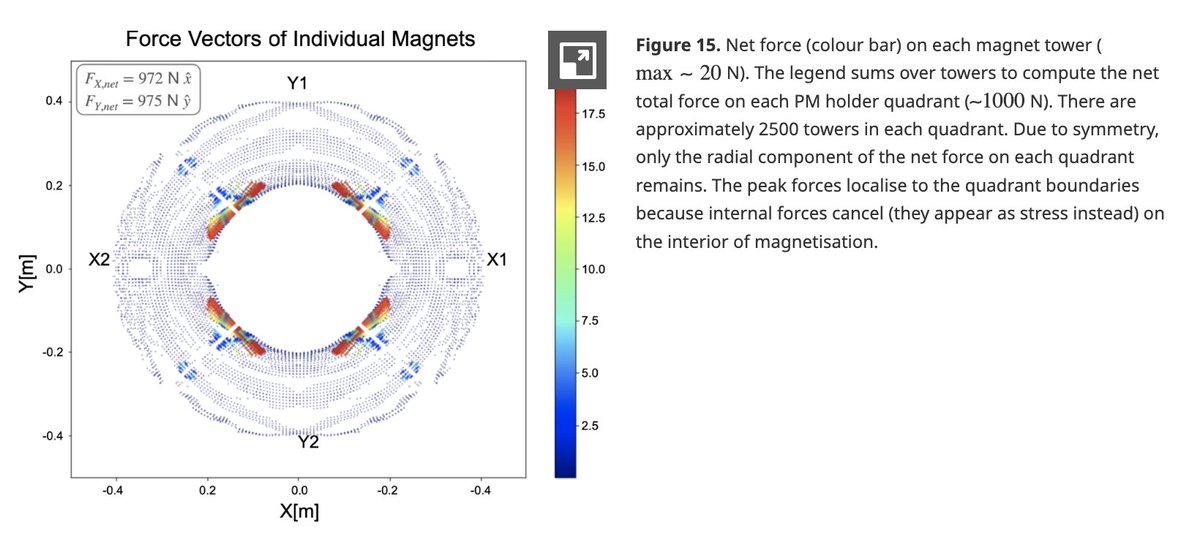
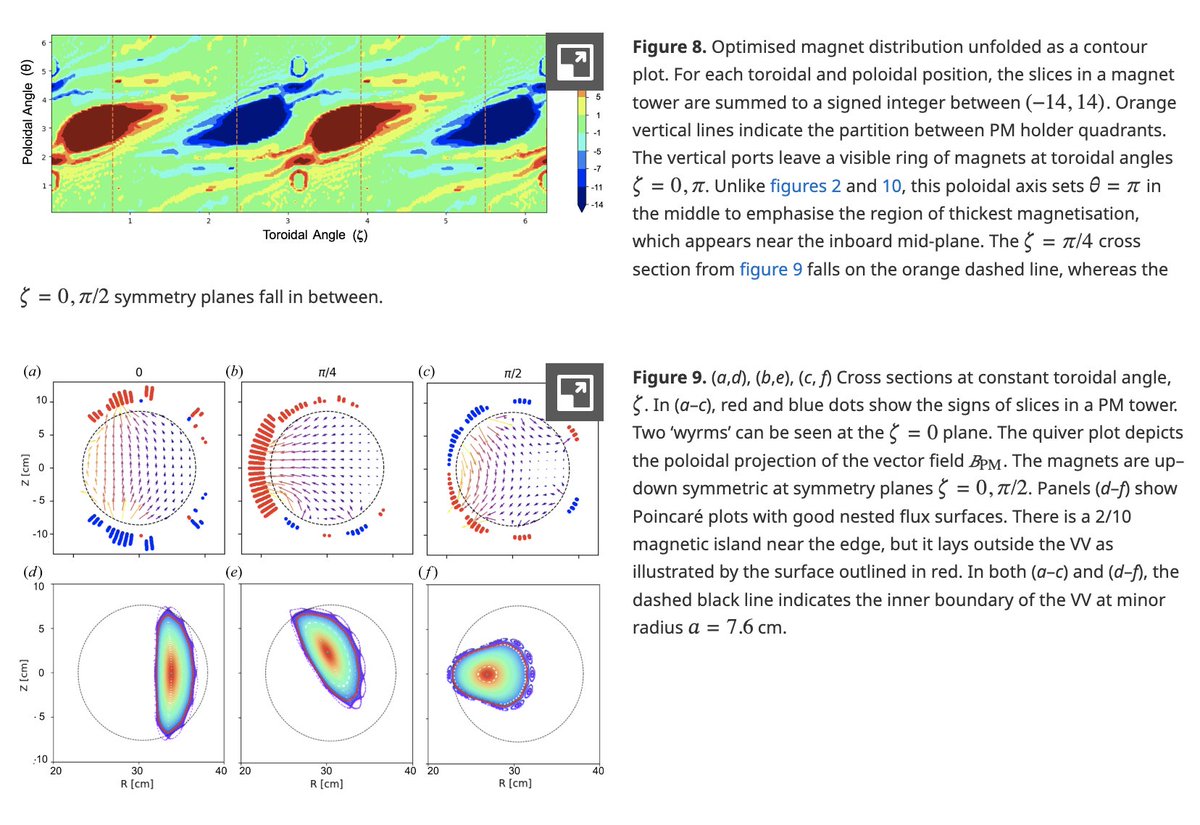
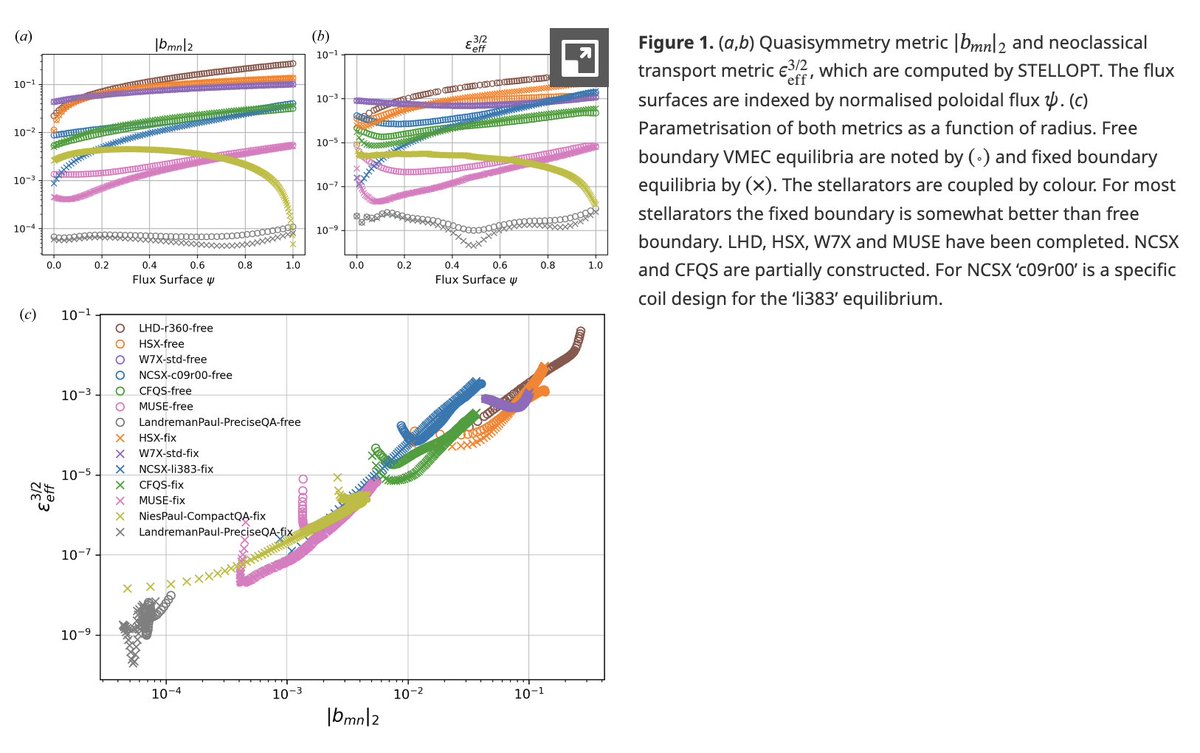
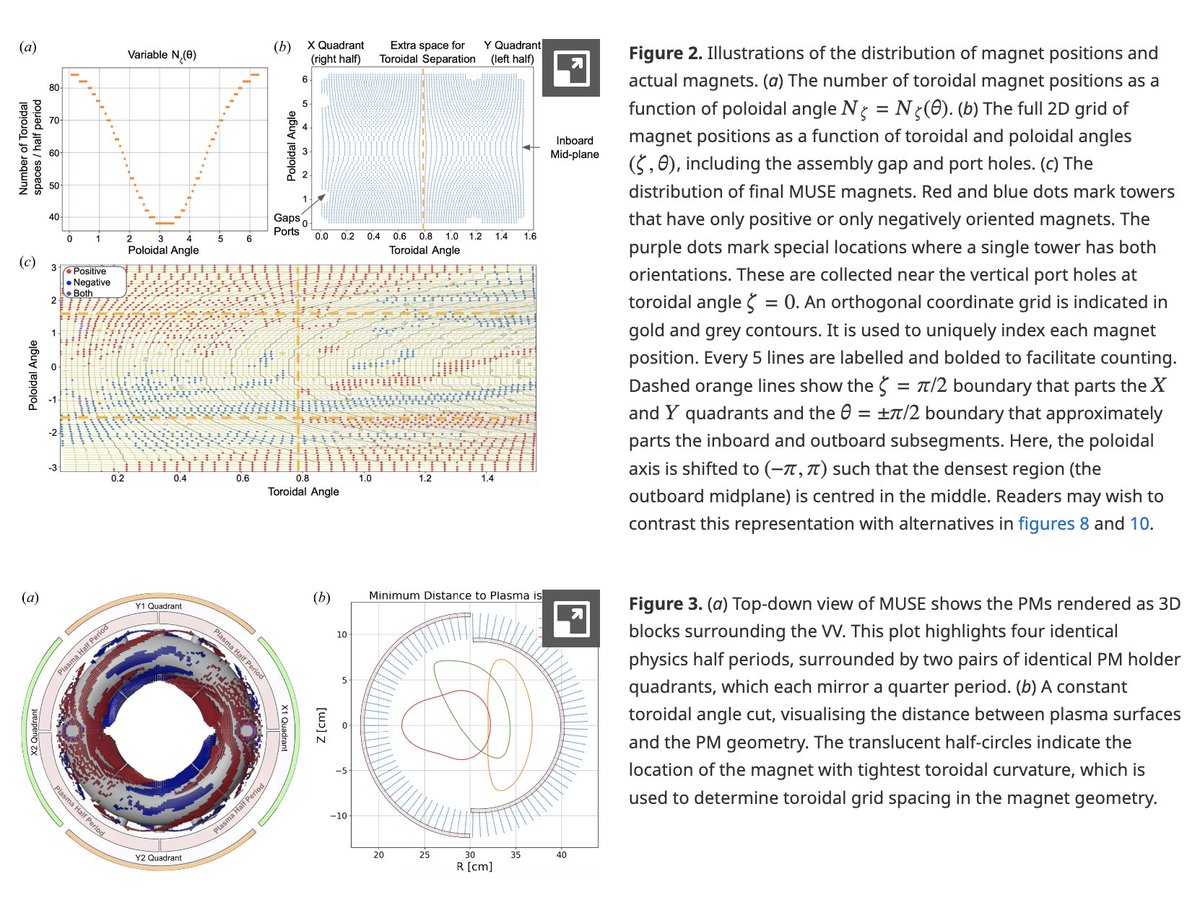
Building and operating such a device is an ultimate triumph of science and engineering - by uncovering the hidden symmetries in plasma dynamics, entirely new fundamental abilities are unlocked if only we achieve complete mastery over our design and manufacturing methods
The win condition is limitless clean energy on-demand anywhere in the planet using the universes most abundant element - hydrogen - and its isotopes as fuel.
The energy from Deuterium in just a single gallon of water is equal to 800 gallons of gasoline
The energy from Deuterium in just a single gallon of water is equal to 800 gallons of gasoline
https://x.com/Andercot/status/1692678804576051698
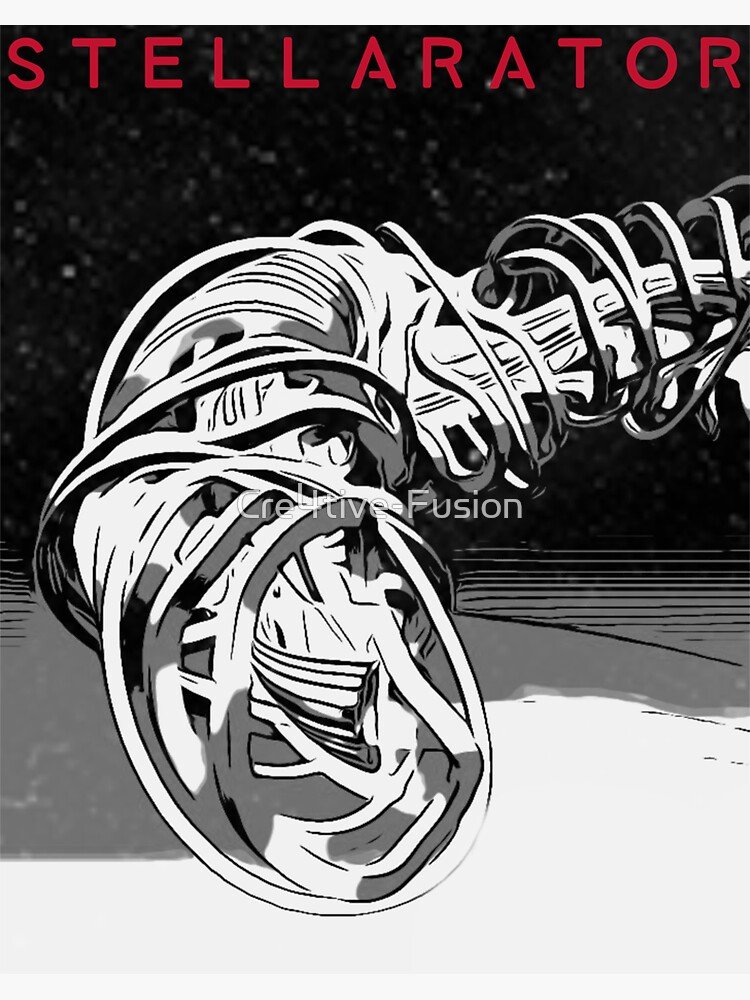
This is just a small taste of the kinds of things we'll be able to build in the next couple decades. Masterpieces of engineering that transform our physical environment into works of art.
• • •
Missing some Tweet in this thread? You can try to
force a refresh