Tabbye Chavous, Chief Diversity Officer at UMich, has penned a long response to the NYT piece on her DEI bureaucracy.
Chavous says the article reminded her of “the novice student writing a class paper,” makes accusations of sexism, and then ties the piece to Project 2025. 🧵
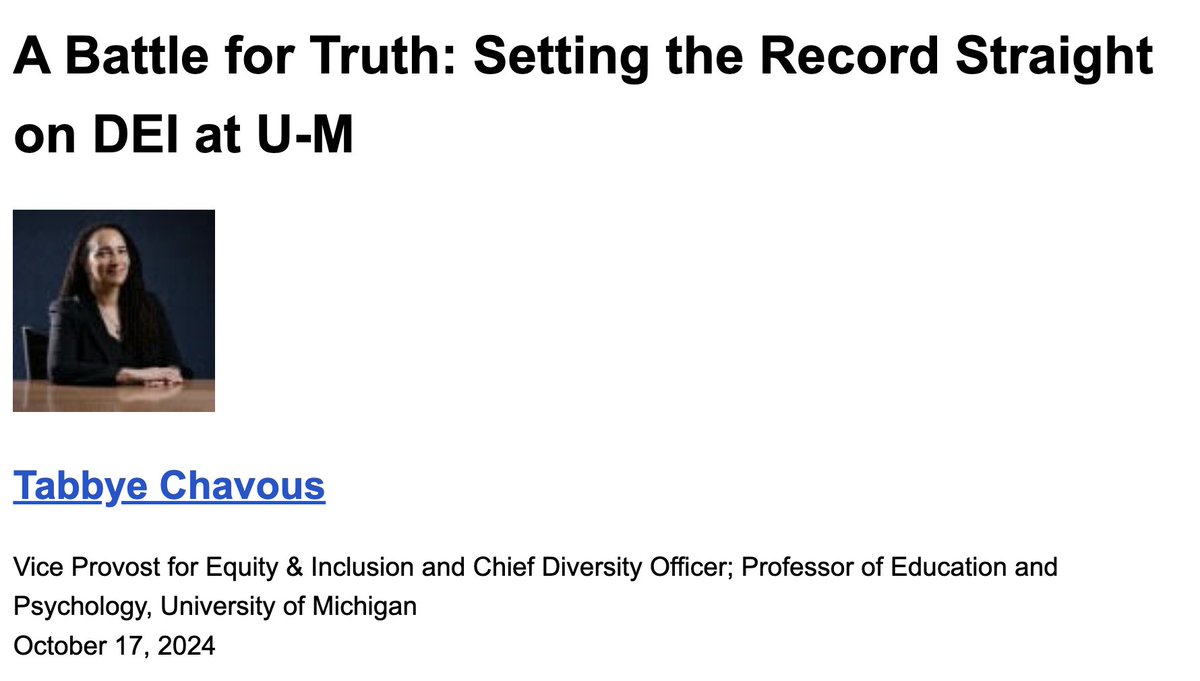
She starts with a string of strong, specific condemnations: "misinformation," "disinformation," "sexism," "a preconceived thesis," "confirmation bias."
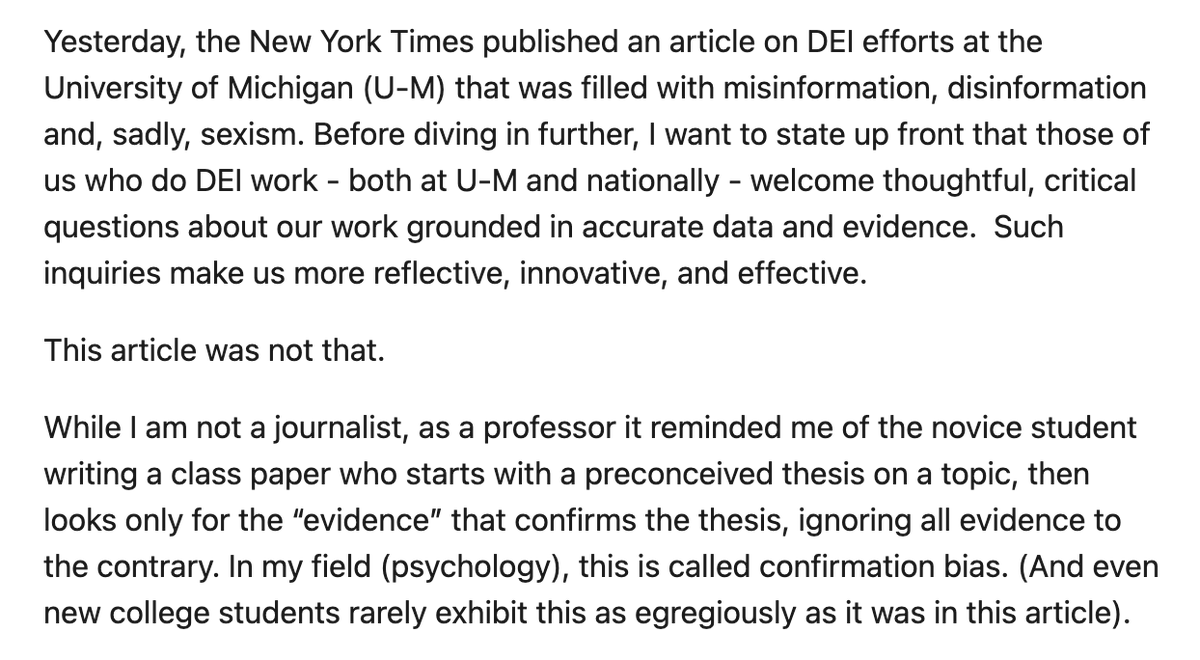
She then gives a quick summary of the article's ostensibly worst offenses. One is that she only had two days to respond to a list of questions.
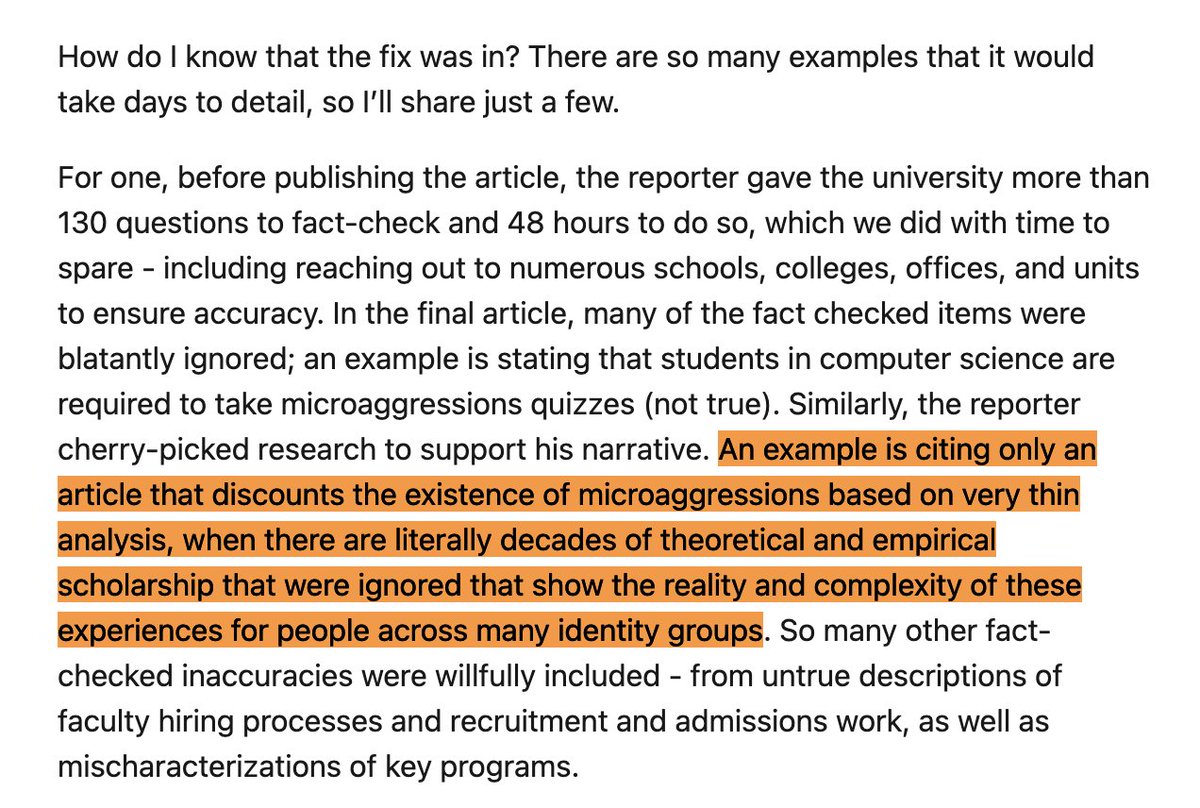
Another is that the article only cites @PsychRabble's article on microaggressions, "very thin analysis," and not the "decades" of scholarship on the topic.
@PsychRabble She argues the Heritage Foundation is a "primary" source showing "the failures of DEI."
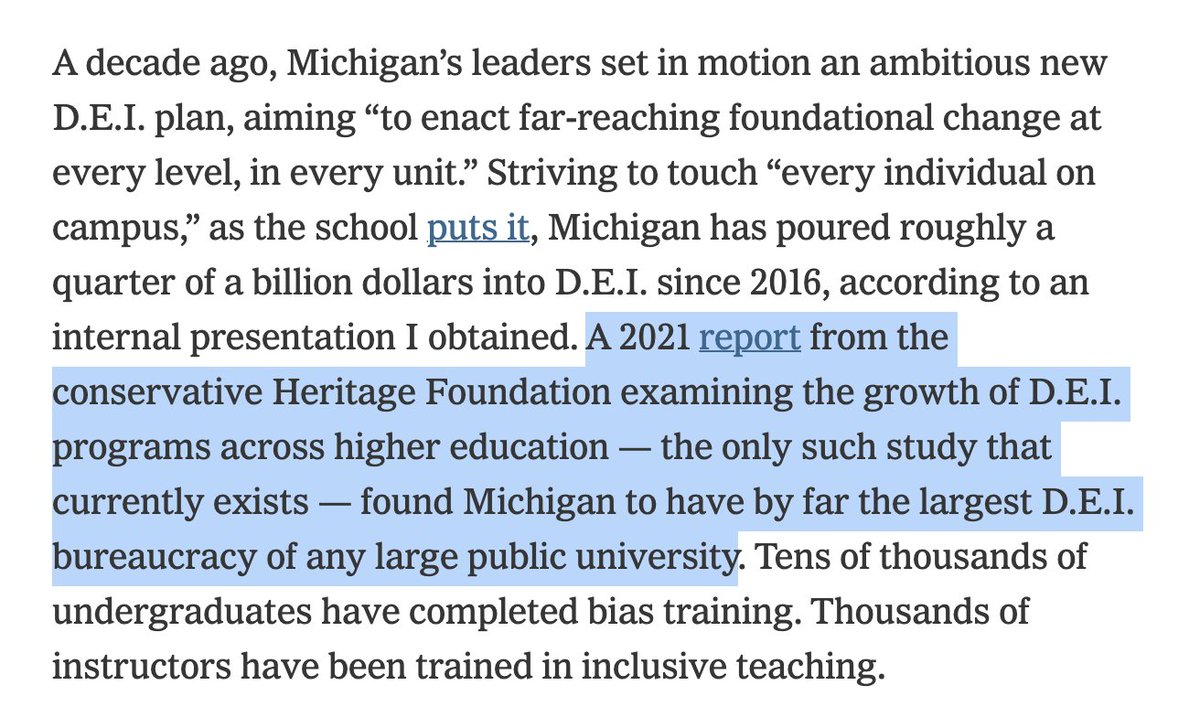
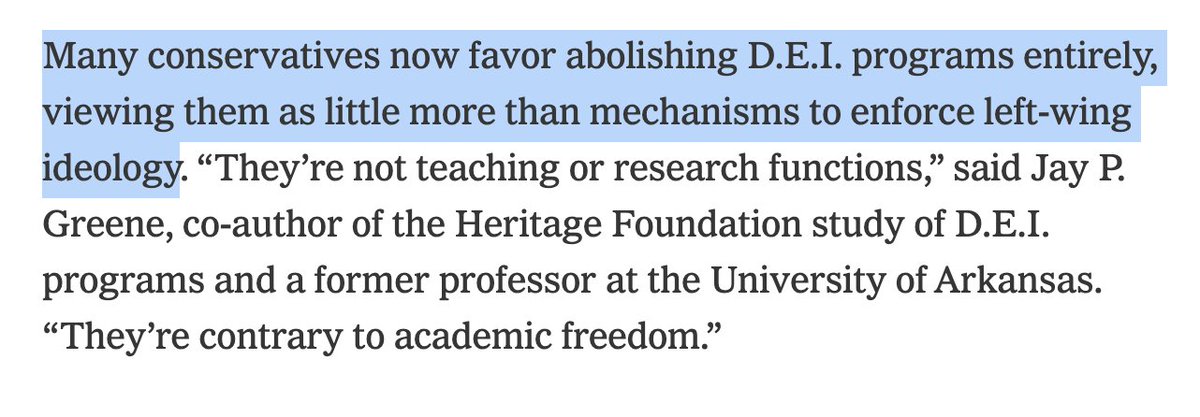
@nickconfessore mentions Heritage twice. Once citing the only study of its kind on the growth of DEI; once illustrating what conservatives think about DEI.
Therefore: Project 2025.
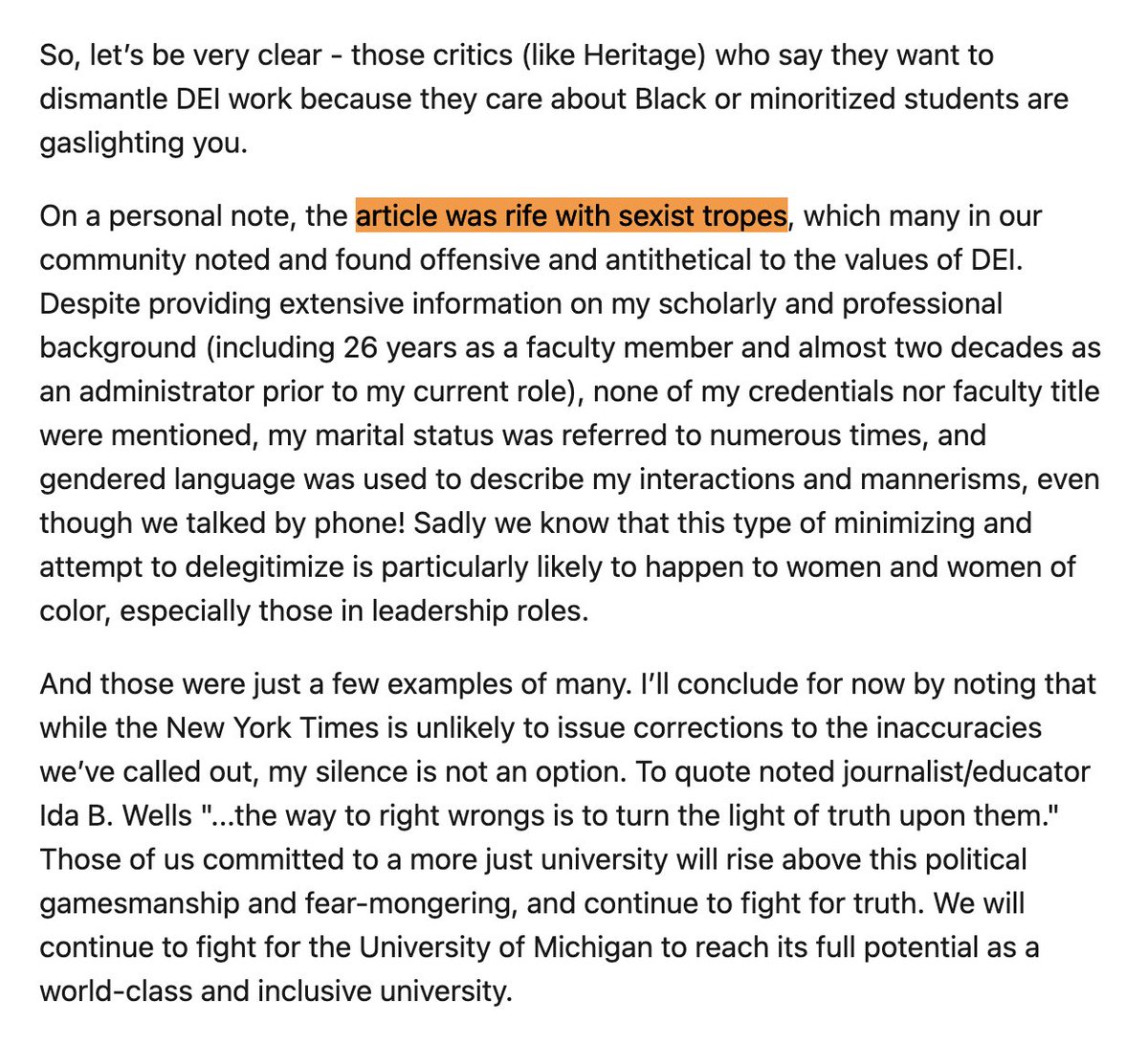
@PsychRabble @nickconfessore Says that the article is "rife with sexist tropes." Specifically:
1) mentioning her marital status
2) not mentioning her credentials
3) using "gendered language"
@PsychRabble @nickconfessore Seems relevant that Chavous is married to UMich's former head of DEI, whose marital status is thus also mentioned.
• • •
Missing some Tweet in this thread? You can try to
force a refresh

NEW: At San Diego State University, an intern training program teaches students how to challenge the “colonizer logic of work”—thanks to funds from the Mellon Foundation.
Through a records request, I acquired the grant proposal. It's possibly the worst internship prep ever. 🧵
The project's proposal lays out a simple rationale:
➡️Ethnic, women's, and gender studies students are seen as “unwilling or uncapable” of participating in the “hegemonic workforce.”
➡️This “deficit model” means the students end up underemployed.
The project’s solution: help students secure internships and then teach them to “resist” this “deficit model.” Specifically, by teaching them to resist the “colonizer logic of work,” “question specialization,” and retain “allyship.”
The remarkable thing about discrimination in higher ed: so much of it was documented. Approved in official records. Talked about in emails. All subject to FOIA.
Like this email, where a University of New Mexico professor just says: "I don't want to hire white men for sure."
Here's a search committee report from Ohio State saying: "We decided as a committee that diversity was just as important as perceived merit as we made our selection."
Here's an report from the University of Washington which concluded that its psychology department just blatantly discriminated by re-ranking finalists so the first choice wouldn't be a white woman.
NEW: During one hiring cycle at Ohio State, 60% of new arts and humanities faculty jobs fell in the “DEI” category, according to emails I obtained.
This was after OSU announced it would hire “100 underrepresented and BIPOC hires in all fields of scholarship.”
🧵on my latest.
In 2021, Ohio State’s then-president Kristina Johnson announced an initiative to hire 50 scholars focused on “social equity” and 100 “underrepresented and BIPOC” hires in all disciplines.
Documents I’ve acquired, reported in @CityJournal, shed light on how that played out.
@CityJournal The documents reveal how administrators were keeping tabs on the hiring spree.
In November 2022, an OSU diversity dean said over email that she wanted to meet with the finalists for a DEI-focused faculty job: professor of “indigenous knowledges.”
Last week, the DOJ released guidance for federal funding recipients.
The memo—which clarifies how nondiscrimination law should be applied—is a huge development for universities. A lot of their worst policies are looking more fragile than ever. 🧵
2/ The DOJ specifically highlights the use of racial proxies. Hiring on the basis of "cultural competence" or using diversity statements is unlawful if the purpose is to give an advantage to specific racial groups.
This is an even bigger deal than it might seem.
3/ Universities often take on large-scale hiring programs that select for an emphasis on "equity."
Inevitably the programs recruit ideologues. More importantly, this criteria is justified because it's seen as a way to favor minorities. It's right there in their own documents ⬇️
NEW: Around the country, college deans monitor finalist slates, shortlists, and applicant pools for faculty jobs. If a list isn't "diverse," a search can be outright cancelled.
I've acquired a trove of records that show who bankrolled this practice: the federal government.
🧵
As I’ve previously reported, these checkpoints give administrators diversity-based veto power in hiring (see ⬇️⬇️⬇️ for examples).
But the practice didn’t emerge organically. At many universities, it was adopted as direct result of National Science Foundation (NSF) funding.
Here’s what those grants look like.
In 2003, Case Western Reserve University received one of the early NSF ADVANCE grants ($3.5 million).
As a part of the grant, “deans could send a list back to the department if it did not reflect the diversity of the national pool.”