The Paperclip Profile picture
Oct 29 19 tweets 5 min read Read on X
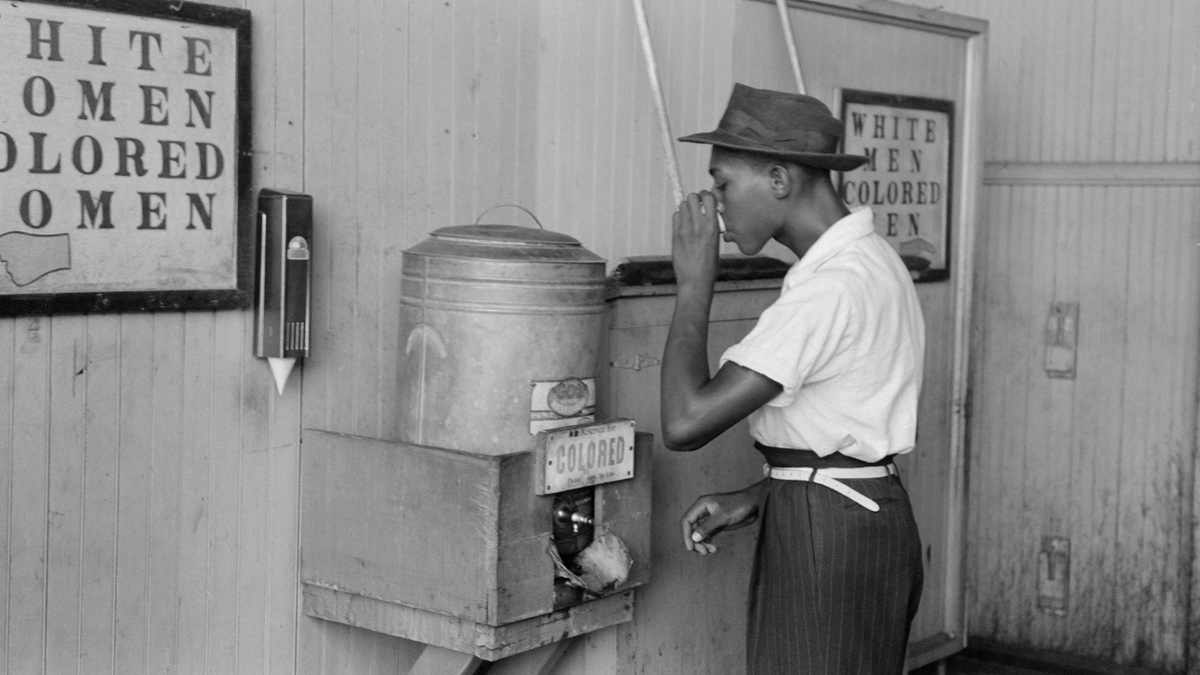
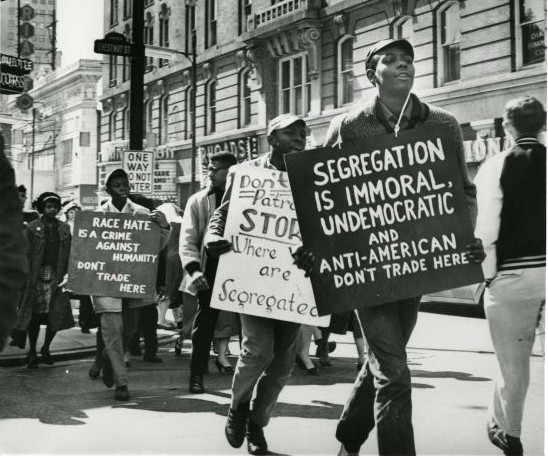
In the spring of 1941, amidst WWII, one Indian woman boarded a "whites-only" section on a train in the American South. A ticket collector ordered her to move, but what followed was nothing short of remarkable.

Thread.

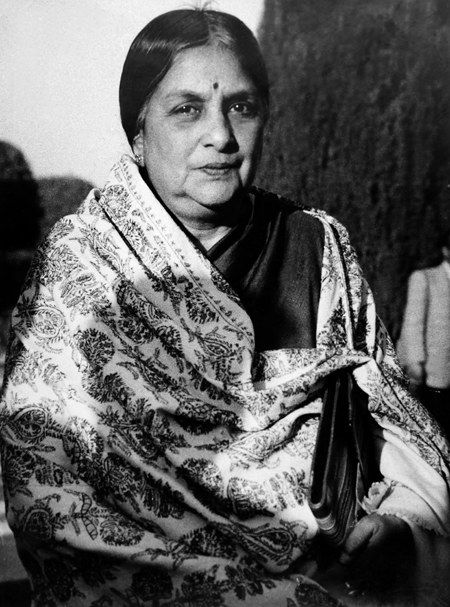
1/18 Image
As the train sped across the Louisiana border, the ticket collector demanded her to move. Yet this woman, undeterred by the authoritative demand, remained seated. Calmly, she looked up and asked a question that revealed her resolve: “Why?”

2/18
He replied, “That’s the rule, and you better obey it.” But she didn’t budge. He left, fuming, but soon returned—this time subdued. It seemed he had realized she was not African American. With a softened tone, he asked, “Where are you from?”

3/18 Image
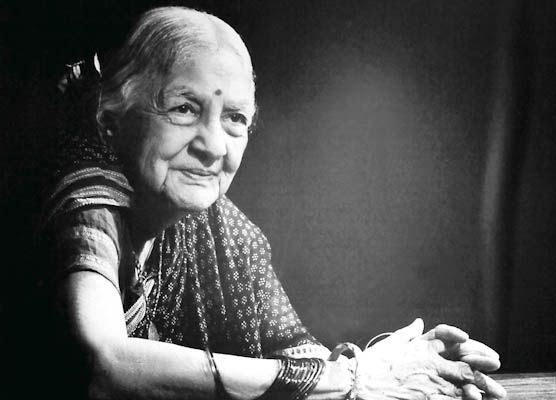
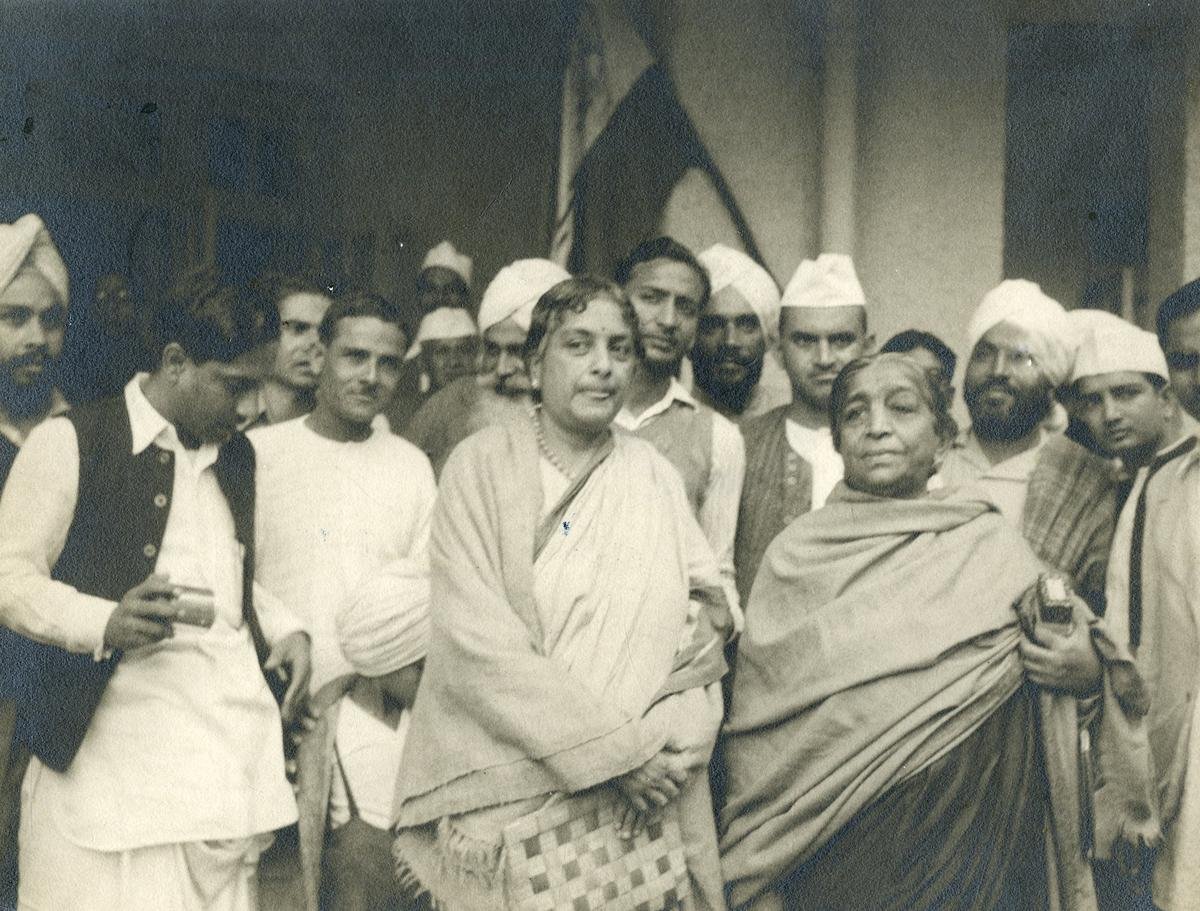
At this moment, she could have revealed her distinguished status. After all, this was Kamaladevi Chattopadhyay—a prominent figure in India’s independence movement, a guest of President Roosevelt at the White House, and a respected advocate for women’s rights.

4/18
But instead, she answered simply: “It makes no difference. I am a colored woman.”

In that statement, Kamaladevi did something radical.

5/18
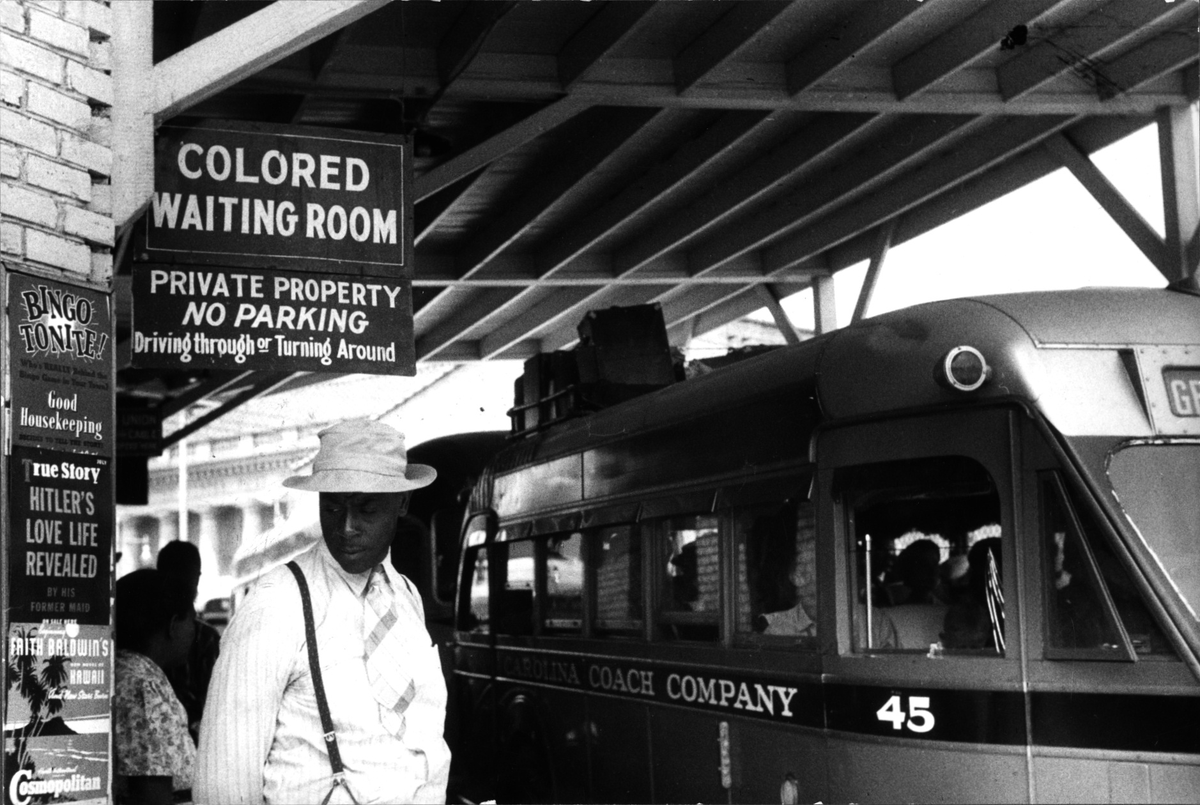
She rejected the comfort of her privilege, embracing instead the common struggle she shared with African Americans. So, why is this woman seated unflinchingly in a segregated train car in 1941, deep in the southern USA?

6/18
Kamaladevi was born in Mangalore in 1903, to a wealthy family. Her life, however, would be far from conventional. When her father died, most of the inheritance went to her step-brother—a stark lesson in inequality she never forgot.

7/18 Image
Widowed at 15, she fought to pursue her education, even as society pushed against her. Later, she defied social norms, becoming an actress, remarrying outside her region and language, eventually divorcing, and raising her son alone.

8/18
By 1941, Kamaladevi was more than just a leader; she was a symbol of resistance against oppression, inequality, and gender discrimination. Her journey to the U.S. wasn’t only about seeking support for India’s freedom. It was something more.

9/18
For Kamaladevi, the struggles against racial, colonial, and gender injustices were bound together in a shared cause. During her 18 months in America, Kamaladevi traveled across the country, insisting on staying with African American families in the segregated South.

10/18
This choice, extraordinary and dangerous for the time, caught the attention of the press on both sides of the Atlantic. African-American newspapers dubbed her “India’s foremost woman leader” and “Gandhi’s Aide,” honoring her efforts to connect with Black communities.

11/18
New York pressed announced her farewell talk before she left for the American South, while the Bombay Chronicle called her stay with Black families “daring” due to the harsh racial prejudices. Kamaladevi was undeterred.

12/18
She believed in aligning the fight for Indian independence with the civil rights struggles of Black Americans. She saw herself not just as an Indian fighting colonial rule but as part of a global struggle against racial discrimination.

13/18 Image
By the end of her visit, her actions had planted seeds of solidarity that grew. In 1942, a survey in the U.S. showed that 87.8% of Black Americans supported India’s quest for independence.

14/18
Kamaladevi’s presence and her daring support for the struggles of Black Americans had a profound impact on African-American attitudes toward India’s fight for freedom. Her time in the U.S. was pivotal in connecting the struggles of two worlds.

15/18 Image
Kamaladevi’s refusal to leave her seat in the train wasn’t just about defying segregation; it was a profound act of solidarity that bridged two worlds. Her legacy reminds us that the bonds of resistance are often stronger than the borders that divide us.

16/18 Image
By refusing to leave her seat on a segregated train in Louisiana, she risked alienating the White Americans who supported India’s independence but turned a blind eye to injustices at home.

17/18 Image
She chose courage over comfort—a reminder for all of us who often overlook injustice in our own backyard.

Today, we remember her on her death anniversary.

18/18 Image
Source and references

Brijbhushan, J. (2003). Kamaladevi Chattopadhyaya: Portrait of a Rebel. Abhinav Publications.

Slate, N. (2009). ‘I am a colored woman’: Kamaladevi Chattopadhyaya in the United States, 1939–1941. Contemporary South Asia, 17(1), 7–19.

Wikimedia Commons @Wikimediadoi.org/10.1080/095849…

• • •

Missing some Tweet in this thread? You can try to force a refresh

 

Keep Current with The Paperclip

The Paperclip Profile picture

Stay in touch and get notified when new unrolls are available from this author!

Read all threads

This Thread may be Removed Anytime!

PDF

Twitter may remove this content at anytime! Save it as PDF for later use!

Try unrolling a thread yourself!

how to unroll video
  1. Follow @ThreadReaderApp to mention us!

  2. From a Twitter thread mention us with a keyword "unroll"
@threadreaderapp unroll

Practice here first or read more on our help page!

More from @Paperclip_In

Oct 25
Remember this iconic DDLJ opening scene? Amrish Puri, feeding pigeons in London’s Trafalgar Square, lost in thoughts of Punjab’s mustard fields. It’s etched in Bollywood history. But have you ever wondered why so many pigeons are always present in city squares? A Thread. 1/20 Image
Trafalgar Square is one of London’s most vibrant and iconic spots, featured in DDLJ where Amrish Puri’s character, in a nostalgic monologue, compares himself to urban pigeons searching for food in a foreign land. Throughout the film, pigeons serve as a metaphor. 2/20 Image
But in reality, the presence of pigeons in a modern city isn’t an accident. It’s a global phenomenon, especially in coastal cities, rooted in a fascinating journey through natural history. But how do these birds thrive in the concrete jungle? Let’s unravel this. 3/20 Image
Read 21 tweets
Oct 19
Legend has it, the Czar of Russia challenged the brilliant mathematician Leonard Euler with a puzzle he couldn’t solve, despite years of effort. 177 years later, three mathematicians finally cracked it—two of them Indian. Today, we celebrate the birthday of one of them. 1/18 Image
Euler, born in Switzerland, made a name for himself in St. Petersburg, Russia, working under the protection of the czars. His mathematical genius thrived, solving complex problems for both the Academy and the government. 2/18 Image
The famous puzzle asked by the Russian Czar, as believed, went like this: Can 36 officers, from 6 regiments and of 6 different ranks, be arranged in a square so that no row or column repeats a rank or regiment? It stumped Euler. 3/18 Image
Image
Read 19 tweets
Oct 6
You’ve probably seen that viral image floating around the internet: a zebra cart trotting through the streets of Calcutta in the 1930s. But the real story of taming zebras? It was a global obsession, and it’s wilder than you think! Thread 1/18 Image
The most unique tale of a zebra-drawn carriage is linked to Calcutta’s Mullick family. You might think this was all about flaunting wealth, but, according to Rajat Mullick, it was much more—a daring answer to a challenge. The Ganges Walk has a brilliant article on this. 2/18 Image
Manmatha Nath, youngest son of the Mullick dynasty, loved horses. He trained them himself and was known for his wild, adventurous spirit. So, when someone challenged him, "Can you tame a zebra?" - he didn’t back down 3/18
Read 19 tweets
Sep 27
Kolkata’s iconic tram system, since 1873, is nearing its end as the Govt. plans to discontinue most routes. Kolkata—India’s last city with a functioning tram system—will now only keep one route operational. A thread of images from the golden days of #KolkataTram 1/18 Image
Above: Car 205 was converted to normal layout in about 1970, and is seen here thus altered on 3 June 1977.
The car is on the roadside reservation on Kidderpore Road, and has just passed a "K" class car.
2/18 Image
"Sundari/De Luxe" class car 587 was the last of its type to be built (in 1976). It is seen here approaching Esplanade on 2 June 1977; the livery is two-tone blue with black and white trim.
(T. V. Runnacles) 3/18 Image
Read 19 tweets
Sep 24
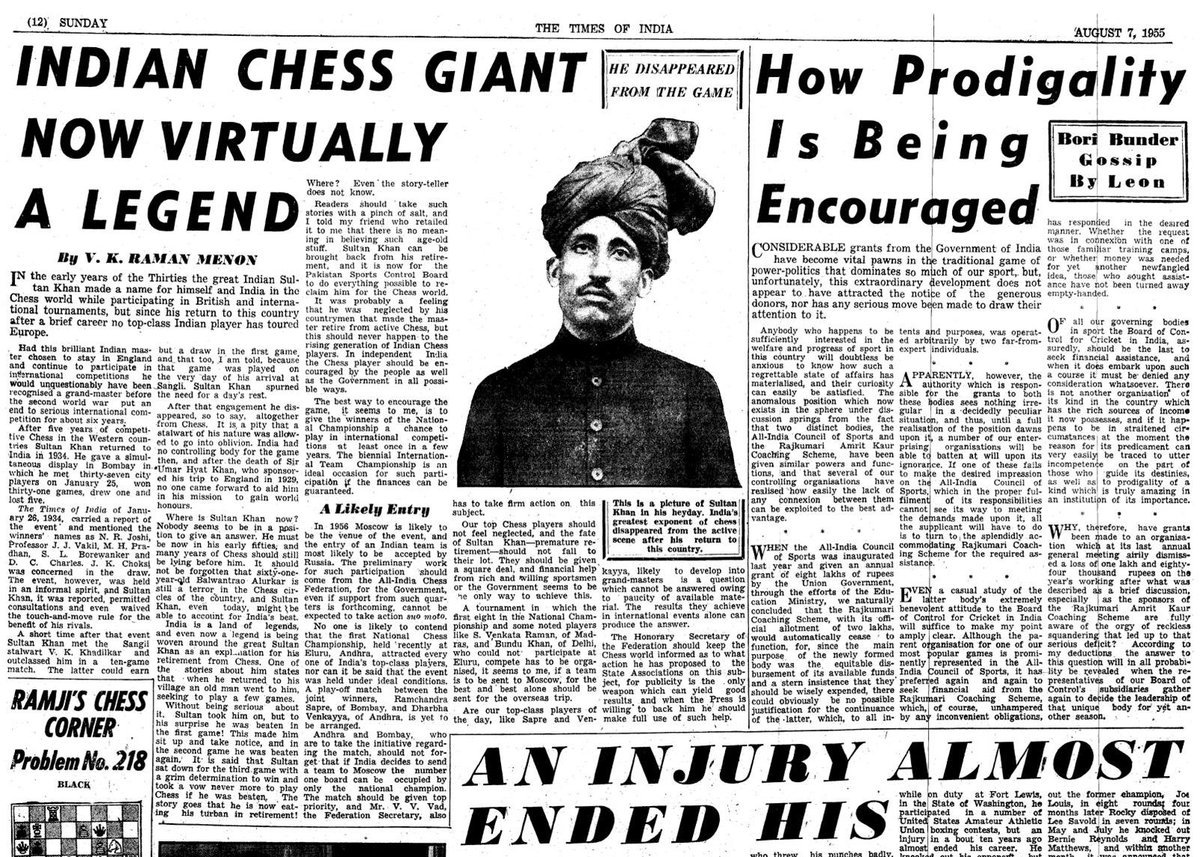
Team India has just made history with a rare double gold at the #ChessOlympiad2024 in Budapest, dominating both the men's and women's events. This is the perfect time to look back at the fascinating story of India’s first chess superstar. Thread 1/16 Image
Mir Sultan Khan was born in 1903 (alt. 1905) in Sargodha of present day Pakistan in a family of religious preachers. His initiation into the game of chess happened at the age of 9 through his father (2/16) Image
By the time he was 21, Mir Sultan was acknowledged as the best chess player in the entire Punjab province (3/16)
Read 17 tweets
Sep 23
Every year, millions rely on a procedure that’s simple, non-invasive, and life-saving: Endoscopy. It's used to diagnose everything from stomach issues to cancer. But did you know its roots trace back to an ancient Indian circus art? Thread.

1/9 Image
Endoscopy—a flexible tube with a camera to look inside the body—has revolutionized healthcare. But what if I told you it was inspired by something as wild as sword swallowing? Don't miss the full deep dive into this incredible story in our latest YouTube video! Now read on. 2/9
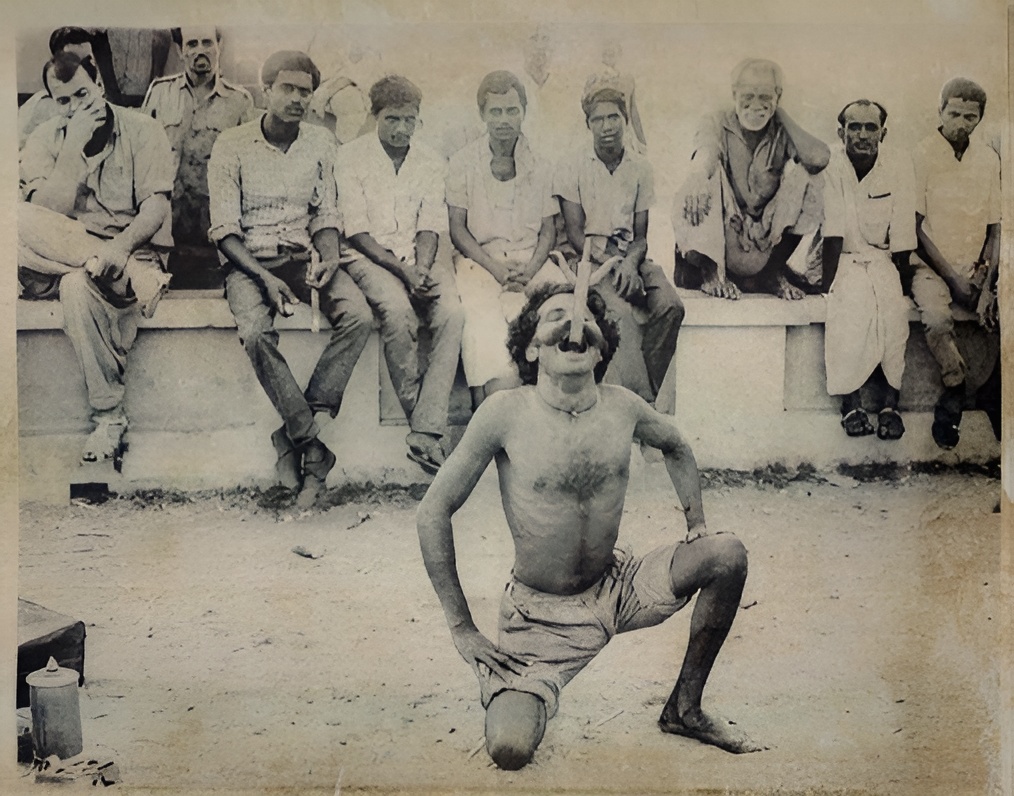
Sword swallowing, a 4,000-year-old Indian art, was once a symbol of spiritual and physical mastery. Fakirs, or holy men, perfected the dangerous feat of sliding blades down their throats without injury. This skill spread across the world. 3/9 Image
Read 11 tweets

Did Thread Reader help you today?

Support us! We are indie developers!


This site is made by just two indie developers on a laptop doing marketing, support and development! Read more about the story.

Become a Premium Member ($3/month or $30/year) and get exclusive features!

Become Premium

Don't want to be a Premium member but still want to support us?

Make a small donation by buying us coffee ($5) or help with server cost ($10)

Donate via Paypal

Or Donate anonymously using crypto!

Ethereum

0xfe58350B80634f60Fa6Dc149a72b4DFbc17D341E copy

Bitcoin

3ATGMxNzCUFzxpMCHL5sWSt4DVtS8UqXpi copy

Thank you for your support!

Follow Us!

:(