Today's Lancet climate and health report presents 56 indicators of health and climate change across FIVE domains. (Download the report for free from the Lancet website). Here is a thread of some of the key findings. #Lancetclimate24 (1) 

Heat-related deaths among over 65s are at their highest ever level (2)

Almost half the global land area is being affected by extreme drought for at least one month each year. (3)

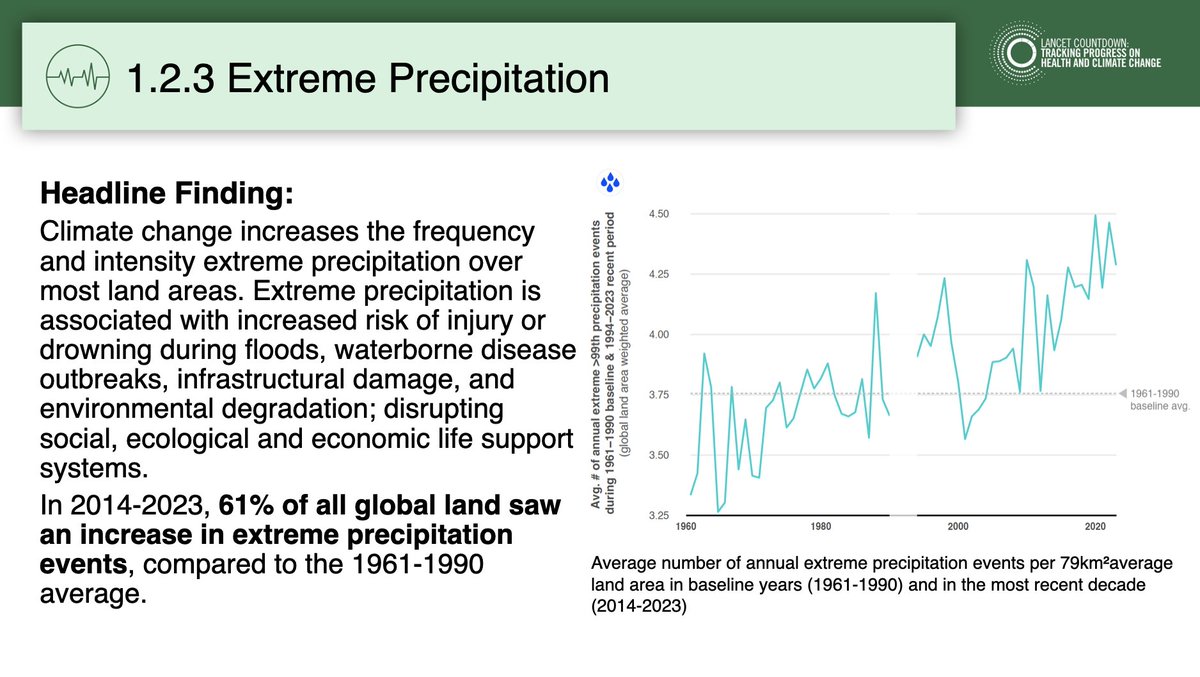
At the same time extreme rainfall events are increasing leading to the pictures we see every week in the media, such as yesterday's tragic floods in Valencia, Spain which killed many people. (4)
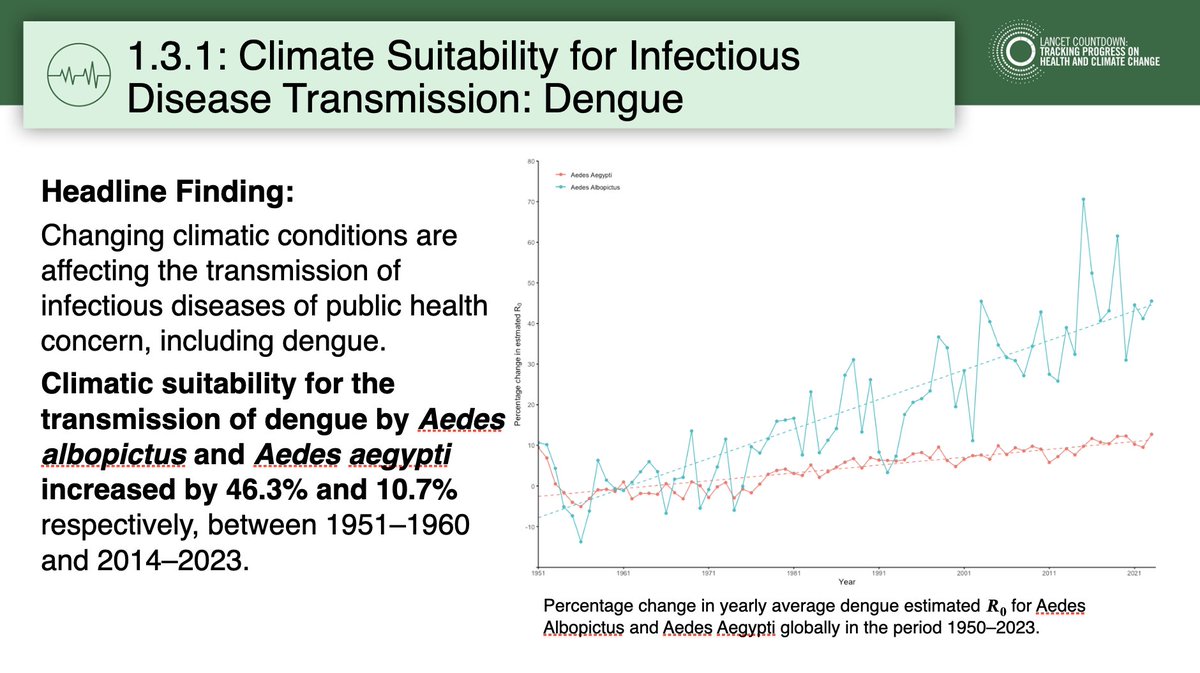
The mosquitoes that spread infections like dengue fever epidemics are reaching new countries, and gradually moving north. (5)
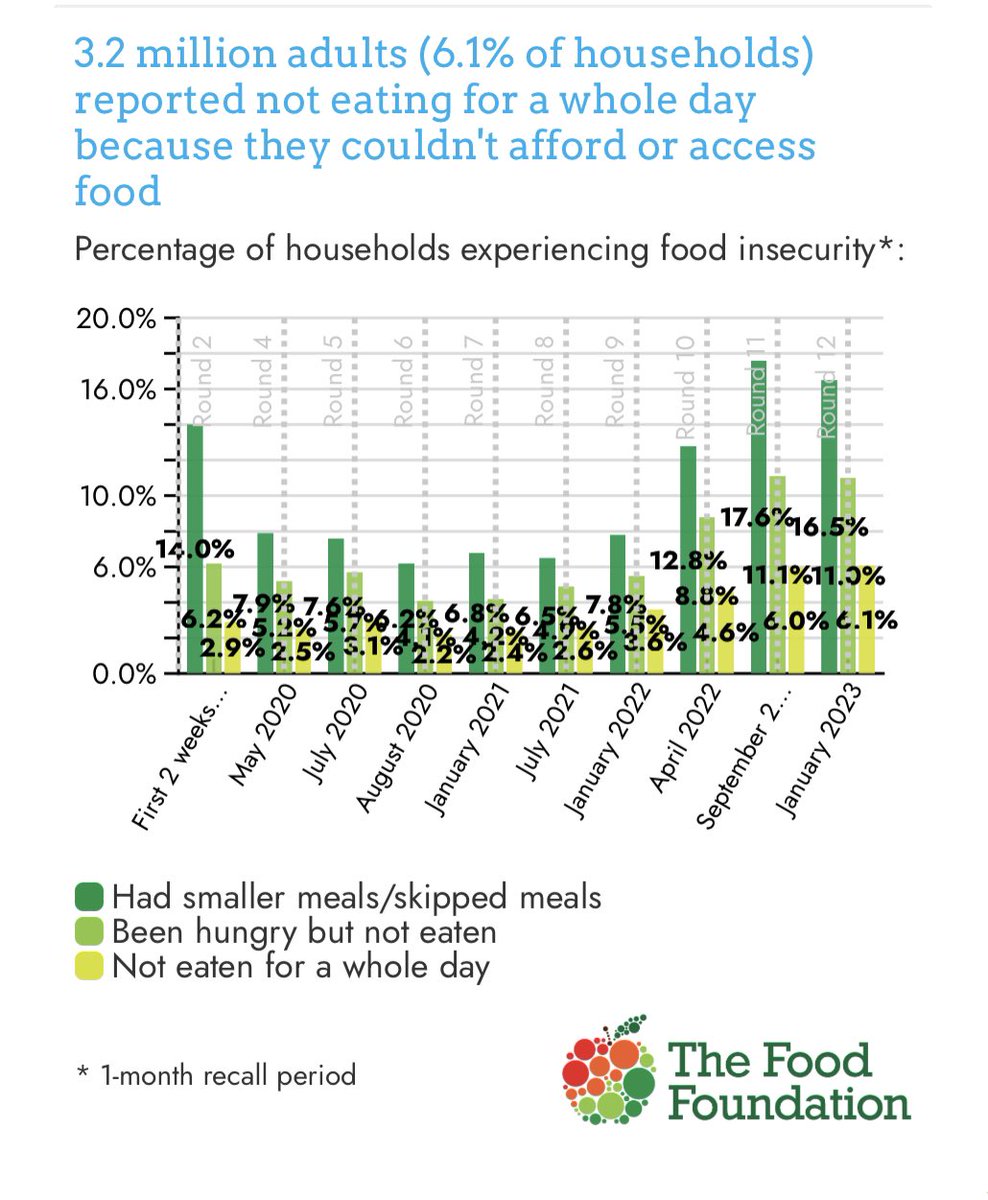
Food insecurity and hunger are relentlessly rising. (6)

One good thing to note is the keen attention to these issues by city mayors and municipal governments. Often more so than national politicians (7)

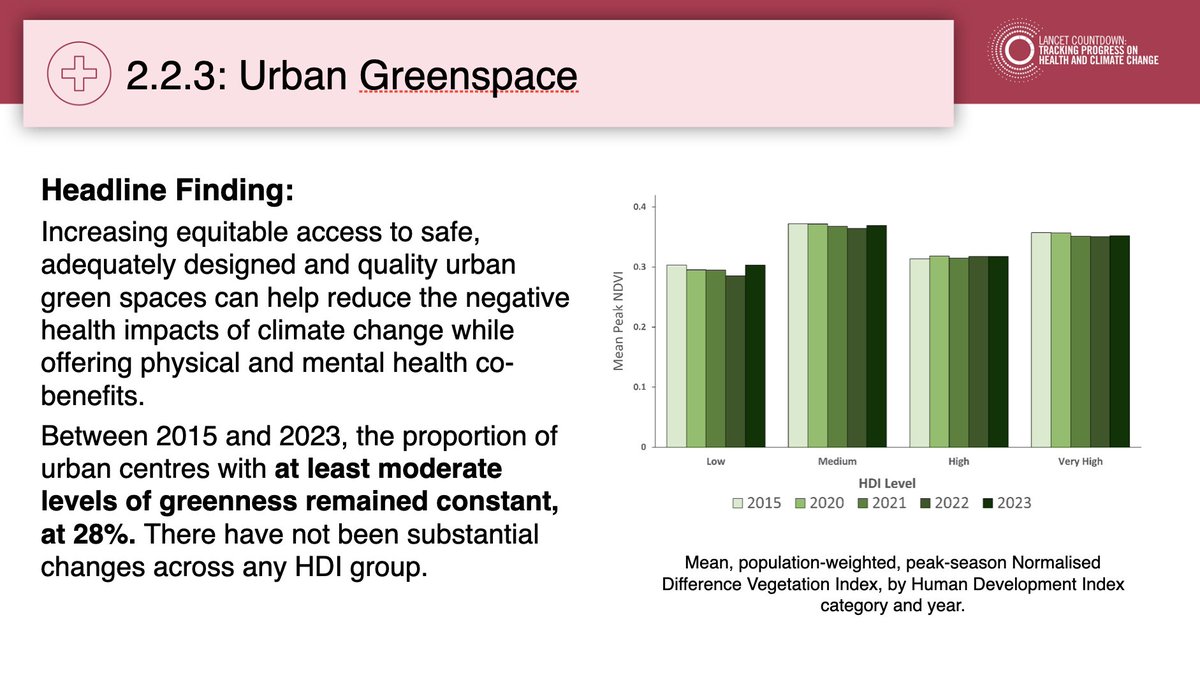
But despite all the promises made at Paris 2015 for rapid action we see no evidence for significant changes in urban green space which could have enormous benefits for exercise, shade, mental health and carbon trapping. (8)
Since 1990 we have seen hardly any change in the carbon intensity and emissions from our global energy systems. (9)

Persisting emissions come particularly from coal, the dirtiest fuel. Coal use is falling in rich countries but is rising elsewhere. (10)

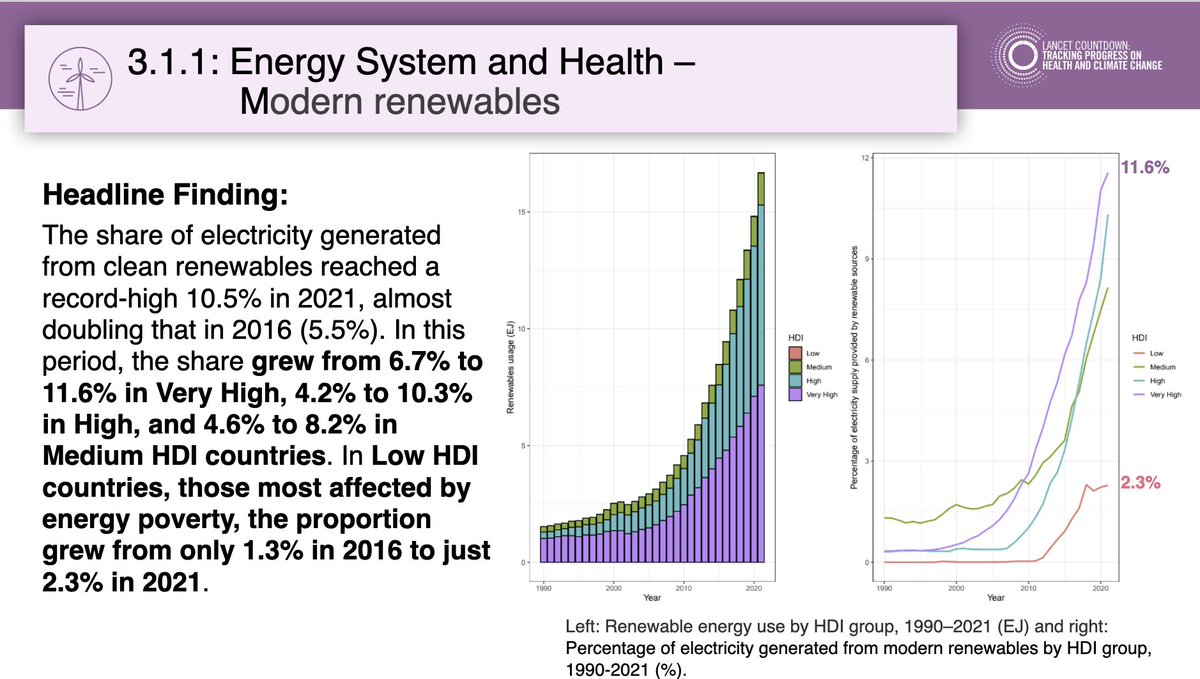
It is encouraging that renewable energy solutions are increasing exponentially albeit from a low base. But where renewables could be invaluable in low income countries, a lack of investment means less than 3% use them. (11)
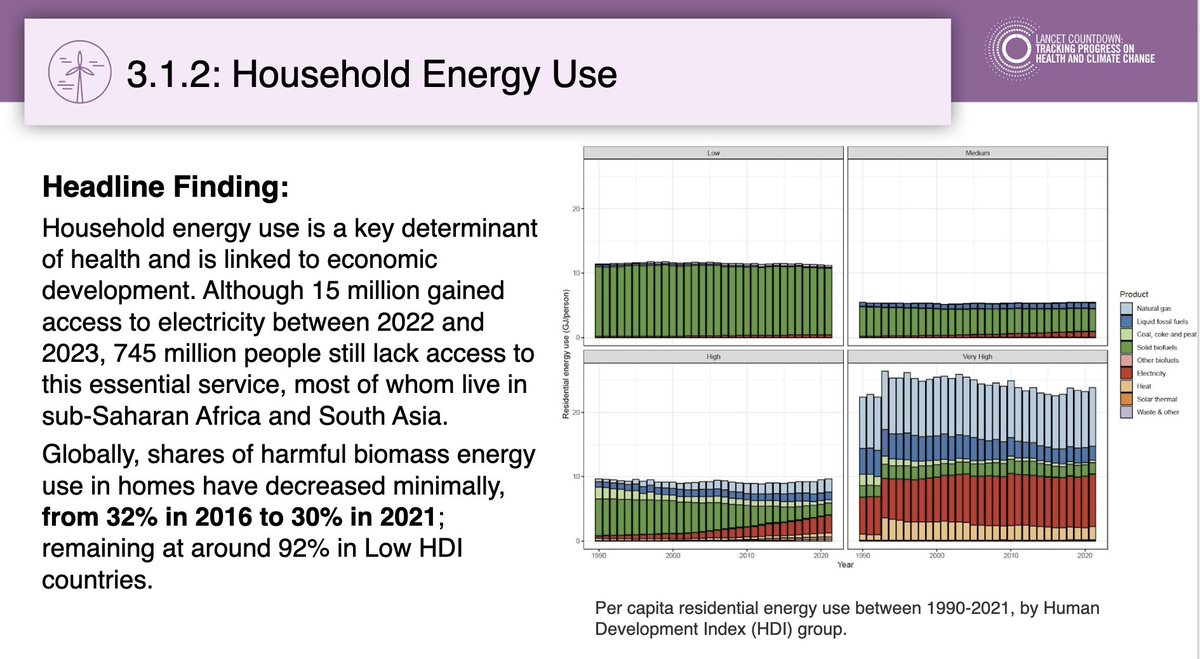
Globally, one third of households still burn wood or waste (biomass) for their energy and 745 million people still lack access to electricity. (12)
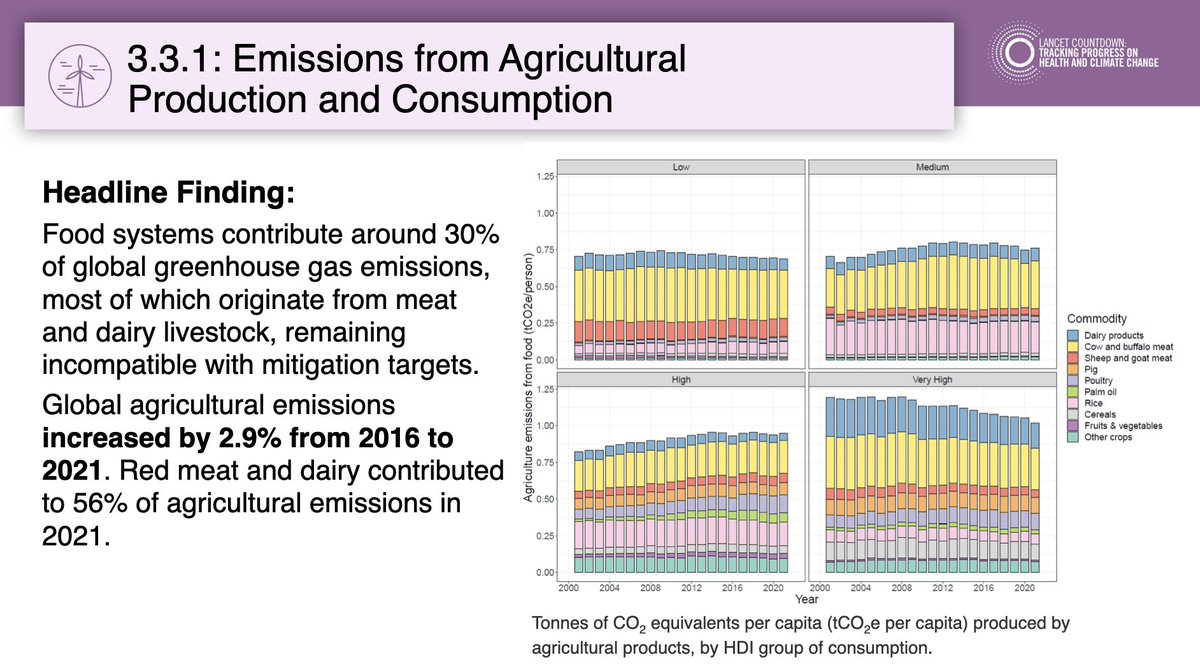
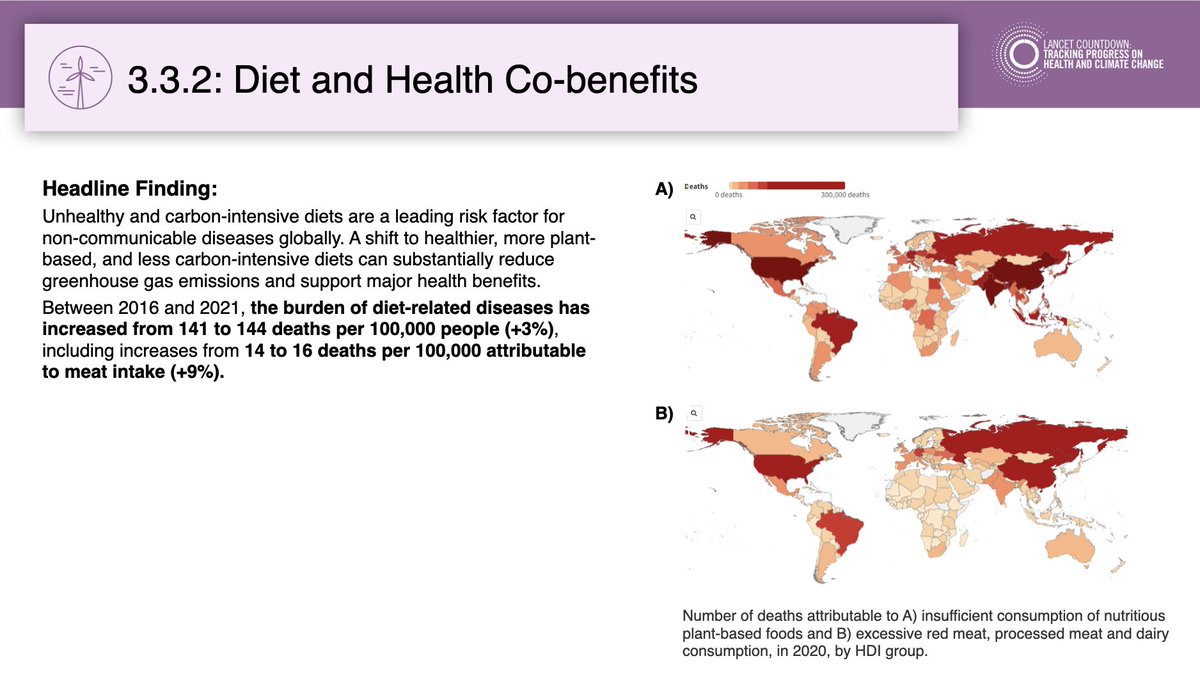
Almost one third of emissions come from agriculture, especially meat and dairy product production, and since 2016 these emissions have increased. A shift to a lower meat and dairy diet globally could have a big impact on emissions and climate change. (13)
And a changing diet could dramatically reduce the growing epidemic and costs of non-communicable diseases (14)
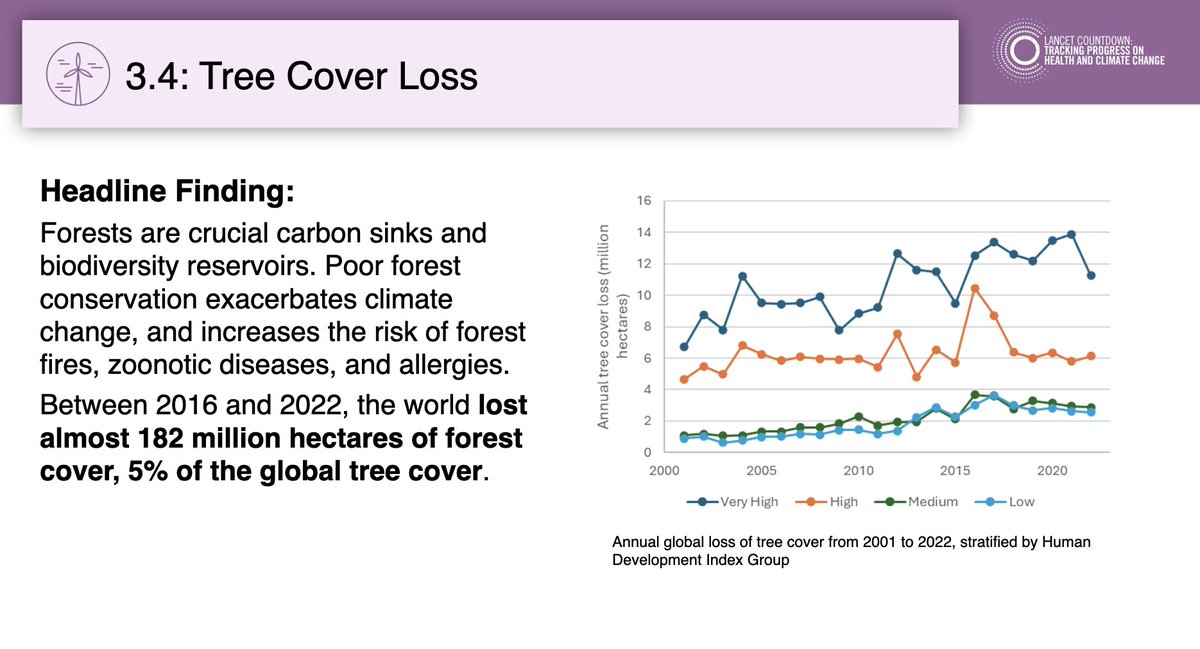
We've known for decades the importance of trees and reforestation to reduce carbon pollution. Yet we have seen 5% of all global tree cover being lost between 2016 and 2022. (15)
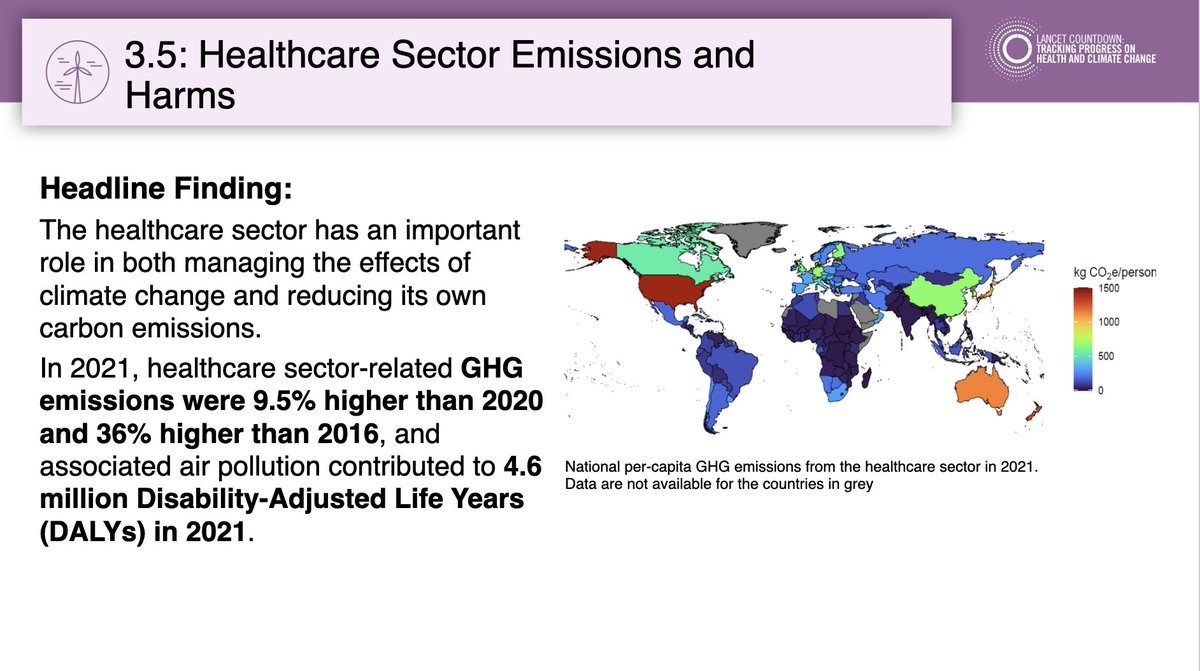
And the health sector in Australia, the USA, China and Europe are making unacceptable contributions to emissions. The health community has a special responsibility to reverse this trend and provide sustainable health care. (16)
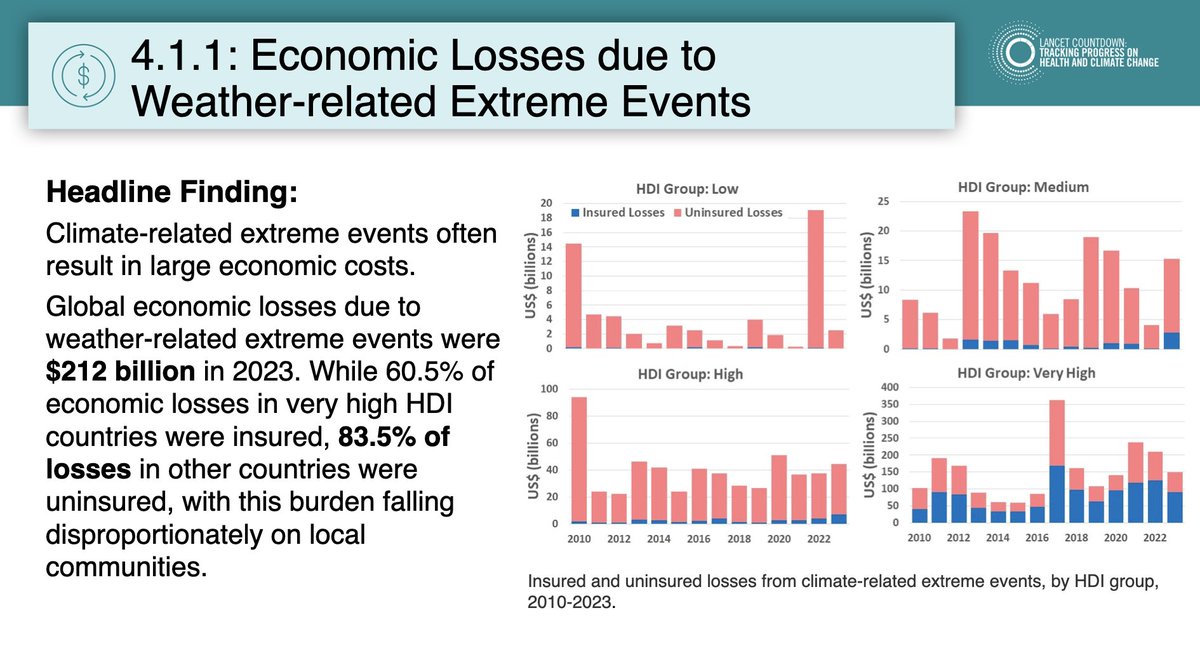
Climate impacts have huge costs. Look at the tiny proportion of extreme weather events that are covered by insurance (in blue) which means the poorest people lose the most. (17)
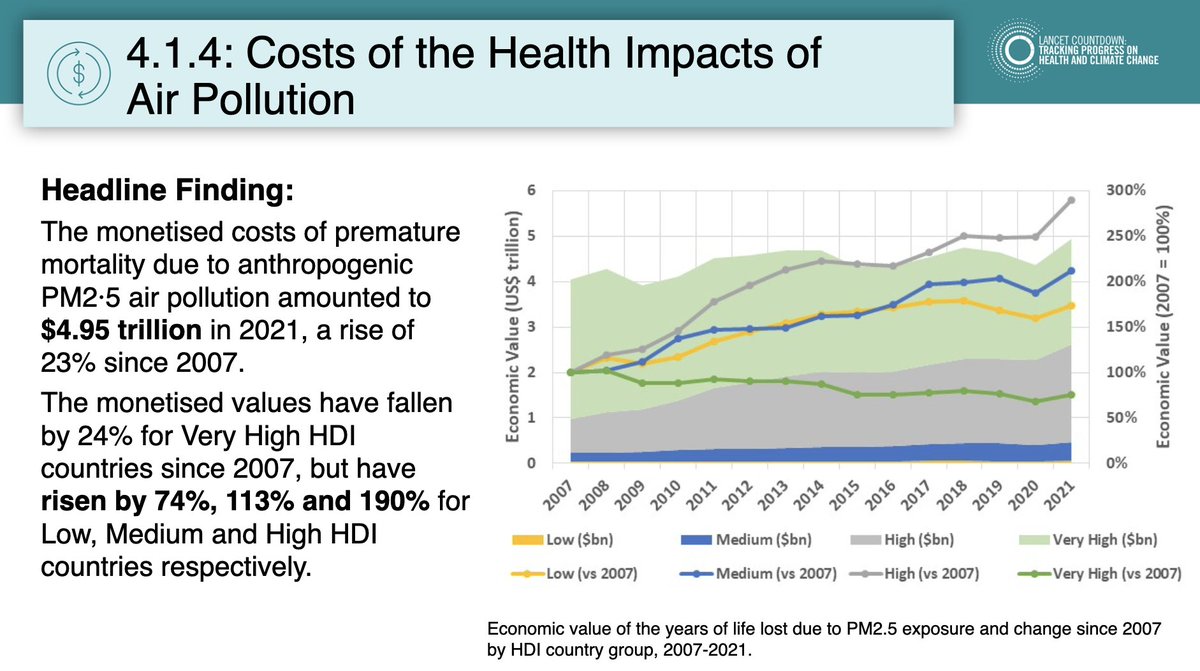
The rampant air pollution arising from fossil fuels has enormous costs. (99% of the world's children breathe unsafe air. WHO!) And the 7 million deaths caused by air pollution costs the world economy nearly 5 TRILLION dollars each year. (18)
So what are the fossil fuel companies doing about it? Are they switching to renewables? NO. The great majority are simply planning even greater investment to dig out more fossil fuels that will worsen climate change. And big financial funds/banks readily provide the credit. (19)

And remember that emissions arise from where people consume products not just where they were produced.(20)

Worse, governments do not make the polluters pay. Instead they continue to subsidise fossil fuels. The IMF estimate that subsidies and the damage caused by carbon pollution exceeds $7 TRILLION dollars each year. (21)

Are people and politicians aware of the health threats from climate change? Not enough. Media coverage of health problems related to climate change has increased but still three quarters of climate media reports do not mention health. (22)

Likewise government engagement with climate health threats is increasing but only slowly. (23)

Finally we should not despair. There is so MUCH WE CAN DO. Everyone has a part to play. Renewable energy, conservation agriculture, biodiversity, healthy diets, sustainable health care, local energy solutions, community awareness + support, + lobby politicians everywhere. (24)

• • •
Missing some Tweet in this thread? You can try to
force a refresh