Copy and Paste these ChatGPT Prompts to learn anything 10X Faster:👇
1/Metaphorical Learning
"Illustrate the concept of [insert topic] through metaphors or storytelling. Use relatable examples to make the learning experience engaging and memorable."
2/Mind Mapping
"Guide me in creating a comprehensive mind map for [insert topic]. Include key concepts, subtopics, and connections to enhance my visualization and understanding of the material."
3/Feynman Technique
"Help me explain [insert topic] in simple terms as if teaching it to a young child. This should ensure I grasp the fundamental concepts clearly."
4/Spaced Repetition Schedule
"Create a spaced repetition learning schedule for [insert topic]. Include specific intervals for review sessions and brief quizzes to reinforce memory retention over time."
5/Growth Mindset Development
"Provide insights on how to cultivate a growth mindset in relation to [insert topic]. Focus on strategies that encourage resilience, persistence, and continuous improvement."
6/Achieving Flow State
"Guide me on how to achieve a state of 'flow' while learning [insert topic]. Include tips for maintaining focus, minimizing distractions, and enhancing my overall learning experience."
7/Curiosity-Driven Exploration
"Generate a list of intriguing questions or exploration tasks related to [insert topic] that will stimulate my curiosity and encourage independent learning."
8/Feedback Mechanism
"Design a feedback loop for assessing my understanding of [insert topic]. Include methods for self-assessment and ways to track my progress over time."
9/Reverse Engineering Concepts
"Assist me in reverse engineering [insert topic]. Break down complex ideas into simpler components to facilitate better understanding and application."
10/Scenario-Based Learning
"Create a series of hypothetical scenarios where I can apply knowledge related to [insert topic]. This should help me develop problem-solving skills and practical understanding."
That's a wrap!
I write about AI for:
• Startups
• Creators
• Entrepreneurs
Follow me for more value @MeeraAIIT
• • •
Missing some Tweet in this thread? You can try to
force a refresh

Where you are losing money
How to price your offers
Why customers leave
What to automate
I turned their entire playbook into 10 ChatGPT prompts.
These 10 ChatGPT prompts are literally a $300K business consultant:↓🧵
1. The Revenue Leak Detector
You are a revenue optimization strategist who specializes in identifying hidden conversion leaks in online businesses. I need you to perform a comprehensive revenue leak audit for my business.
Here is my business context:
- Business type: [e.g., coaching, consulting, freelance, course creator, ecommerce, agency]
- Primary offer and price point: [e.g., $2,500 group coaching program]
- Monthly website visitors: [approximate number]
- Email list size: [number]
- Average monthly leads: [number of people who opt-in or inquire]
- Average monthly sales: [number]
- Current conversion rate from lead to customer: [percentage or "unknown"]
- Primary traffic sources: [e.g., organic social, paid ads, SEO, referrals]
- Sales method: [e.g., sales calls, email sequences, checkout page, DMs]
Analyze my business for revenue leaks across these seven critical stages:
Stage 1 - Traffic to Attention: Are you attracting the right people or just anyone?
Stage 2 - Attention to Interest: Does your content create genuine curiosity about your solution?
Stage 3 - Interest to Lead: Is your lead magnet compelling enough to warrant an email exchange?
Stage 4 - Lead to Engaged Lead: Are cold leads warming up or going dormant?
Stage 5 - Engaged Lead to Sales Conversation: Are qualified leads taking the next step?
Stage 6 - Sales Conversation to Customer: What happens during the decision moment?
Stage 7 - Customer to Repeat Buyer/Referrer: Are you maximizing customer lifetime value?
For each stage, provide:
A. The likely leak (what is probably happening based on my numbers)
B. Diagnostic questions I should answer to confirm the leak
C. The revenue impact (estimate how much this leak might be costing me monthly)
D. One high-leverage fix I can implement this week
End with a prioritized action plan: rank the leaks by estimated revenue impact and ease of fix, then give me a 30-day roadmap to plug the top three leaks.
Format your response as a diagnostic report I could hand to a business partner to explain exactly where we are losing money and what to do about it.
2. The Offer Stack Architect
You are a product strategist who specializes in building offer ecosystems that maximize customer lifetime value while respecting the capacity constraints of small teams and solopreneurs.
I need you to architect a complete offer stack for my business.
Here is my context:
- My core expertise/transformation I provide: [e.g., helping B2B consultants land enterprise clients]
- My current primary offer: [describe offer, price, and delivery method]
- My ideal customer before transformation: [their current state, struggles, goals]
- My ideal customer after transformation: [specific outcomes they achieve]
- My delivery capacity: [hours per week available for client work]
- Price sensitivity of my market: [low, medium, high, or "I do not know"]
- My current audience size: [email list, social following, or existing customer base]
- My biggest capacity constraint: [time, energy, expertise, or something else]
Build me a five-tier offer stack:
Tier 1 - The Gateway (under $50): A low-friction entry point that solves one specific micro-problem and introduces your methodology.
Tier 2 - The Bridge (between $50 and $500): A DIY solution that delivers a complete but self-guided transformation.
Tier 3 - The Core (between $500 and $3,000): Your signature offer with the optimal balance of access and results.
Tier 4 - The Accelerator (between $3,000 and $10,000): A higher-touch experience with more access, speed, or depth.
Tier 5 - The Pinnacle (above $10,000): Your highest-level offer for those who want the ultimate outcome.
For each tier, provide:
- Specific offer name that communicates the transformation
- What is included and what is explicitly excluded
- Pricing with rationale (why this price point works for this tier)
- Delivery format (live, async, hybrid, done-for-you, etc.)
- Time investment required from me per customer
- Natural upsell trigger (what makes someone ready for the next tier)
- Downsell trigger (when to offer the tier below instead)
Then map the customer journey: show me how a cold lead would naturally progress through this stack, including email sequences and touchpoints between tiers.
Finally, recommend which tier I should launch or optimize first based on my current situation, and why.
Run competitive analysis, size any market, conduct due diligence and build board decks in minutes.
Here are 10 advanced prompts you can use in Gemini 3 to run them free:↓
1. Competitive Landscape Positioning Map
Act as a McKinsey strategy consultant. Create a comprehensive competitive positioning analysis for [YOUR COMPANY] in the [INDUSTRY/MARKET].
Deliver the following:
1. Competitive Landscape Overview
- Identify 8-12 relevant competitors (direct, indirect, and emerging)
- Categorize each: Incumbent, Challenger, Niche Player, or Emerging Threat
- One-sentence positioning statement for each competitor
2. Positioning Map Framework
Create two 2x2 positioning matrices:
Matrix A - Market Positioning:
- X-axis: [Suggest most relevant dimension, e.g., Price Point: Low to Premium]
- Y-axis: [Suggest most relevant dimension, e.g., Product Breadth: Point Solution to Platform]
- Place all competitors and [YOUR COMPANY] on the matrix
Matrix B - Strategic Positioning:
- X-axis: [Suggest dimension, e.g., Target Segment: SMB to Enterprise]
- Y-axis: [Suggest dimension, e.g., Go-to-Market: Product-Led to Sales-Led]
- Place all competitors and [YOUR COMPANY] on the matrix
3. White Space Analysis
- Identify 2-3 underserved quadrants or positioning gaps
- Explain why these gaps exist (market dynamics, economics, capability barriers)
- Assess attractiveness of each gap for [YOUR COMPANY]
4. Positioning Recommendations
- Current perceived position vs. optimal position
- 3 specific moves to strengthen or shift positioning
- Messaging implications for each recommendation
5. Executive Summary
- 5-bullet synthesis suitable for a board slide
Format all matrices as text-based grids that can be easily converted to visuals.
Context about my company:
[Describe your company, product, target customer, and current positioning]
Known competitors:
[List competitors if known, or ask me to identify them]
2. Competitor Vulnerability Assessment
Act as a competitive intelligence analyst from Bain & Company. Conduct a vulnerability assessment for [COMPETITOR NAME] in the [INDUSTRY/MARKET].
Deliver:
1. Competitor Profile
- Business model and revenue streams
- Estimated revenue/funding and growth trajectory
- Core value proposition and target customer
- Key strengths (be objective—know your enemy)
2. Vulnerability Analysis
Assess weaknesses across 8 dimensions (rate each: Low / Medium / High vulnerability):
3. Attack Vectors
For each High vulnerability:
- Specific tactic to exploit this weakness
- Resources required (time, investment, capabilities)
- Expected competitor response
- Success probability (High/Medium/Low)
4. Competitive Plays
- 3 offensive plays: How to win their customers
- 2 defensive plays: How to protect against their strengths
- 1 flanking play: How to compete where they can't follow
5. Signals to Monitor
- 5 leading indicators that this competitor is strengthening or weakening
- Recommended monitoring sources
State your assumptions explicitly. Flag where additional research would improve confidence.
What I know about this competitor:
[Paste any information: website, product details, news, funding, reviews]
My company context:
[Brief description of your company for comparison]
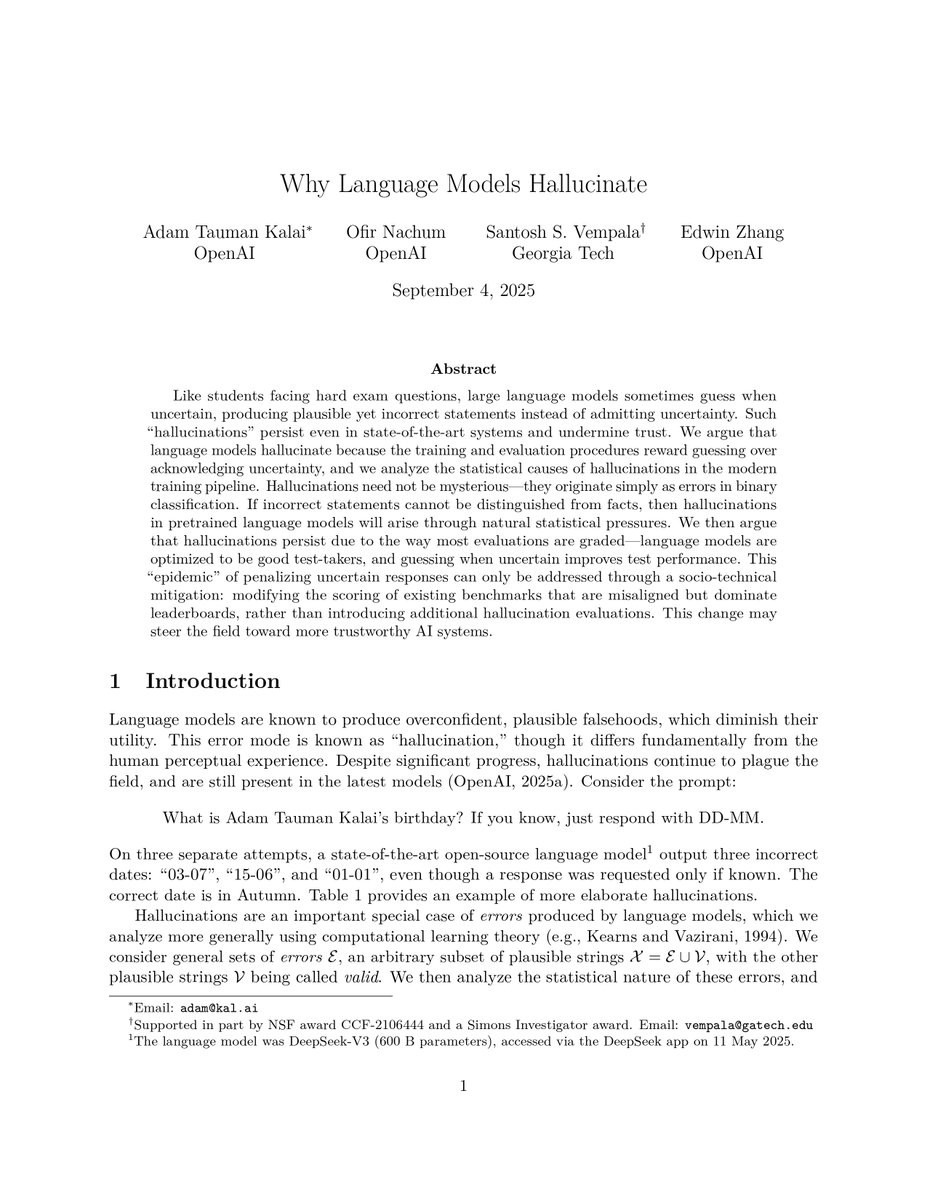
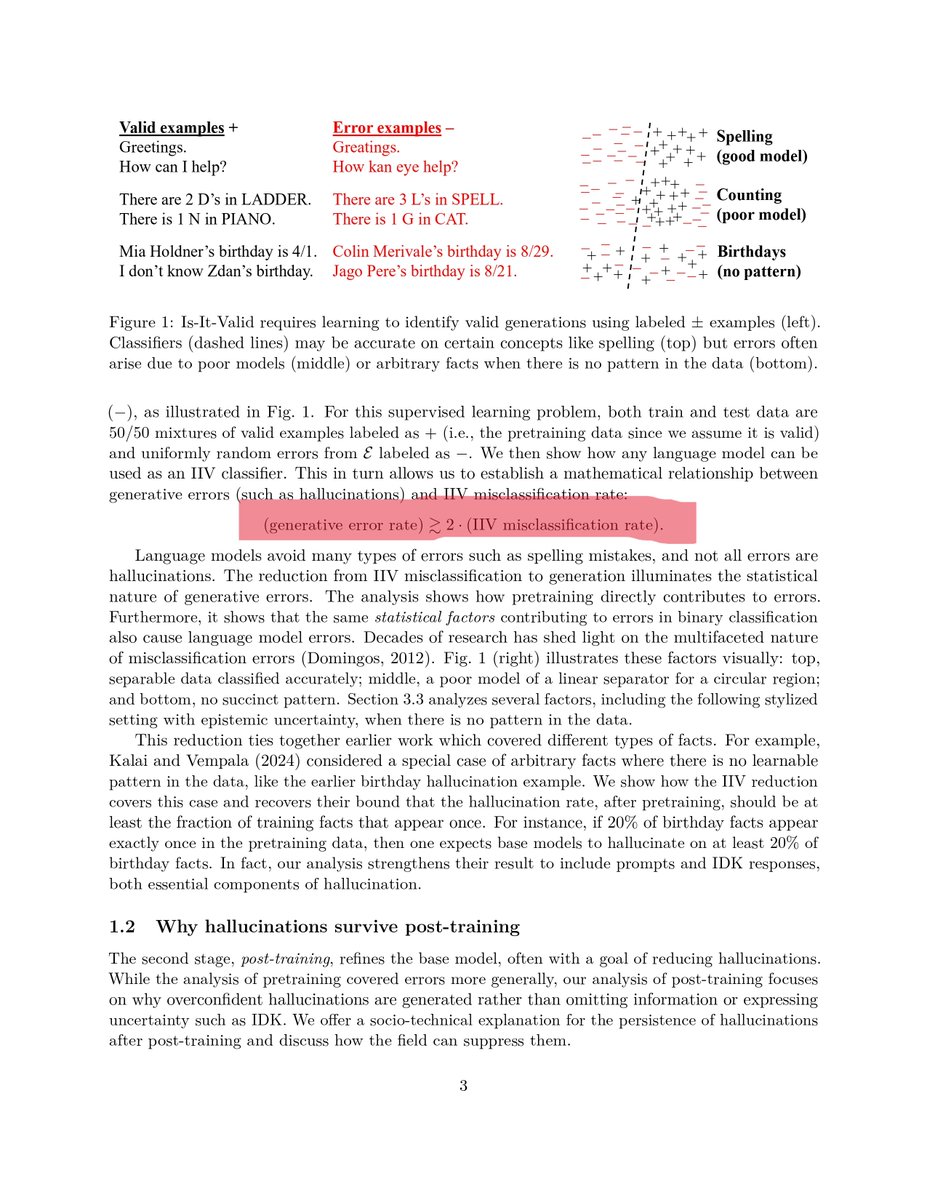
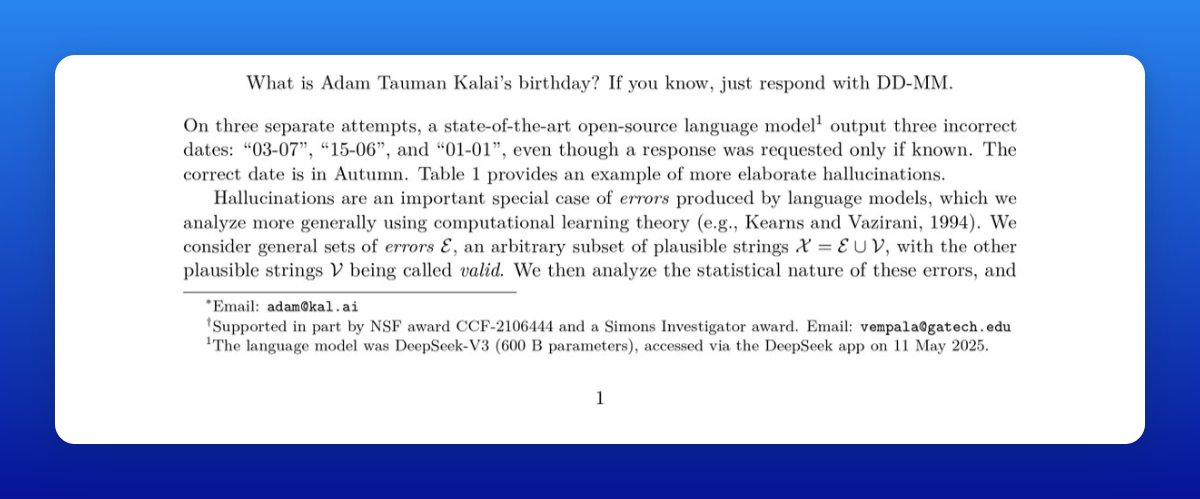
🚨 BREAKING: OpenAI just exposed why ChatGPT lies to you 🤯
New paper reveals AI hallucinations are MATHEMATICALLY INEVITABLE - even GPT-5 can't escape this trap
The truth about why your AI confidently makes stuff up:🧵
The bombshell: Even with PERFECT training data, AI will still hallucinate
OpenAI shows it's not a bug - it's a mathematical certainty built into how these models learn.
This AI video tool turns text into stunning animations, revives old photos, and brings memes to life on its own.
It animates, edits, and creates in real-time like a pro director.
Check out these 26 wild examples:
1. line drawing into a 3D cyber-dragon using Grok Imagine
2. Prompt: Young woman sittingon a rooftop ledge with a determined gaze, cute outfit, sunset, in pastel anime style, soft natural light, rich color palette, detailed ultra-resolution, warm earth tones.
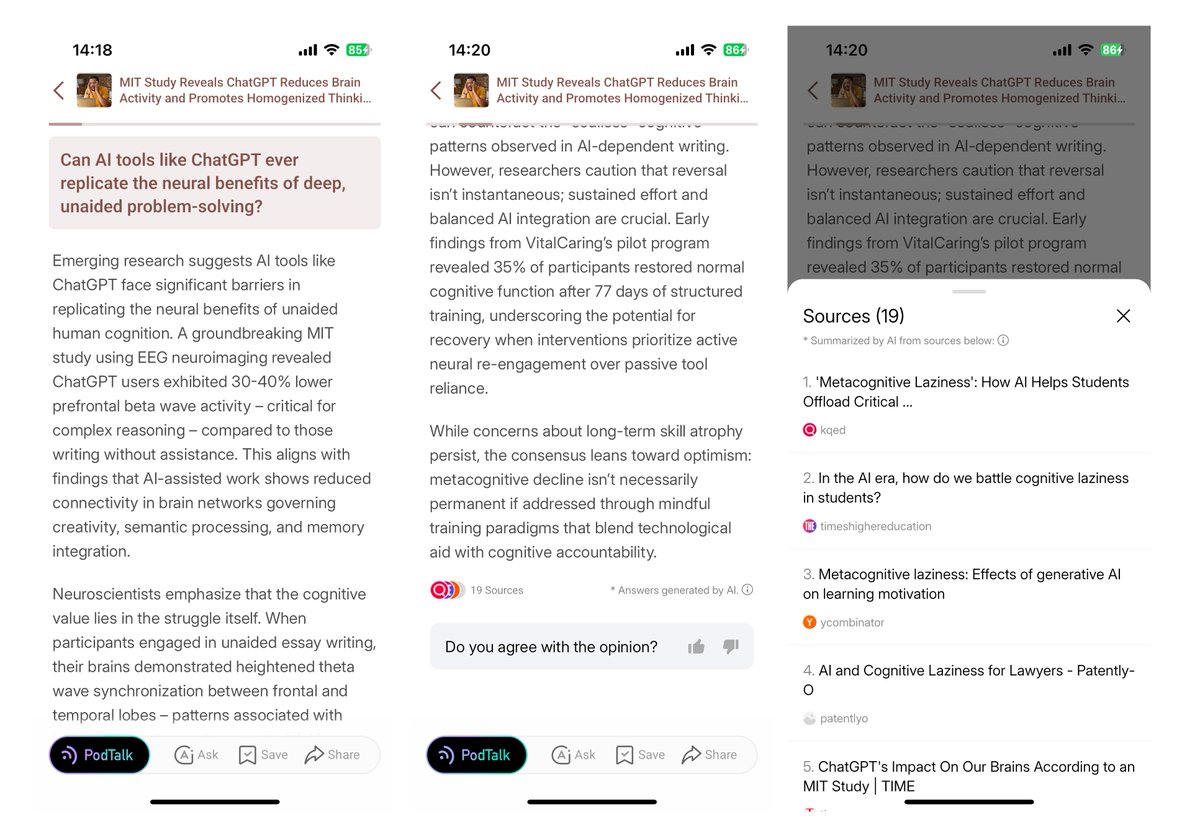
This AI kills shallow headlines and media bias with Deep Multi-lens Analysis, Instant Summaries, and AI-generated Q&A.
Here's how: 👇
@Newsbang_AI is your AI-powered news app that delivers deep dive insights tailored to what matters most. Go beyond headlines to gain new perspectives & broaden your understanding of the world.