Basics of Logistics Support – What keeps your unit working?
Despite sounding incredibly dull, logistics is the reason why warfighters are able to keep fighting whether they be infantry, special forces, or guerillas. General John Pershing during the first World War said, “Infantry wins battles, logistics wins wars.” Logistics ensure that units have water to drink, food to eat, medical supplies to consume, and keep the flow of bullets into magazines. Without reliable logistics, a unit deteriorates very fast. Without bullets, no shooting happens. Without food, the morale suffers. Without medicine, men die. Without water, everyone dies. Any army that hopes to win in any conflict needs to establish a logistics department of some form lest they risk imminent defeat. The question then to ask is, “how are these set up?”
This article is written from the perspective of having to create a logistics team from the ground up as a prepared citizen or group of citizens during a major event such as cataclysms, conventional war, or unconventional warfare where citizens may need to act as guerillas. THIS IS NOT ADVICE TO GO DO ANYTHING ILLEGAL. DO NOT BREAK THE LAW. DO NOT CONSIDER BREAKING THE LAW. I DO NOT SUPPORT ANY EXTREMIST ORGANIZATIONS OR MOVEMENTS. I DO NOT SUPPORT ANY INSURRECTIONIST MOVEMENTS. I DO NOT ADVOCATE FOR ANY EXTREMIST ORGANIZATIONS, MOVEMENTS, OR IDEAOLOGIES. PLEASE DON’T DRONE STRIKE ME.
Supply Prioritization.
First and foremost, before delivering the supplies, the supplies that are needed need to be determined. Beginning with ammunition, then water, and finally food. Logistics teams need to evaluate the size of the unit they are supporting and what their needs actually are.
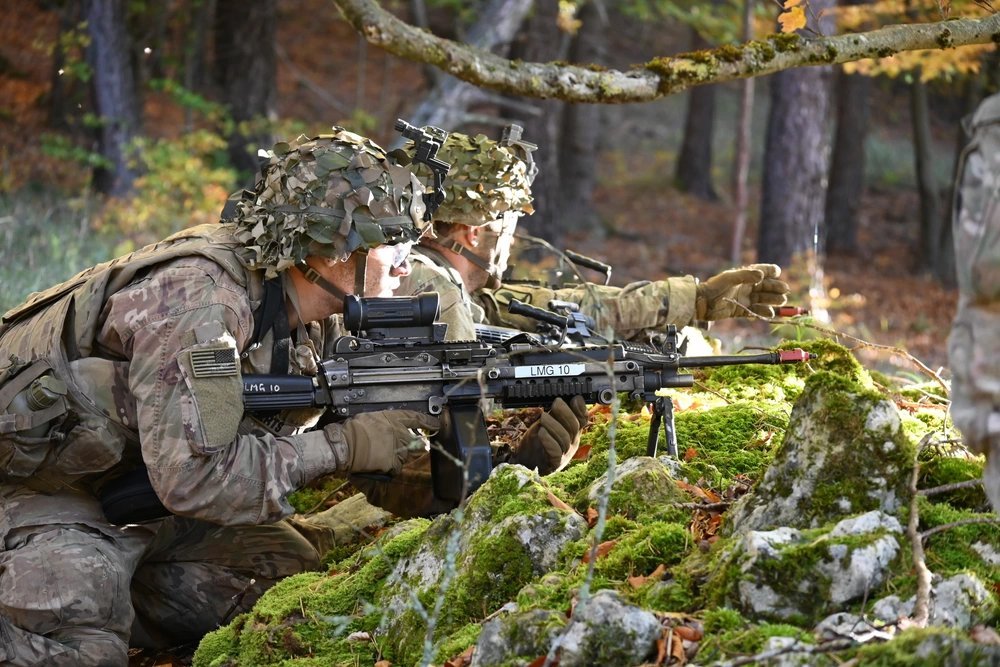
For example, let’s take a small 10-man squad composed of 1 medic, 1 support weapons operator, 1 squad lead, 2 team leads, and the remaining 5 men being riflemen. Let’s look at what equipment they are likely to go through quickly and need the most urgently:
Riflemen – ammunition, basic medkits, and water
Medic – More advanced medical supplies, IV fluids, extra water
Support weapons operator – specialized ammunition for their platform, tools and weapon’s lube for maintenance
Leadership – ammunition, maps, batteries, communication devices.
Quantities needed are generally formulated from greater statistically analysis than I can provide. In lieu of that, the team can also analyze the duration of the team’s mission and intensity to deliver approximate amounts of logistical supplies. If a team is planned to go out and perform a quick ambush against a small group and then return home, the logistics team should focus on providing enough equipment to support the team for an appropriately short mission. While it sounds obvious to state this, misallocation of supplies is commonplace and can cause a lot of unnecessary complications in the field.
Organization of Supplies.
In order to actually deliver the supplies, the team needs to know where the supplies are at. Ideally supplies should be centralized, at least the most essential ones. A primary stockpile that is in a safe location and is accessible to all team members. In the case of a guerilla warfare type scenario, stockpiles can be dispersed but their contents should be known.
When it comes to storing items in a stockpile, safety and appropriate volumetric sizes need to be considered. Firstly with safety, things such as ammunition should be stored away from other supplies to prevent cookoffs (fires that spread to ammunition and lead to a series of explosions) from damaging other goods. Ammunition should also be separated by caliber rather than being one big dump. This is partially to preserve the other calibers in case of cookoff but also to ensure that is easily locatable.
Storage of food and water on the other hand requires more of a vaguely mathematical approach. Teams need to make use of their space allotted to them to hold as much material as possible. Water and food needs to be placed in easily stacked containers such as boxes or drums.
Allocation of Supplies.
As mentioned earlier, certain teams only need certain amounts of goods. Supplies should be distributed by logistics teams according to their individual needs. Individual logistics teams distributing equipment on the other hand need to be careful with how much they are carrying. A frontline logistics team would do well to carry minimal essentials required when making deliveries to prevent massive losses should the team be destroyed. More rearward support units on the other hand can have an excess on hand to easily distribute if frontline units require more or are annihilated by battlespace actors.
Another option to touch on is the setup of field caches for extended ops, clandestine teams, or for guerillas. A series of small, hidden supply caches along an established route can make short work for teams operating in the field to stop at for resupply or for a logistics team to gather needed supplies.
Delivery and Resupply Strategies.
If an army fights on it’s stomach, the supply route is the esophagus. Supply routes need to be established early and constantly reevaluated for safety and efficiency. These routes need to be as short as possible and as safe as possible to ensure speedy delivery times and actually ensuring the supplies arrive. They should be sheltered from enemy positions or enemy vectors of attack. Multiple redundant routes should be established in case the primary route is compromised.
Supplies should be delivered at regular intervals and their quantities based on expected usage rates by the team they are supporting. In the case of teams in the field, mobile resupply options such as small backpacks that can be tossed, carried on a tac vest that is dropped, or even delivered via a drone allows teams to work quickly and prevent them from lingering in a dangerous position. A great example of this comes from the GWOT where bandoliers of 5.56 ammo would be prepacked into ammo cans and then dropped via helicopter, allowing teams to resupply rapidly without needing a guy with a truck to swing through and drop off ammunition traditionally.
Teams can also make use of a rotational system where non-essential personnel carry supplies forward and take empty containers or unneeded gear back. This is to prevent the logistics team from having to personally send a man or a team out to the field to get the scraps, excess, or accidentally sent stuff back to the logistics team, giving them more time and manpower to deliver goods.
Emergency Procedures.
Logistics teams should plan for emergency extractions and medical evacuations in the case of a mass casualty event while conducting deliveries in the field. Assignment of specific individuals or roles to manage casualties and to bring them to designated evacuation points is ideal.
In the case of discovery or destruction of a primary supply cache, secondary, redundant, caches should be employed with emergency essentials, enough to keep their assigned duties operating for a few days allows the team a fallback option while the primary supply line is reconfigured.
Conclusion.
Logistics is a tricky business and can be more full of spreadsheets than I am comfortable with being around. Though, at it’s core is only a handful of principles that are followed. They are as discussed, assessing needs based on roles and mission scope of their units of responsibility, organization of supplies, planning and executing of resupply routes, and preparing for emergencies to ensure that everyone else is able to operate smoothly. Obviously this is a super generalized approach and every conflict and situation will have different demands as well as inputs and outputs but the basics laid out here are well enough that they can be generally applied to most situations and adjusted to their needs. Whether you are a prepper, a guerilla, an aid worker in the aftermath of a hurricane, almost any scenario where getting goods from place A to place B to keep everyone functioning, this rough layout can help establish and execute a plan.
Act accordingly.
Despite sounding incredibly dull, logistics is the reason why warfighters are able to keep fighting whether they be infantry, special forces, or guerillas. General John Pershing during the first World War said, “Infantry wins battles, logistics wins wars.” Logistics ensure that units have water to drink, food to eat, medical supplies to consume, and keep the flow of bullets into magazines. Without reliable logistics, a unit deteriorates very fast. Without bullets, no shooting happens. Without food, the morale suffers. Without medicine, men die. Without water, everyone dies. Any army that hopes to win in any conflict needs to establish a logistics department of some form lest they risk imminent defeat. The question then to ask is, “how are these set up?”
This article is written from the perspective of having to create a logistics team from the ground up as a prepared citizen or group of citizens during a major event such as cataclysms, conventional war, or unconventional warfare where citizens may need to act as guerillas. THIS IS NOT ADVICE TO GO DO ANYTHING ILLEGAL. DO NOT BREAK THE LAW. DO NOT CONSIDER BREAKING THE LAW. I DO NOT SUPPORT ANY EXTREMIST ORGANIZATIONS OR MOVEMENTS. I DO NOT SUPPORT ANY INSURRECTIONIST MOVEMENTS. I DO NOT ADVOCATE FOR ANY EXTREMIST ORGANIZATIONS, MOVEMENTS, OR IDEAOLOGIES. PLEASE DON’T DRONE STRIKE ME.
Supply Prioritization.
First and foremost, before delivering the supplies, the supplies that are needed need to be determined. Beginning with ammunition, then water, and finally food. Logistics teams need to evaluate the size of the unit they are supporting and what their needs actually are.
For example, let’s take a small 10-man squad composed of 1 medic, 1 support weapons operator, 1 squad lead, 2 team leads, and the remaining 5 men being riflemen. Let’s look at what equipment they are likely to go through quickly and need the most urgently:
Riflemen – ammunition, basic medkits, and water
Medic – More advanced medical supplies, IV fluids, extra water
Support weapons operator – specialized ammunition for their platform, tools and weapon’s lube for maintenance
Leadership – ammunition, maps, batteries, communication devices.
Quantities needed are generally formulated from greater statistically analysis than I can provide. In lieu of that, the team can also analyze the duration of the team’s mission and intensity to deliver approximate amounts of logistical supplies. If a team is planned to go out and perform a quick ambush against a small group and then return home, the logistics team should focus on providing enough equipment to support the team for an appropriately short mission. While it sounds obvious to state this, misallocation of supplies is commonplace and can cause a lot of unnecessary complications in the field.
Organization of Supplies.
In order to actually deliver the supplies, the team needs to know where the supplies are at. Ideally supplies should be centralized, at least the most essential ones. A primary stockpile that is in a safe location and is accessible to all team members. In the case of a guerilla warfare type scenario, stockpiles can be dispersed but their contents should be known.
When it comes to storing items in a stockpile, safety and appropriate volumetric sizes need to be considered. Firstly with safety, things such as ammunition should be stored away from other supplies to prevent cookoffs (fires that spread to ammunition and lead to a series of explosions) from damaging other goods. Ammunition should also be separated by caliber rather than being one big dump. This is partially to preserve the other calibers in case of cookoff but also to ensure that is easily locatable.
Storage of food and water on the other hand requires more of a vaguely mathematical approach. Teams need to make use of their space allotted to them to hold as much material as possible. Water and food needs to be placed in easily stacked containers such as boxes or drums.
Allocation of Supplies.
As mentioned earlier, certain teams only need certain amounts of goods. Supplies should be distributed by logistics teams according to their individual needs. Individual logistics teams distributing equipment on the other hand need to be careful with how much they are carrying. A frontline logistics team would do well to carry minimal essentials required when making deliveries to prevent massive losses should the team be destroyed. More rearward support units on the other hand can have an excess on hand to easily distribute if frontline units require more or are annihilated by battlespace actors.
Another option to touch on is the setup of field caches for extended ops, clandestine teams, or for guerillas. A series of small, hidden supply caches along an established route can make short work for teams operating in the field to stop at for resupply or for a logistics team to gather needed supplies.
Delivery and Resupply Strategies.
If an army fights on it’s stomach, the supply route is the esophagus. Supply routes need to be established early and constantly reevaluated for safety and efficiency. These routes need to be as short as possible and as safe as possible to ensure speedy delivery times and actually ensuring the supplies arrive. They should be sheltered from enemy positions or enemy vectors of attack. Multiple redundant routes should be established in case the primary route is compromised.
Supplies should be delivered at regular intervals and their quantities based on expected usage rates by the team they are supporting. In the case of teams in the field, mobile resupply options such as small backpacks that can be tossed, carried on a tac vest that is dropped, or even delivered via a drone allows teams to work quickly and prevent them from lingering in a dangerous position. A great example of this comes from the GWOT where bandoliers of 5.56 ammo would be prepacked into ammo cans and then dropped via helicopter, allowing teams to resupply rapidly without needing a guy with a truck to swing through and drop off ammunition traditionally.
Teams can also make use of a rotational system where non-essential personnel carry supplies forward and take empty containers or unneeded gear back. This is to prevent the logistics team from having to personally send a man or a team out to the field to get the scraps, excess, or accidentally sent stuff back to the logistics team, giving them more time and manpower to deliver goods.
Emergency Procedures.
Logistics teams should plan for emergency extractions and medical evacuations in the case of a mass casualty event while conducting deliveries in the field. Assignment of specific individuals or roles to manage casualties and to bring them to designated evacuation points is ideal.
In the case of discovery or destruction of a primary supply cache, secondary, redundant, caches should be employed with emergency essentials, enough to keep their assigned duties operating for a few days allows the team a fallback option while the primary supply line is reconfigured.
Conclusion.
Logistics is a tricky business and can be more full of spreadsheets than I am comfortable with being around. Though, at it’s core is only a handful of principles that are followed. They are as discussed, assessing needs based on roles and mission scope of their units of responsibility, organization of supplies, planning and executing of resupply routes, and preparing for emergencies to ensure that everyone else is able to operate smoothly. Obviously this is a super generalized approach and every conflict and situation will have different demands as well as inputs and outputs but the basics laid out here are well enough that they can be generally applied to most situations and adjusted to their needs. Whether you are a prepper, a guerilla, an aid worker in the aftermath of a hurricane, almost any scenario where getting goods from place A to place B to keep everyone functioning, this rough layout can help establish and execute a plan.
Act accordingly.
• • •
Missing some Tweet in this thread? You can try to
force a refresh