How does Russia make marine reactors?
The OKBM Afrikantova is the principal producer of marine nuclear reactors, including reactors for icebreakers, and for submarines in Russia. Today we will take a brief excursion on their factory floor 🧵
The OKBM Afrikantova is the principal producer of marine nuclear reactors, including reactors for icebreakers, and for submarines in Russia. Today we will take a brief excursion on their factory floor 🧵

Before I do, let me introduce some basic ideas necessary for the further discussion. First, reactor production is based on precision metalworking. Second, modern precision metalworking is digital. There is simply no other way to do it at scale.

How does the digital workflow work? First, you do a design in the Computer Aided Design (CAD) software. Then, the Computer Aided Manufacturing (CAM) software turns it into the G-code. Then, a Computer Numerical Controller (CNC) reads the code and guides the tool accordingly
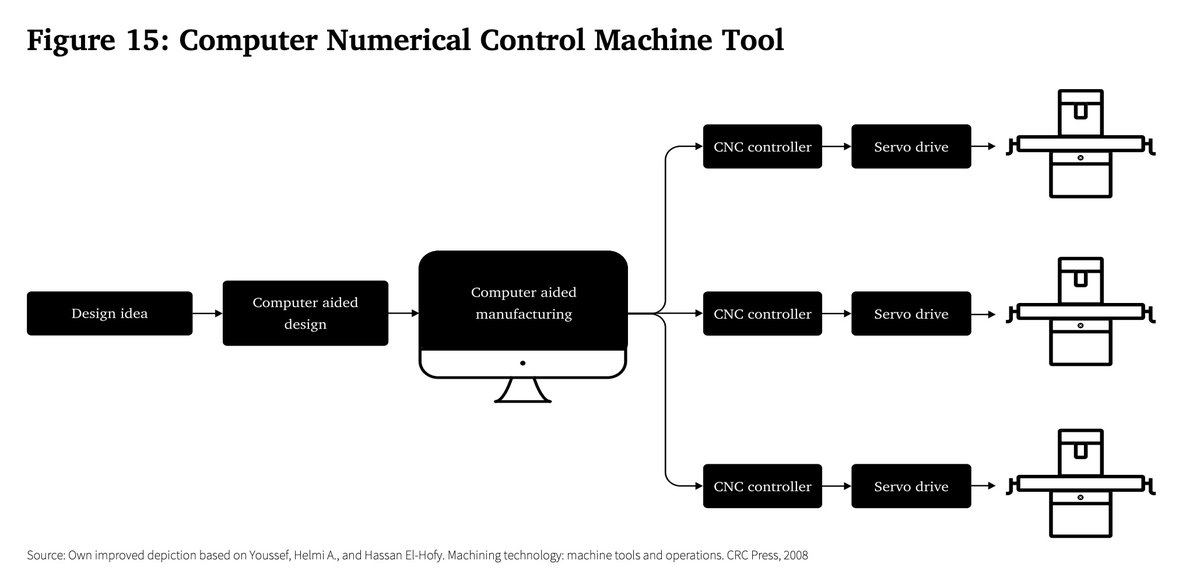
What ties it all together is the Product Lifecycle Management (PLM) software streamlining the production process from the CAD application to CNC controller. Higher-end PLM will minimise the labor input and, therefore, human factor (= mistakes) at every stage of the process.
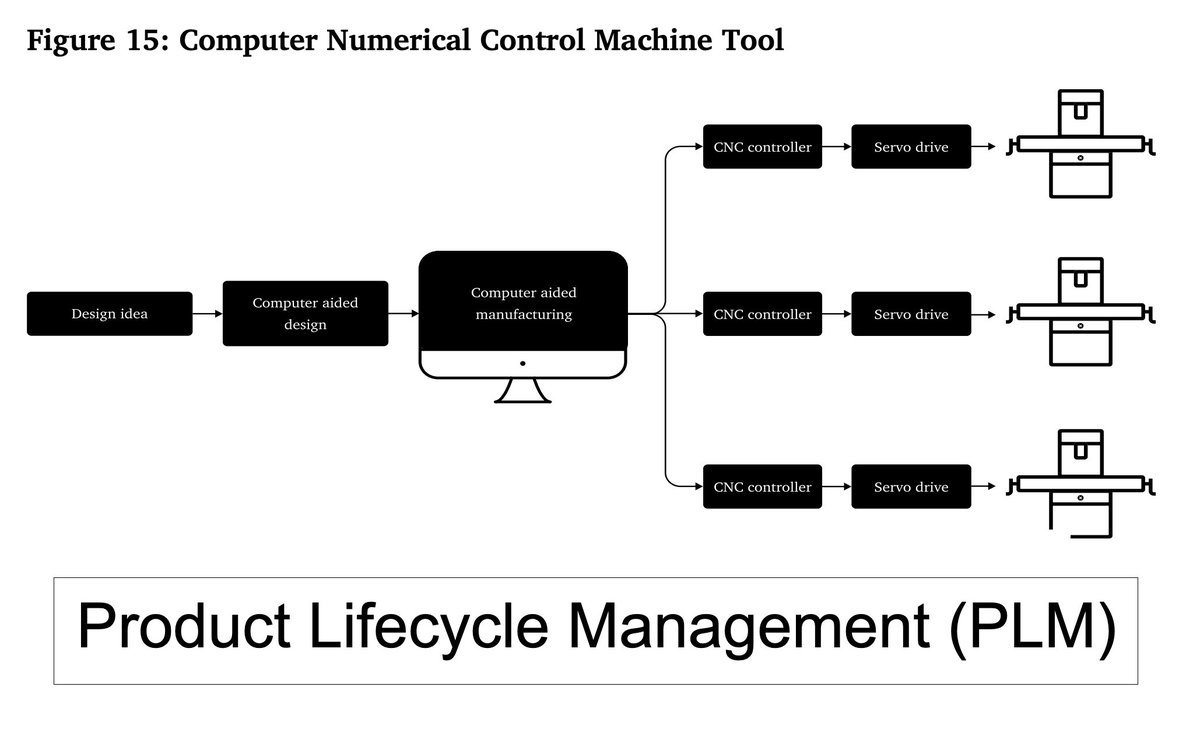
So, our basic concepts will be:
CNC - machine that makes stuff
CAM - software that prepares code for the machine
CAD - software that makes digital designs
PLM - pipeline, streamlining it all from CAD to CNC
That is, of course, a reduction. Still, good enough as a first intro
CNC - machine that makes stuff
CAM - software that prepares code for the machine
CAD - software that makes digital designs
PLM - pipeline, streamlining it all from CAD to CNC
That is, of course, a reduction. Still, good enough as a first intro
Let's start with the CNC machines
Tos Varnsdorf (Czechia). This one is very typical. There are many of them on this enterprise
Tos Varnsdorf (Czechia). This one is very typical. There are many of them on this enterprise
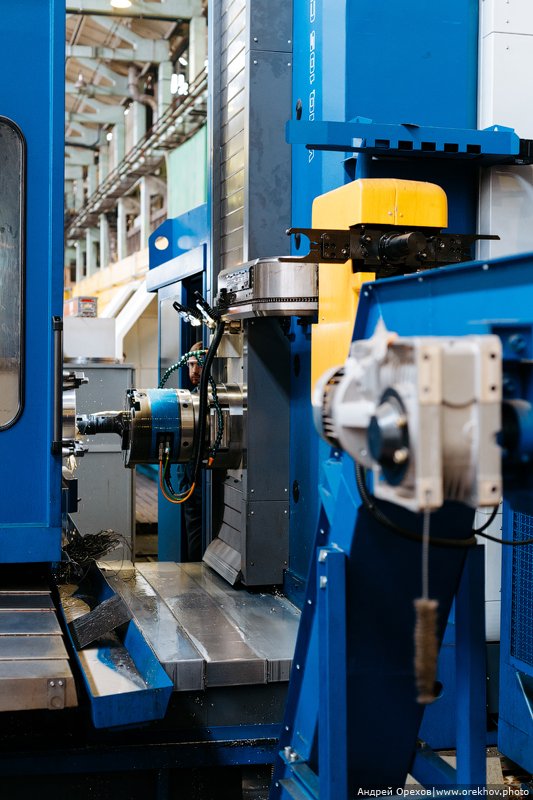
TYC (Czechia)

Breton S.p.A (Italy)

Doosan (Korea)

L&L (Taiwan)
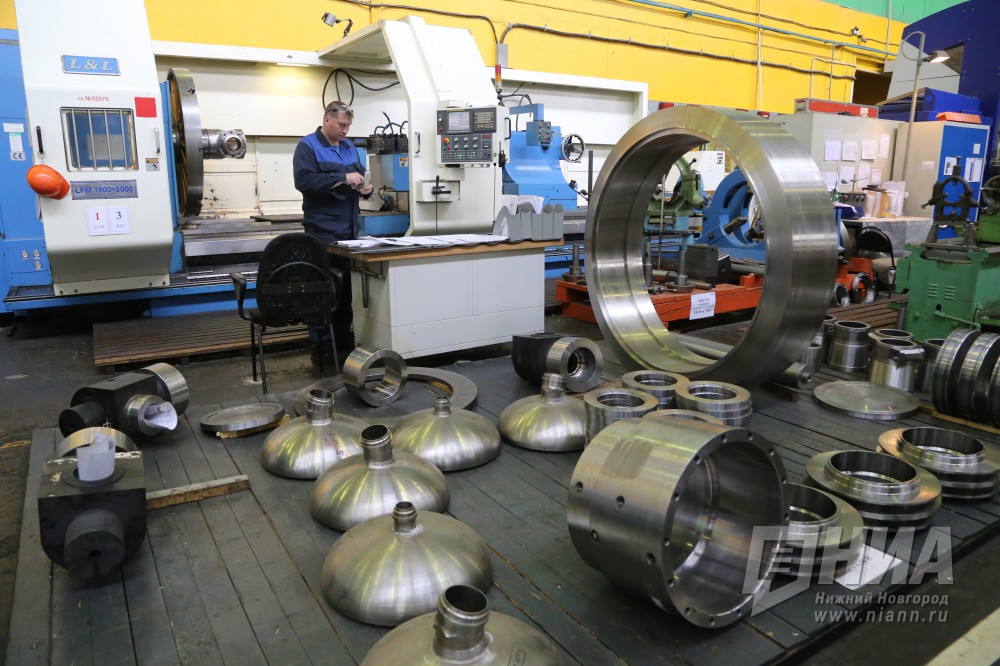
I could be showing Canadian, Swedish, Japanese, or - as in this case - Australian machines, but I think you are already getting my point. The machinery is all Western, and by Western I mean primarily Western European + cheaper, less sophisticated Taiwanese and Korean stuff.
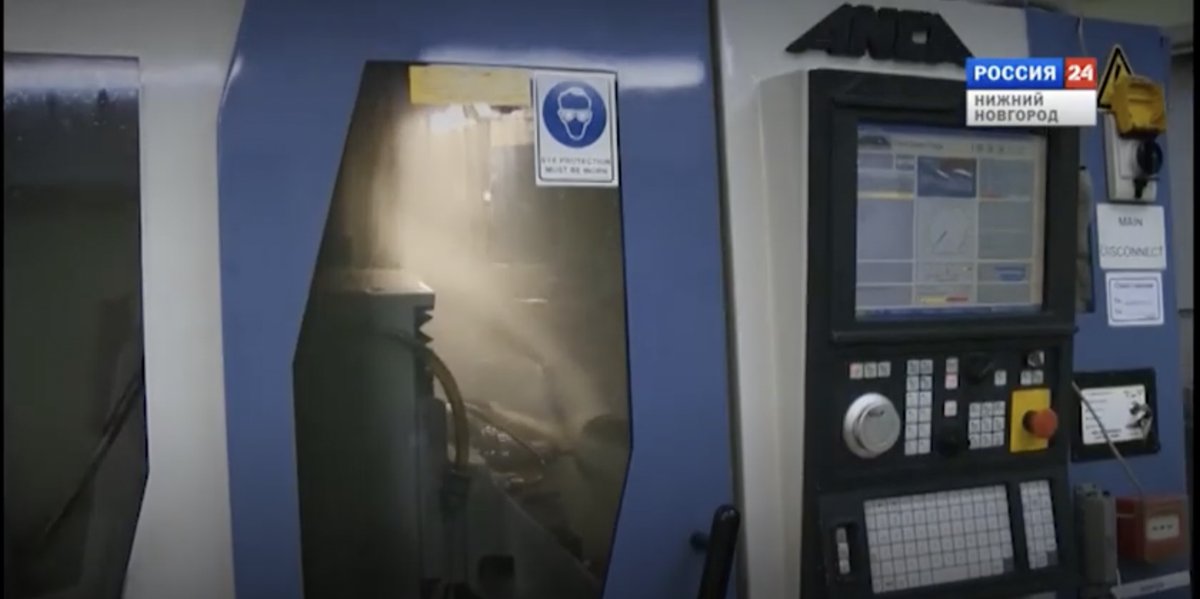
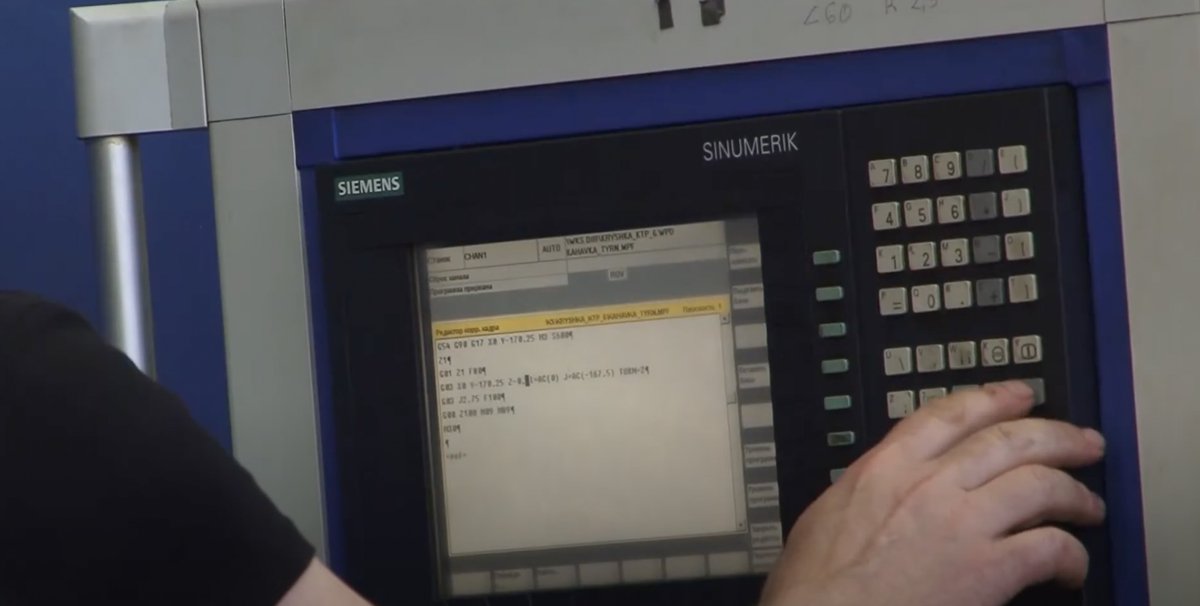
When it comes to the CNC controllers themselves, electronic "brains" controlling machine tools, then it is usually one of the two. It is either:
Siemens (Germany)
Fanuc (Japan)
Other variants exist, but they are much, much rarer. These are two standard types, basically
Siemens (Germany)
Fanuc (Japan)
Other variants exist, but they are much, much rarer. These are two standard types, basically
When it comes to the software, the main question regarding the OKB Afrikantov - or any strategic enterprise - should be:
How Siemens'ed it is?
In other words, to which extent did it base its digital infrastructure on the all-in-one turnkey solutions by Siemens? It can vary.
How Siemens'ed it is?
In other words, to which extent did it base its digital infrastructure on the all-in-one turnkey solutions by Siemens? It can vary.
This may sound somewhat opaque, so let me explain. There are two strategies to build your digital infrastructure. You may collect a "zoo" of various programs and systems by lots of various producers, or you can implement a single solution by one.
Zoo: pros vs cons
Pro: You do not particularly depend upon any single producer, and can choose the best/cheapest from any
Con: It will take lots of human labour, lots of human decision-making and lots of mistakes. In other words, you will be fucking things up to some degree
Pro: You do not particularly depend upon any single producer, and can choose the best/cheapest from any
Con: It will take lots of human labour, lots of human decision-making and lots of mistakes. In other words, you will be fucking things up to some degree
All-in-one solution:
Pro: It will minimise the labor input, minimise human decision making, minimise variety, maximise consistency
Con: Its damn expensive, and once you get on the needle you won't be able to get off. Plus there is really only one provider on this planet
Pro: It will minimise the labor input, minimise human decision making, minimise variety, maximise consistency
Con: Its damn expensive, and once you get on the needle you won't be able to get off. Plus there is really only one provider on this planet
This particular enterprise is not the most Siemensed. No, of course it uses Siemens products, and uses them a lot. Obviously, Siemens NX makes for the basic CAD + CAM on this enterprise. Still, it did not *fully* outsource its digital infrastructure to the one single provider.
The main reason being:
It is the foreign export that has been the main driver of system integration (that invariably ends in siemensisation). The more export-oriented you have been, the more advanced (= siemensed). The more domestic market oriented, the more frozen in time.
It is the foreign export that has been the main driver of system integration (that invariably ends in siemensisation). The more export-oriented you have been, the more advanced (= siemensed). The more domestic market oriented, the more frozen in time.
A couple of pre-conclusions that I want to put here before I go to sleep. Reality is incomprehensible, in all of its complexity. Still, you can navigate through this reality based on its asymmetries
One asymmetry:
1. Back end vs Front end
That is completely different stuff, qualitatively different. Back end is more complex, more demanding, and also smaller in terms of the market size. When we go to the back end of anything complex, Europe is huuuuuugely overrepresented
1. Back end vs Front end
That is completely different stuff, qualitatively different. Back end is more complex, more demanding, and also smaller in terms of the market size. When we go to the back end of anything complex, Europe is huuuuuugely overrepresented
2. Domestic market vs Foreign exports
Again, these are two different things, qualitatively different. You cannot compare domestic and overseas markets by size only. Overseas markets work differently. To put it simply, only the overseas markets are markets in a true sense
Again, these are two different things, qualitatively different. You cannot compare domestic and overseas markets by size only. Overseas markets work differently. To put it simply, only the overseas markets are markets in a true sense
• • •
Missing some Tweet in this thread? You can try to
force a refresh