At the end of the Roman Empire, inflation was out of control.
Huge state spending required endless money "printing" — until an entire bag of coins couldn't buy a sack of wheat.
Here's how inflation (and taxes) brought the empire to its knees... (thread) 🧵
Huge state spending required endless money "printing" — until an entire bag of coins couldn't buy a sack of wheat.
Here's how inflation (and taxes) brought the empire to its knees... (thread) 🧵

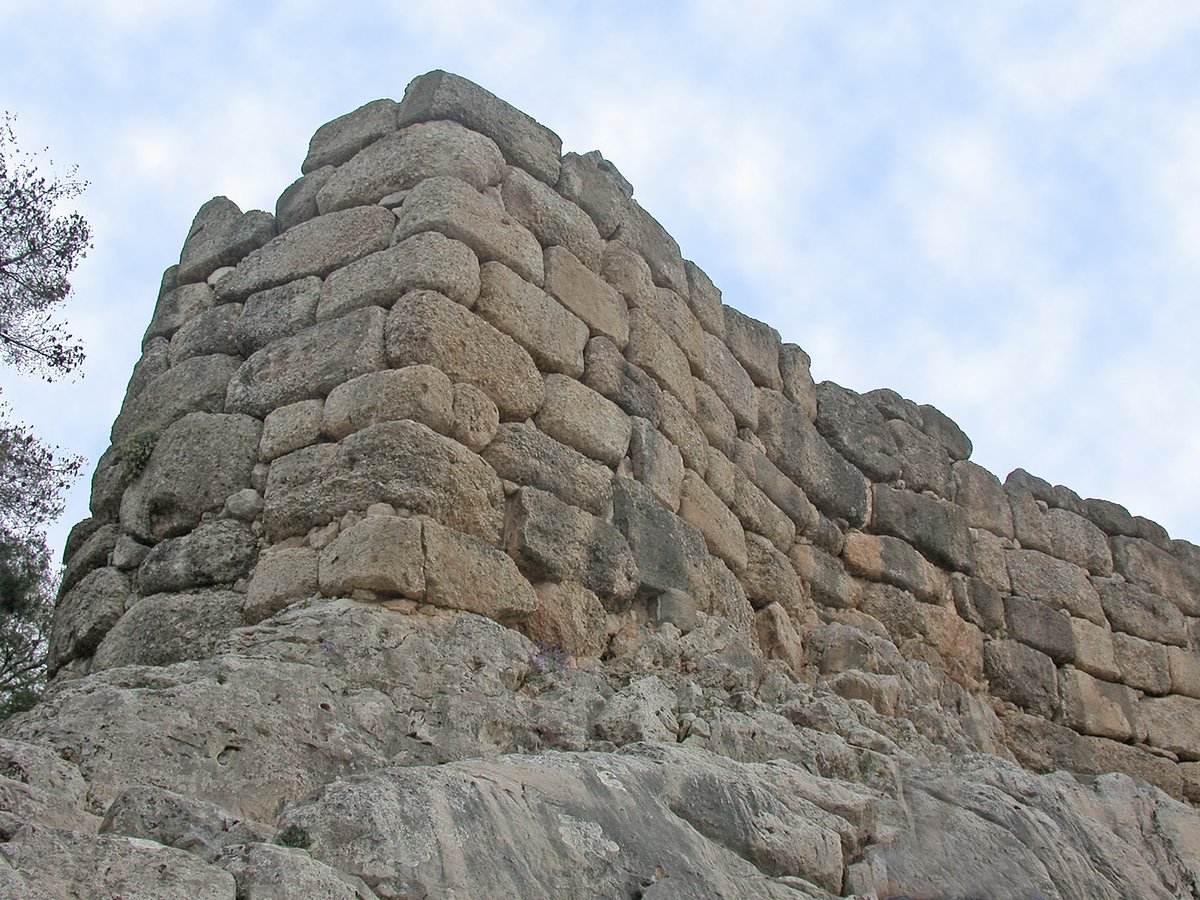
Rome's monetary system required continual looting of silver and gold from conquered lands to supply its coinage.
But when the expansion of the empire stopped, wealth stopped flowing into the treasury...
But when the expansion of the empire stopped, wealth stopped flowing into the treasury...

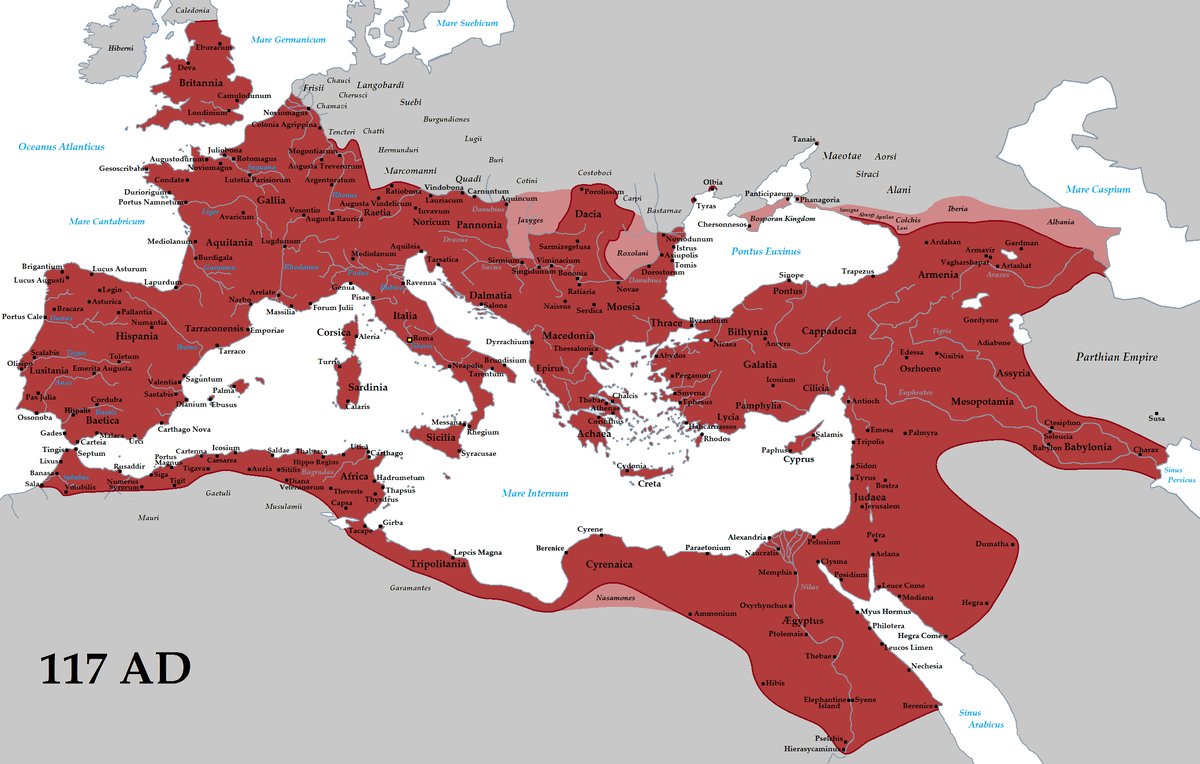
To maintain territories and conquer new ones, a massive army was required.
By the mid 2nd century AD, half a million soldiers were on the payroll — 70% of the total budget.
By the mid 2nd century AD, half a million soldiers were on the payroll — 70% of the total budget.
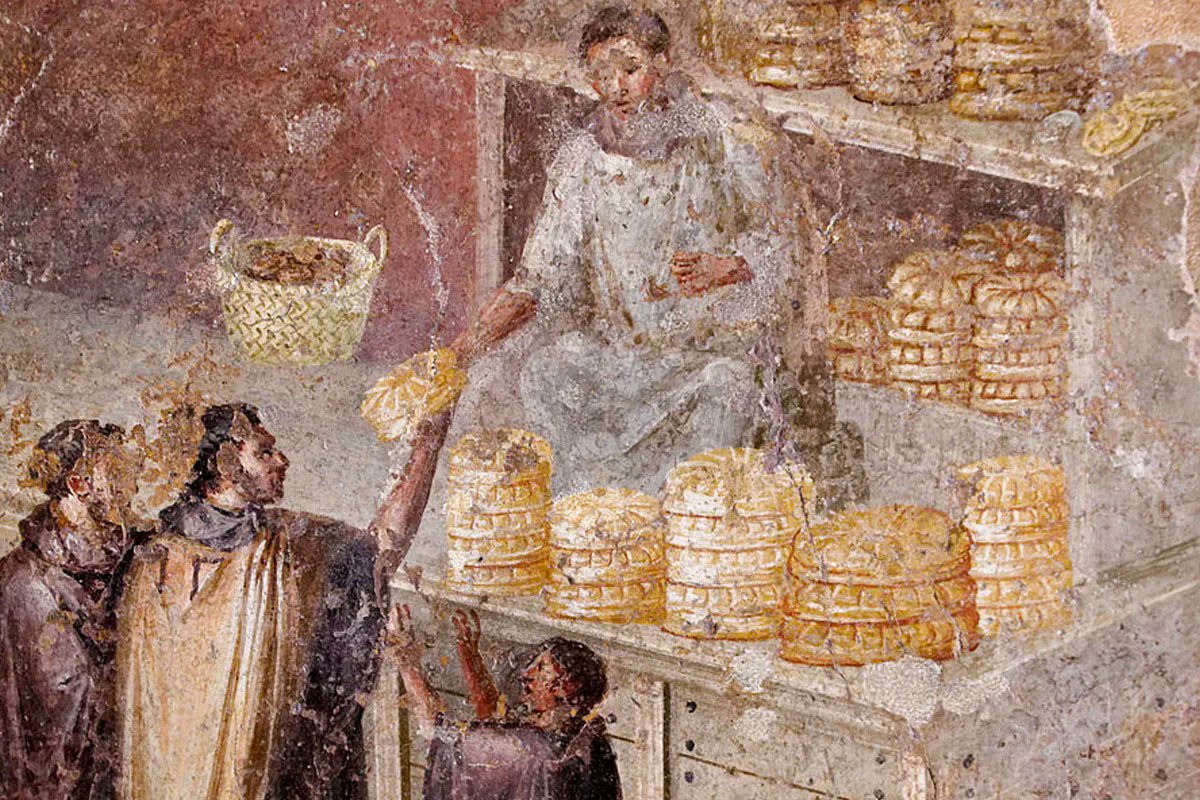
The state also haemorrhaged money via social programs for free and subsidized grain: 200,000 people in Rome were on the grain dole.
Note, when the silver denarius was introduced in 211 BC, a modius of wheat (8.7 L) cost a fraction of a denarius.
Note, when the silver denarius was introduced in 211 BC, a modius of wheat (8.7 L) cost a fraction of a denarius.
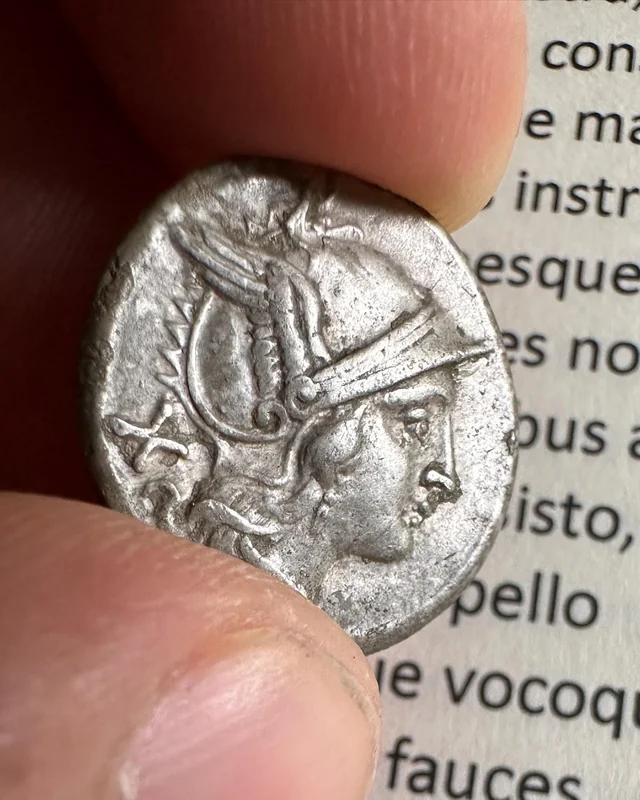
Emperors like Nero and Commodus spent lavishly, nearly bankrupting Rome with indulgent displays.
For a while, free grain and games kept the lower classes happy — "bread and circuses."
For a while, free grain and games kept the lower classes happy — "bread and circuses."
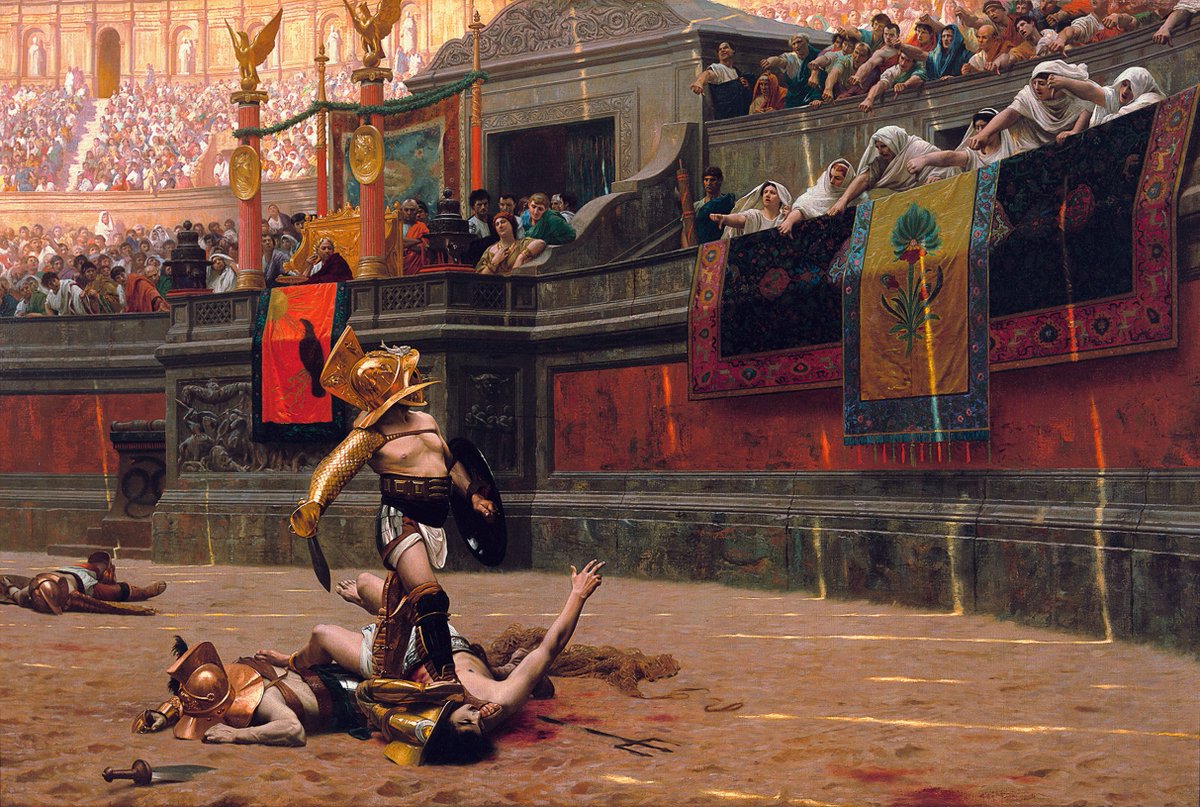
When Nero had to rebuild Rome after the fire in 64 AD, money was tight (especially due to war in Armenia).
So, he melted down denarii and created more of them from the same silver content — diluting purity from 98% to 93% while retaining the same face value.
So, he melted down denarii and created more of them from the same silver content — diluting purity from 98% to 93% while retaining the same face value.
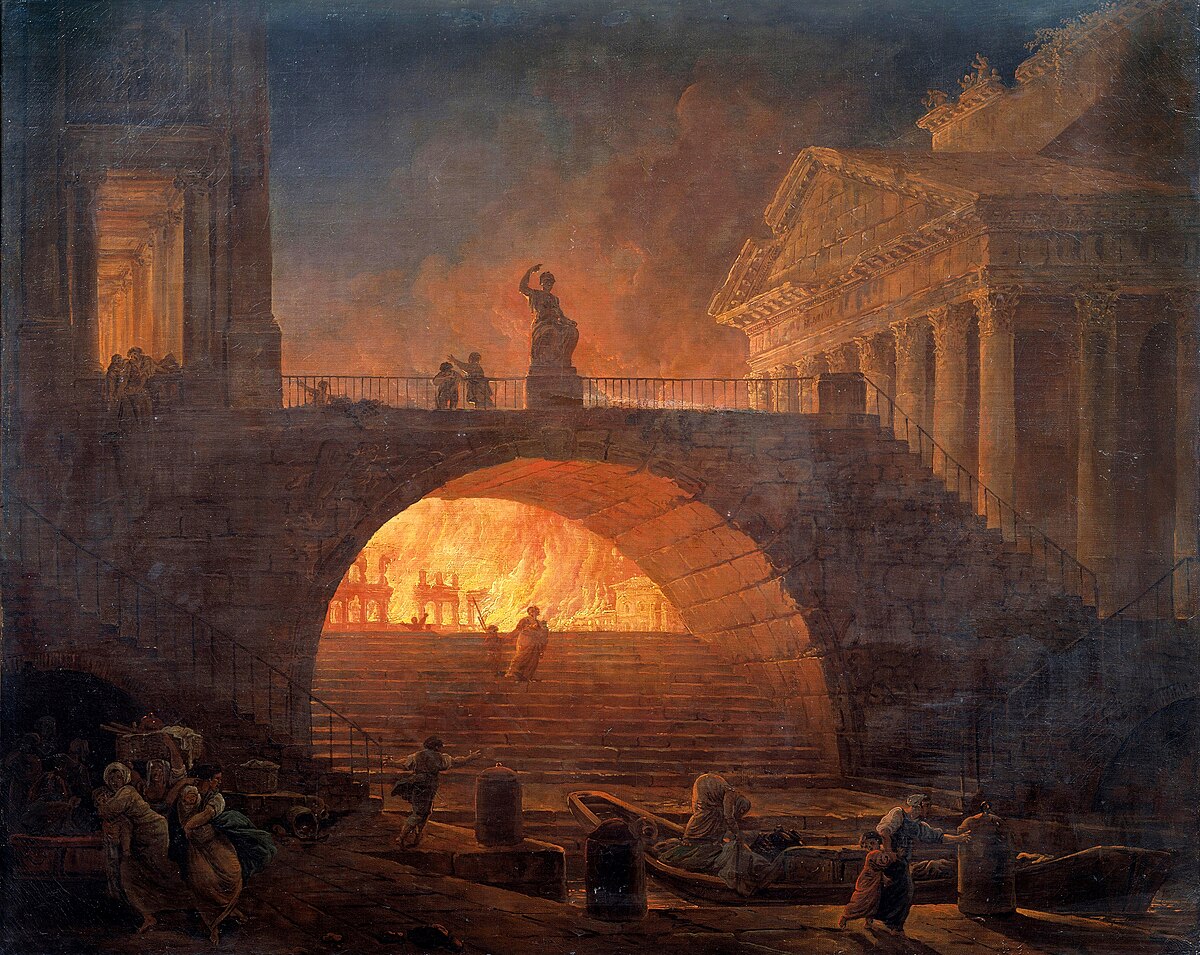
It seemed like a harmless way to increase the money supply, but the state soon got addicted to solving its problems this way.
Emperors continued debasing coins ever so slightly, and things remained stable for a while...
Emperors continued debasing coins ever so slightly, and things remained stable for a while...
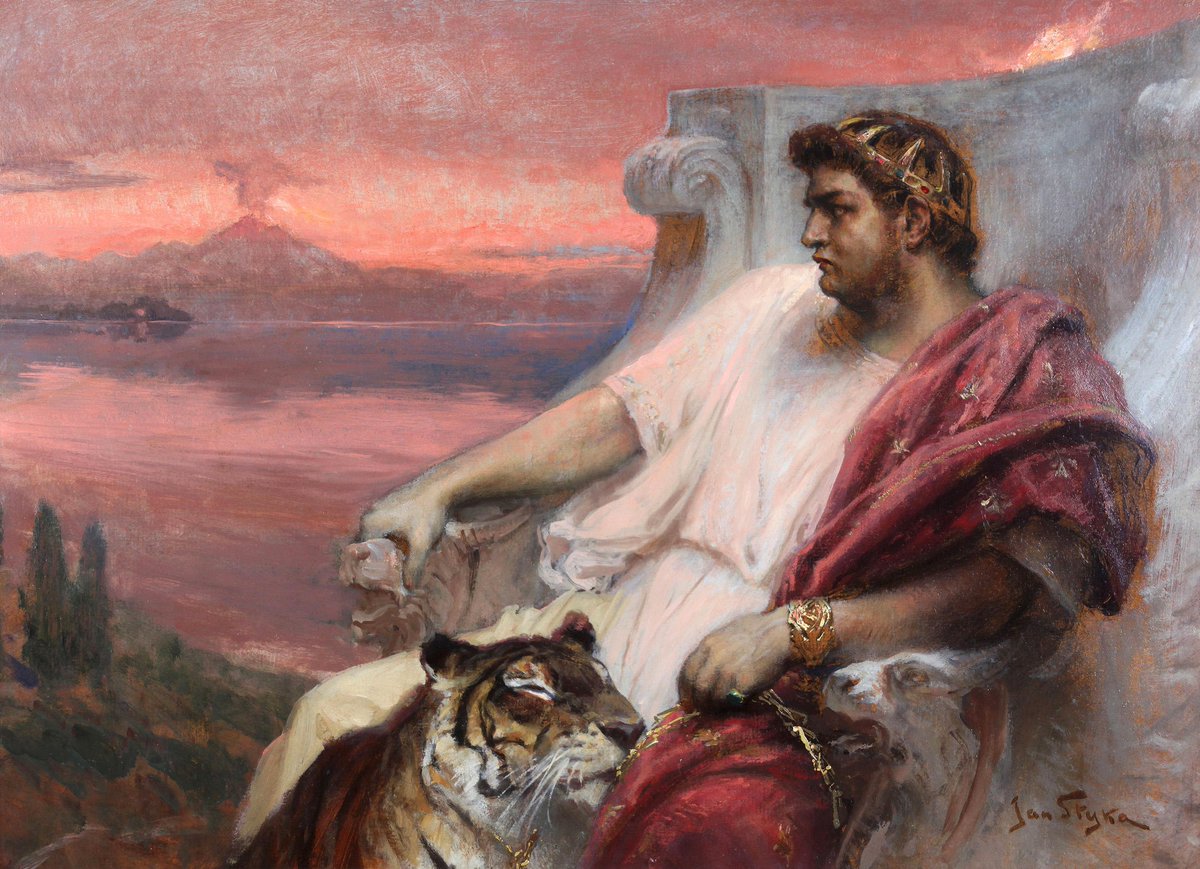
Plus, emperors had other ways of obtaining funds.
Commodus seized the assets of wealthy citizens by accusing them of treason, and Caracalla granted citizenship to 30 million provincials overnight in order to tax them.
Commodus seized the assets of wealthy citizens by accusing them of treason, and Caracalla granted citizenship to 30 million provincials overnight in order to tax them.
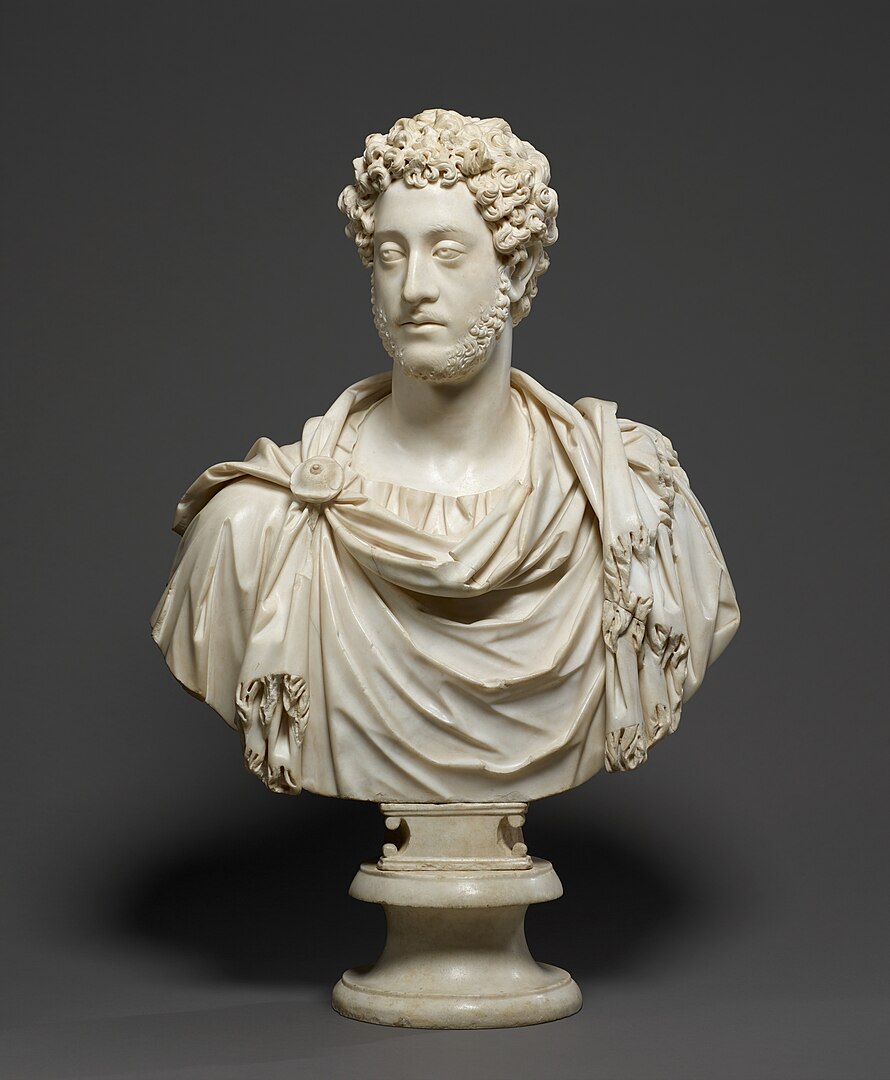
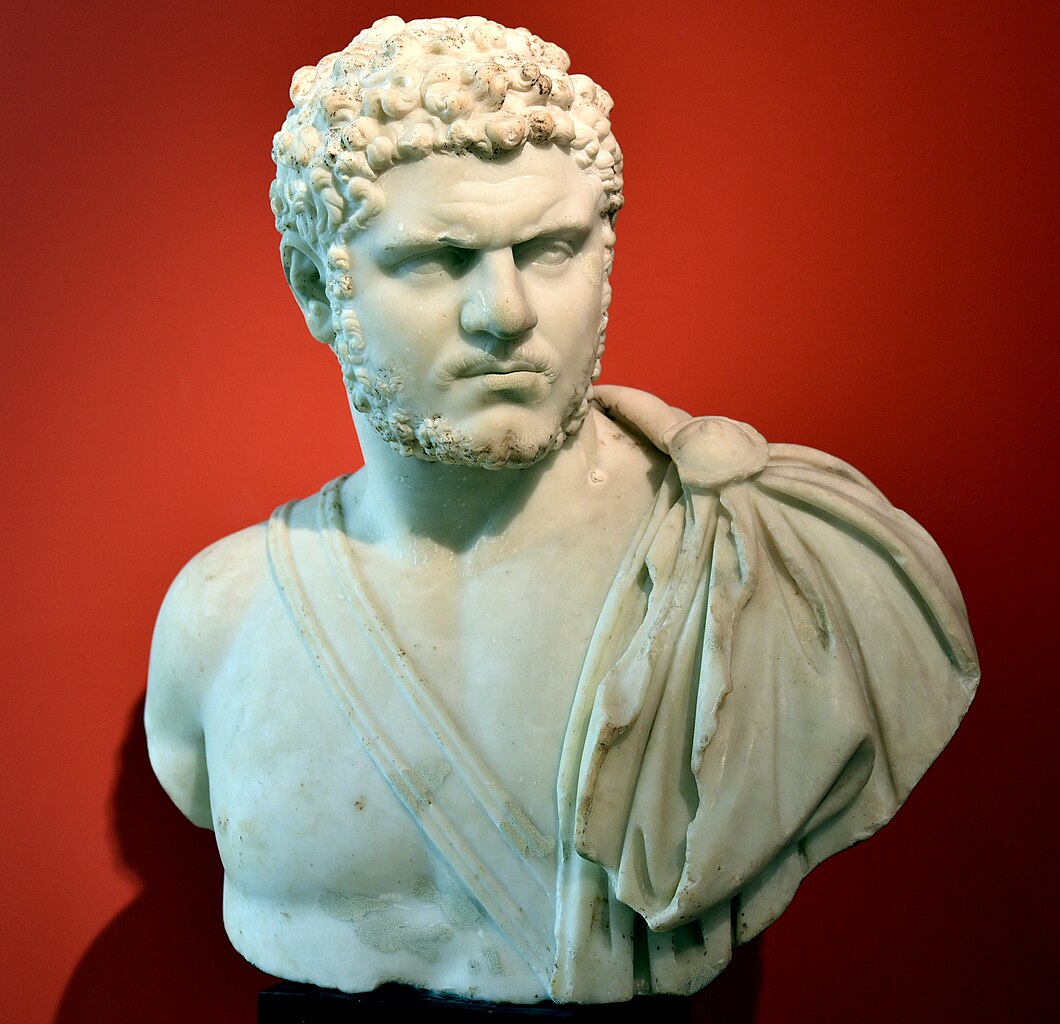
By the 3rd century, the denarius was down to 60% purity and a modius of wheat cost multiple denarii.
Still, the state kept spending to maintain the illusion of prosperity — until crisis struck...
Still, the state kept spending to maintain the illusion of prosperity — until crisis struck...
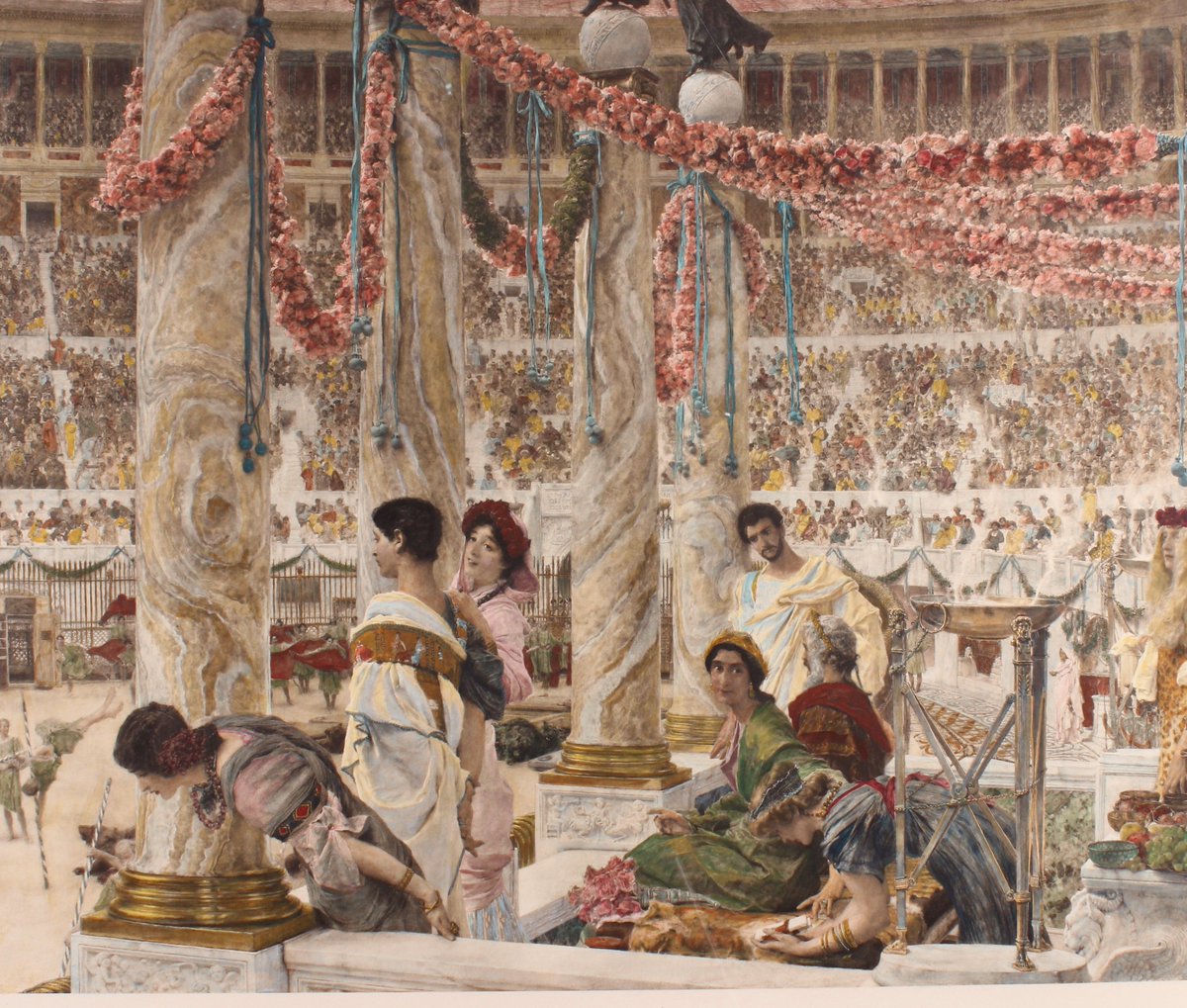
Frontiers across the empire came under attack in the mid 3rd century.
Military expenses soared, provinces were abandoned and their tax yields lost, and vast quantities of silver and gold lost in looting and tributes.
Military expenses soared, provinces were abandoned and their tax yields lost, and vast quantities of silver and gold lost in looting and tributes.

When soldiers' wages could no longer be paid, debasing the currency even more was the only option.
Emperors issued new denarii with less and less silver content — by 268 AD, it was down to 0.5% silver.
Emperors issued new denarii with less and less silver content — by 268 AD, it was down to 0.5% silver.
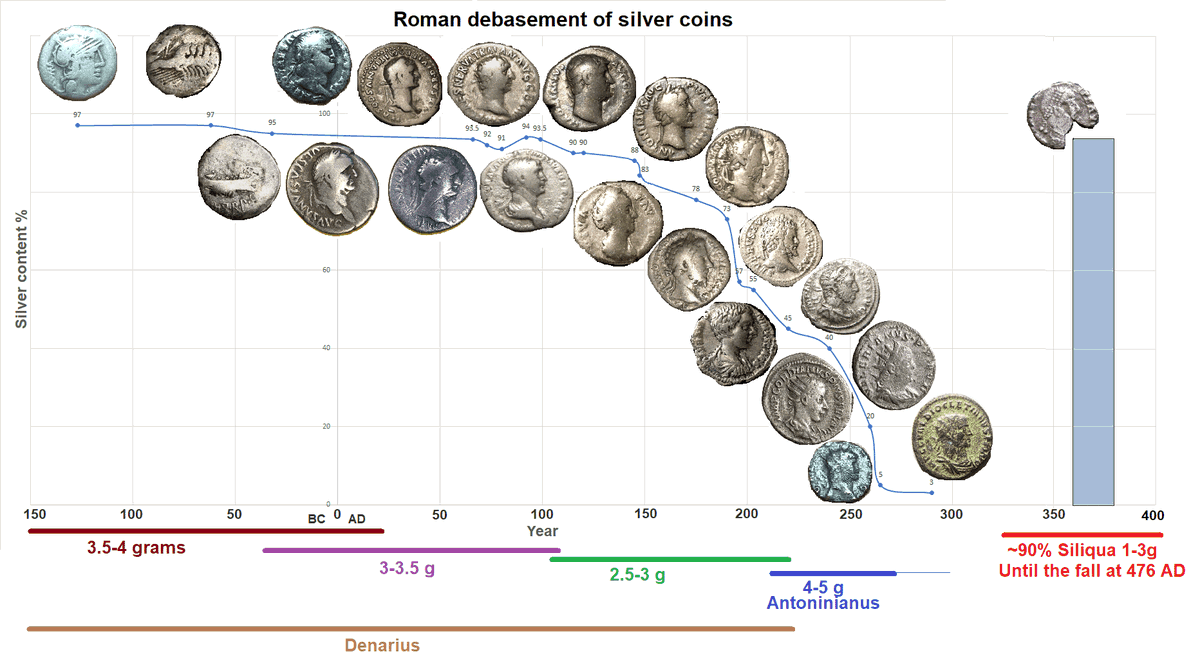
Soon, an entire bag full of coins replicated the silver content of a single coin a century earlier.
By 300 AD, soldiers were paid 8x in denarius versus a century ago, and wheat prices were up 200x.
By 300 AD, soldiers were paid 8x in denarius versus a century ago, and wheat prices were up 200x.
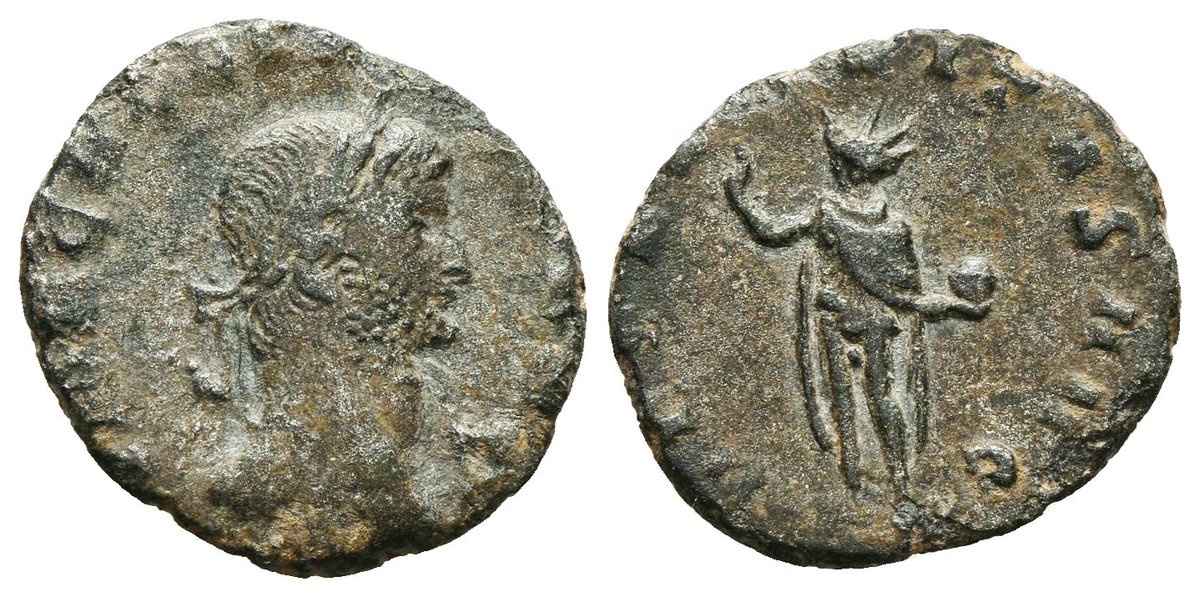
The administration even started issuing new coins with hardly any silver but a deceptively silver surface.
People lost confidence in the money, paid their taxes with the worthless new coins, and hoarded the old silver ones.
People lost confidence in the money, paid their taxes with the worthless new coins, and hoarded the old silver ones.

When the state *still* struggled to pay troops, some abandoned the military and went pillaging towns.
For half a century, the empire was on the brink of destruction: emperors were assassinated, barbarians sacked towns and enslaved citizens.
For half a century, the empire was on the brink of destruction: emperors were assassinated, barbarians sacked towns and enslaved citizens.
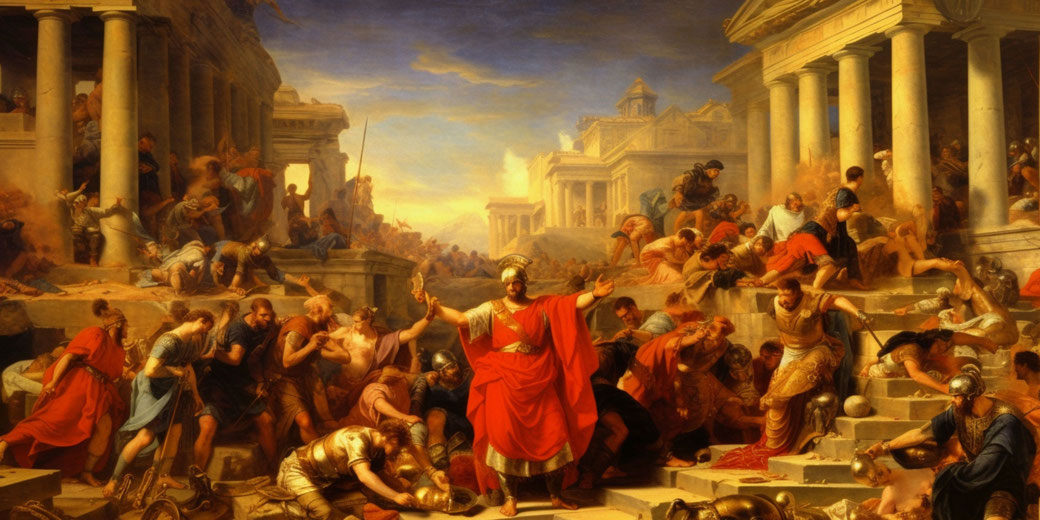
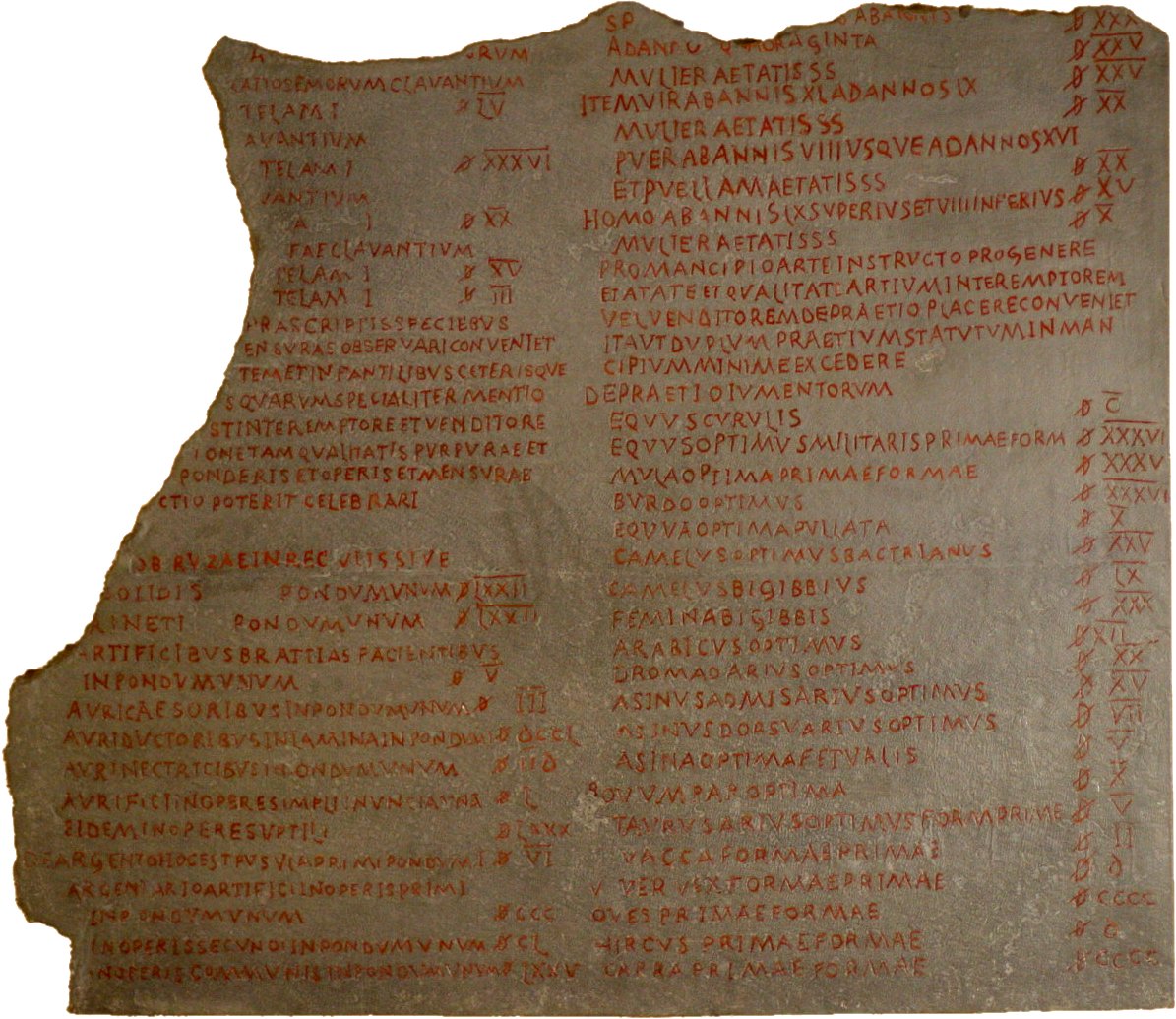
In 301 AD, Diocletian tried to stabilize things with price caps on 1,000 goods and services, but it ultimately failed.
A modius of wheat that had cost 0.5 denari in the 2nd century sold for 10,000 denarii in 338 AD.
A modius of wheat that had cost 0.5 denari in the 2nd century sold for 10,000 denarii in 338 AD.
Who pays when the money system breaks?
The people pay with their freedom. The currency was so worthless that the state demanded forced labor rather than accept coins as tax. Merchants had to provide goods directly to the army, and leaving their trade was outlawed.
The people pay with their freedom. The currency was so worthless that the state demanded forced labor rather than accept coins as tax. Merchants had to provide goods directly to the army, and leaving their trade was outlawed.
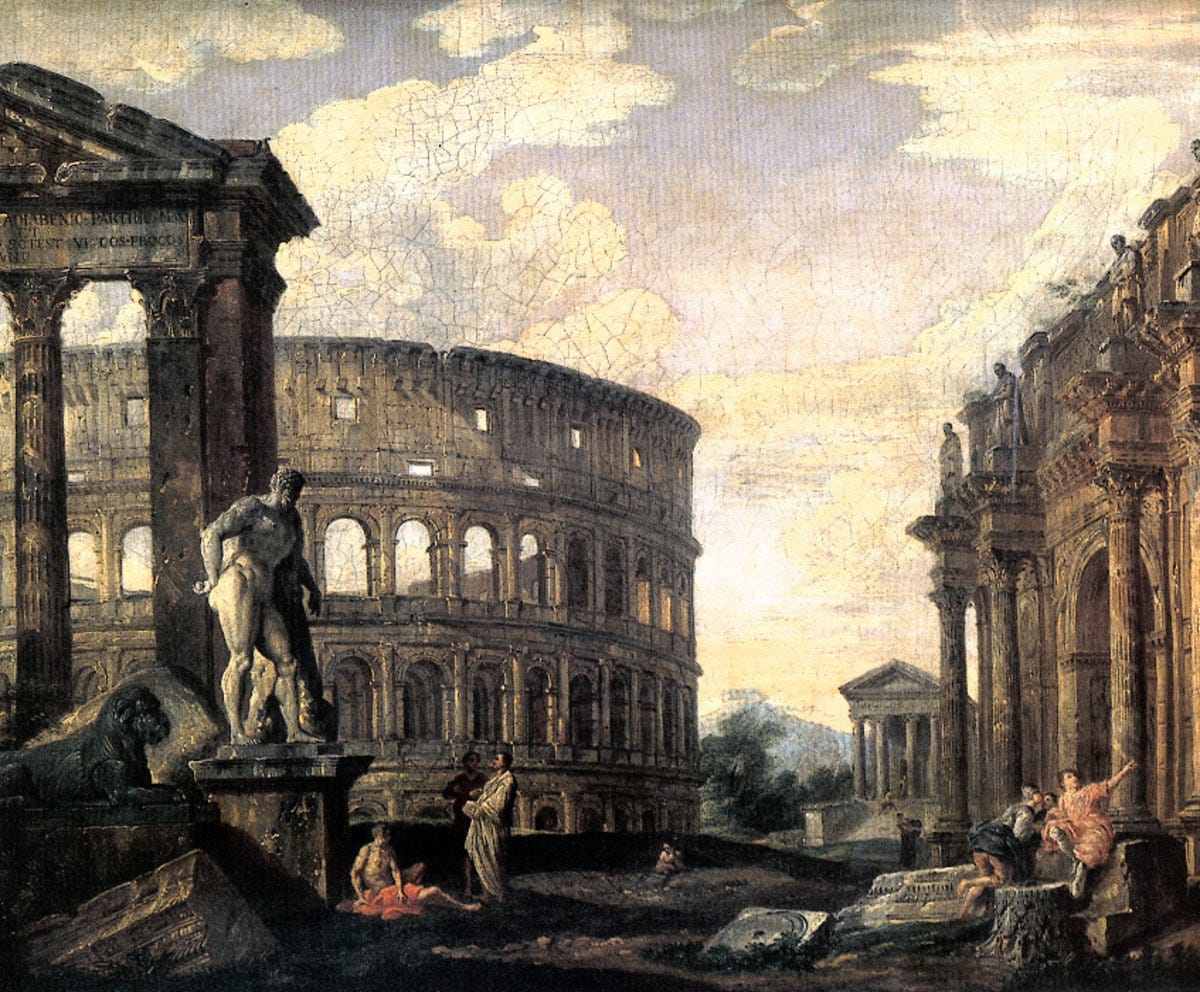
Constantine tried to restore the currency by introducing the new, gold solidus into mass circulation.
But subsequent emperors carried on debasing coins, refusing to believe it caused inflation.
But subsequent emperors carried on debasing coins, refusing to believe it caused inflation.
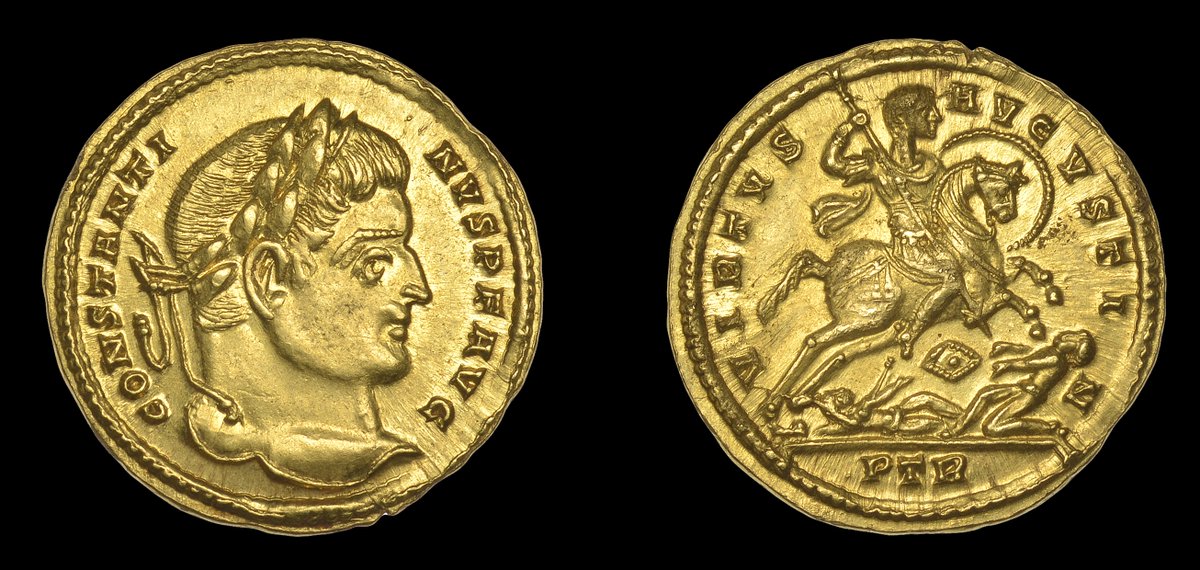
Over time, the masses fell into serfdom and unrest while the state grew more authoritarian in response. When the 5th century barbarians came, invaders were seen as liberators.
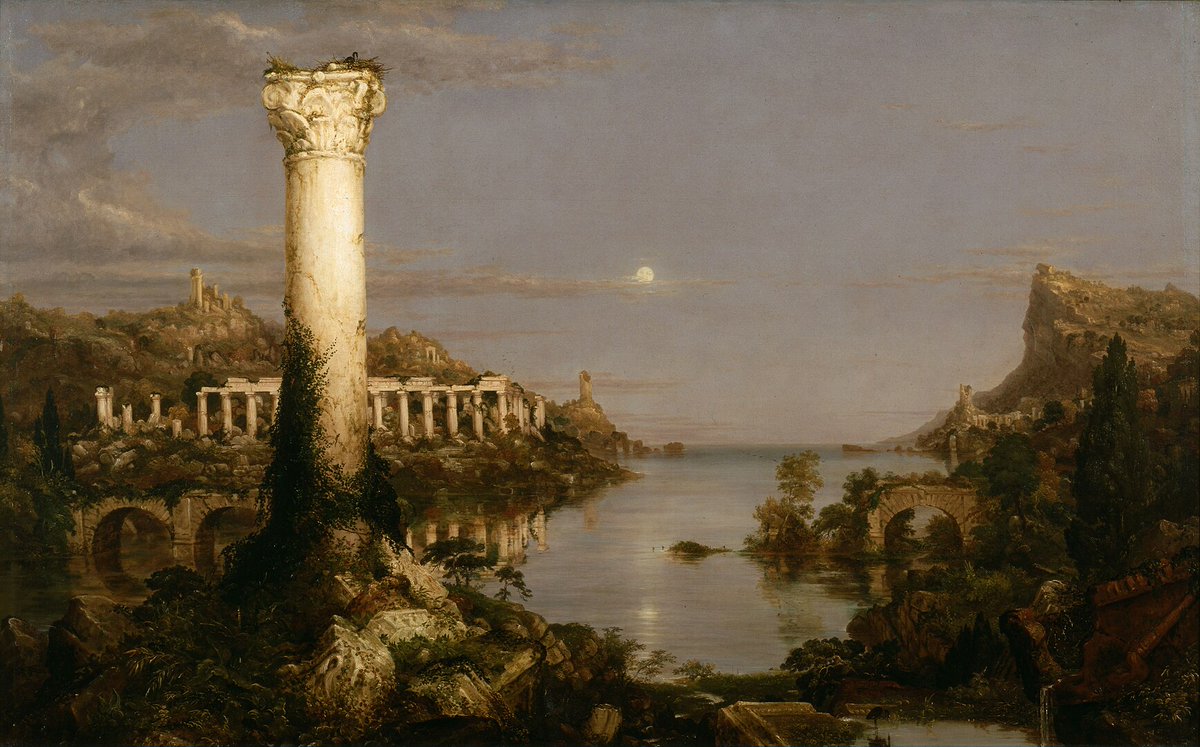
"The empire could no longer afford the problem of its own existence."
"The empire could no longer afford the problem of its own existence."
Remember, I go deeper on this and much more in my FREE newsletter — do NOT miss tomorrow.
96,000+ people read it: history, art and culture 👇
culture-critic.com/welcome
96,000+ people read it: history, art and culture 👇
culture-critic.com/welcome
Also, if any of this sounds familiar...
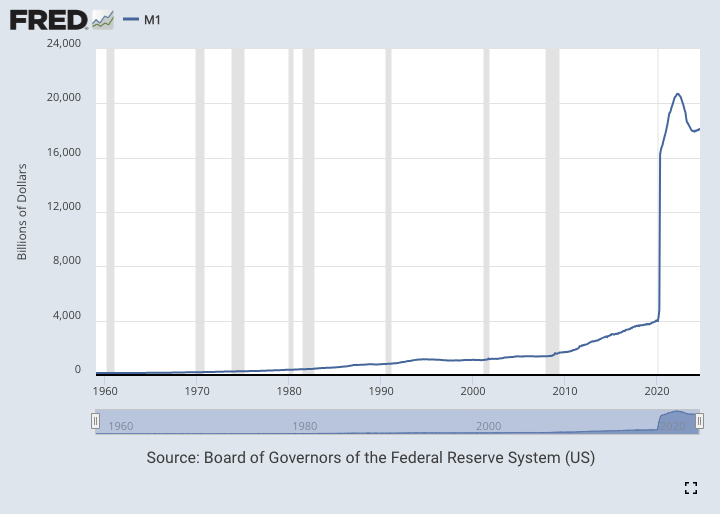
It might be because 80% of all dollars in circulation today were printed since Covid (going by M1 money supply).
It might be because 80% of all dollars in circulation today were printed since Covid (going by M1 money supply).
• • •
Missing some Tweet in this thread? You can try to
force a refresh